Lecture 13: Sustainability
 Call Kai
 Learn
Learn Practice Test
 Spaced Repetition
 Match
Match Flashcards
 Knowt Play
1/23

There's no tags or description
Looks like no tags are added yet.
Name | Mastery | Learn | Test | Matching | Spaced | Call with Kai |
|---|
No analytics yet
Send a link to your students to track their progress
24 Terms
core values that motivate behaviour
egoistic: promote oneself
altruistic: promote others
ecological: promote nature
consumerism
ideology/social system where the ongoing acquisition of goods and services is promoted for wellbeing and social participation
Status games are zero-sum.
materialism
value orientation in which you believe that possessions and wealth are central to life satisfaction, personal success and identity
People who endorse materialism:
are less happy
exhibit less prosocial behaviour
happiness
two components:
positive affect: frequency of experience of positive feelings, moods, and emotions such as joy
life satisfaction: feeling one is close to their ideal
Not that closely related.
how to boost happiness
aerobic exercise
nurturing social relationships
practicing acts of kindness
avoiding overthinking and social comparison
developing problem-focused coping
human-nature philosophy
Master:
Nature exists for human use. Economic growth and technology can solve any environmental problem (techno-optimism).
Steward:
Responsible for caring for nature on behalf of future generations, still above it.
Participant:
Not privileged above others, participate in nature and share in its health/illness.
environmental problem
when people specify what’s most important to them, environment is always pretty low, they’re more concerned about short-term interests.
All of the other, short-term goals underlie the environment, cannot be separated.
environmental sustainability
= stable ecosystem, resources and toxins.
sustainability = a balanced system (what you’re taking is going back)
ecosystem = the community of interactions between living organisms and with other materials
systems: agriculture, ecology, water/ocean, climate, energy
market solutions
markets are incredibly efficient at pricing, but they require enforcement and accurate info.
Markets require regulation + enforcement
no changes in prices because the earth is paying… internal → external
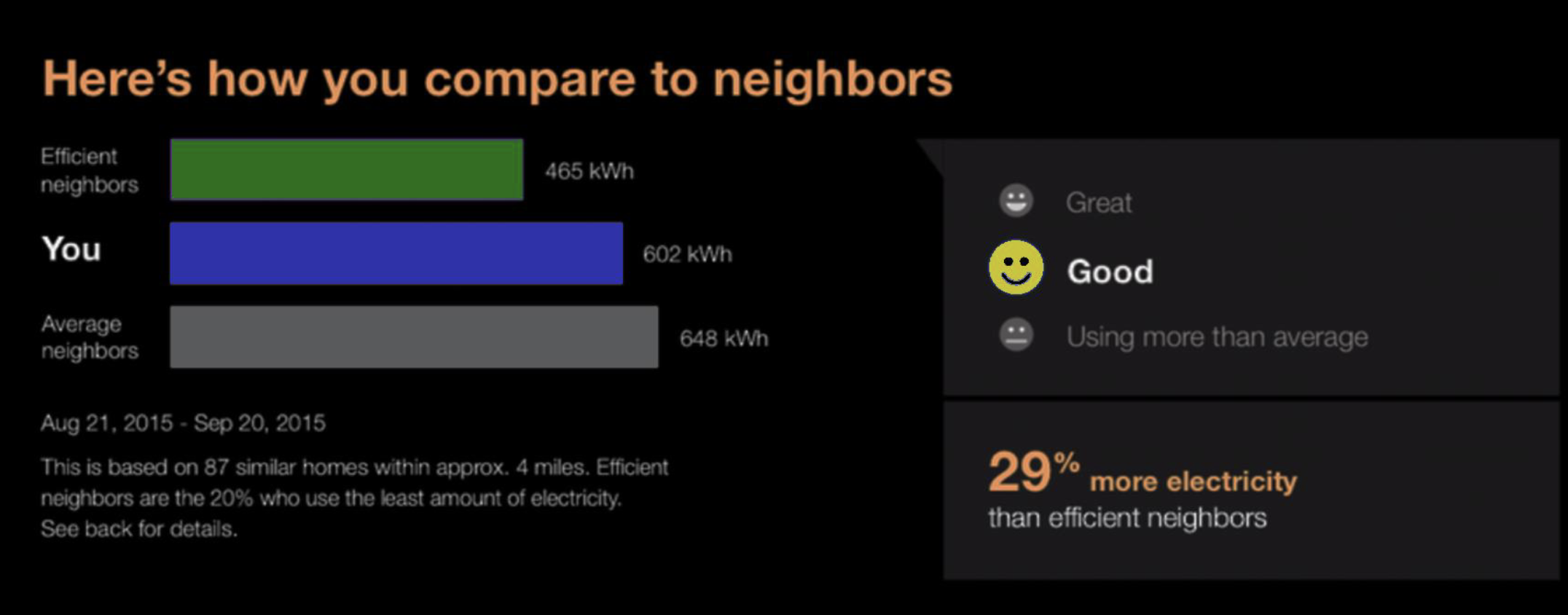
light-touch intervention for increasing sustainability
descriptive social norms (left) and injunctive social norms (right), reduce their use.
only descriptive norm: increased use for efficient neighbours
These reports save 2% of household energy over the year.
people’s responses to climate advocacy
Collect what the media reports, the day of, before people have the chance to read it, survey on opinions.
BBC article (centrist)/video from activists: both had positive views.
right-wing newspaper: no evidence for change, slighlty negative
environmentalism - major predictor, conservatism - negative predictor
people shown nothing got meaningfully more positive!
why does public opinion shift so rapidly on the issue of climate change
perception of the norm changes → private beliefs become public → culture shift
tipping points are hard to predict: incoherence, inconsistency, sudden changes
People lack insight on this process, social signaling effects.
is environmental concern/awareness correlated with action?
yes but so so so vaguely so Concern might be necessary, but it’s not enough.
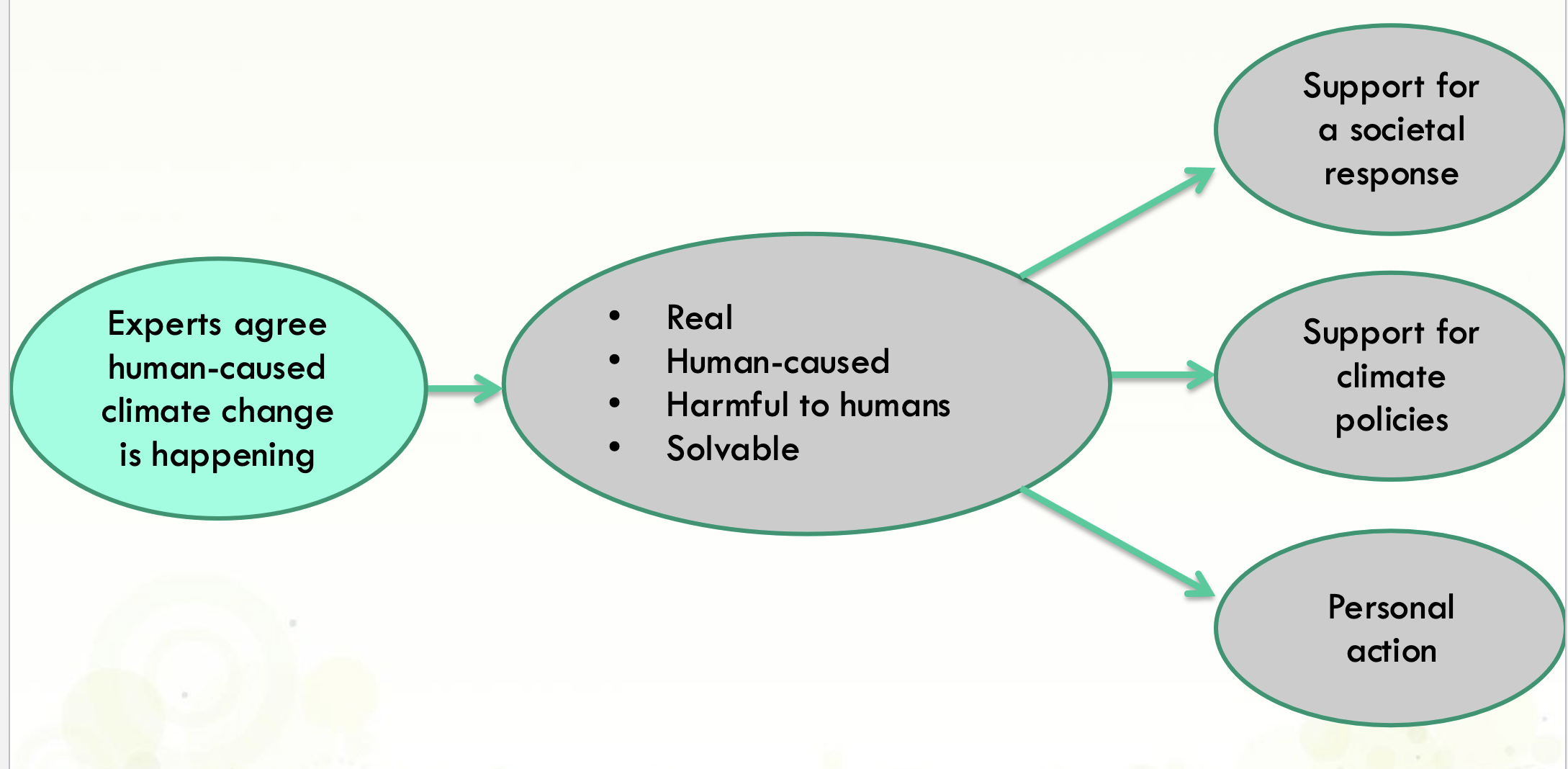
Understanding the scientific consensus does predict key beliefs and support for action!
so lack of information - information deficit model
perception of threats: why do we care about some issues more than others
threats that get our attention (the four i’s):
Intentional
Immoral
Imminent
Instantaneous
Climate change doesn’t fit these (or at least isn’t perceived as such) :(
theory of emergency response
notice the problem → interpret the problem as an emergency → feel personally responsible to act → know what to do → do it.
psychological barriers in the theory of emergency response
noticing the problem:
lack of information/comprehension
low perception of threat (4i)
cultural cognition, rejection of conflicting information
interpret the problem as an emergency:
problems above
as questions become more verbal and elaborate (issue vs emergency) we get more motivated reasoning. aici de ce nu intreaba nimeni ce dracu inseamna asta bine ca l-a intrebat ce inseamna imminent daca nu stii engleza du-te dracu si ia cursuri cumpara-ti un dictionar
feeling personally responsible to act:
self-interest
free riding
belief in a just world
tragedy of the commons
self-interest vs collective interest, basically resource social dilemma
not inevitable. Communitites can have sustainably managed shared resources, which require:
clear boundaries
rules match local conditions
users can help make rules
compliance is monitored
free riding
losers do all the work (e.g. make flashcards) others profit without doing anything (e.g. use flashcards).
reduced by:
individual performance is evaluated
expectation of punishment for poor performance
individual effort is necessary for success
task is important to you
group is small
group is cohesive
belief in a just world
we have a need to believe the world is predictable and just, people get what they deserve, leads to an is-ought problem
barrier to action because it reduces the perception of a problem and the acceptance of responsibility
classic model of climate change mitigation
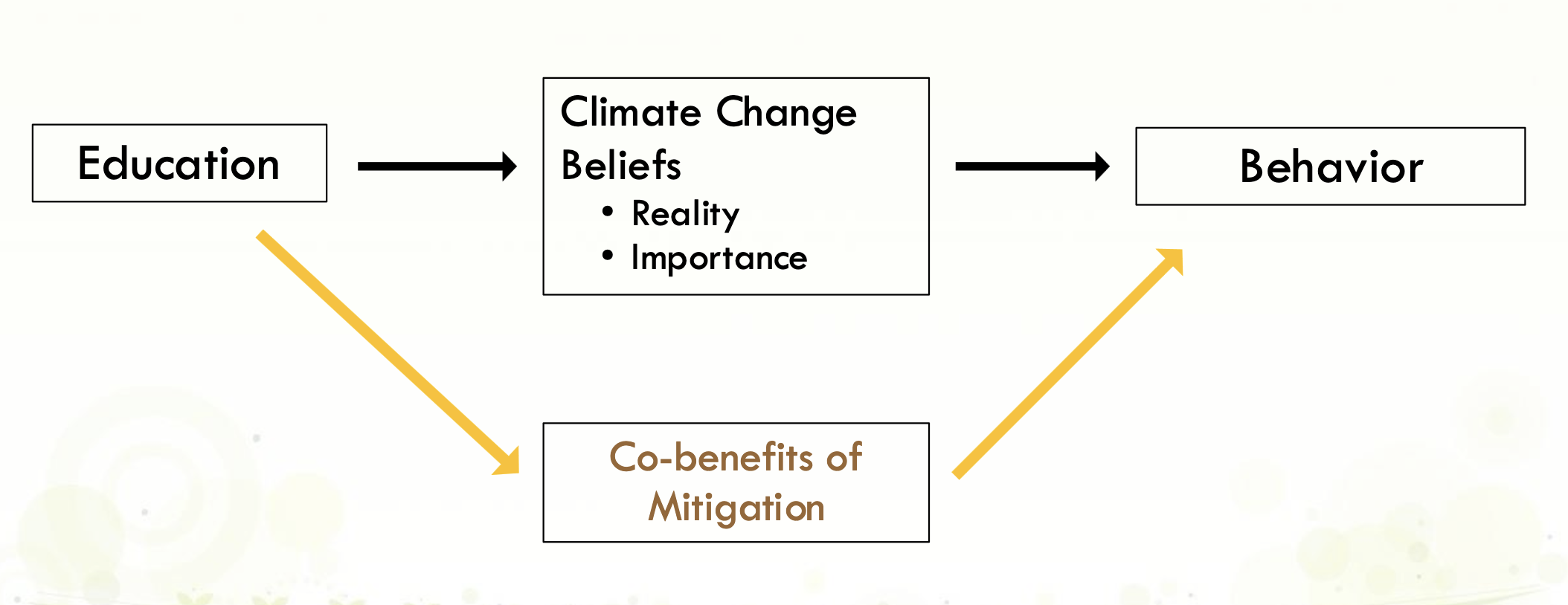
information-deficit isn’t the whole story
reorient towards people that they want to happen (national security, economic prosperity) that comes with climate change mitigation.
People asked how other things will be after the government solves climate change. If people also believe that climate change mitigation strategies will also predict their country’s wellbeing, this predicts behaviour. (collective futures model)
communicating the three Rs of climate
Reality:
scientists are convinced that human-caused climate change is occurring
harmful climate change impacts are already happening here and will get worse.
Risk:
climate may get worse than we expect.
we may experience surprises -- abrupt climate change or abrupt impacts triggered by gradual climate change
Response:
the sooner we respond, the better off we’ll be.
there’s much we can do.
identity signaling
we are motivated to feel good about ourselves and our groups.
Behaviours signal identity and reputation → pro-environmental behaviours have social meaning.
When we realise identity is socially relevant, it affects how we communicate about it.
Individuals may signal social identities with environmental behaviour: environmentalists will do more (green-to-be-seen), anti-environmentalists will do less (gray-to-stay-away).
So current campaigns may backfire on non-environmentalists.
knowing what to do: which behaviours do we target
plasticity: some behaviours are more changable than others.
We should target the behaviours that are both the most impactful and the most changeable - also scaleable, create more change later
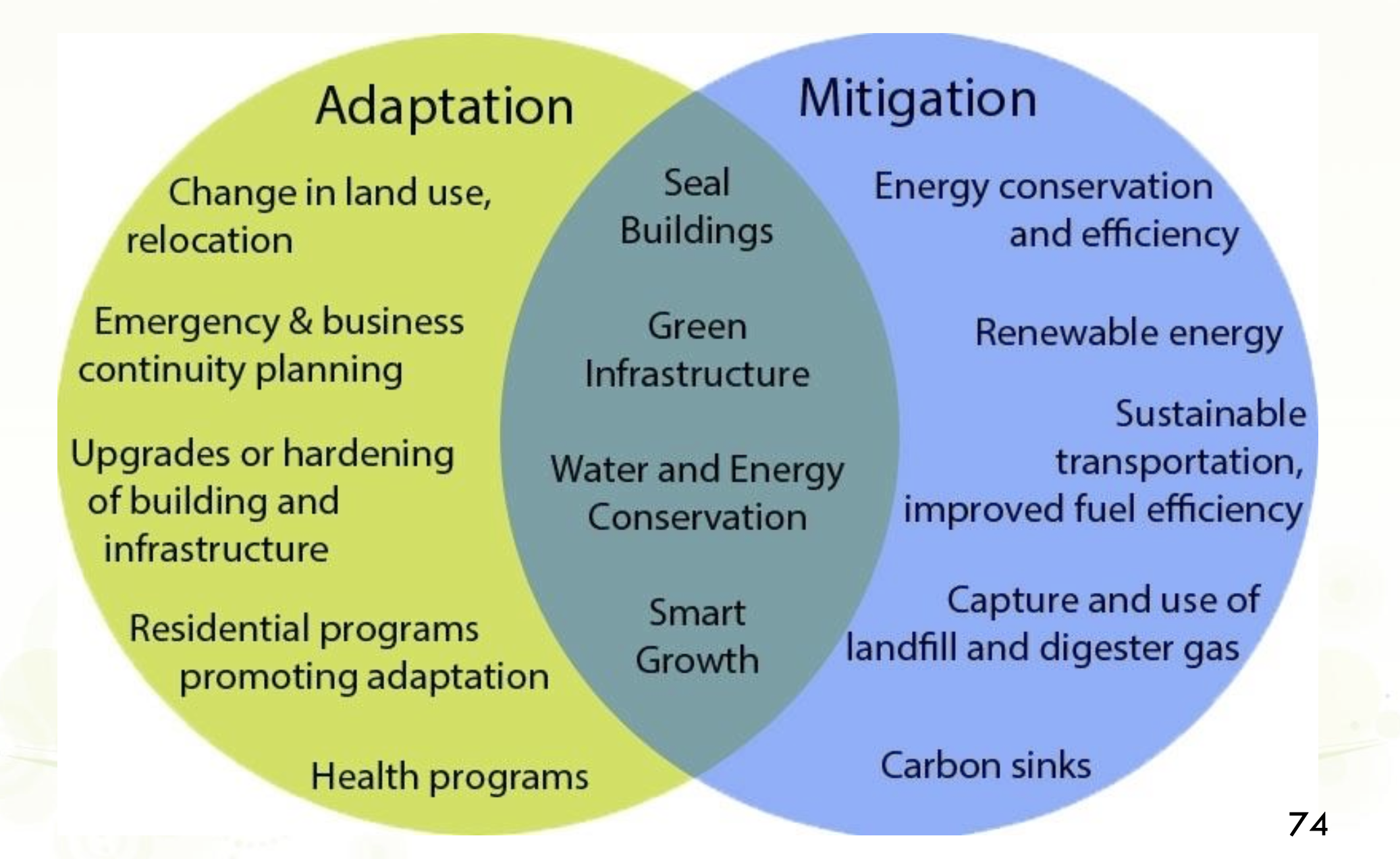
the two climate change strategies
mitigation: stop climate change from occurring
adaptation: fix our vulnerability to things that are changed by climate change
both: e.g. reducing food waste