APHUG Unit 2
 Studied by 2 people
 Call Kai
 Learn
Learn Practice Test
 Spaced Repetition
 Match
Match Flashcards
 Knowt Play
1/66

There's no tags or description
Looks like no tags are added yet.
Name | Mastery | Learn | Test | Matching | Spaced |
|---|
No study sessions yet.
67 Terms
Carrying Capacity
The population size of a species that the environment can sustain indefinitely, given the available resources.
Overpopulation
The phenomenon of a population exceeding the capacity of the evironment to support life.
Demography
The study of population characteristics
Census
The complete enumeration (numbering and acknowledging) of a population
Ecumene
The portion of Earth’s surface occupied by permanent human settlement.
Arithmetic Density
The total number of people in an area. Calculated by the total number of people divided by the total land area.
Physiological Density
The number of people per unit of arable land. Calculated by the total number of people divided by units of arable land.
Agricultural Density
The ratio of arable land to farmers.
Natural Increase Rate (NIR)
The percentage rate of population growth, excluding migration.
Doubling Time
How long (in years) it takes for a population to double itself.
Crude Birth Rate (CBR)
Total number of births in a year per 1000 people.
Crude Death Rate (CDR)
Total number of deaths in a year for every 1000 people alive.
Total Fertility Rate (TFR)
Total number of births in a society. Calculated by the average amount of children a mother will have in her childbearing years.
Infant Mortality Rate (IMR)
Total number of infant (<1 years old) deaths per 1000 births, annually
Demographic Transition
The process of a society’s population transition from having high NIR/CBR to low NIR/high population.
DTM Stage 1
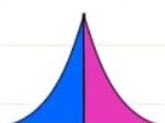
This stage contains most of early human history. No current country is in this stage and there were no events to increase population. High CBR, High CDR, Low NIR.
DTM Stage 2
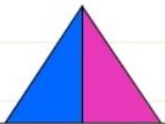
This stage is mostly defined by the Industrial Revolution and Medical Revolution. With more advancements, there will be a high CBR, declining CDR and high NIR.
DTM Stage 3
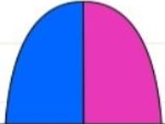
This stage has people having fewer children because of economic changes (birth control). Declining CBR, declining CDR, moderate NIR.
DTM Stage 4
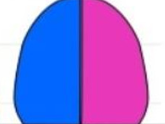
This stage is defined with a Low CBR, Low CDR, and a Low NIR. This stage begins to reach ZPG.
DTM Stage 5
This stage has a negative CBR, and a slightly increasing CDR, meaning that it has already reached ZPG and has a negative NIR.

Zero Population Growth (ZPG)
A state in which NIR is zero or even negative, meaning the country’s population is going down.
Maternal Mortality Rate
Number of pregnanet/parental female deaths per 100,000 live births
Sex Ratio
The number of males per 100 females in a population.
Elderly Support Ratio
The number of working-age people (15 to 64) divided by the number of people 65 and older.
Dependency Ratio
Number of people who are too old/young to work compare to people who are in their productive years.
Population Pyramid
A bar graph that displays the percentage of a place’s population for each age and gender.
Epidemiologic Transition
The process of change in the distinct causes of death in each stage of the demographic transition.
ETM Stage 1
This stage includes a plethora of pestilences and famines, as well as pandemics and epidemics (eg. Black Plague).
Epidemic
A widespread occurrence of an infectious disease within a community at a particular time.
Pandemic
An epidemic that occurs over a wide geographic area and affects a very high proportion of the population at the same time.
ETM Stage 2
This stage has pandemics recede because of improved sanitation. nutrition and medicine during the Industrial and Medical Revolution.
ETM Stage 3
The stage is characterized by a decrease in deaths from infectious disease, but an increase in chronic disorders relating to aging.
ETM Stage 4
In this stage, degenerative diseases become delayed or even fully stopped, and people die because of illegal drug use and bad diets.
Pronatalist Policy
A government policy that supports higher birth rates. (eg. tax breaks for families)
Antinatalist Policy
A government policy that supports lower birth rates. (eg. job opportunities for adult women)
Life Expectancy
Average number of years a person is expected to live based on social/economic/medical conditions.
ETM Stage 5
A stage that includes a sudden reemergence of past diseases because of evolution, poverty, and increased human connections.
Malthus Theory
A thought in the 18th century that argued that people grew exponentially, while food grew arithmetically; meaning that overpopulation was destined to occur. Today, it is proven wrong because of technology.
Neo-Malthusian Theory
A modern theory extending based on Malthus Theory, based on environmental impacts and advocating for population control.
Migration
A permanent movement to another location, usually involving people taking their cultural/economic values with them.
Mobility
The umbrella term of all types of movement from one place to another.
Circulation
Daily short-distance movement.
Migration Transition
A change in the migration pattern in a society that results from industrialization, population growth, and other social and economic changes.
International Migration
Migration from one country to another (either voluntary or forced).
Voluntary Migration
Migration where migrants choose to move, for economic or environmental reasons.
Forced Migration
Migration where migrants are forced to move by political or environmental factors.
Internal Migration
Migration within the same country. The farther away the location, the less likely someone will migrate there.
Interregional Migration
Migration from one region to another (rural to urban).
Intraregional Migration
Migration inside of a singular region (urban to suburban).
Immigration
Migration coming into a country.
Emigration
Migration from a country.
Net Migration
The difference between immigrants and emigrants. If positive, the amount of immigrants exceeds emigrants.
Urbanization
Migration from rural to urban areas. This phenomenon began in Europe and North America during the Industrial Revolution when people sought economic opportunities.
Push Factor
Something that induces people to move out of a place.
Pull Factor
Something that induces people to move into a place.
Intervening Obstacle
Political/environmental factor that hinders migration.
Step Migration
Migration involving steps (eg. going to Place A to Place C before Place B).
Refugee
A person who has been forced to migrate to escape persecution of certain personal traits, violations of rights, or violence.
Internally Displaced Person (IDP)
A person who is forced to migrate for similar reasons as a refugee, but doesn’t cross any international borders.
Asylum Seeker
A person who migrates for the purpose of being recognized as a refugee.
Remittance
The transfer of money by people working in other country to other people that live in the country they emigrated from.
Unauthorized Immigrants
People who illegally enter a country without the proper documents necessary.
Quota
A law that sets a limit on the maximum number of immigrants that can come to a certain country.
Brain Drain
Mass emigration of talented workers (doctors, scientists, etc.).
Chain Migration
Migration of people that move because their relatives migrated/live there.
Guest Worker
A person who migrates to developed countries in search of a higher-paying job.
Circular Migration
Migrating temporarily to a new country, to then move back into their original country.
 Note
Note  Flashcards (55)