org. evolution - CH13 - Selfish Genes
 Call Kai
 Learn
Learn Practice Test
 Spaced Repetition
 Match
Match Flashcards
 Knowt Play
1/31

There's no tags or description
Looks like no tags are added yet.
Name | Mastery | Learn | Test | Matching | Spaced | Call with Kai |
|---|
No analytics yet
Send a link to your students to track their progress
32 Terms
What defines a selfish genetic element in terms of selection?
A genetic element that increases its own transmission relative to other alleles, regardless of its effect on organismal fitness
Why can selfish genetic elements spread even if they are harmful to the organism?
Because selection can act at the level of genes, favoring transmission advantage over organismal fitness
How does interference allow a selfish genetic element to achieve drive?
By disrupting the transmission of alternative alleles so they are less likely to be inherited
How does over replication lead to biased transmission?
By increasing the number of copies of the element relative to other genes in the genome
Why does gonotaxis increase the success of a selfish genetic element?
Because moving into the germline ensures transmission to the next generation
What is the selfish logic behind transposons spreading in a genome?
They increase in frequency if their replication rate exceeds their removal, regardless of host impact
Why can transposons accumulate to large portions of the genome?
Because they can copy themselves repeatedly within the genome
What feature allows LINEs to spread independently within the genome?
They encode their own machinery for reverse transcription and integration
How do SINEs (e.g., Alu elements) spread if they do not encode their own machinery?
They use the machinery of LINEs to copy themselves
What is a key evolutionary cost of transposons to the host?
Insertion into functional regions can disrupt gene function
Why does the existence of transposons challenge the idea that all genome features are adaptive?
Because they can spread due to their own replication advantage rather than benefiting the organism
What is meiotic drive in terms of allele transmission?
A process where an allele is transmitted to more than 50% of the gametes from a heterozygote
Why does meiotic drive violate Mendel’s law of segregation?
Because alleles are not transmitted equally to offspring
What is the core strategy of killer alleles in meiotic drive?
They eliminate gametes that do not carry the allele
How do poison-antidote systems create biased transmission?
The allele produces a toxin affecting all gametes and an antidote that only protects gametes carrying it
Why does a poison-antidote system guarantee transmission advantage?
Because only gametes with the allele survive
What is genomic imprinting in terms of gene expression?
Sex-specific expression of genes depending on whether they are inherited from the mother or father
Why does genomic imprinting create a conflict within the same organism?
Because maternal and paternal alleles have different evolutionary interests
According to the genetic conflict hypothesis, what do paternal genes favor in offspring?
Increased resource extraction from the mother to enhance growth
According to the genetic conflict hypothesis, what do maternal genes favor?
Limiting resource use to balance investment across offspring
How does IGF2 relate to the genetic conflict hypothesis?
It promotes growth, and paternal expression increases its activity
What unifies selfish genes, organelles, and cell lineages under evolutionary logic?
Each can act to increase its own transmission, even at the expense of the organism
Why can selection occur at multiple biological levels?
Because any replicating unit with variation and differential success can be subject to selection
How does the gene-centered view explain conflicts within an organism?
Different genetic elements can have competing interests over transmission
Why is the organism not always the “unit of selection”?
Because selection can favor genes that increase their own transmission even if they reduce organismal fitness
According to our chapter, what percentage of the human genome is made up of selfish DNA?
A. 1%
B. 10%
C. 35%
D. 75%
E. 99%
D. 75%
According to our chapter, which element makes up the largest fraction of our genome?
A. Regulatory elements
B. Coding genes
C. P-elements
D. LINEs
E. Pseudogenes
D. LINEs
According to our chapter, how many copies of Alu element are found in an average genome?
A. 100s
B. 1,000s
C. 10,000s
D. 100,000s
E. Millions!
E. Millions!
What would be the ultimate result of a reciprocal altruism system where the cost to the actor is higher than the benefit to the recipient?
A. It would drive to fixation
B. It would go extinct
C. Its fitness would be about equal to the selfish strategy and could go either way
B
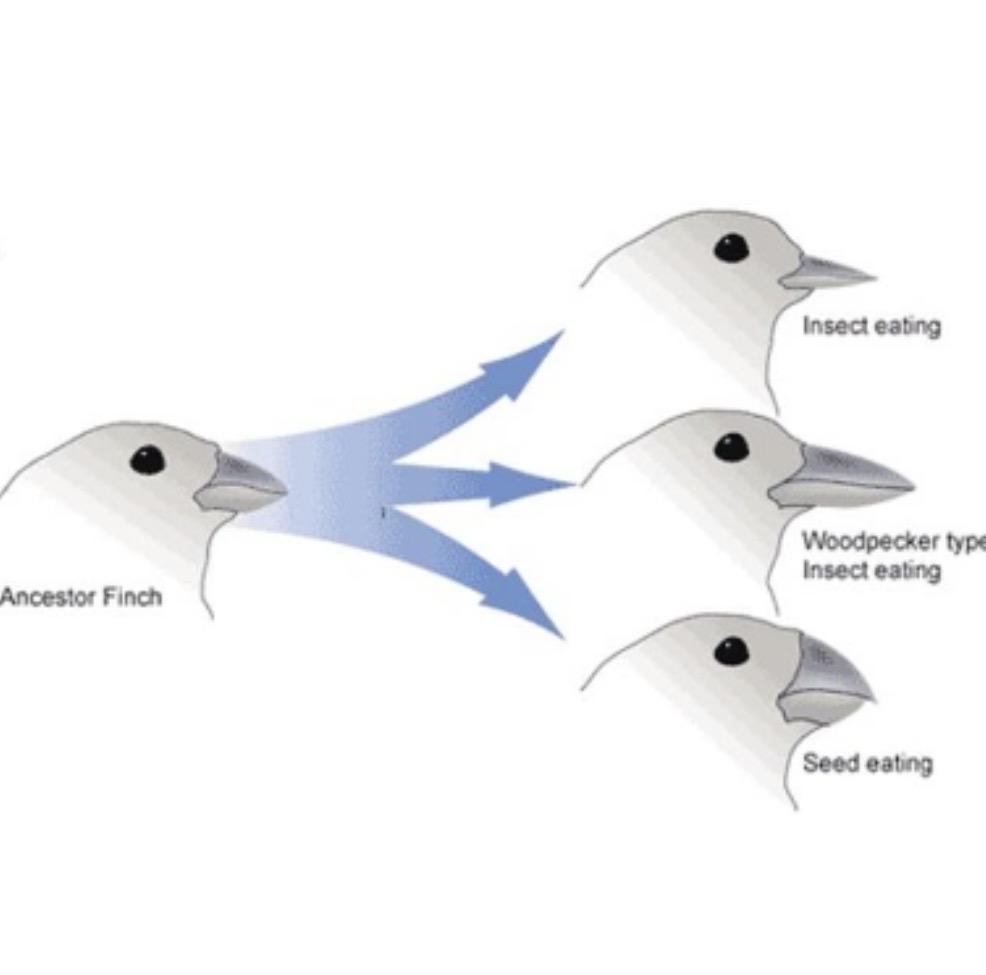
Which of the following is most associated with one species diverging into two species?
A. Reproductive isolation
B. Increased gene flow
C. Environmental change
D. Sexual selection
E. Bottleneck effect
A
What should be the expected result if a mouse fetus has only paternal imprints?
A. Larger fetus than normal
B. Smaller fetus than normal
C. No change in fetal size
A
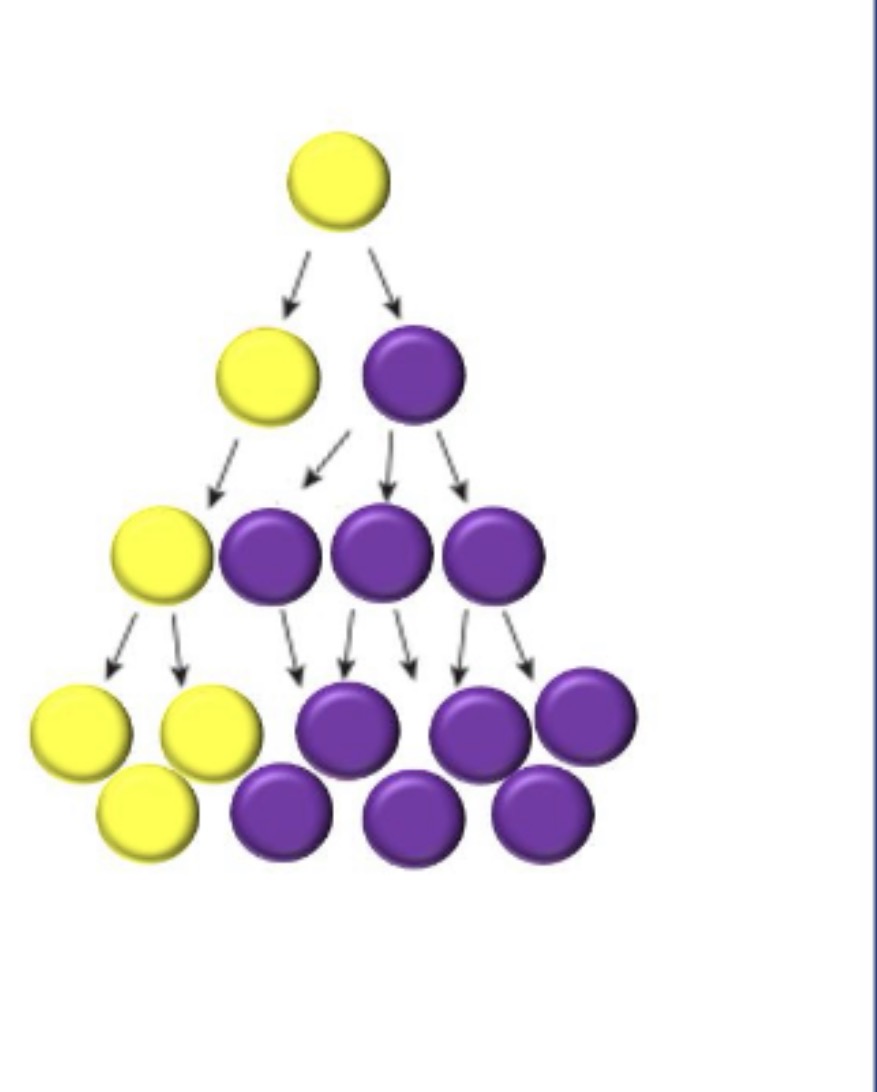
What should be the expected result if a cell in the body began to reproduce faster than other cells?
A. That cell type would become overrepresented in the body
B. The body would be killed
C. Both
C

