Physics - Magnetism & electromagnetism
 Call Kai
 Learn
Learn Practice Test
 Spaced Repetition
 Match
Match Flashcards
 Knowt Play
1/99

There's no tags or description
Looks like no tags are added yet.
Name | Mastery | Learn | Test | Matching | Spaced | Call with Kai |
|---|
No analytics yet
Send a link to your students to track their progress
100 Terms
What is a magnet?
any material or object that produces a magnetic field
What are the magnetic metals?
iron, steel, cobalt, nickel
What are the magnetic poles?
north and south
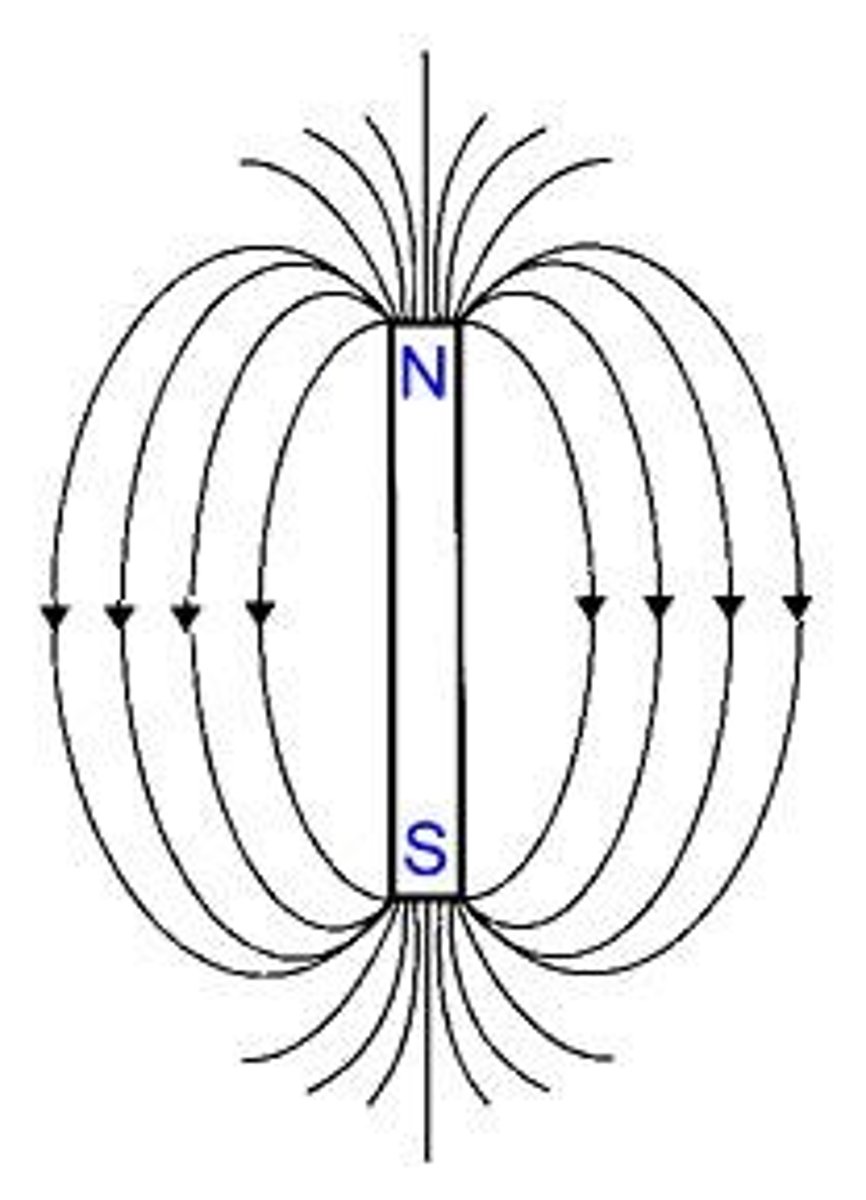
What are the rules of magnetism?
Opposite poles attract, like poles repel
What happens if you cut a magnet in half?
You get two smaller magnets, each piece still has a north and south pole.
What are magnetic fields?
The invisible region surrounding a magnet or current-carrying conductor, where magnetic materials experience a non-contact force
What is magnetism?
The force of attraction or repulsion of magnetic materials
What is a current-carrying conductor?
any material—typically a metal wire or bar—through which an electric current flows, generating a magnetic field around it
Why are magnetic fields generated by electric currents?
because moving electric charges (electrons) fundamentally produce them
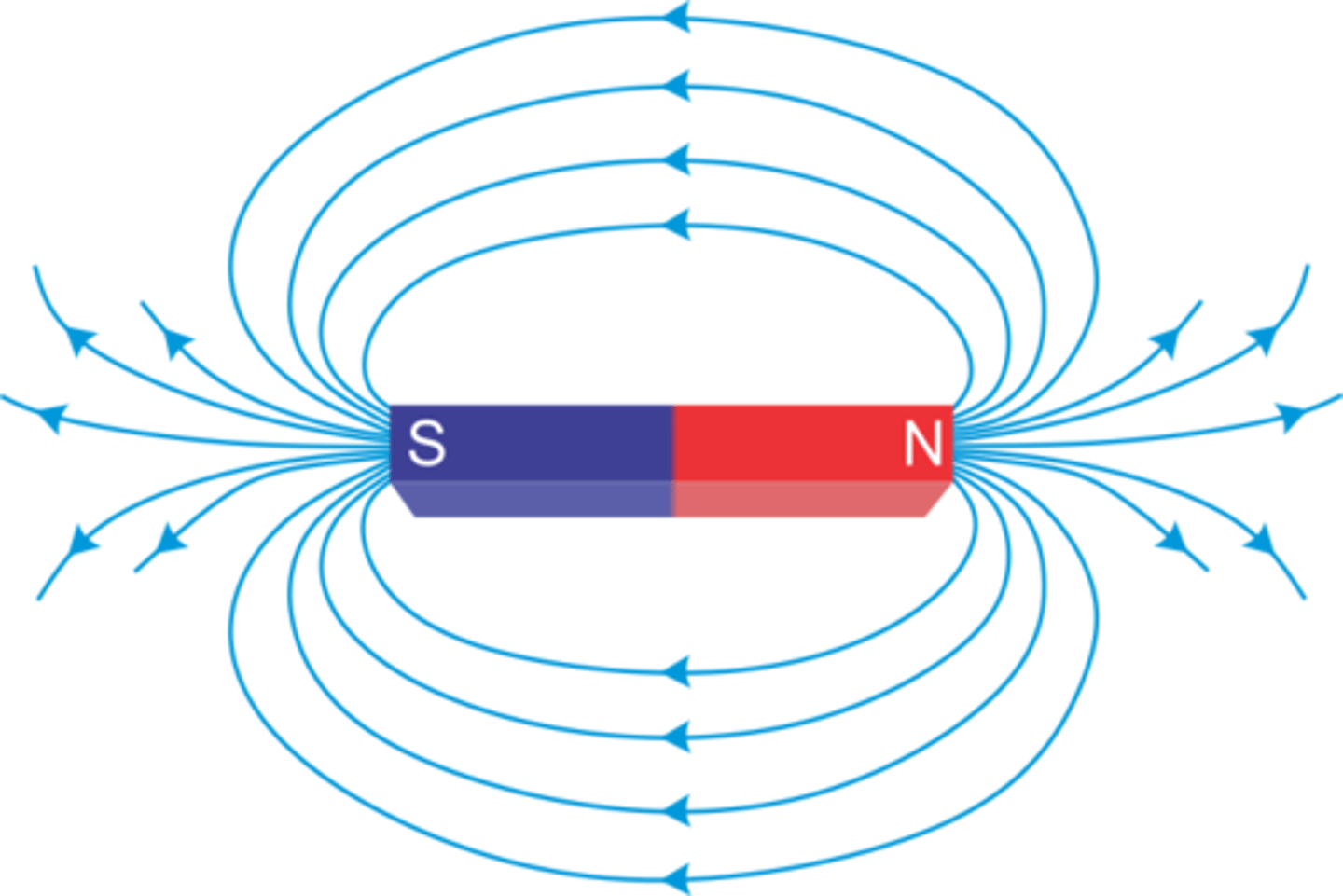
What are magnetic field lines?
imaginary lines used to visualize the strength and direction of a magnetic field around a magnet or current-carrying wire
What are magnetic fields created by?
permanent magnets, magnetic materials (iron, steel, cobalt, nickel), and moving electric charges, such as current flowing through a wire
What is the difference between magnetic and electric fields?
Electric fields are produced by stationary or moving charges and act on all charges, while magnetic fields are created only by moving charges (current) or permanent magnets
What do denser magnetic field lines mean?
a stronger magnetic field
What is the magnet inside the earth like?
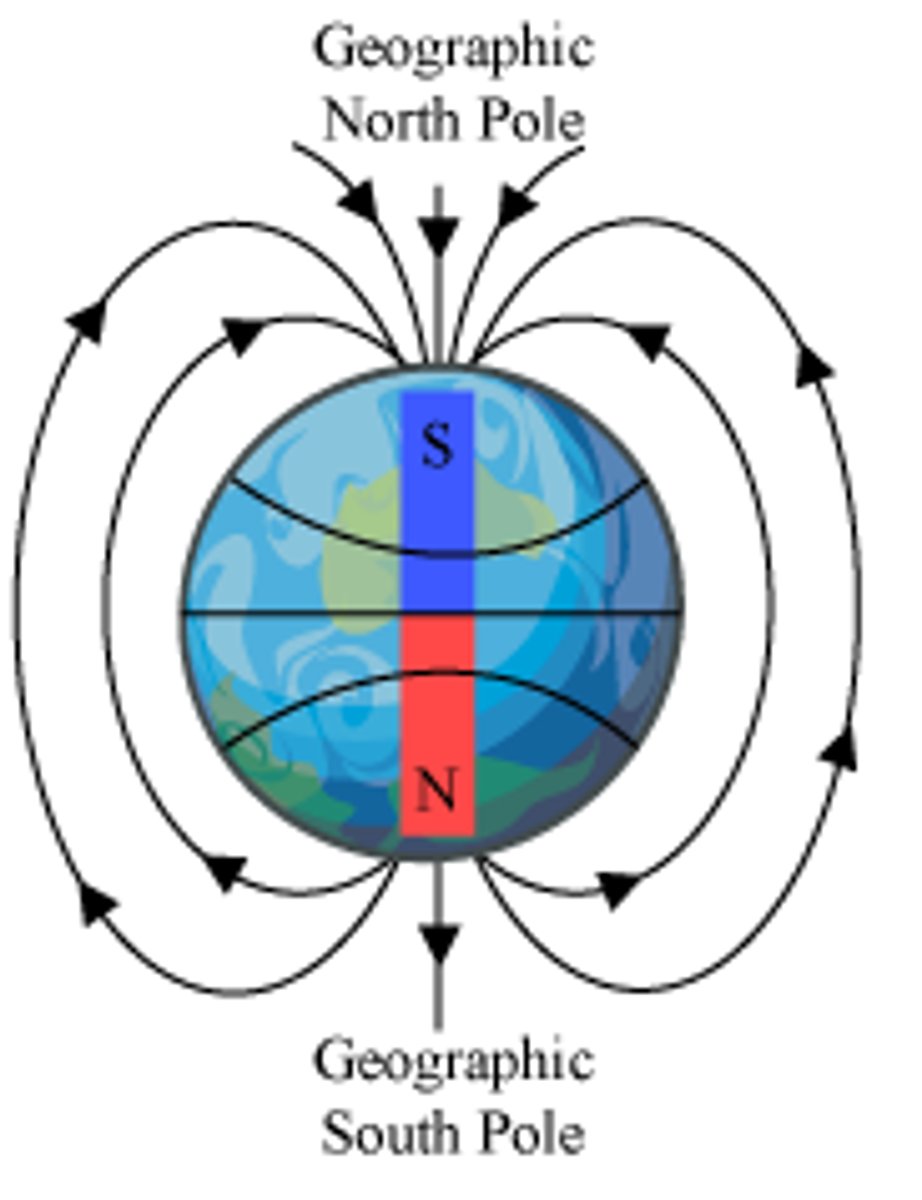
Why does the Earth have a magnetic field?
because its outer core contains molten iron and nickel, which move due to convection currents and the planet's rotation
How do compases work?
- by using a small, lightweight magnet (the needle) balanced on a pivot, allowing it to align with the Earth's magnetic field. - Because the Earth acts as a giant magnet, the compass's North-seeking pole is attracted to the Earth's magnetic South Pole, which is located near the geographic North Pole.
How do magnetic field lines travel?
from north to south
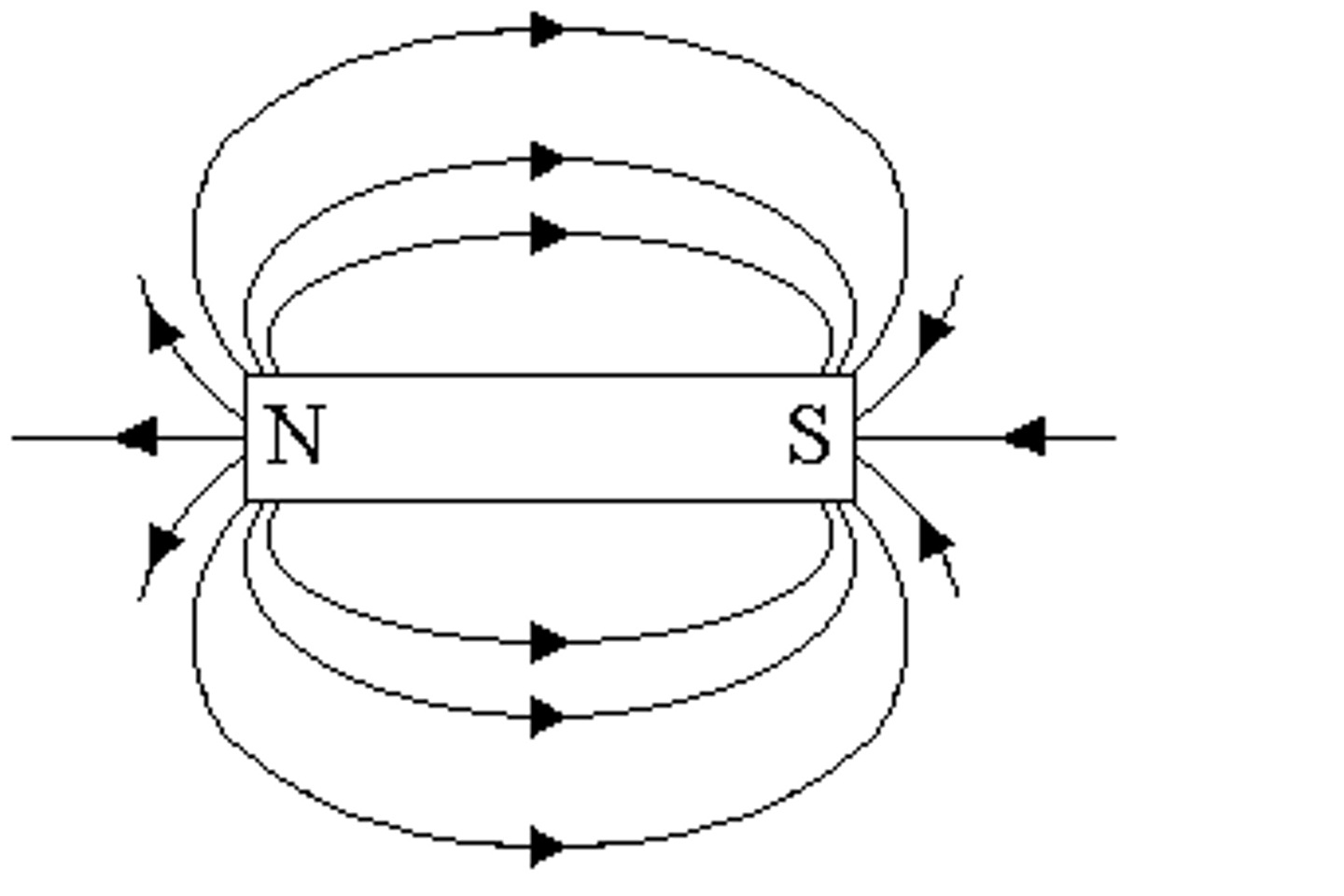
Why do field lines go from north to south?
to represent the direction a free north magnetic pole would be pushed
What is a permanent magnet?
A magnet that produces its own magnetic field
What is an induced magnet
- A material that becomes a magnet when it is placed in a magnetic field
- Only remain magnetic while in the field—lose magnetism when removed.
Example of an induced magnet
An iron nail placed near a magnet becomes temporarily magnetic.
What happens when an induced magnet is removed from a magnetic field?
it loses most or all of its magnetism because induced magnetism is temporary and dependent on the presence of a magnetic field
What happens when an electric current flows through a wire?
- it creates a magnetic field around the wire.
- The field forms circular lines around the wire.
- The direction of the field depends on the direction of the current.
What happens when current flows through a straight wire?
- A magnetic field forms in circles around the wire.
- The direction of the field depends on the direction of the current.
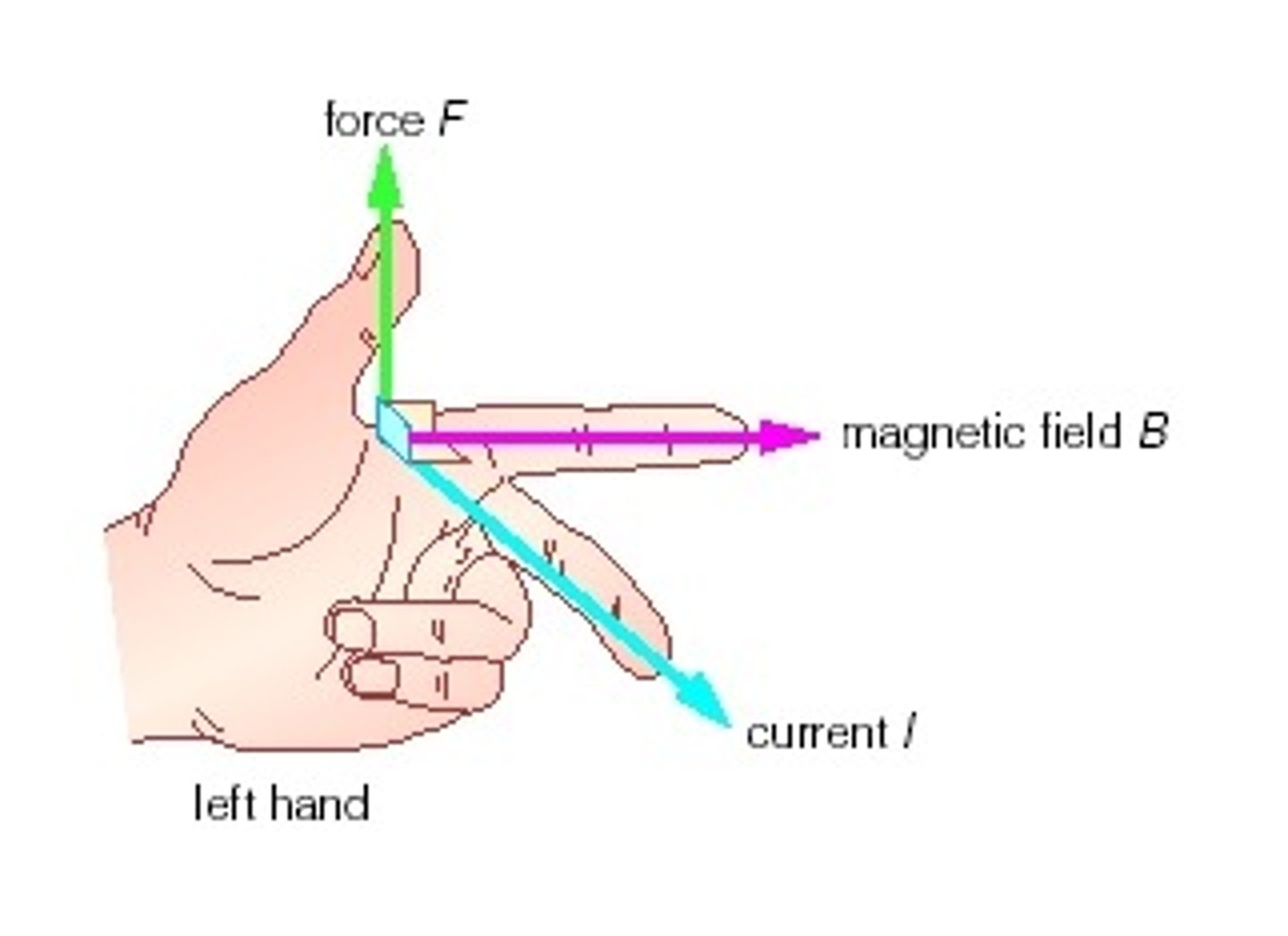
What is Fleming's left-hand rule?
Thumb - Force (movement)
First finger - Magnetic Field
Second finger - current
What is a solenoid?
A coil of current-carrying wire that produces a magnetic field
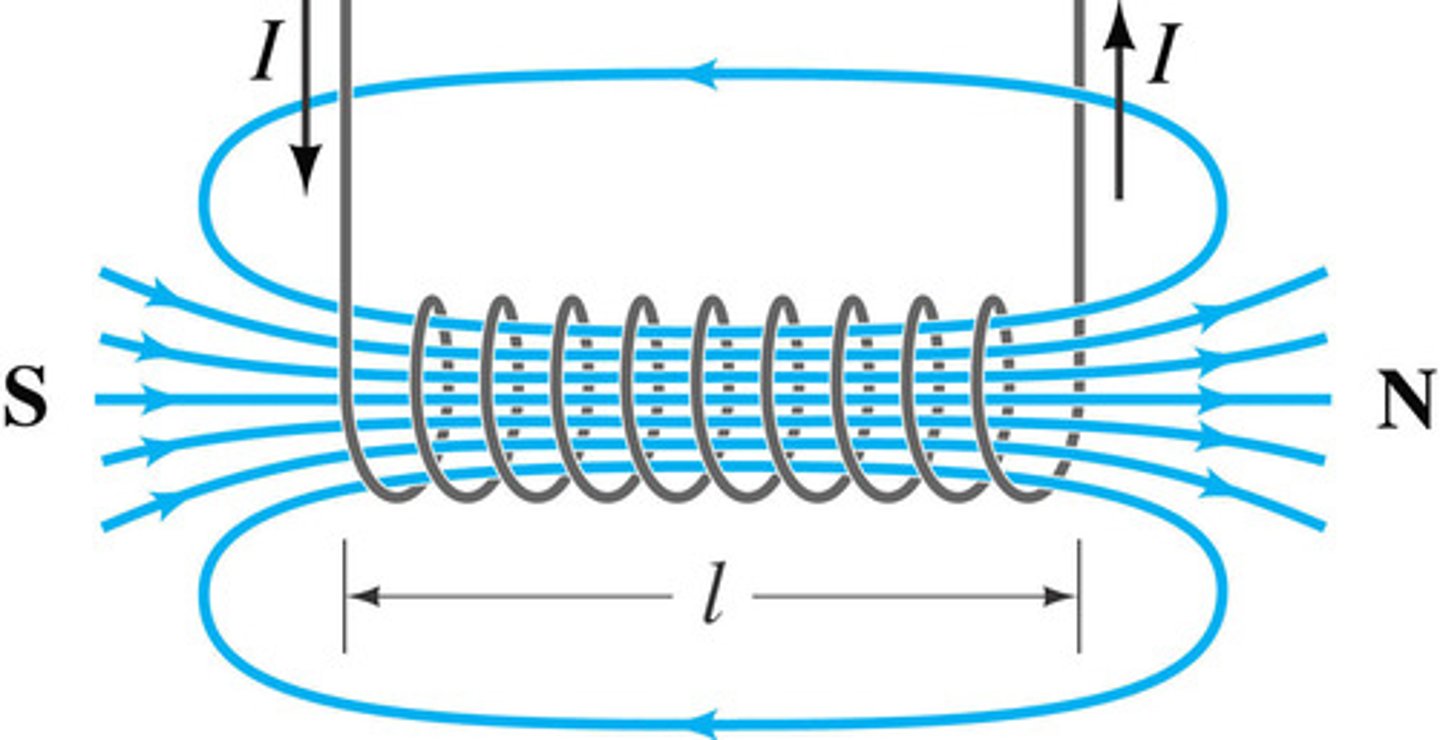
What are the magnetic field lines of a solenoid like?
The magnetic field produced by a solenoid is similar to the field of a bar magnet.
- One end of the solenoid acts like a north pole
- The other end acts like a south pole
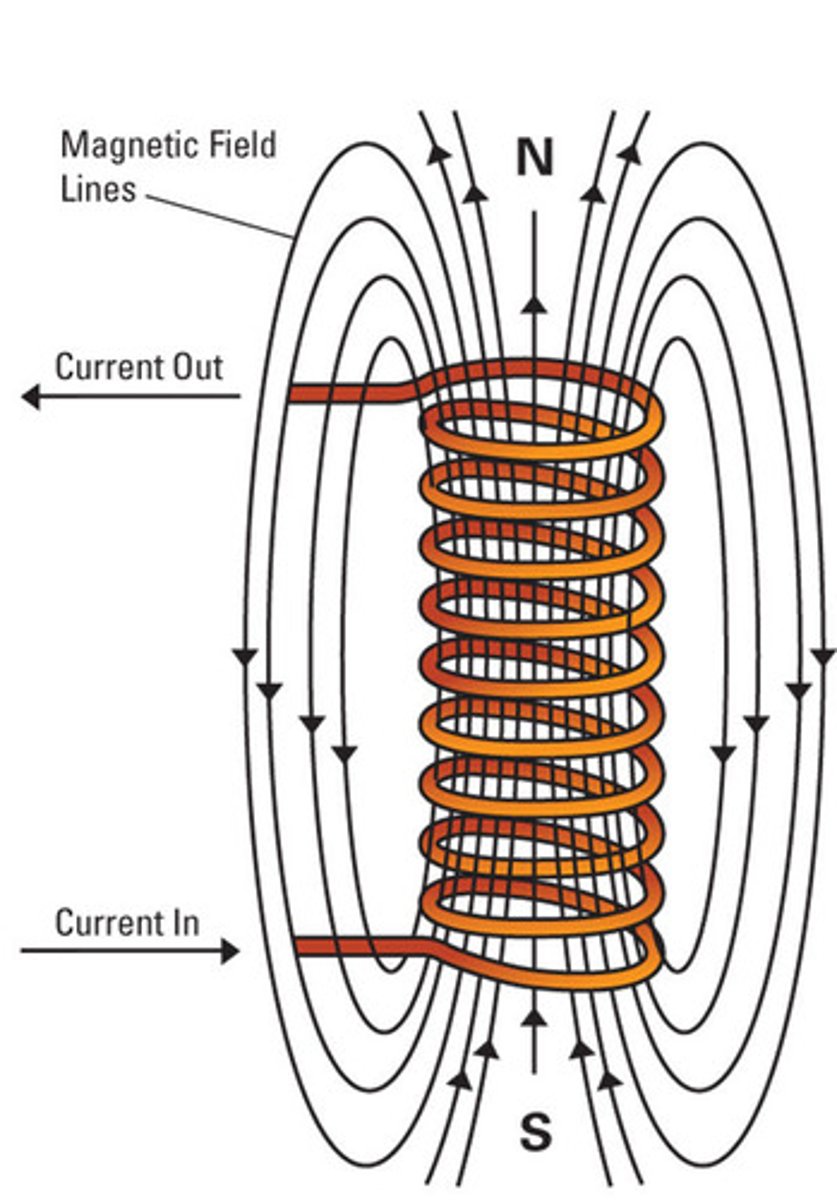
What is the magnetic field like inside a solenoid?
- The magnetic field is strong
- The field lines are straight and parallel, meaning the field is uniform
What is the magnetic field like outside a solenoid?
The field spreads out like it does around a bar magnet.
Why do solenoids have a stronger magnetic field than a straight wire?
they consist of multiple coils, allowing the magnetic fields from each turn to add together and align in the same direction
How does the magnetic field produced by a solenoid change?
- It increases if the current increases
- it reverses if the current reverses
What is the motor effect?
A force experienced by a current-carrying wire in a magnetic field
How can you increase the magnetic field strength of a solenoid?
By:
- Increasing the current
- Adding more coils of wire
- Using a soft iron core
What is an electromagnet?
- A solenoid with an iron core
- Adding the iron core increases the strength of the magnetic field
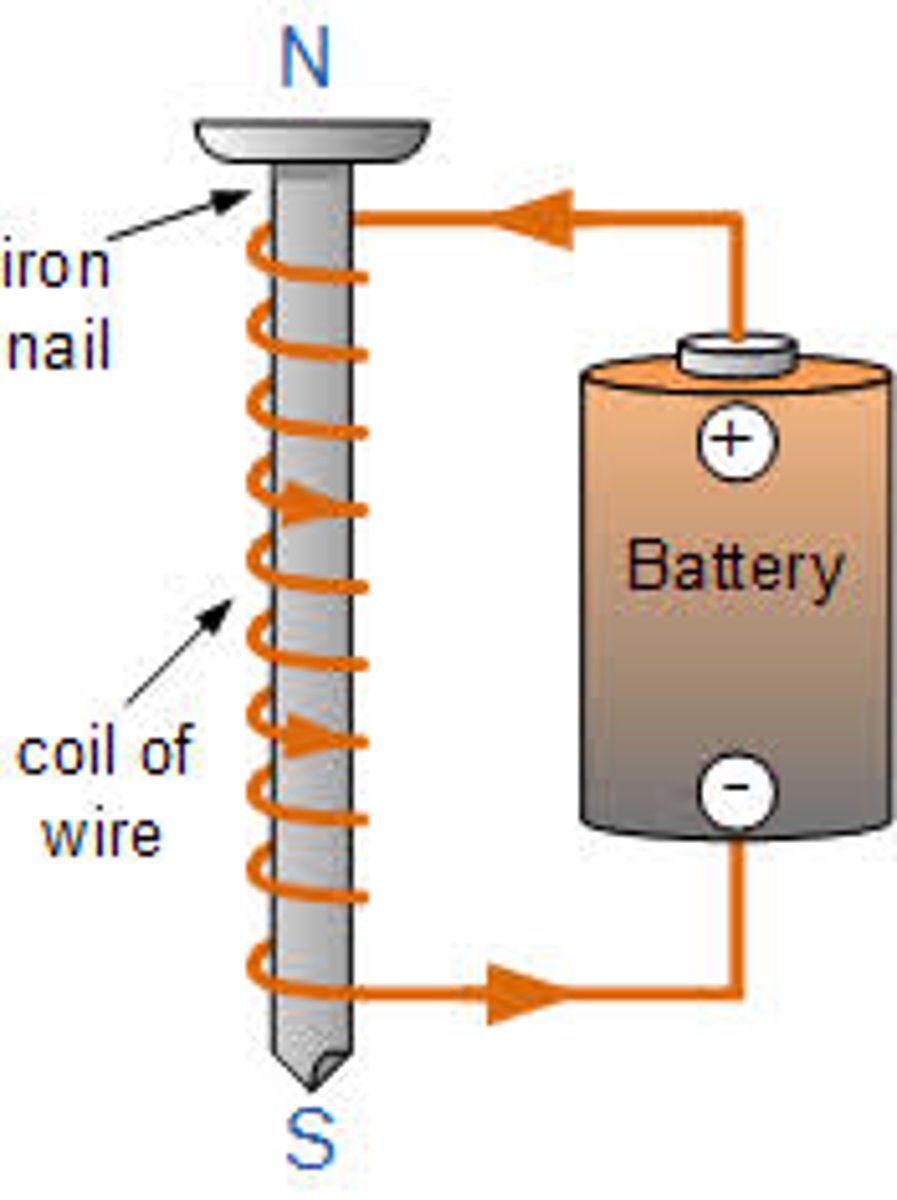
Why are electromagnets useful?
- They can be switched on and off
- Their strength can be changed
What are electromagnets used for?
- Electric motors
- Loudspeakers
- Scrap metal cranes
- Relays
- Generators (produce electricity)
- Transformers
How can electromagnets be switched on and off?
by controlling the flow of electric current through a coiled wire, typically using a switch, battery, or circuit breaker
How can the strength of an electromagnet be increased?
By:
- increasing the current
- increasing the number of coils
- by using a soft iron core
- by reducing the length
Why is iron used in electromagnets?
- because it is a soft magnetic material, meaning it easily becomes a powerful induced magnet when current flows, amplifying the magnetic field.
- it loses its magnetism instantly when the current is turned off, allowing the magnet to be switched on and off.
Why does increasing the number of coils increase the magnetic field?
because the magnetic fields produced by each individual loop of wire add together
Why does increasing the current increase the magnetic field?
- because magnetic field strength is directly proportional to the amount of current flowing through a conductor
- A larger current means there are more moving charges per second, which increases the magnetic field effect surrounding the wire
Why does reducing the length of the core increase the magnetic field?
- because it increases the number of turns per unit length
- then the magnetic fields produced by each individual loop of wire add together
How are electromagnets used in scrap yard cranes?
1. Electric current flows through a coil around an iron core.
2. This creates a strong electromagnet.
3. The magnet attracts metal objects like cars or steel.
4. When the current is switched off, the magnetism disappears and the metal drops.
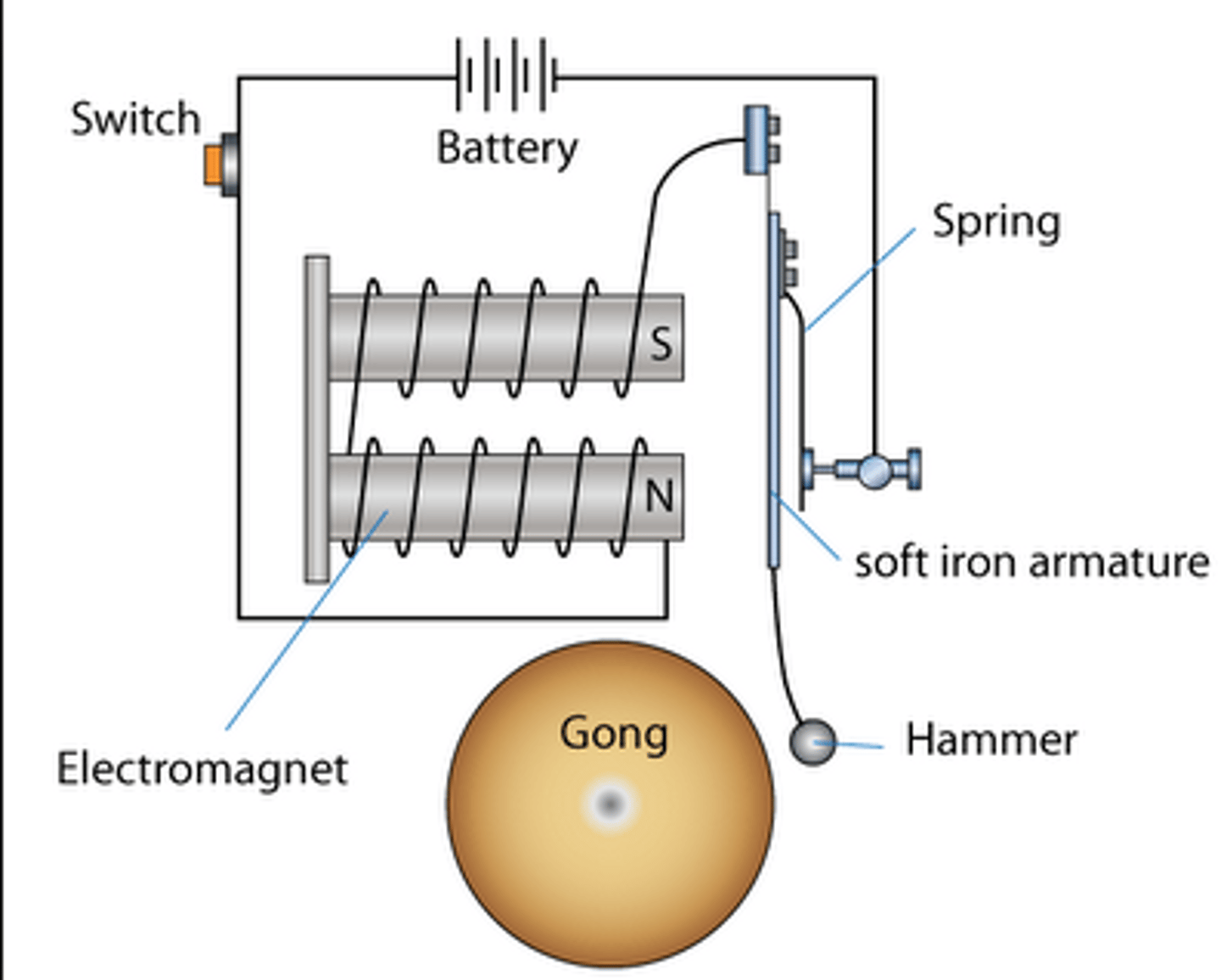
How are electromagnets used in electric bells and doorbells?
1. Pressing the button closes the circuit and allows current to flow through an electromagnet.
2. The electromagnet attracts and pulls a metal arm with a hammer.
3. The hammer hits the bell.
4. This breaks the circuit, switching off the electromagnet, then it reconnects repeatedly, causing the bell to ring continuously.
What are relays?
A switch turned on and off by an electromagnet
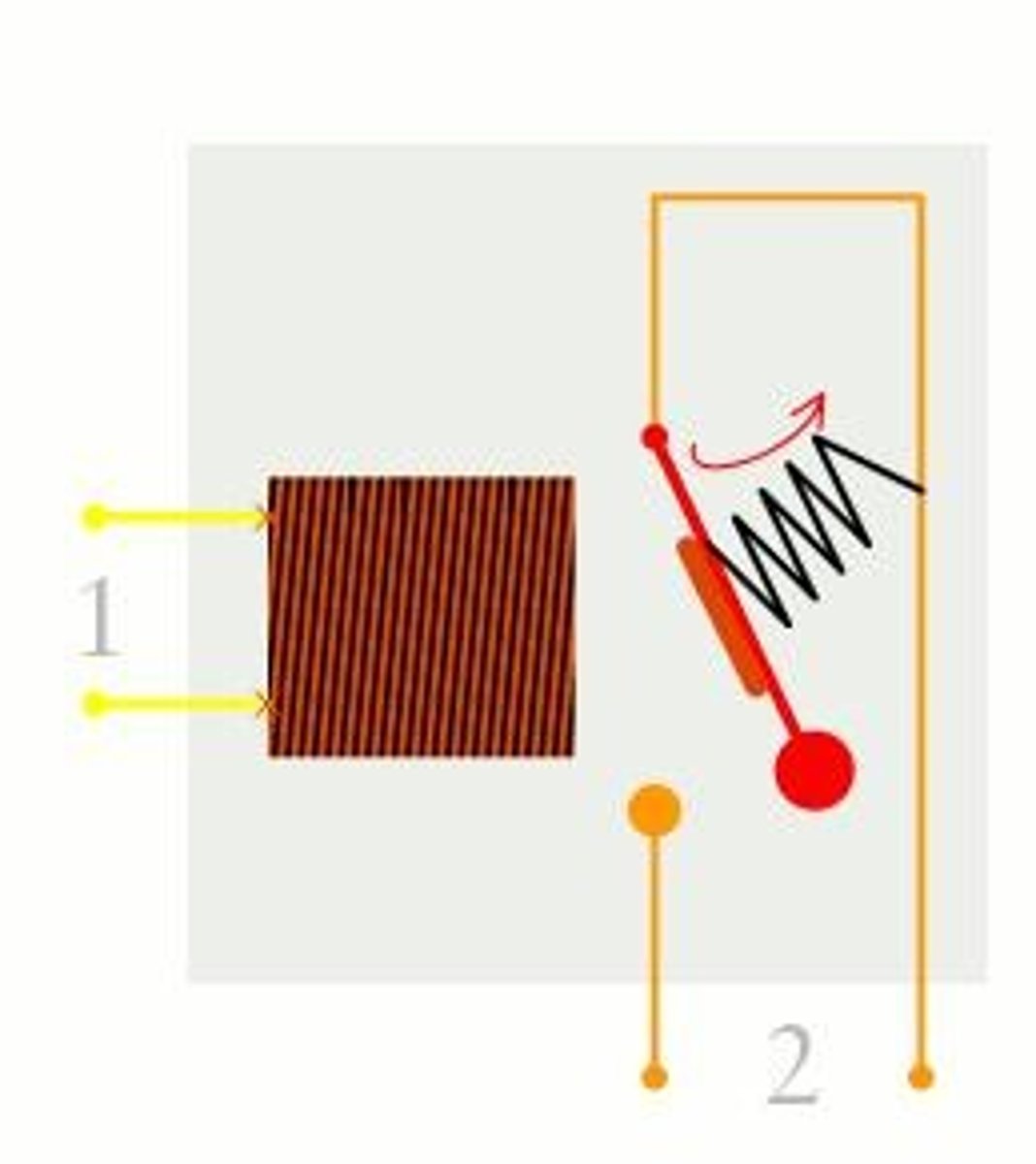
How are electromagnets used in relays?
1. A small current flows through the electromagnet.
2. The electromagnet pulls a switch closed.
3. This allows a larger current to flow in another circuit.
What are relays used in?
- Car electronics
- Industrial machines
- Control systems
How are electromagnets used in circuit breakers?
- In a circuit breaker, too great a current makes the electromagnet open a switch, which cuts off the current. The switch then needs to be reset manually
What are electromagnetic fields?
an invisible, physical field of energy surrounding electrically charged objects, combining both electric and magnetic forces.
What causes the motor effect?
- the interaction between two magnetic fields
- one from the external magnetic field (from a magnet) and the other from the magnetic field produced by an electric current flowing through a wire
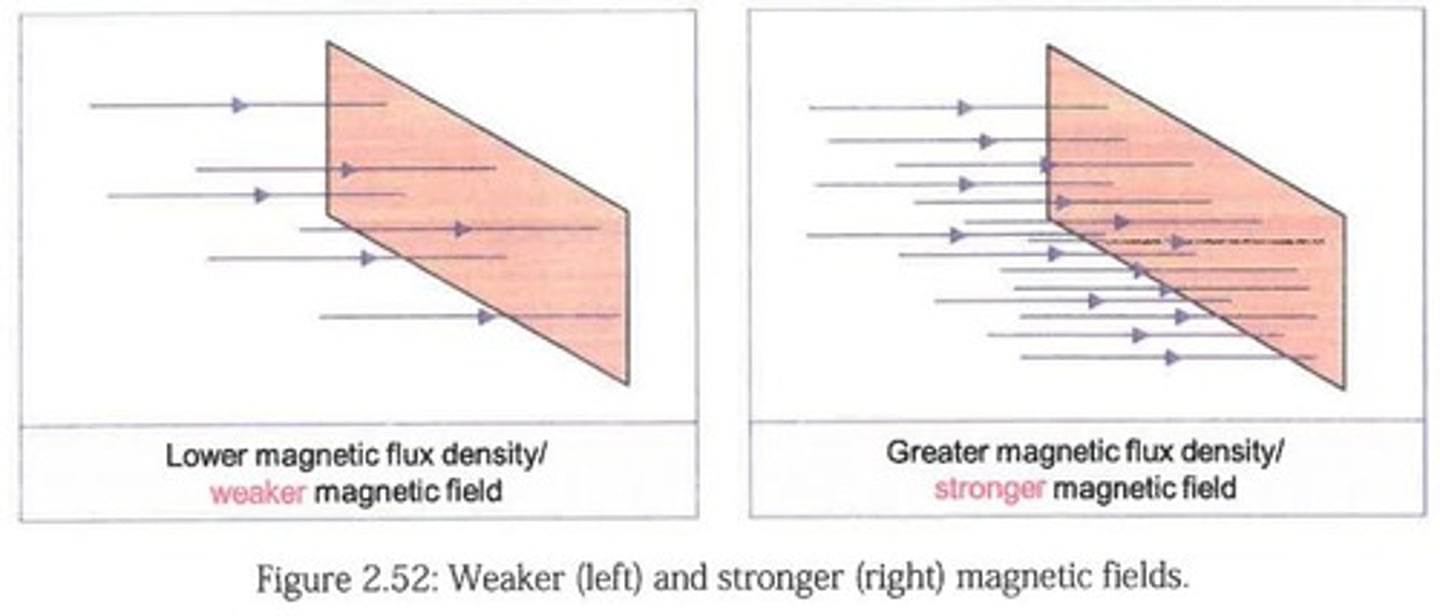
What is magnetic flux density?
- a vector quantity representing the strength and direction of a magnetic field
- It measures how concentrated the field is, with stronger fields having higher density (closer lines)
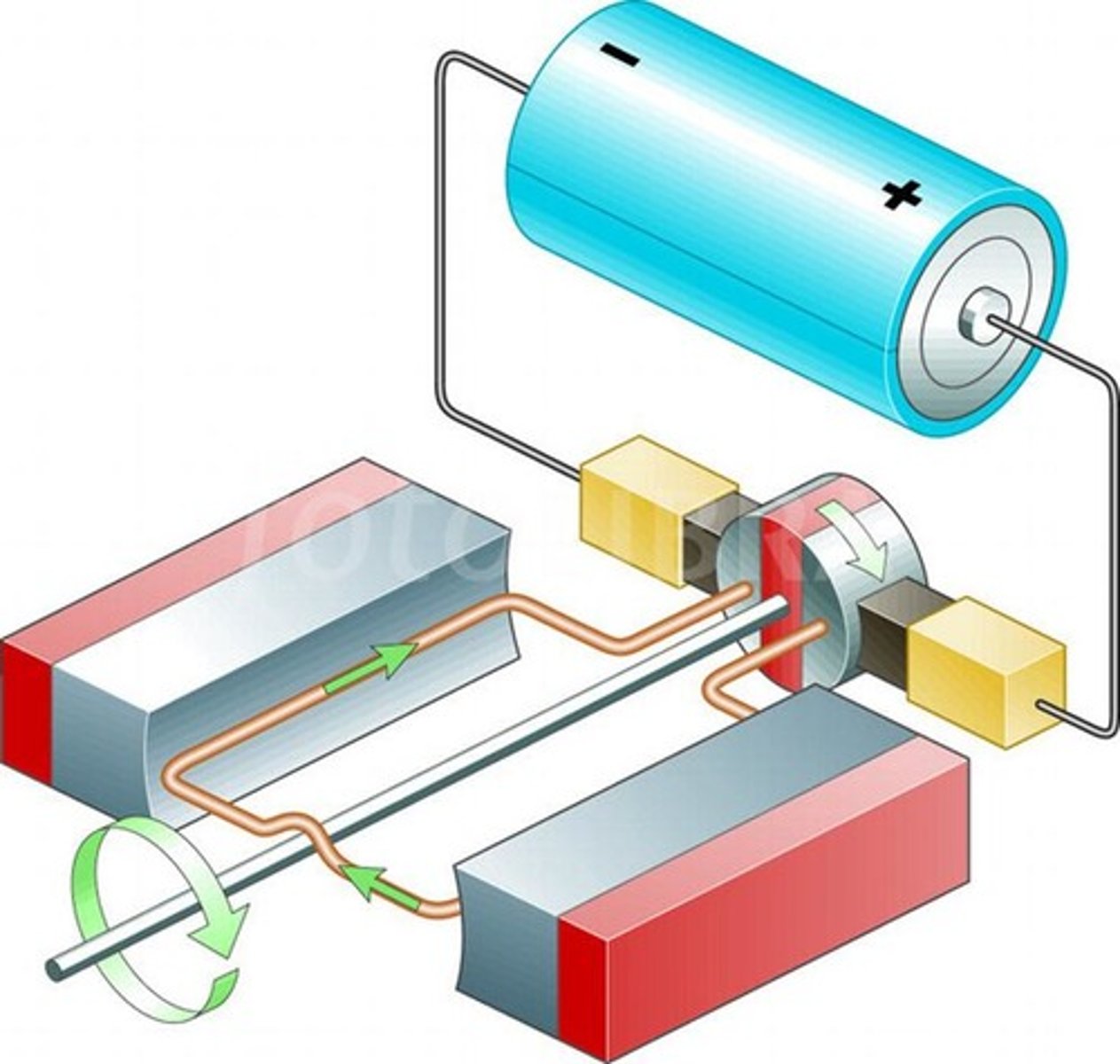
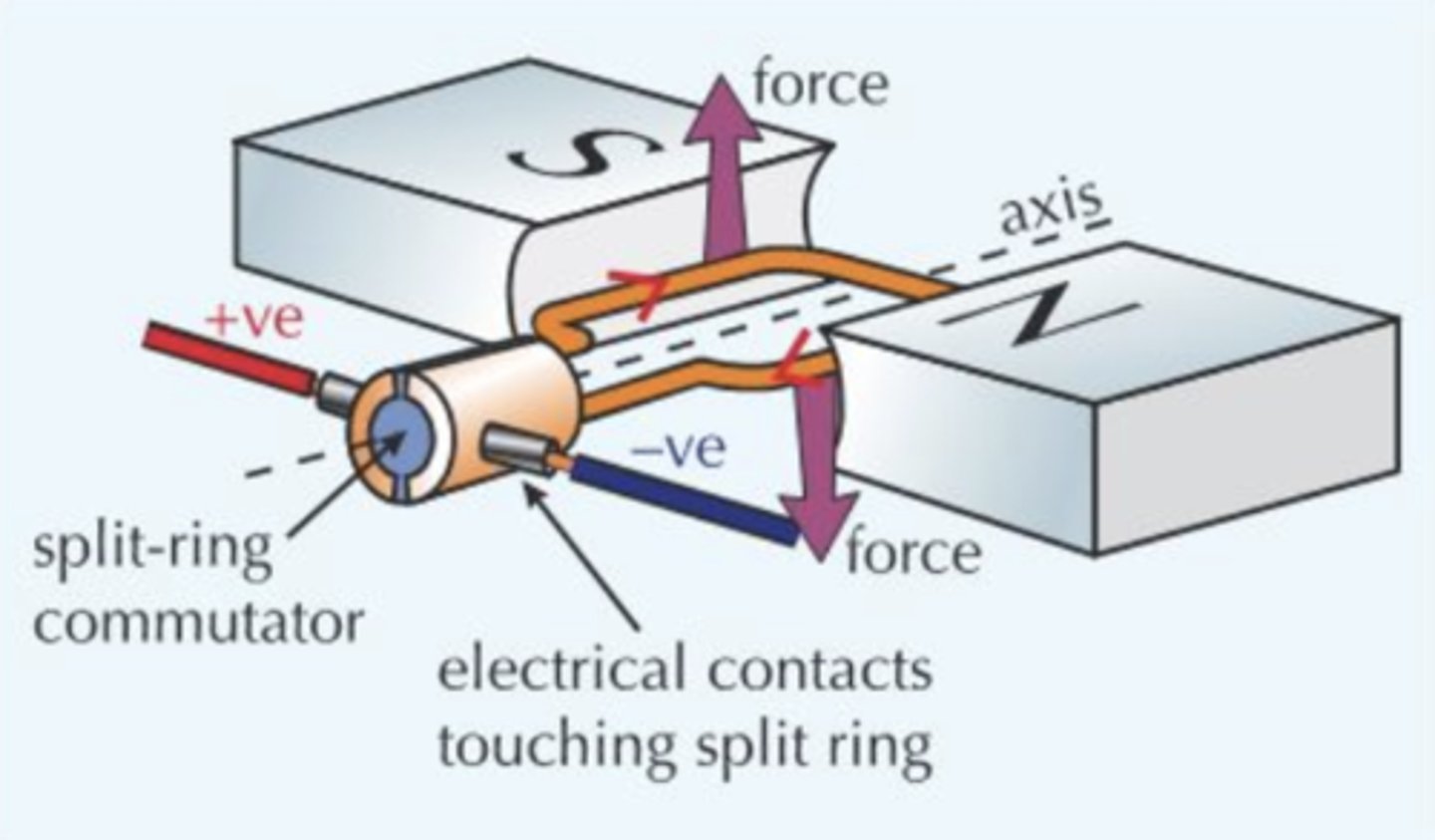
How do electric motors work?
1. Current flows through a coil inside a magnetic field.
2. The coil becomes an electromagnet.
3. Forces between magnetic fields cause the coil to rotate.
4. This rotation turns parts of machines like fans or washing machines
Formula for magnetic flux density?
Force = Magnetic flux density x Current x Length of the wire
Why does the motor effect happen?
1. A wire carrying an electric current produces its own magnetic field.
2. When this field interacts with the magnetic field of a magnet, the fields push against each other.
3. This interaction creates a force on the wire, causing it to move.
- This is how electric motors turn electrical energy into movement.
What factors affect the motor effect?
The force becomes stronger if:
- The current is increased
- The magnetic field is stronger
- The length of the wire in the magnetic field increases
- The force is strongest (maximum) when the wire is placed at 90 degrees to the magnetic field lines, and vanishes if they are parallel
Why does the motor effect increase when the current increases?
- A higher current produces a stronger magnetic field around the wire.
- This stronger field interacts more intensely with the permanent magnetic field, resulting in a larger force
Why does the motor effect increase when the magnetic field is stronger?
because the force is directly proportional to the magnetic flux density
Why does the motor effect increase when the length of the wire increases?
- more length means more electrons are flowing through the magnetic field, allowing for a greater, more intense interaction between the magnetic field of the wire and the permanent magnet's field
Why is the force is strongest when the wire is placed at 90 degrees to the magnetic field lines?
because the interaction between the wire's magnetic field and the external field is maximised
What is the direction of the force in an electromagnet?
is perpendicular (at a 90-degree angle) to both the direction of the electric current and the direction of the magnetic field
What is the right-hand rule?
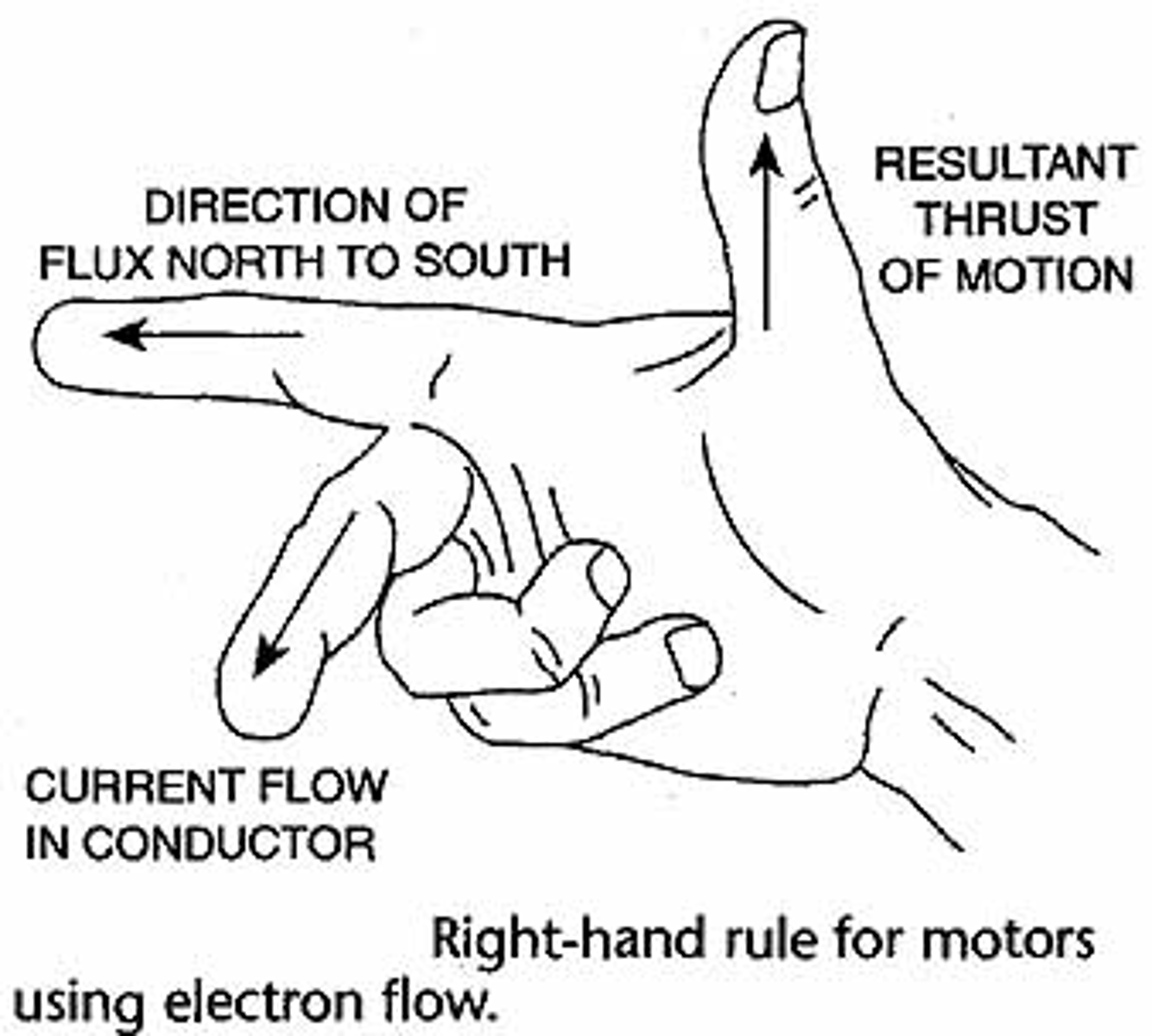
What are electric motors used for?
- Fans
- Washing machines
- Electric cars
- Power tools
In these devices, the motor effect causes coils of wire to rotate, producing movement.
What causes the direction of the force to reverse?
If the direction of current or magnetic field reverses
Why does the wire move in a motor?
A current in a wire creates its own magnetic field. When this field interacts with the magnetic field from a magnet, the fields push against each other, producing a force on the wire.
What is electromagnetism?
the magnetic field produced around a current-carrying conductor (wire) and its applications
What is the generator effect?
the production of a potential difference (voltage) when a conductor, like a wire, moves through a magnetic field and cuts magnetic field lines
What does the moter effect explain?
it explains how electricity can produce motion
What is magnetic induction?
the generator effect
What does the generator effect explain?
It explains how movement can produce electricity.
How does the generator effect work?
- a conductor (like a wire or coil) placed between the poles of a magnet.
- When the wire moves through the magnetic field, it cuts across the magnetic field lines.
- The magnetic field exerts a force on the electrons in the wire, pushing them in one direction.
- This movement of electrons creates a potential difference (voltage) across the wire.
- If the wire is part of a complete circuit, the electrons flow, creating an electric current.
How can the induced voltage be increased in the generator effect?
- Moving the wire faster.
- Using a stronger magnetic field.
- Using more turns of wire in a coil.
How does increasing number of turns on the coil of the wire increase induced potential difference?
A coil with more turns of wire (or using a larger coil) ensures that more wire cuts the field lines, which increases the overall voltage.
How does a stronger magnet increase induced potential difference?
Using stronger magnets creates more magnetic field lines to be cut, resulting in a higher induced voltage.
How does faster movement increase induced potential difference?
Moving the wire or magnet faster increases the rate of change of the magnetic field, which increases the voltage.
How can you reverse the current in the generator effect?
by reversing the direction of movement (e.g., moving a magnet out of a coil instead of in) or by reversing the magnetic field polarity (swapping the north and south poles)
How can you produce an alternating current in the generator effect?
by rotating a coil of wire within a magnetic field or by rotating a magnet inside a coil
What are the main parts of an alternator?
- Coil of wire
- Magnets (provide magnetic field)
- Slip rings (allow continuous rotation while connected to the circuit)
- Brushes (transfer current to the external circuit)
What are transformers?
A transformer is an electrical device that changes the voltage of an AC supply.
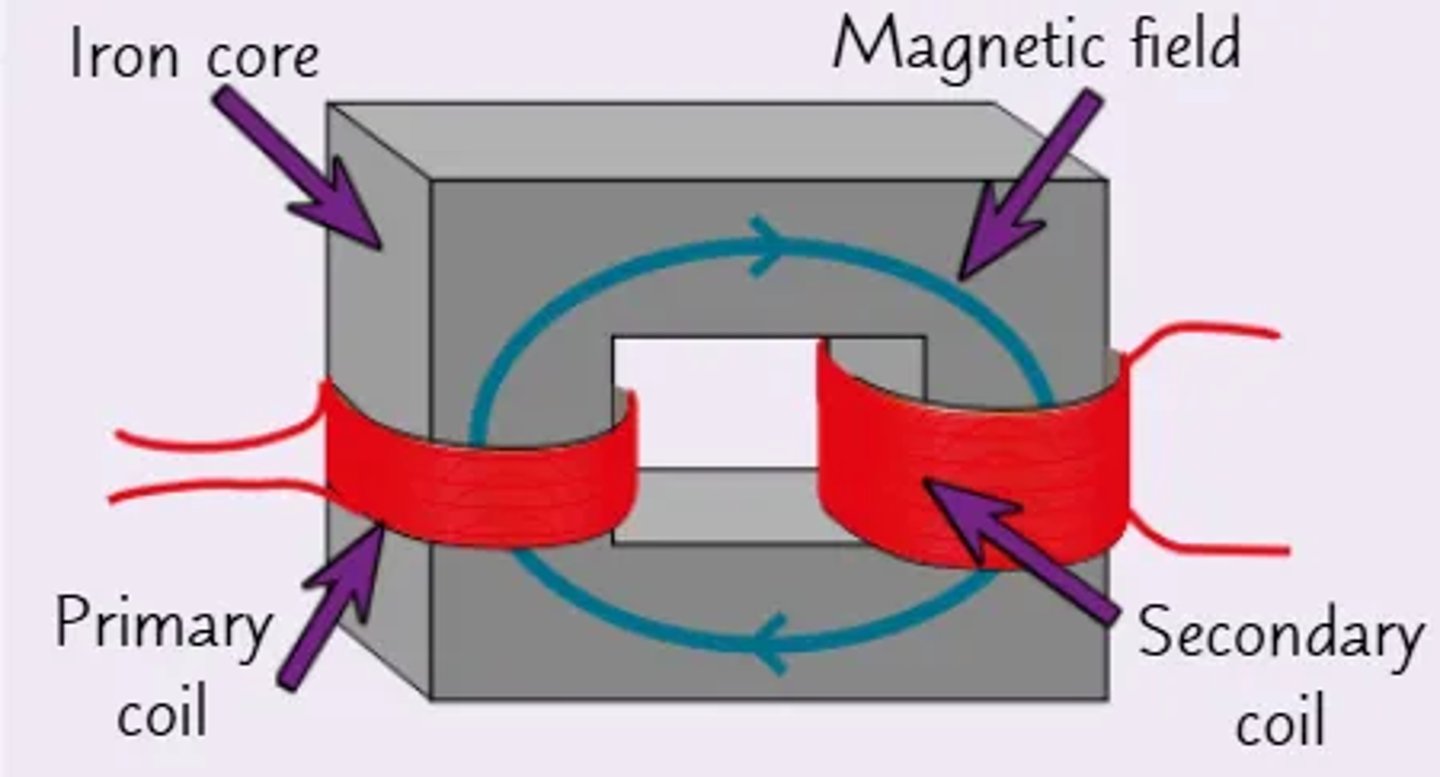
What is a step-up transformer?
- Increases the voltage.
- Less coils on the primary coil.
What is a step-down transformer?
- Decreases the voltage.
- Less coils on the secondary coil.
What is the primary coil of a transformer?
the input coil of a transformer, connected to the alternating current (a.c.) power supply
What is the secondary coil of a transformer?
The output coil where an alternating voltage is induced
How do transformers work?
- When alternating current flows in the primary coil, it creates a changing magnetic field.
- This changing magnetic field passes through the iron core to the secondary coil.
- The changing magnetic field induces a voltage in the secondary coil
- The size of the voltage depends on the number of turns in each coil.
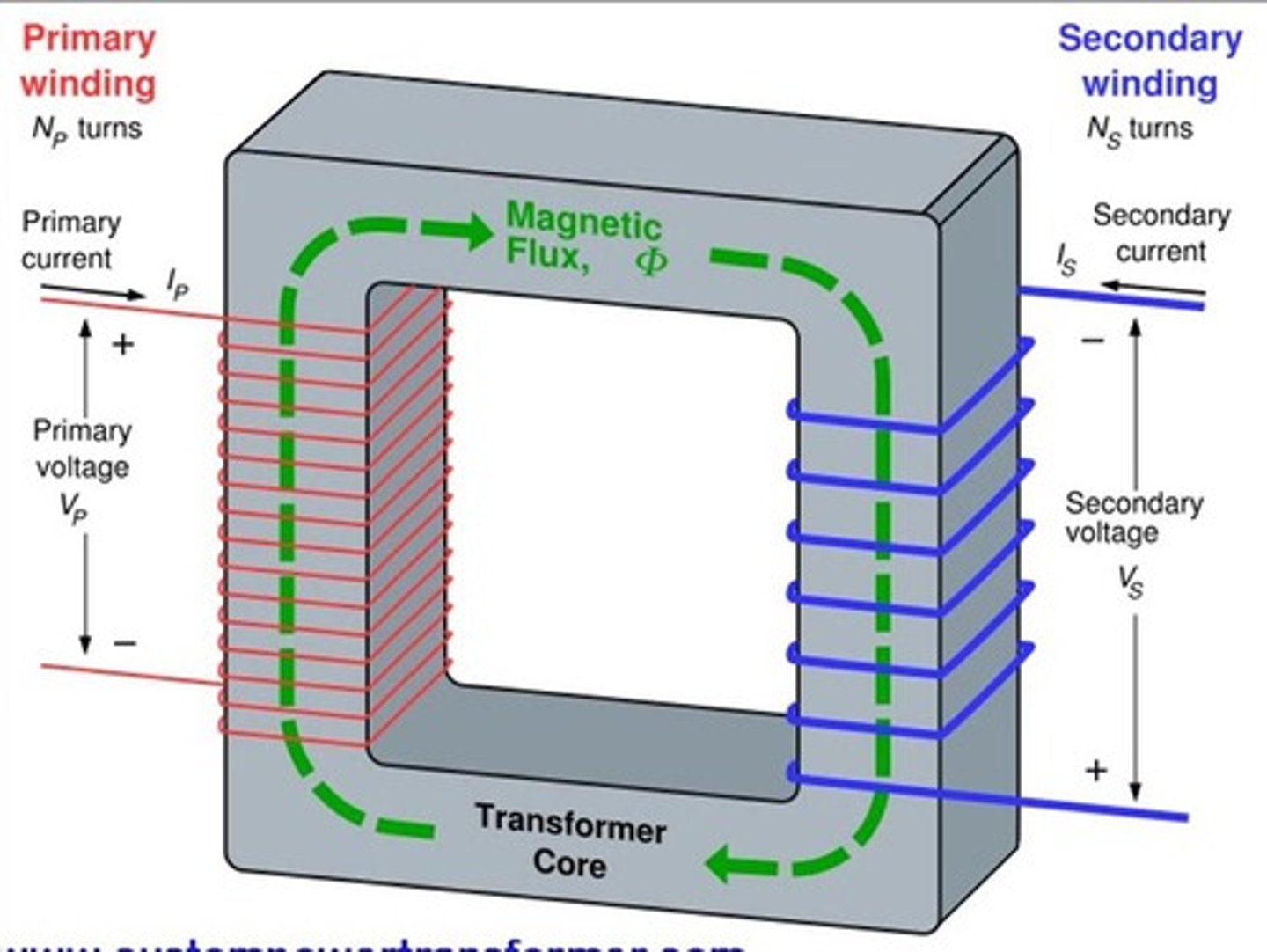
Why is a voltage induced in a transformer?
- because an alternating current (AC) in the primary coil creates a continuously changing magnetic field
- this induces a voltage because it forces free electrons within a conductor to move, creating a separation of charge
How do transformers change voltage?
Transformers change the voltage of alternating current (AC) using electromagnetic induction
What is electromagnetic induction?
The production of a potential difference (voltage) across a conductor when it interacts with a varying magnetic field
What is the difference between step-up and step-down transformers?
- Step- ups have more turns in the secondary coil leading to a higher voltage
- step-downs have fewer turns in the secondary coil leading to lower voltage
Why do step-up transformers have more turns on the secondary coil?
- The primary coil creates a changing magnetic field
- This magnetic field passes through the secondary coil
- Each turn of wire in the secondary coil experiences the changing magnetic field
- If the secondary coil has more turns, it "cuts" the magnetic field more times
- This produces a larger voltage
Why do transformers only work with AC?
because they rely on electromagnetic induction, which requires a constantly changing magnetic field to induce a voltage in the secondary coil
Why are the coils wrapped around an iron core in transformers?
- to efficiently transfer a changing magnetic field from the primary to the secondary coil
What is a dynamo?
An electrical generator that converts mechanical energy (movement) into direct current (DC) electricity using electromagnetism
How do dynamos work?
- The dynamo has a wire (or coil) placed between magnets.
- The wire is turned, and it cuts through the magnetic field
- This produces a voltage, and if the circuit is complete, current flows
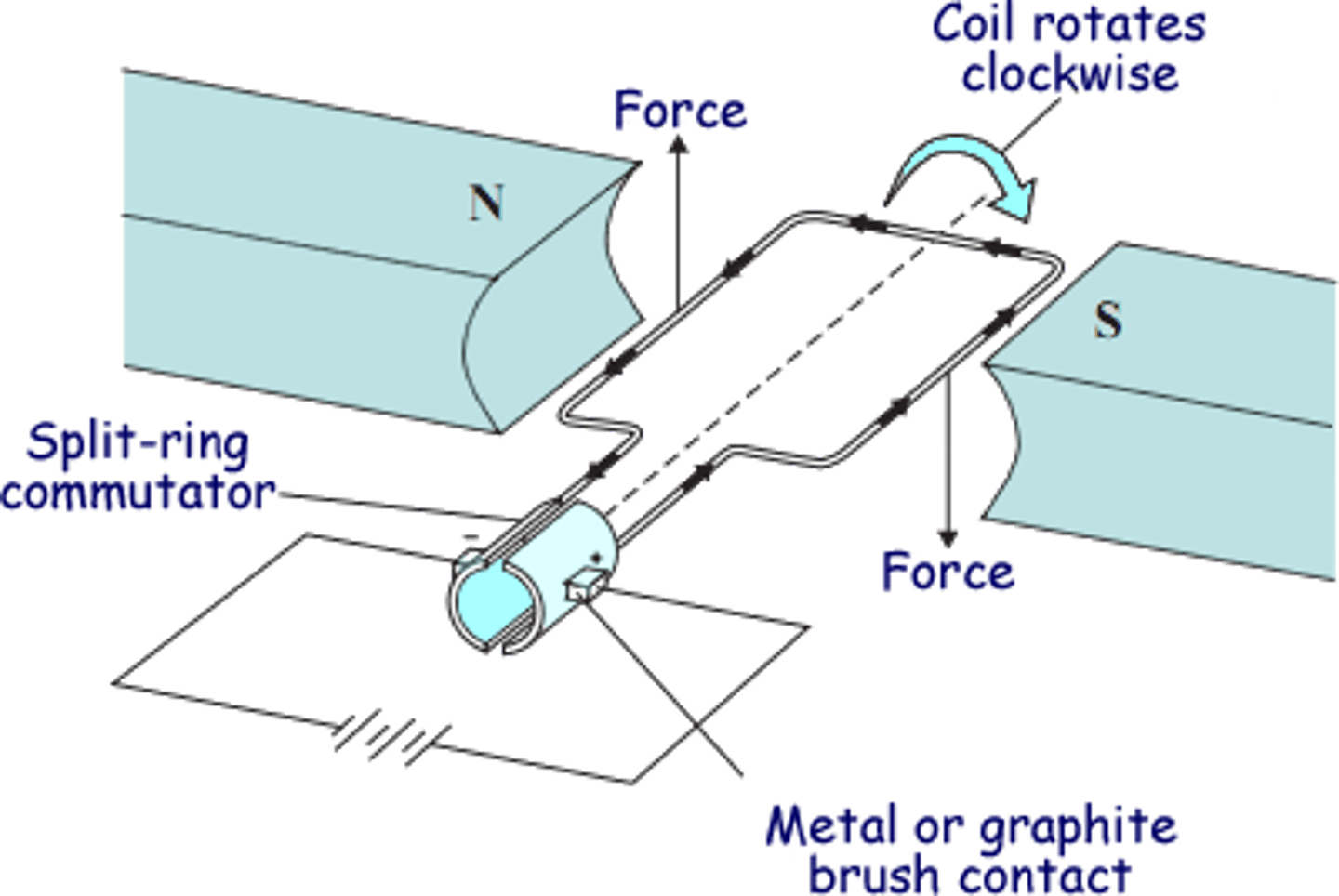
Why don't dynamos produce AC?
A dynamo has a split-ring commutator, which:
- Reverses the connections every half turn
- Keeps the current flowing in one direction
- So instead of alternating, the current becomes direct current (DC).
Example of dynamos being used
- Bicycle lights use dynamos
- When the wheel spins → the dynamo spins → electricity is produced → the light turns on
What is an alternator?
an alternating current generator that converts mechanical energy into electrical energy
How do alternators work?
1. A coil is placed in a magnetic field. The coil sits between the north and south poles of a magnet.
2. The coil is rotated It is spun by something like a turbine (wind, water, steam).
3. The coil cuts through magnetic field lines
4. due to the generator effect — electrons are pushed in the wire.
- Every half turn, the direction of motion reverses so the current also reverses.
How do loudspeakers work?
1. A coil of wire is placed in a magnetic field
2. When an alternating current (from music, for example) flows through the coil, a force is produced on the coil due to the motor effect
3. The direction of the force changes as the current changes direction so the coil moves back and forth
4. The coil is attached to a cone, so the cone also vibrates
5. These vibrations push air particles, creating sound waves
- Faster vibrations → higher pitch
- Bigger vibrations → louder sound
How do microphones work?
1. Sound waves hit and cause a diaphragm to vibrate
2. The diaphragm is attached to a coil placed in a magnetic field
3. As the coil moves, it cuts through the magnetic field lines
4. This induces a voltage in the coil
5. The changing movement produces an alternating current that matches the sound waves
How do electric generators work?
In an Electric Generator:
- A coil of wire spins inside a magnetic field
- As it spins, different sides of the coil move in opposite directions
- This continuously induces a voltage
- The result is a flow of electricity
What does cutting magnetic field lines do?
it causes electromagnetic induction and induces a potential difference (voltage) across its ends

