Bio 2 Unit 3 Test
 Call Kai
 Learn
Learn Practice Test
 Spaced Repetition
 Match
Match Flashcards
 Knowt Play
1/224

Earn XP
Description and Tags
Consist information on Protists, Origin of Land Plants, Evolution of Seed Plants, and Fungi
Name | Mastery | Learn | Test | Matching | Spaced | Call with Kai |
|---|
No analytics yet
Send a link to your students to track their progress
225 Terms
Endosymbiosis theory
mitochondria and chloroplasts were formerly small independent prokaryotes that began living as symbionts within other larger cells
How did ancestors of mitochondria and chloroplasts likely enter their hosts?
As undigested prey
Ancestral acrchaean cell possessed what kind of features?
Eukaryotic-like
1st Eukaryotic-like Traits Ancestral Archaean Cells Possessed
Similar RNA
2nd Eukaryotic-like Traits Ancestral Archaean Cells Possessed
Histone proteins
3rd Eukaryotic-like Traits Ancestral Archaean Cells Possessed
Membrane transport proteins
1st Type of Endosymbiosis Evidence for Mitochondria & Chloroplasts
Inner membranes are similar to the plasma membranes of prokaryotes
2nd Type of Endosymbiosis Evidence for Mitochondria & Chloroplasts
Replicate independently of the cell
3rd Type of Endosymbiosis Evidence for Mitochondria & Chloroplasts
Contain their own circular DNA
Evolution of eukaryotic cells
allowed for a greater range of unicellular forms
1st Feature Eukaryotic Cells Have
Nucleus
2nd Feature Eukaryotic Cells Have
Membrane bound organelles
3rd Feature Eukaryotic Cells Have
Strands of DNA
4th Feature Eukaryotic Cells Have
May or may not have a cell wall, composition varies
Eukaryotic Asexual reproduction
Spores, budding, fragmentation – no mate needed
Eukaryotic Sexual Reproduction
Gametes (sperm & egg) must fuse to form a zygote
Do zygotes have genes that are exactly like the parents?
No, they are always genetically different
What is the cellularity of the oldest eukaryote fossil?
Singe-celled
1st Eukaryotic Supergroup
Excavata
2nd Eukaryotic Supergroup
SAR
3rd Eukaryotic Supergroup
Archaeplastida
4th Eukaryotic Supergroup
Unikonta
How many supergroups does eukaryotes have?
4
Protist
informal name for the group of organisms that includes all eukaryotes except animals, plants, and fungi
What type of clade does protists have?
Paraphyletic
What does protists have more than any eukaryotes?
more structural and functional diversity
Do all protists have the same cellularity?
No, some can be unicellular, colonial, multicellular, or aggregative
What is the cellularity of most protists?
Unicellular
Unicellular Characteristic
Single independent cell
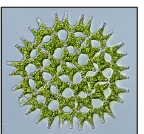
Colonial Cellularity Characteristic
Multiple genetically identical units (cells or multicellular bodies) that are physically connected to each other
How do colonial units replicate?
Mitosis, Fragmentation
Fragmentation
type of asexual reproduction in which a parent organism breaks into two or more pieces, and each piece develops into a complete, independent organism identical to the parent.
Multicellular Characteristics
Contain more than one cell type, have a division of labor, and must coordinate their functions
What does multicellular cells require?
differential gene expression
1st Type of Multicellular Protist
Brown Algae
2nd Type of Multicellular Protist
Red algae
3rd Type of Multicellular Protist
Chlorophytes
4th Type of Multicellular Protist
Charophytes
5th Type of Multicellular Protist
Land plants
What is multicellularity associated with?
evolution of cell signaling pathways and cellular adherence
1st Advantage of Multicellularity
Increased size
2nd Advantage of Multicellularity
Division of labor
3rd Advantage of Multicellularity
Metabolic cooperation
Do all protists obtain nutrients the same way?
No
Photoautotrophs
photosynthesize with chloroplasts
Chemoheterotrophs
absorb organic molecules or ingest larger food particles
Mixotrophs
combine photosynthesis and heterotrophic nutrition
Which supergroup obtained chloroplast from endosymbiosis with cyanobacteria?
Archaeplastida
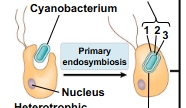
Primary Endosymbiosis
process by which a eukaryotic cell engulfs a prokaryotic organism, leading to a mutualistic relationship that results in the formation of organelles like chloroplasts.
Primary Endosymbiosis with __ led to the __ lineage
Cyanobacteria, Archaeplastida
How did members of Excavata and SAR obtain their chloroplasts?
Through secondary endosymbiosis
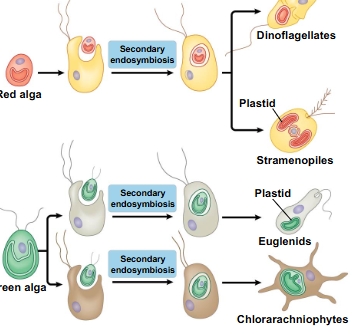
Secondary endosymbiosis
is the process in which a eukaryotic cell engulfs an archaeplastid that has already undergone primary endosymbiosis, leading to complex organelles and increased cellular diversity.
What subgroup(s) of SAR Clade obtained chloroplasts through secondary endosymbiosis?
Stramenopiles and Alveolates
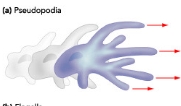
1st Type of Protist Common Locomotion
Amoeboid motion
Another name for Amoeboid motion?
Cytoplasmic streaming
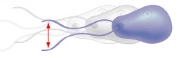
2nd Type of Protist Common Locomotion
Swimming by flagella
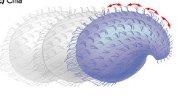
3rd Type of Protist Common Locomotion
Swimming by cilia
1st Way Protists Reproduce
Asexual
2nd Way Protists Reproduce
Sexual
3rd Way Protists Reproduce
Alternation of generations
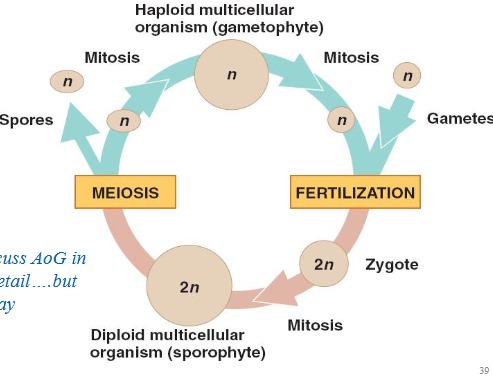
Alternation of generations
Adult generation alternates between multicellular haploid and diploid forms
1st Step of Alternation of Generations
A haploid multicellular organism (gametophyte) produces gametes through mitosis
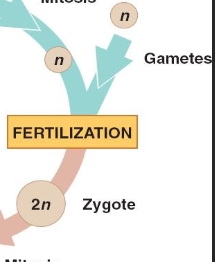
2nd Step of Alternation of Generations
Fertilization of gametes leads to the formation of a diploid zygote.
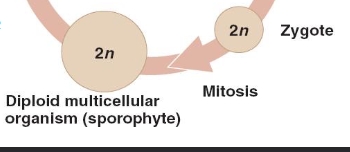
3rd Step of Alternation of Generations
Through mitosis the zygote develops into a diploid multicellular organism (sporophyte)
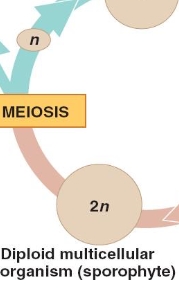
4th Step of Alternation of Generations
The sporophyte undergoes meiosis to produce haploid spores, which can germinate and grow into new gametophytes
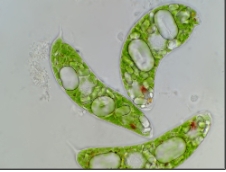
Excavata
includes the euglenozoans, characterized by their cytoskeleton and a “excavated” feeding groove
What is the cellularity of Euglenozoans?
Unicellular
What are Euglenozoans feeding modes?
chemoheterotroph, photoautotroph, and mixotroph
1st Organism that belongs to the phylum Euglenozoa
Euglenids
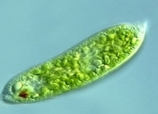
Euglenids
Covered by outer pellicle and are VERY sensitive to light
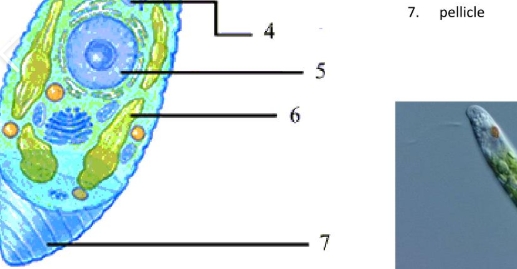
Pellicle
protein layer supported by microtubules that allows for extreme flexibility
What is the movement called when a organism using a pellicle to me?
euglenoid movement
2nd Organism that belongs to the phylum Euglenozoa
Kinetoplastids
Kinetoplastids
Free-living heterotrophs, some are parasitic
Example of parasitic kinetoplastids
Trypanosoma
Trypanosoma
Knows as African Sleeping Sickness that can cause rupture of blood cells
How does Trypanosoma spread?
By bite of tsetse fly
Supergroup SAR
diverse monophyletic super group named for the first letters of its three major clades Stramenopiles, Alveolates, and Rhizarians
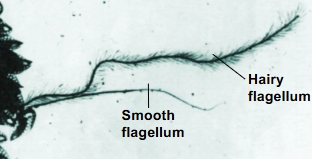
Stramenopiles
have a “hairy” flagellum paired with a “smooth” flagellum
1st Protist that belongs to phylum Stramenopiles
diatoms
2nd Protist that belongs to phylum Stramenopiles
golden algae
3rd Protist that belongs to phylum Stramenopiles
brown algae
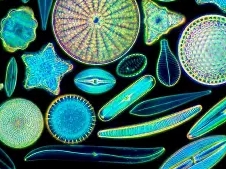
Diatoms
unicellular algae with a unique two-part, glass-like cell wall of silicon dioxide
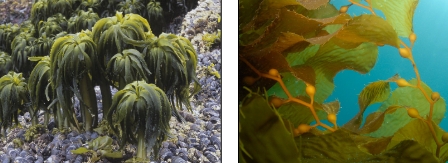
Brown Algae
Includes the largest, most complex algae, mostly marine. HUGE ecological breeding zone
What is the cellularity of brown algae?
Multicellular
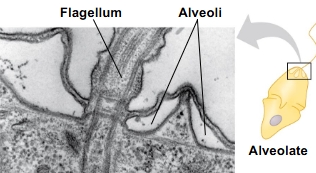
Alveolates
have membrane-enclosed sacs (alveoli) just under the plasma membrane
1st Organism that belongs to clade alveolates
Dinoflagellates
2nd Organism that belongs to clade alveolates
Apicomplexans
3rd Organism that belongs to clade alveolates
Ciliates
Dinoflagellates
One of most abundant components of both marine and freshwater phytoplankton.Some produce toxins
Apicomplexans
Parasites of animals. Most have sexual and asexual stages that require two or more different host species for completion
What is an example of a apicomplexans?
Plasmodium
Plasmodium
Causes malaria, requires both the mosquito and a mammal
2nd Type of Alveolates
Ciliates
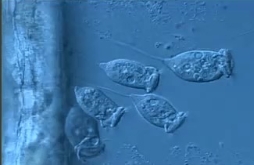
Ciliates
named for their use of cilia to move and feed.
Amoebas
protists that move and feed by pseudopodia, extensions of the cell surface.
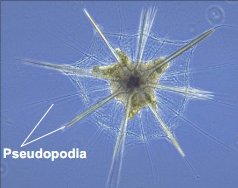
Rhizarain Amoebas
differ from amoebas in other clades by having threadlike pseudopodia.
1st Type of Protist that Belong to Supergroup Archaeplastida
red algae
2nd Type of Protist that Belong to Supergroup Archaeplastida
green algae

