memory
 Call Kai
 Learn
Learn Practice Test
 Spaced Repetition
 Match
Match Flashcards
 Knowt Play
1/72

There's no tags or description
Looks like no tags are added yet.
Name | Mastery | Learn | Test | Matching | Spaced | Call with Kai |
|---|
No analytics yet
Send a link to your students to track their progress
73 Terms
coding
how information is stores in the various memory stores
capacity
amount of information held in a memory store
duration
length of time information can be held in a memory store
study for coding
Baddeley
4 groups of participants given different lists of words to remember
acoustically similar/dissimilar or semantically similar/dissimilar
asked to recall worlds in correct order - immediately (STM) and also after 20 minutes (LTM)
information is coded ___ in STM
acoustically
information is coded ___ in LTM
semantically
findings from Baddeley study on coding
when recalling immediately (STM) participants did worse for acoustically similar worlds
when recalling after 20 mints (LTM) they did worse with semantically similar words
study on capacity - digit span
Jacobs
research reads 4 digits
participants recalls out loud in correct order
if correct, then increases to 5 digits and so on
once participant cant recall correctly - indicates their digit span
findings from Jacobs digit span study
mean span for digits was 9.3 items
mean span for letters was 7.3
study + findings on capacity - span
Miller
made observations of everyday practice
things come in 7 (days of the week, musical notes)
span of STM 7 items +/- 2
chunking
Miller - grouping sets of digits or letters into units or chunks in order to remember more easily
study for duration of STM
Peterson and Peterson
24 students in 8 trials each
given consonant syllable eg YCG to remember + given 3 digit number
counted back from the number until told to stop (prevents mental rehearsal)
told to stop after 3/6/9/12/15/18 seconds (retention interval) then recall the consonant syllable
findings of Peterson and Petersons STM duration study
after 3 seconds, average recall was 80%
after 18 seconds is was 3%
STM duration
about 18 seconds, unless verbal rehearsal
study for duration of LTM
Bahrick
392 american participants between 17 and 74
high school yearbooks used
memory tested by
1) photo recognition test, some from yearbooks
2) free recall test - naming people from their graduation class
findings from Bahrick’s duration of LTM study
participants who graduated within 15 years were 90% accurate in photo recognition
free recall was 60%
participants graduated with 48 years were 70% accurate for photo recognition
free recall 30%
duration of LTM
may be up to a lifetime
strength of Baddeley’s study for coding
identified clear difference between memory stores
later research showed some exceptions
idea of STM coded acoustically and LTM semantically has remained correct
important step into understand memory - led to multi-store model
limitation of Baddeley’s study for coding
used artificial stimuli
word lists had no personal meaning to participants
tell us little about coding in different memory tasks in everyday life
people may use semantic coding for LTM when processing meaningful information
findings have limited application
strength of Jacob’s study for digit span
study had been replicated
old study which often lacks valid control - digit spans may have been underestimated due to confounding variables
repeats have been confirmed by better controlled studies
valid test of digit span in STM
limitation of Millers study for span
overestimated STM capacity
review of other research concluded the span is more like 4 ± 1 chunks
the lower end of the estimate is more accurate (5) than 7
limitation of Peterson x2 study for STM duration
stimuli was artificial
not completely irrelevant as we still remember fairly meaningless material eg. phone numbers
but recalling consonant syllables doesn’t reflect everyday memory activities
lacks external validity
strength of Bahrick’s study for LTM duration
high external validity
use of meaningful material (names and faces)
studies of LTM with meaningless pictures had lower recall rates
findings reflect a more accurate estimate of LTM duration
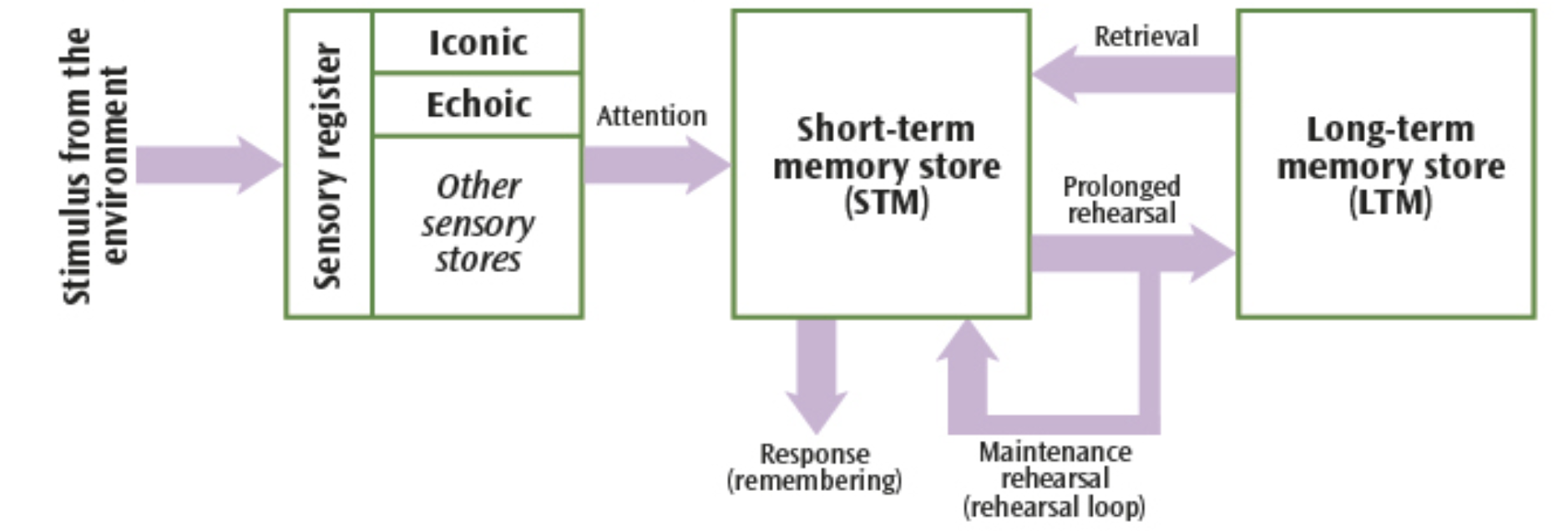
multi-store model (Atkinson and Shiffrin)
function of the multi-store model
describes how memory works in terms of 3 stores (sensory register, short-term memory, long-term memory) and how information is transferred from one store to another
sensory register
all stimuli from the environment passes into the sensory register
stores each of our 5 sense
coding of the sensory register
coding in each store is modality specific (depends on the sense)
iconic memory
visual information
echoic memory
acoustic information
duration of the sensory register
very brief - less than half a second
capacity of the sensory register
very high - over 100 million cells in one eye, each story data
how information passes from the sensory register further into the memory system
attention (paying attention to the information)
how we keep information in STM
maintenance rehearsal - repeating material over and over
how information is passed from STM to LTM
prolonged rehearsal - repeating the material for long enough
how we recall information from the LTM
transferred back into the STM by retrieval
case study HM
brain surgery due to epilepsy went wrong - hippocampus removed from both sides of his brain (central to memory function)
after operation - he thought it was 2 years earlier and remembered little of the operation
couldn't form new long term memories
performed well on STM tests
supports separation of stores
MSM strength- research support
studies differentiate STM and LTM
Baddeley coding study - mix up acoustically similar words in STM and semantically similar with LTM
capacity and duration studies also support the separation (Peterson/Bahrick)
clearly show they are separate stores, supporting MSM
MSM limitation - invalid model for everyday life
many studies supporting MSM use artificial stimuli that doesn't reflect things we remember in everyday life
(Baddeley, Jacobs, Peterson)
may not explain how memory works in everyday life where we remember meaningful information
limitation of MSM - multiple STM stores
KF + other studies
found there may be another STM store for non-verbal noises
may be more than one STM store processing different types of information
KF case study
motorbike accident resulted in brain damage + amnesia
LTM remained intact but not STM
digit span - low when words read aloud
digit span test - words presented visually - better performance
also, his STM for non-verbal noises was intact (eg dog barking)
supports idea of multiple STM stores
limitation of MSM - prolonged rehearsal
MSM says prolonged rehearsal = more likely to transfer into LTM
studies found instead the type of rehearsal is more important
elaborative rehearsal - linking information to existing knowledge + thinking about the meaning
suggests info can be transferred into LTM without prolonged rehearsal
MSM may not fully explain achievement of LTM storage
LTM - episodic memory + how it’s retrieved
personal events/memories
retrieved consciously with effort
LTM - semantic memory + how it’s retrieved
knowledge of the world/facts/concepts
retrieved consciously with effort
LTM - procedural memory + how it’s retrieved
knowledge of how to do things/skills
retrieved subconsciously and without effort
case study Clive Wearing
severe form of amnesia from viral infection attacking his brain + damaging hippocampus
used to be a world-class musician
intact procedural LTM - can still play piano + conduct a choir
faulty episodic LTM - doesn't remember his musical education
remembers some aspects of life before infection eg.that he has children, but can’t remember their names
faulty STM - greets his wife happily every time she walks in as if its been years
types of LTM strength - clinical evidence
HM and Clive Wearing
impaired episodic memory due to brain damage
semantic + procedural memory stayed unaffected (could remember word meanings + how to speak/walk etc)
supports different stores of LTM as one can be damaged while the others are unaffected
types of LTM limitation - control of studies
clinical studies used as support often lack control of variables
brain injuries were unexpected and couldn’t be controlled
research doesn't know what their memory was like before the damage - no comparison
limits what clinical studies can say tell us about types of LTM
types of LTM strength - real-world application
allows psychologists to help people with memory problems
age is linked to loss of episodic memory - recalling recent memories/events, though past ones remain intact
Belleville designed an intervention to help improve episodic memories in older people - participants performed better on memory test after training than a control group
distinguishing types of LTM enables specific treatment
types of LTM limitation - conflicting findings
Buckner + Petersen - found semantic memory is located on the left side of the PFC, and episodic memory on the right
other research links left PFC with encoding episodic memory, and the right with episodic retrieval
challenges neurophysiological evidence supported type of LTM
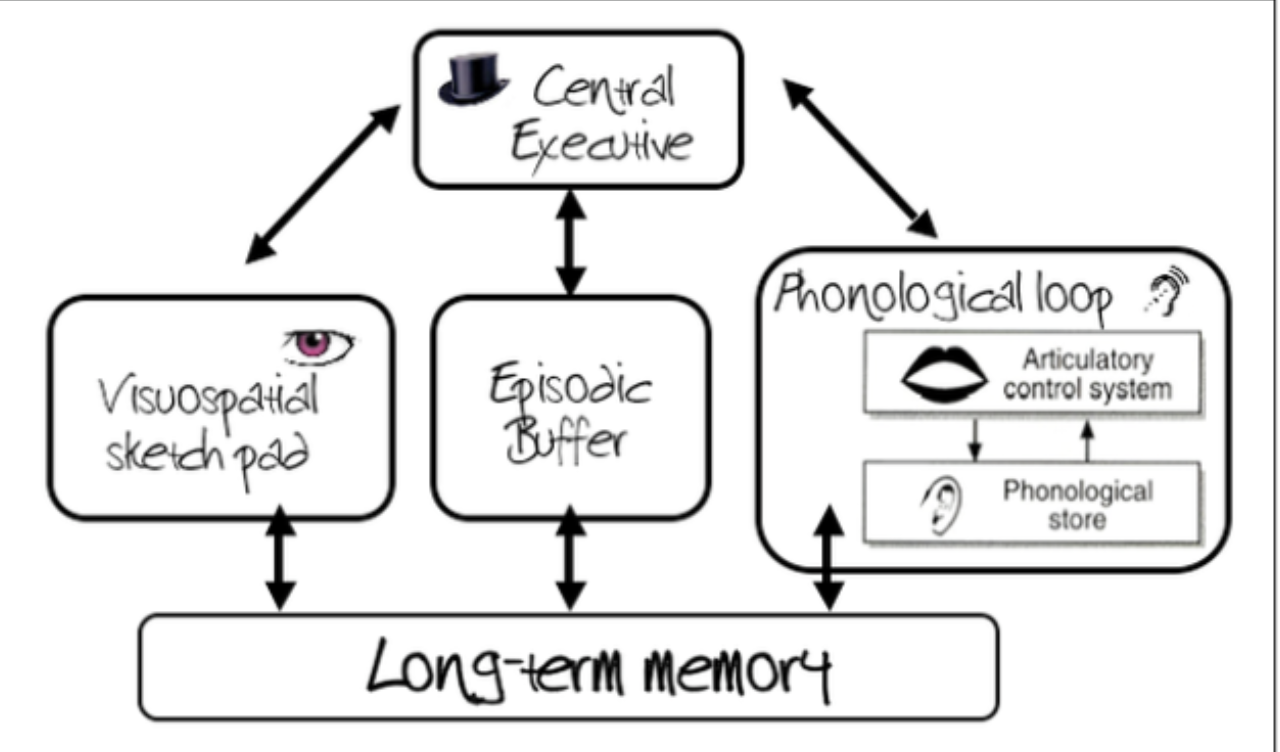
The Working Memory Model (Baddeley and Hitch)
function of the WMM
explains how STM is organised and how it functions
components of the WMM
central executive, phonological loop, visuo-spatial sketchpad, episodic buffer
role of the central executive
supervisory role
monitors incoming data + focuses/divides attention + allocates subsystems to tasks
capacity of the central executive
very limited processing capacity, doesn’t store information
role of the phonological loop
deals with auditory information
phonological store - stores words you hear
articulatory process - allows maintenance rehearsal, repeats sounds/words in a loop to keep them in working memory
capacity of the phonological loop
2 seconds worth of what you can say
role of the visuo-spatial sketchpad
stores visual and/or spatial information
helps visualise things
components of the VSS
visual cache - stores visual data
inner scribe - records arrangement of objects in the visual field
capacity of the VSS
limited - 3 or 4 objects
role of the episodic buffer
temporary store for information
integrates visual, spatial and verbal information processes by other stores
maintains sense of time sequencing
storage component of the central executive
links working memory to LTM + wider cognitive processes
capacity of the episodic buffer
limited - about 4 chunks
WMM strength - clinical evidence
KF
poor STM for auditory information
could process visual information normally
could recall letters/digits better when he read them than when they were read to him
his phonological loop was damaged but his visuo-spatial sketchpad was intact
supports existence of separate visual/acoustic STM memory stores
WMM limitation - lack of controls
KF may have had other cognitive impairments (not just damage to phonological loop) affecting his memory
the trauma from the accident may have affected his cognitive performance severely
challenges evidence coming from clinical studies of people with brain injuries
WMM strength - support for visuo-spatial sketchpad
Baddeley study - participants were fine carrying out visual and verbal task at the same time (dual task)
when both tasks were visual/verbal - performance declined
because both visual tasks compete for same subsystem - VSS
verbal + visual tasks dont compete
evidence for a separate subsystems (VSS) that processes visual input, and one for verbal processing (PL)
WMM limitation - confusion over central executive
lack of clarity over nature of the central executive
its recognised as the most important component of memory - but is the least understood
its defined as simply ‘attention’ whereas it needs to be more specified - some psychologists believe is may have subcomponents
challenges the quality of the WMM
interference theory
explanation for forgetting in LTM
when 2 pieces of information disrupt each other - causes forgetting one or both or distortion of memory
harder to access information in LTM, interference makes it harder to locate them
proactive interference
when an older memory interferes with a newer one
retroactive interference
when a newer memory interferes with an older one
interference - study on effects of similarity
McGeoh and McDonald
participants learned 10 words until they could remember them 100% accurately, then learned a new list
6 different groups for type of new word lists (synonyms, antonyms, unrelated to original list, consonant syllables, 3 digit numbers, no new list (control))
interference - findings of McGeoh and McDonald’s study on effects of similarity
when recalling the original list - synonym group did the worst
showed that interference was worst when memories are similar
could be due to PI or RI

