Pharmaceutics II: Exam 1
 Studied by 0 people
 Call with Kai
 Learn
Learn Practice Test
 Spaced Repetition
 Match
Match Flashcards
 Knowt Play
1/203

There's no tags or description
Looks like no tags are added yet.
Name | Mastery | Learn | Test | Matching | Spaced | Call with Kai |
|---|
No analytics yet
Send a link to your students to track their progress
204 Terms
What is the definition of pharmaceutics?
the study of formulating a drug/chemical entity into a dosage form for optimal delivery, stability, pharmacology and patient compliance
What is the definition of pharmacokinetics?
“What the body does to the drug”
the study of Absorption, Distribution, Metabolism and Excretion (ADME) of the drugs
includes factors that influence ADME
What is a drug substance?
an active ingredient that is intended to furnish pharmacological activity or other direct effect in the diagnosis, cure, mitigation, treatment, or prevention of disease or to affect the structure or any function of the human body, but does not include intermediates used i the synthesis of such ingredient
What is a drug product?
a finished dosage form, such as a tablet, capsule, or solution that contains a drug substance, generally, but not necessarily, in association with one or more other ingredients
What is a drug substance also known as?
Active pharmaceutical ingredient (API)
different forms (salts, hydrates, solvates)
Why do we need drug products (dosage forms)?
small doses (quantities)
physical form (solid, semisolid, liquid)
route of administration, intended use (suppositories)
improve API stability
improve bioavailability
modify drug release
target drug release
patient compliance (handling, storage, administration)
What is micromeritics?
it is the science of small particles, and includes particle size and size distribution, shape, densities, porosity, flowability, compressibility, etc.
What is properties of a drug are impacted by the particle size, shape and distribution of a dosage form of a drug?
disintegration
dissolution
content uniformity
suspendability
compressibility
How does one measure the PS of a non-spherical particle?
estimate using ‘equivalent’ diameter
calculate the diameter of a sphere with equivalent geometry or physical properties to the particle in question
e.g. projected area, surface area, volume, sedimentation rate, aerodynamics diameter etc.
How does one analyze the PSD of a non-uniform powder?
collect particle size data from a representative sample (volume, weight, etc.)
plot frequency of occurrence vs. size
plot is called a histogram
report
distribution
average/mean particle size
d50 or d90
What are commonly used methods for particle size analysis?
sieving (USP 786)
optical microscopy (USP 776)
light diffraction (SUP 429)
What does method of choice depend on for particle size analysis?
particle size range
purpose and application
equipment availability
What are the characteristics of Optical microscopy?
sample size: small (mg)
sample prep: dry or wet
size range: 1 mm to 2,000 mm
analysis time: very slow
mechanism of measurement
direct observation is only mechanism of measurement
measures length or projected area
Operator training essential
What are the characteristics of sieving?
sample size: large (up to 50 g)
sample prep: typically dry
size range: 25 mm to 2,000 mm
analysis time: ~20 min/sample
mechanism of measurement
material passing through aperture
measures dimension that pass through orifice
Operating parameters essential
What is the US Sieve No. (mesh number)?
the number of openings per linear inch
What happens as the sieve number increases?
the particle size decreases, becomes finer
What are the characteristics of light diffraction/scattering?
sample size: variable mg to g
sample prep: dry or wet
size range: 0.05 mm to 2,000 mm
analysis time: 1<min/sample
mechanism of measurement
measures volume
operator training essential
scattering angle 0 alpha to particle size
What is the descriptive term for a particle that has a d50 of > 355 and a sieve no. of 45?
coarse
What is the descriptive term for a particle that has a d50 of 180-355 and a sieve no. of 80-45?
moderately fine
What is the descriptive term for a particle that has a d50 of 125-180 and a sieve no. of 120-80?
fine
What is the descriptive term for a particle that has a d50 of greater than or equal to 125 and a sieve no. of 120?
very fine
What are ways to reduce particle size?
increase in surface area
small scale
trituration
levigation
large scale
milling
pulverization
What are particle/powder densities characteristics?
Density (p) = mass/volume
mass (weight) of a powder can be measured easily, and is standard
what about the volume? Which volume?
bulk volume or loose volume
tapped volume
true volume
What can bulk volume be described as?
the volume measured before tapping out the air pockets between particles.
*this volume will always be more than the tap volume
What can tap volume be described as?
the volume after the air pockets are removed from tapping
What is the impact of particle/powder densities on dosage forms?
dosage accuracy
manufacturing/compounding
How can the flow of powder be improved?
by excipients: glidants and lubricants
granulation
What is powder flow analysis?
Carr’s compressibility index (CI)
CI = (tapped density-loose density)/tapped density x 100
What is the flow property of a powder than had a compressibility index (%) of less than or equal to 10 and an angle of repose (degrees) of 25-30?
excellent
What is the flow property of a powder than had a compressibility index (%) of 11-15 and an angle of repose (degrees) of 31-35?
good
What is the flow property of a powder than had a compressibility index (%) of 16-20 and an angle of repose (degrees) of 36-40?
fair (aid not needed)
What is the flow property of a powder than had a compressibility index (%) of 21-25 and an angle of repose (degrees) of 41-45?
passable (may hang up)
What is the flow property of a powder than had a compressibility index (%) of 26-31 and an angle of repose (degrees) of 46-55?
poor (must agitate, vibrate)
What is the flow property of a powder than had a compressibility index (%) of 11-15 and an angle of repose (degrees) of 56-65?
very poor
What is the flow property of a powder than had a compressibility index (%) of >38 and an angle of repose (degrees) of >65?
very, very poor
What is a definition of a powder?
a dry substance composed of finely divided particles
What are the pharmaceutical applications of powders?
bulk form of most APIs and excipients
dosage form
What are examples of powders?
lactose, microcrystalline cellulose
Renvela (sevelamer carbonate)
MiraLAX (PEG 3350)
What are granules?
agglomerates of powder particles
What are the pharmaceutical applications of granules?
processing intermediates for tablets and capsules
dosage form
What are examples of granules?
Biaxin (Clarithromycin)
Mucinex Children’s Mini-melts Packets
What is the difference between powders and granules?
particle size and shape
Bulk properties (flowability, density)
manufacturing processing
pharmaceutical granulation
often used interchangeably (should not be in the pharmacy world)
What are examples of powders as dosage forms?
oral powders
dusting powders
aerosol powders
sterile powders
dentifrice powders
douche powders
packaging
bulk powders
divided powders (packet or sachet)
What are characteristics of oral powders?
to be dissolved or suspended in water or foods
available in bulk and divided powders
What are examples of oral powders?
Psyllium
Cholestyramine
Cefdinir
What are Effervescent oral powders?
to be dissolved in water-releasing CO2
key excipients: sodium bicarbonate, citric acid, and tartaric acid
What are examples of effervescent oral powders?
Emergen-C
Eboost
FizzMix base from Medisca
What are the advantages of oral powders?
stability
dose adjustment
easy to swallow
bioavailability
What are the disadvantages of oral powders?
vehicle
time
accuracy
taste
What are dusting powders?
topical applications to intact or broken skin
not intended for systemic effect
powder vehicle-starch and talc
What are the desirable qualities for dusting powders?
fine, separated particles (125-180 micrometers)
ease of flow and spreadability
adhere to skin
good covering and adsorptive properties
What are examples of dusting powders?
Lamisil
Gold Bond
What are aerosol powders for?
for inhalation
local and systemic
require a narrow range of particle size
special devices-to be covered later
for various body surfaces or cavities
nose, throat, tooth socket, and skin
apply with a powder blower or an insufflator
What are sterile powders used for?
for injections
powder or freeze-dried (lyophilized) cake
reconstituted prior to use
unique properties-to be covered later
What methods can be used for powder mixing on a small scale (blending)?
Trituration
Spatulation
Sieving (sifting)
Tumbling
New tools
Turbula Mixer
Resonant Acoustic Mixer (RAM)
What are methods of powder mixing on a large scale?
Tumble mixer
Agitator mixer
How does one achieve a homogenous mix for powder mixing?
uniform particle size and density
particle movement (1/2 to 2/3 full)
avoid segregation
What are the characteristics of powder sampling?
sample size/number
location
tools
sample thief
in-line samplers
How does one to mix a small amount of a potent drug with a large amount of diluent?
use geometric dilution
assuming the ratio of components is at least 3:1
stepwise approach-equal amount of the two ingredients
additional tips
color indicators
commercial “dilutions”
What is the definition of capsules?
solid dosage forms in which the drug or a drug formulation is enclosed within either a hard or a soft soluble shell
What are the applications of capsules?
oral
granules (disperse with food/drink)
DPI/vaginal/rectal
GI imaging
What are the characteristics of hard gelatin capsules?
hard shell
two piece
What are the characteristics of soft gelatin capsules?
soft shell
one piece
What are the capsule fill contents of hard gelatin capsules?
powder and granules
MR beads and pellets
liquids and semi-solids
small tabs/caps
What are the fill contents of soft gelatin capsules?
liquids
semi-solids
What are the major components of capsule shell materials?
gelatin-hard and soft capsule shells
HPMC-hard capsule shells
What are the minor components of capsule shell materials?
water
plasticizers (glycerin)
preservatives (parabens)
colorants
opaquants (opacifiers)
extended-release materials
What are gelatin capsule shells most commonly made up of?
hydrolyzed collagen of connective tissues
What are the advantages of hydrolyzed collagen of connective tissues?
good film forming material
non-toxic and acceptable in most countries
soluble in warm GI fluids and broken down by enzymes
What are the disadvantages of hydrolyzed collagen of connective tissues?
animal origin
stability
may contain 13-16% moisture (moisture transfer)
What are HPMC capsules made of and who are they primarily for?
hydroxypropyl methylcellulose used typically by vegan patients
What are the advantages of HPMC capsule shells?
plant derived
dissolution-pH and temperature independent
low moisture content
chemically more stable than gelatin
What are the disadvantages of HPMC capsule shells?
production
cost
What are hard shell capsule designs?
pre-made shells
standard shapes and sized
ready for manufacturing or compounding
What is the tampered rim on the body of a capsule for?
to engage easily with the cap for problem-free closure
What are the six elongated dimples on a capsule for?
maintain precise round capsule diameter, improving filling machine performance
What are the rounded hemispherical ends on a capsule for?
mechanically stronger and more resistant to deformation
What are the locking rings on a capsule for?
provide a full-circumference leak-free closure
What are the two aerodynamic air vents for?
allow air to escape from the cap; critical when operating high speed filling machines
What are characteristics off pre-locked position?
dimples of the cap engage gently with the indented ring of the body
empty capsules stay closed in transit; yet the consistent low pre-lock force reduces opening and rectification problems
What are the characteristics of the sealed position?
the full-circumference locking rings of the cap and the body interlock to form a secure, leak-free closure
a wide choice of capsule sizes are available that are compatible with all types and models of capsule filling machines
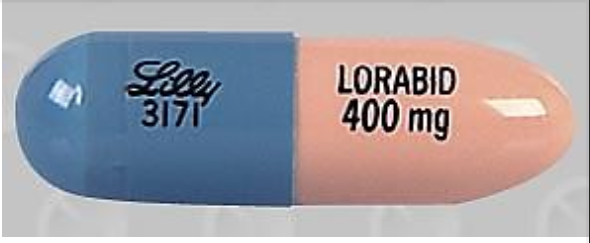
What shape is this capsule?
Pulvule
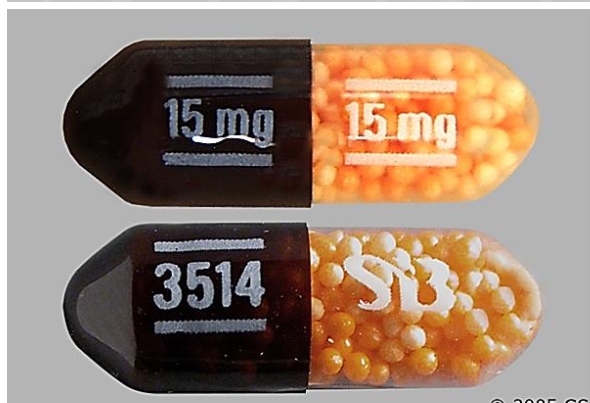
What shape is this capsule?
Spansules
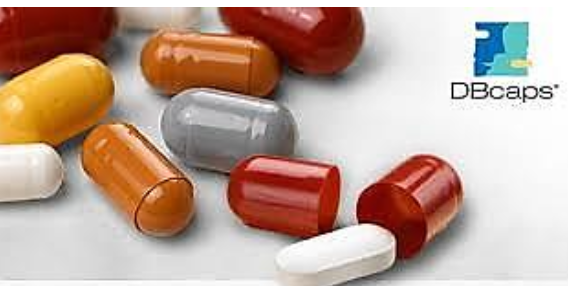
What shape is this capsule?
DBcaps Over-Encapsulation Capsules
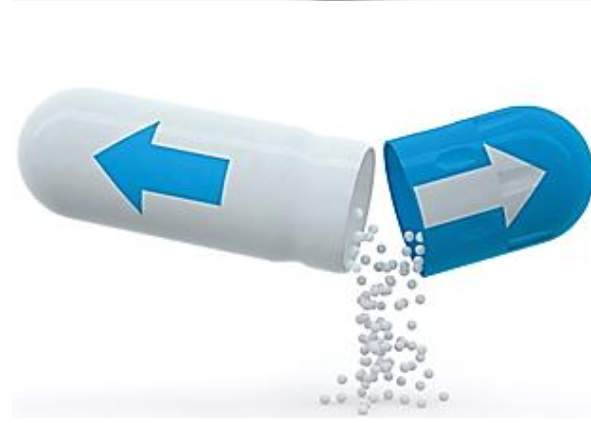
What shape is this capsule?
Sprinkle capsules
What are banding on capsules for?
for preventing tampering
gelatin seal around capsule at the seam of the body and cap
What are the human hard shell capsule sizes?
000, 00, 0, 1, 2, 3, 4, and 5
What are the veterinary hard shell capsule sizes?
Su07, 07, 10, 12el, 11, 12, and 13
What happens to the size of the capsule as the size number increases?
the capsule size decreases
What are soft shell capsule designs?
various shapes possible
shells are not pre-made
form-fill-seal in one step
requires special equipment and trained operators
contract manufacturing
not for compounding
What are the applications of soft shell capsules?
Oily substances
vitamin E
isotretinoin (Acutane, a retinoid)
Dronabinol (Marinol)- active in Marijuana
sometimes used to enhance bioavailability
cyclosporine (Neoral vs Sandimmune)
Digoxin
What is the function of a diluent or filler?
provide bulk and cohesion
lactose, microcrystalline cellulose, starch, and dibasic calcium phosphate are example of what?
diluent or filler
What is the function of disintegrant?
break up and disperse capsule contents
pregelatinized starch, croscarmellose sodium, and sodium starch glycolate are examples of what?
disintegrant
What is the function of a glidant?
improve powder flow
silicon dioxide and talc are examples of what?
glidant
What is the function of lubricant?
prevent sticking
magnesium stearate and stearic acid are examples of what?
lubricants
What is the function of surfactants?
enhance wetting
 Note
Note  Flashcards (74)