Unit 1 AP Psychology | Biological Bases of Behavior
 Call Kai
 Learn
Learn Practice Test
 Spaced Repetition
 Match
Match Flashcards
 Knowt Play
1/208

There's no tags or description
Looks like no tags are added yet.
Name | Mastery | Learn | Test | Matching | Spaced | Call with Kai |
|---|
No analytics yet
Send a link to your students to track their progress
209 Terms
Nature (Psychology)
The belief that inherited genetic factors (biology, DNA) primarily determine traits, behaviors, and abilities
Nurture (Psychology)
Emphasizes that our behaviors, personalities, and development are shaped primarily by environmental factors like upbringing, culture, education
Hereditary
The predisposed characteristics that influence an individual’s physical, behavioral, and mental traits and processes
Environment
The external factors that an individual experiences, such as a person’s family, friend group, school, or other societal factors
Characteristics of Nature
Genetic factors, universal grammar, inherent language skills such as babbling
Characteristics of Nurture
Environment, learning and conditioning, rewards and punishment, shaping, reinforcement, John B. Watson
Epigenetics
The study of how our environment can cause heritable changes in gene expression, essentially turning genes "on" or "off," without altering the DNA sequence itself (how nurture impacts nature)
Long-Term Potentation
Ability of neurons to activate when recalling learned information
Plasticity
When the brain changes and builds new neural pathways in response to a person’s experiences (different from Epigenetics)
Evolutionary Perspective
Focuses on natural selection, the passing down of genes, and how many of our behaviors and mental processes actually come from our ancestors, such as fear responses
Eugenics
Improving the genetic quality of the human population by promoting the reproduction of individuals with desirable traits and discouraging or preventing reproduction among those with traits deemed undesirable
Henry Geddard
An American eugenicist who pushed to use intelligence tests to rank people into different mental categories who argued that society should prevent people that were “feeble-minded” from having children through sterilization and isolation
Hereditability
A mathematical measure to estimate how much variation there is in a population related to its genes
Identical Twins
Have the same DNA, are of the same sex, and come from one egg (monozygotic)
Fraternal Twins
Different DNA, can be the opposite sex, come from two eggs (dizygotic)
Minnesota Twin Study
Researchers discovered that twins reared apart have many similarities over 35 years of research; for example, the “Jim Twins” had many similarities despite being raised separately. They were both married to a woman named Betty, named their first son James, named their dog “Toy,” worked as a part-time deputy sheriff in Ohio, did carpentry, and did poorly in spelling but well in math
Nervous System Divisions
Peripheral Nervous System and Central Nervous System
Peripheral Nervous System
Everything outside of the Central Nervous Systems, all of outside nerves, carry information TO the CNS
Central Nervous System
Comprised of the brain and a spinal cord, central to the body and central to survival, entirely encased in bone, controlling and processing body functions
Peripheral Nervous System Divisions
Somatic Nervous System and Autonomic Nervous System
Somatic Nervous System
Communicates sensory information (via sensory neurons) to the CNS, motor neurons take information about what to move or how to move from the CNS to various muscles, voluntary movement and skeletal muscle
Autonomic Nervous System
Works automatically, unaware of moment to moment , autopilot, regulates involuntary functions (heart rate, blood pressure, breathing, digestion)
Autonomic Nervous System Divisions
Sympathetic and Parasympathetic Nervous Systems
Sympathetic Nervous System (Fight or Flight)
Allows someone in a threatening situation to react in a way that is advantageous to their survival (increases heart rate, blood pressure, respiration, secretion of stress hormones (epinephrine, cortisol), pupil dilation)
Parasympathetic Nervous System (Rest and Digest)
Calms body after “fight or flight” response, returns body to calm, homeostatic state (a parachute)
Afferent Neurons
Also known as sensory neurons, send signals from the sensory receptors to the Central Nervous System (approaches)
Efferent Neurons
Also known as motor neurons, send signals from the Central Nervous System to the Peripheral Nervous System (exits)
Homeostasis
Stability in an internal environment
Glial Cells
Helper cells that send and receive chemical signals to and from each other and to and from neurons
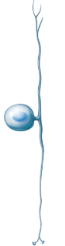
Sensory Neurons
Nerve cells in the peripheral nervous system that convert external stimuli (light, sound, touch) and internal stimuli into electrical impulses
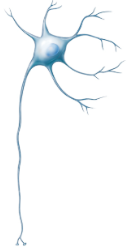
Motor Neurons
Nerve cells that transmit electrochemical signals away from the central nervous system (brain and spinal cord) to muscles and glands, initiating movement and physical action

Interneurons
Act as intermediaries, processing information between sensory inputs and motor outputs
Neural Anatomy Acronym
DSATs
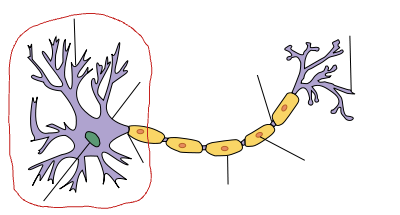
Soma
The body of the neural cell which protects the nucleus and is the central, metabolic, and life-support center of a neuron
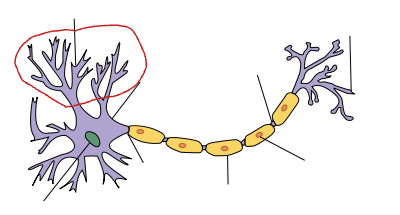
Dendrites
The branch-like, bushy extensions of a neuron responsible for receiving chemical messages from other neurons and conducting these impulses toward the soma
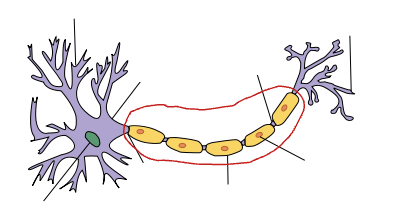
Axons
A long, thread-like extension of a neuron that carries action potentials away from the soma to other neurons, muscles, or glands
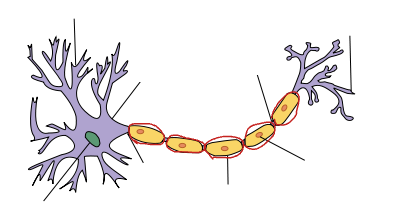
Myelin Sheath
A fatty tissue layer segmentally encasing the axons of some neurons to protect and insulate them, speeding up transmission of nerve impulses
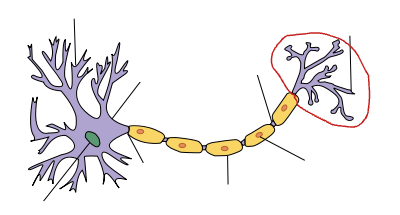
Axon Terminal
The branched endings of an axon that transmit signals with terminal buttons to other neurons, muscles, or glands
Synapse (Synaptic Gap)
The microscopic, fluid-filled space between the axon terminal of a presynaptic neuron and the dendrite of a postsynaptic neuron where neurotransmitters cross after being released from vesicles
Resting Potential
-70 millivolts, polarized
Neurotransmitters
Chemical messengers in the nervous system released by neurons that cross synaptic gaps to transmit signals to other neurons, muscles, or glands
Action Potential
A brief, electrical charge (neural impulse) that travels down a neuron's axon, facilitating communication (+30 millivolts), also called depolarization
All or None Law
Once at threshold a neuron will fire, and it will fire with the same intensity each time
Refractory Period
A brief period where the neuron cannot fire again
Reuptake
The original sending neuron recollects neurotransmitters (presynaptic neuron takes back neurotransmitters from dendrite as a sort of recycling method)
Excitatory Neurotransmitters
Chemical messengers that depolarize the postsynaptic neuron, increasing the likelihood of an action potential in the next neuron
Inhibitory Neurotransmitters
Chemical messengers that decrease the likelihood of a postsynaptic neuron firing an action potential
Schwann Cells
Produce myelin sheath
Nodes of Ranvier
Small, regularly spaced gaps in the myelin sheath covering a neuron's axon
Nociceptors
Specialized sensory receptors (nerve endings) located throughout the body (skin) that detect harmful stimuli (pain)
Reflex Arc
The direct, neural pathway mediating an involuntary, rapid response to a stimulus, typically bypassing conscious brain processing
Chemical Synapses
Slower, unidirectional, and use neurotransmitters to bridge a wider cleft, allowing for complex signal amplification, modulation, and plasticity
Electrical Synapses
Nearly instantaneous, bidirectional signaling via direct ion flow through gap junctions, ideal for synchronization
Glutamate
Most abundant excitatory neurotransmitter that enhances learning and memory by strengthening synaptic connections
GABA (Gamma Aminobutyric Acid)
Most abundant inhibitory neurotransmitter, associated with various anxiety-related disorders, brakes of the CNS, sleep, movement, and slows down nervous system
Acetylcholine (ACh)
All muscle movement, involved in learning and memory and many other functions, associated with Alzheimer’s
Dopamine
Linked to the anticipation of pleasurable or rewarding activities and also involved in movement, attention, and learning
Endorphins
Body’s natural painkiller, involved in pain reduction and reward, released when hurt, can be stimulated by intense and prolonged exercise, creating euphoric feelings
Epinephrine (Adrenaline)
Neurotransmitter and hormone → boosts energy, primary chemical in a “fight or flight” response
Substance P
Helps with transmitting pain signals from sensory nerves to CNS
Norepinephrine (Noadrenaline)
Arousal, alertness, vigilance (heightened sensitivity to what is going on around you), closely related to epinephrine, heavily involved in sleep cycle
Serotonin
Plays a significant role in mood, appetite, sleep, or dreams, low levels associated with depression
Impact of Psychoactive Drugs
Have a direct impact on one or more neurotransmitters at the synapse, working as agonists and antagonists based on how they influence neural transmission
Agonists
Increase a neurotransmitter's action by mimicking them or blocking reuptake for full activation
Direct Agonists
Mimic the the neurotransmitter and bind with the receptor of the next neuron
Indirect Agonists
Block reuptake of a neurotransmitter, also known as reuptake inhibitors, the neurotransmitter is stuck in the synapse for longer as the drug acts a blockade not allowing it to get back
Antagonists
Decrease or block a neurotransmitter's action by binding to receptors without activating them, inhibiting transmission with no activation taking place
Drug Tolerance
Needing increasing amounts of the drug to create the original high/desired effects
Blood-Brain Barrier
A semi-permeable coating/barrier that allows some chemicals to pass from the blood into the brain but prevents other chemical structures from entering
Depressants
Slow or inhibit Central Nervous System functions, creating drowsiness, sedation/sleep, and relieving anxiety and lowering inhibition
Example of Depressants
Alcohol → Depresses brain centers responsible for judgement and self-control
Opiates/Opioids
Act as agonists for endorphins, mimicking the body’s natural painkillers and are incredibly addictive and create powerful withdrawal symptoms
Examples of Opiates
Heroin, Oxycodone, Fentanyl, Morphine
Stimulants
Activate sympathetic nervous system, increasing breathing heart rate, and blood pressure to increase brain activity, arouse behavior, and mental alertness
Examples of Stimulants
Caffeine → Promotes wakefulness processes by stimulating release of dopamine
Cocaine → Dopamine agonist (reuptake inhibitor), intense euphoria and alertness
Hallucinogens (Psychedelics)
Create sensory and perceptual distortions, alter mood, and affect thinking
Example of Hallucinogens
THC, Marijuana, LSD
Multiple Sclerosis
Occurs when the myelin sheath is damaged, resulting in the disruption of the transmission of electrical signals and leads to muscle weakness, coordination problems, and fatigue
Myasthenia Gravis
An autoimmune disorder the affects the communication between nerves and muscles as antibodies block/destroy acetylcholine receptors preventing muscle contraction and causing muscle weakness and fatigue
Examples of Hormones
Adrenaline, Leptin, Ghrelin, Melatonin, Oxytocin
Examples of Neurotransmitters
Glutamate, GABA, Acetylcholine, Dopamine, Endorphins, Epinephrine, Substance P, Norepinephrine, Serotonin
Adrenaline
Helps body’s response to high emotional situations and help form memories, helps in fight-or-flight
Leptin
Helps regulate energy balance by inhibiting hunger (signals to brain that the body has enough stored fat, reducing appetite)
Ghrelin
Also known as the hunger hormone, signals hunger to brain and promotes the release of growth hormones
Melatonin
Produced by the pineal gland and helps regulate sleep-wake cycles (circadian rhythm)
Oxytocin
Produced in hypothalamus and released by pituitary gland, also known as the love hormone because it promotes feelings of affection and emotional bonding
Hindbrain (region of brainstem) is comprised of…
Medulla Oblongata, Pons, Reticular Activating System (RAS), and the Cerebellum
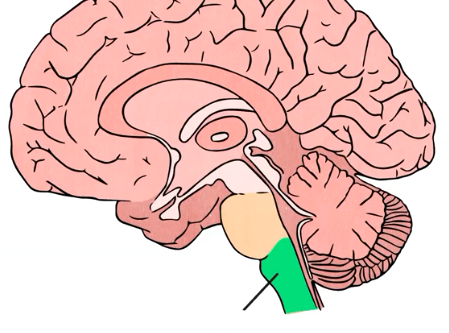
Medulla Oblongata
Basic autonomic functions such as heart rate, breathing, blood pressure, and reflexes such as swallowing, sneezing, and vomiting
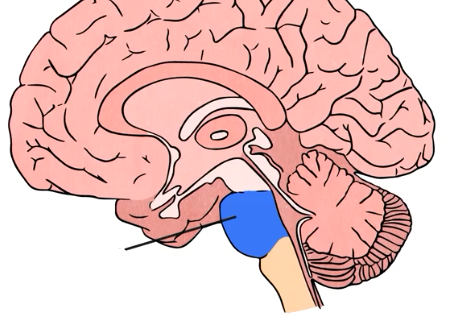
Pons
Bridge that connects the brainstem and cerebellum and helps coordinate and integrate movement on each side of the body
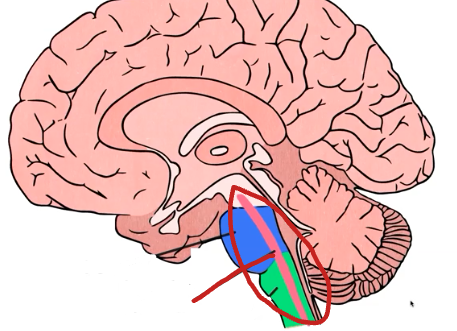
Reticular Activating System (RAS)
A set of nerves and nerve fibers that run through the medulla and the pons, involved in attention, arousal, and alertness
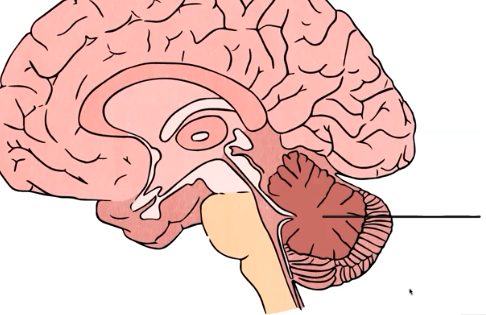
Cerebellum
Balance and equilibrium, coordinated sequences of movement, implicit memory
Midbrain
Nerve system connects lower and higher portions of brain, relays info between brain and eyes/ears, integrating information from audio and visual sense
Limbic System (part of forebrain)
Thalamus, Hypothalamus, Amygdala, Hippocampus
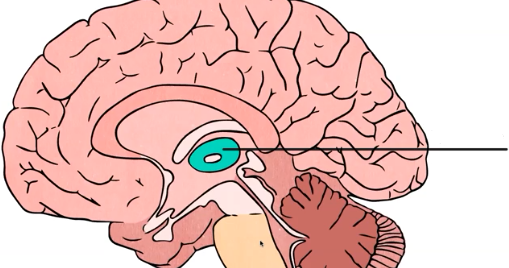
Thalamus
The center of the brain, sensory switchboard, receives and sorts sensory information, then sends it to the cortex for further interpretation (excluding smell)
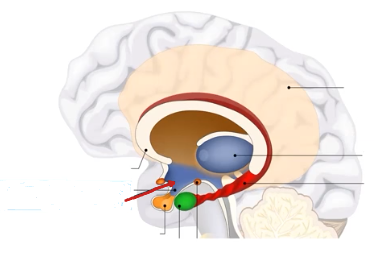
Hypothalamus
Beneath thalamus, greatly involved in fight or flight response, involved in feeding, initiating motivation to eat, reward pathways, and maintains homeostasis
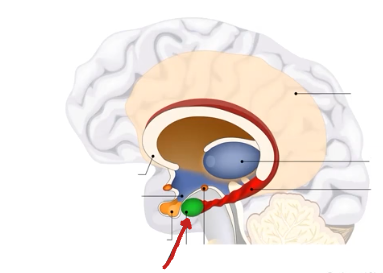
Amygdala
Involved in anger and rage, closely linked to aggression, being afraid and causes fear responses, also ingrains highly emotional memories
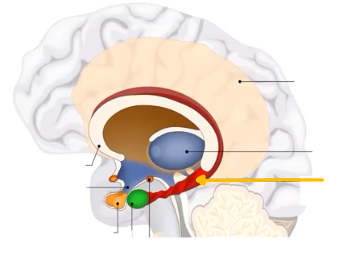
Hippocampus
Converts short-term memory into long-term memory, involved in processing and retrieving declarative (facts and events) memory
Flashbulb Memories
A vivid, detailed, and long-lasting memory of an emotionally significant or surprising moment
Declarative (Explicit) Memory
A type of long-term memory that involves the conscious, intentional recollection of facts, knowledge, and personal events; can be recalled and verbally described
Procedural (Implicit) Memory
Responsible for knowing how to perform motor skills, habits, and actions without conscious thought; also called “muscle memory”
Explore top notes

