Unit 2
 Call Kai
 Learn
Learn Practice Test
 Spaced Repetition
 Match
Match Flashcards
 Knowt Play
1/62

Earn XP
Description and Tags
Chapters 4, 7, 9
Name | Mastery | Learn | Test | Matching | Spaced | Call with Kai |
|---|
No analytics yet
Send a link to your students to track their progress
63 Terms
Charles Darwin
studied animals in the Galapagos Islands
Alfred Russel Wallace
studied animals in the Malay Archipelago
Evolution
the idea that species change over generations because individuals compete for scarce resources
Evolution occurs when…
Range of traits: Variation in traits that exist in a population
Heritable traits: Replication occurs through reproduction
Some traits survive better: Selection is the nonrandom survival of offspring
Directional selection
acts against one extreme (favors the other extreme)
Stabilizing selection
acts against both extremes (favors intermediate traits)
Disruptive selection
acts against middle trait (favors extremes)
Niche
is a species role in an ecosystem (how it uses its habitat, how other organisms in the habitat use that species, and the habitat it occupies)
Principle of Competitive Exclusion
states that niches cannot overlap for long
Resource partitioning
when several species use different resources to coexist in the same habitat
Allopatric speciation
occurs when some kind of barrier isolates part of a population
“Allopatric = Alps/Alone”
Sympatric speciation
occurs without a geographical barrier (common in plant populations)
“Sympatric = Symphony” together
Interspecific competition
occurs between different species
“IntEr = diffErent”
Intraspecific competition
occurs between the same species
“IntrA = sAme”
Mutualism
benefits both species (positive/positive)
Commensalism
benefits one species, and neither harms nor benefits the other species (positive/neutral)
Predation
when a consumer feeds directly on another living organism (positive/negative)
Parasitism
benefits the parasite, and harms the host (positive/negative)
First major population increase
after 1600 C.E. because of major technological developments in agriculture, transportation, power, and health care
Last population decrease
Black Plague
Thomas Malthus
argued that excess population growth is the ultimate cause of social and environmental problems
Karl Marx
argued that oppression and exploitation are the real causes of social and environmental problems
Demographic factors
vital statistics that influence changes in size or composition of a population
Crude birth rate (CBR)
the annual births per 1000
Crude death rate (CDR)
the annual deaths per 1000
Total fertility rate (TFR)
the average births per reproductive female
Replacement fertility rate
The number of offspring needed to have two surviving reproductive adults (usually 2.1)
Carrying capacity
the maximum number of individuals an environment can support (limitations due to space and resources)
Dependency ratio
the number of nonworking compared to working individuals in a population
China’s One-Child Policy
Resulted in the 4-2-1 problem and impacted the sex ratio (more males)
Pronatalist pressures
factors that encourage people to have babies
Frank Notestein
Proposed demographic transition (a pattern of decreased birthrates and death rates in response to improved living conditions)
Demographic transition in the U.S.?
The U.S. is in stage four (industrial)
Demographic transition globally?
Stage three (birth rate declining)
Demographic transition: Stage 1
High death, high birth
Demographic transition: Stage 2
Rapid lowering in death, high birth
Demographic transition: Stage 3
Low death, lowering birth
Demographic transition: Stage 4
Low death, low birth
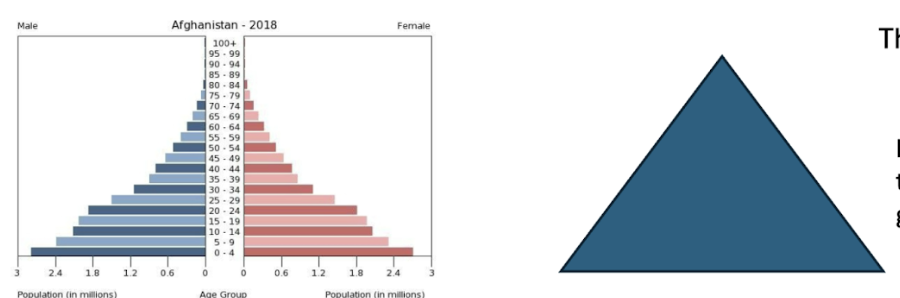
Rapid growth
Like a pyramid with the biggest part in the youngest age groups
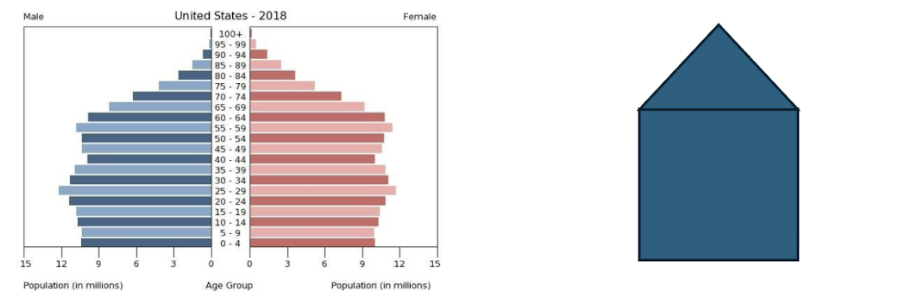
Slow growth
Roughly even between reproductive ages and offspring
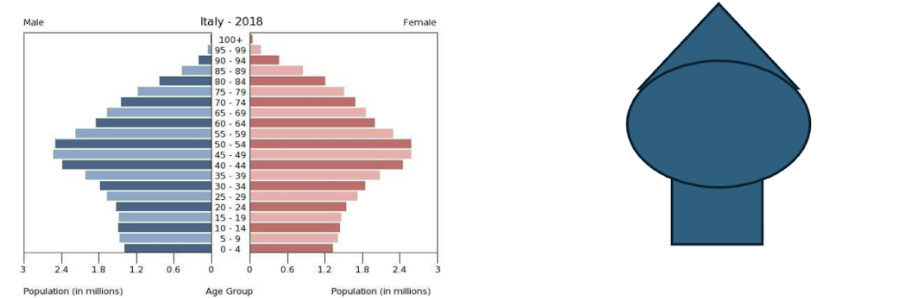
Negative growth
Has a “bubble” where there were more reproductive individuals than offspring at some point (least number of young ages)
Women rights impact on population
As education of women increases, TFR decreases
Anemia
low hemoglobin levels in the blood, usually caused by dietary iron deficiency (most common nutritional problem in the world)
Iodine deficiency
causes the thyroid (controls metabolism) to swell, causing a goiter
Vitamin A deficiency
impacts vision, especially helping the rods in our eyes differentiate light and dark
Folic acid deficiency
impacts neurological function, and can cause the brain to shrink long-term
Kwashiorkor
when people are not receiving enough protein, but they are getting enough calories (swelling belly and reddened hair and skin)
Marasmus
a deficiency in both protein and calories, so other nutrients are also lacking ( extreme thinness, old appearance, and dry skin)
Chronic Hunger Trends
We are in a global increase of chronic hunger
Poverty and overweight?
Low income, not high income is the primary predictor of being overweight throughout the world
Food Pyramid Changes
Moved red meat to use sparingly
Added healthy fats and oils to recommended diet
Included optional alcohol in moderation
Reduction in the proportion of grains
Vegetables have increased
Focus has moved to raw fruits and veggies
Three major crops
wheat, rice, and corn (make up more than 60% of the calories that humans consume)
Confined animal feeding operation (CAFO)
animals are housed and fed, mainly on soy and corn, for rapid growth
CAFO Drawbacks
corn as primary diet, disease and bacteria, high antibiotic use, animal rights issues, and air and water pollution
Green revolution
dramatically increased agricultural production brought about by new varieties of grain spread around the world
Artificial selection
when humans choose which organisms breed in order to produce a desired trait
Genetically modified organisms (GMOs)
organisms whose genetic code has been altered by artificial means such as interspecies gene transfer
GMO Pros and Cons
Pros: increased crop yields, enhanced nutritional value, and better pest resistance
Cons: reduced biodiversity and long-term health effects
Pest resistance
The pest resistant BT bacteria has been used in several GMOs, resulting in plants producing a toxin that kills pest insects
Pesticide/herbicide resistance
Taking DNA from plants that can resist herbicide (used to kill weed plants) and creating a whole line of “roundup ready plants” that can tolerate high levels of roundup herbicide
Sustainable food methods
Supporting community vitality: Grow local food to connect communities and provide fresh, healthy options
Energy conservation and production: Use less energy and create renewable energy on the farm
Ecological insect and weed management: Control pests naturally by using plants that attract insects away from your crops
Reduced till and no till: Keep soil healthy by not over-tilling; it helps prevent erosion and maintains nutrients
Building soil health: Use compost and mulch to enrich soil and support good microorganisms
Nature as a model: Embrace biodiversity in farming to create sustainable, long-lasting food systems
Rotational grazing
Polyculture
Rotational Grazing
a land management system where livestock are confined to small, designated areas of pasture (paddocks) and moved regularly, allowing grazed areas to rest and recover
Polyculture
growing multiple plant species together in the same space

