ECO 202 Module 11: Monopoly and Antitrust Policy
 Studied by 0 people
 Call with Kai
 Learn
Learn Practice Test
 Spaced Repetition
 Match
Match Flashcards
 Knowt Play
1/23

There's no tags or description
Looks like no tags are added yet.
Name | Mastery | Learn | Test | Matching | Spaced | Call with Kai |
|---|
No study sessions yet.
24 Terms
monopoly
a firm that is the only seller of a good or service for which there is not a close substitute
barriers to entry
for a firm to be a monopoly, there must be barriers to entry preventing other firms coming in and competing with it
government restrictions on entry
control of a key resource
network externalities
natural monopoly
government restrictions on entry
patents: given to newly developed products for the exclusive legal right to product a product for a period of 20 years
copyrights: provide exclusive right to produce and sell creative works like books and films
trademarks: offer protection for brand names, symbols, and some characteristics
public franchises: government designation that a firm is the only legal provider of a good or service
control of a key resource
e.g natural resources, raw materials
network externalities
situation in which the usefulness of a product increases with the number of consumers who use it
auction sites, social media, etc
natural monopoly
situation in which economies of scale are so large that one firm can supply the enire market at a lower average total cost than can two or more firms
most likely when fixed costs are high
how do monopolies choose price and output
seek to maximize profit by choosing a quantity to produce
face a downward-sloping demand curve
the difference is barriers to entry will prevent other firms from competing away their economic profit
calculating a monopoly’s revenue
firms will sell a product as long as its marginal revenue exceeds its marginal cost
as a firm decreases price to expand output:
revenue increases from selling an extra unit of output at the new price
revenue decreases because the price reduction is shared with existing customers
so, marginal revenue is always below demand for a monopolist
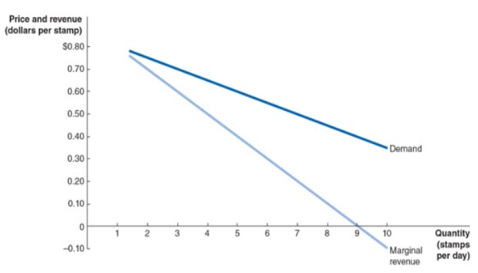
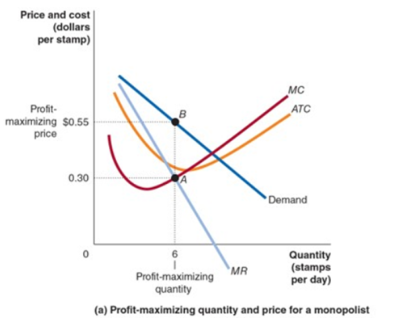
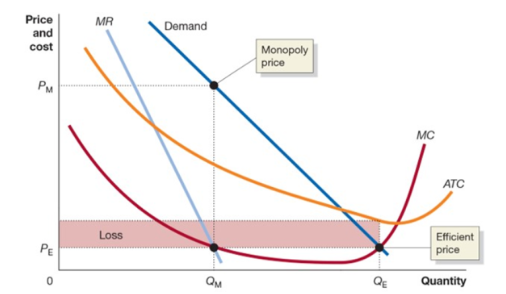
profit-maximizing price and output
maximize profit by producing the quantity where the additional revenue from the last usit (MR) just equals the additional cost incurred from its production (MC)
at this quantity:
market demand curve detemines price
average total cost curve determines average cost
profit is the difference between these times quantity
profit = (P-ATC) *Q
short run vs long run profits
since there are barriers to entry, additional firms can’t enter the market, so there is no distinction between short run and long run in a monopoly
we expect monopolists to continue to earn profits in the long run
monopolies and economic efficiency
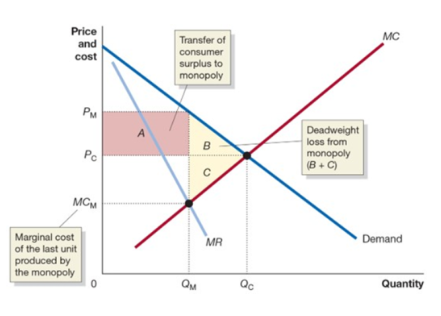
a monopoly will produce a smaller quantity and change a higher price than would a PCM
consumer surplus will fall with higher price
producer surplus must rise, otherwise the firm would’ve chosen the perfectly competitive price and quantity
economic surplus is reduced and there is deadweight loss
the marginal cost of the next unit is less than the price consumers are willing to pay so it should be produced, but it would decrease the monopoly’s profit, so it won’t be
market power
the ability of a firm to charge a price greater than marginal cost
some say market power drives firms to innovate and create new products using their profits
size of efficiency losses
every firm, other than those in perfect competition, have market power, so some loss of efficiency occurs in the market for nearly every good and service
overall loss of economic efficiency is small because most firms face competition
price discrimination
charging different prices to different customers for the same good or service when the price differences are not due to differences in cost
ex) student discount, senior discount
is possible when:
firms possess market power (otherwise they would be price takers)
identifiable groups of consumers have different willingness to pay for the product
arbitrage (buying a product at a low price and selling it for a high price) is not possible either because reselling is not logically possible or because transaction costs are high
increases profits for firms and decreases consumer surplus
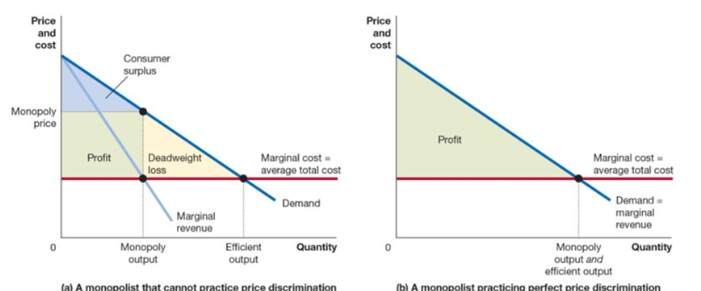
perfect price discrimination
charging every consumer a price exactly equal to their willingness to pay for it
every consumer would by the product, but consumer surplus would be zero, the firm would extract all surplus from the market
shows that price discrimination might increase economic efficiency
antitrust laws
laws aimed at eliminating collusion and promoting competition among firms
collusion
an agreement among firms to charge the same price or otherwise not compete — ILLEGAL
horizontal mergers
mergers between firms in the same industry
vertical mergers
between firms at different stages of the production process (we are less concerned with vertical mergers)
DOJ and FTC Merger guidelines
market definition
measure of concentration
merger standards
market definition
the more broadly defined the market, the smaller (and more harmless) the merger appears
“appropriate market” the smallest market containing the firms’ products for which an overall price rise within the market would result in total market profits increasing
if profits would decrease, there must be adequate substitutes available, hence the market is too broadly defined
measure of concentration
market is concentrated if a relatively small number of firms have a large share of total sales inn the market
merger standards
based on the Herfindahl-Hirschman Index value, the DOJ and FTC will apply standards to decide whether the challenge is a merger
challenged mergers must show that their merger would result in substantial efficiency gains
regulating natural monopolies
local and/or state regulatory commissions typically set prices for natural monopolies instead of allowing them to set their own price
to achieve economic efficiency, regulators should require monopolies to charge a price equal to its marginal cost, but the monopoly will suffer a loss, so regularots set the price equal to average total cost
 Note
Note  Flashcards (123)