PSY290 Lecture 4: Microanatomy & Neural Transmission
 Studied by 0 people
 Call Kai
 Learn
Learn Practice Test
 Spaced Repetition
 Match
Match Flashcards
 Knowt Play
1/4

There's no tags or description
Looks like no tags are added yet.
Name | Mastery | Learn | Test | Matching | Spaced | Call with Kai |
|---|
No analytics yet
Send a link to your students to track their progress
5 Terms
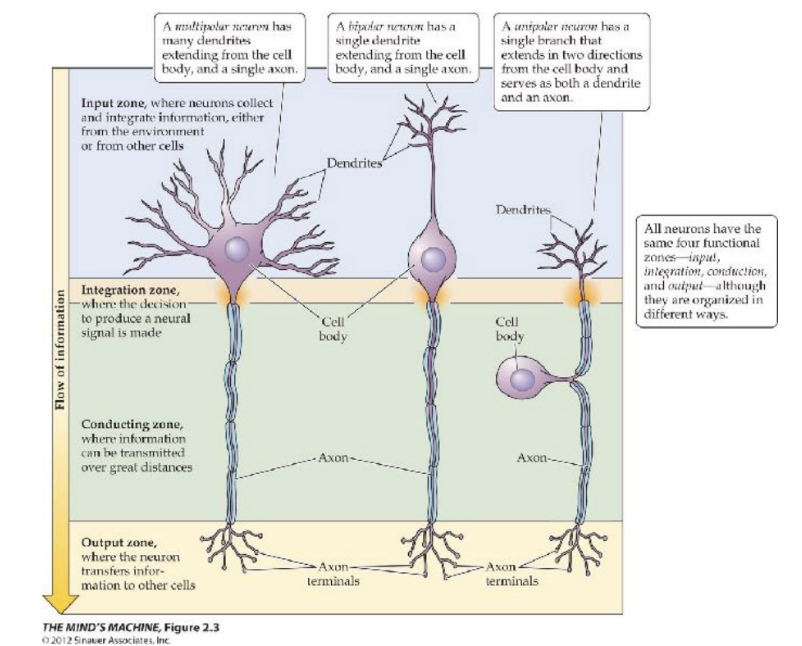
What are the 3 Principal Types that neurons are classified into?
Multipolar neurons
The most abundant neuron in the CNS
Have one central axon extending from the cell body. On the top many dendrites extending from the cell body itself
Multipolar because it has many extensions extending from the cell body
When look at the brain, majority of the neurons (75-85%) are multipolar in nature
Bipolar Neurons
There are 2 opposite ends: has one extension from either end of the neuron
One dendrite at top & other axon at bottom
Unipolar
Only have one extension from a cell body
One core branch that extends off that extension, forming dendrites on one side & axons on other side
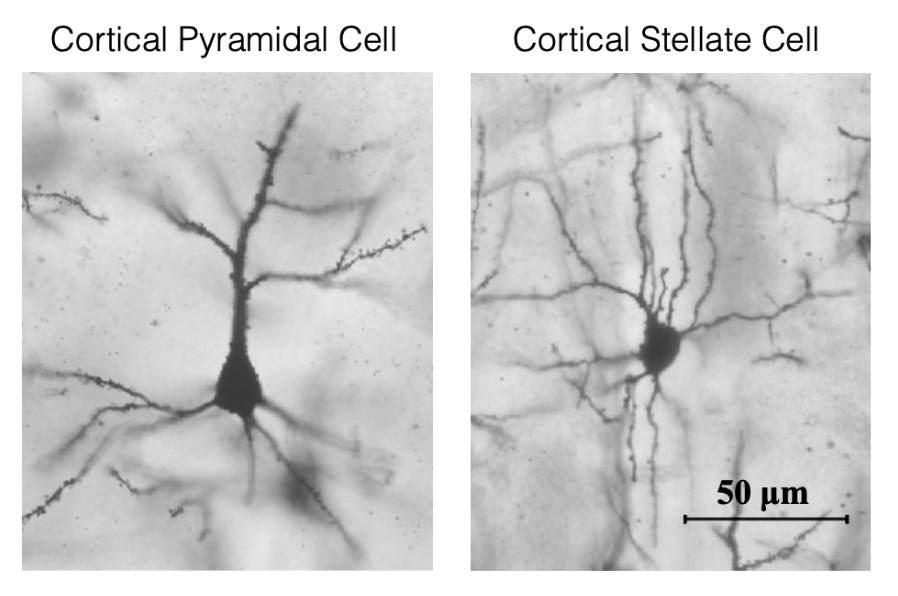
What are Golgi-Stained Pyramidal & Stellate Neurons?
Pyramidal
Triangular shaped body. Soma looks like a pyramid.
Have a few distinct branches extending from it
Has one large trunk. Other branches on the side
These cortical pyramidal cells are the most abundant kind of cell in mammalian cortical structures
Important role in advanced cognitive function in neural processing
Main source of excitatory activity in the brain (generated AP)
Stellate neurons
See one thicker branch & a number of thinner
Thicker branch is the axon & thinner is the dendrites
Less abundant than pyramidal in CNS
Inhibitory activity in brain (sculpt AP)
Bipolar Neurons
Multipolar neurons are most abundant neuron in the brain, they are found everywhere in the CNS. Bipolar & unipolar neurons are more focused or isolated to where we see them
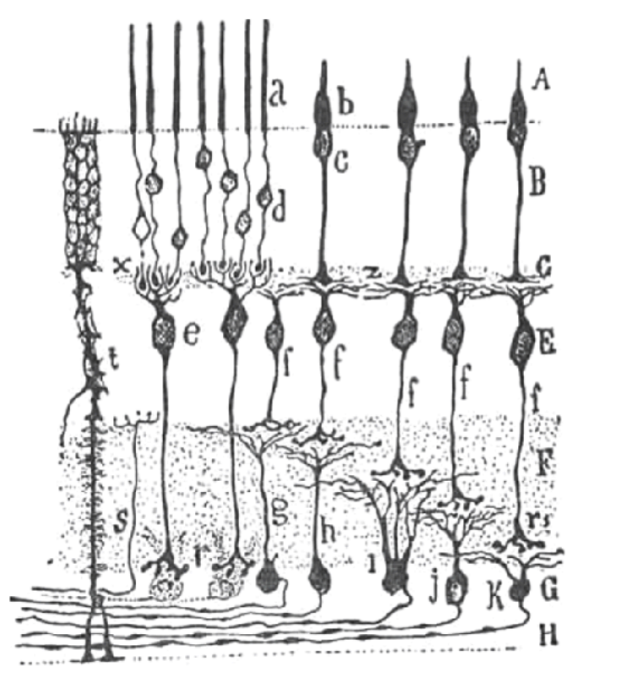
Bipolar neurons often found in sensory system relays to take the transduction of electrical signal from the sensory neuron like a rod or a cone and conduct that activity & transmit it to the brain
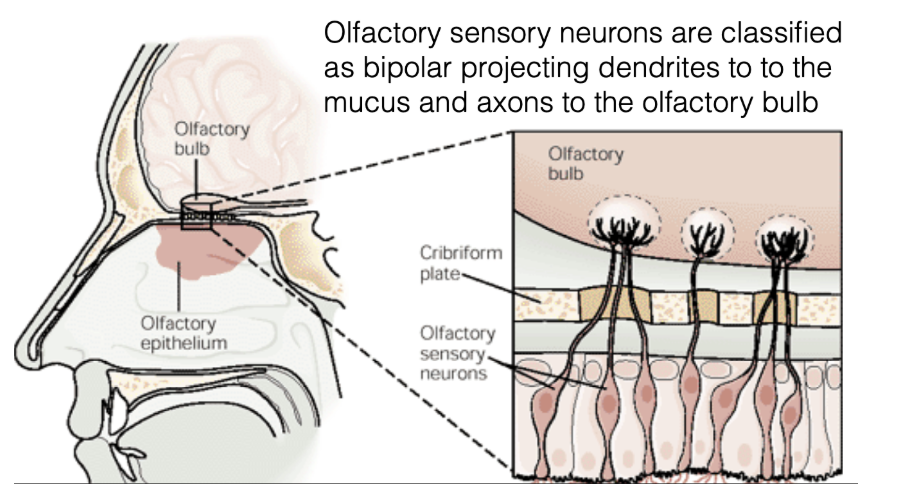
Olfactory neurons are classified as bipolar projecting dendrites which project to the mucus & axons to the olfactory bulb
Bipolar neuron where its dendrites project right through the mucus of our nose, forming dendritic nobes where olfactor cilia exists (the fingers or extensions that detect odour molecules to detect something we smell)
Unipolar Neurons
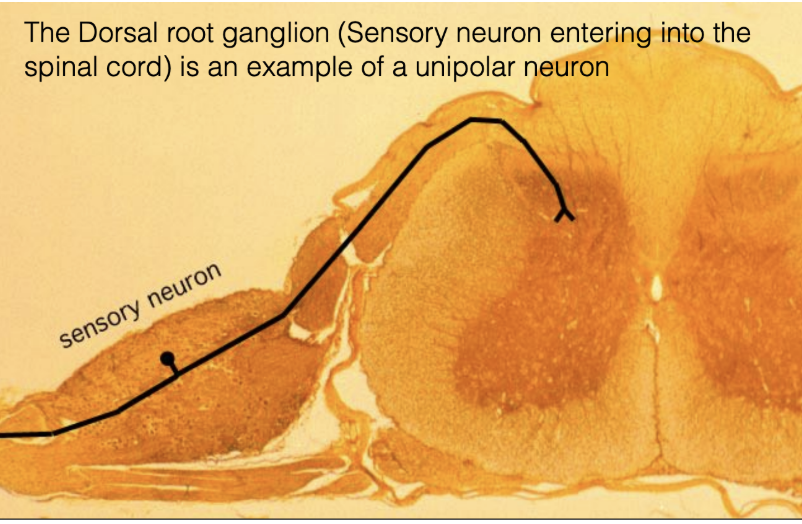
The dorsal root ganglion (sensory neuron entering into the spinal cord) is an example of a unipolar neuron
Unipolar neurons have one cell body with a single extension from it and then two branches off of that extension
One has to be axon and a dendrite, sending information to and from different areas
 Note
Note  Flashcards (31)