Module 3
 Studied by 0 people
 Call Kai
 Learn
Learn Practice Test
 Spaced Repetition
 Match
Match Flashcards
 Knowt Play
1/45

There's no tags or description
Looks like no tags are added yet.
Name | Mastery | Learn | Test | Matching | Spaced | Call with Kai |
|---|
No analytics yet
Send a link to your students to track their progress
46 Terms
Acqurier (Or bidder)
The buyer of the firm
Target
The seller of the firm
Merger Waves
Peaks of heavy activity followed by quiet troughs of few transactions in the takeover markets
Types of Mergers
Horizontal Merger
Vertial Merger
Conglomerate Merger
Horizontal Merger
Target and acquirer are in the same industry
Vertical Merger
A merger of two companies in the same industry that make products required at different stages of production.
The benefit of this is greater coordination, but not always successfully pulled off
Conglomerate Merger
Target and acquirer operate in unrelated industries
Market Reaction and Laws surrounding takeovers
Law requires that shareholders of the target firm who are forced to sell their shares receive a fair value for their shares
This means the bidder (acquirer) is unlikely to get the target firm for less than the current market value, and most times, acquirers pay premiums to the current value
Acquisition Premium
Paid by acquirer in a takeover, it is the percentage difference between the acquisition price and the pre-merger price of a target firm
Reasons to Acquire
Large synergies are the most common reason bidders pay the acquisition premium for the target firm
Types of synergies
Cost reduction synergies: usually due to layoffs of overlapping employees and the elimination of redundant resources
Revenue enhancement synergies: Hard to achieve
Economies of Scale
The savings a large company enjoys from producing goods in high volumns not available to small companies
Economies of Scope
Savings large companies can realize that come from combining the marketing and distribution of different types of related products (basically packaging related products together to save money)
Reason for Mergers: Expertise
Idea that firms need expertise in certain areas to compete more efficiently, in areas like tech, for example, it can be hard to find experienced workers, so companies may purchase an existing firm that has divisions of talent experises
Reasons for Mergers: Monopoly Gains
Occur when a firm merges with or acquires a major rival to reduce competition in the industry, allowing increased profits from greater market share.
Key Points on Monopoly Gains
Reducing competition can increase industry wide profitability
Most countries have antitrust restrictions on mergers
All firms benefit from reduced competition; only the merging firms bear the cost of the mergers
Reasons for Mergers: Efficiency Gains
Another reason acquirers pay premiums for targets is for the efficiencies that can be achieved through the elimination of duplication.
Reasons for Mergers: Diversification Benefits
Risk Reduction
Debt Capacity and Borrowing Costs
Liquidity
Diversification: Risk Reduction
Mergers are justified based on the idea that larger firms bear less unsystematic risk, making the combined firm less risk
However argument ignores fact that investors can achieve diversification benefits on their own by just buying shares of both firms.
Diversification: Debt Capacity and Borrowing Costs
Larger firms are more diversifed which lowers the probability of default as the merged firm can increase its leverage and lower its costs of capital
Diversification Debt Capacity and Borrowing Costs Key Points
Due to Market imperfections such as bankruptcy costs, firms may increase debt and obtain greater tax savings without incurring significant financial distress
Any gains must be large enough to offset the disadvantages of operating a larger, less focused firm.
Diversifcation: Liqudity
Since shareholders of private companies have disproportionate shares of their wealth invested in the company, the liquidity that a bidder brings to the owners of private firms can be valuable and is an important incentive for the target shareholders to agree to the takeover.
Managerial Motives to Merge
Conflict of Interest
Overconfidence
Managerial Motives to Merge: Conflicts of Interest
Managers may prefer to run a larger company due to additional pay and prestige
Managerial Motives to Merge: Overconfidence
The hubris hypothesis says overconfident CEOs pursue mergers that have low chances of creating value because they believe their ability to manage is great enough to make it succeed
The Takover Process: Valuation
Key issues in takovers is quantifying and discounting the value added by the merger, referred to as takeover synergies
The price paid for a target = the target’s pre-bid market capitalization + acquisition premiums
The pre-bid market capitalization is viewed as the stand-alone value of the target
Takeover synergies
Any additional value created by a merger
When do bidder’s consider a takeover to be a postive NPV project
Only when the premium paid does not exceed the synergies created by the takeover.
The Takeover Process: The offer
Once the valuation is complete, they can make a tender offer, using two methods to pay for a target:
Cash transactions where the bidder pays for the target and any premiums in cash
Stock swap transactions where the bidder pays the target by issuing new stock and giving it to the target shareholders, swapping target stock for acquirer stock
Exchange Ratio in Stock Swaps
The number of bidder Shares recieved in exchange for each target share
When a Stock Swap Merger is considered a positive NPV investment for acquiring shareholders
If the share price of the merged firm exceeds the pre-merger share price of the acquiring firm, it is considered a positive NPV investment
Tax and Accounting Issues: Payment Methods
The way an acquirer pays for a target will affect the taxes paid by both the target shareholders and the combined firms.
Payment methods influence the tax consequences of a taxover, with tax effects differing depending on if payment was in cash or stock
Tax Effects of Cash Payments
The target shareholders will face an immediate tax liability
Target shareholders must pay capital gains tax on cash received
The capital gains are calculated as the difference between the takeover price and the original purchase price of the shares
Tax Effects of Stock Swap Payments
When a takeover uses bidder stock to pay the target, taxes for target shareholders are deferred until target shareholders actually sell their new shares.
Tax and Accounting Issues: Purchase Price Allocation
After a takeover, the combined firm must allocate the purchase price to the target’s assets on its financial statements based on their fair market value
Tax and Accounting Issues: Goodwill in Takeovers
Goodwill arises when the purchase price exceeds the fair market value of the target’s identifiable assets.
Goodwill is recorded on the Balance sheet and is tested annually for impairment
Board and Shareholder Approval
For mergers to proceed, both the target and the acquiring board of directors must approve the deal and then put it up to a vote for the shareholders of the target
Friendly Takeover
When a target’s board supports a merger and negotiates with the potential acquirers to then agree on a price that is put to a shareholder vote
Hostile Takeover
When an organization purchases a large portion of a target’s stock and in doing so gets enough votes to replace the target’s board of directors and CEO
Corporate Raider
THe acquirer in a hostile takeover
Reason Acquirers paid large takeover premiums: Competition
There is competition that exists in the takeover market, so once a acqurier starts bidding on a target company, and a clear significant gain exists in acquiring the target, other potential acquirers will start submitting their own bids.
Condition for Acquirer Share Price Increases
After a stock swap acquisition, the acquirer’s share price increases only if the value per share after the merger exceeds the value per share before the merger
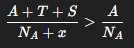
Stock Swap Offers Varible Names
A = Pre-merger Value of acquirer
T = Pre-merger value of the target
S = value of synergies created by the merger
Na = Number of acquirer Shares outstanding before the merger
x = number of new shares issued to acquire the target
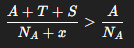
Maxmium Shares Issues (Postive NPV Condition
The maximum number of new shares the acquirer can issue while still achieving a positive NPV
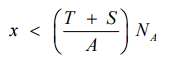
Exchange Ratio for Share Based offers
The exchange ratio expresses the number of acquirer shares offered per target share
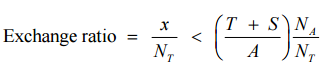
Exchange Ratio using Share Prices
Pt = T/Nt (Target Share Price)
Pa = A/Na (Acquirer Share Price)

 Note
Note  Flashcards (42)