1.4 Government Intervention (EDEXCEL A LEVEL ECONOMICS)
 Studied by 0 people
 Call Kai
 Learn
Learn Practice Test
 Spaced Repetition
 Match
Match Flashcards
 Knowt Play
1/33

There's no tags or description
Looks like no tags are added yet.
Name | Mastery | Learn | Test | Matching | Spaced | Call with Kai |
|---|
No analytics yet
Send a link to your students to track their progress
34 Terms
rule of law, property rights
correction of market failure
equitable distribution of income
improve performance of the economy
Reasons for government intervention
correcting market failure due to negative externalities
INDIRECT TAX:
increases cost of production so less supply, pushes up price so consumers demand less- if equal to social cost then quantity will move to socially optimal levels
regressive
hard to get right
incidence of tax depends on elasticity
reduction in trade depends on elasticity
costs of administration
inflation
main objective of tax
Evaluation of tax to correct market failure
Correcting market failure due to positive externalities
SUBSIDIES:
costs of production are funded so producers increase supply, this pushes down price so consumers demand more- if it is equal to social benefits then quantity will move to socially optimal levels
incidence depends on elasticities
hard to get right
increase in trade depends on elasticities
resources reallocated from other causes (XED)
opportunity cost
Evaluation of subsidies to correct market failure
price control
legally imposed maximum or minimum prices from the government
price ceiling
legally imposed maximum price, imposed when prices rise faster than wages and supports the population so they can afford necessities, only makes sense below equilibrium price
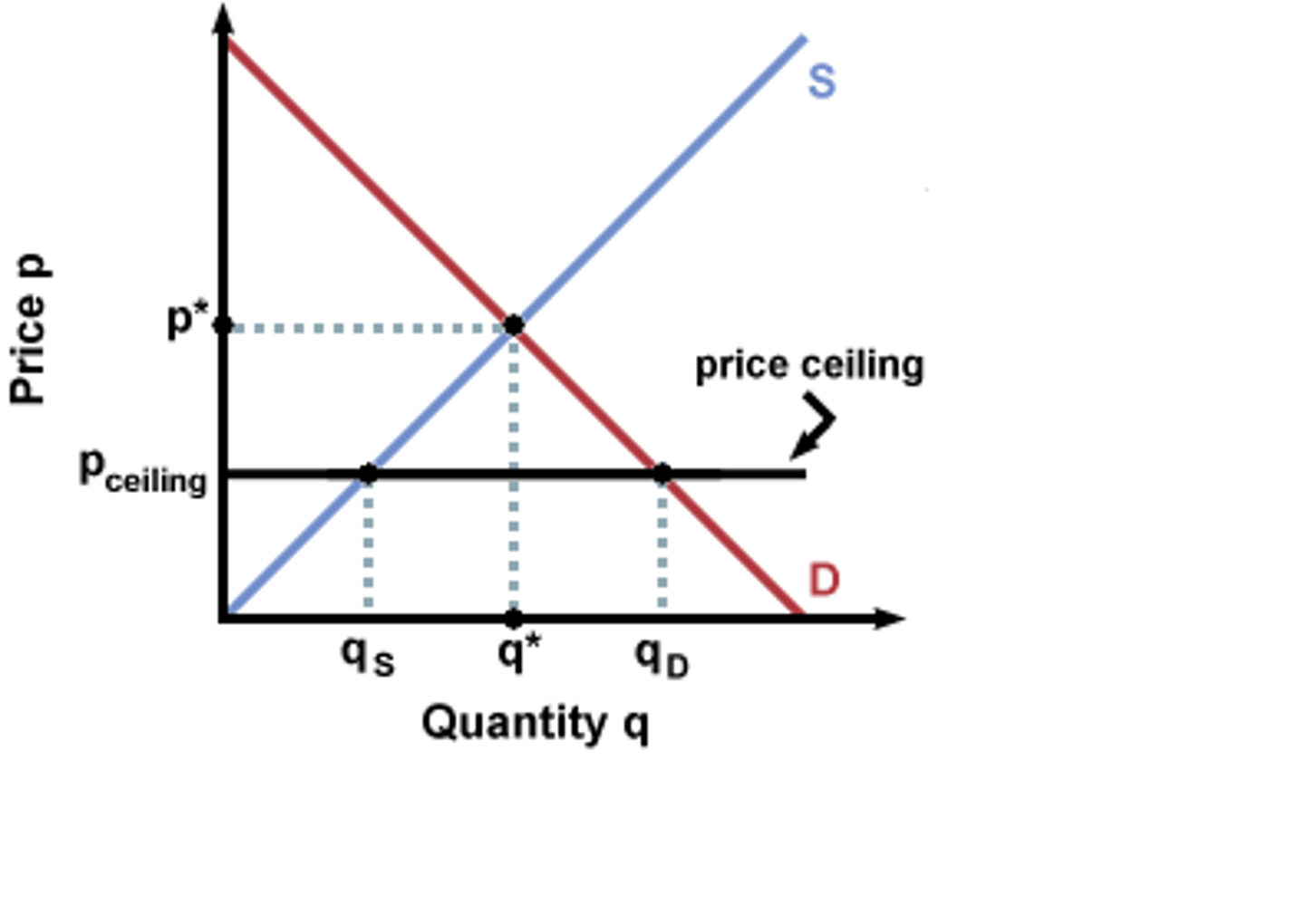
shortage
other means of rationing
hoarding
black market
deteriorating quality
Problems with the price ceiling
low prices
other rationing
low quality
shortage
black market
analysis of price ceilings: consumers
low prices
reduced surplus
less jobs
reduced fund for innovation and growth
analysis of price ceilings: producers
deal with shortages:
subsidies
black market
enforcement
analysis of price ceilings: government
depends on difference between cap and market price
depends on PES and PED
inefficient use of resources by consumers (buying more than needed)
evaluation of price ceilings
price ceilings and elasticities
the more inelastic the less the impact of price ceilings
price floors
legally imposed minimum price
only makes sense above equilibrium price
imposed if price of labour falls (ensures people have enough money)
protects industries and jobs
reduces consumption of demerit goods
high price
less choice
less surplus
depends on elasticities
have less money to spend elsewhere
analysis of price floors: consumers
increased surplus (if bought by gov)
excess supply
less profits
increased revenues
less incentive to innovate
analysis of price floors: producers
have to deal with excess supply:
intervention buying
opportunity cost of this
analysis of price floors: government
price increase fully passed to consumer
excess supply on black market
cross border shopping (bad for local business)
reformulation of bad goods
harmful substitutes
no tax revenue
expensive to enforce
should be set at a level to reduce to socially optimal quantity
evaluation of price floors
tradable pollution permits: why not tax
no guarantee to reduce pollution
unlikely to have significant effect as energy has inelastic demand due to it being an essential
rich firms can cover cost and carry on polluting
tradable pollution permits
limits place on carbon emissions through permits which can be freely traded
fines imposed if limits exceeded
those who underproduce can sell excess permits
internalises external costs
biggest polluters pay the most to pollute, most compensation for negative externalities
advantages of tradable pollution permits
incentives to reduce pollution (can profit off it)
market based (pollution reduced at the lowest cost)
firms decide their most efficient solution
disadvantages of tradable pollution permits
hard to decide appropriate levels
administration costs
difficult to set the right amount of fines
restriction to competition
uneven geographical pollution
requires international cooperation
no tax revenues
decreasing tradable pollution permits
the government reduces the amount of permits supplied each year, this causes the price of permits to increase each year until eventually it is cheaper to reduce pollution than to buy more permits
command and control intervention
legally enforced rules on producers and consumers to regulate their behaviour
reduce external costs or increase external benefits
best suited to inelastic PED where taxes have little effect
restricted choice
maximising MPB is limited
analysis of command and control: consumers
cost of regulation
barriers to entry-reduced competition
analysis of command and control: producers
cost of enforcement
regulatory capture
analysis of command and control: government
provision of information
government led initiative to inform producers and consumers of the true costs and benefits of their activity
reduce or increase demand
improve health
better choices
analysis of provision of information: consumers
respond to changes in preference
analysis of provision of information: producers
minimise cost and maximise benefit
cost of campaigns
analysis of provision of information: government
may be expensive
cost benefit analysis of who to target
evaluation of provision of information
government provision of public goods
normative issue
provided on grounds of: need (eliminate free riders), fairness, efficiency (economies of scale- larger scale= smaller cost per unit), social welfare
evaluation of government provision of public goods
lack of competition
no incentive to innovate
private sector crowded out- loss of innovation and employment
 Note
Note  Flashcards (156)