sheep scab, lice and keds
 Call Kai
 Learn
Learn Practice Test
 Spaced Repetition
 Match
Match Flashcards
 Knowt Play
1/17

There's no tags or description
Looks like no tags are added yet.
Name | Mastery | Learn | Test | Matching | Spaced | Call with Kai |
|---|
No analytics yet
Send a link to your students to track their progress
18 Terms
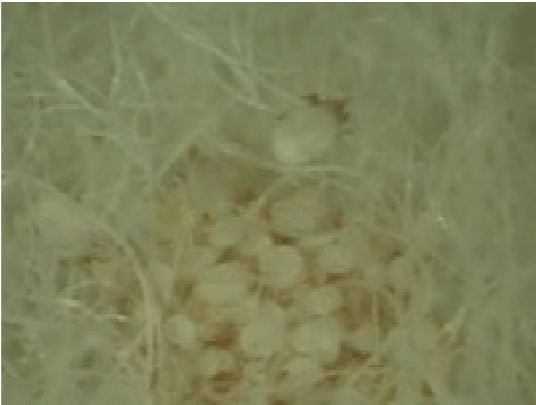
= psoroptes ovis
mite
sheep scab/ vine psoroptic mange
intense itching, lesions, wool loss, weightloss or reduced weight gain in lambs, ear twitching, dirty marks around shoulders where there scartching with there back legs
similar clinical signs to louse infestations, scrapie
skin scraping or ELISA to differentiate
worldwide - eradicated in New Zealand and Australia
primarily sheep and also cattle
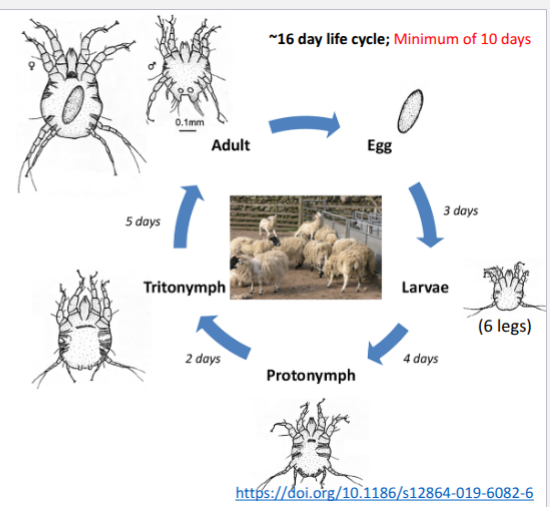
psoroptes ovis life cycle and feeding
non-burrowing = feeds at surface of skin, lipids, superficial fluids, cells in serous exudate, bacteria, lymph
sensitive to desiccation so longer fleece ideal - provides micorclimate to them so see outbreaks or increased in severity of clinical signs in winter period
~ 16d life cycle - can be as fast as 10d when warmer
males look different to females
psoroptes ovis pathogenesis
type I hypersensitivity response( to things in faeces) -get serous exudate that might feeds on and then it heals over and mites move to edge of scab and same occurs, severe pruritis
chronic exudative superficial dermatitis
centre of lesion forms a crust, mites move to edge, more hypersensitivity, lesion grows
can cover ¾ of body within 6-8wks - can be fatal
mite density highest around moist edge of lesion
clinical signs =
chronic skin changes, hyperkeratosis
aural haematomas
lesions across neck, back, shoulders, flanks
intense pruritis - even after treatment due to dead mites still being stuck in the fleece so need time for mites to drop off
30% decrease weight gain
weight loss
decreased birth weight - about 10% if lamb born to a ewe who had an active infestation
restlessness
wool loss
epileptiform seizures - touching sheep may induce seizures
death if left untreated
secondary bacterial infections
psoroptes ovis diagnosis
blood ELISA - detects IgG in sheep serum 2 weeks after infestation and before appearance of clinical signs
useful for brought in sheep for detecting infestations before you introduce them into the flock and prevents unnecessary treatments
clinical signs and mite ID - skin scrapes
part wool to examine for lesions
superficial skin scrapes using scalpel - around edge of lesion - do several lesions and several animals - absence of mites doesn’t confirm absence of mites in flock so used to confirm diagnosis
macerate scabby material in 1-5% KOH for 5-10mins to release mites
view under microscope, look for live mites, cuticles from moulting mites, eggs
co-infestation with chewing lice and forage mites may also be present
psoroptes ovis - morphology/ID
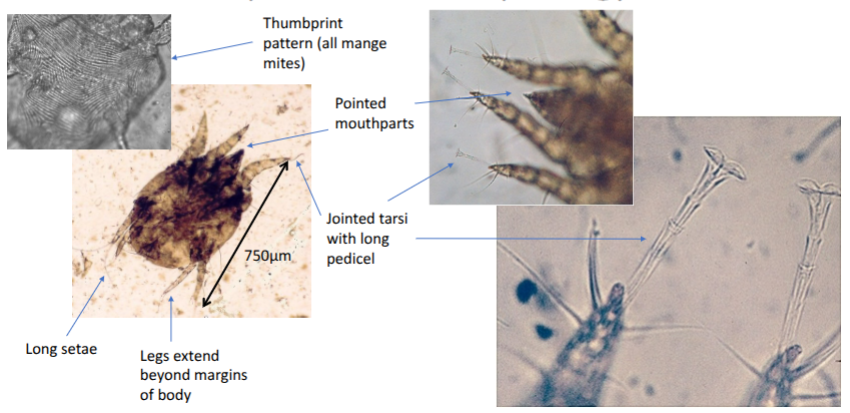
thumbprint pattern
pointed mouth parts
jointed tarsi with long pedicel
legs extend beyond margins of body
long setae = hairs on mite
males a little bit smaller than females
tarsi = pedicels
forage mites and chewing lice
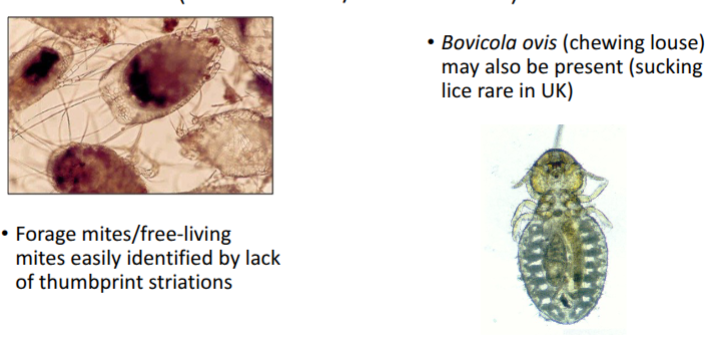
forage mites/ free living mites easily identified by lack of thumbprint striations
globular and darker
bovicola ovis = chewing louce may also be present
can get coinfection
transmission of psoroptes ovis
direct contact
common grazing
neighbours sheep - single fence
indirect - fomite
mites survive off-host for ~16 days
how are new infestations introduced to farm
mixing with other farms on common grazing
bought in sheep not treated on arrival
rented land contaminated by previous occupants - if <16d between them
poor fencing - stray sheep, contact with neighbours sheep
contaminated lorries, shears, trailers etc - if <16d between uses
contact in markets or fomites in showing pens
epidemiology and risk factors of sheep scab
late-autumn/ winter disease
longer fleece in winter
shearing reduces population in summer as it reduces microclimate for mites
resevoirs of infection - axilla, ears, skin folds - protects them from UV so stay here through summer
upland regions and areas with common grazing have higher probability of reporting sheep scab - highlands, wales, peaks, lakes, northumberland, SW England
most outbreaks are repeat outbreaks
most common risk factor was common grazing
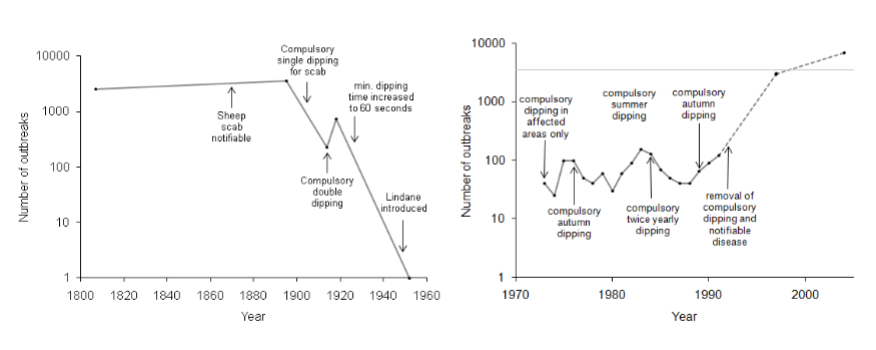
current legislation
sheep scab order 1997(England and Wales)
sheep scab(Scotland) order 2010
legal requirement to treat affected sheep and entire flock - if they show any clinical signs or confirmed cases
movement restrictions
notifiable disease - Scotland only
preventing infestation
avoid introduction
quarantine and test/ treat bought-in sheep - ELISA 14d after purchase, treat(if high risk or ELISA+) with OP dip or a macrocyclic lactone = moxidectin (injection)
consider options for sheep returning from shows/markets
disinfect shearing equipment/ transport
prevent contact
double fencing with gap in between - expensive
treat prophylactically - esp if using common grazing or come into contact with other sheep regularly
organophosphate dip(diazinon) - protects for 60d
moxidectin injection 1% - protectd for 28d
moxidectin injection LA(long-acting) - protects for 60d
treating infestations/ outbreaks
treat all individuals in flock
dipping with organophosphate(diazinon) - should be in swimming dip for 60secs and head must go under 2x
moxidectin injection 1% - 2× 10d apart
moxidectin injection LA(long-acting) - only need 1 injection
doramectin injection - some resistance to it
ivermectin injection - 2× 7d apart - to kill larvae and nymph that have emerged from the eggs since the first injection
beware of retreatment intervals and of selection for resistance
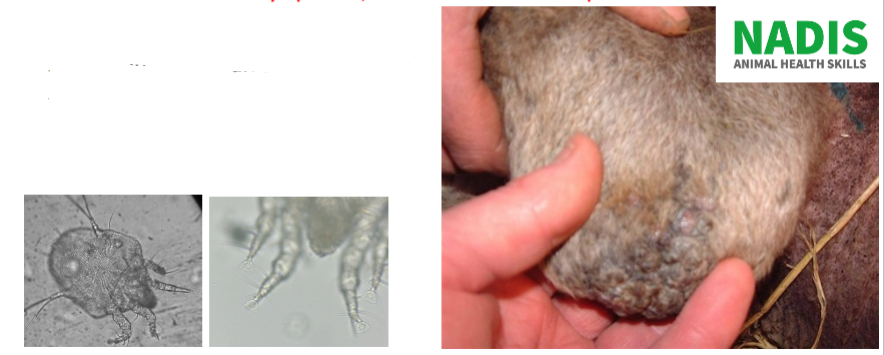
choriotpes bovis - chorioptic mange
sheep adapted strain
affect hairless areas rather than wooly areas
more common than sheep scab but less severe
lice of sheep
bovicola ovis - chewing louse, common worldwide
suckling lice less important - linognathus pedialis( foot louse) and L. ovillus(face louse)
less important as sheep treated regularly with MLs
Bovicola ovis and diagnosis
wool loss
restlessness
itching
reduced appetite
rubbing
lesions attract blowflies
diagnosis = adult lice next to skin, eggs on wool
Bovicola ovis epidemiology and control
11% prevelance
upland farms and common grazing are risk factors
quarantine brought-in stock for 3 weeks
remove potential fomites from housing can persist in wool
severity varies between individuals
shearing reduces populations in summer
need accurate diagnosis to inform correct control
differential = p.ovis(sheep scab)
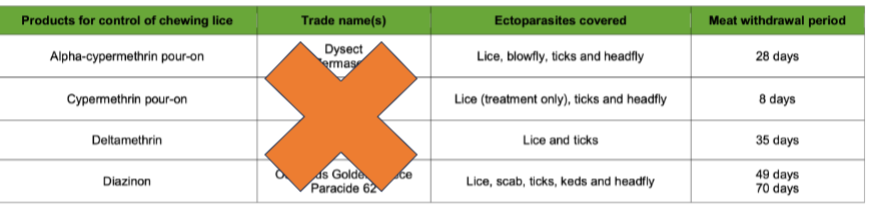
treatment = synthetic pyrethroids or organophosphate dip(diazinon)
treatment options for chewing lice
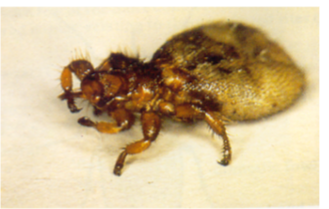
melophagus ovinus - sheep keds
diptera - flies without wings - entire life cycle is on sheep
direct transmission
mainly winter problem
suck blood, causes pruritis, loss of condition
transmits non-pathogenic trypanosoma melophagium
rare in UK as sheep are treated by macrocylic lactones - systemic injections - blood feeding

