PSY10060-Brain and Behavior Lecture 4: Neurons and Synapses
 Studied by 0 people
 Call with Kai
 Learn
Learn Practice Test
 Spaced Repetition
 Match
Match Flashcards
 Knowt Play
1/32

There's no tags or description
Looks like no tags are added yet.
Name | Mastery | Learn | Test | Matching | Spaced | Call with Kai |
|---|
No study sessions yet.
33 Terms
What additional property distinguishes neurons from other cells?
-Can transmit electrical signals quickly over long distances
-When the signals arrive at their endpoints they trigger a special kind of chemical signaling
What are the four zones of importance in a neuron and what are their associated roles?
1. Dendrites (collecting)
2. Soma (integrating)
3. Axon (conducting)
4. Axon terminals (outputting)
What do dendrites look like? What is their role?
-Different shapes
-Long branching extensions from the cell body
-Specialized for COLLECTING information signals
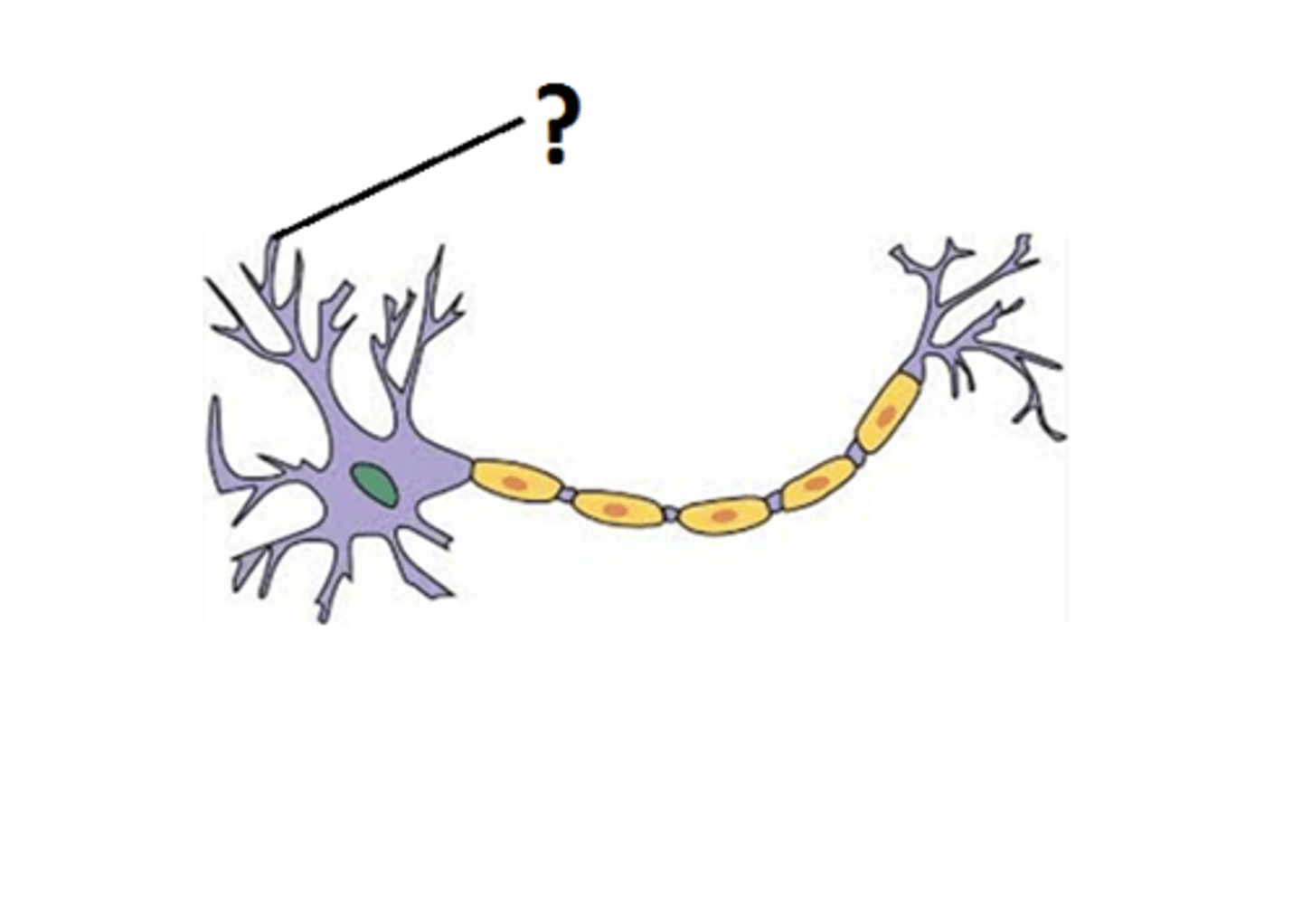
What is the relationship between a dendrite and a soma?
The dendrites pass information to the soma
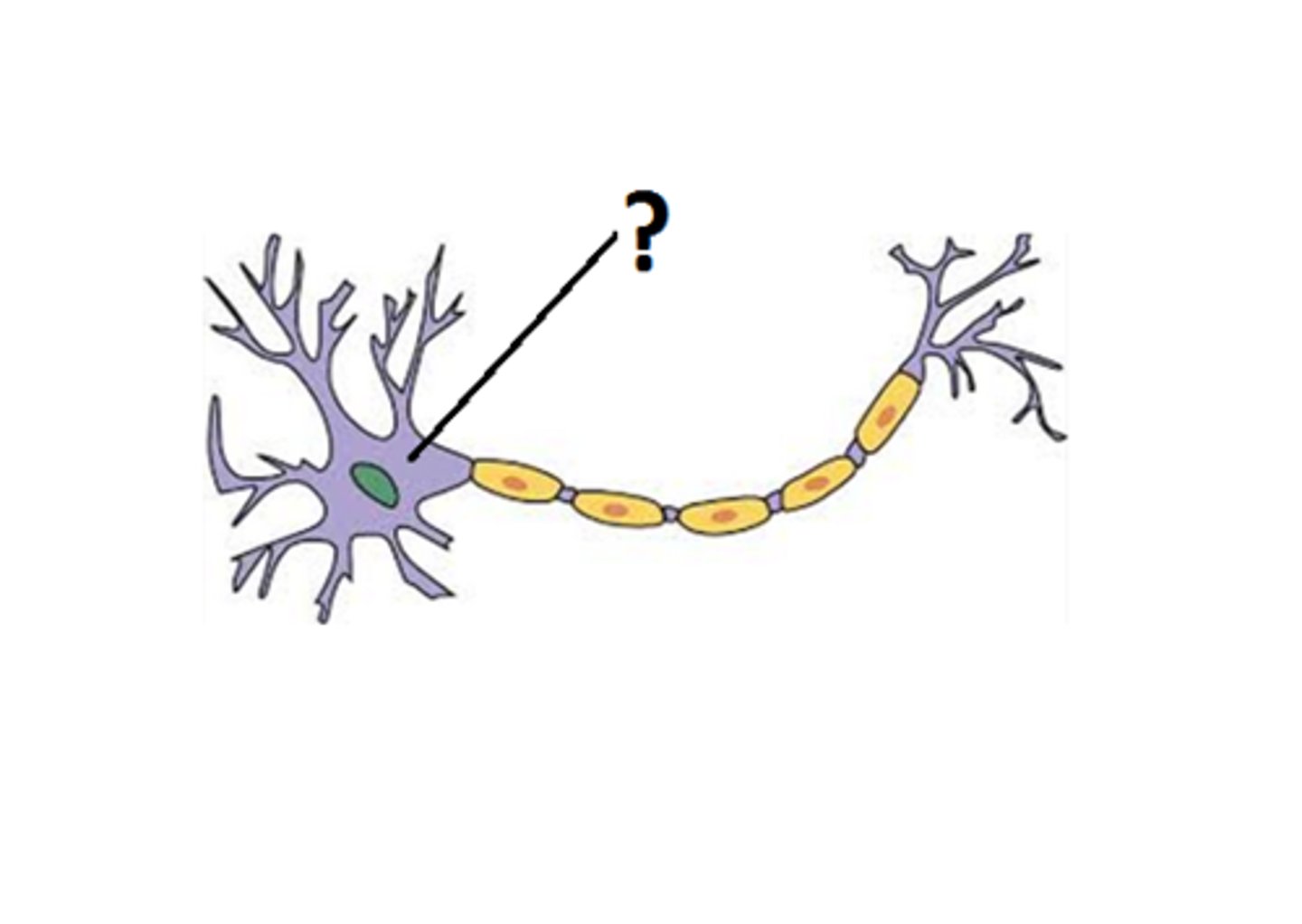
What is a soma? what is its role?
-Soma = cell body
-Nucleus: regulates cell activity
-10 to 25 micrometers
-Plays a key role in integrating signals that come from dendrites
What is an axon? What is its role?
-Nerve fibre
-Long extension (just one unlike dendrites)
-Much longer than dendrites
-Can carry signals from spinal cord to big toe
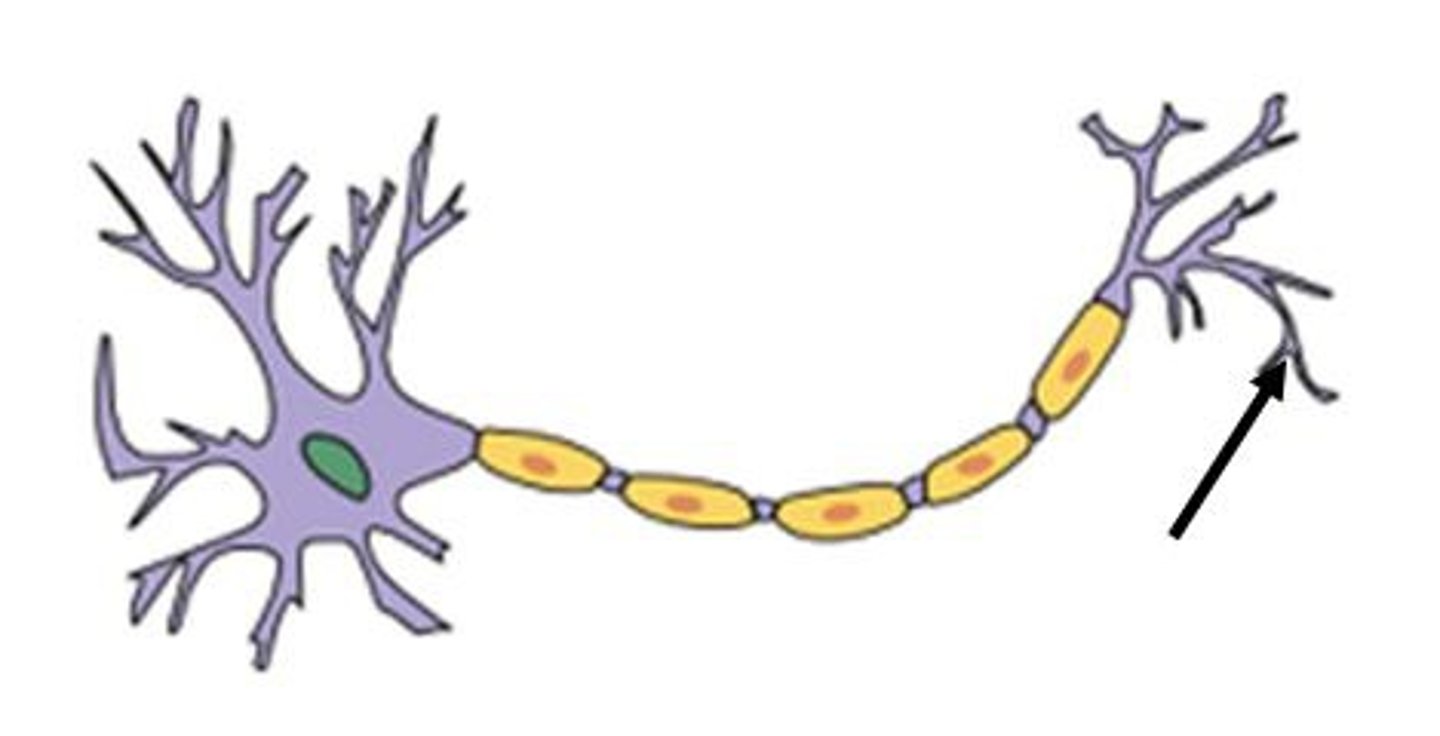
What is an axon terminal (axon button)?
-Axon branches at its end splitting into 10,000 axon terminals (axon buttons)
-Small swellings at end tips
-Contains packages of chemicals that can be released into the space between cells
-Terminals are optimize for OUTPUT of signals
What is a synapse?
-Main location of signal transmission
How many synapses do we have? Does that number stay constant throughout our life?
-3 y.o has quadrillion
-Synapse numbers decrease with age
-Adults contain between 1000 and 5000 trillion
-Cubic mm of cerebral cortex contains more of these tiny connections than people on the planet
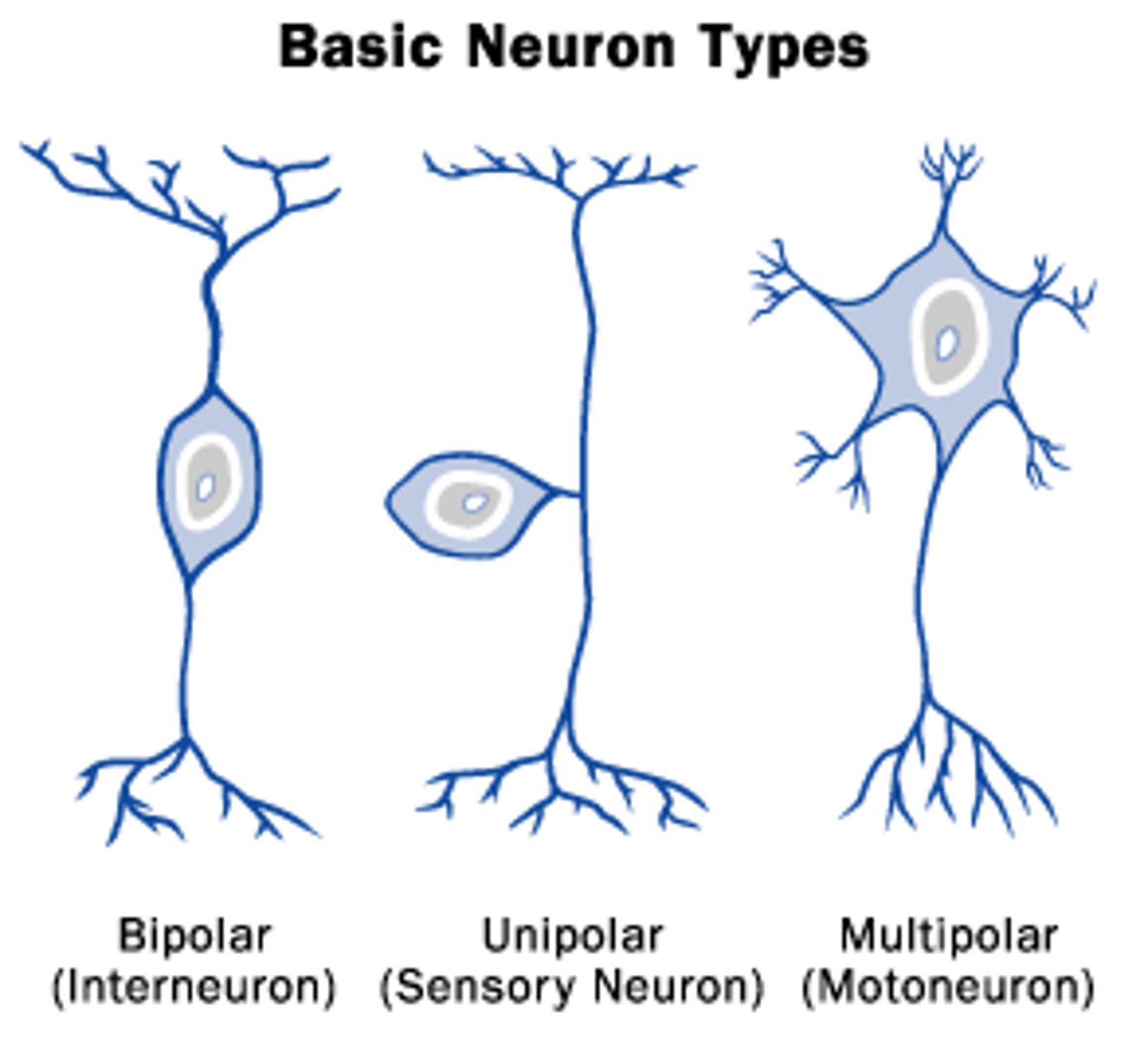
What are the 3 neuron types? What are their roles?
Classified by function:
1. Sensory neurons/Afferent neurons (Arrival)
2. Motor neurons: Efferent neurons (Exit)
3. Interneurons -between the sensation of a signal and the action
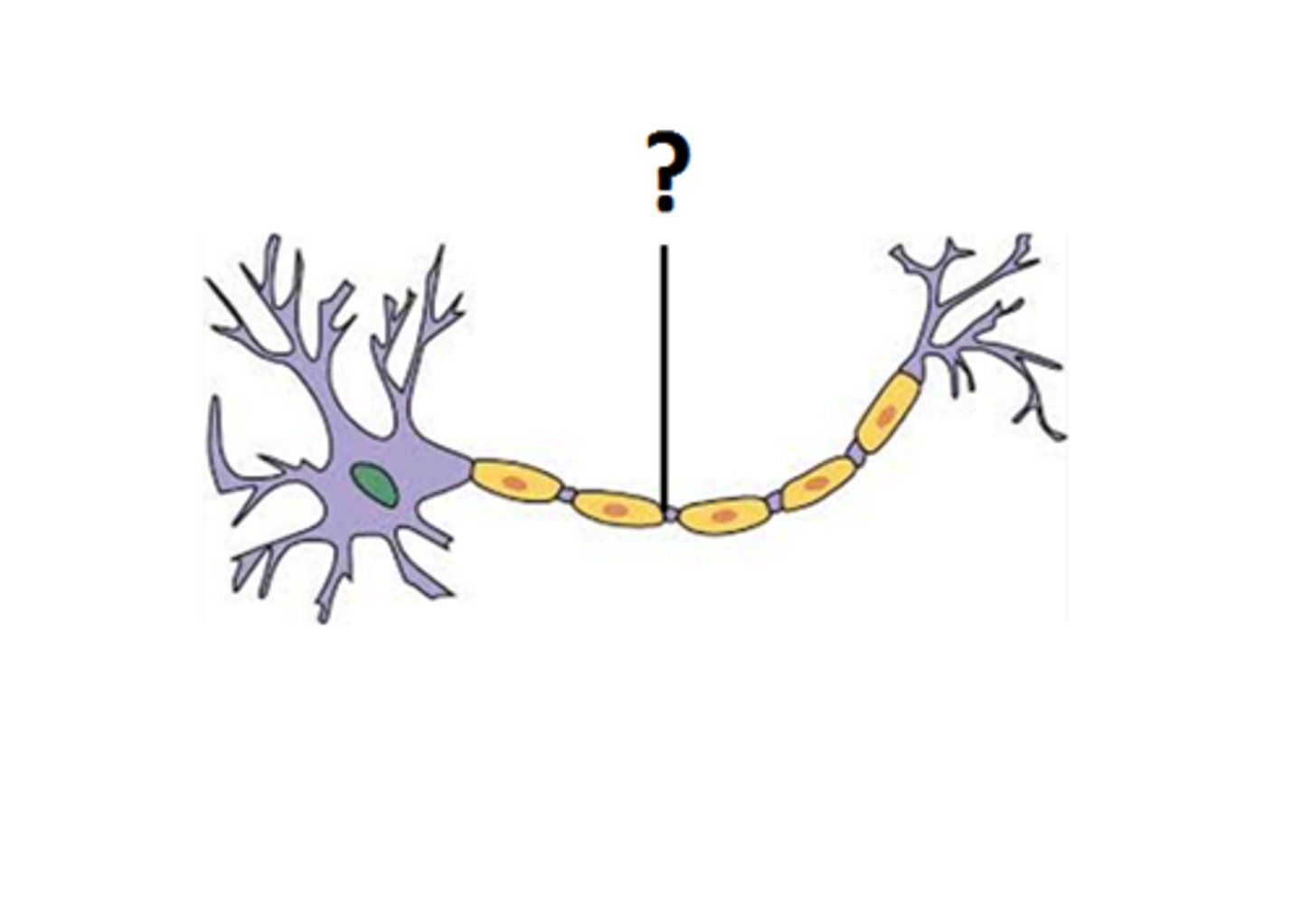
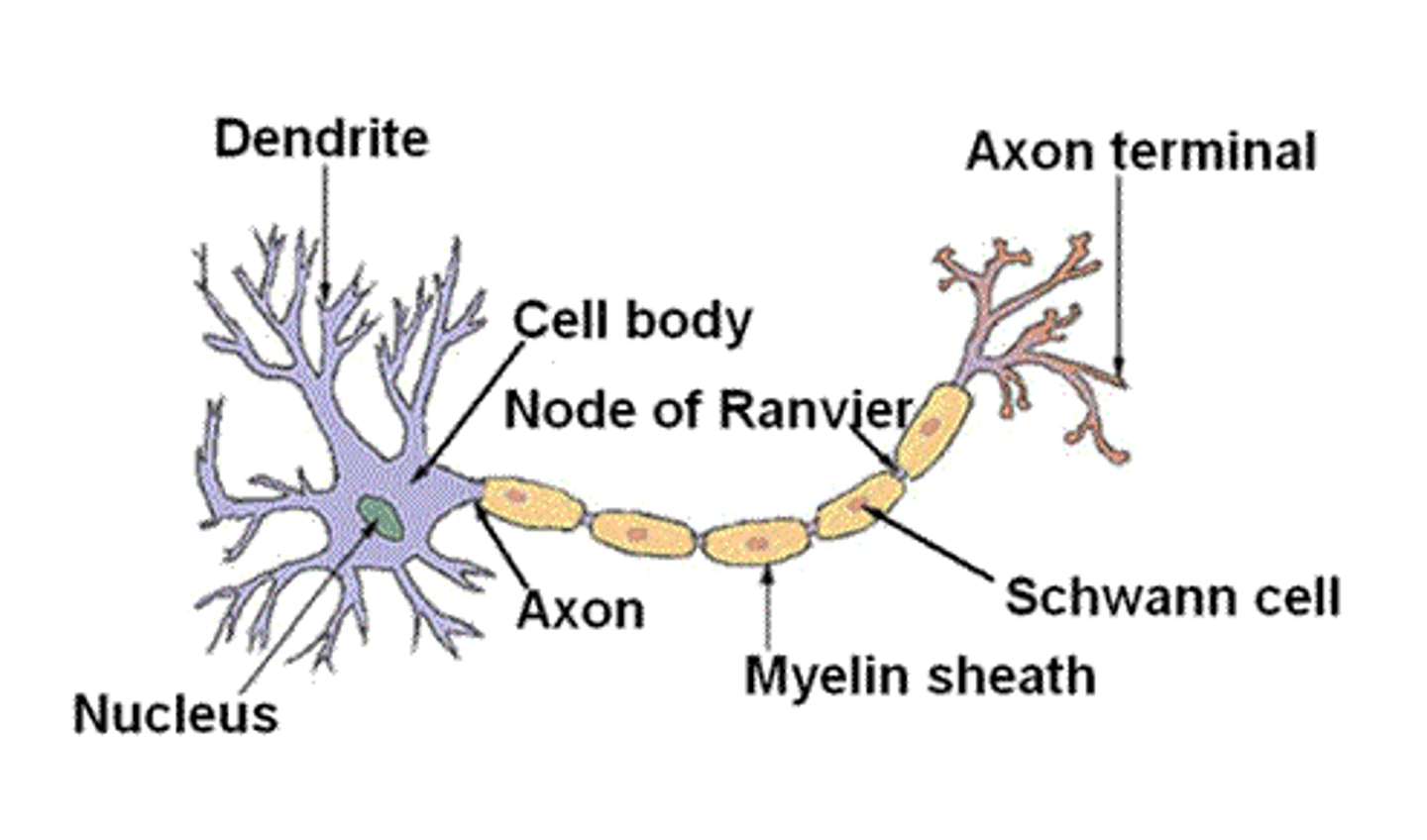
What are the eight sections of a neuron?
1. Dendrite
2. Cell body (Soma)
3. Nucleus (within soma)
4. Axon
5. Myelin sheath (covers the axon)
6. Schwann cell (provides support and insulation)
7. Node of Ranvier
8. Axon terminal
What are the 4 types of Glia?
1. Oligodendrocytes
2. Schwann cells
3. Astrocyte
4. Microglia
What are the functions of glia?
1. Myelin sheath (accelerates axonal transmission
2. Transport nutrients to neurons
3. Clean up debris
4. Digest parts of dead neurons
5. Helps to hold neurons in place
What is multiple sclerosis?
MS is an auto immune disease: The immune system attacks healthy CNS tissue, mistakes own bodys's healthy tissue for foreign tissue
What are the consequences of multiple sclerosis? What functions can be affected?
Consequence: a process called demyelination in which the loss or damage to the myelin sheath disrupts normal nerve signal transmission
-Myelin sheaths become scarred (sclerotic)
-Small isolated area -varied symptoms: balance, speech, muscle weakness, vision, fatigue and pain
How do neurons communicate across these small spaces? Who discovered this process?
1921 Otto Loewi discovered neurotransmission, that the signal from the axon is chemical
What is a synaptic cleft? What is its role? What is a synaptic vesicle and what is its role?
Synaptic cleft: Microscopic gap between two neurons allowing communication via neurotransmitters
-Neurotransmitter molecules are contained within a Synaptic vesicle
-Vesicle fuses with outer membrane and molecules spill into cleft
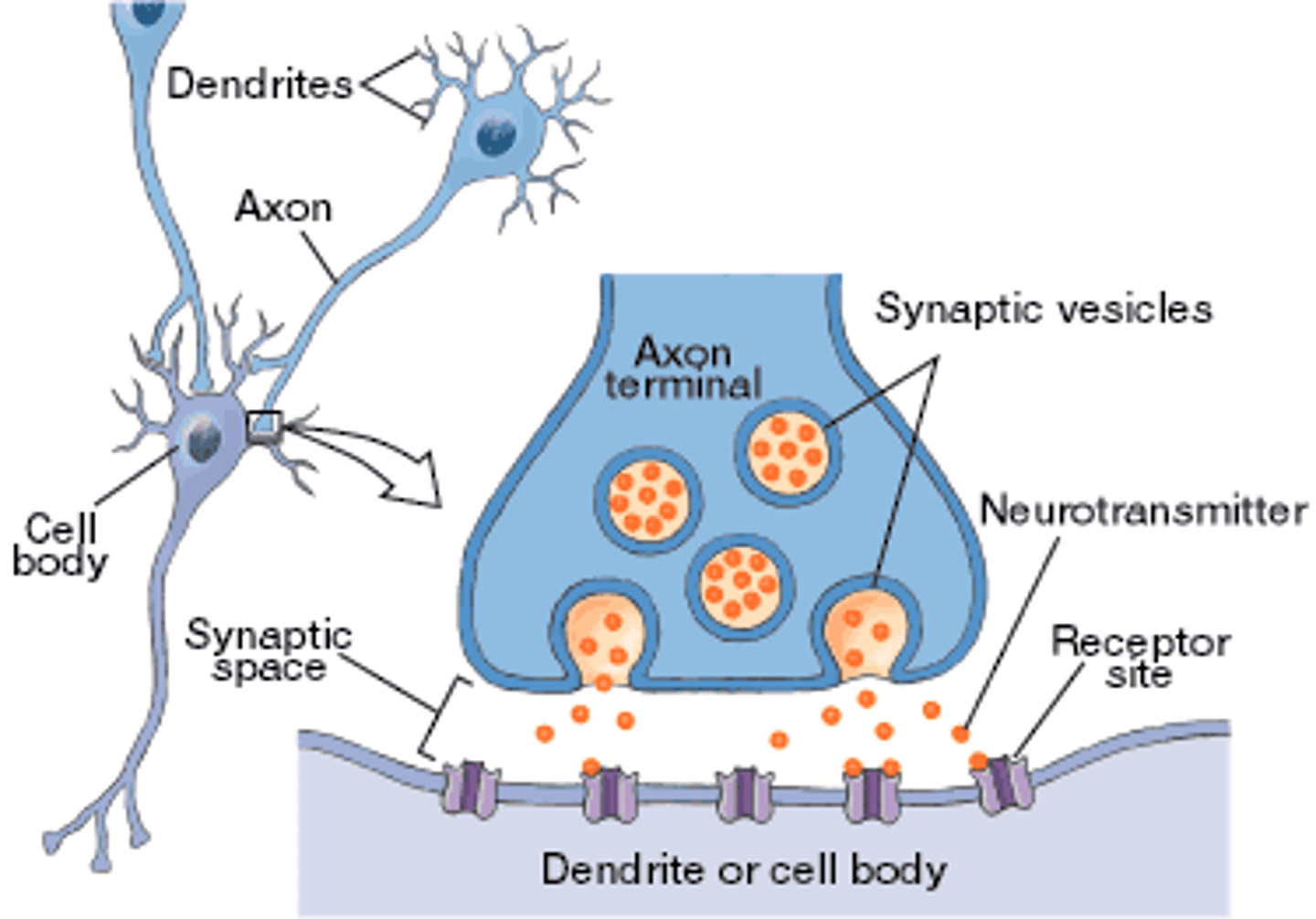
What are neurotransmitters? How do they release their effect?
-Chemicals that transmit messages between neurons or from neurons to other cells
-Neurotransmitters release their effect by binding to receptors
-Many different types
What are the three types of action of neurotransmitters?
1. Excitatory (stimulate)
2. Inhibitory (block)
3. Modulatory
How many types of neurotransmitter do each neuron generally release?
Each neuron generally synthesizes and releases a single type of neurotransmitter
What are 6 key neurotransmitters and their roles?
1. Glutamate: primary excitatory transmitter
2. Dopamine: reward learning, muscle control
3. Serotonin: Mood, memory, sleep, appetite
4. Norepinephrine/noradrenaline: Sympathetic NS, alertness/attention
5. Acetylcholine: autonomic NS, movement, cognition
6. Histamine: metabolism, temp control, regulating various hormones, sleep-wake cycle
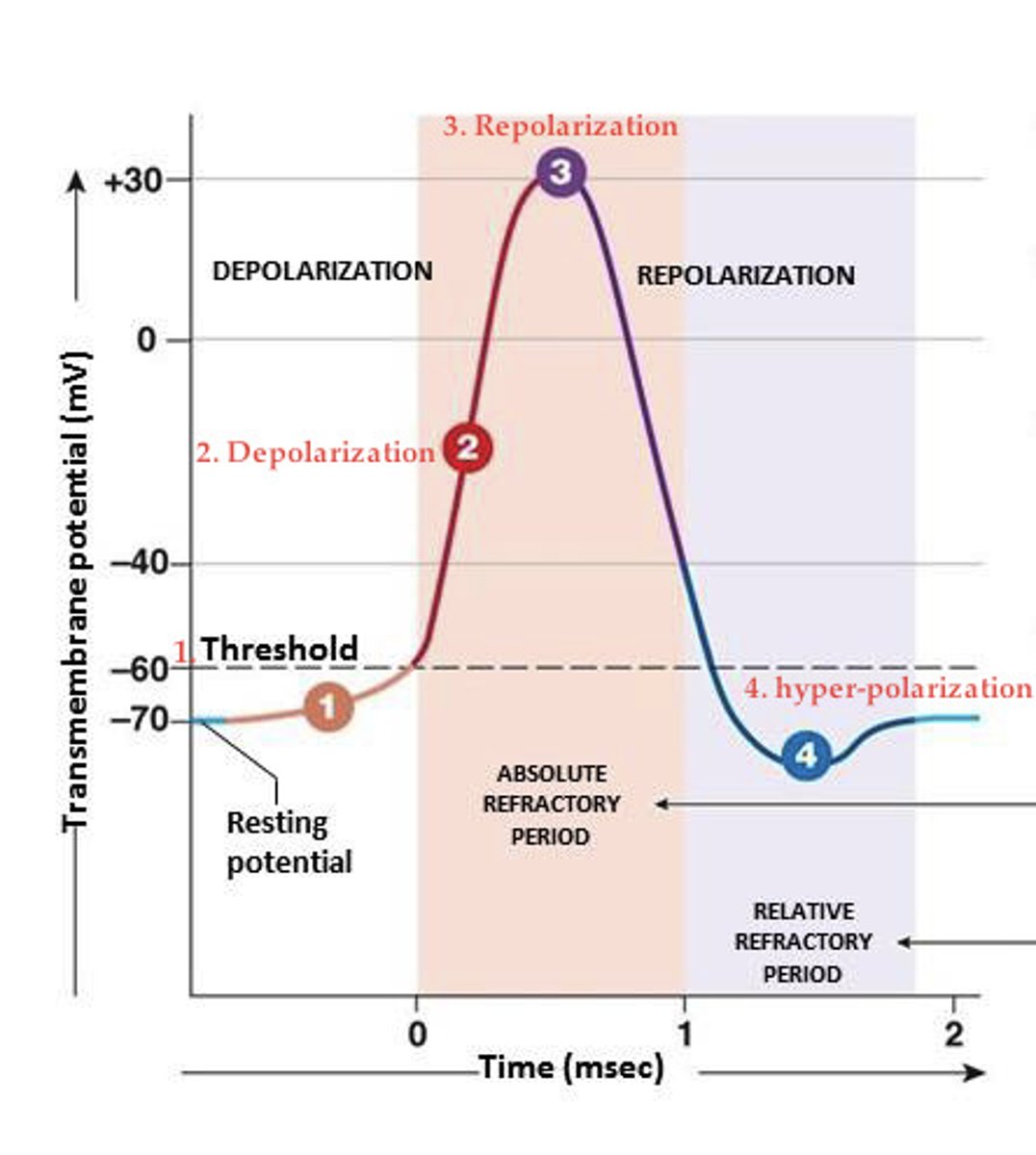
What is an action potential?
Electrical impulse that travels down the axon triggering the release of neurotransmitters (signals by which neurons communicate)
-Also called nerve impulse or spike
-Cycle of depolarization and repolarization
What two ions play key roles in action potentials?
1. Sodium
2. Potassium
How concentrated is sodium (Na+) in and outside the cell when an action potential is at rest?
At REST there is a HIGH concentration of SODIUM (NA+) OUTSIDE the cell and there is a much LOWER concentration of SODIUM (NA+) on the INSIDE of the cell
How concentrated is potassium (K+) in an outside the cell when an action potential is at rest?
At REST there is a LOWER concentration of POTASSIUM (K+) OUTSIDE the cell and there is a much HIGHER concentration of POTASSIUM (K+) on the INSIDE of the cell
What is the name of pufferfish poison? What does it cause?
-Tetrodotoxin (poison)
-Prevents the transmission of action potentials
At resting state what is the membrane potential in voltage?
-70 mV
What happens if the stimulus causes the voltage to go from -70 (resting state) to -55 (threshold)?
It triggers opening of sodium/Na+ channels (gated ion channels)
-This lets positive sodium/Na+ ions into the cell causing depolarization
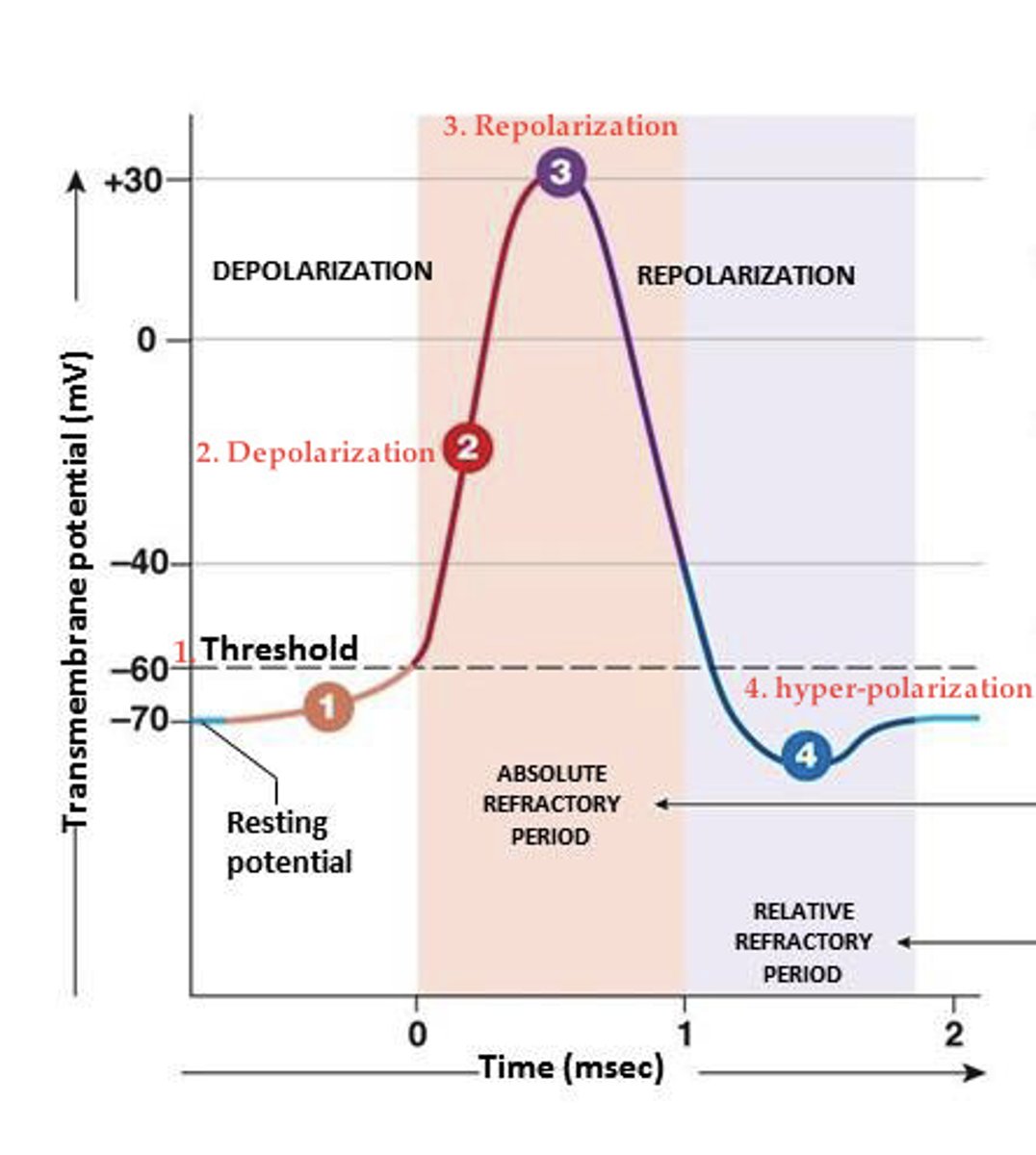
What happens when the voltage of the membrane potential spikes to +40 following the ion exchange?
It reaches its action potential and closes the positive Na+ channels. The influx of Na+ causes the K+ channels to open resulting in repolarization of the membrane potential.
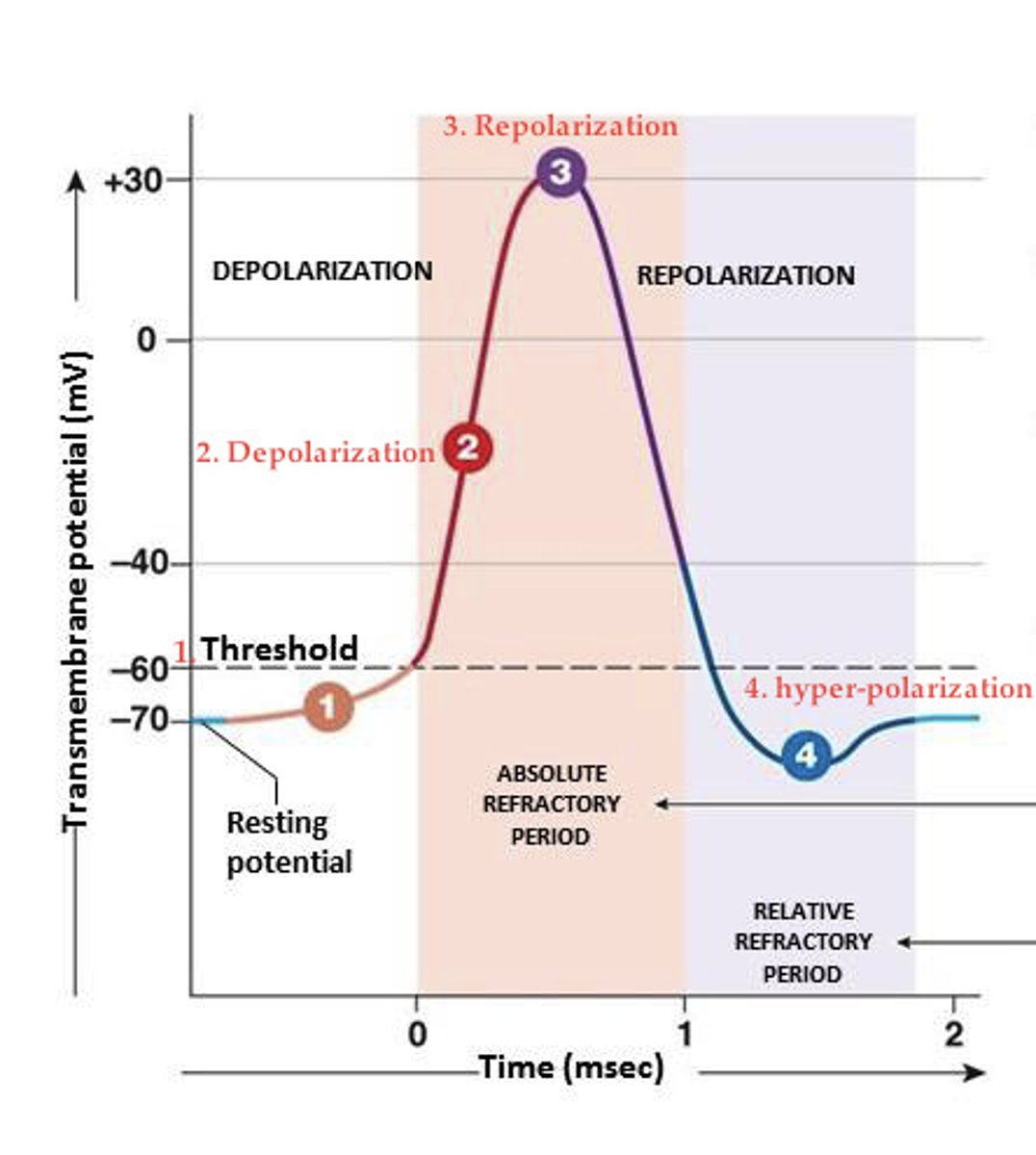
What stage follows the depolarization of the membrane potential?
When the K+ channels open causing a large brief reversal of polarity (repolarization) and becomes hyper polarized, before eventually returning to its resting state.
How does an action potential help pass signals?
The action potential fires, this electrical signal travels along the axon to the terminal, causes axon terminal to release neurotransmitters into synapse, dendrites of other neurons then absorb neurotransmitters and the chain continues
What is a nerve?
Bundle of axons traveling along together
What is a refractory period?
A period immediately following stimulation during which a nerve or muscle is unresponsive to further stimulation
 Note
Note  Flashcards (76)