Applied Human Genetics

0.0(0)
studied byStudied by 1 person
0.0(0)
full-widthCall Kai
learnLearn
examPractice Test
spaced repetitionSpaced Repetition
heart puzzleMatch
flashcardsFlashcards
GameKnowt Play
Card Sorting

1/12

encourage image

There's no tags or description

Looks like no tags are added yet.

Study Analytics
Name
Mastery
Learn
Test
Matching
Spaced

No study sessions yet.

13 Terms

1
New cards

Human Genetics

the physical characteristics that are common genetic traits inherited from one generation to the next

- dominant and recessive traits

2
New cards

Free vs. Attached earlobes

Free earlobes

- dominant trait

- hang below the point of the attachment to the head

Attached earlobes

- recessive trait

- are attached directly to the side of the head
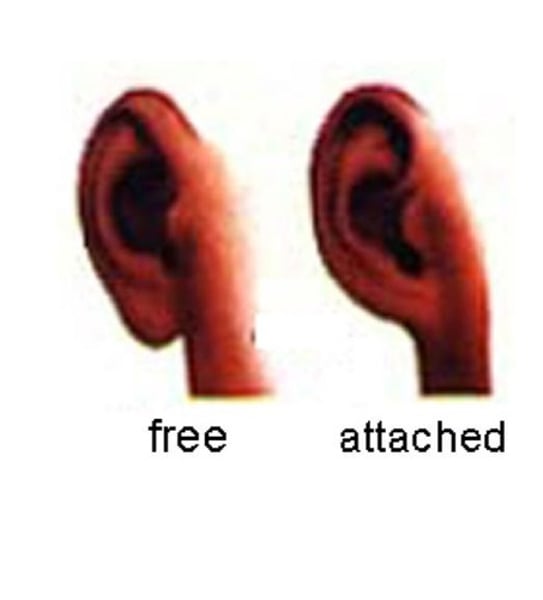
<p><strong>Free earlobes</strong></p><p><span class="bgP">- dominant trait</span></p><p>- hang below the point of the attachment to the head</p><p></p><p><strong>Attached earlobes</strong></p><p><span class="bgP">- recessive trait</span></p><p>- are attached directly to the side of the head</p>
3
New cards

Ear Wiggling

Can move ears

- dominant

- although this may be variable

Can't move ears

- recessive

*ear wiggling may be connected to tongue rolling in males
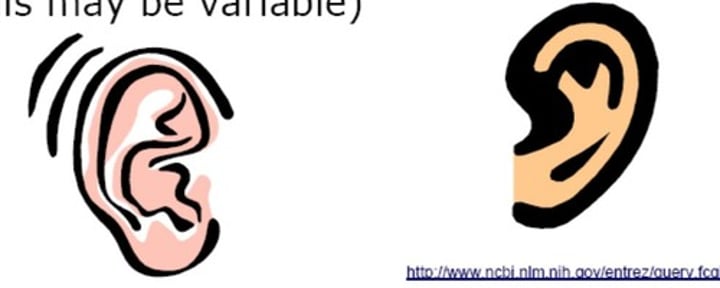
<p><strong>Can move ears</strong></p><p><span class="bgP">- dominant</span></p><p>- although this may be variable</p><p></p><p><strong>Can't move ears</strong></p><p><span class="bgP">- recessive</span></p><p></p><p>*ear wiggling may be connected to tongue rolling in males</p>
4
New cards

Straight vs. Curved Thumbs

Straight thumbs

- dominant

- can be seen as nearly a straight line and may contain a slight arch when viewed from the side as in the illustrations

Curved thumbs

- recessive

- can be seem as part of a circle
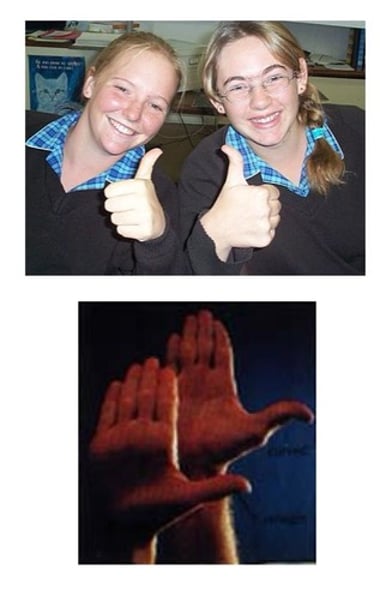
<p><strong>Straight thumbs</strong></p><p><span class="bgP">- dominant</span></p><p>- can be seen as nearly a straight line and may contain a slight arch when viewed from the side as in the illustrations</p><p></p><p><strong>Curved thumbs</strong></p><p><span class="bgP">- recessive</span></p><p>- can be seem as part of a circle</p>
5
New cards

Bent vs. Straight Pinky

Bent pinky

- dominant trait

Straight pinky

- recessive trait

*hold your hands together as if you are covering your face. if the tips of the pinkies point away from one another, the pinkies are bent
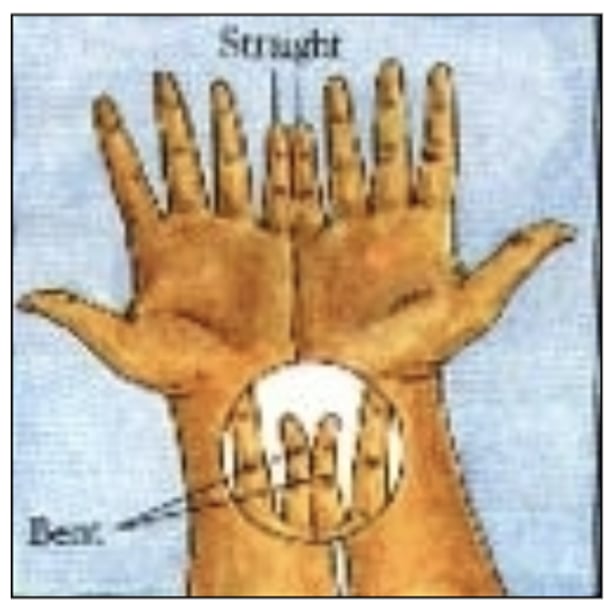
<p><strong>Bent pinky</strong></p><p><span class="bgP">- dominant trait</span></p><p></p><p><strong>Straight pinky</strong></p><p><span class="bgP">- recessive trait</span></p><p></p><p>*hold your hands together as if you are covering your face. if the tips of the pinkies point away from one another, the pinkies are bent</p>
6
New cards

Tongue Rolling

Rolling

- dominant

Non-rolling

- recessive
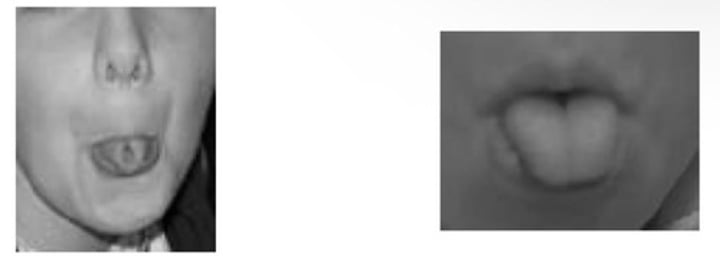
<p><strong>Rolling</strong></p><p><span class="bgP">- dominant</span></p><p></p><p><strong>Non-rolling</strong></p><p><span class="bgP">- recessive</span></p>
7
New cards

Dimples

Dimples

- dominant

No dimples

- recessive
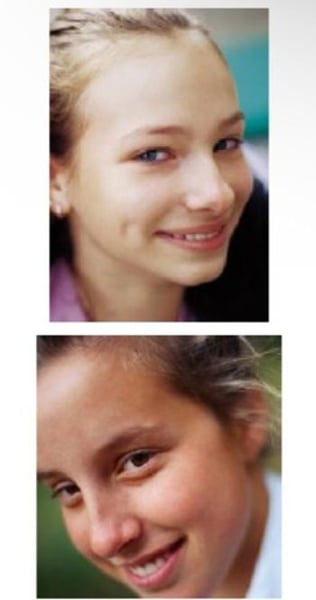
<p><strong>Dimples</strong></p><p>- <span class="bgP">dominant</span></p><p></p><p><strong>No dimples</strong></p><p>- <span class="bgP">recessive</span></p>
8
New cards

Hand Clasping

*hand clasping is believed to be determined by genetic factors, although it is unclear if one trait is dominant over the other

Left thumb on top

- 55% of people do this

Right thumb on top

- 44% of people do this
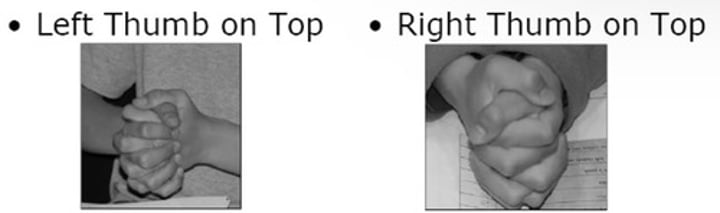
<p>*hand clasping is believed to be determined by genetic factors, although it is <span class="bgP">unclear if one trait is dominant over the other</span></p><p></p><p><strong>Left thumb on top</strong></p><p>- <span class="bgP">55%</span> of people do this</p><p></p><p><strong>Right thumb on top</strong></p><p>- <span class="bgP">44%</span> of people do this</p>
9
New cards

Cleft Chin

Cleft chins

- dominant

No cleft chin

- recessive
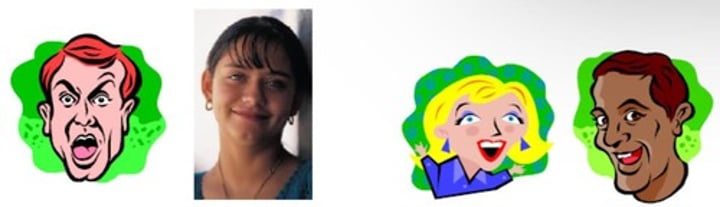
<p><strong>Cleft chins</strong></p><p>- <span class="bgP">dominant</span></p><p></p><p><strong>No cleft chin</strong></p><p>- <span class="bgP">recessive</span></p>
10
New cards

Widow's Peak

Widow's peak hairline

- dominant

No widow's peak

- recessive
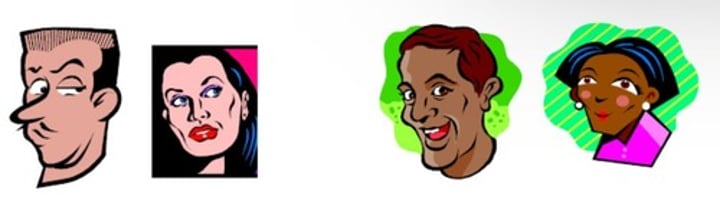
<p><strong>Widow's peak hairline</strong></p><p>- <span class="bgP">dominant</span></p><p></p><p><strong>No widow's peak</strong></p><p>- <span class="bgP">recessive</span></p>
11
New cards

With vs. Without White Forelock

White Forelock

- dominant trait

- a patch of white hair, usually located at the hairline just above the forehead

No white forelock

- recessive trait
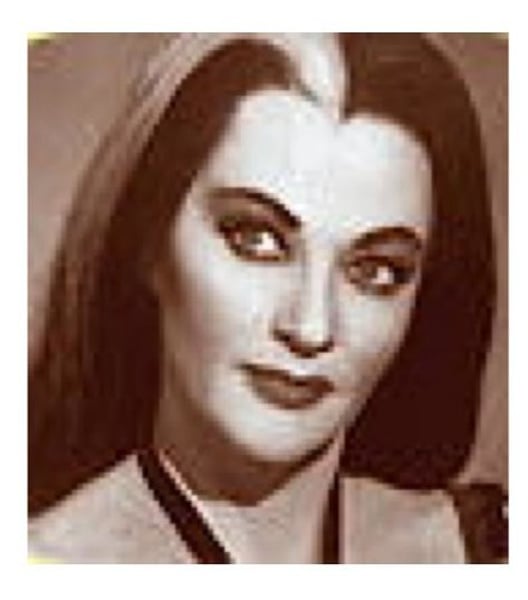
<p><strong>White Forelock</strong></p><p><span class="bgP">- dominant trait</span></p><p>- a patch of white hair, usually located at the hairline just above the forehead</p><p></p><p><strong>No white forelock</strong></p><p><span class="bgP">- recessive trait</span></p>
12
New cards

Hair on Middle Segment of Finger

Hair

- dominant

- the presence of hair on the middle segment of any finger

No hair

- recessive
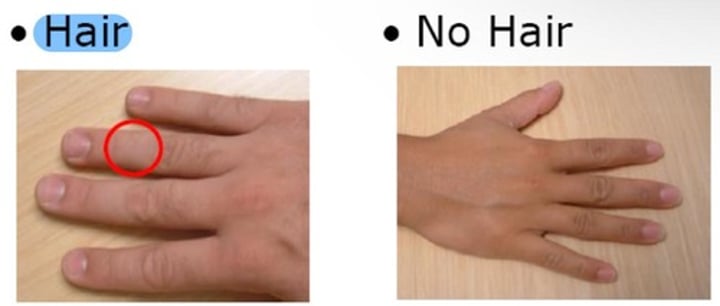
<p><strong>Hair</strong></p><p><span class="bgP">- dominant</span></p><p>- the presence of hair on the middle segment of any finger</p><p></p><p><strong>No hair</strong></p><p><span class="bgP">- recessive</span></p>
13
New cards

PTC Tasting

PTC tasting

- dominant

- 75% of individuals can taste the bitter flavor of PTC

Non-tasting

- recessive

- 25% of individuals find the PTC paper tasteless

*PTC is a bitter flavor compound that often causes people to dislike certain foods, such as broccoli, coffee, or beer
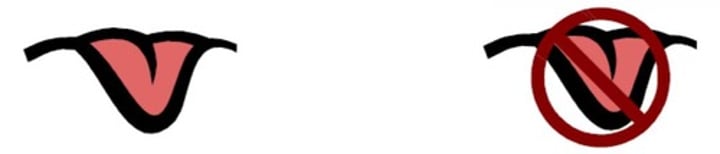
<p><strong>PTC tasting</strong></p><p>- <span class="bgP">dominant</span></p><p>- 75% of individuals can taste the bitter flavor of PTC</p><p></p><p><strong>Non-tasting</strong></p><p>- <span class="bgP">recessive</span></p><p>- 25% of individuals find the PTC paper tasteless</p><p></p><p>*PTC is a bitter flavor compound that often causes people to dislike certain foods, such as broccoli, coffee, or beer</p>