Lecture PHYSIO module 3 Comphrensive set
 Call Kai
 Learn
Learn Practice Test
 Spaced Repetition
 Match
Match Flashcards
 Knowt Play
1/235

There's no tags or description
Looks like no tags are added yet.
Name | Mastery | Learn | Test | Matching | Spaced | Call with Kai |
|---|
No analytics yet
Send a link to your students to track their progress
236 Terms
What is coarctation of the aorta?
A congenital birth defect where the aorta is narrowed, leading to hypertension in the head and neck and low blood pressure in the lower limbs.
What are the treatment options for coarctation of the aorta?
Surgery to remove the narrow part of the aorta.
What condition is related to pregnancy and involves endothelial dysfunction?
Preeclampsia.
How do thyroid hormones affect blood pressure?
They control metabolism and increase sensitivity of adrenergic receptors, leading to a risk of hypertension.
What is the normal range of parathyroid hormone (PTH) in blood calcium?
10 milligrams per deciliter.
What happens with oversecretion of PTH?
It increases blood calcium and blood pressure, which can lead to arrhythmia.
What are common signs of hypertension?
Severe headache, vertigo, anxiety, nose bleeding, excess sweating, and palpitations.
What are some drug classes used to treat high blood pressure?
ACE inhibitors, ARBs, diuretics, calcium channel blockers, and beta-adrenergic blocking agents.
What does the P-wave on an EKG represent?
Depolarization of the right and left atria.
What indicates an AV block on an EKG?
A PR interval longer than 0.2 seconds.
What does the QRS complex indicate?
Ventricular depolarization and contraction.
What is the significance of an elevated or depressed ST segment?
It can indicate myocardial infarction.
What does the T wave represent on an EKG?
The relaxation phase of the ventricles.
What is tachyarrhythmia?
Frequent abnormal heart movements that are not complete contractions.
What are the phases of action potential in the heart?
Phase 0: Sodium enters; Phase 1: K+ enters; Phase 2: Ca2+ enters; Phase 3: K+ leaves; Phase 4: K+ reaches equilibrium.
What is the absolute refractory period?
A phase during which the cell membrane cannot respond to a second stimulus.
What is the effective refractory period?
A phase where the cell membrane accepts a second stimulus but does not react.
What is the relative refractory period?
A phase where the cell membrane can respond to a second stimulus.
What condition is indicated by severe hypertension, headache, and obesity?
Cushing Syndrome.
What symptoms suggest pheochromocytoma or hyperthyroidism?
Severe hypertension, headache, excess sweating, palpitations, and significant weight loss.
What does polycythemia indicate in a patient with hypertension and increased white blood cells?
Irritation of bone marrow.
How can you differentiate between types of hypertension?
By analyzing blood sodium, potassium, bicarbonate, and glucose levels.
What symptoms are associated with hyperparathyroidism?
Hypertension, headache, vertigo, and muscle spasms.
What does the Frank-Starling relationship explain?
It explains how greater venous return increases stroke volume and cardiac output.
What is venous return?
The flow of blood back to the heart from the superior and inferior vena cava and the pulmonary veins.
What is the end diastolic volume (EDV)?
The total volume of blood in the ventricle at the end of diastole, which is 140 ml after receiving 70 ml from the atrium.
What happens to troponin C when the ventricle builds up 140 ml of blood?
It becomes more sensitive to calcium, leading to stronger contractions.
What is stroke volume?
The amount of blood ejected from the ventricle during contraction, typically 70 ml.
What is end systolic volume (ESV)?
The volume of blood remaining in the ventricle after contraction, which is 70 ml.
What are the four steps of the cardiac cycle?
1. Isovolumetric contraction, 2. Ventricular ejection, 3. Isovolumetric relaxation, 4. Ventricular filling.
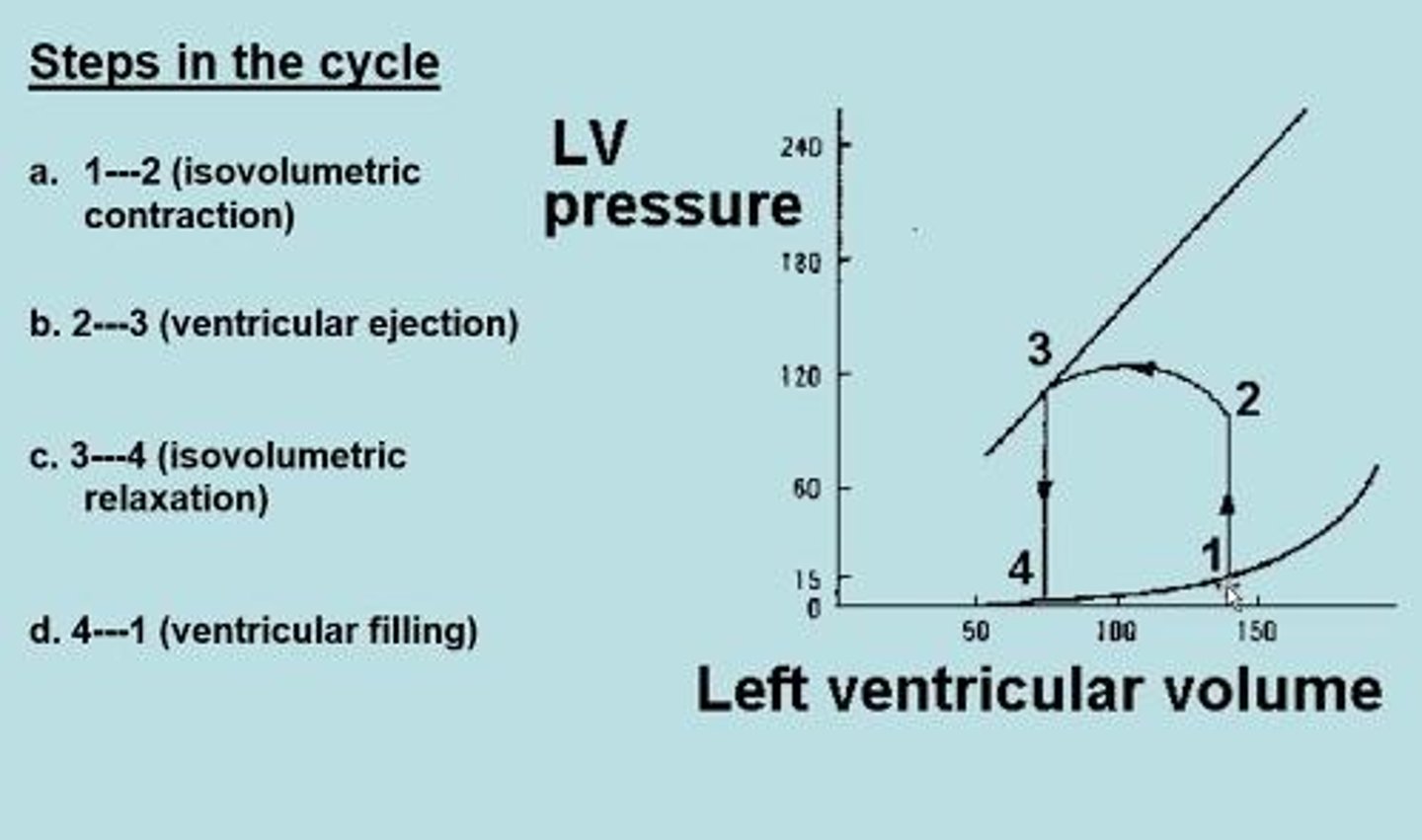
What occurs during isovolumetric contraction?
All valves are closed, and the ventricle contains 140 ml of blood with zero pressure change.
What happens during ventricular ejection?
Ventricular pressure increases, causing the ejection of 70 ml of blood into the aorta or pulmonary artery.
What is the significance of increased preload?
It can lead to increased stroke volume if the end diastolic volume exceeds normal levels.
What is increased afterload?
It results in decreased stroke volume and increased end systolic volume, leading to higher oxygen consumption.
What does increased contractility lead to?
Increased stroke volume and decreased end diastolic volume, often due to norepinephrine or hypercalcemia.
What factors increase cardiac oxygen consumption?
Increased afterload, heart size, contractility, and heart rate.
What causes the first heart sound (S1)?
Closure of the mitral and tricuspid valves.
Where can the aortic valve be auscultated?
On the right side, in the 2nd intercostal space between two ribs.
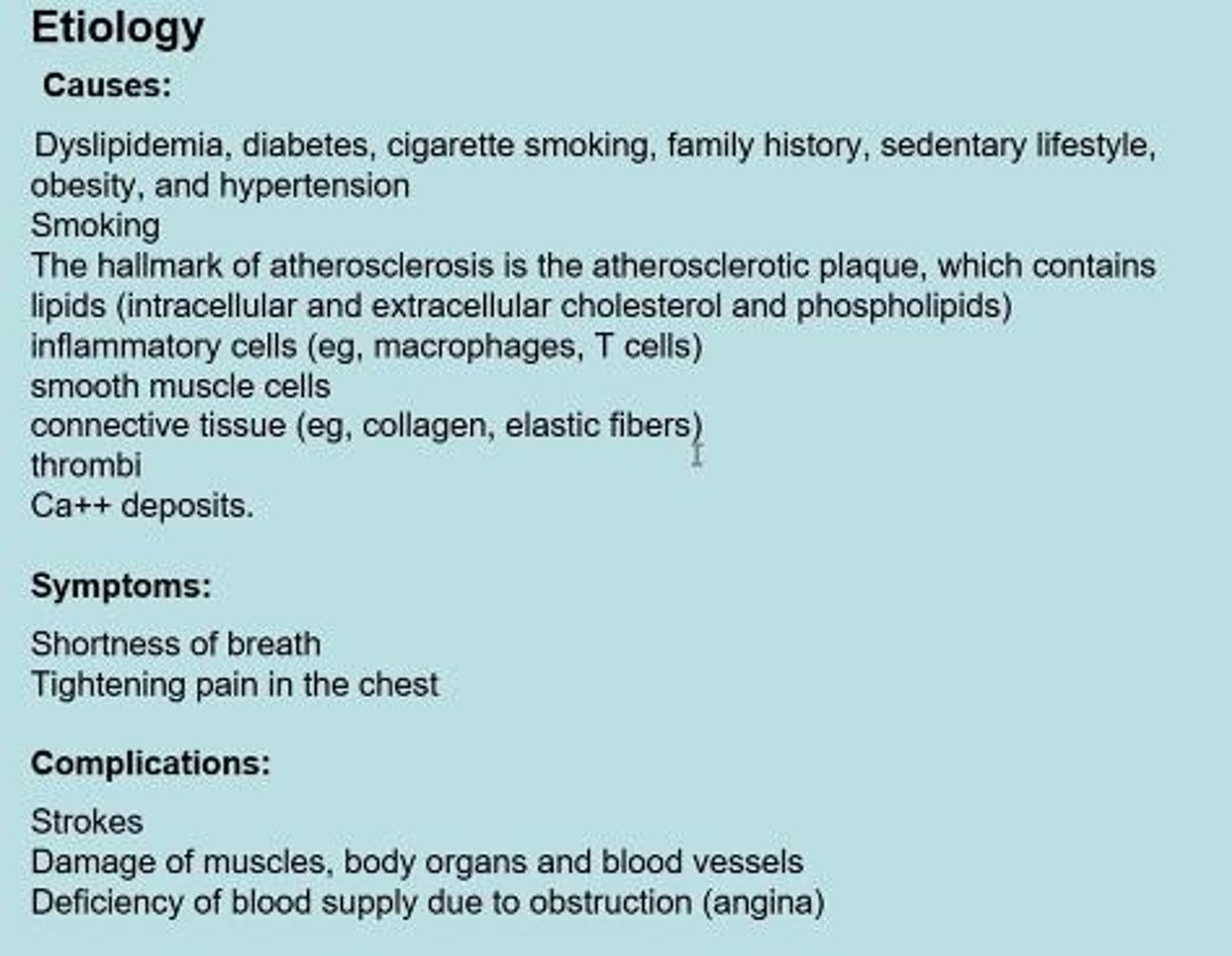
What is atherosclerosis and its potential consequences?
A condition that leads to myocardial infarction and stroke, often linked to Marfan syndrome affecting elastic fibers.
What is atrial fibrillation and its relation to the mitral valve?
Atrial fibrillation is a condition characterized by frequent P waves and one QRS, often related to mitral valve issues.
What is a heart murmur associated with?
Pathological conditions related to mitral stenosis.
What is the mechanism behind jaundice in sickle cell anemia?
Damaged red blood cells release bilirubin, causing the yellow color.
What condition is indicated by a pregnant female experiencing early morning sickness and normal blood tests?
Preeclampsia, due to hormonal changes affecting blood vessel walls.
What is the conduction pathway of the heart?
SA node → AV node → Bundle of HIS → Bundle Branches → Purkinje fibers
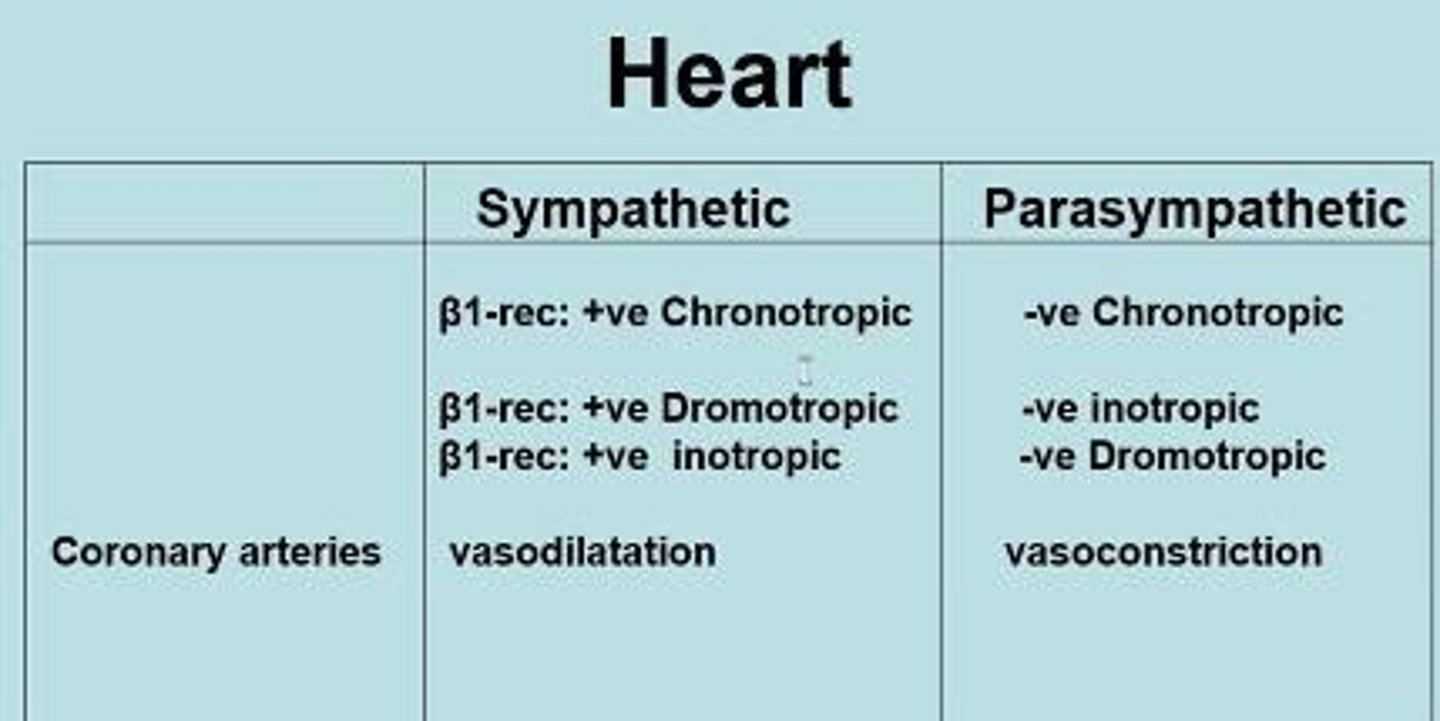
What is the term for heart rate?
Chronotropic
What is the term for conduction velocity?
Dromotropic
What is the term for contraction of myocardium?
Inotropic
What effect does the sympathetic nervous system have on heart rate?
Positive effect on heart rate, conduction velocity, and contractility of myocardium.
What neurotransmitter is associated with the parasympathetic nervous system's effects on the heart?
Acetylcholine (ACH)
What is arrhythmia?
An incomplete contraction of the ventricle; relates to abnormal contraction.
What is sinus tachycardia?
A heart rate above 100 bpm.
What is sinus bradycardia?
A heart rate below 50-60 bpm.
What is supraventricular arrhythmia?
Atria arrhythmia that occurs post-myocardial infarction.
What does a negative P wave in an EKG indicate?
Supraventricular arrhythmia.
What are the causes of ventricular extrasystole?
Hypercalcemia and post-myocardial infarction.
What is the normal range of blood calcium?
10 mg/dl.
What is digoxin used for?
To decrease heart rate while increasing contractility of myocardium.
What can cause arrhythmia in relation to digoxin?
Overdose of digoxin.
What is myocarditis?
Inflammation of the myocardium.
What is the effect of magnesium deficiency on the heart?
Leads to hypercalcemia and abnormal contraction of myocardium.
What is the role of potassium (K+) in heart function?
Causes the repolarization phase.
What is the effect of calcium (Ca+) excess on the heart?
Increases contractility.
What is the treatment for ventricular extrasystole?
Restoring balance of magnesium, calcium, and potassium.
What are sodium channel blockers used for?
To treat arrhythmias.
What is the heart rate range for atrial tachycardia?
100-250 bpm.
What is the heart rate range for ventricular tachycardia?
120-250 bpm.
What happens in an AV node block?
The PR interval is impacted, indicating varying degrees of disconnection.
What is preload in the context of heart function?
The volume of blood in the ventricles at the end of relaxation phase.
What is afterload?
The pressure the ventricles must overcome to eject blood.
What is stroke volume?
The amount of blood ejected into the aorta and pulmonary artery by each ventricular contraction.
What is the formula for stroke volume?
EDV - ESV.
What is cardiac output?
5L per minute.
What factors can lead to vasobstruction and blood clot formation?
High level of platelets, congenital reasons, calcification due to hypercalcemia.
What condition could cause increased blood calcium levels?
PTH deficiency.
What are the signs of a congenital narrow part of the aorta?
Hypertension in head and neck, low blood pressure in lower limbs.
What could normal levels of K+, Na+, Ca2+ with symptoms of palpitation and hypertension indicate?
A problem with the adrenal gland, such as pheochromocytoma.
What are the four chambers of the heart?
Two atria and two ventricles.
What is the function of the AV valves?
They carry blood from the atrium to the ventricle.
What is the role of the semilunar valves?
They carry blood from the heart to the rest of the body.
What is the pericardium?
The outer layer surrounding the heart.
What are papillary muscles?
Muscles inside the ventricles that connect to the AV valves via chordae tendineae.
What is the function of chordae tendineae?
They connect the papillary muscles to the AV valves.
What is systemic circulation?
The transfer of blood throughout the entire body.
What is pulmonary circulation?
The connection of the heart and lungs, dealing with blood traveling through the pulmonary artery.
What happens to deoxygenated blood in the lungs?
It undergoes gas exchange, releasing carbon dioxide and taking in oxygen.
What is cardiac output?
The amount of blood ejected into the aorta by the left ventricle per minute, approximately 5 L.
What is the formula for blood pressure?
Blood Pressure (BP) = Cardiac Output (CO) × Total Peripheral Resistance (TPR).
What is total peripheral resistance?
The resistance to blood flow in the arterial system, influenced by the diameter of arterioles and capillaries.
What is the pressure in the aorta?
100 mmHg.
What is systolic pressure?
The highest arterial pressure during a cardiac cycle, occurring during ventricular contraction.
What is diastolic pressure?
The lowest arterial pressure during a cardiac cycle, occurring during ventricular relaxation.
What is pulse pressure?
The difference between systolic and diastolic pressure.
What condition is indicated by dehydration in relation to blood flow?
Increased viscosity leads to higher resistance to blood flow.
What is a common symptom of hypertension?
Headache and vertigo.
What is polycythemia?
A condition characterized by an overproduction of red blood cells.
What type of anemia is associated with heavy hemorrhage in pregnant females?
Normocytic anemia.
What are three factors important for the formation of red blood cells?
Iron, vitamin B12, and folic acid.
What is leukemia?
A tumor/disease characterized by the overproduction of immature white blood cells.
What are common symptoms of leukemia?
Fever, headache, weakness, weight loss, joint pain, and increased immature leukocytes.
What is blood classified as?
A specialized connective tissue.

