Biology
 Call Kai
 Learn
Learn Practice Test
 Spaced Repetition
 Match
Match Flashcards
 Knowt Play
1/49

Earn XP
Description and Tags
1. Cell Biology Ultrastructure of cells Membrane structure & transport Cell division 2. Molecular Biology DNA replication Transcription & translation Enzymes 3. Genetics Meiosis Inheritance Genetic modification 4. Ecology □ Species & communities □ Energy flow □ Carbon cycling □ 5. Evolution & Biodiversity □ Natural selection □ Classification □ Cladistics □ 6. Human Physiology □ Digestion □ Blood system □ Gas exchange ADDITIONAL HL: □ 7. Nucleic Acids □ 8. Metabolism □ 9. Plant Biology □ 10. Genetics & Evolution □ 11. Animal Physiology
Name | Mastery | Learn | Test | Matching | Spaced | Call with Kai |
|---|
No analytics yet
Send a link to your students to track their progress
50 Terms
D4.1 what are the green house effect which is good and which isn’t?
Normal greenhouse effect (good)
enhanced greenhouse effect (bad)
what are the anthropogenic causes of climate change
Major green house gases
Carbon dioxide CO2
Methane (CH4)
Nitrous oxide (N2O)
Water vapour H2O
water vapour is the most____.
abundant
the other term of Human activities, what does it do?
anthropogenic, it have increased the concentrations of carbon dioxide and methane. leading to enhanced green house effect.
Sources of Carbon dioxide
Celluar respiration
Combustion of fossil fuels
Deforestation (agricultural expansion and logging)
Sources of methane
Extraction of fossil fuel
Agriculture
landfills
green house gases…
Trap heat in earth’s atmosphere.
this is a natural phenomenon (a fact or situation that is observed to exist or happen) that enables earth to have a stable and habitable temperature, while the increase of anthropogenic elevated emissons of GHGs leading an enhanced greenhouse effect.
Positive feedback cycles in Global warming in ocean
CO2 is a dissolved gas in the ocean, when the ocean gets warmer, CO2 is released from the ocean to the atmosphere, causing temperature to rise further.
Positive feedback cycles in Global warming in Snow and ice covering (radiation)
Less snow and ice = less sunlight reflected.
Increased temperature causes snow and ice to melt, reducing reflective surfaces, less solar radiations is reflected back to spaceradiation, therefore, more is absorbed by the earth’s surface.
Peat decomposition
type of organic soil which has partially decomposed material found in wetland areas (a carbon sink) As temps increase, microbial activity increases leading to a high release of carbon dioxide
Permafrost melting (methane) Permafrost (from perma- 'permanent', and frost) is soil or underwater sediment which continuously remains below 0 °C
the more heat trapped the more permafrost melting will occurre there will be more decay and more methane being produced
Droughts and forest fires
Rising temperature causes more droughts, drier conditions makes forests more vulnerable to fires, forest fire release large amounts of carbon dioxide into the atmosphere.
tipping points
threshold where a system undergoes significant and potentially irreversible changes due to disturbances.
Change from net carbon accumulation to net loss in boreal forests as an example of a tipping point
Carbon sink through drought, heat and fires can become a carbon source. Scientists observed a transition from net carbon accumulation to net carbon loss in boreal forests.If the tipping point of boreal forests is reached, it will turn them into a carbon source rather than a carbon sink, further exacerbating climate change
what is a carbon sink (just knowledge so i can understand)
A carbon sink is any natural or artificial system that absorbs more carbon dioxide () from the atmosphere than it releases. By capturing and storing this carbon, these sinks play a vital role in reducing the concentration of greenhouse gases and helping to mitigate climate change.
Correlation ≠ Causation
Correlation describes a statistical relationship between two variables. e.g. students who study more tend to have higher grades
When one variable changes, the other tends to change in a predictable way.
Causation means that one variable directly influences another. e.g. smoking and cancer
A change in one variable causes a change in the other.
e.g. No proof of causation/only a correlation/other factors could be affecting the coral.
Polar Habitat Changes:
Emperor penguins: Melting of landfast ice leads to population at risk
ice that remains attached to the coastline during the winter season- a stable platform for breeding and young raising. Accelerated melting disrupts its natrual breading cycles.
Walruses: loss of sea ice
sea ice as resting platforms when searching for food and shelters, evasion of predators, giving birth. Diminishing sea ice means fewer resting areas posing a threat to their population, more energy lost.
Ocean currents the two layers
driven by temperature, wind, salinity and Earth’s rotation
Shallow water: Warmer, less salt, less dense
Deeper water: Colder, more salt, more dense
How does climate change affect Nutrients upwelling of ocean currents
Nutrient upwelling occurs when the Earth’s rotation and winds causes currents to bring the colder, deeper waters towards the surface.
this displaces the warmer water in shallow water.
brings upwell nutrients → increase primary production
Climate change decreases upwelling and therefore decreases primary productivity, negatively impacting marine food webs
Shifting climate zones, upslope range shifts of temperate species
crested Satinbird
when temperature gets warmer, species in inhabit mountains moves upslope to find optimal temperature, competing for niches with species already living at the top.
Shifting climate zones, Poleward
northern shift of some North American
ranges have shifted towards the poles for some species (to find optimal temperatures) Competiton and death are driving the shift.
example of potential ecosystem collapse Coral reefs ecosystem collapse
CO2 present in the atmosphere increases ocean acidification, making it harder for coral to absorb carbon dioxide. Hence, the calcium carbonate shells of marine organisms can be dissolved . warm water will cause coral bleaching which the mutualistic algea dies, meaning coral will die too. symbiotic relationships
Carbon sequesration
Capturing and storing carbon (carbon sink)
e,g, in photosynthesis, plant grow , building of shells of marine organisms. Fossilisation (formation of coal oil, natural gas) and peat formation
approaches to do Carbon sequestration
Afforestation: planting trees in areas with no trees
Forest regeneration (reforesting): planting trees that have been cut down
used in these are usually fast-growing species that do not occur naturally. which tend to create monoculture (little to no species diversity)
positively affects carbon sequestration but may have negative impact on other factors that effect ecosystem stability e.g. with organisms already inhabit in that area
Peat
Peat decomposition is the extremely slow breakdown of dead plant material in waterlogged, acidic, and anaerobic (oxygen-poor) conditions, allowing organic matter to accumulate.
phenology
study of seasonal timing of events in plants and animals.
two major factors that changes in timing can indicate climate change
temperature
photoperiod (daylight hours per day)
e.g. that are effect by temperature in phenology
Bud burst (new leaves)
e.g. that are effect by photoperiodism in phenology
Bud set (growth stoppage)
flowering
bird migration
synchrony (things happening the same time) of phenological events are disrupted by climate change
events e.g. migration and food availability
photoperiods dont change
temperature changes as change if climate change
difficult for synchronisation since one species might be cued by photoperiods and another by temperature. A disruption in temperature might throw off the timing of an events necessary for successful interaction.
example. of species not able to synchronise
Caribou eat the arctic mouse ear - mismatch between their spring migration time and plant development. - not enough food supply
Great tits eat caterpillars - caterpillars peaks earlier while great tits breeding season stayed the same - having fewer surviving chicks.
e.g. of warmer temperature affect habitats in increase in pests
Spruce beetle
Drought and warm temperature stress trees to weak trees, more spruce bark beetles to develope decreasing to having 1 year generation time.
Evolution as consequence of climate change example
Natural selection - Tawny owl example
Overpopulation and competition - food shortage
Variation - feather colour of gray or brown
Survival of fittest - less snow cover changes the ability to blend in
increase in trait frequency of brown colour Tawny owls are more common
Photosynthesis equation
Water + Carbon dioxide —-Light source—→ Glucose + Oxygen
H2O + CO2 —-light—→ C6H12O6 + O2
(opposite to respiration)
Photosynthesis can transfer Light energy to chemical energy.
What form of chemical energy ?
Carbohydrates, lipids, proteins, nucleic acid
chromatography
separation of pigment
Chromatography calculation
Rf : distance moved by pigment / distance move by the solvent
e.g. blue dot is 4/10 = 0.4
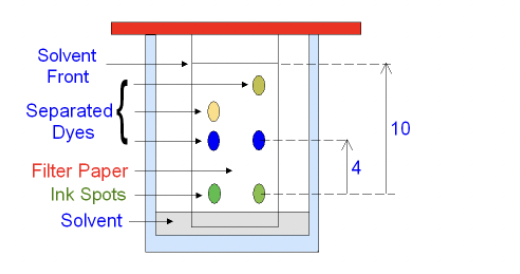
In chromatography which volume is more soluble in solvent?
Why are some colours not visible in the leaf of the plant, but visible on chromatography?
Why Rf of the same pigments may not be the same?
it moved the furthest up the chromatogram/stationary phase
Pigments may be masked by more intense ones; there might be less of that pigment in the plant
Different solvents may be used; different stationary phase used
difference of Colours and Pigment
Colours are different wavelengths of light
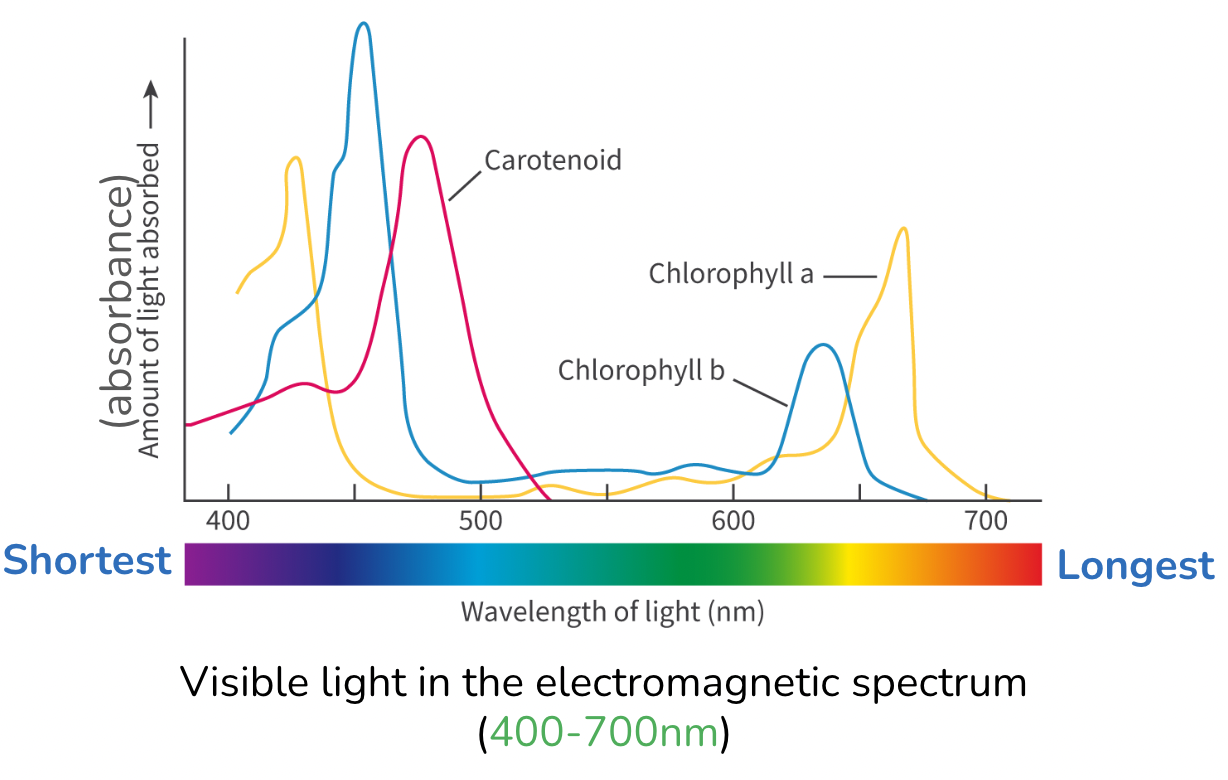
pigments absorb certain wavelengths of light, and we can only see what the pigment is reflecting
Absorption spectrum (need to draw)
Shows the wavelengths of light a pigment absorbs
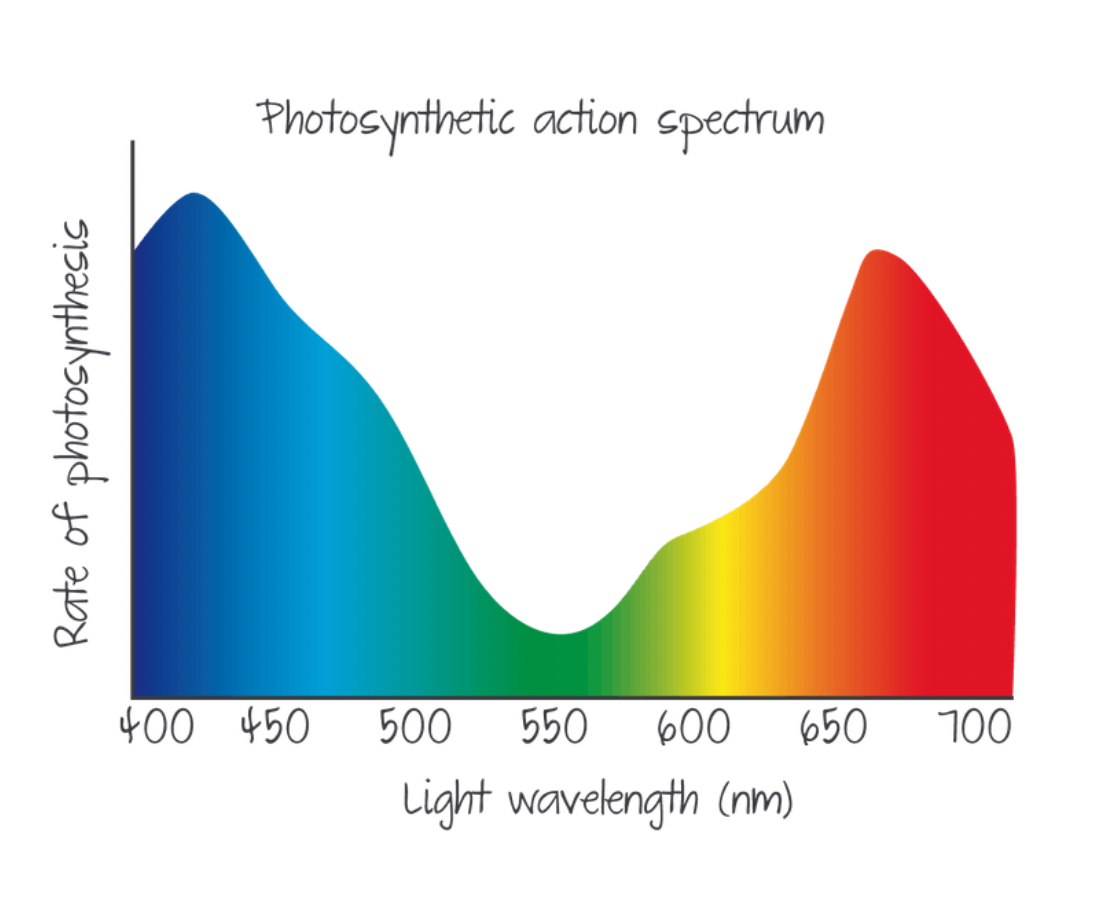
Action spectrum (need to draw)
photosynthesis rates in % at different wavelengths
Differences and similarities of Action spectrum
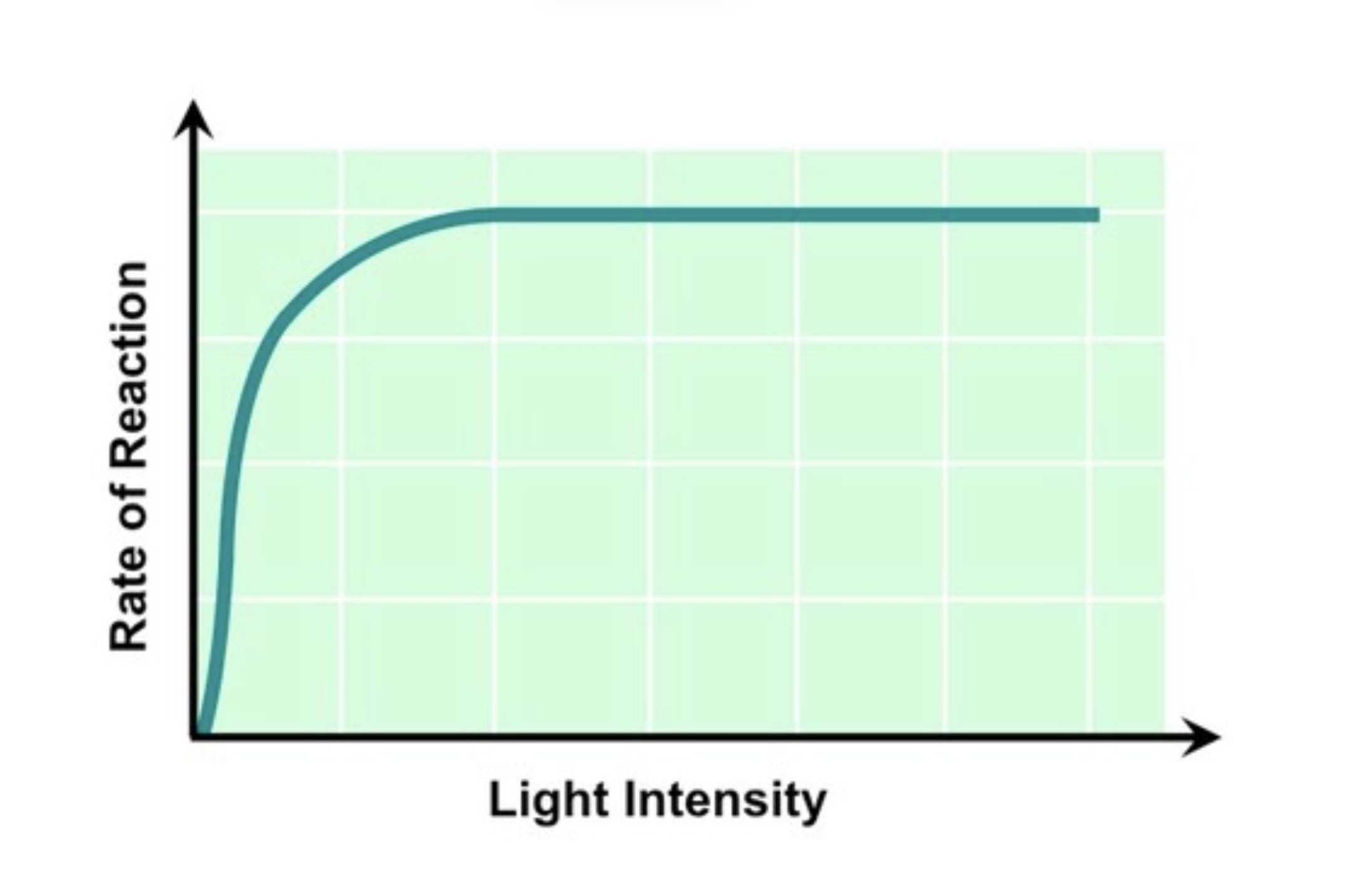
limiting factor of photosynthesis: light
Light is absorbed by chlorophyll, which convert the radiant energy into chemical energy (ATP)
As light intensity increases reaction rate will increase, as more chlorophyll are being photo-activated
At a certain light intensity photosynthetic rate will plateau, as all available chlorophyll are saturated with light
Different wavelengths of light will have different effects on the rate of photosynthesis (e.g. green light is reflected)
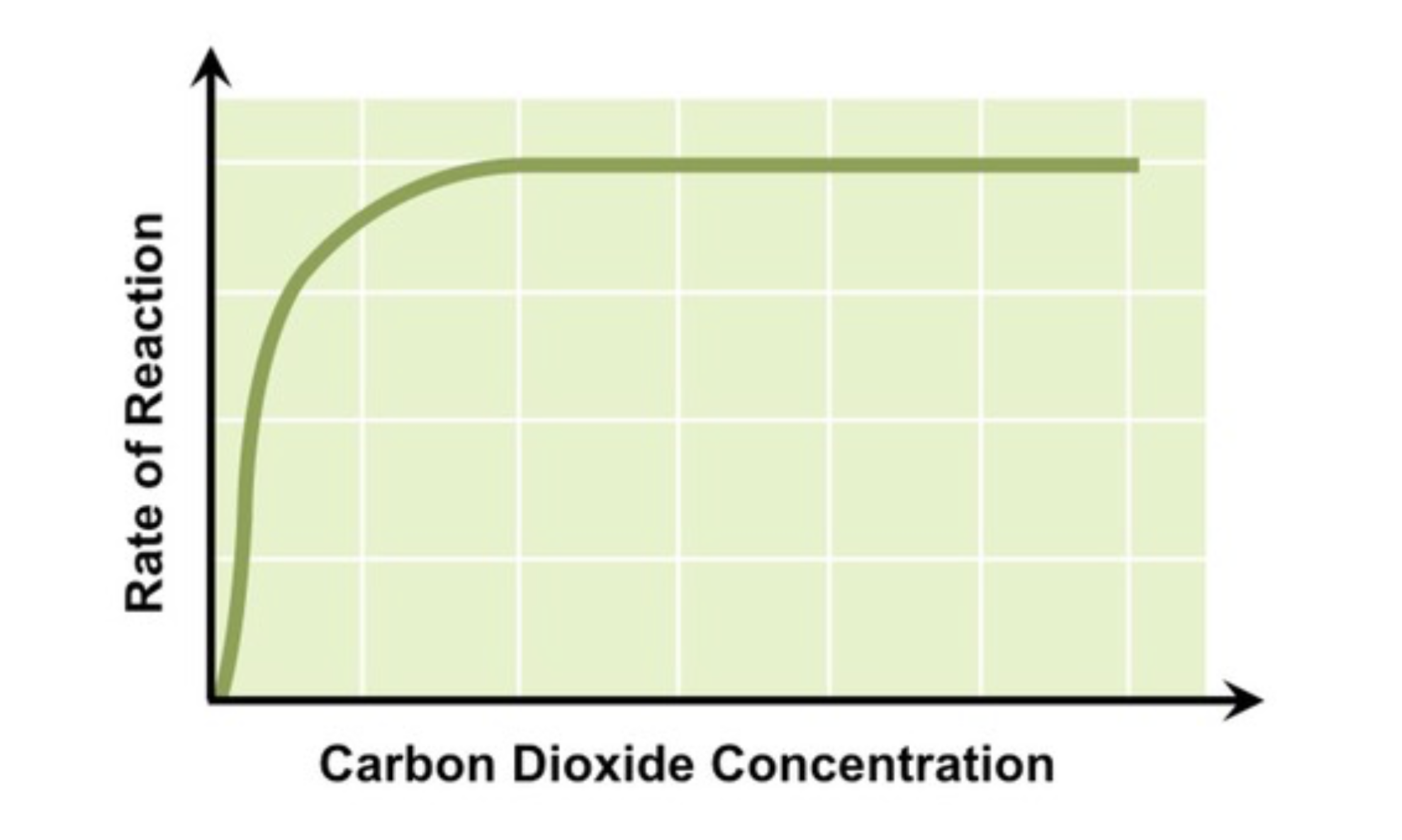
limiting factor of photosynthesis: Carbon Dioxide
Carbon dioxide is involved in the fixation of carbon atoms to form organic molecules
As carbon dioxide concentration increases reaction rate will increase, as more organic molecules are being produced
At a certain concentration of CO2 photosynthetic rate will plateau, as the enzymes responsible for carbon fixation are saturated
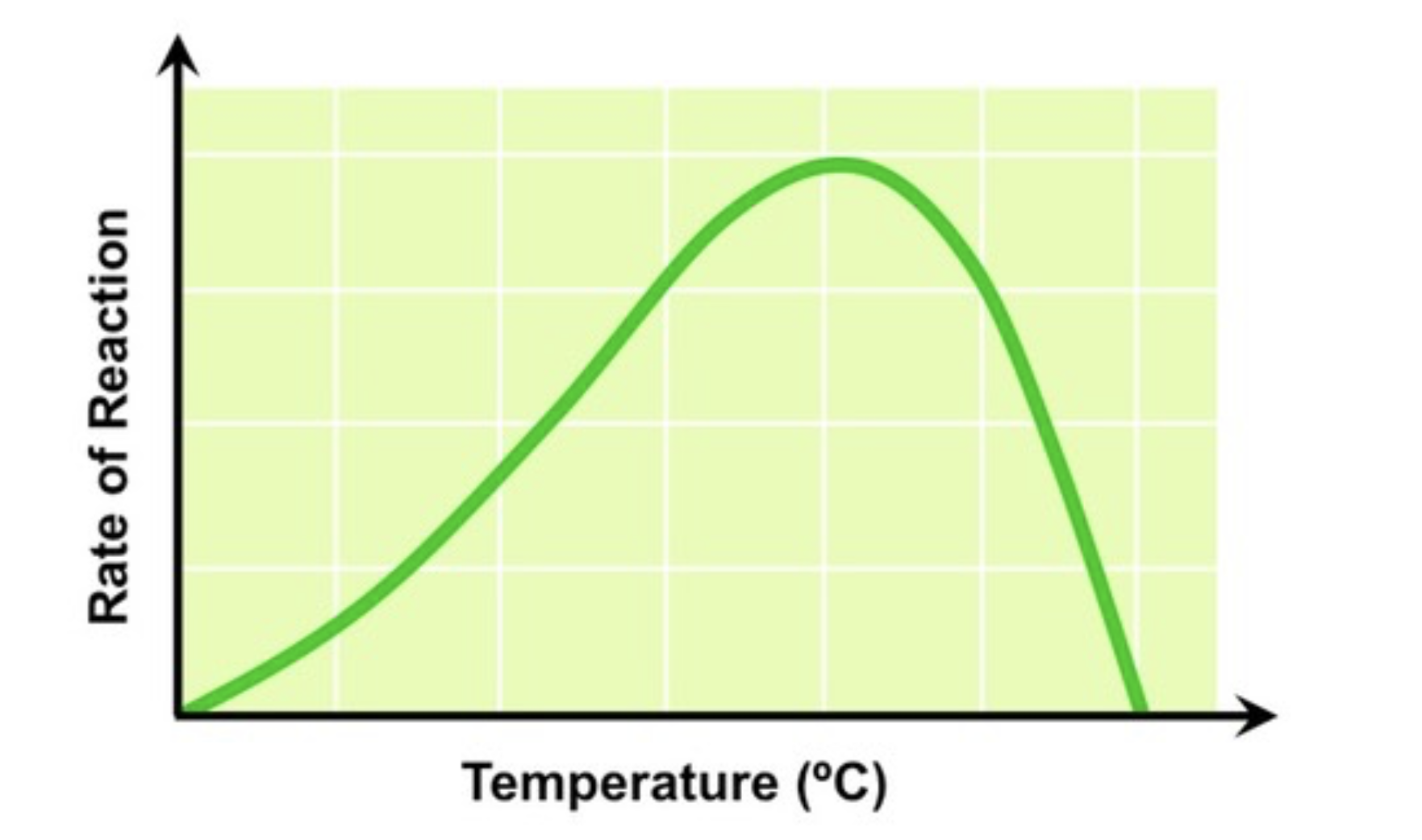
limiting factor of photosynthesis: Temperature
Photosynthesis is controlled by enzymes, which are sensitive to temperature fluctuations
As temperature increases reaction rate will increase, as reactants have greater kinetic energy and more collisions result
Above a certain temperature the rate of photosynthesis will decrease as essential enzymes begin to denature
method to measure photosynthesis way
carbon dioxide concentration add sodium hydrogen carbonate (increases CO2 level)
light intensity to see how long the leaf floats, the faster the higher photosynthesis rate
Temperature water bath
Pick one independent variable and control the rest
must have a reliable way of manipulating the independent variable
must have a reliable way of measuring photosynthesis rates
FACE (free air carbon dioxide enrichment experiments)
observing plant growth, limiting factors of photosynthesis
effects on other parts of the ecosystem
photosynthesis two main sets of reactions
Light dependent reactions (thylakoids)
Light independent reactions (stoma)
Drawing a diagram of a chloroplast to show its structure. Annotate your diagram to indicate the adaptations of the cholopast to its functions (3marks)
label with ruler
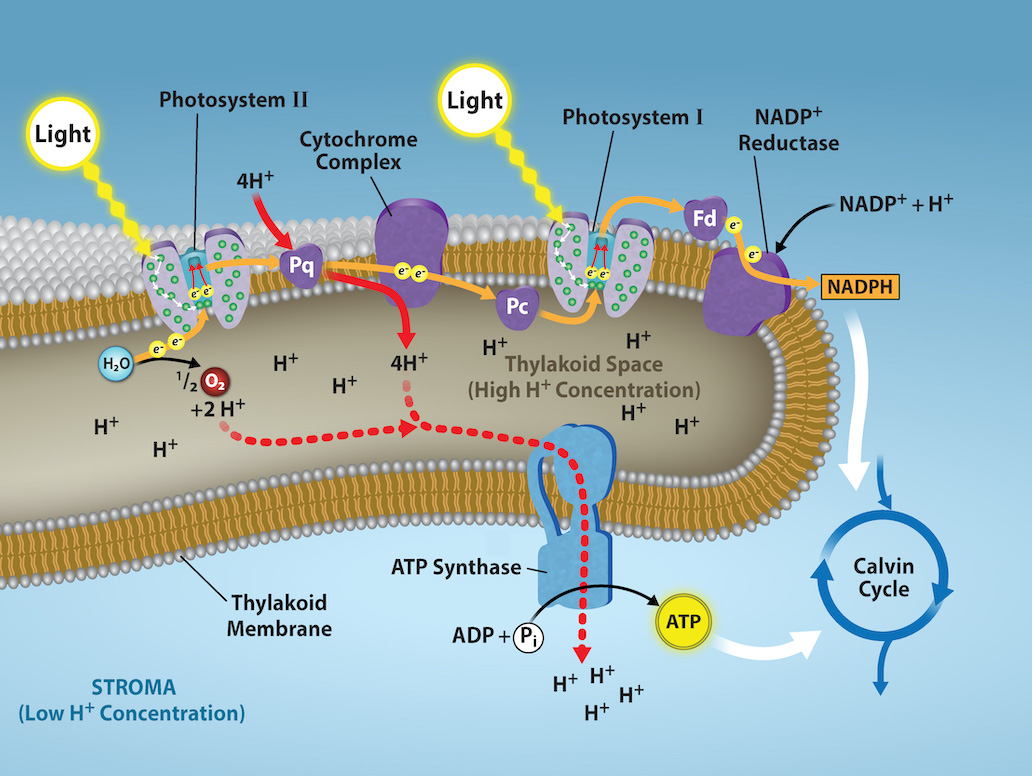
Light dependent reaction occuring in thylakoids
The process of decomposing water H2O
H2O —→ H++ e-+ O-
Photoactivation at photosystem II:
A photon of light is absorbed by a pigment in photosystem I
Transfers to other pigment molecules until it reaches chlorophyll a
Electrons are supplied one by one to chlorophyll a, which is then excited by a photon of light
The excited electrons are captured by the primary electron acceptor in photosystem II
pass down the electron transport chain
Energy is created at each step, which pumps H+ from stoma all across the membrane into the thylakoid space (inside the thylakoid)
Chemiosmosis: H+ passes through ATP synthase in the thylakoid membrane to the stroma
which is oxidative phosphorylation from ADP to ATP as a product
Electrons from the first electron transport chain are excited by a photon of light again at photosystem I
Electrons are then passed down a second electron transport chain
Enzymen
light dependent of Calvin cycle

