A.2 - Forces and Momentum
 Call Kai
 Learn
Learn Practice Test
 Spaced Repetition
 Match
Match Flashcards
 Knowt Play
1/5

There's no tags or description
Looks like no tags are added yet.
Name | Mastery | Learn | Test | Matching | Spaced | Call with Kai |
|---|
No analytics yet
Send a link to your students to track their progress
6 Terms
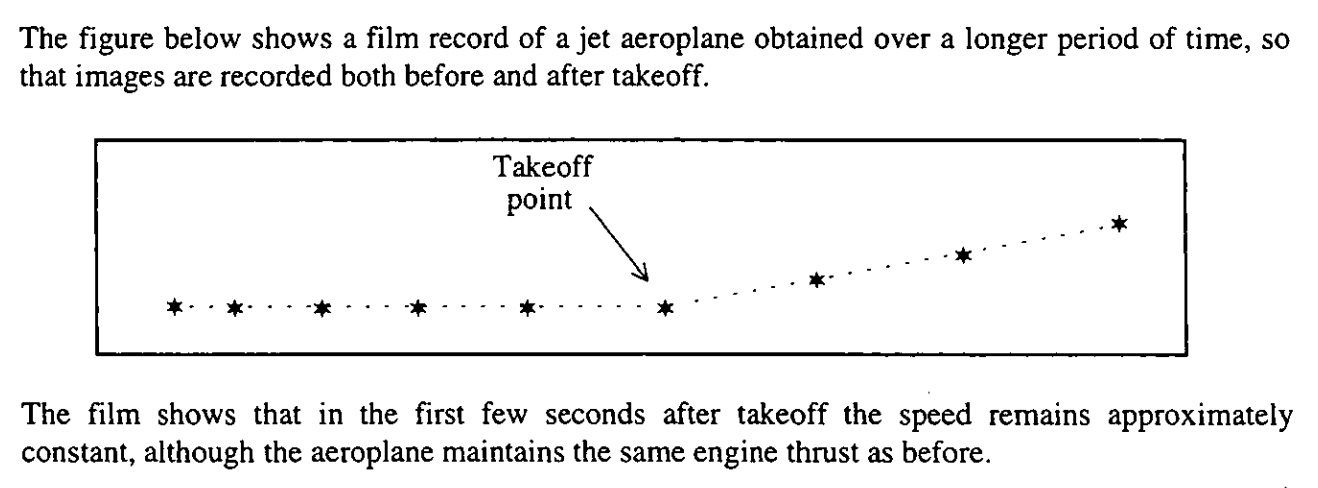
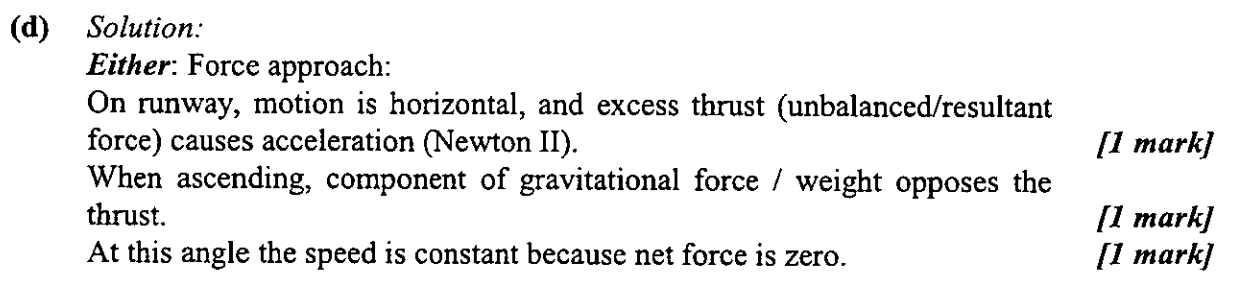
d) Explain why the same thrust can cause the airplane to accelerate while on the runway but travel at constant speed while ascending.
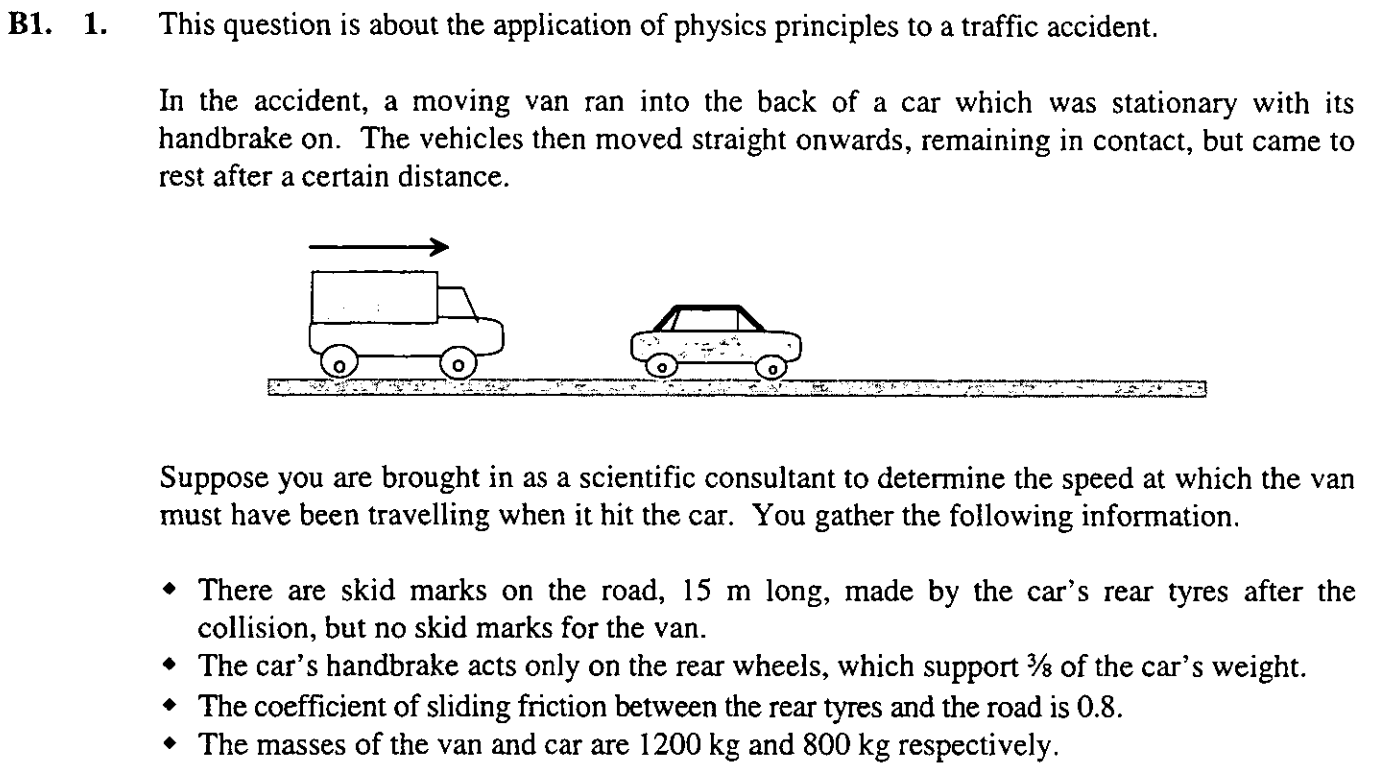
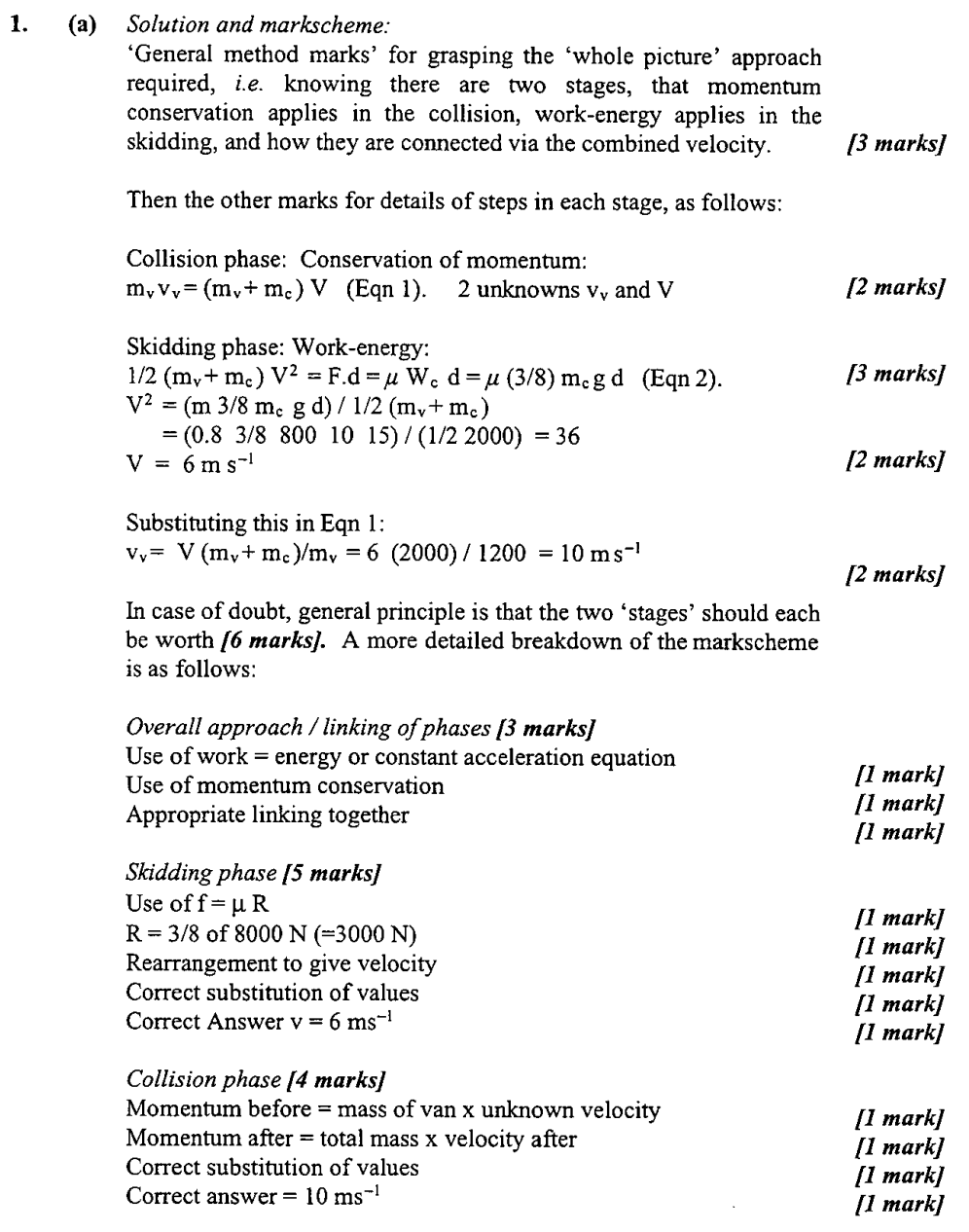
Determine the speed of the van just before it hits the car.
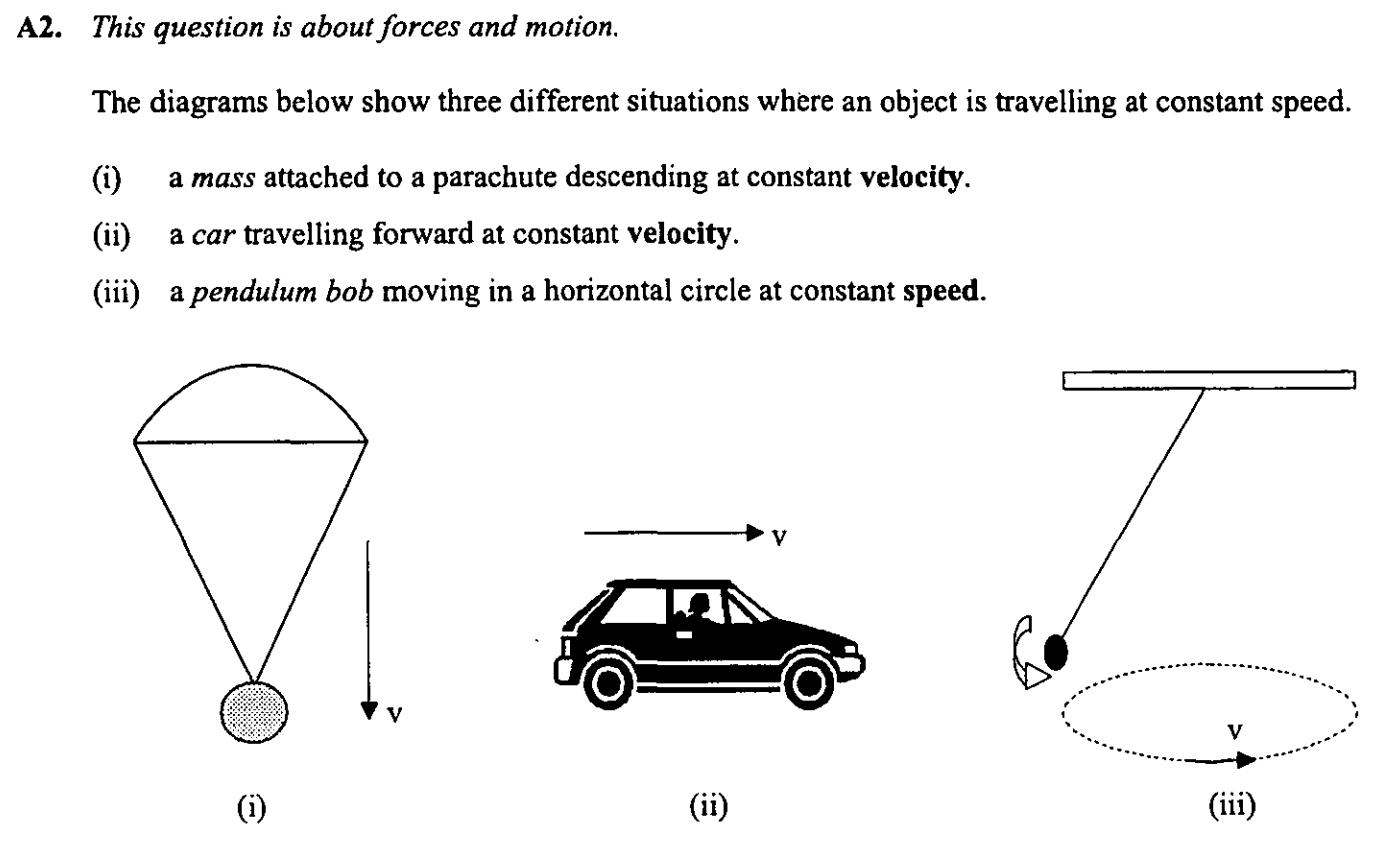
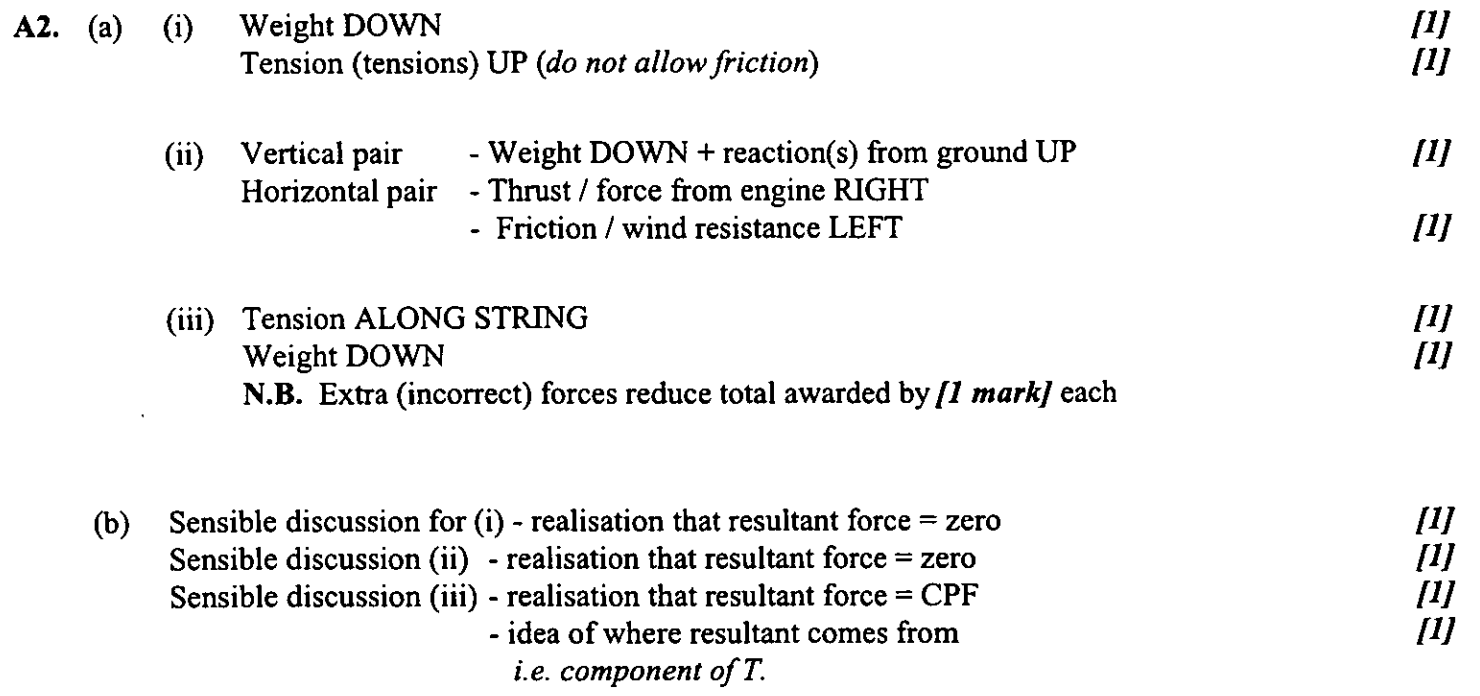
a) On the diagram add labelled arrows to represent the main forces acting on the mass, the car and the pendulum bob.
b) Discuss how the forces acting in each case can result in the speed being constant.
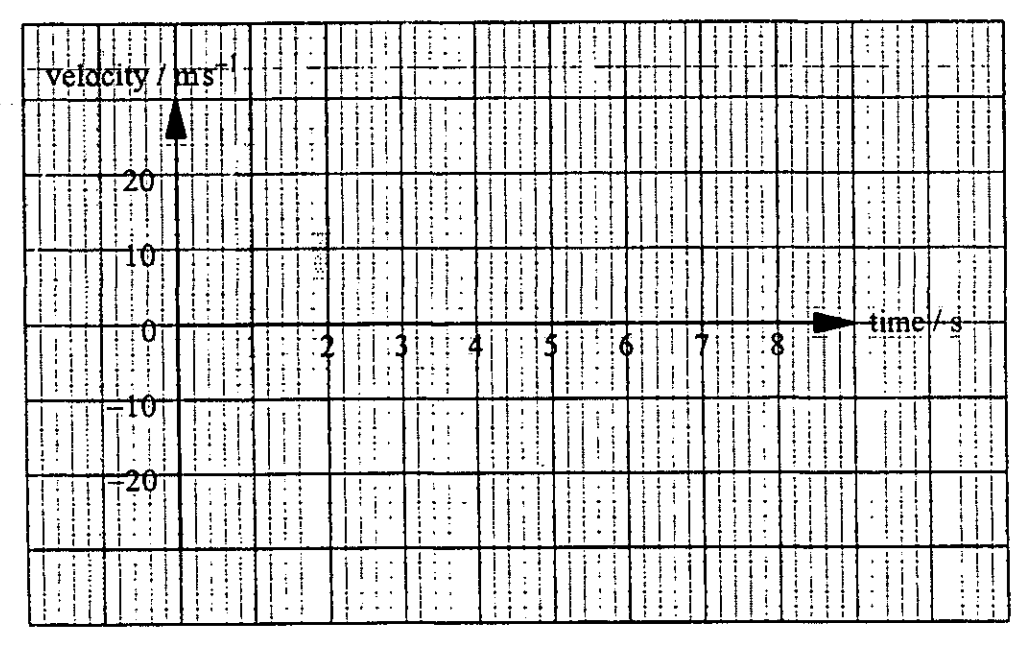
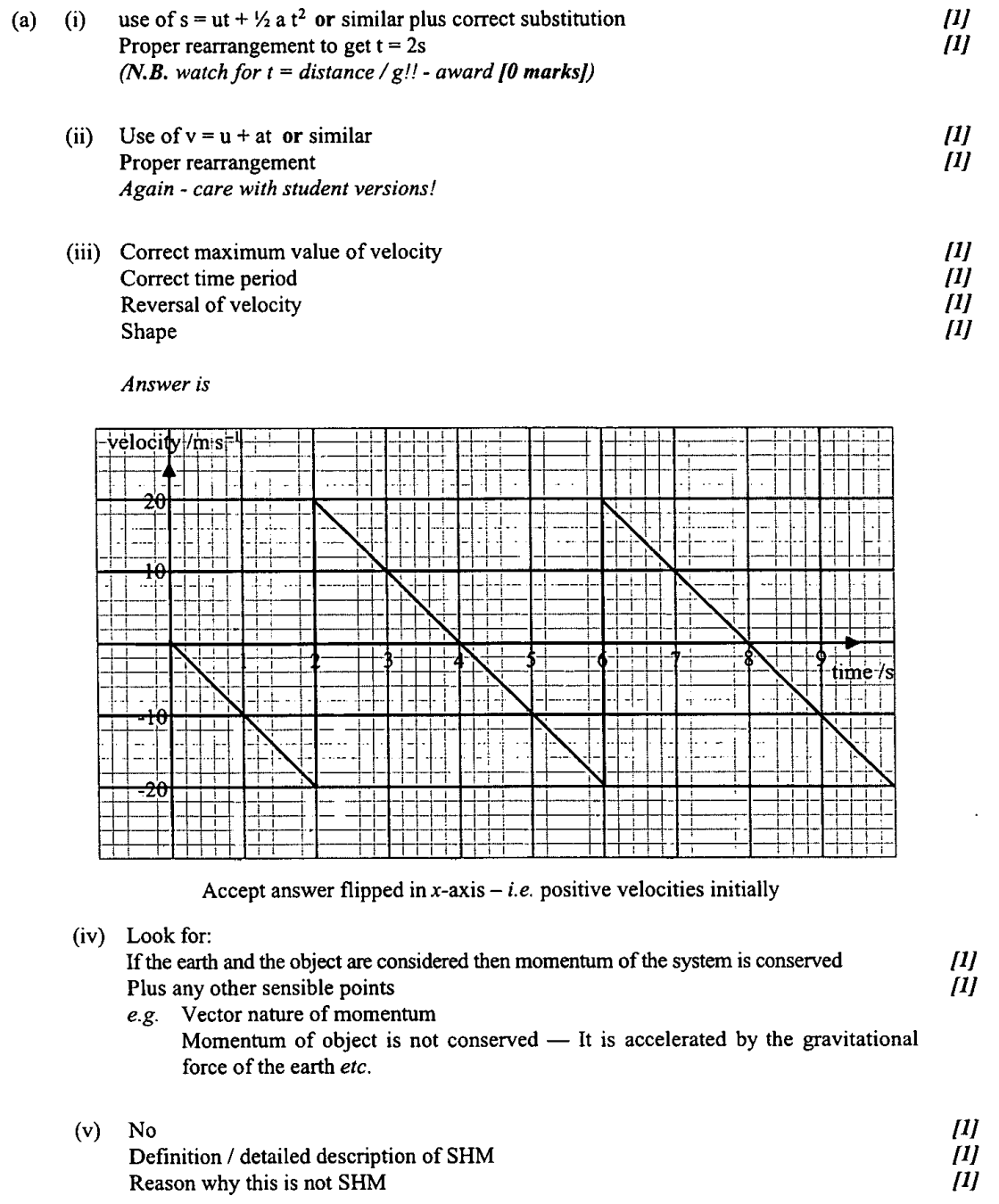
a) A ball is dropped from rest from a height of 20 m onto a hard surface where it makes an elastic collision. If frictional losses are very small, it returns to its original height and continues to bounce up and down.
i) Show that the time taken for the ball to reach the ground from its starting position is 2s.
ii) Show that the speed of the ball just before it hits the ground is 20 ms-1 .
iii) Use the axes to sketch a graph oh how the velocity of the ball varies with time during several bounces.
iv) Explain how the principle of the conservation of linear momentum applies to the situation of the ball falling towards the floor.
v) Is this bouncing motion an example of simple harmonic motion? Justify your answer.
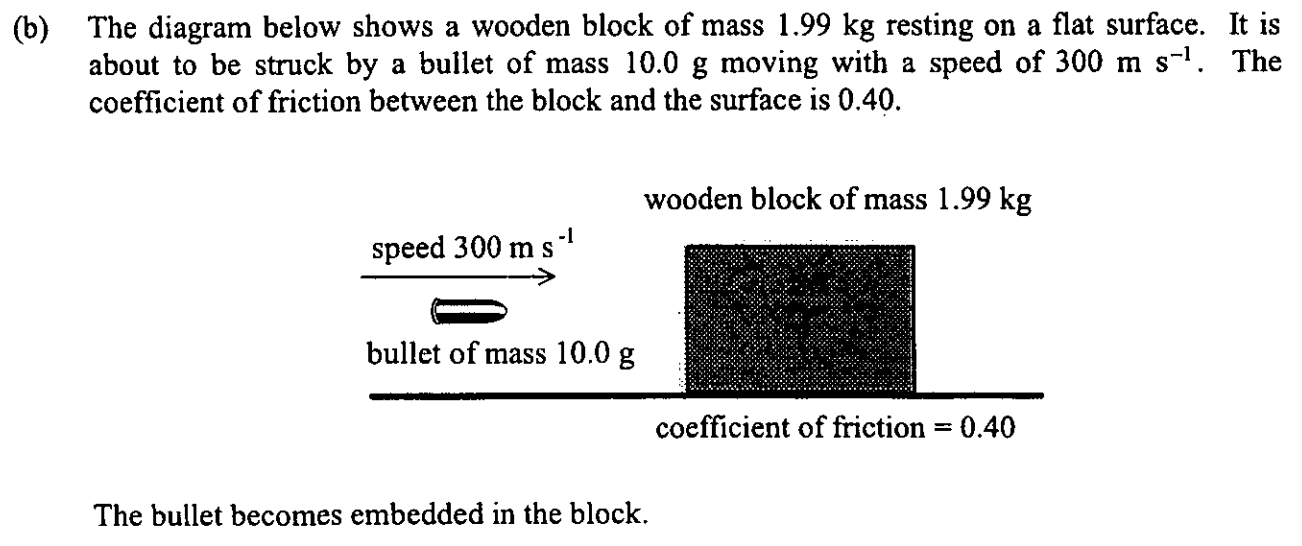
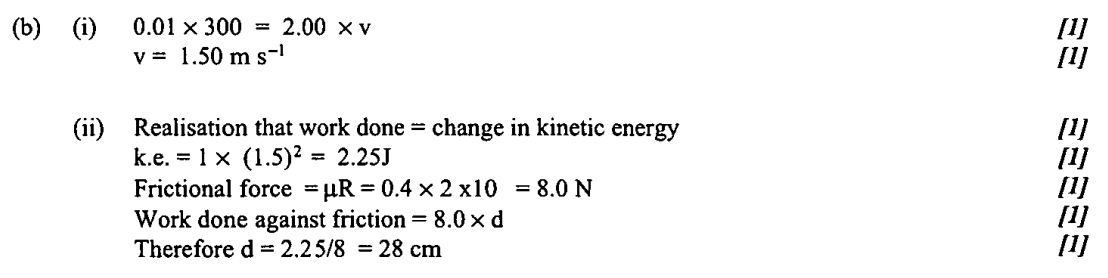
i) Calculate the speed with which the block moves off after being struck by the bullet.
ii) Calculate the distance that the block moves along the table before coming to rest.
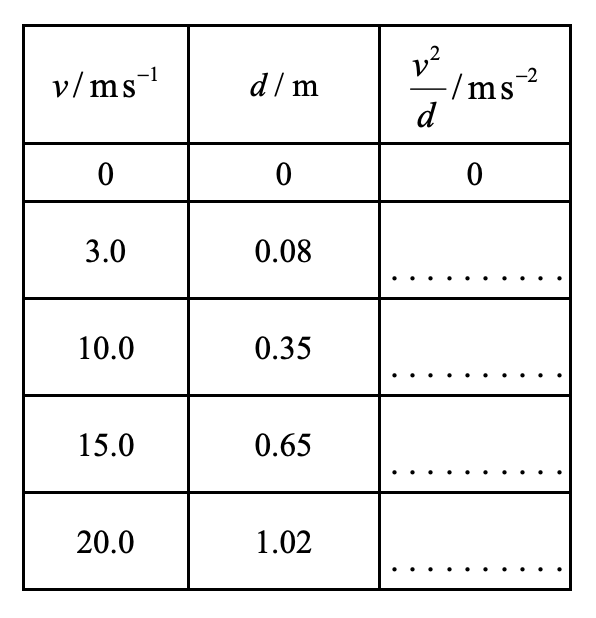
b) The table gives values of the crush distance, d, for different impact speeds v, of cars of the same make. Complete the last column of the table
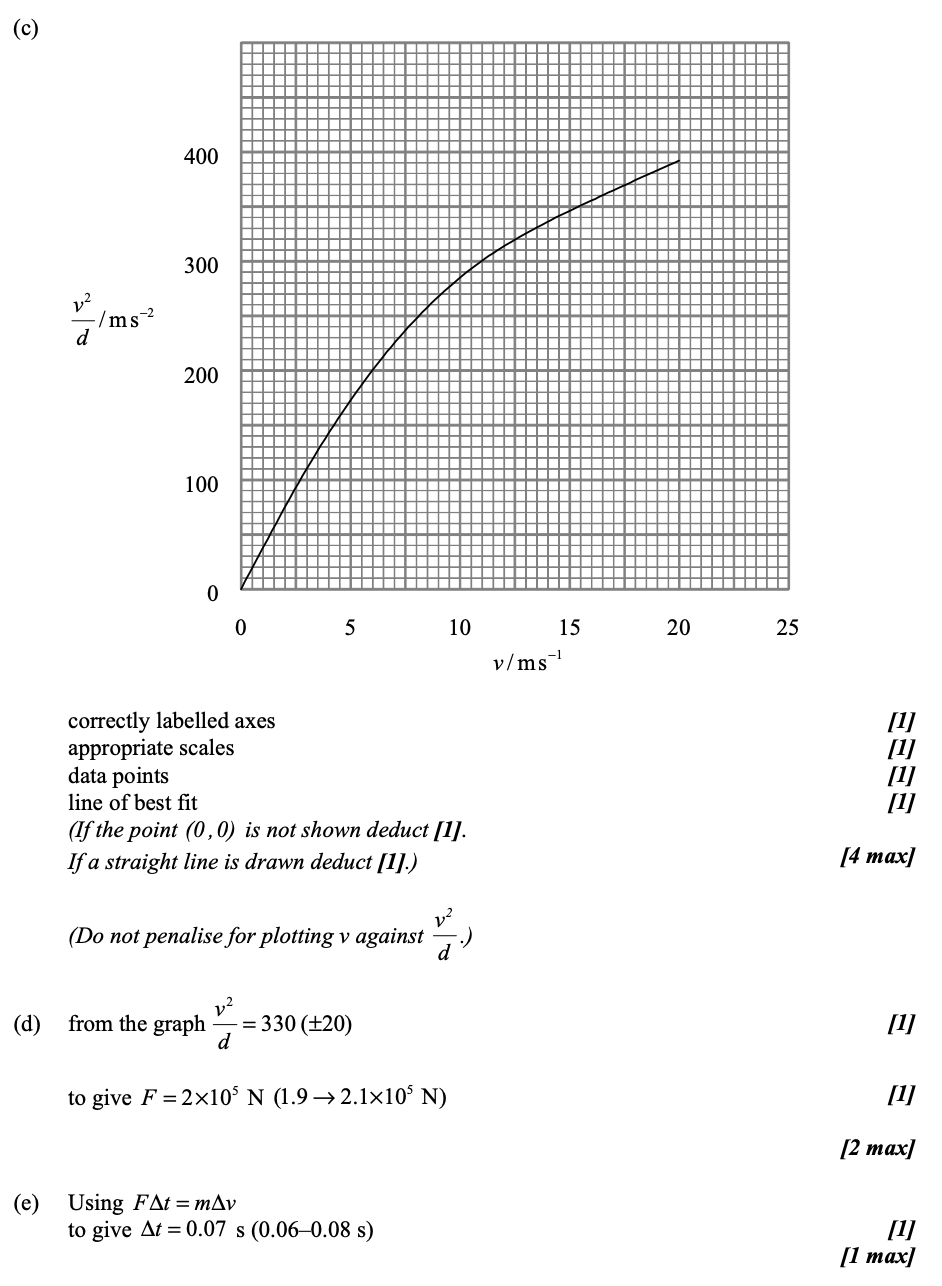
c) On a grid, plot a graph of v2/d against v.
d) Consider the situation in which a car of mass 1200kg has an impact speed of 12 ms-1. Use information form the graph you have drawn to find the average force exerted on the car during the collision as it is brought to rest.
e) Calculate the time it takes this car to come to rest from the moment of impact.
b) 113, 286, 346, 392