tragedy of the commons
 Studied by 0 people
 Call Kai
 Learn
Learn Practice Test
 Spaced Repetition
 Match
Match Flashcards
 Knowt Play
1/14

There's no tags or description
Looks like no tags are added yet.
Name | Mastery | Learn | Test | Matching | Spaced | Call with Kai |
|---|
No analytics yet
Send a link to your students to track their progress
15 Terms
garrett hardin
economist who coined the tragedy of the commons in 1968 based on open ecosystems
focused on enviro degradation, population growth, limited resources and land rights
describes the problem of a pasture open to all
tragedy of the commons
resource is held in common, so owned by no one or by a group meaning all have access to the resource
no technical solution due to overpopulation and competition for resources - needed to be political - so introduced malthus.
ex resources includes air, water, fish and wildlife, lumber, crown land, ground water
econ explanation of tragedy of the commons
individuals are motivated to add their flocks to increase personal wealth
so dominated by those who add the most cattle, gain in wealth per cow is higher than degradation of each cow
but the loss from degradation is shared so everyone has the incentive to MAX the number of cattle to gain the most
but this leads to overgrazing and loss of communal trust
thomas malthus
predicted population grows exponentially and food supply can only increase arithmetically so eventually we will all starve or die with the political outcome of the latter
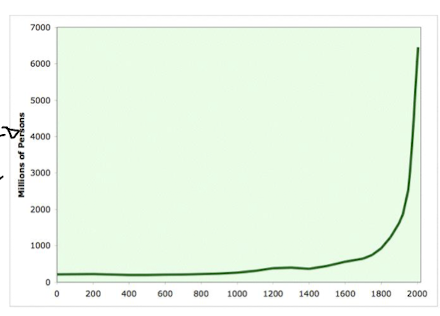
how to manage tragedy of the commons
centralized government or private property
south tasman rise trawl fishery example
orange roughy severly overfished, needed management plan
cooperation between aus and nz reached in 1997 but the official start date was march 1998 so in this gap people were incentivized overfish until the date
aus harvested entire total allowable trust before the start date, then the next year nz overfished in response
in 2000 they reached a more reasonable agreement but it was too late, harvest were low and it was a long rebuild due to late maturity for the fish. still not really bounced back from this
top down management
governed by national and international interests and agreements
ex Montreal protocol 1986 - banning aerosols to protect the ozone
ex int commission on the protection of the rhine for massive pollution
failures: kyoto agreement and climate change, rio protocol for biodiversity
havent come to fruitition
bottom up management
governed by local agencies and users
knowledge base is strongest with small scale ecologies and institutions
hard to assess failures
top down vs bottom up struggle
hard decisions with today vs tomorrow, large uncertainty and complexity
effective governance is co-evolutionary race - conditions erode as developments increase threats
people devise ways to evade the government
successful governance needs to adapt
effective commons governance
1) when the resources and use can be monitored
2) rates of change in resources, use, tech, economic and social conditions are moderate
3) social capital/networks are high
4) outsiders can be excluded at low cost (individual complex when foreign)
5) users support effective monitoring and enforcement
institutional arrangements can help establish these
tragedy of the commons global problem
global market places are tightly linked
contemporary environmental challenges are global - climate change, land use change and population size
local places are strongly influenced by global dynamics
lake caohai example
large, shallow, hypereutropic lake with local agriculture and fisheries industry, bird watching
poor area, lake is used for sustenance and economy - lives at stake so complicated tragedy of the commons
dikes and canals allow for agriculture on the surrounding wetlands - rice
all size classes of fish are utilized, as well as water vegetation
so catch is declining and management efforts are opposed - no govt trust
lake caohai problem
local knowledge and stakeholders included, fisheries biologist role
lake is heavily overfished even in closed season, reductions in biomass, max fish size and catch per unit of effort (from 20kg per day to <1kg)
better management required to improve
lake caohai objectives
education program of benefits of reduced fishing (more fish)
involve locals in decision making efforts
develop grass roots (bottom up) support for self policing management/co management
start small to demonstrate success
develop alternative income for displaced fishermen
reduce total fishing to increase yield and catch per unit effort
lake caohai management options
1) limit days fished or nets used enforced by fishermans cooperative
2) rotating fish bans on sections of the lake to provide refuge and reduce impacts on locals
3) fence off sections of lake to be protected - possible stocking
4) consider grass carp stocking to convert macrophytes to fish protein
5) small scale culture ponds to replace fish and income loss
6) education programs for kids and next generation
 Note
Note  Flashcards (123)