Exam 4: Enzymes
 Call Kai
 Learn
Learn Practice Test
 Spaced Repetition
 Match
Match Flashcards
 Knowt Play
1/61

There's no tags or description
Looks like no tags are added yet.
Name | Mastery | Learn | Test | Matching | Spaced | Call with Kai |
|---|
No analytics yet
Send a link to your students to track their progress
62 Terms
Enzymes are…
biological protein catalysts
Write or say the formula for enzyme-catalyzed reactions. Below are the components.
product, substrate, enzyme
Substrate —> Enzyme —> Product
Enzymes are measured by what?
Activity
How does Substrate Concentration influence enzymes?
increases rate enzymatic of reaction
How does pH influence enzymes?
changing enzyme shape & electrical charge
How does temperature influence enzymes?
increases the velocities (speed) of chemical reactions
Activators, or coenzymes increase the rate of an enzymatic reaction.
Cofactors
Various substances that can decrease the rate of reaction.
Inhibitors
Inhibitor binds to the ES complex to form an enzyme substrate complex but doesn’t result in a product.
Uncompetitive inhibition
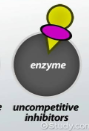
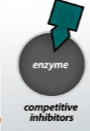
Substance is similar to the normal substrate and competes with the substrate for the bind or active site of the enzyme.
Competitive
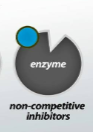
Inhibitor structurally different than the substrate and binds to an allosteric site on the enzyme molecule.
Non- competitive inhibition
Enzyme Classification:
Responsible for oxidase reduction
Oxidoreductase
Enzyme Classification:
Transfers Carbon, Nitrogen or Phosphorus containing groups— from a donor molecule to a acceptor.
Transferases
Enzyme Classification:
Cleavage of bonds by adding water.
Hydrolases
Enzyme Classification:
Cleavage of carbon-carbon, carbon-nitrogen & carbon to ‘S’ bonds.
Lyases
Enzyme Classification:
Racemization of optical or geometric isomers
Isomerases
Formation of bonds b/n C and O, S, N coupled to hydrolase high energy phosphate.
Ligases
Enzyme Clin Sig.
Associated with hepatocellular disease or damage to hepatocytes.
AST and ALT
CK-1;
Brain and CNS
CK-2
Heart muscle
CK-3
Skeletal & Heart muscle
An aminotransferase that catalyzes the deamination of
alanine. Greatest concentration within the cytoplasm of the liver + liver specific issues.
Alanine Aminotransferase (ALT)
Reference range for ALT is…
6-37 u/L
With excessive (really HIGH) ALT what could be the patients health issue? What about moderate levels of ALT?
Hepatitis. Obstructive liver disease.
Catalyzes the interconversion of amino acids and α-oxoacids by the transfer of amino groups. Elevations occur mostly in the heart, liver, skeletal muscle and kidneys related diseases/conditions…
Aspartate Aminotransferase (AST)
Related to high/elevates levels in pediatric/adolescence and pregnancy(placenta)…?
Alkaline Phosphatase (ALP)
Reference range for AST is…
5-30 u/L
Within clinical testing with the use of patient serum for AST and ALT, what should be avoided?
Hemolysis (destruction of RBC)
In which liver disease is the DeRitis ratio (AST: ALT) usually less than 1?
Viral hepatitis
Cirrhosis
Alcoholic hepatitis
All of the above
Viral hepatitis
Organic cofactors that commonly have a structure related to vitamins:
Holoenzymes
Coenzymes
Prosthetic groups
Substrate
coenzymes
Present in all body tissue, richest in cell membranes and alkaline nature. Found highest in hepatobiliary diseases; hepatobiliary obstruction and biliary tract disorders.
Alkaline Phosphatase (ALP)
Reference range for Alkaline Phosphatase (ALP)…
44-147 u/L
Alkaline phosphatase(ALP) enzyme…what disease?
pt. 1 : muscle, brain, bone or pancreas
pt. 2: Obstructive liver disease, Hepatitis, Renal failure or Pancreatitis
Bones; Obstructive Liver
Alanine aminotransferase(ALT) enzyme…
Liver (specific)
Acid Phosphate (ACP) enzyme…
Prostate
Creatine Kinase (CK) enzyme…
Heart
Amylase enzyme…
a. prostate
b. Pancreas
c. Liver, bone, muscle
pancreas
Lactate Dehydrogenase (LDH) enzyme…
Hemolysis (Liver + Heart)
Aspartate aminotransferase(AST) enzyme…
Heart, Liver, Muscle
Gamma-glutamyl transferase (GGT) enzyme…
RBC
NOT property of enzymes:
a. Small amounts of the enzyme required because the enzyme is used over
and over again
b. Enzymes are not altered or consumed during the reaction
c. Enzymes alter the equilibrium constant required for the reaction
d. Enzymes accelerate the speed at which a chemical reaction reaches
equilibrium
Enzymes alter the equilibrium constant required for the reaction
All of the following are factors influencing enzyme action except:
a. pH
b. Temperature
c. Color
d. Cofactors
e. Inhibitors
Color
Most of clinically significant enzymes function at a pH of _________ and a
temperature of ____________.
a. 7-8, 37ºC
b. 2-3, 37ºC
c. 7-8, 25ºC
d. 2-8, 25ºC
7-8 ; 37C
A heat-labile protein portion of enzyme is called the ______________, which
requires a _______________ for full catalytic activity.
a. Holoenzyme; cofactor
b. Apoenzyme; coenzyme
c. Holoenzyme; substrate
d. Apoenzyme; inhibitor
Apoenzyme; coenzyme
Fill in the Blank:
_______________________________ is defined as amount of enzyme that
produces 1µmol of product per minute under standardized conditions of
temperature, pH, substrate, and activators.
International Unit
Increases in the MB fraction of CK is associated with:
a. Liver disease
b. Bone disease
c. Kidney failure
d. Myocardial infarction
Myocardial infraction
CK-1, CK-2, and CK-3 are examples of:
a. Transport proteins
b. Isoenzymes
c. Hetroenzymes
d. Inhibitors
isoenzymes
The recommended storage temperature for the preservation of activity for MOST
enzymes is:
a. 0ºC
b. 4ºC
c. 25ºC
d. 37ºC
4C
Which of the following blood tests is used to determine acute pancreatitis?
a. Acid phosphatase
b. Uric acid
c. Amylase
d. Alkaline phosphatase (ALP)
amylase
In enzyme kinetics, the reaction rate dependent of substrate concentration is
known as:
a. Zero-order kinetics
b. First-order kinetics
c. Second-order kinetics
d. Double-order kinetics
First-order kinetics
Serum chemistry results on a 35 year old male are:
Results Ref. Range
AST 100 U/L 4-34 U/L
ALT 185 U/L 5-40 U/L
ALP 85 U/L <165 U/L
GGT 22 U/L 5-24 U/L
These results are consistent with a possible diagnosis of _______________
a. Hemolytic anemia
b. Hepatitis
c. Biliary obstruction
d. Myocardial infarction
Hepatitis
When measuring enzyme activity, if the instrument is operating 5ºC lower than
the temperature prescribed for the method, how will the results be affected?
a. Lower than actual
b. Higher than actual
c. Varied, showing no particular pattern
d. No effect
Lower than actual
The properties of enzymes are CORRECTLY described by which of the following
statements?
a. Enzyme activity is not altered by heat denaturation
b. Enzymes are protein catalysts of biological origin
c. Enzymes are stable proteins and unaffected by pH changes
d. Enzymes affect the rate of a chemical reaction by raising the activation
energy needed
Enzymes are protein catalysts of biological origin
Wrong about enzyme inhibition:
a. Inhibitors are various substances that can decrease rate of reaction
b. Competitive inhibitors are substances similar to normal substrate
c. Uncompetitive inhibitors bind to an active site of the enzyme
d. Non-competitive inhibitors are structurally different from substrate
Uncompetitive inhibitors bind to an active site of the enzyme
Incorrect about ALT & AST methodologies:
a. The decrease in absorbance at 340 nm as NADH is oxidized to NAD +
measured
b. In both measurements, a temperature of 37ºC used for incubation
c. In both measurements, a two-step reaction principle is used
d. The increase in absorbance at 340 nm as NADH is oxidized to NAD +
measured
The increase in absorbance at 340 nm as NADH is oxidized to NAD +
measured
That portion of an enzyme which is separated from its cofactor is called a(n):
a. Holoenzyme
b. Isoenzyme
c. Coenzyme
d. Apoenzyme
Apoenzyme
18. Given the following data, what is the most likely disease state?
AST = 75 (2-25)
ALT = 118 (2-23)
LD = 220 (<140)
ALP = 841 (28-68)
GGT = 150 (21-40 U)
a. Intoxication
b. Hemolytic disease
c. Biliary duct obstruction
d. Bone disease
Biliary duct obstruction
A reaction is in ___________ kinetics when the reaction rate depends only on
enzyme concentration.
a. Zero-order
b. First-order
c. Second-order
d. Mixed-order
Zero-order
Which of the following blood tests is used in determination of prostate cancer?
a. Acid phosphatase
b. Alkaline phosphatase (ALP)
c. Alanine aminotransferase (ALT or SGPT)
d. Creatinine
Acid phosphate (ACP)
Place them correctly.
MK 1:
MK 2:
MK 3:
BB (bone)
Heart muscle
Skeletal & Heart muscle
An enzyme that breaks down starch to simple sugars:
Amylase.
Phosphatase.
Lipase.
Kinase.
Amylase

