Latitudes Longitudes and Rotation Revolution
 Studied by 0 people
 Call Kai
 Learn
Learn Practice Test
 Spaced Repetition
 Match
Match Flashcards
 Knowt Play
1/13

There's no tags or description
Looks like no tags are added yet.
Name | Mastery | Learn | Test | Matching | Spaced | Call with Kai |
|---|
No analytics yet
Send a link to your students to track their progress
14 Terms
Earth's grid
a complete network of parallels of latitudes and meridians of longitudes drawn on the map or globe
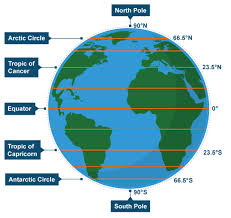
Latitude
the angular distance of a place north or south of the equator, as measured from the centre of the Earth
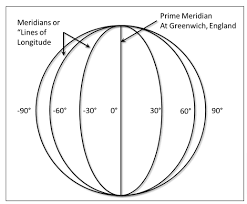
Longitude
the angular distance of a place east or west of the prime meridian
No. of time zones in Canada, Russia, USA
Canada: 6, Russia: 11, USA :6
Time zones of USA
Hawaii Time zone, Alaska Time zone, Eastern, Central, Mountain and Pacific Time zones
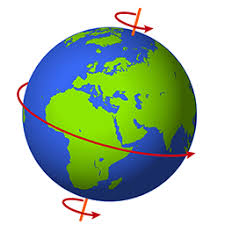
Rotation
The earth rotates on its axis from west to East once in 24 hrs. Causes day and night. Spinning of the Earth on its polar axis is termed as roatation.
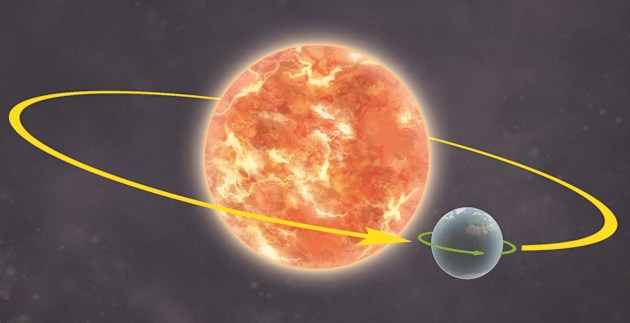
Revolution
The motion of the earth along its elliptical orbit around the sun in approximately 365.25 days.
Circle of illumination
Is the imaginary line which shows the clear demarcation between the phenomenon of day and night on the Earth
Sidereal day
The time taken by the earth to complete a 360 degrees rotation is 23hrs 56mins 4.09 secs is called sidereal day. It is determined by the stars.
Coriolis force OR Ferrell’s law / Effects of speed of rotation
All moving bodies on the Earth’s surface are deflected towards the right in the Northern Hemisphere and in the left in the Southern Hemisphere due to Coriolis force created due to the rotation of the earth. Cyclones and anti cyclones are also deflected causing atmospheric changes. It affects the pressure belts and movement of air on the Earth’s surface.
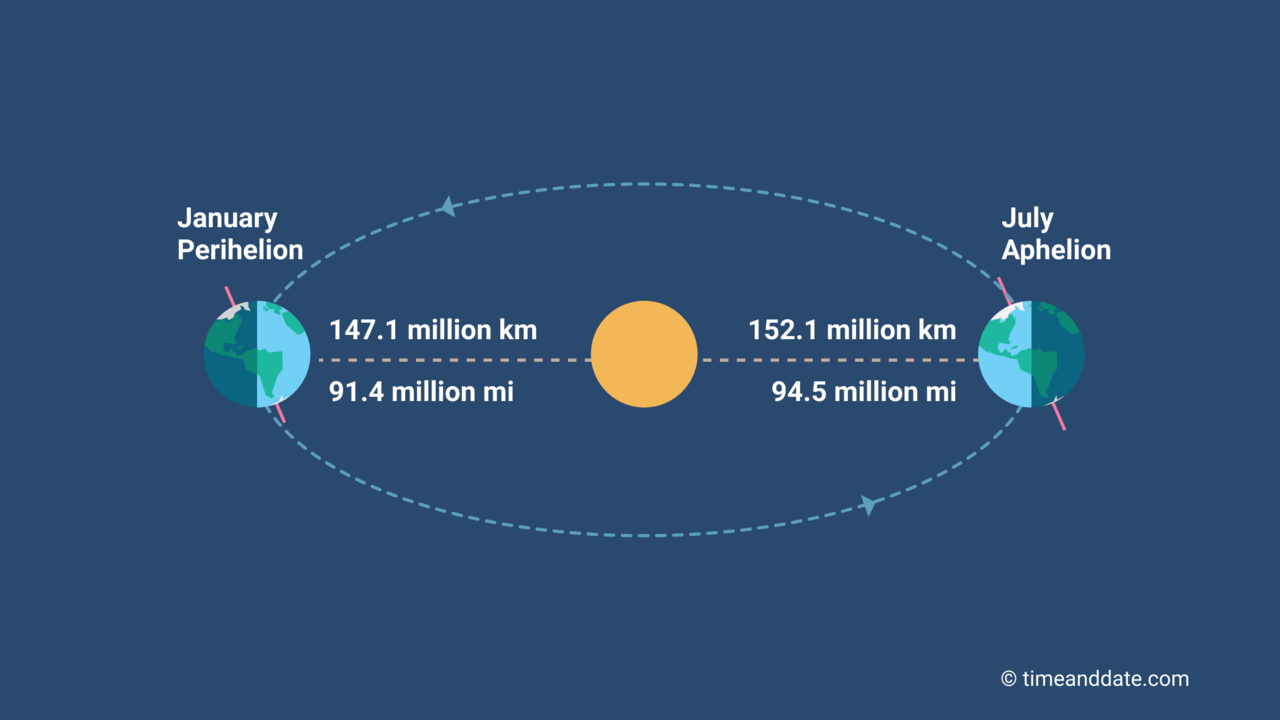
Perihelion and Aphelion
Perihelion: Jan 3rd when the distance is least or about 147 million km.
Aphelion: July 4th is when Earth is said to be farthest from the Sun or about 152 million km away.
Speed of revolution
1.07,000 km/hr OR 30 km/sec. Velocity is greatest at perihelion and least at aphelion.
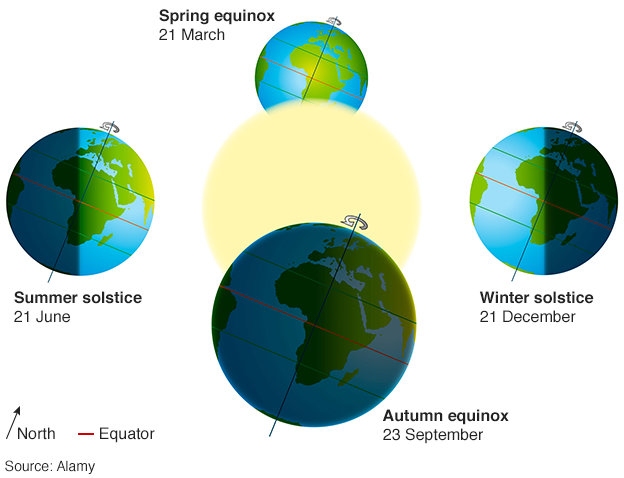
Equinox
The sun is directly overhead the at the equator on March 21st and September 22nd though at times it is referred to as September 23 because the year is not exactly 365 days (leap year). These two days are termed as Spring and Autumn equinox respectively.
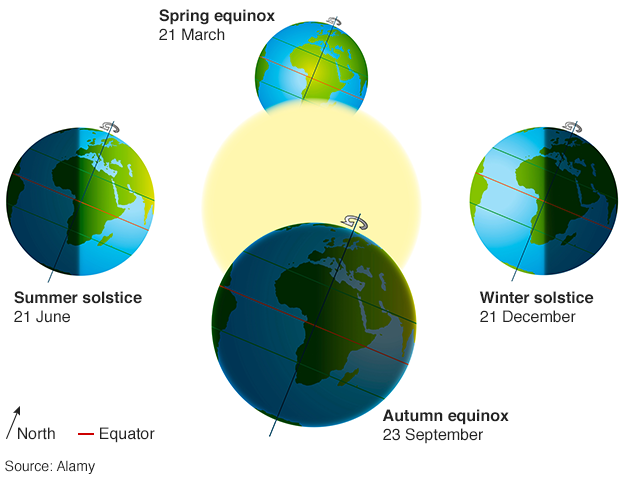
Summer and Winter Solstice
After the spring equinox the sun appears to move North and directly overhead tropic of cancer on June 21 (Longest day and shortest night). On December 22nd, the sun shines overhead the tropic of Capricorn in the southern hemisphere. The northern hemisphere has its winter solstice at this time.
 Note
Note  Flashcards (54)