Med Term Exam #4: Ch 13-16
 Call Kai
 Learn
Learn Practice Test
 Spaced Repetition
 Match
Match Flashcards
 Knowt Play
1/969

There's no tags or description
Looks like no tags are added yet.
Name | Mastery | Learn | Test | Matching | Spaced | Call with Kai |
|---|
No analytics yet
Send a link to your students to track their progress
970 Terms
musculoskeletal system
the bones, muscles, and joints of the body
bones
provide structural support and protection of internal organs
muscles
responsible for internal and external movement
joints
where bones come together
how much flexibility is needed
how is the type of joint at a specific location determined?
tendon
fibrous connective tissue that binds muscles to bones
ossificaiton
replacement of cartilage with bone
osteoblast
a cell that produces immature bony tissue that replaces cartilage
osteocyte
cell thatnourishes and maintains bone
osteoclast
cell that reabsorbs or digests bone (remodels bone)
deposit and tear down bone throughout life
osteoblasts and osteoclasts work together to....
calcium, phosphorus, vitamin D
what substances are needed for proper formation of. bone?
calcium phosphate enzyme
helps create hard bone from caclium, phosphorus, and vitamin D
bones
what is the main source of calcium (main reservoir for calcium storage) in the body?
nerve transmittal to muscle, including heart muscle and skeletal muscle
what is calcium necessary for?
parathyroid glands, which secrete PTH to release calcium from bone
what part of the body regulates the amount of calcium in the blood?
long, short, flat, sesamoid
what are the different types/shapes of bones?
diaphysis
shaft of a long bone
epiphysis
the end of a bone
metaphysis
the cone-like flared portion of a bone between the end and the shaft
epiphyseal line/plate
the growth plate, where cartilage is replaced by bone for bone growth (in length)
periosteum
membrane surrounding bones, rich in blood vessels and nerve tissue; serves as an attachment for tendons and muscles
articular cartilage
covers ends of bones in the joint to cushion the joint and allow it to move freely
compact bone
dense, hard layers of bone tissue that lie underneath the periosteum
cancellous bone
spongy, porous, bone tissue in the inner part of a bone
haversian systems for blood vessels, nerves, and yellow bone marrow (mostly fat)
what is contained within compact bone?
spaces contain red bone marrow with elements for blood formation
what is contained with cancellous (spongy/trabecular) bone?
yellow marrow
part of the bone marrow that mainly contains fat
medullary cavity
central, hollowed-out area in the shaft of a long bone
red marrow
part of the bone marrow that produces blood cells
rich with blood vessels and immature and mature blood cells in various stages of development
what is found in the red marrow?
hematopoiesis
the production of all types of blood cells in the bone marrow
process
a prominent projection on a bone that serves as an attachment for muscles tendons, and ligaments
depressions
openings or hollow regions of bone that help join bones or serve as passageways for nerves and/or vessels
condyle
knuckle-like process at the end of a bone near the joint
epicondyle
raised area on or above a condyle; attaches muscle and connective tissue to bone
trochanter
a large, irregularly shaped process on the side of a bone
tuberosity
a moderate prominence where muscles and connective tissues attach
fossa
shallow, basinlike depression in a bone, often serving as an articular surface
suture
immovable (fibrous) joints between bones; found only in the cranium
fontanelles
soft spot (incomplete bone formation) between the skull bones of an infant
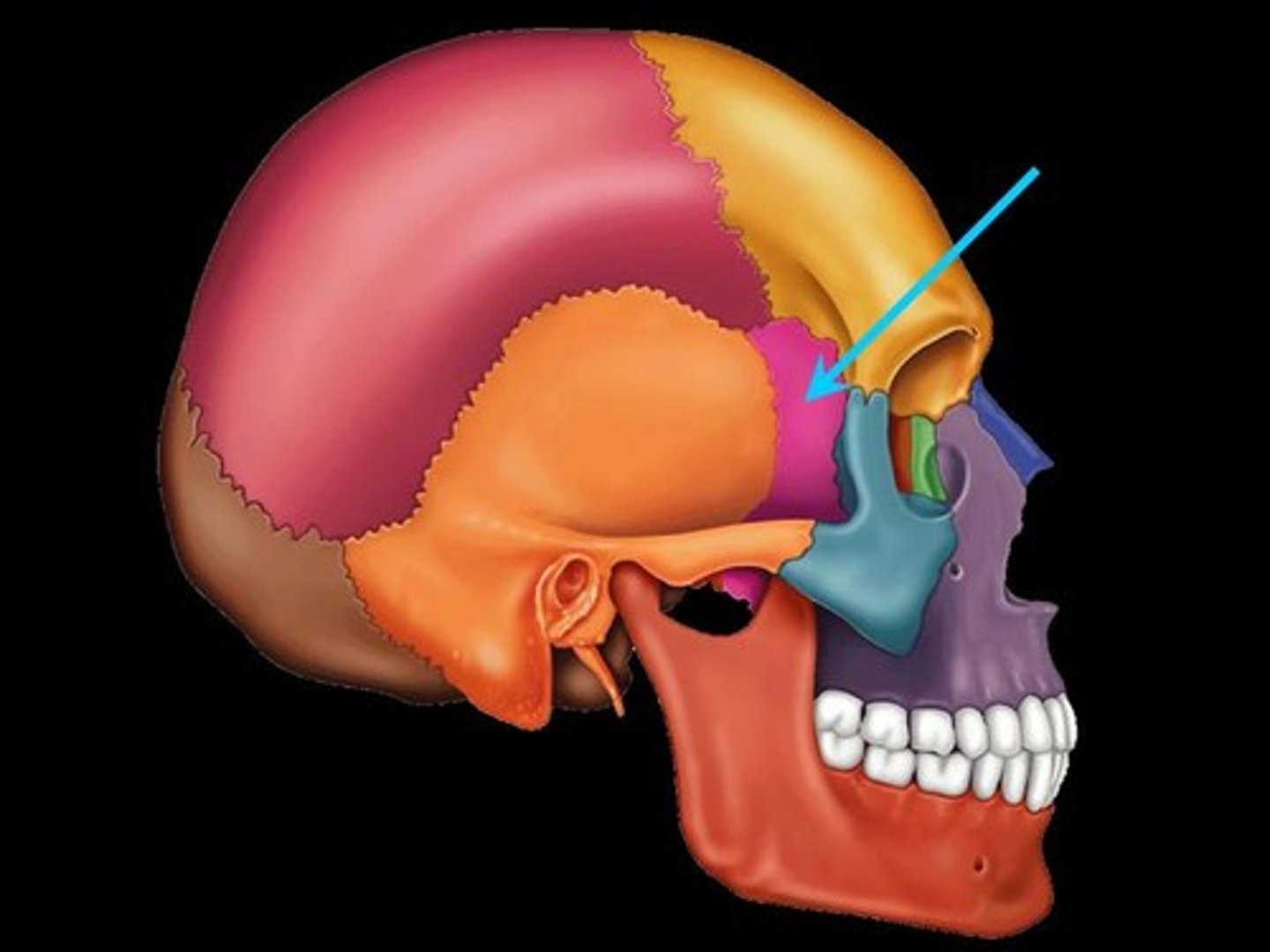
sphenoid bone
bone that joins all of the bones of the cranium together; forms part of the base of the skull
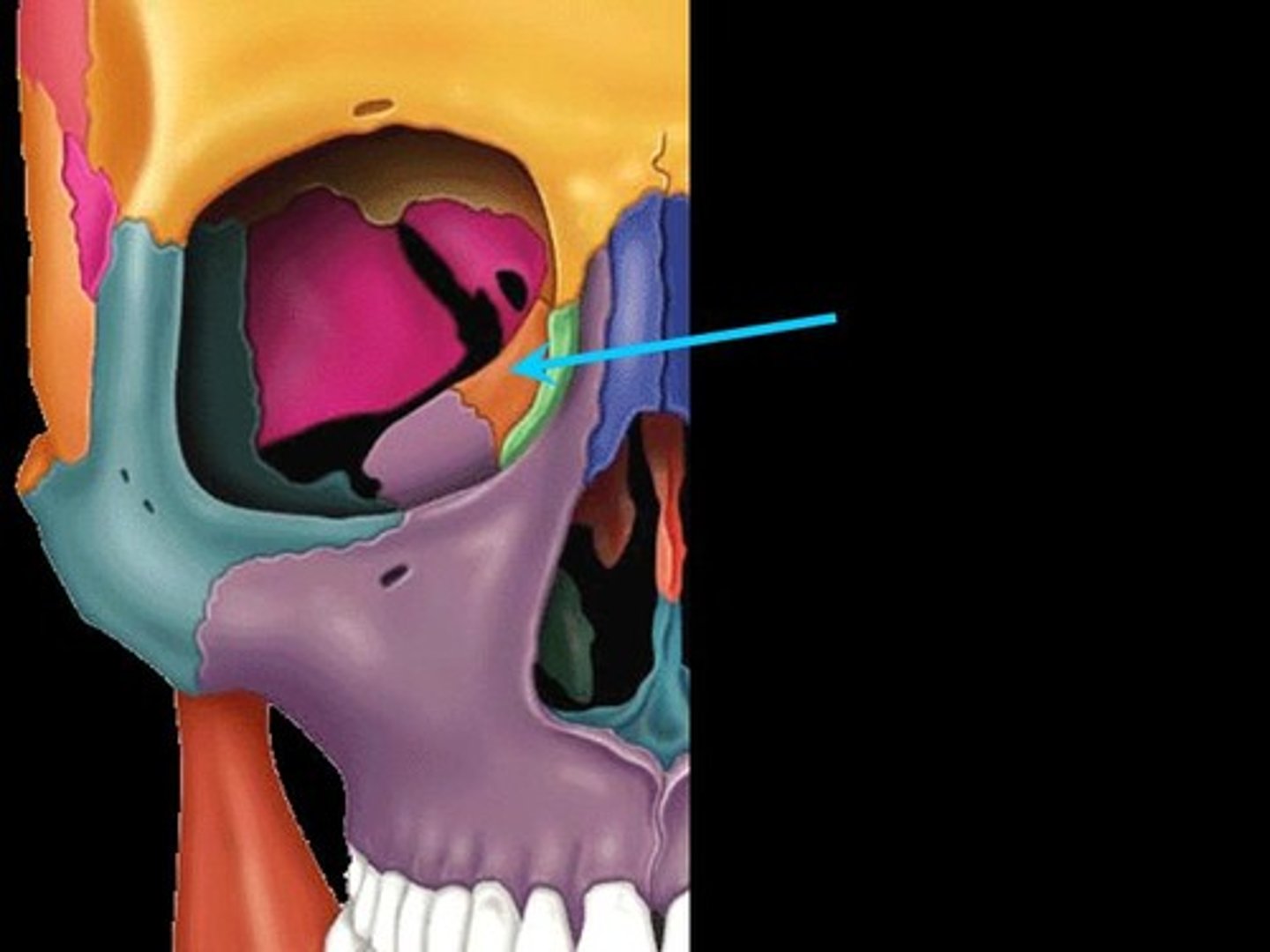
ethmoid bone
forms part of the posterior portion of the nose, the orbit, and the floor of the cranium
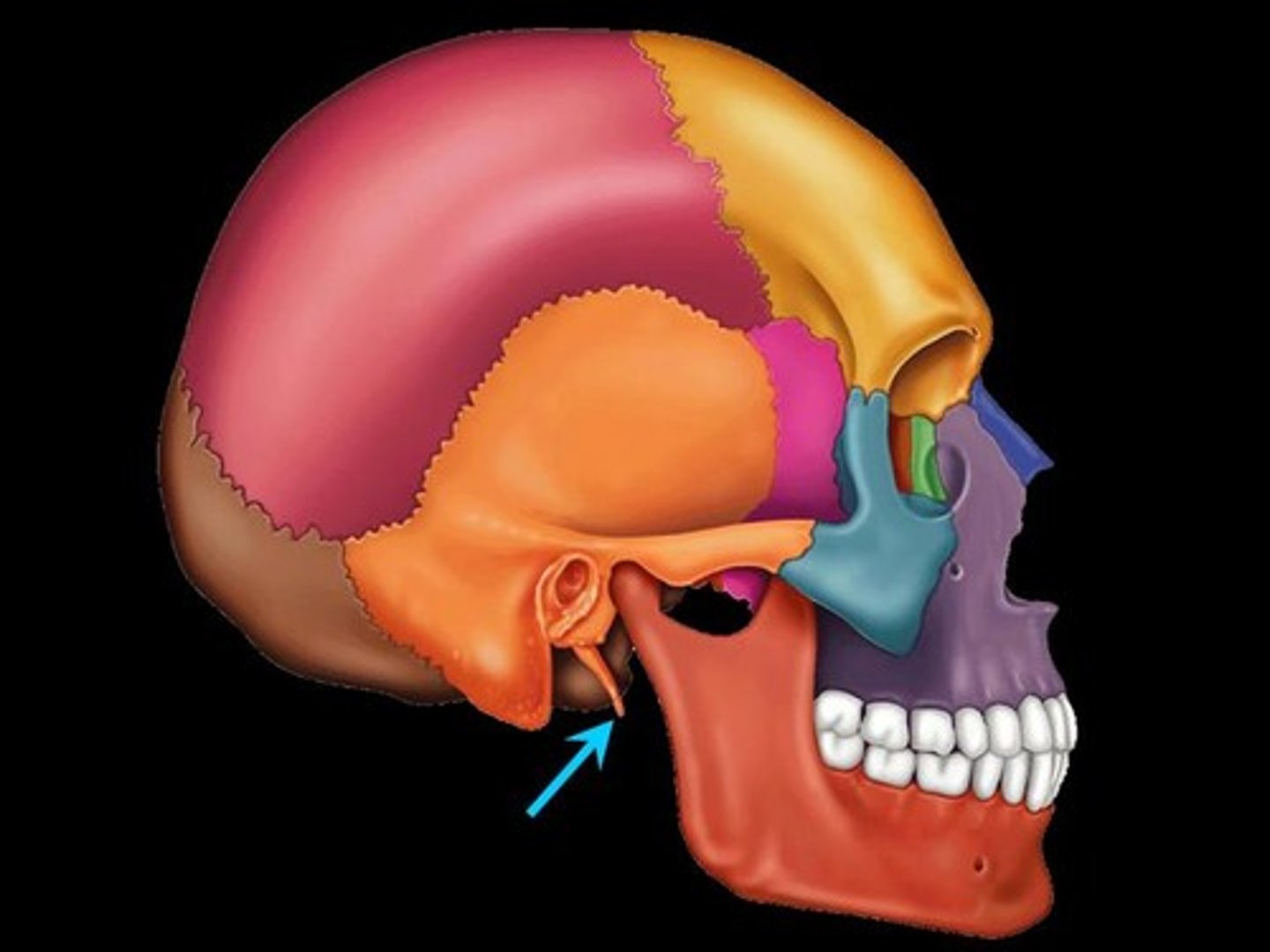
styloid process
pole-like process extending downward from the temporal bone on each side of the skull
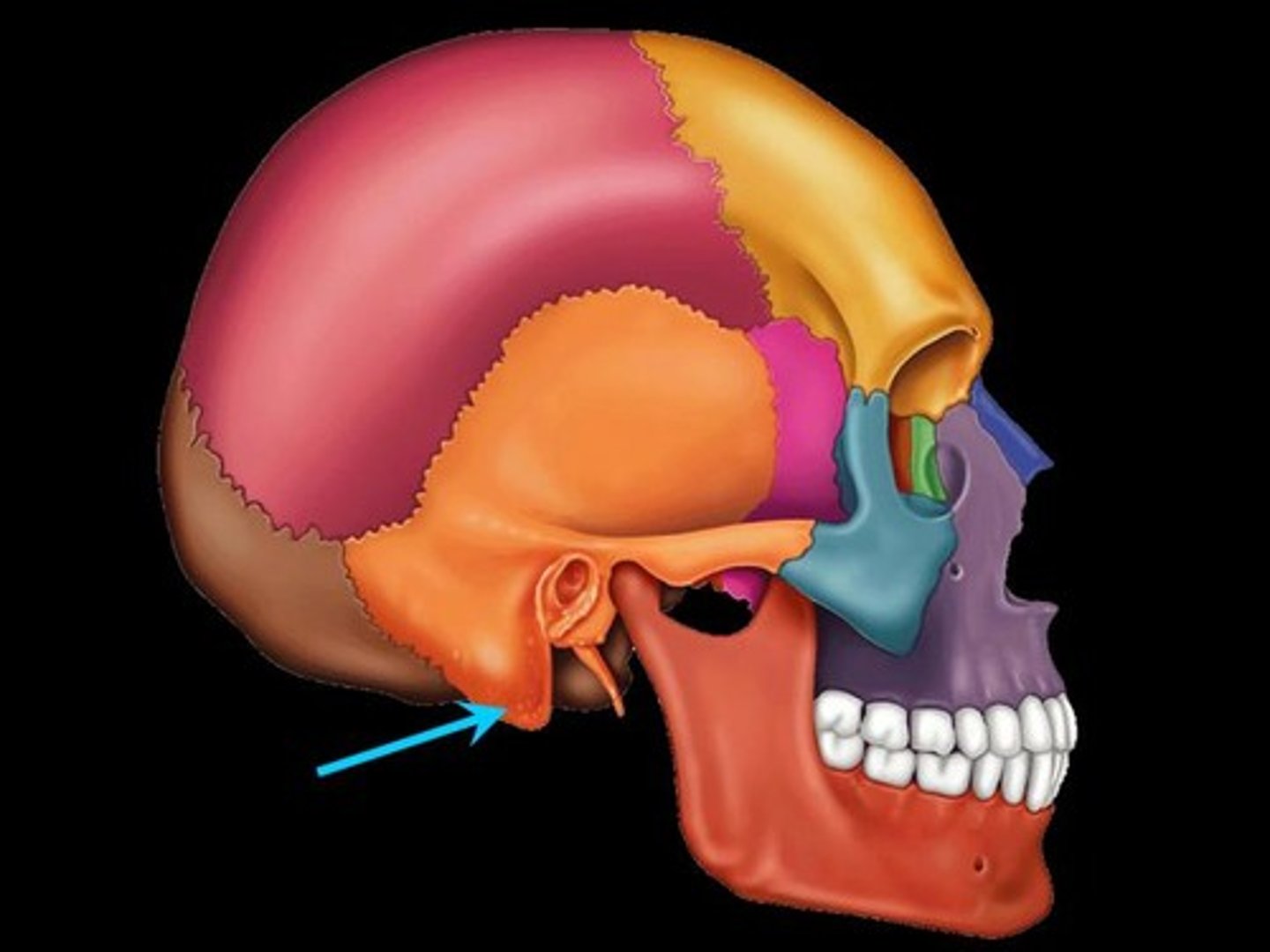
mastoid process
round projection on the temporal bone behind the ear
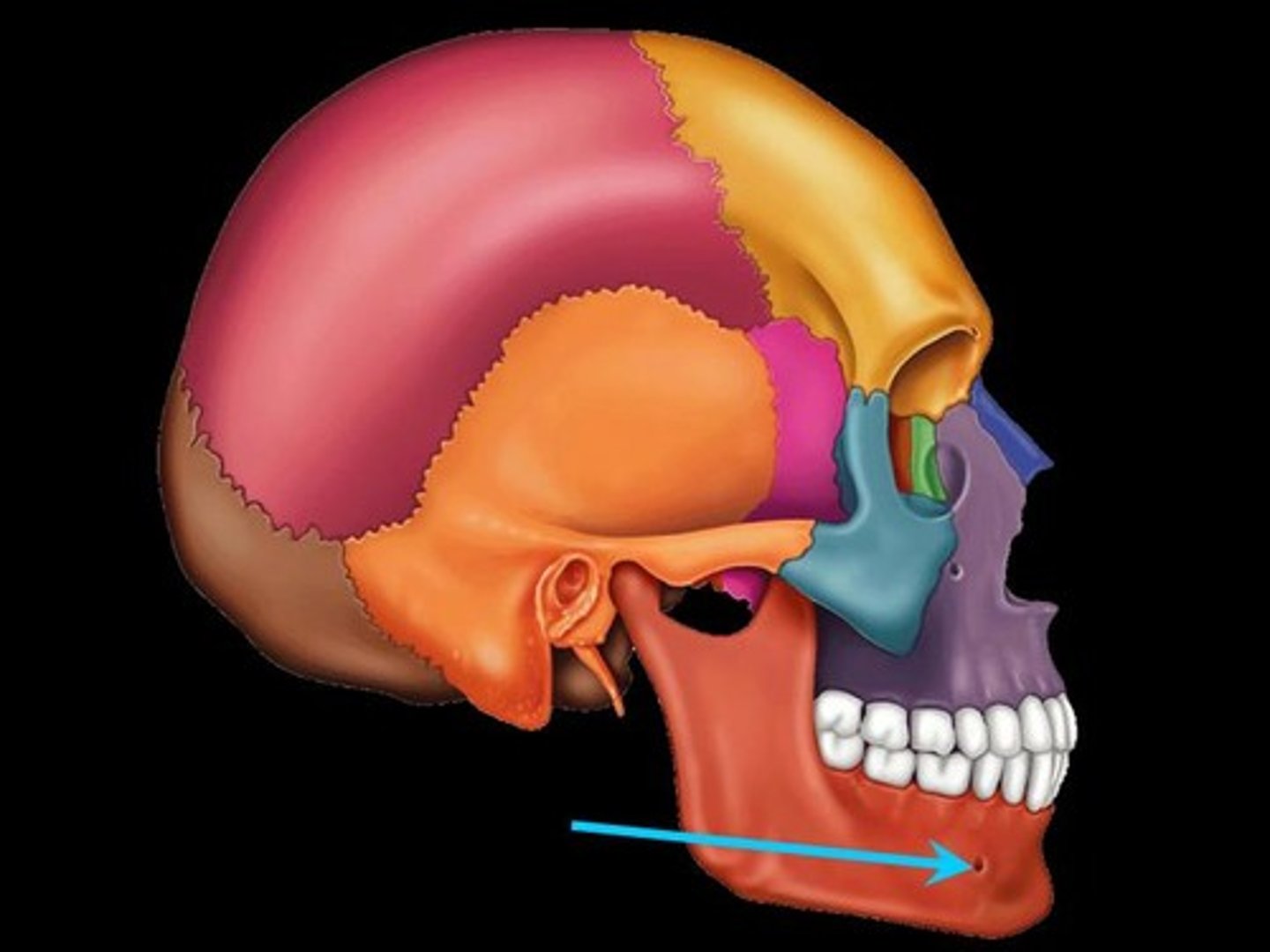
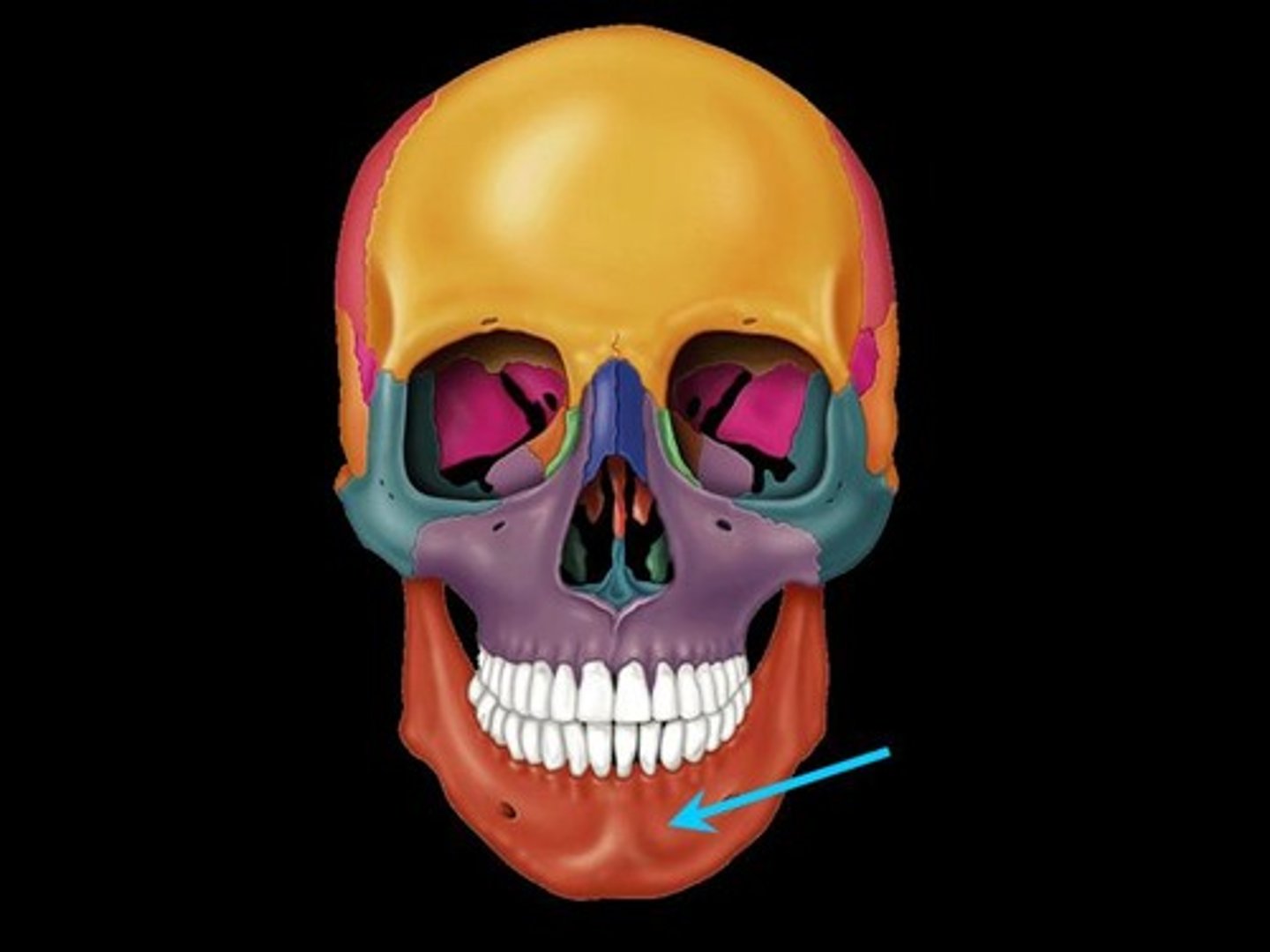
mental foramen
name this opening.
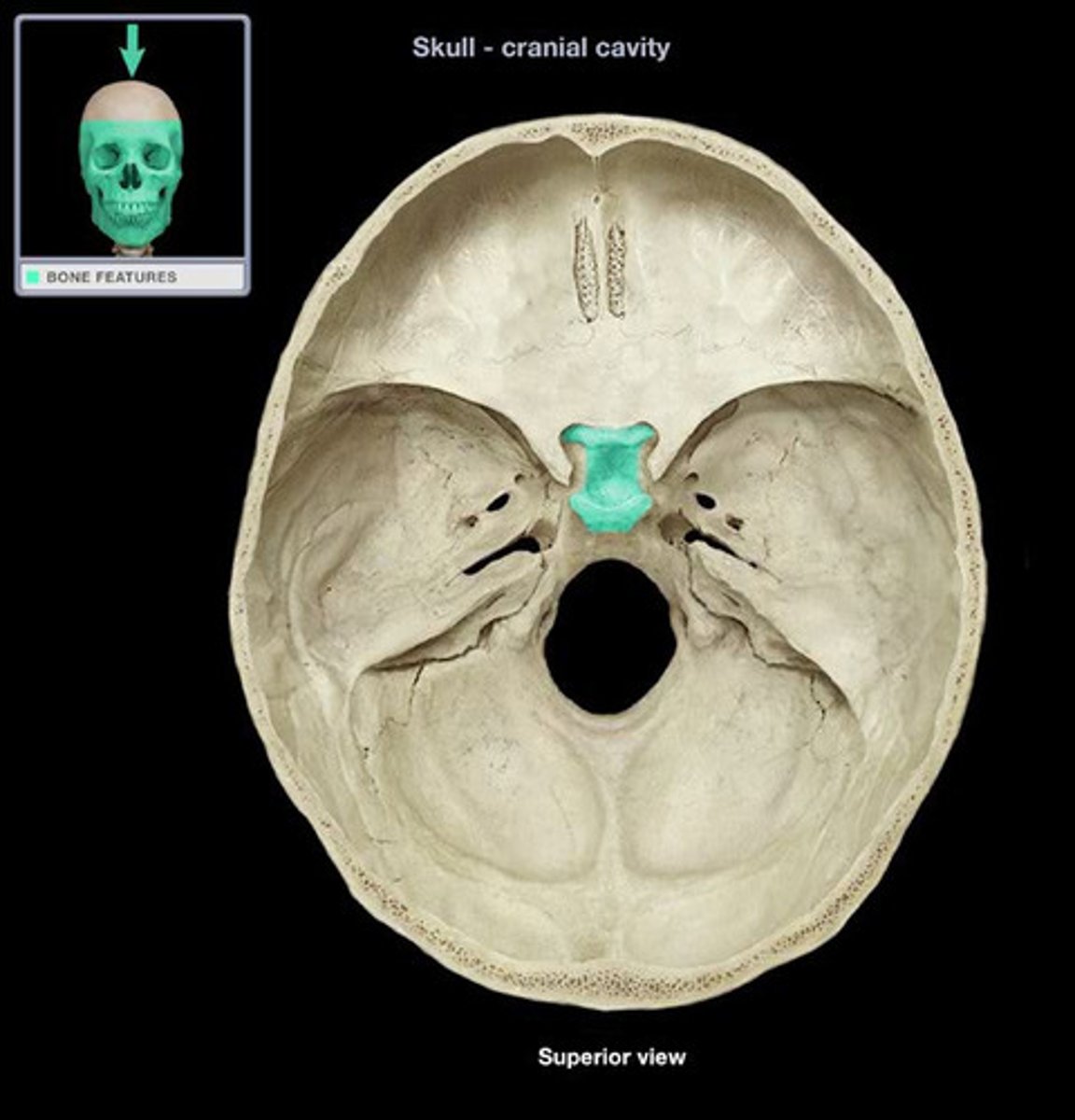
sella turcica
depression in the sphenoid bone where the pituitary gland is located
temporomandibular joint (TMJ)
connection on either side of the head between the temporal bone of skull and mandibular bone of jaw
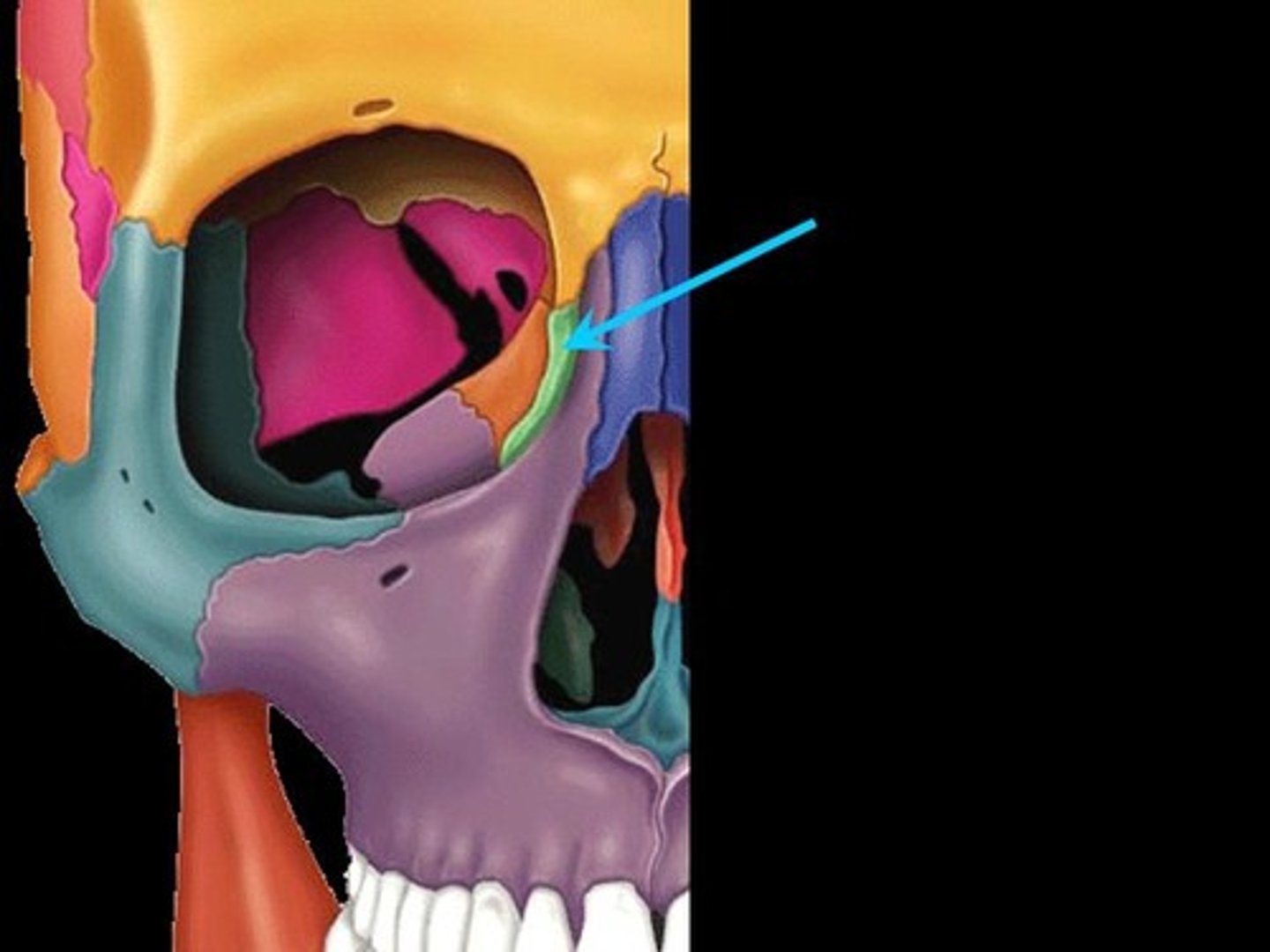
lacrimal bones
paired bones at the corner of each eye that cradle the tear ducts
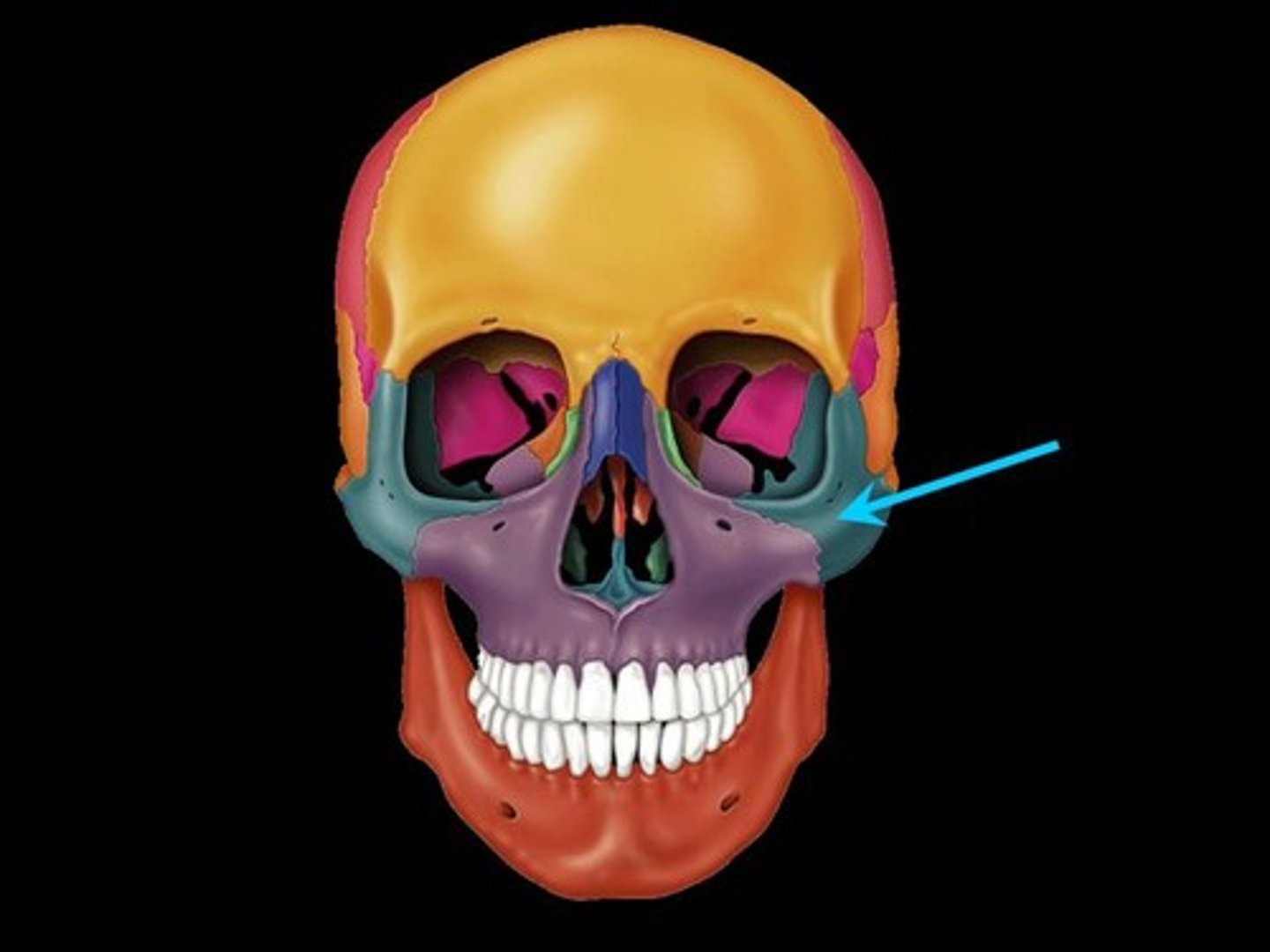
zygomatic bones
cheek bones
mandibular bone
lower jawbone
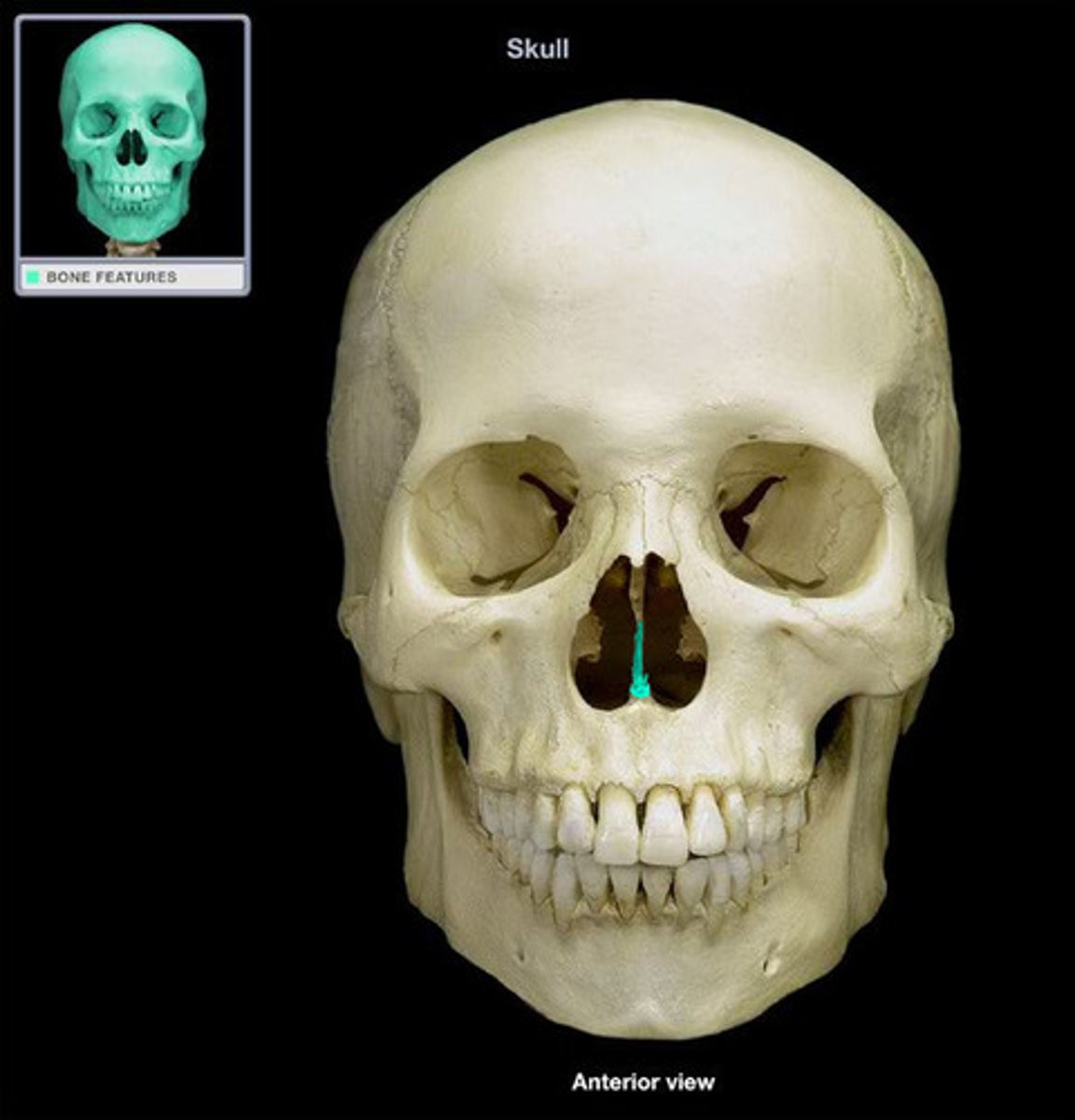
vomer
forms the inferior portion of the nasal septum
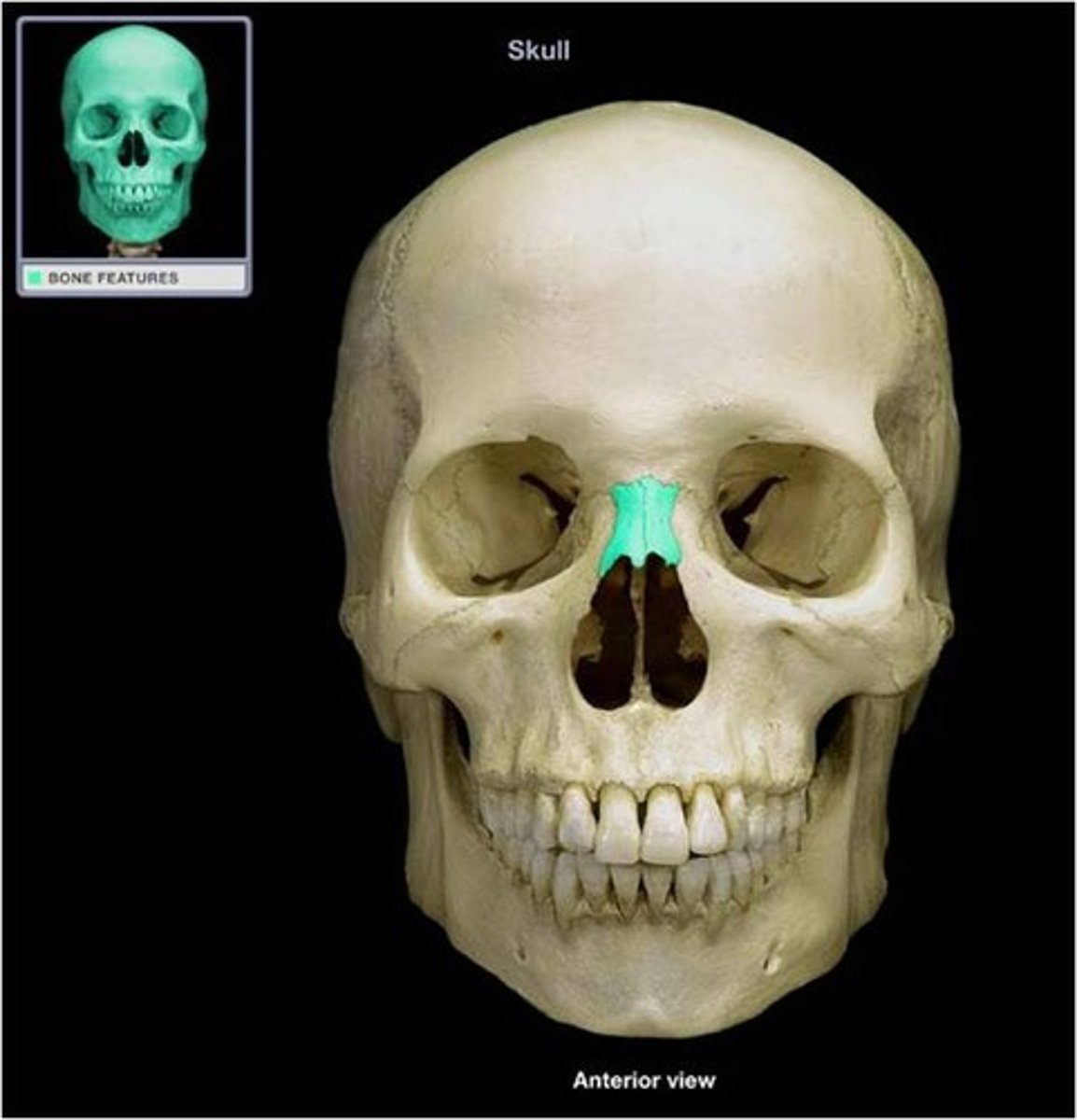
nasal bones
bones that form the bridge of the nose
sinus
an air cavity located in facial and cranial bones, which lighten the skull and warm and moisten air as it passes into the respiratory system
frontal sinus, ethmoidal sinus, sphenoidal sinus, maxillary sinus
what are the major sinuses?
vertebrae
26 bone segments from base of skull to tailbone, in five divisions and separated by pads of cartilage
intervertebral disks
pads of cartilage between vertebrae; shock absorbers
acromion
an outward extension of the scapula (shoulder blade) that forms the high point of the shoulder
acetabulum
rounded depression in the pelvis that joins the femur, forming the hip joint
ilium, pubis, ischium
what are the 3 bones that make up the pelvic girdle?
clavicle, scapula, sternum, ribs
what are the major bones of the thorax?
humerus, ulna, radius, carpals, metacarpals, phalanges
what are the major bones of the arm and hand?
pelvic girdle bones (ilium, ischium, pubis)
what are the major bones of the pelvis?
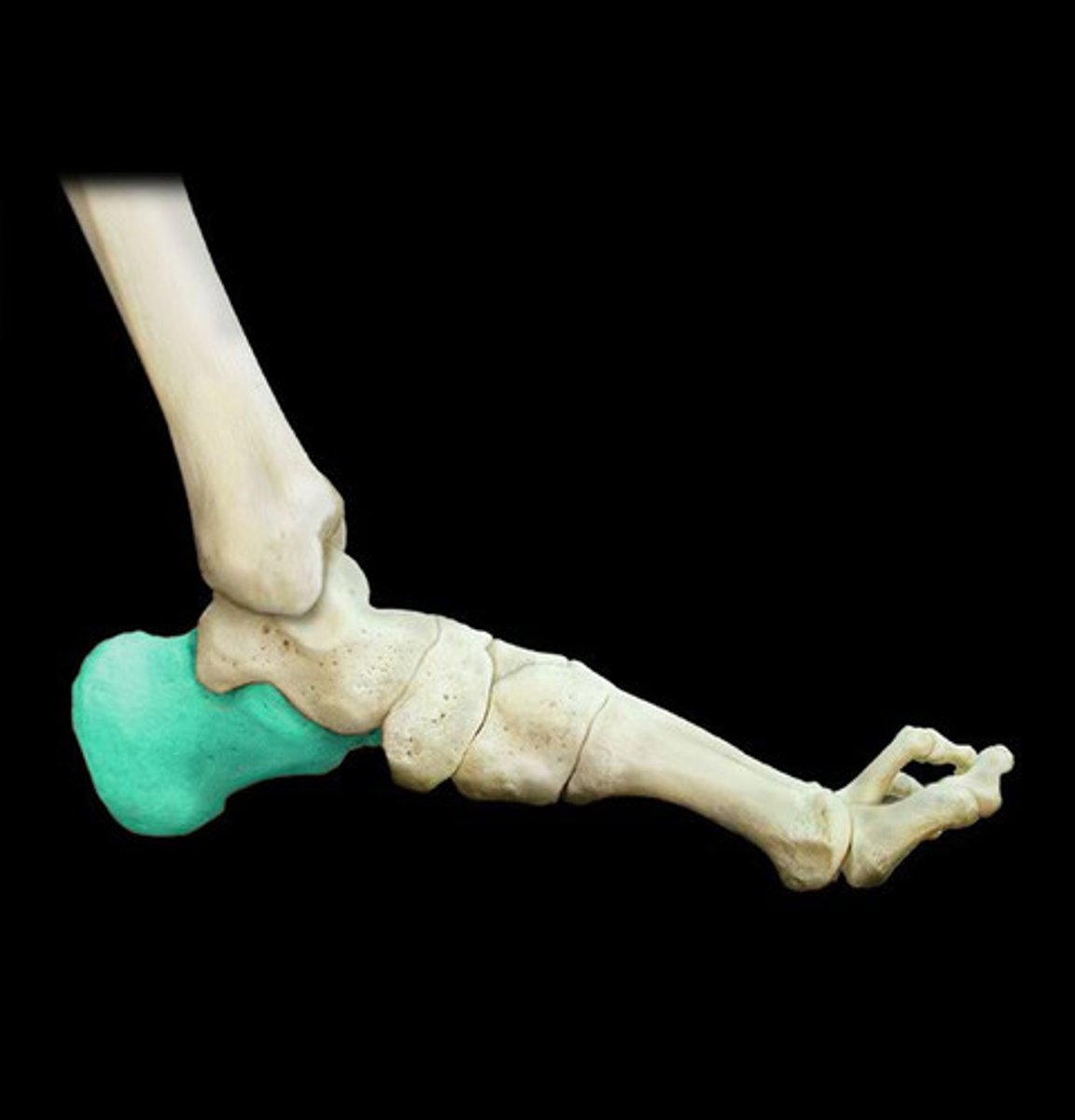
calcaneus
heel bone
talus
ankle bone
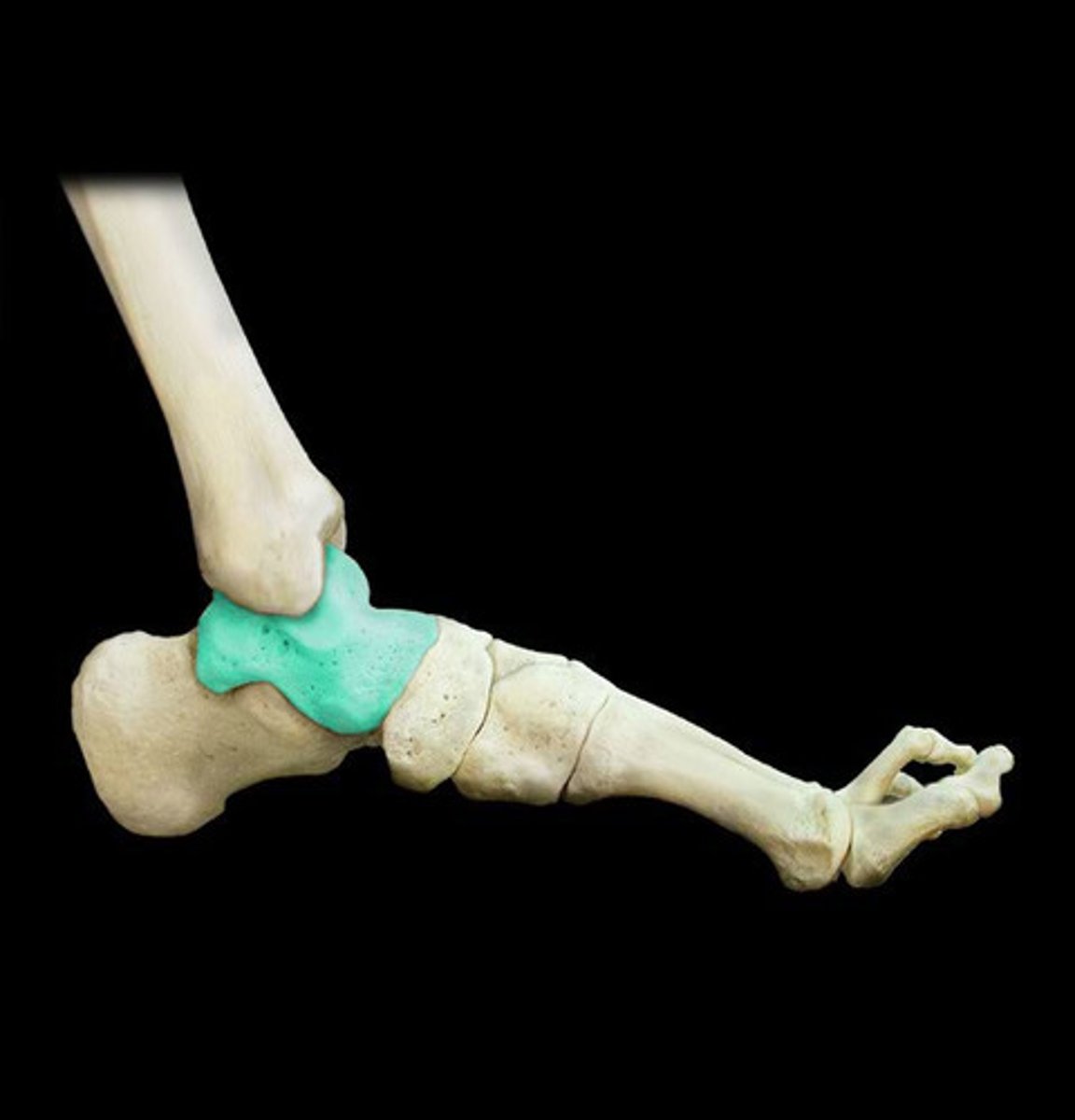
femur, patella, tibia, fibula, tarsals (calcaneus + talus), metatarsals, phalanges
what are the major bones of the leg and foot?
medial malleolus
distal process on medial tibial surface
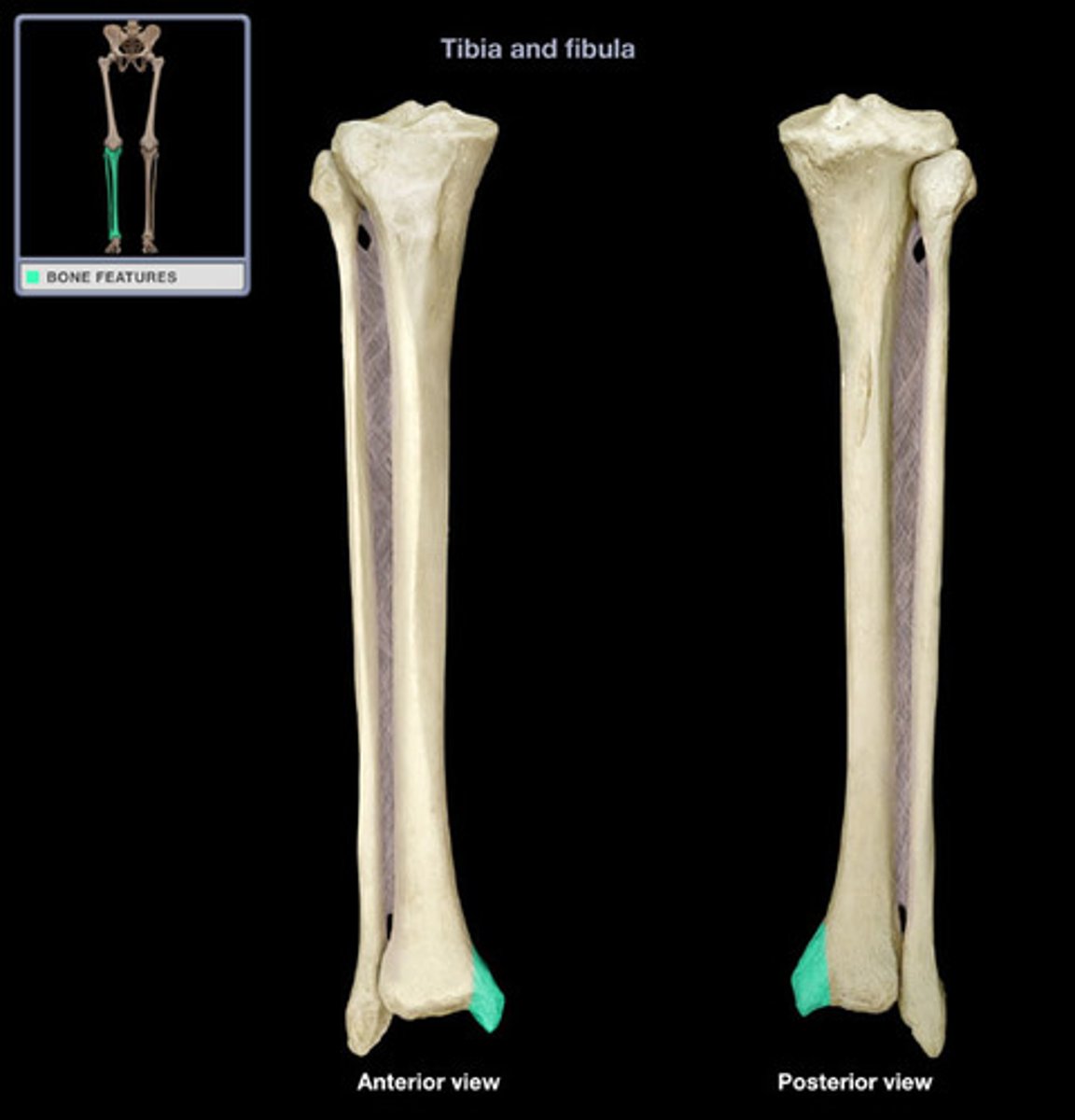
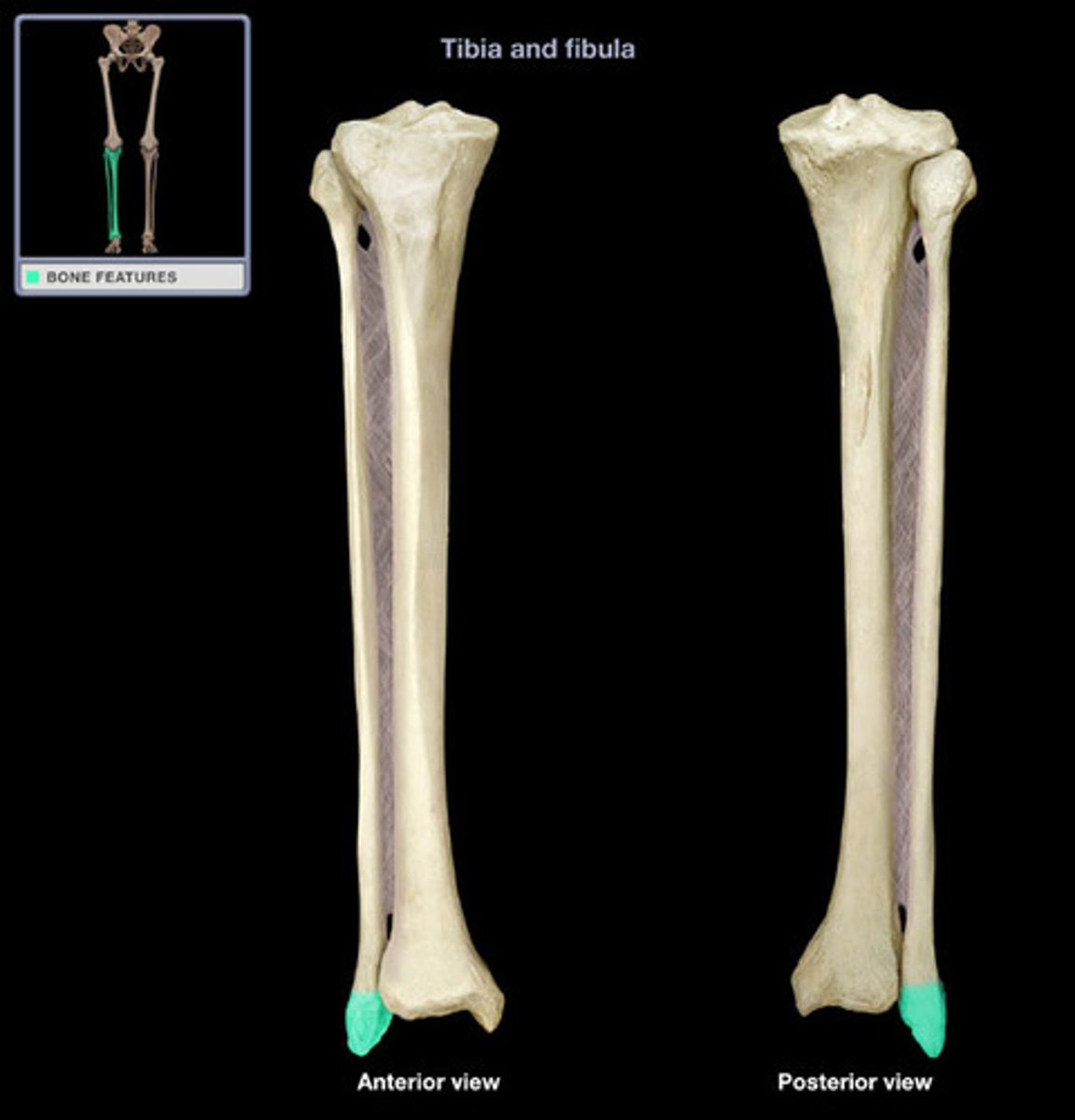
lateral malleolus
distal end of the fibula; forms the outer part of the ankle
bone
dense, hard connective tissue composing the skeleton
bone depression
opening or hollow region serving as a connection for bones, or passageway for blood vessels and nerves
bone process
enlarged area that extends from bones as an attachment for muscles, tendons, and ligaments
calcium
a mineral constituent of bone
cancellous bone
spongy, porous bone tissue in inner part of bone
cartilage
strong connective tissue that supports the body and is softer and more flexible than bone
collagen
dense connective tissue protein strands found in bone and other tissues
compact bone
hard, dense bone tissue, usually found around outer portion of bone
ethmoid, frontal, occipital, parietal, sphenoid, and temporal
what are the cranial bones?
disk
flat, round, plate-like structure
lacrimal, mandibular, maxillary, nasal, vomer, and zygomatic
what are the facial bones?
maxillary bone
bone of the upper jaw
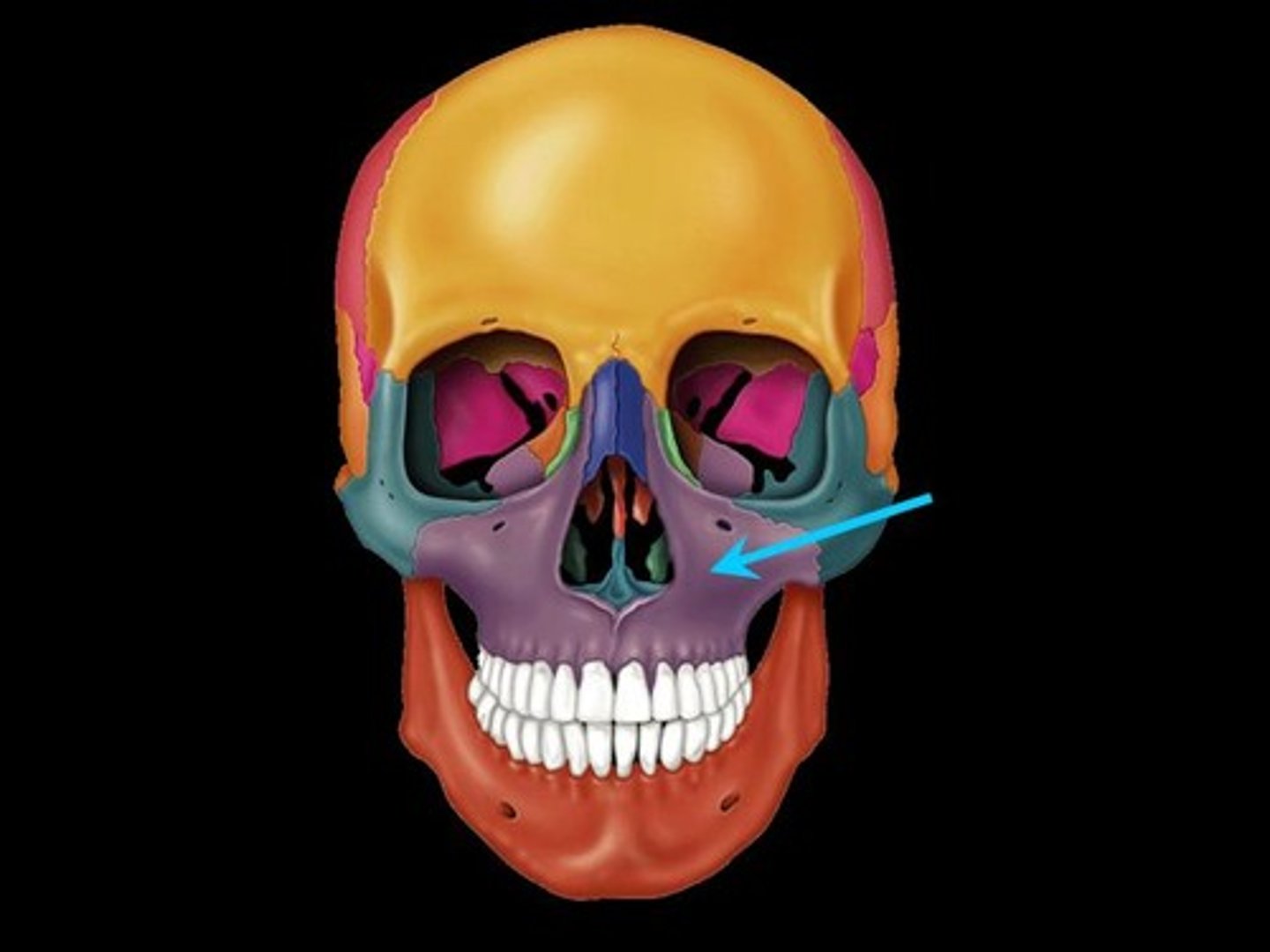
allow skull to move/compress during vaginal delivery
what is the purpose of fontanelles?
foramen magnum
opening of the occipital bone through which the spinal cord passes
ligament
fibrous connective tissue that binds bones to other bones
malleolus
round process on both sides of the ankle joint
manubrium
upper portion of the sternum
mastoid process
round projection on the temporal bone behind the ear
scapula
shoulder blade
clavicle
collar bone
olecranon
large process on the proximal end of the ulna
orthopedist
medical doctor who specializes in bone, joint, and muscle conditions
osseous tissue
bone tissue that makes up the skeletal system
ossification
the process of bone formation
phosphorus
mineral substance found in bones, along with calcium
physiatrist
medical doctor who specializes in rehabilitation
pubic symphysis
area of confluence of the two pubic bones in the pelvis
red bone marrow
found in cancellous bone; site of hematopoiesis
ribs
twelve pairs of curved bones that form the chest wall
true ribs are the first 7 pairs; false ribs are pairs 8-10; floating ribs are pairs 11 and 12
which ribs are classified as true, false, and floating?
sinus
hollow air cavity within a bone
trabeculae
supporting bundles of bony fibers in cancellous bone

