Intro Arch Quiz 5
 Call Kai
 Learn
Learn Practice Test
 Spaced Repetition
 Match
Match Flashcards
 Knowt Play
1/38

There's no tags or description
Looks like no tags are added yet.
Name | Mastery | Learn | Test | Matching | Spaced | Call with Kai |
|---|
No analytics yet
Send a link to your students to track their progress
39 Terms
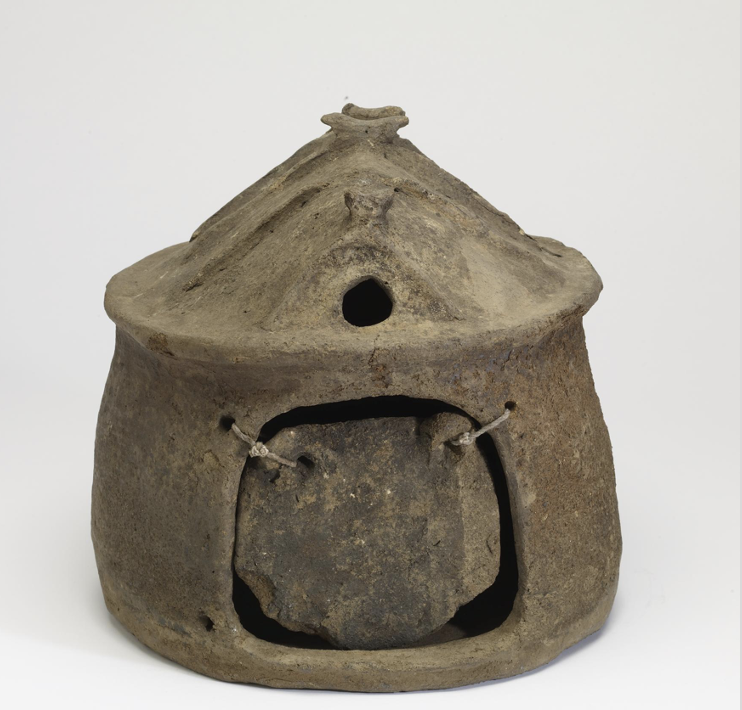
Palatine Hut
When: 10-8th centuries BCE
Where: Palatine Hill (Hill that overlooks swampy parts of Rome)
Why: Oval huts constructed with mudbrick and thatch. Suggests dispersed kin-based communities.
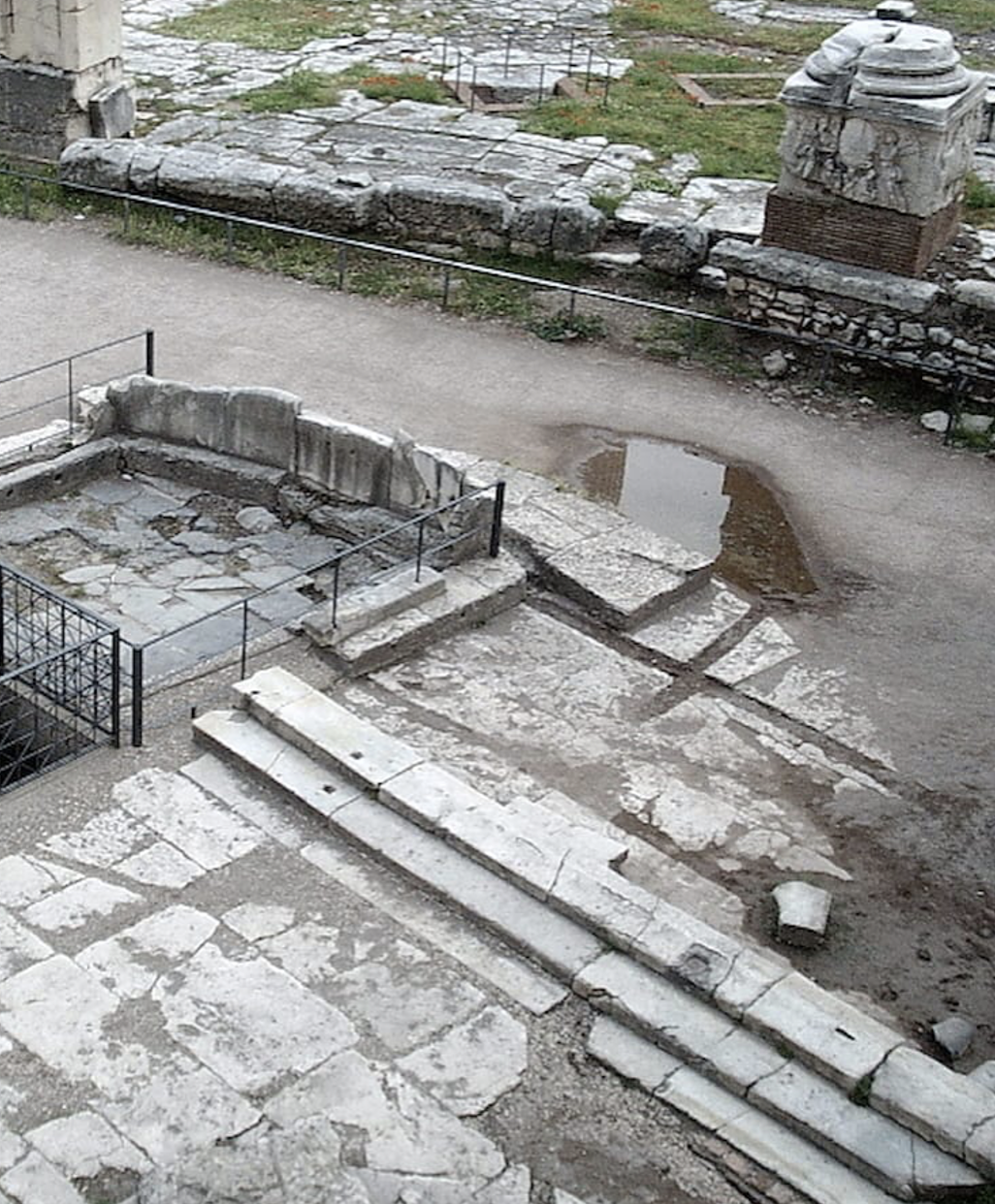
Lapis Niger
When: 6th century BC
Where: Roman Forum, Rome
Why: Contains one of the earliest latin inscriptions which talk about religious ritual actions. Controlled by present authority of the time. Early literacy and formalized public space. Emergence of institutionalized authority.
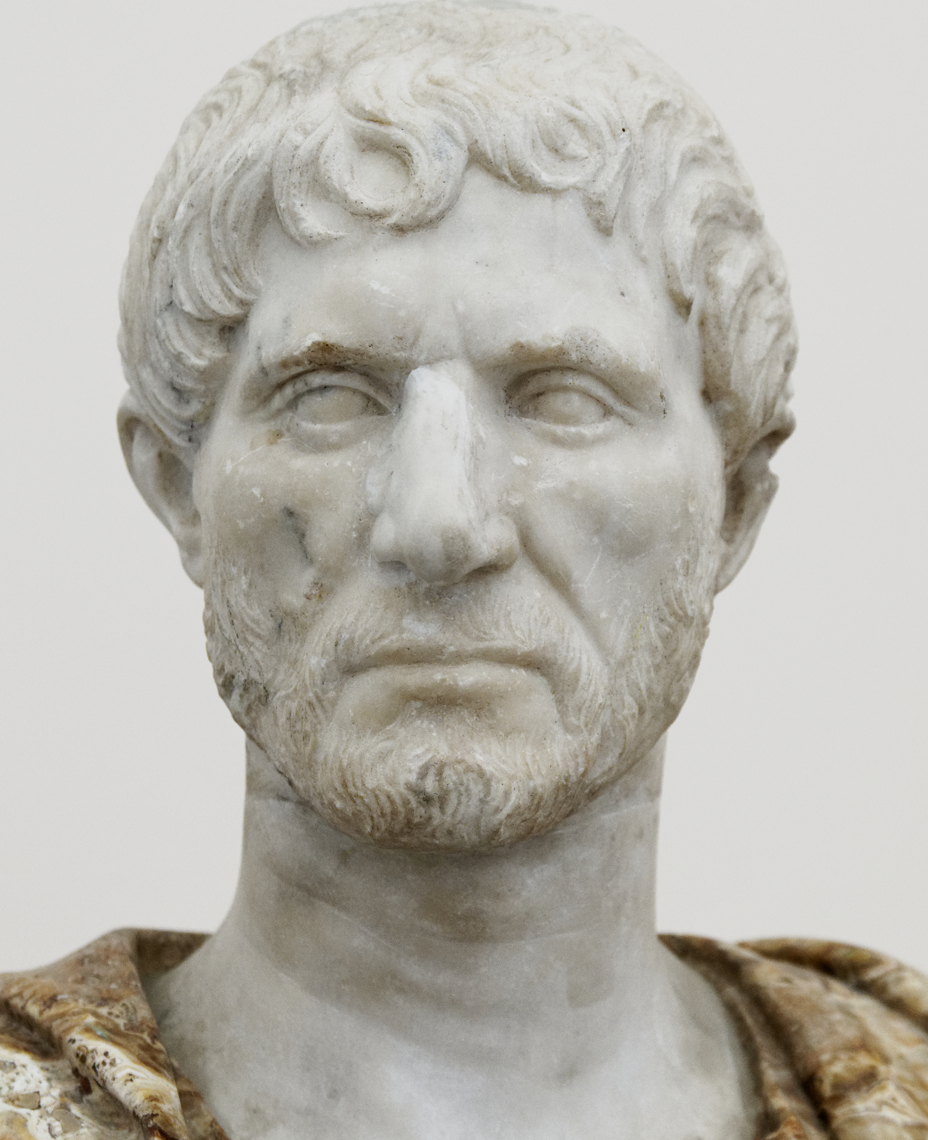
Rome/Etruscans, Conflict & Exchange
Etruscans dominate Central Italy 7-6th centuries BCE. Roman kings of Etruscan origin. Battle of Silvia Arsia = roman power goes up. Rome influenced by Etruscan culture.
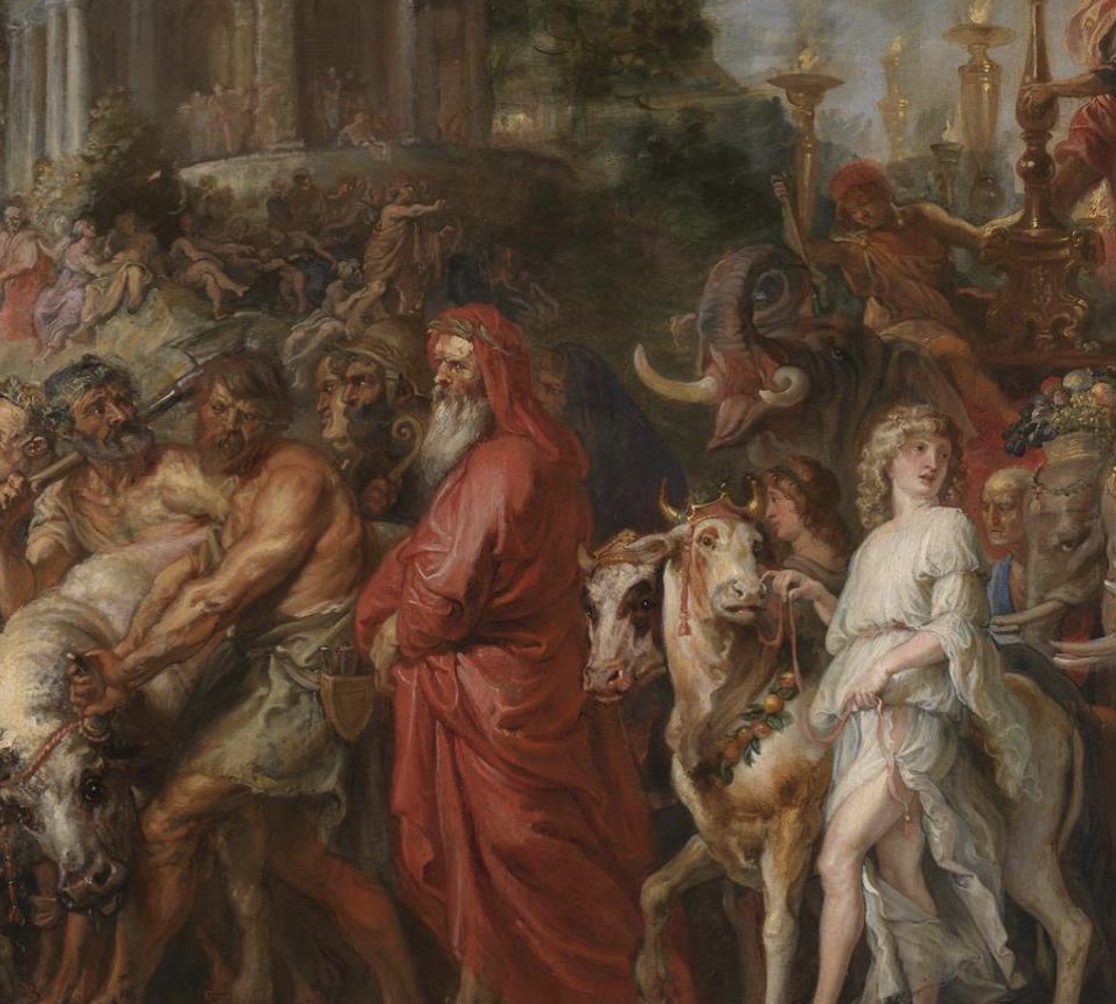
The Triumph: Authority affirmed thru art and culture
Procession when there is a major political victory. Elaborate public spectacle, people follow set route thru Rome, especially getting popular around Temple of Jupiter Optimus on Capitoline Hill. Gold, silver, exotic animals and art on display from the enemies. Sacrifice of white bull when reaching Temple of Jupiter.
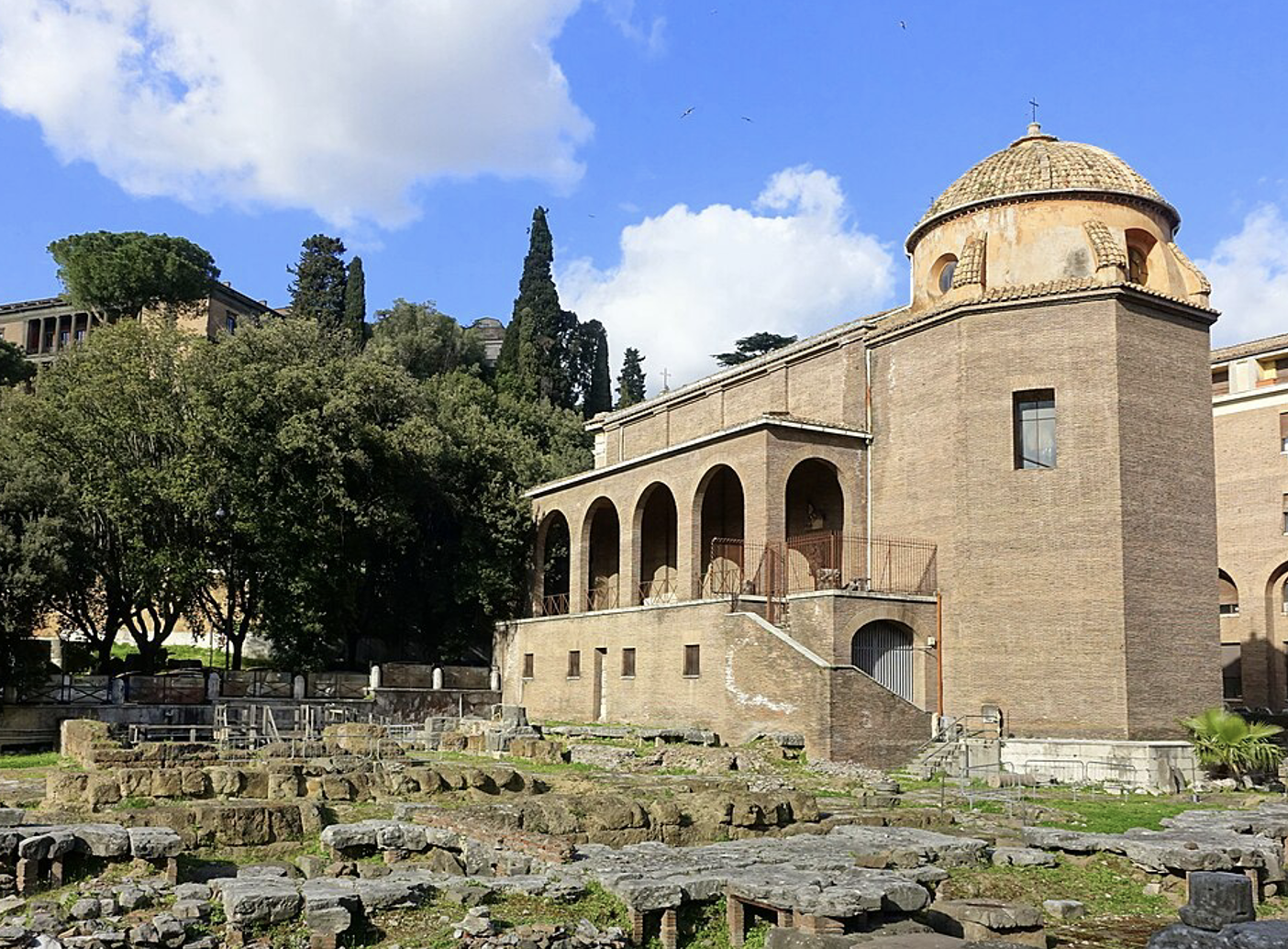
Area of Sant’ombono
When: 6th c. BCE
Where: Rome
Why: Terracotta statues as akroteria made of terracotta (inspired by etruscan art), representing heracles and athena. Helps showcase what 6th century looked like at the time. Excavated temple is dedicated to (?)
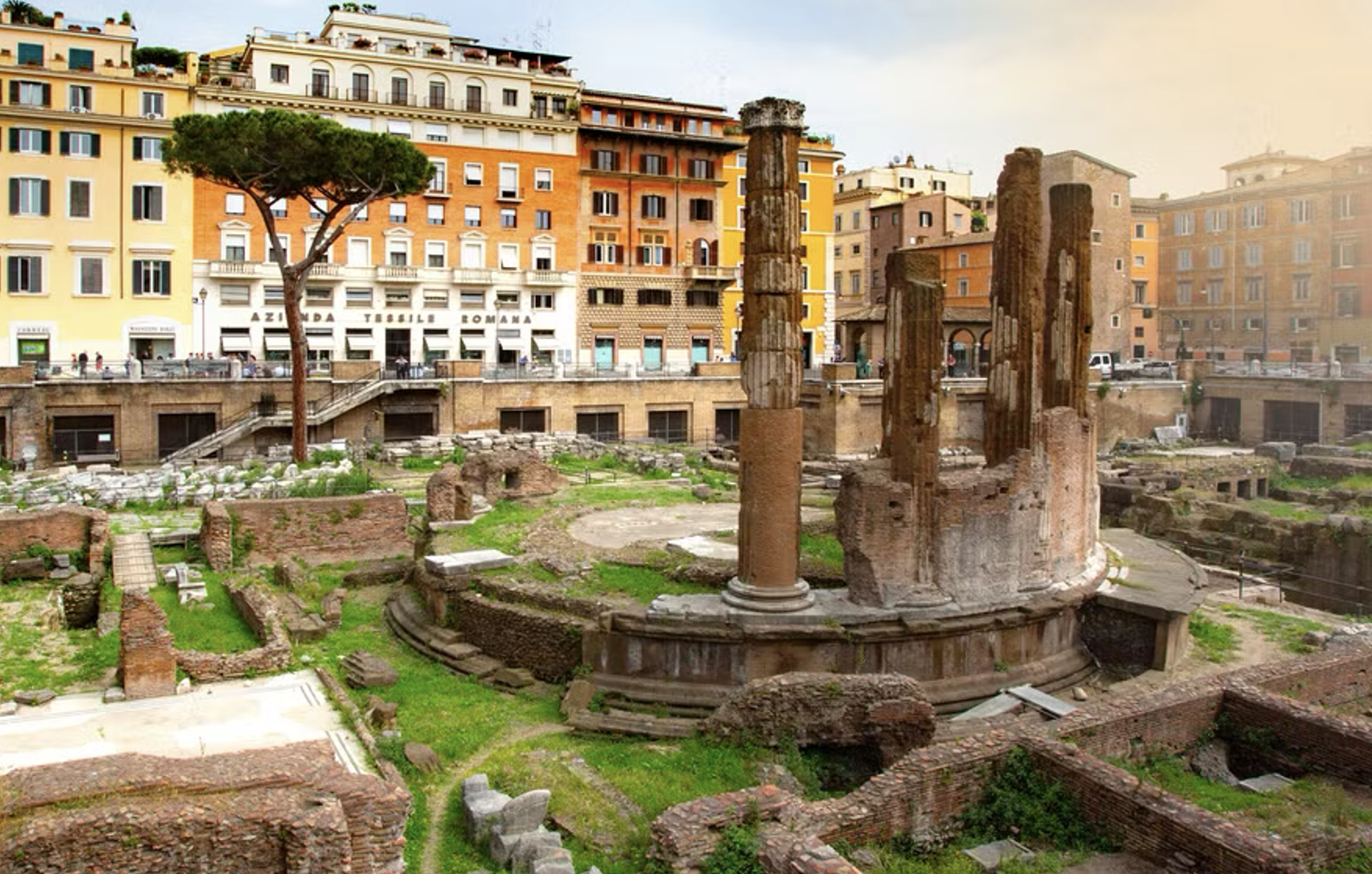
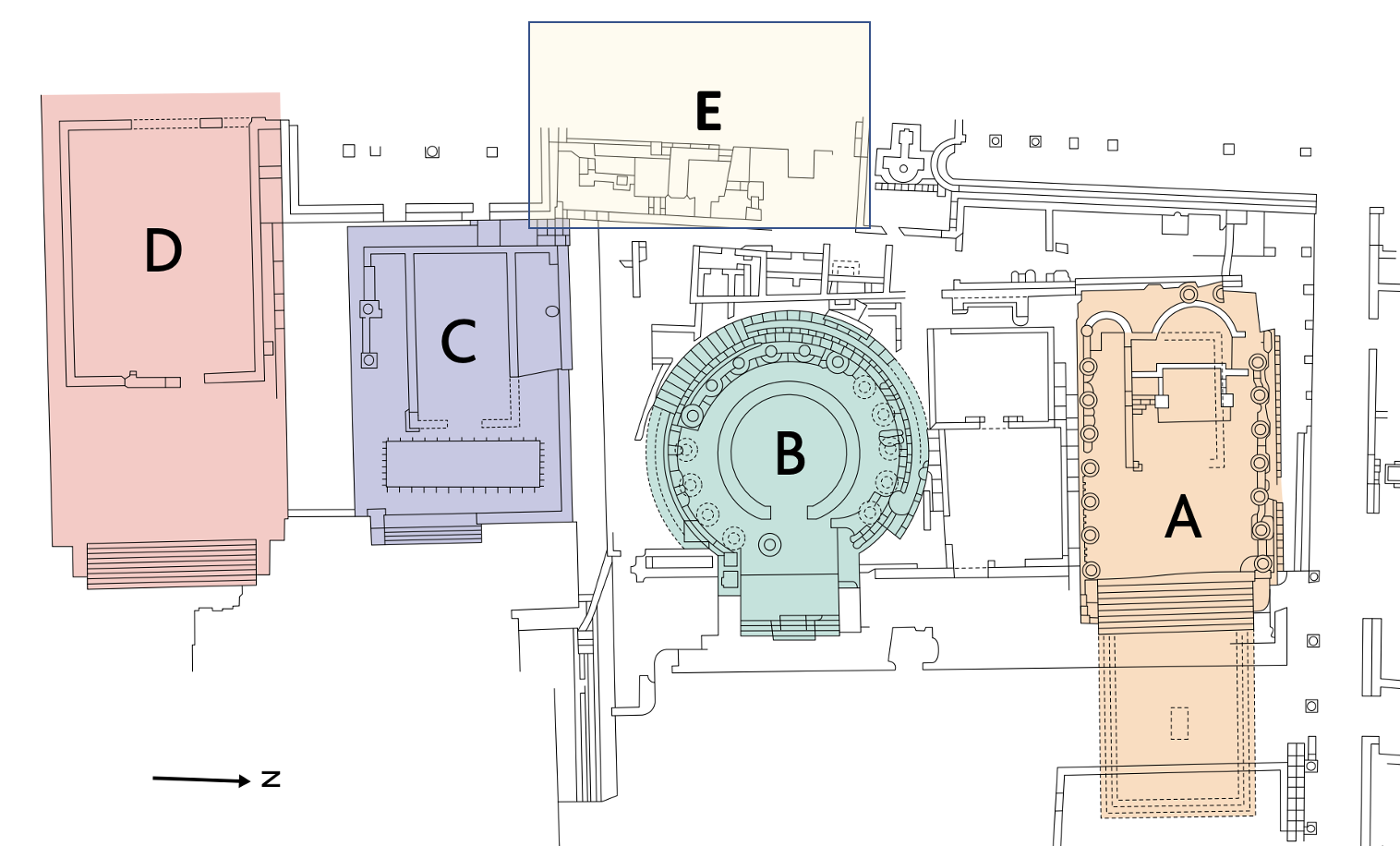
Largo di Torre Argentina
When: Early 4th/3rd BC - 1st century BC
Where: Rome
Why: 4 Republican era temples. Temple A - Temple of Juturna, Temple B - circular tholos temple, dedicated to Fortuna(?), Temple C - oldest (3rd c BC), Temple D - Biggest, dedicated by marcus aemilius lepidus, Temple E - added after all these, gathering place for political meetings of pompeii. Caesar gets killed in this one.
Argentina = silver
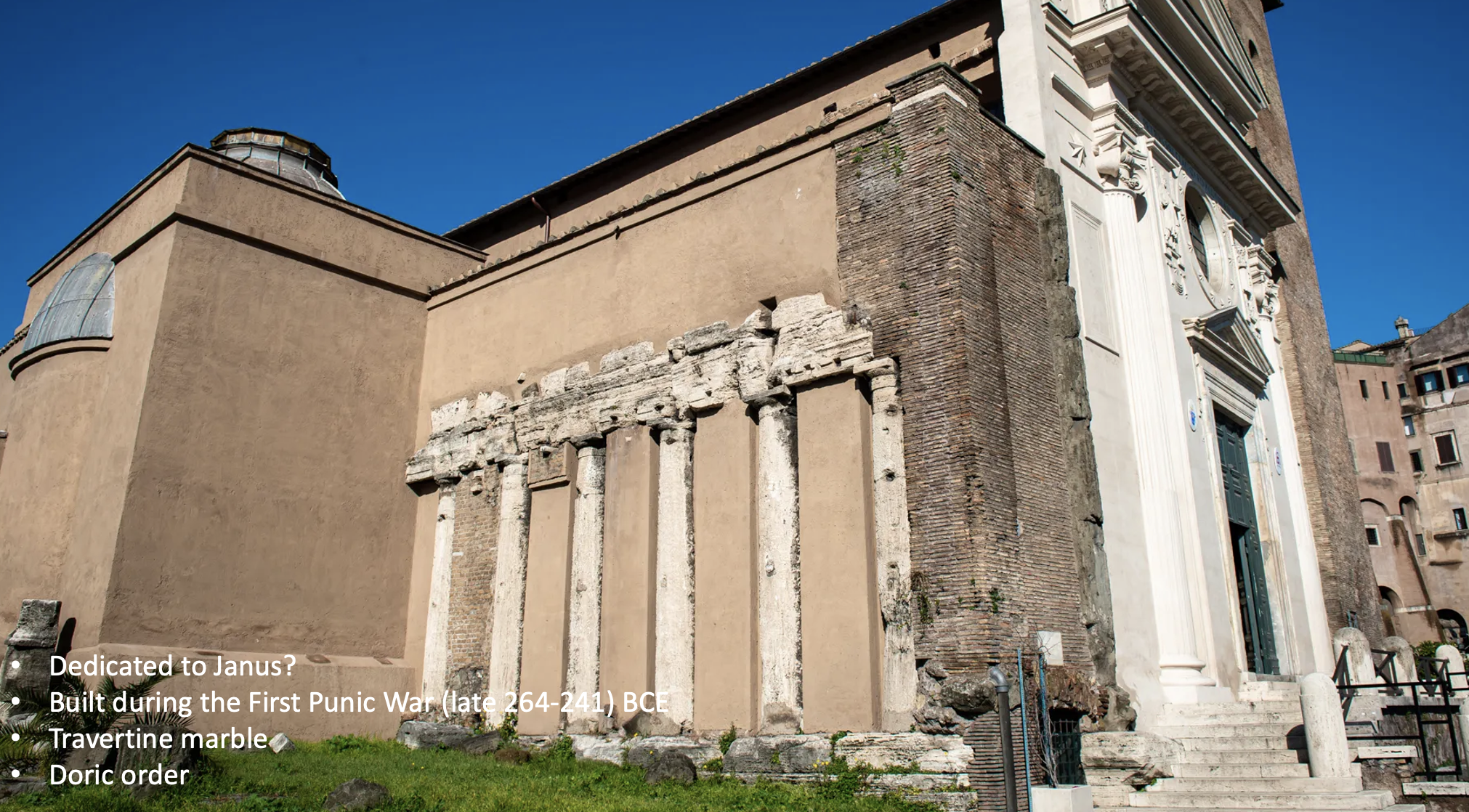
So-Called Temple of San Nicola in Carcere
When: 264-241 BCE
Where: Rome
Why: Dedicated to Janus (2 sided head god). Travertine marble, doric order, doors of temple open/closed depending on current war status. Already built architecture integrated into new architecture
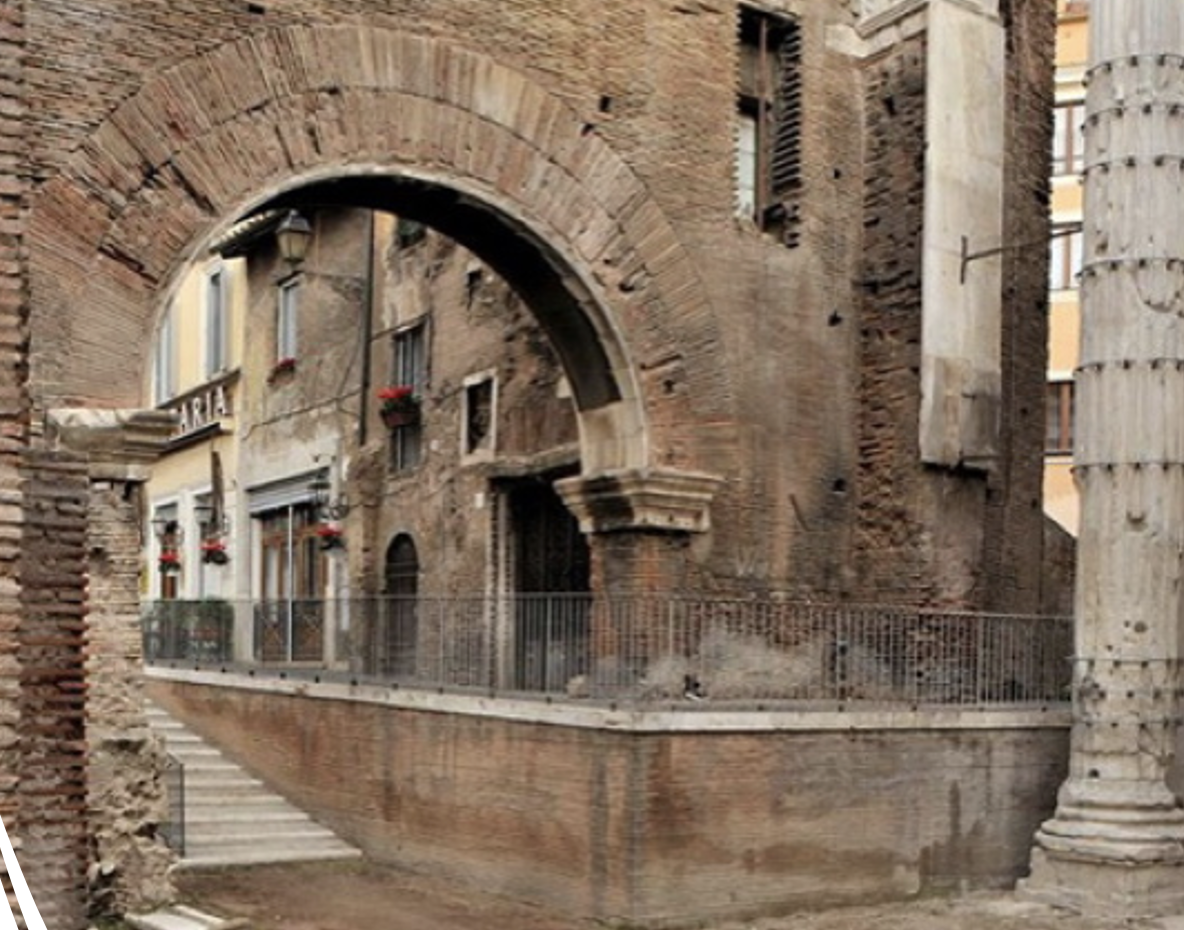
Porticus of Metellus/Octavia
When: 2nd century BCE
Where: Campus Martius, Rome
Why: Manubial Temples. Built by Quintus Caecilius Maetellus after his win of Macedonia. Walkway surrounding 2 large Italic temples. One of earliest known public porticoes in Rome. Both a public gathering space and a monumental setting for temples. Had Greek art inside.
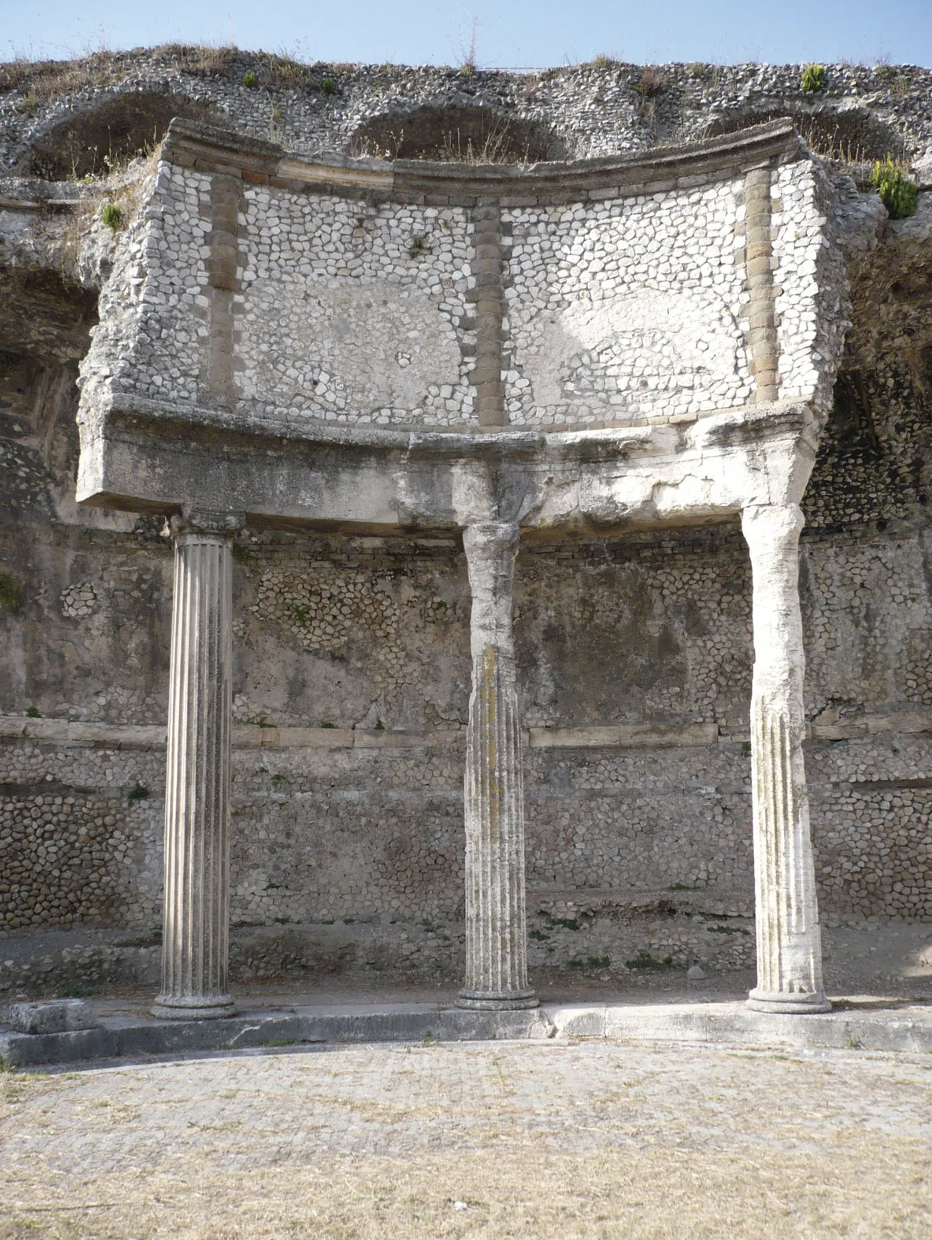
Sanctuary of Fortuna Primigenia
When: 2nd c BCE
Where: Palestrina/Praeneste, Italy
Why: Roman architecture is getting detailed while political power grew. Adapted to natural topography of Palestrina. Dedicated to Fortuna Primigenia. Terraced design, theatrical elements, Tholos temple housed cult statue of Fortuna. Hellenistic style.
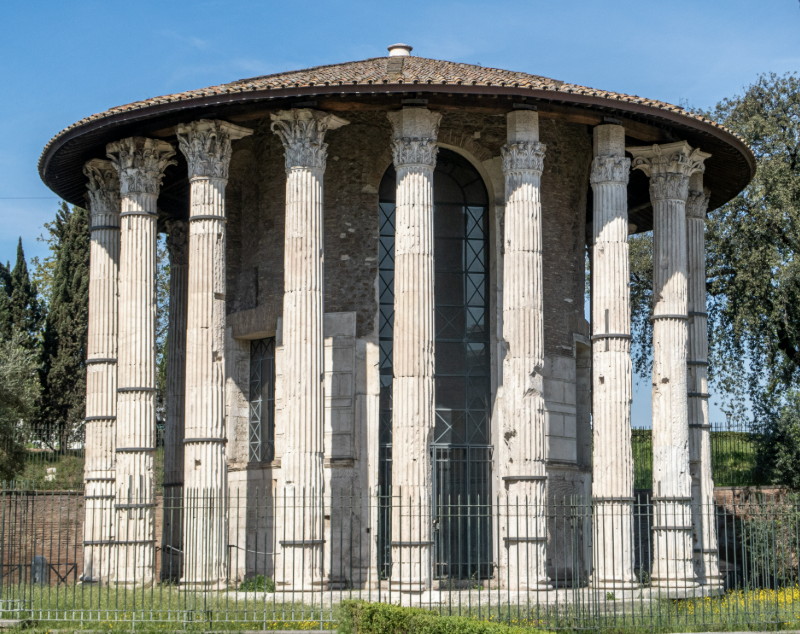
Temple of Hercules, Victor
When: 120 BCE
Where: Rome
Why: Circular structure, marble corinthian columns around cella
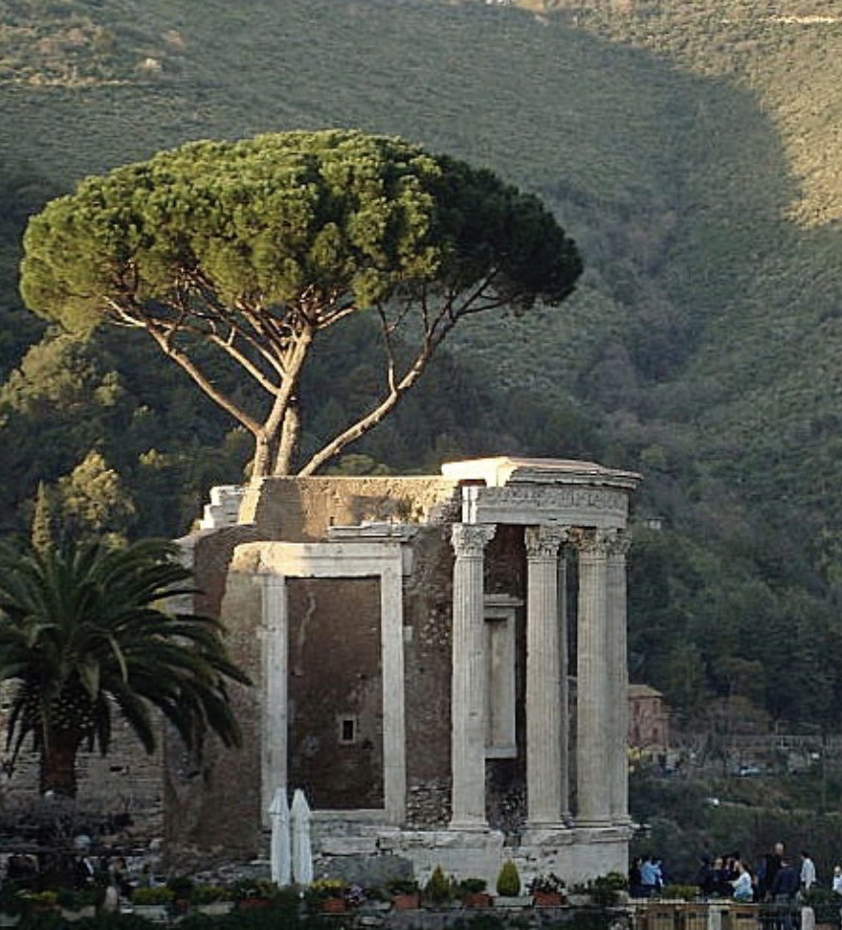
So-Called Temple of Vesta
When: 1st Century BCE
Where: Acropolis of Tivoli, East of Rome
Why: Hellenistic/Roman inspired temple architecture. Tholos. Corinthian columns. Travertine/Tuff temple making it durable/aesthetic. Cella made of concrete.
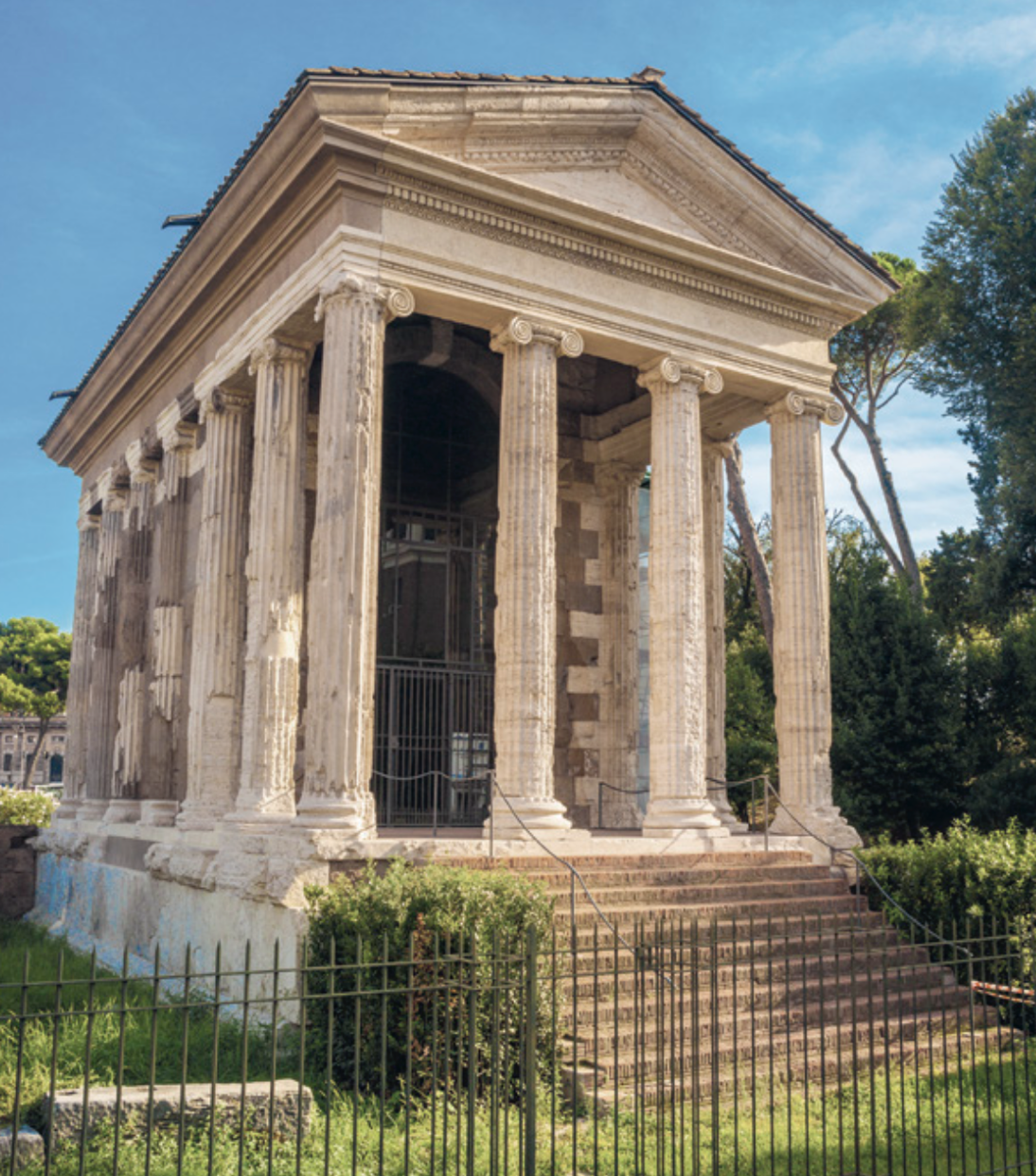
Temple of Portunus
When: 80 BCE
Where: Rome, near Tiber River
Why: Tuscan/Italic style, podium. Ionic columns. Dedicated to Portunus- related to river crossing (Guardian of entrances, ports, so Tiber river harbor).
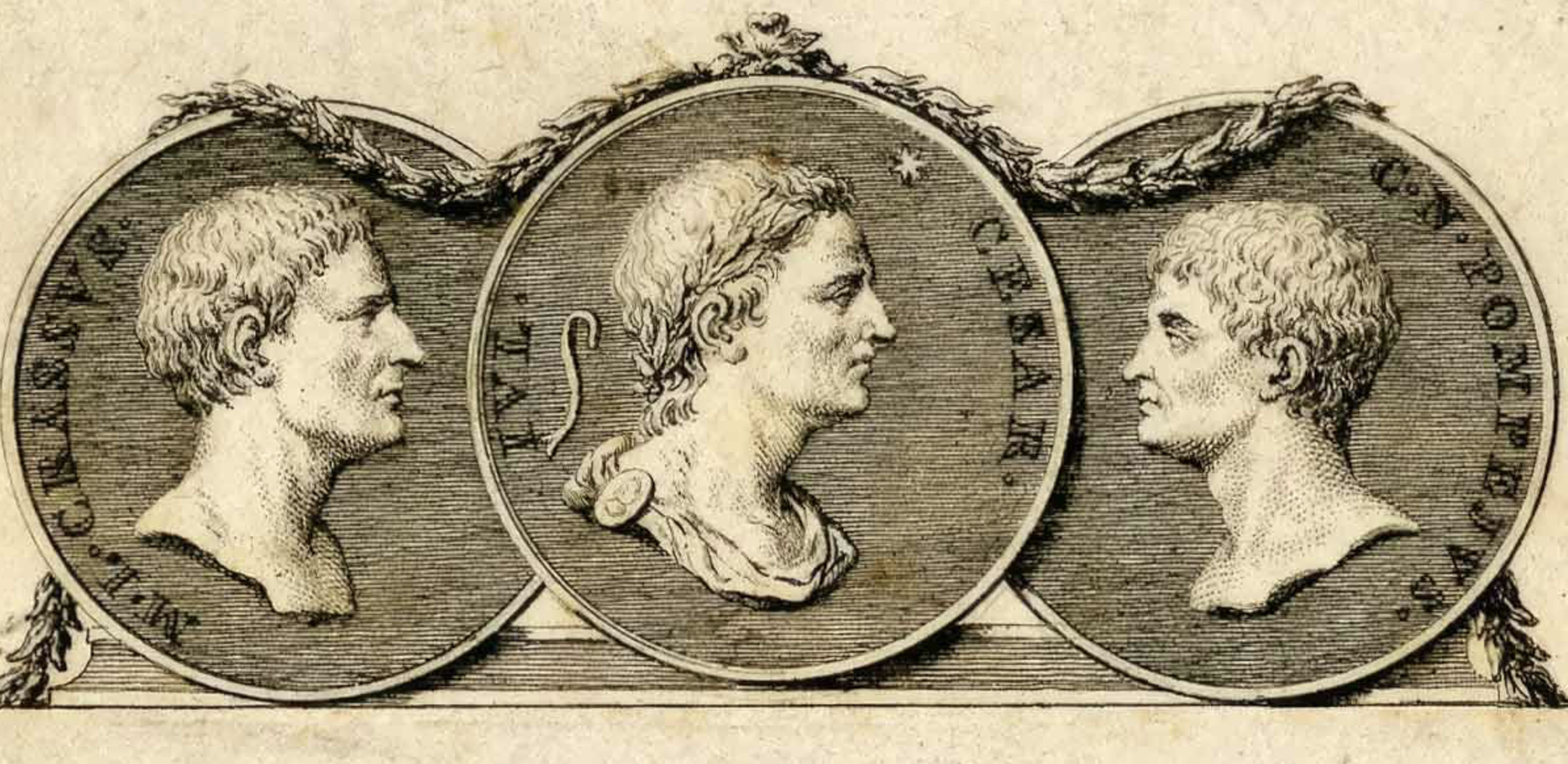
First Triumvirate
60-44 BCE: Caesar, Pompey, Crassus.
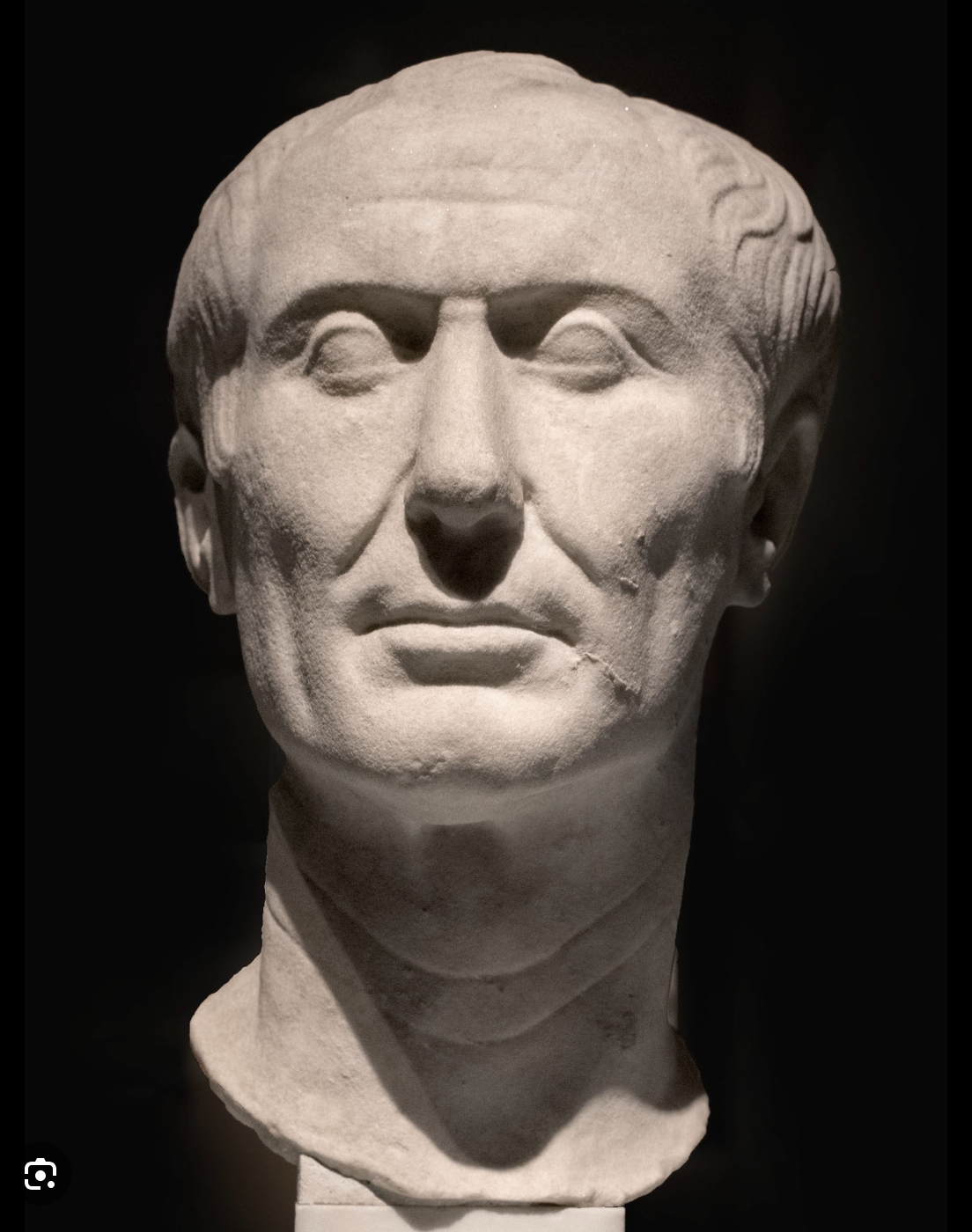
Julius Caesar
Born 100, dies 44 BCE. Popular among Roman people because of military campaigns and his appeal to lower classes.
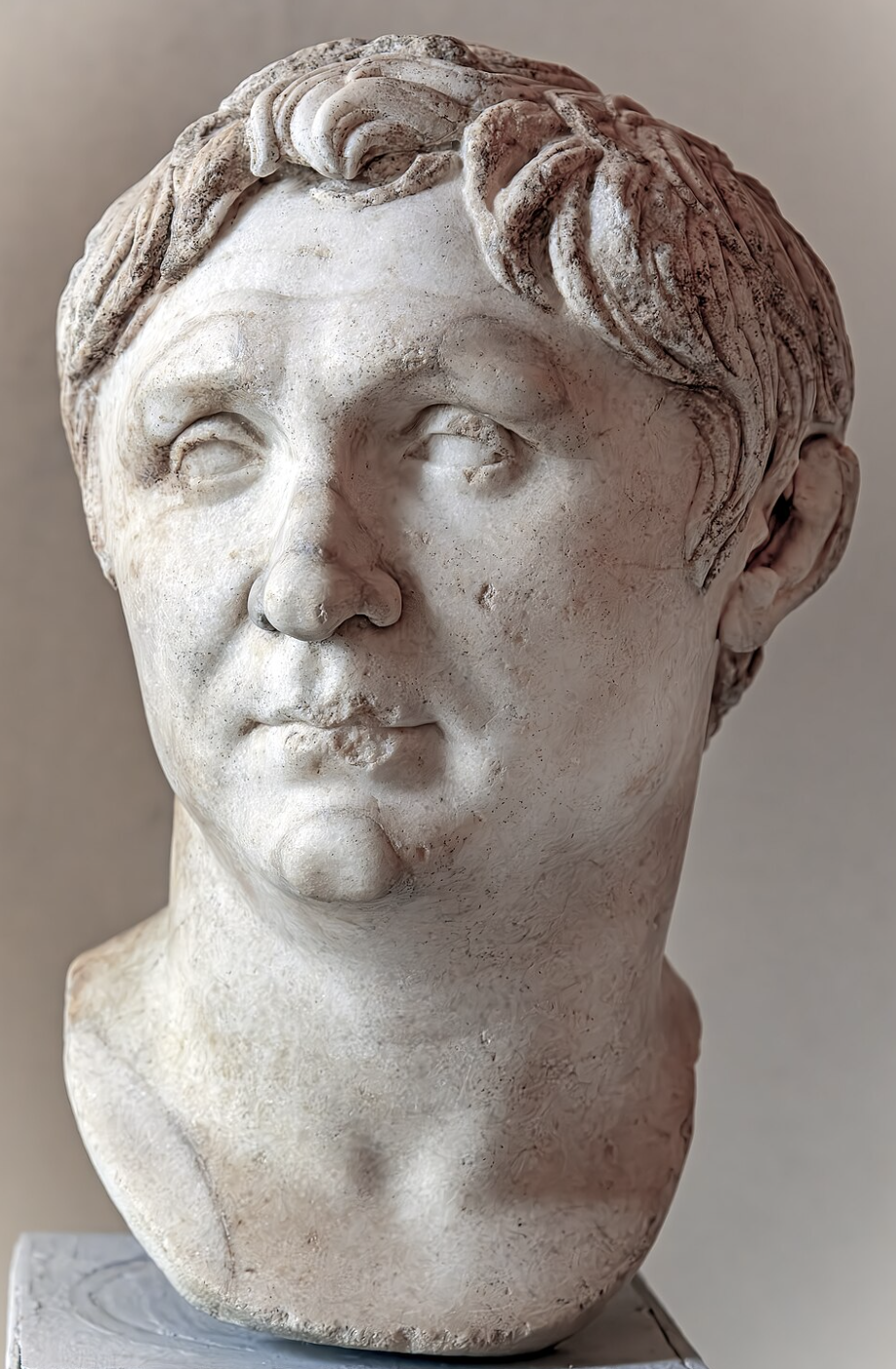
Pompey the Great
Secured victories in East, defeat of pirates in Mediterranean, conquest of Jerusalem.
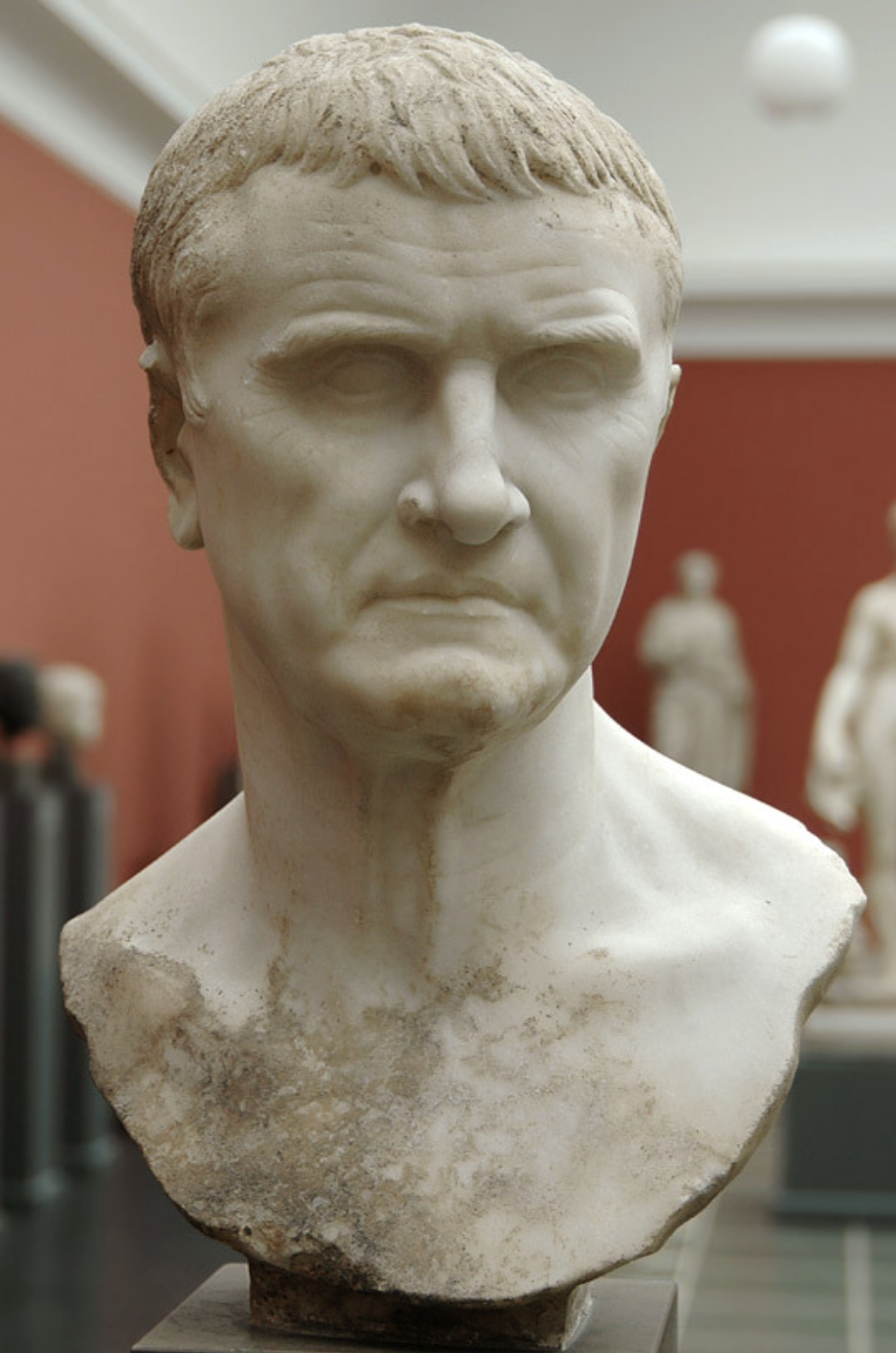
Marcus Licinius Crassus
Wealthiest man of Rome at the time, made fortune thru real estate and other business. General in slave revolt
Theater of Pompey
When: 55 BC
Where: Rome
Why: Theater + Temple of Venus attached. Small shrine on top of theater. Portico with temple at center connected to theater. Portico with columns on all sides.
Forum of Caesar
When: 54-46 BC
Where: Rome
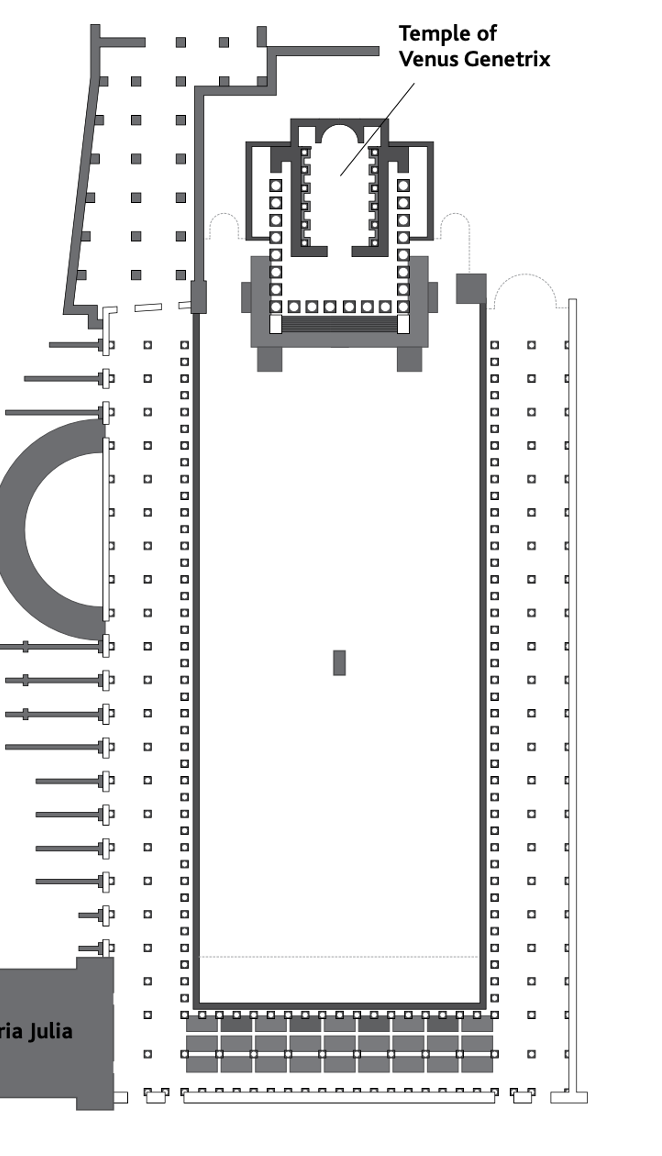
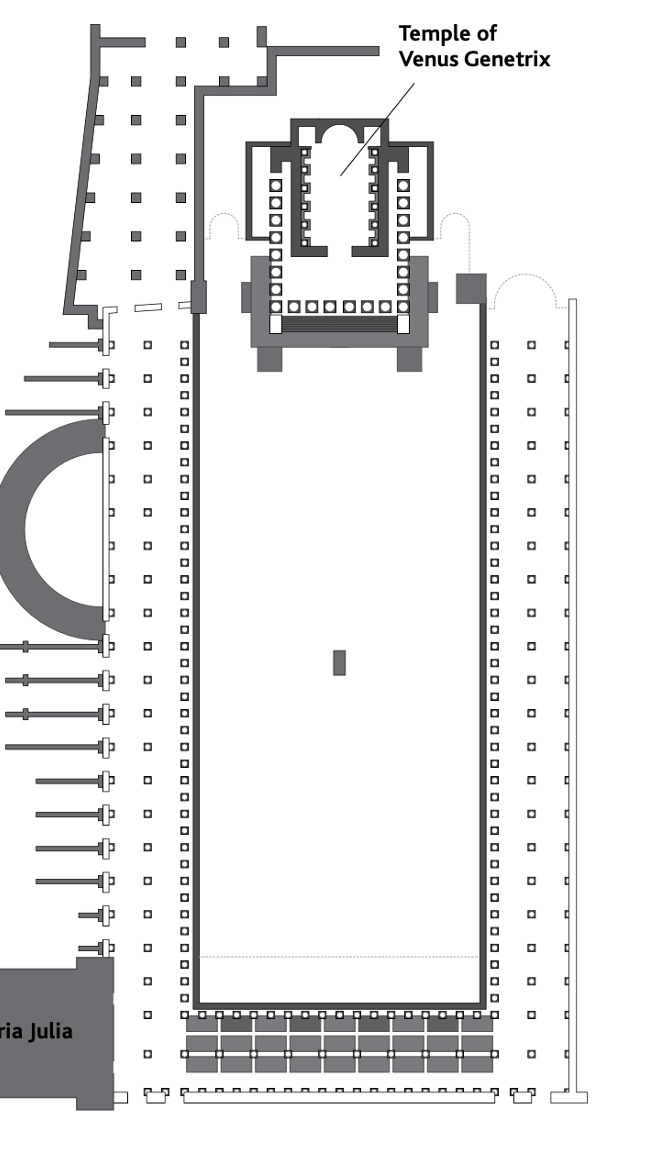
Why: Caesar promotes construction of his own forum. Elongated, rectangular space surrounded by porticos on 2 sides. Italic Temple of Venus Genetrix at the end. Connects his family to mythic and religious line of rome.
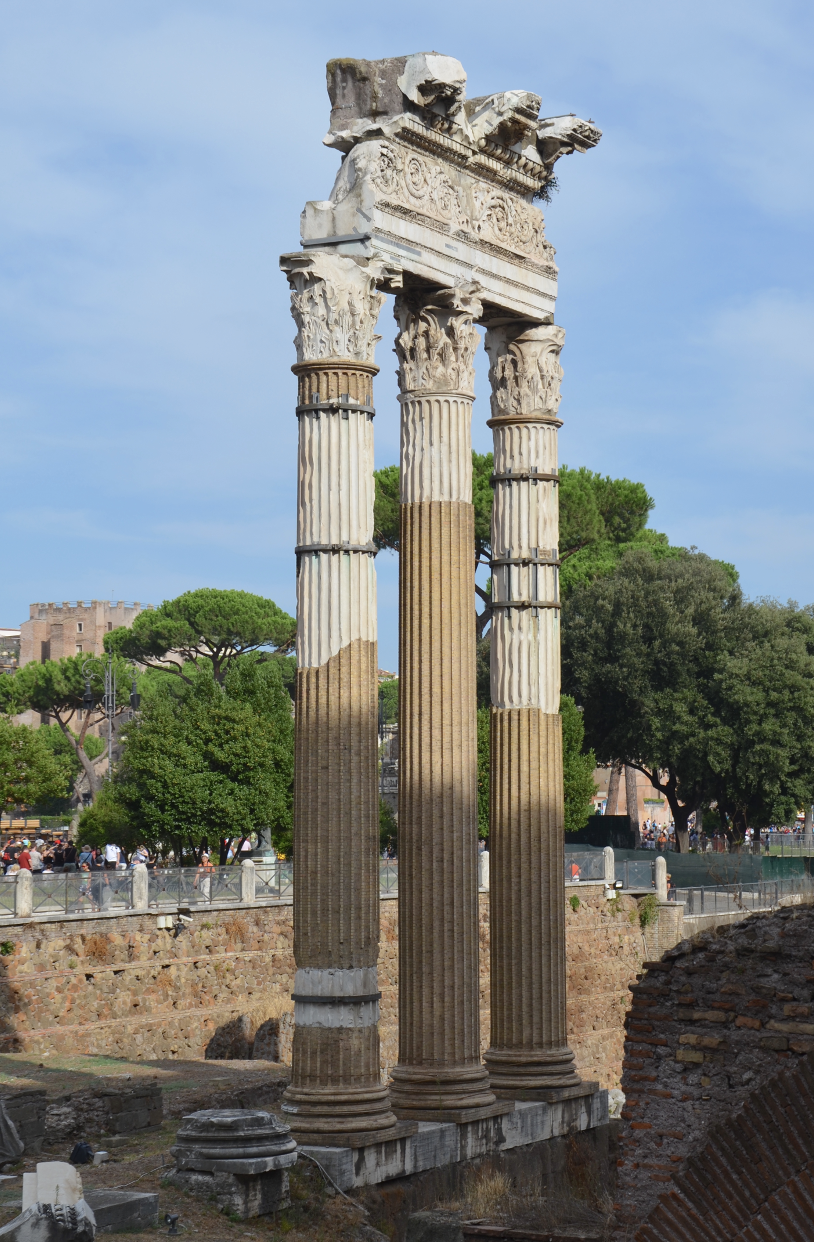
Temple of Venus Genetrix
When: 46 BCE
Where: Rome
Why: Only 3 columns stand. Unique Italic temple. 2 peristyles at both sides, abside in back, built on high podium.
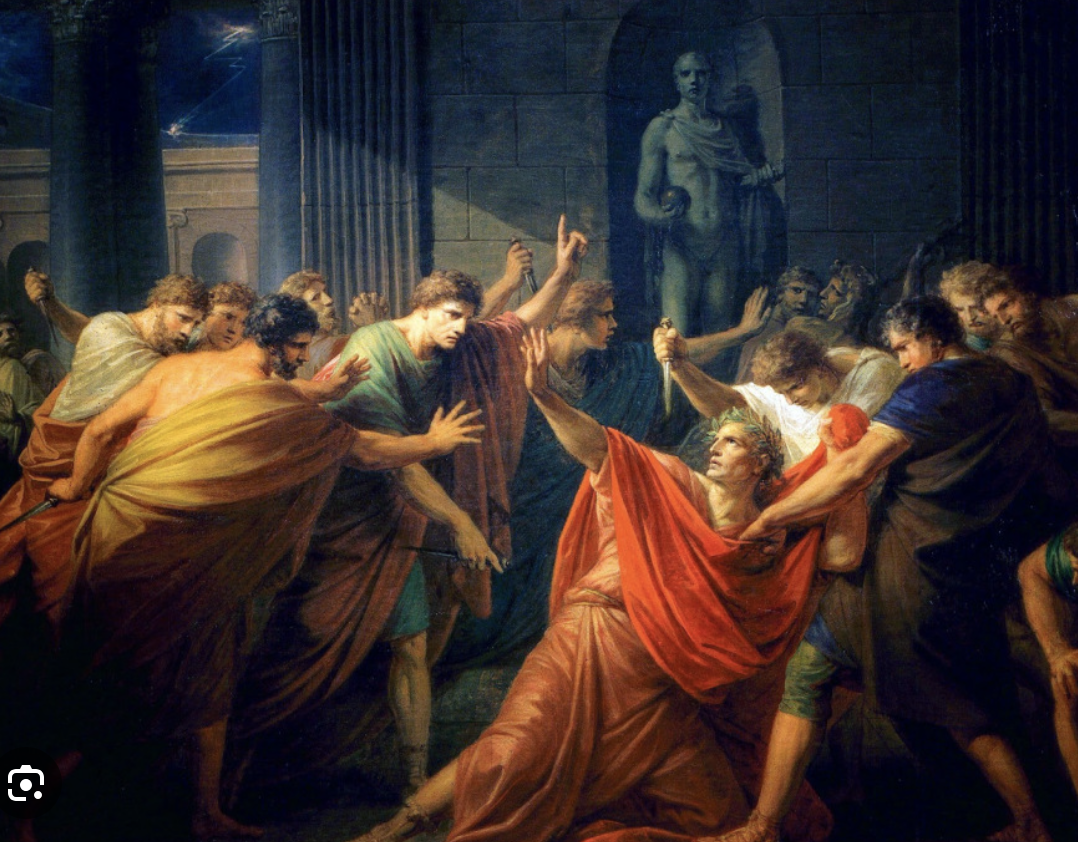
Assassination of Caesar
When: 44 BC
Where: Temple E, Largo Torre Argentina, Rome
Why: Pompey dies. Brutus scared. Brutus, Cassius, Casca lead assassination plans in Largo Torre Argentina bc they dont want caesar to have power. Civil war after death of Caesar. Brutus/Cassius VS Mark Anthony/Octavian. In Battle of Philippi, Brutus/Cassius killed.
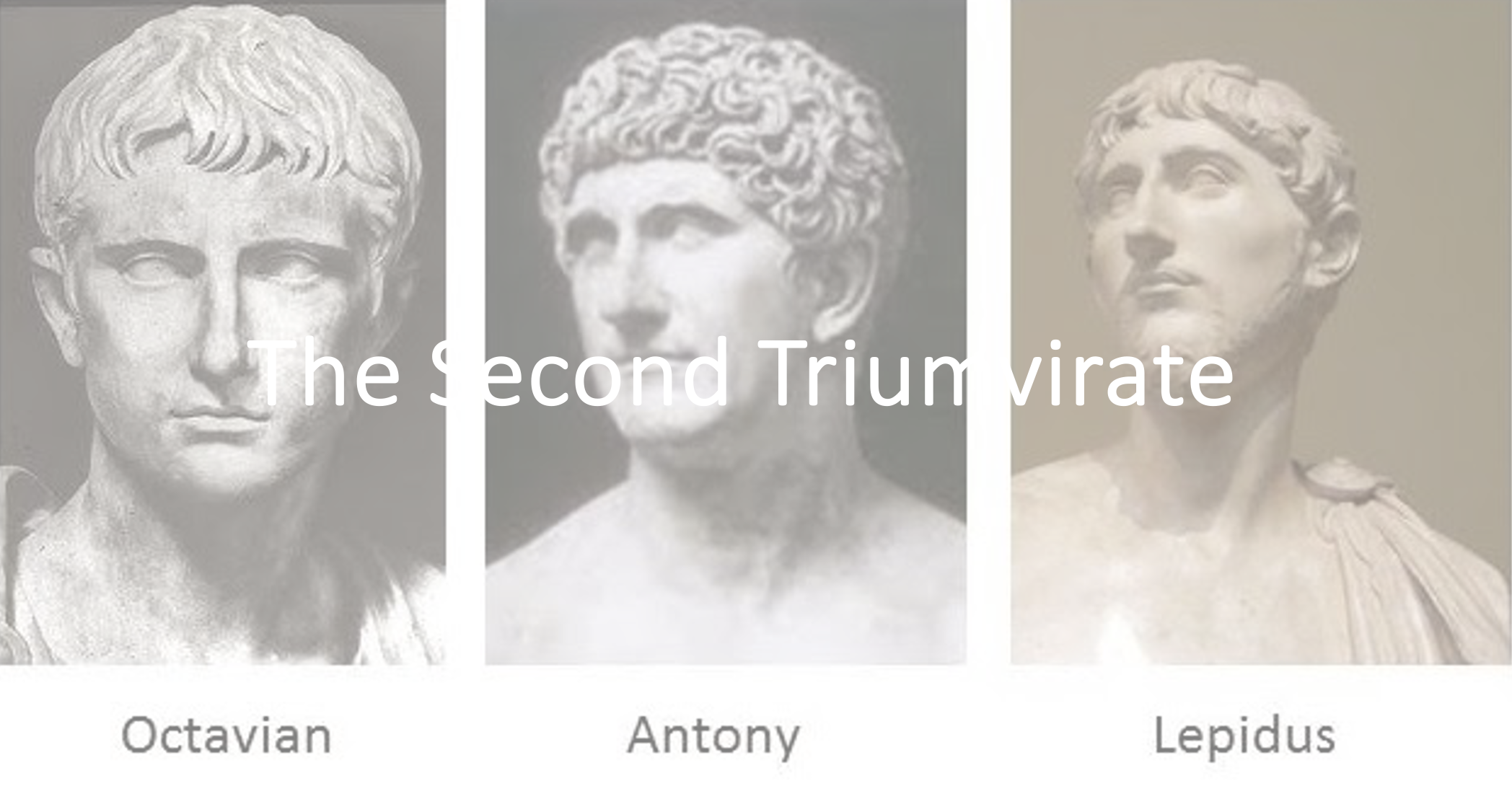
Second Triumvirate
Octavian, Antony, Lepidus. When Civil war ends, this triumvirate starts.
42 BCE: Battle of Philippi, Greece, Mark Anthony defeats Cassius’ army, ending civil war, making 2nd triumvirate.
31 BC: Mark Anthony’s team is defeated, Octavian is sole ruler. Octavian changes his name to Augustus.
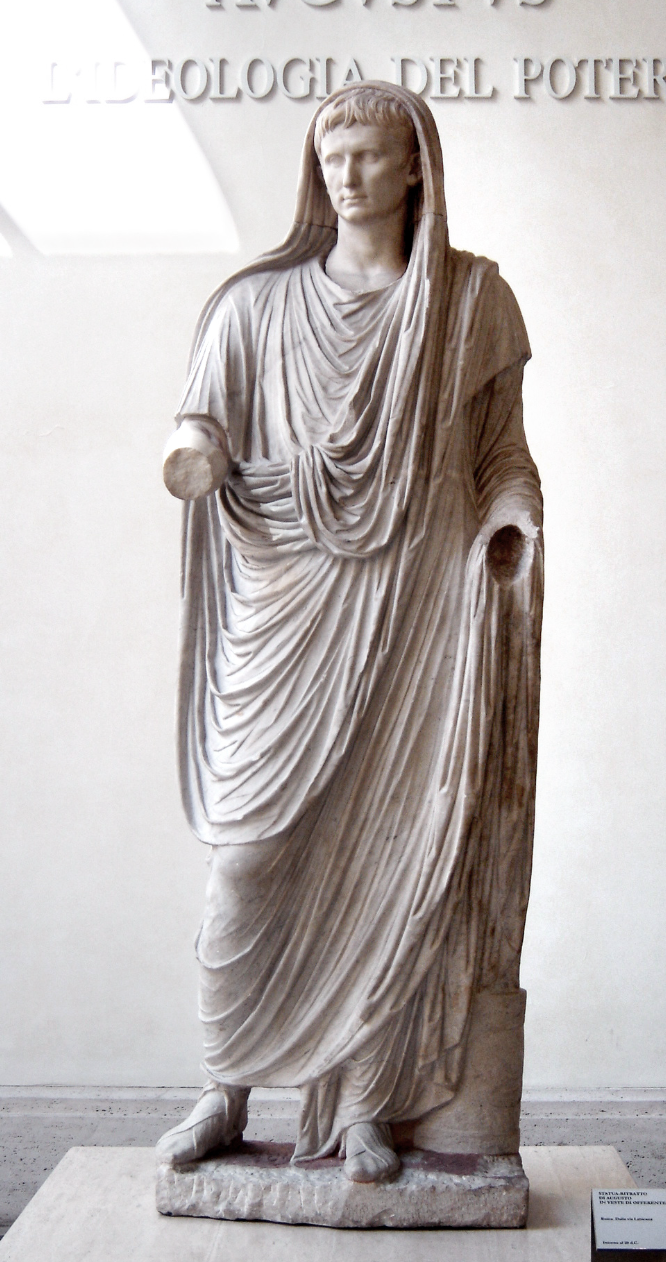
Augustus from Via Labicana
When: 12 BCE
Where: Palazzo Massimo alle Terme, Rome
Why: Augustus as highest ranking priest (Pontifex Maximus). Wearing a toga, head veiled, religious ritual gesture. Focuses on augustus’ moral authority and piety. Promoting family, virtue, and respect for the gods. Youthful look, Roman ideals.
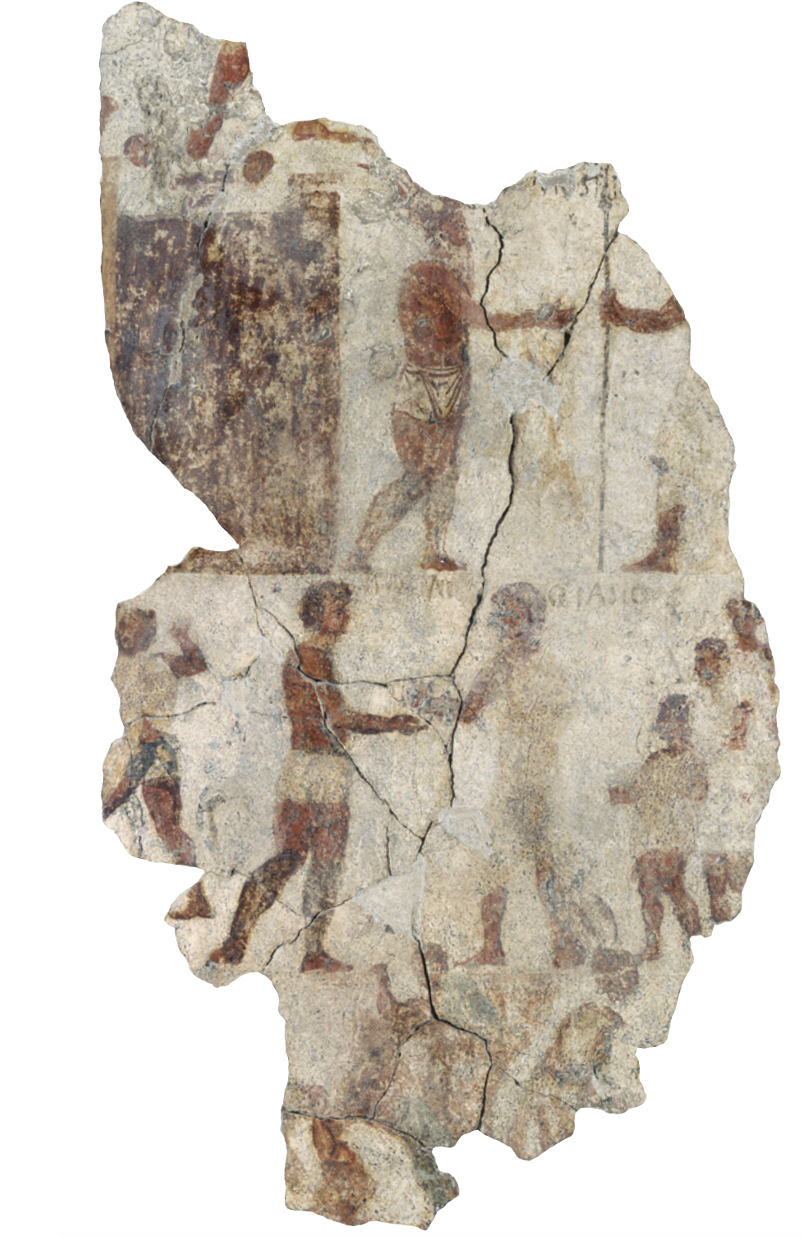
Triumphal Painting
When: 3rd century BCE
Where: Esquiline Tomb, Rome
Why: 4 bands placed side by side. 2 central: 2 figured grouping of a warrior and a toga-wearing magistrate. Upper: take place in front of a fortified town. Bottom: group of soldiers in the act of defending their position. Consistent with the theme of warfare, showing battles, sieges. Conclusions of treaties within combatants.
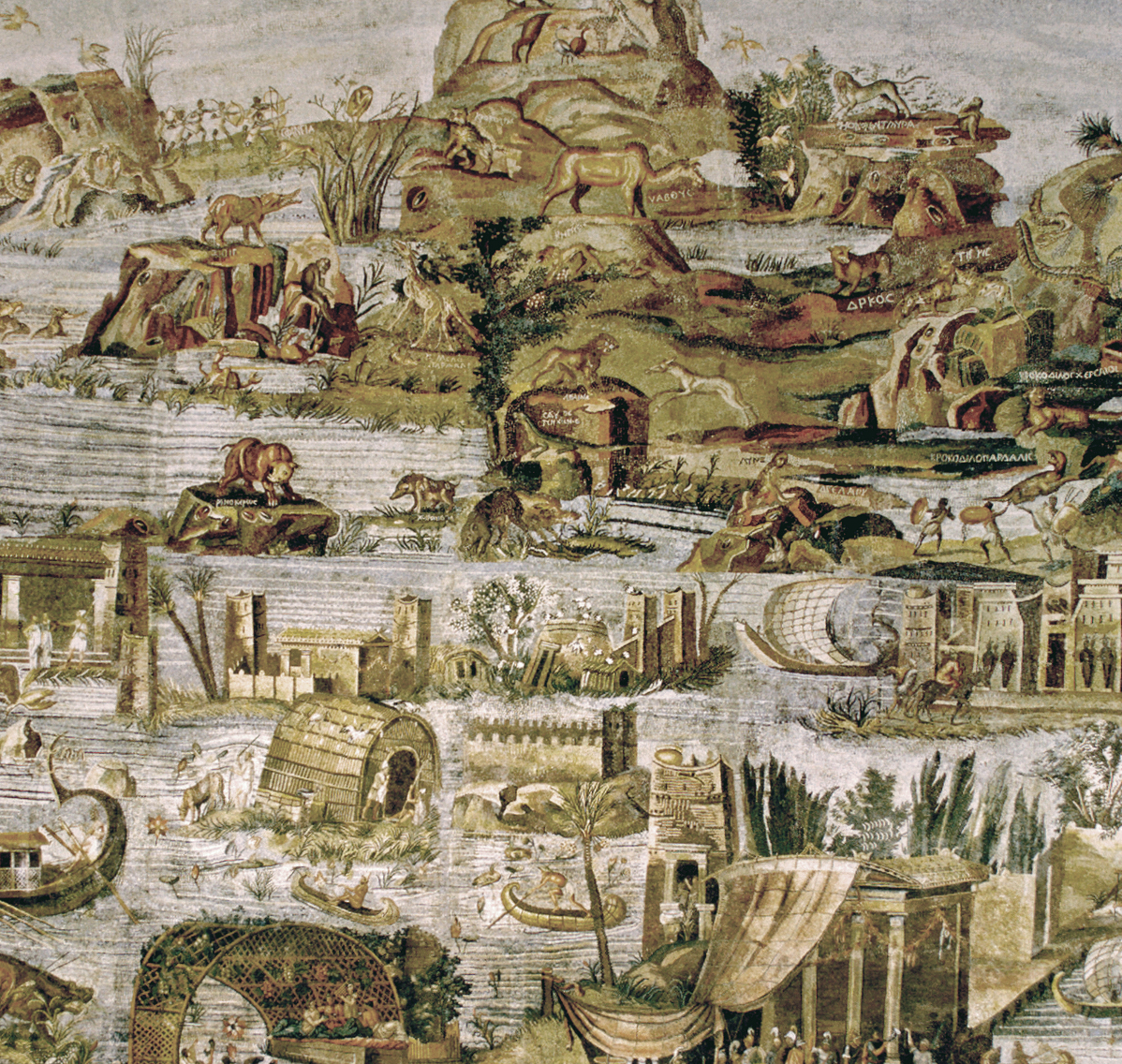
Nile mosaic
When: 2nd BCE
Where: Sanctuary of Fortuna Primigenia
Why: Egyptian landscapes, Nile river. Hellenistic and Early Roman mosaic techniques. One of the most connected harbors of Roman world.
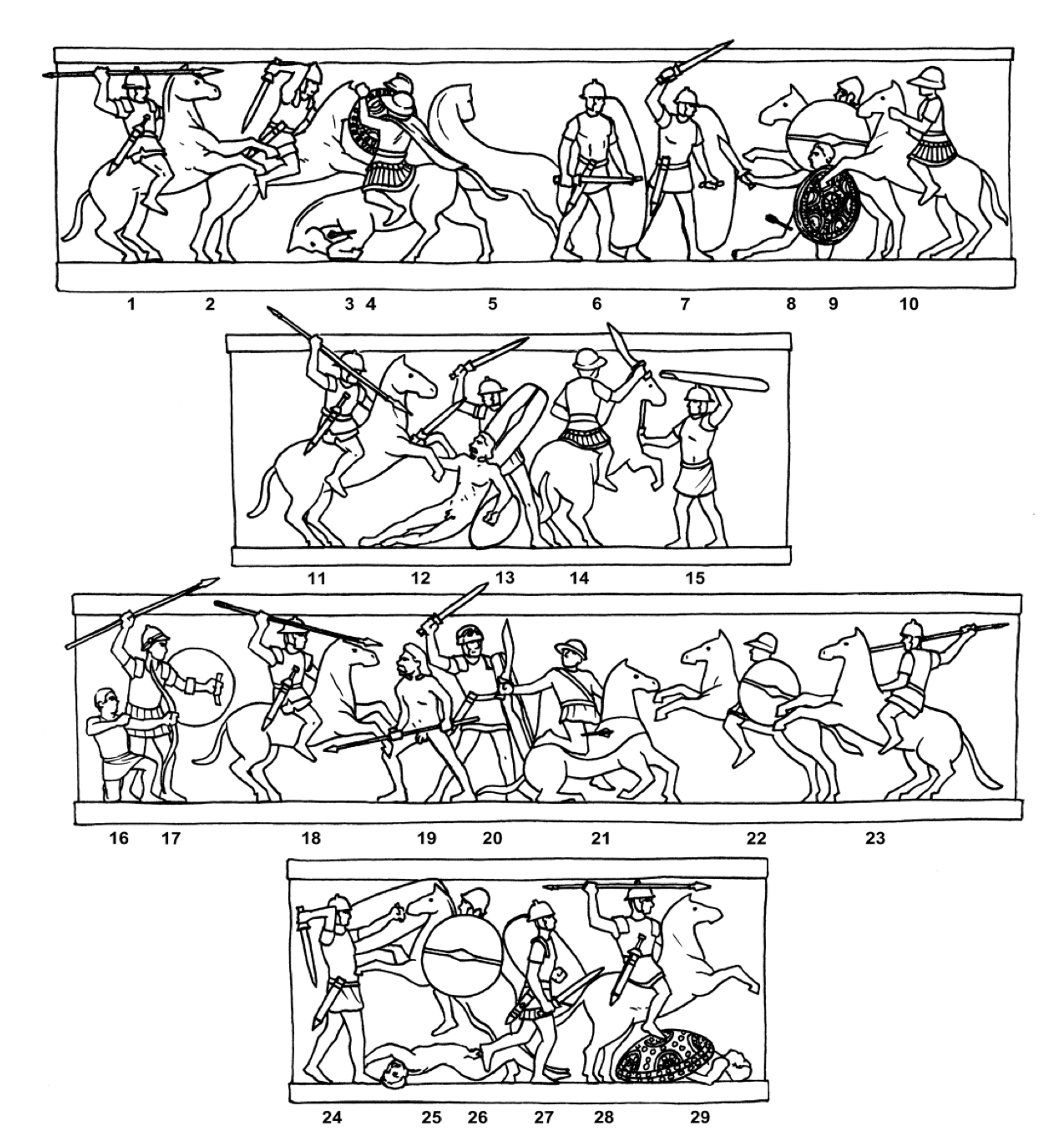
Lucius Aemilius Paullus (Person) (Pedestal??)
When: 2nd c BCE
Where: Sanctuary of Apollo at Delphi
Why: Erected to honor of the victory over the macedonian king perseus at battle of pydna. Replaces Perseus’ statue. Roman supremacy over Greece. Depicts Battle of Pydna.
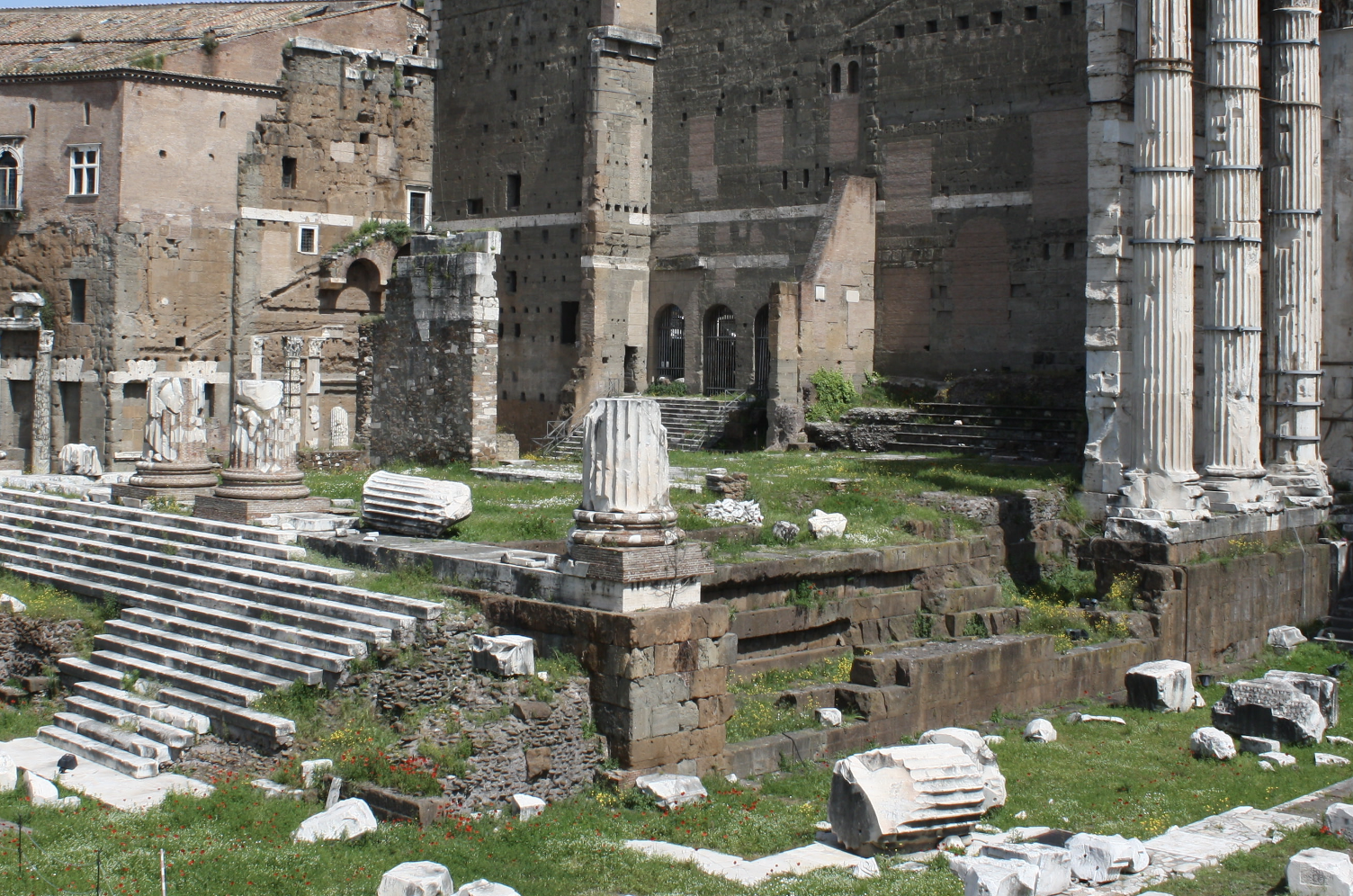
Temple of Mars Ultor
When: Dedicated 2 BCE, vowed in 42 BCE
Where: Rome, Forum of Augustus
Why: Italic style, Mars “Avenger”, (Celebrating death of those who killed Caesar). Connects Augustus’ rise to power to divine vengeance, military triumphs. Senate decisions on war and foreign policy. Epithet "Ultor" refers to Augustus's promise to avenge Julius Caesar’s death.
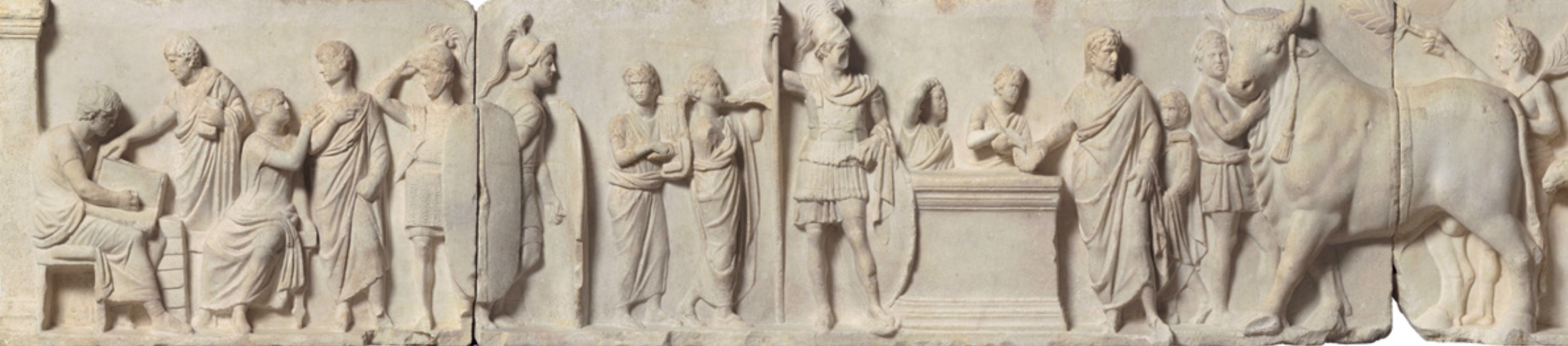
Paris Relief
When: Late 2nd-early 1st BCE
Where: Manubial Temple, Campus Martius
Why: Depicts scene of suovetaurilia, offered to Mars, shown as larger figure on left of altar. Not Hellenistic influenced because people are old, puffy, and there’s roman sacrifice.
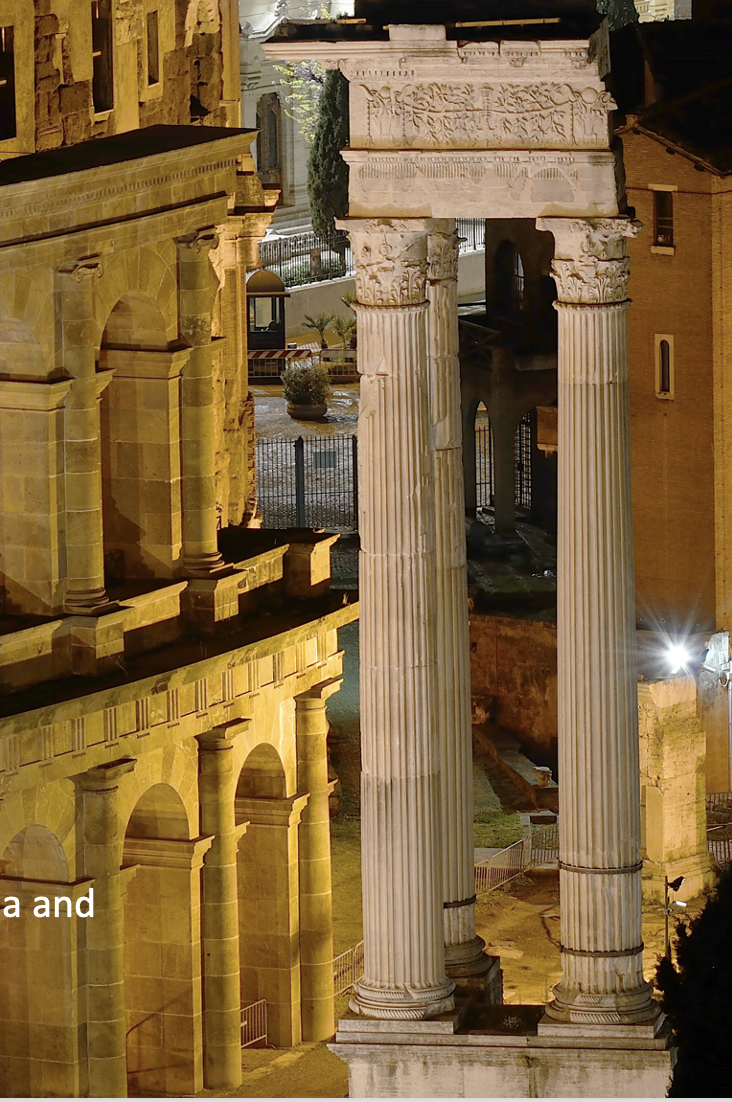
Temple of Apollo Sosianus
When: 50 BCE
Where: Right next to theatre of Marcellus, Rome
Built by gaius sosius, to celebrate victories during wars in syria and cilicia. Last manubial temple from private citizen.
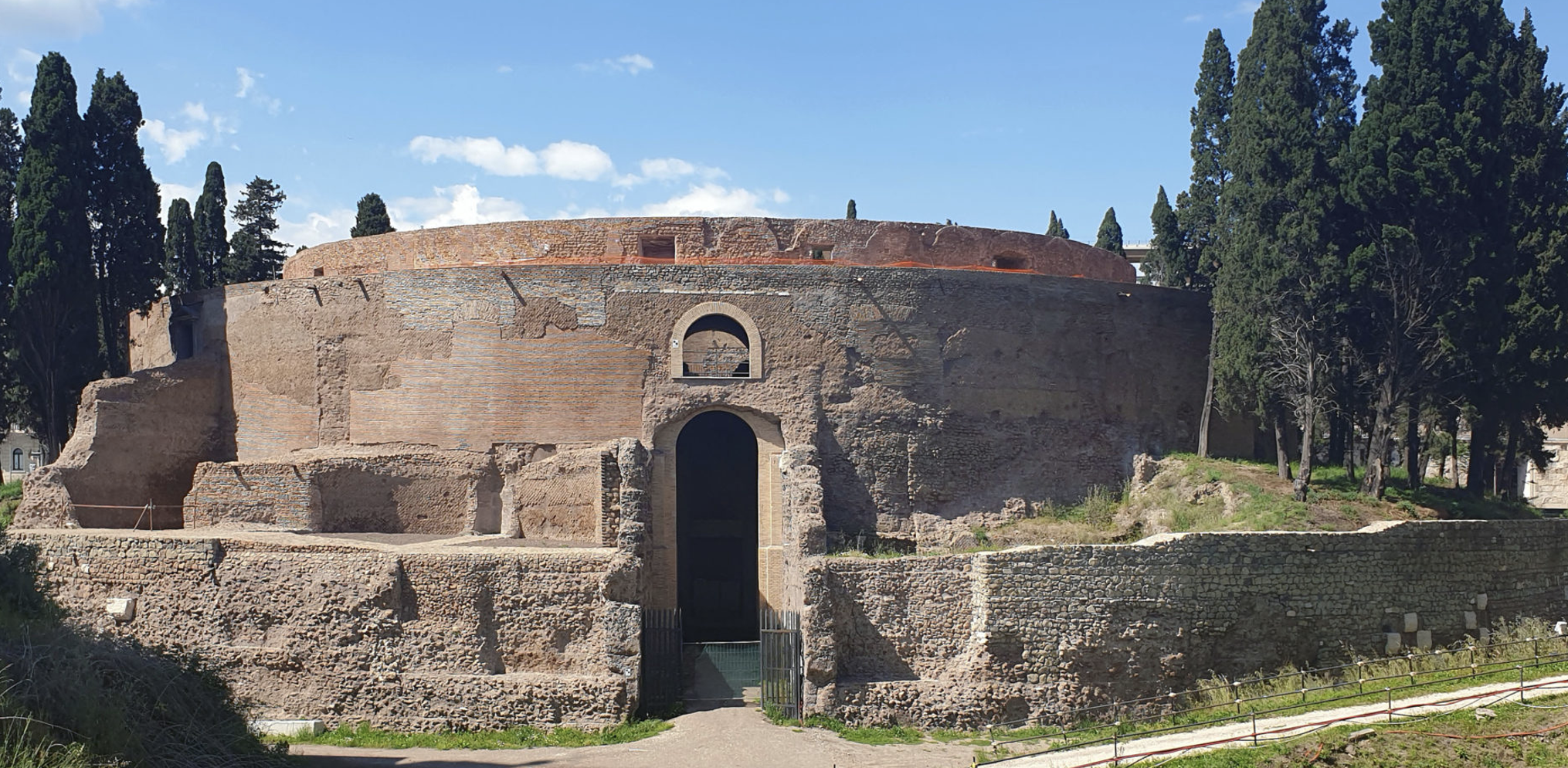
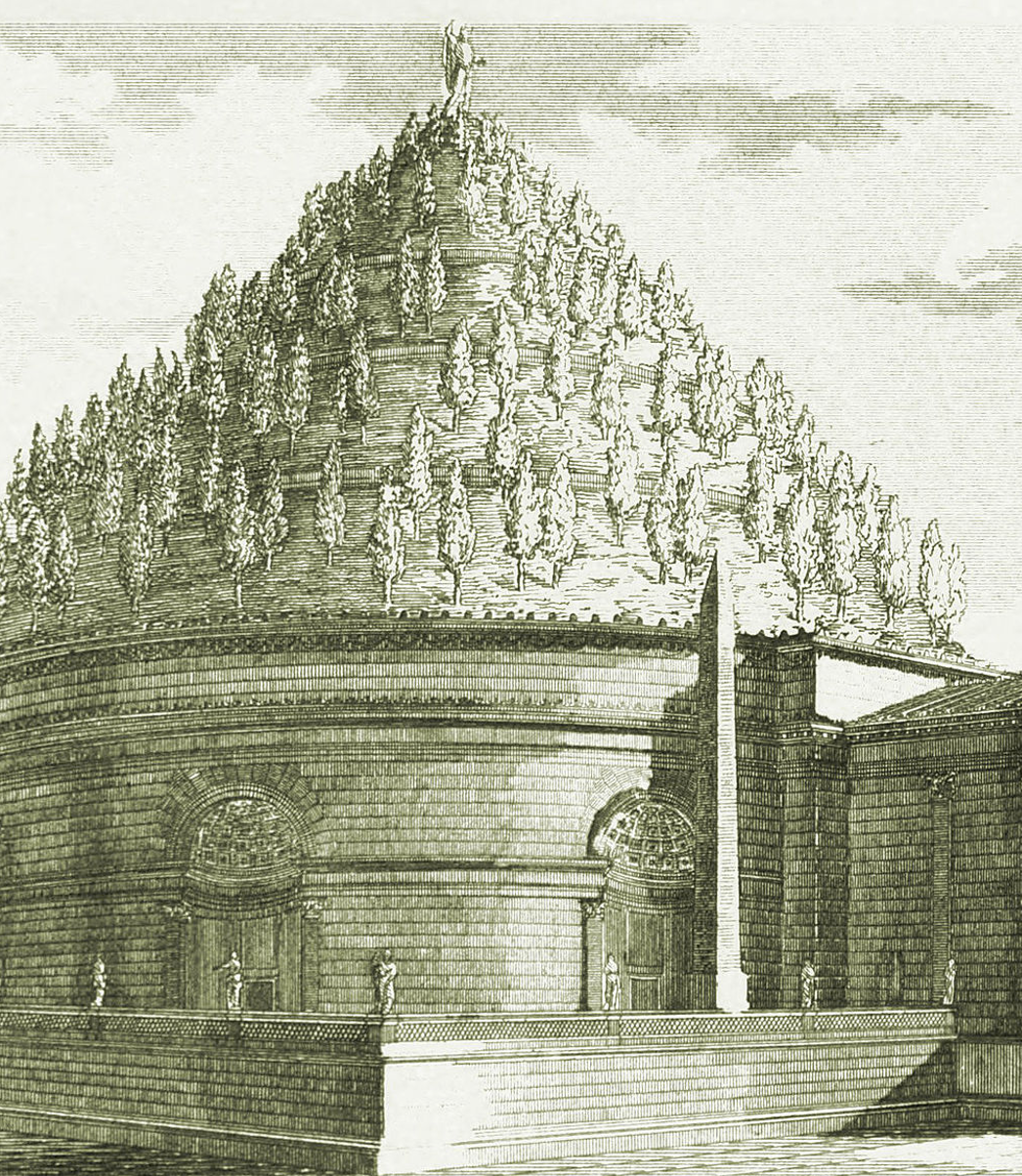
Mausoleum of Augustus
When: 28 BCE
Where: Rome
Why: Built by Augustus. One of the largest circular tombs intending for Augustus’ family for their resting place. Possibly had a conical roof covered in earth/trees, similar to Etruscan burial mounds. Central burial chamber with corridors and passageways, bronze tablets at entrance.
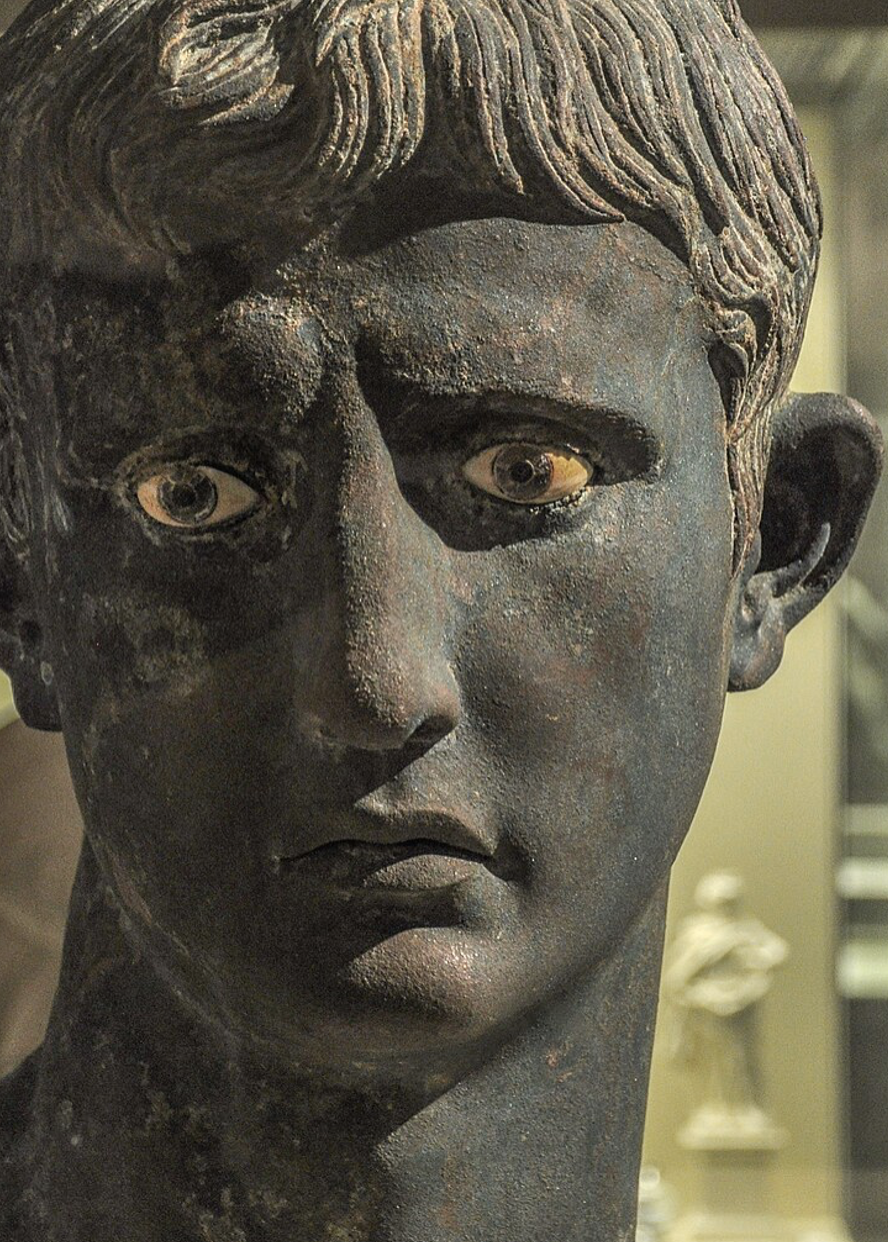
Head from Meroe, Sudan
When: 27-25 BC
Where: Meroe, Sudan
Why: Augustus with idealized youthful features. Originally a whole statue that was then looted by Kushites. Buried beneath steps of Kushite temple so people could step on him. Local populations interpret military symbols differently
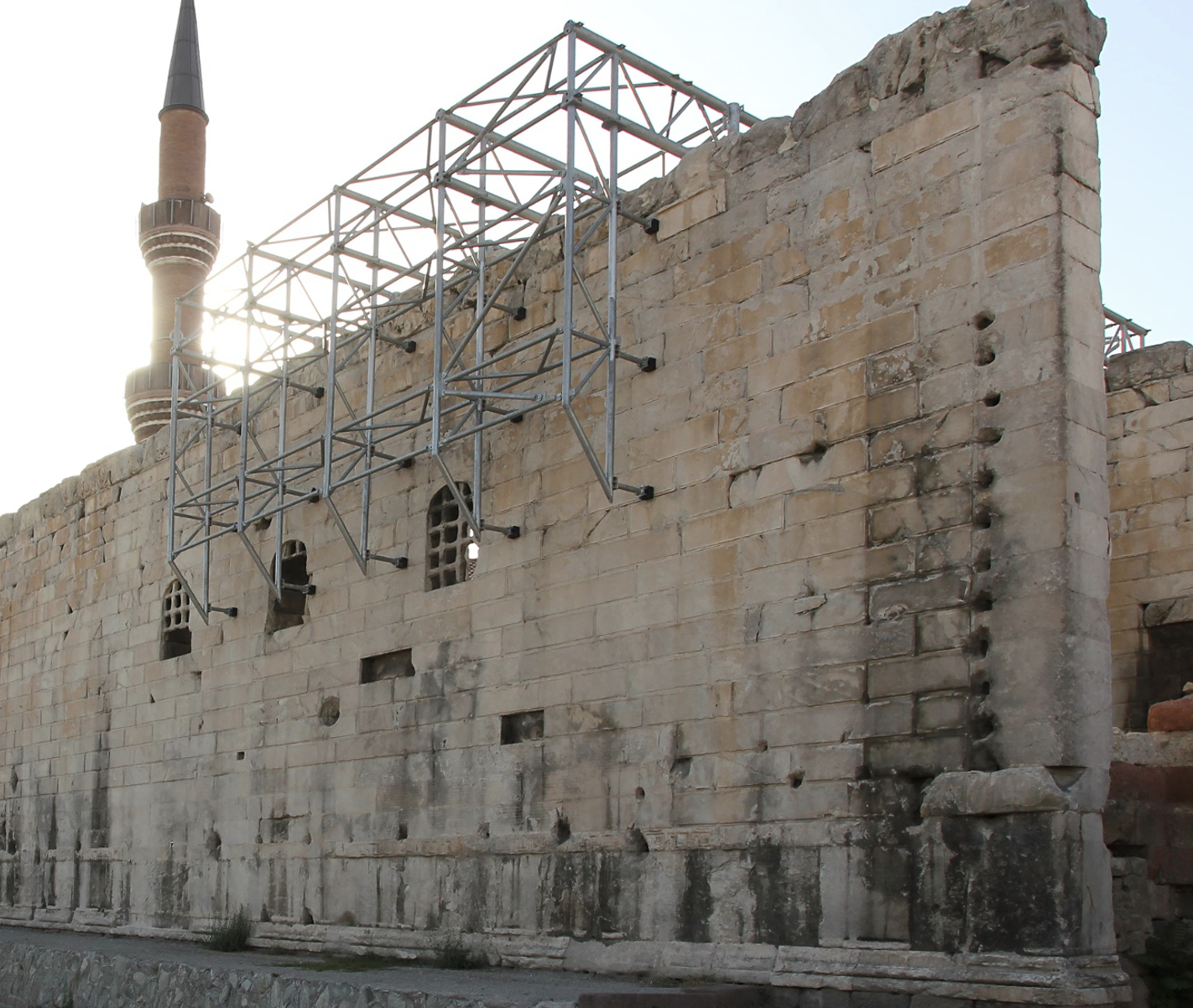
Temple of Augustus
When: 25-20 BC
Where: Ankara, Turkey
Why: Temple dedicated to divinized figure of emperor. Long inscription on inside of wall of achievements of Augustus.
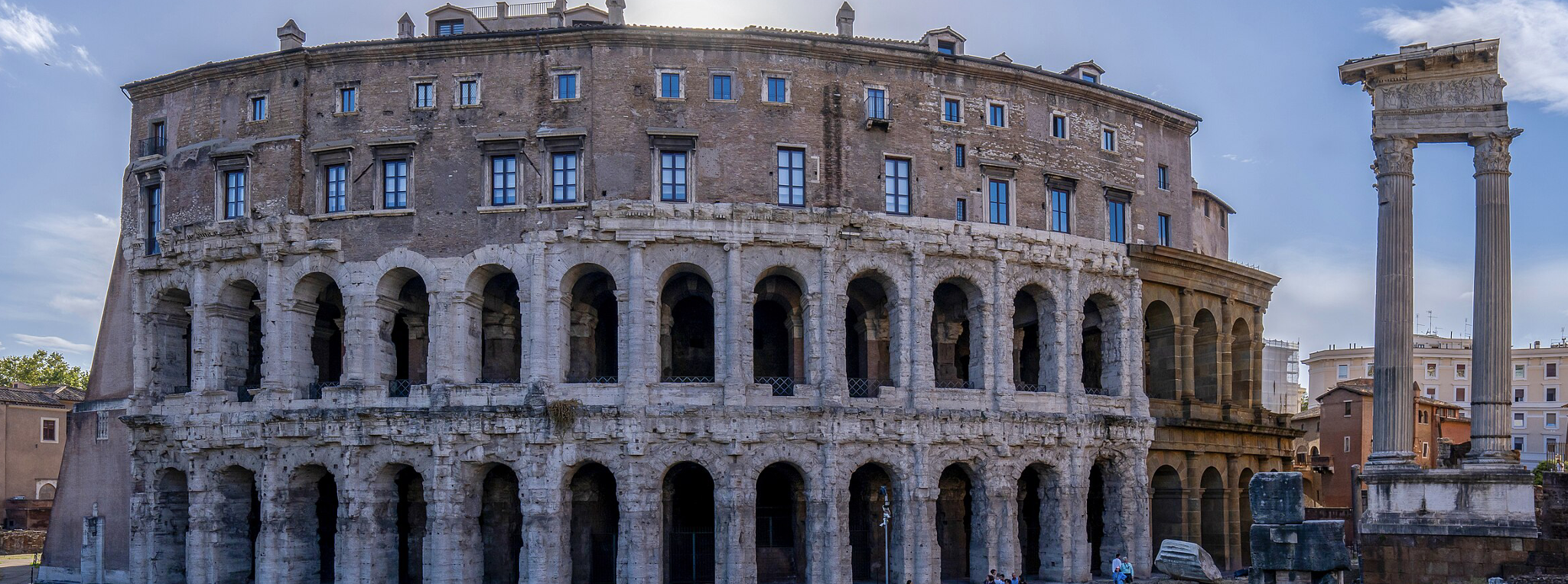
Theatre of Marcellus
When: 13 BC
Where: Rome
Why: Initiated by Caesar, completed by Augustus. Dedicated to Augustus’ nephew Marcellus. Rich family built palace on top of it in 16th century. Remains of theater used for palace.
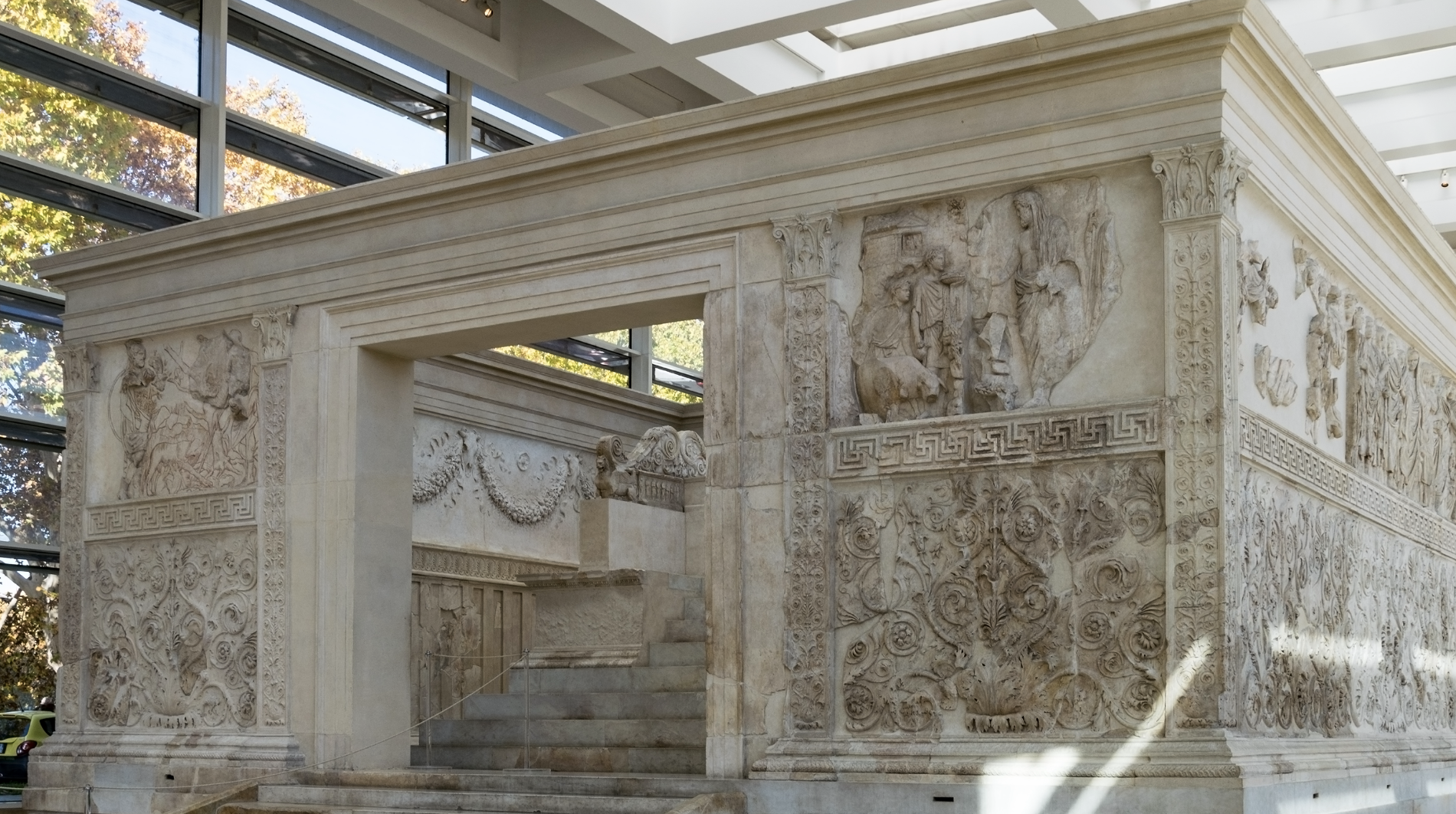
Ara Pacis Augustae
When: Commissioned 13 BC, dedicated 9 BC
Where: Rome, by Tiber, originally Campus Martius.
Why: Symbolic altar in enclosed structure. Augustus connects his own family, role of head of roman empire to mythic/divine origin of rome. Honors Augustus and his establishment of peace after military campaigns. Religious processions w/ Augustus, the fam, officials on North/South frieze. Aeneas sacrifice, Romulus/Remus(?) on East/West frieze. Tellus/Pax panel, seated goddess with 2 kids, air and water.
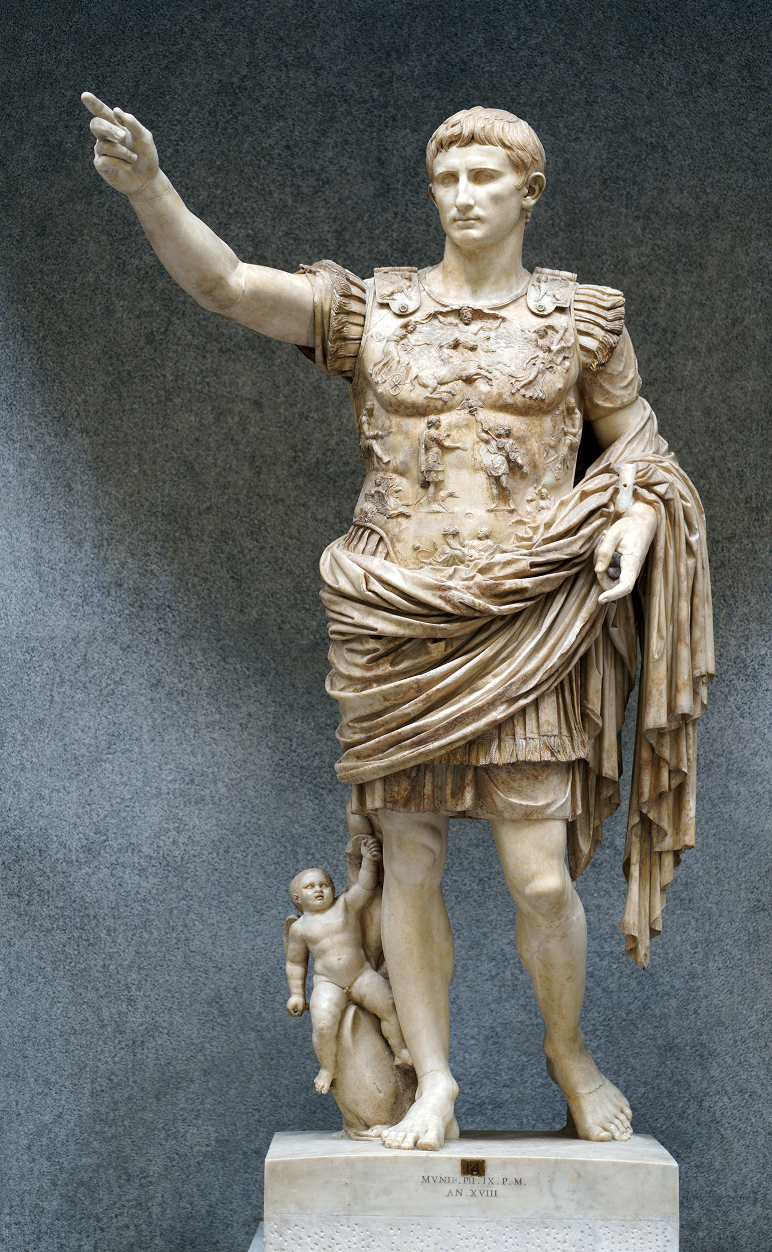
Augustus from Prima Porta
When: 1st century CE
Where: Villa Lidia, Rome
Why: Augustus shown as young. Reflects roman values of strength, control, and perfection. On breastplate, restitution of standards. Oratorio gesture- military authority, leadership. Breastplate shows diplomatic victory, divine lineage, and economic growth.
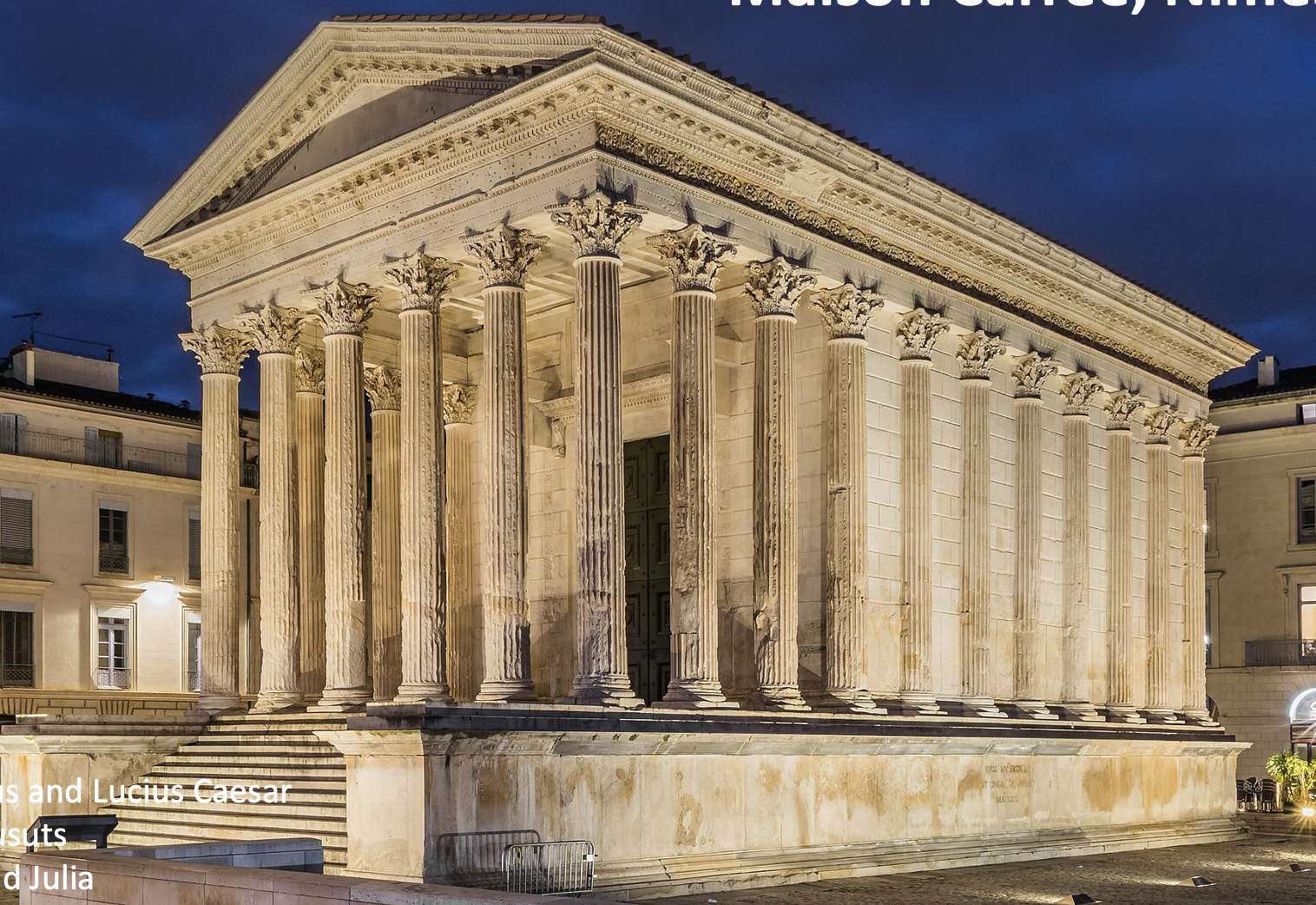
Maison Carree
When: 7 CE
Where: Nimes, France
Why: Dedicated to nephews Gaius and Lucius. Italic temple, entrance only thru front. Nimes Roman colony founded after conquest of Gaul and Caesar. Nephews deified.
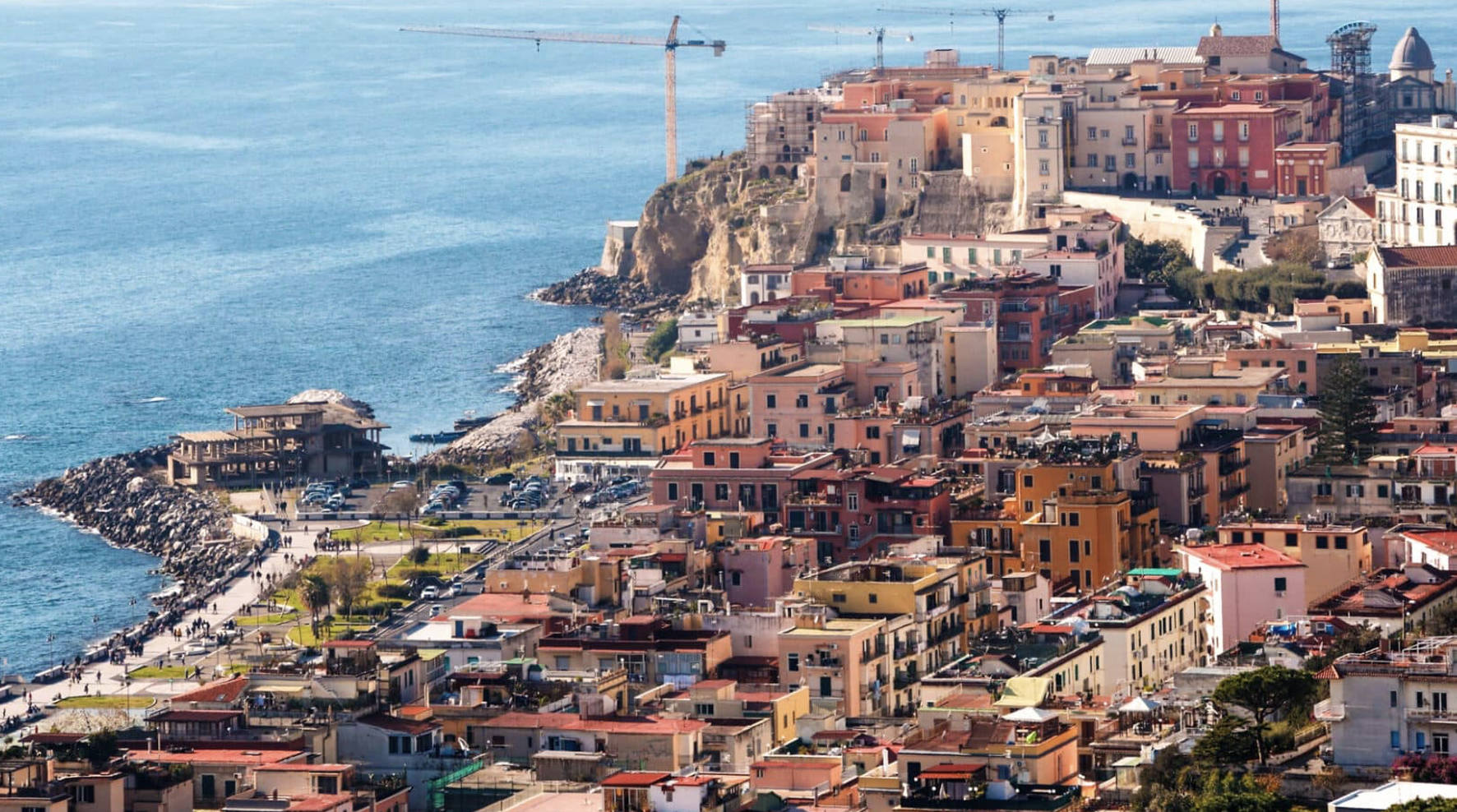
Pozzuoli, Bay of Naples
Why: Birthplace of pozzolana, Roman concrete used to built piers, warfs. Major Roman city harbor. People from other parts of the world to work here/do economic stuff.
Manubial Temples
Roman temple funded by manubiae—the proceeds or spoils of war—and constructed by military commanders, often in fulfillment of a vow made during a campaign
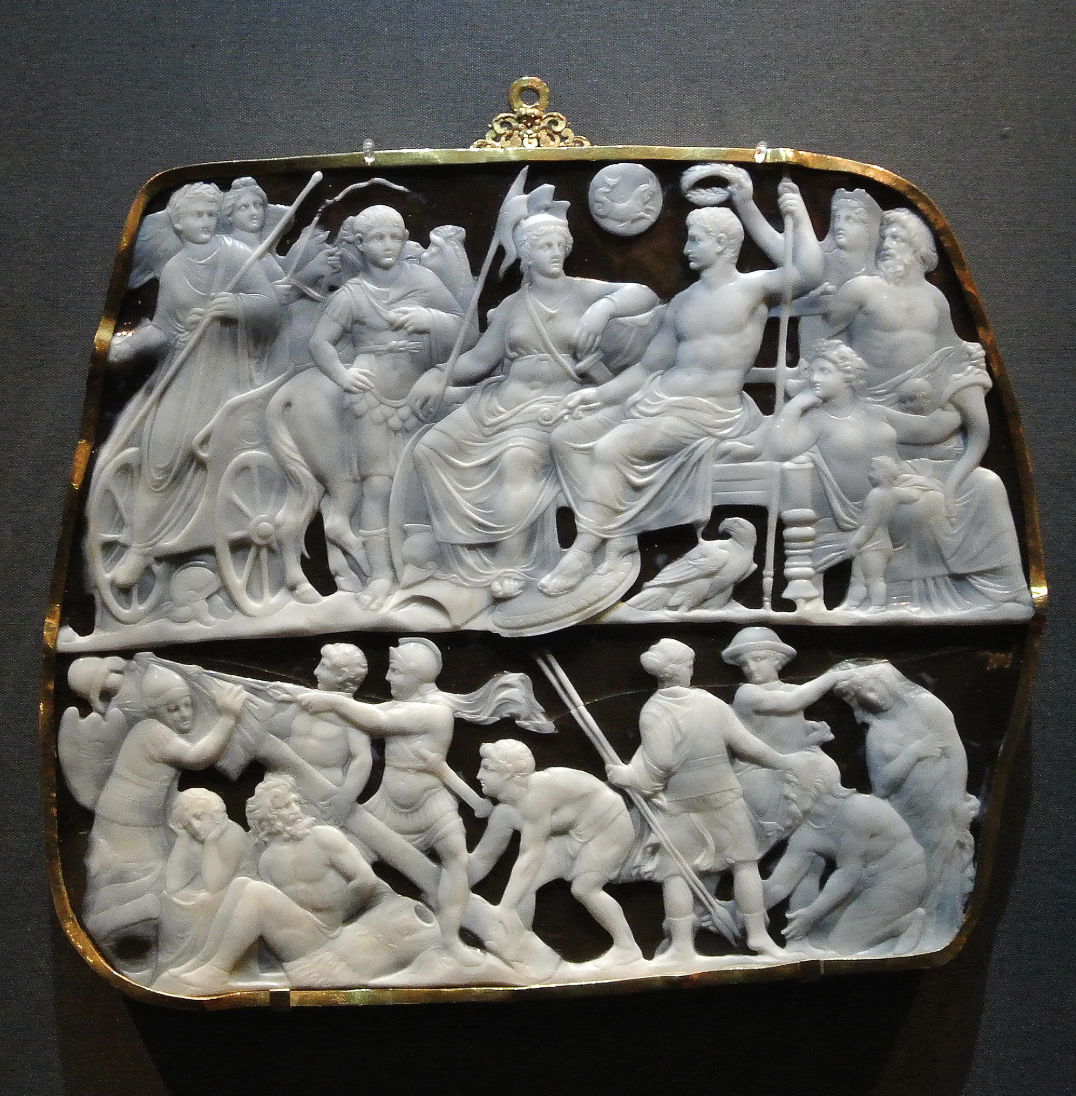
Gemma Augustea
When: 9-12 AD
Where: Kunsthistorisches museum, vienna
Why: transition of power between augustus and tiberius.
Top: Augustus getting crowned. Right/Left: figures of ecumene and ocean, Drusus/Germanicus in line of succession.
Lower register: Connects rise to power to territorial expansion of rome. Mistreated prisoners, People representing conquered provinces.
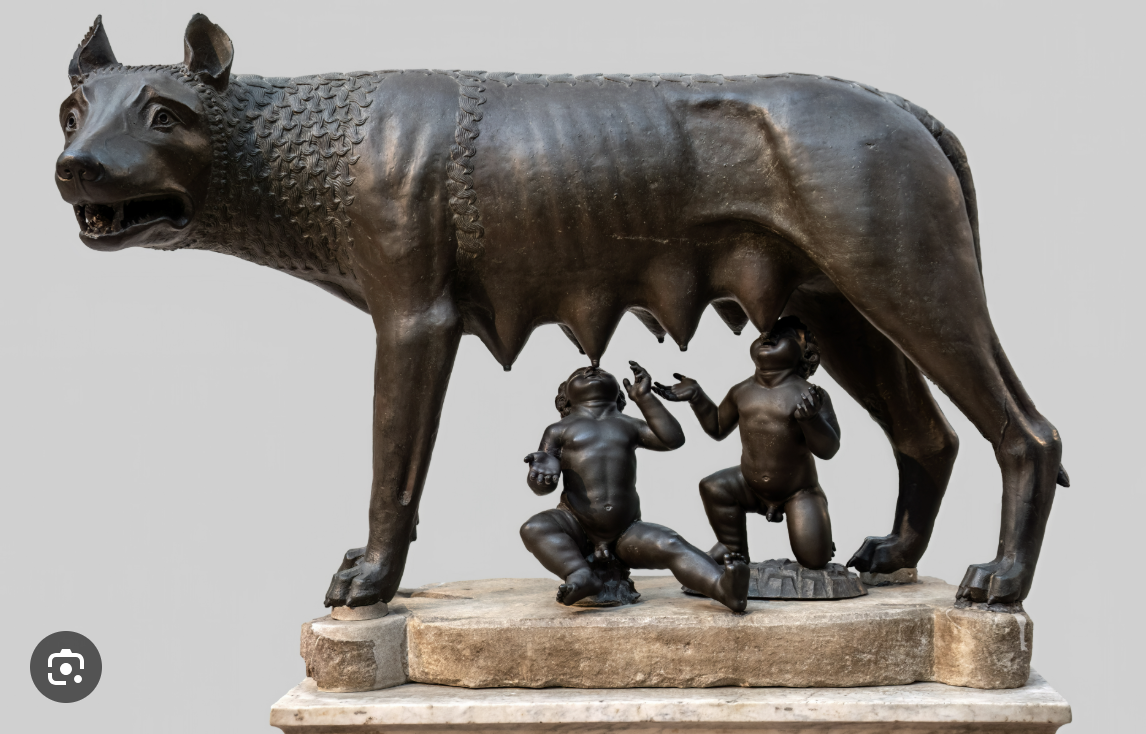
Statue of Romulus and Remus with She-Wolf
When: 11-12th centuries CE
Where: Rome
Why: 2 brothers, Romulus/Remus, start city, don’t know what to call it. Bird watching competition happens, Romulus sees more birds and wins, kills Remus. Lupa Capitolina helps the brothers grow up. Symbol of modern day Rome

