Energy and Environment Week 10
 Call Kai
 Learn
Learn Practice Test
 Spaced Repetition
 Match
Match Flashcards
 Knowt Play
1/15

Earn XP
Description and Tags
solar
Name | Mastery | Learn | Test | Matching | Spaced | Call with Kai |
|---|
No analytics yet
Send a link to your students to track their progress
16 Terms
Solar current capacity
Accounts for 6.9% of global electricity generation (in 2024; up from 5.5% in 2023)
• 428 GW solar capacity added globally in 2023
• Total installed solar capacity (world): 1419 GW
Far more added than other sources; solar has seen a large reduction in cost
Solar sources
The best sources of solar are very sunny places, Like Australia
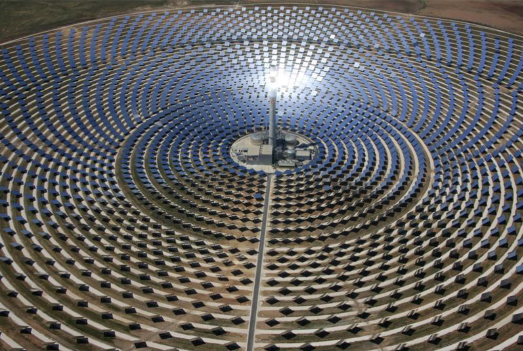
Concentrating solar power
A tower with a point and many surrounding mirrors that bounce sunlight back to said point
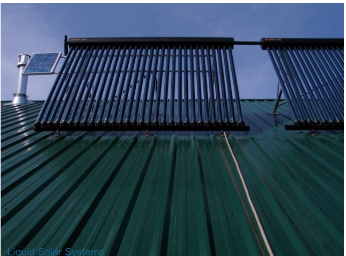
Solar water heating
A passive source of solar installed on rooftops, where sunrays are used to heat water
Learning curve components
R and D (research development)
Learning by doing
Economies of scale
Learning by waiting/spillover effects from other tech
Not applicable to fossil fuels
Wright’s Law
Technologies that follow Wright’s Law get cheaper at a consistent rate, as the cumulative production of that technology increases
Semiconductor
Conducts electricity when energy is provided. Absorbs photons (sun’s energy) & transfers to electrons. Electrons flow through semiconductor as electrical current
Silicon layers in solar cell
sunlight hits the conductor and generates:
• N type Si: extra electrons
• P type Si: extra spaces (holes) to receive electrons
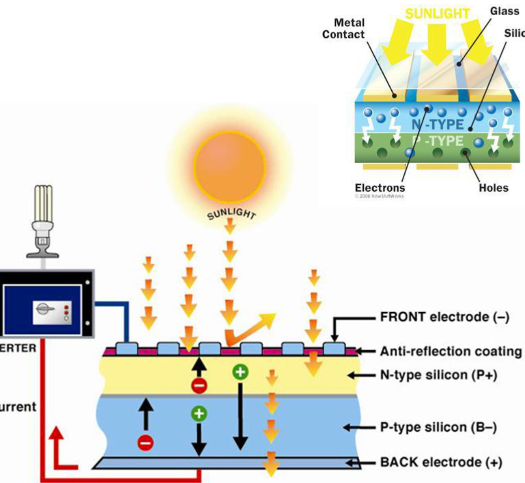
P-N junction
• The electric potential barrier between the two semiconductors of a solar cell
• Creates low resistance path for excited electrons to flow through
• “Loose” electrons flow from the rich end to the poor one creating a direct current (DC)
• This is called the photovoltaic effect and explains why solar cells are actually PV cells
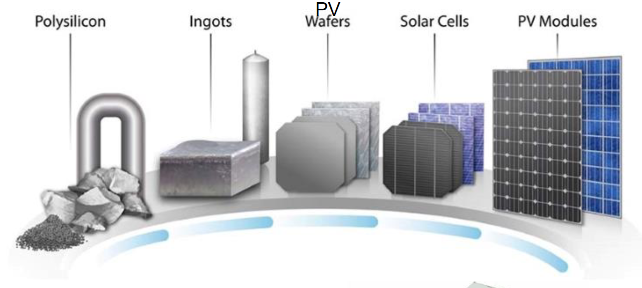
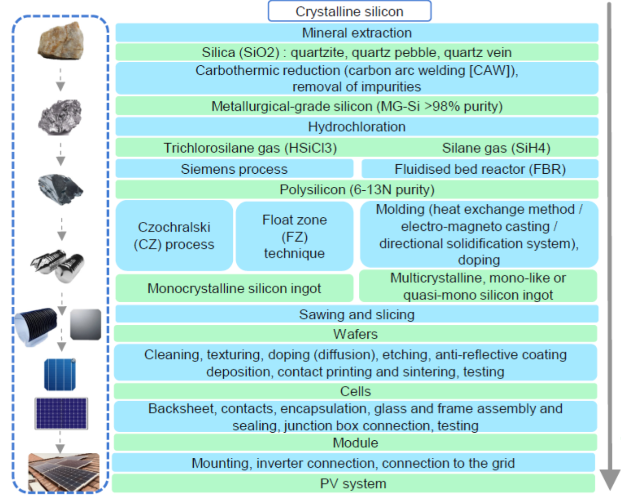
Solar manufacturing process
image
Dominant tech for PV modules
Crystalline polysilicon (98%)
Thin-film cadmium-tellurium (CdTe) is more efficient alternative but does not last as long
PURPA
Dominant utilities must purchase power from renewable producers if cost is at or below utility’s avoided cost. Rates and terms are set by MT public service commission
Net Metering
Homes and businesses can connect DERs (renewables) to the electric grid and get credit on their power bill for excess production. Inverters convert direct current energy to alternating current energy
leftover credits each year are forfeited to the grid
Solar power life cycle
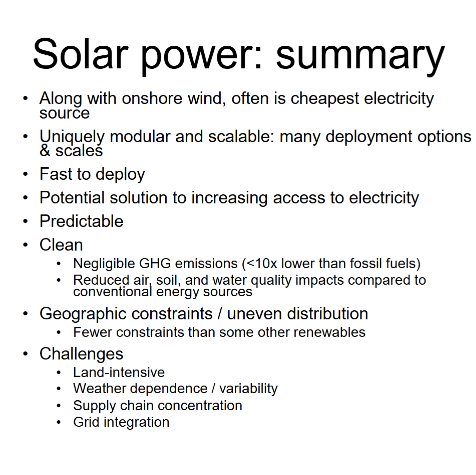
CO2 production only included in transport and making of materials, and depend on location. Panels have a ~25 yr lifespan, and energy payback time is varied
EPBT (energy payback time)
time required for a PV system to generate the same amount of energy as needed for its entire life cycle
Strategies to remove adverse impacts of solar land intensity
rooftop solar
placement in already disturbed areas
agrivoltaics
floating solar photovoltaics (behind a dam)
Explore top notes

Explore top flashcards
