Chapter 19: The Evolution of Populations
 Studied by 0 people
 Call with Kai
 Learn
Learn Practice Test
 Spaced Repetition
 Match
Match Flashcards
 Knowt Play
1/64

There's no tags or description
Looks like no tags are added yet.
Name | Mastery | Learn | Test | Matching | Spaced | Call with Kai |
|---|
No analytics yet
Send a link to your students to track their progress
65 Terms
What did Darwin never know ?
-the mechanisms of inheritance
-where does variation come from
-how is variation maintained
Darwin (1859)
-continuous variation in species
-accumulation of differences in offspring
What Darwin never knew 2
-the mechanisms of inheritance
-the predominant (and incorrect) genetic theory of the time
-with blending inheritance, evolution is not sustained
-Mendelian inheritance was correct and traits are not blended
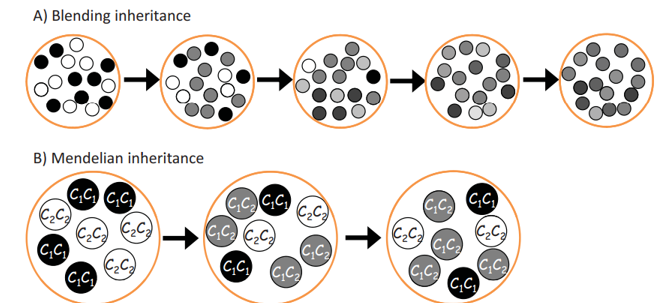
Mendel (1866) and DeVries (1890-1900)
-discrete genetic factors in individuals
-no blending; no “accumulation”
-importance of mutations
Sutton-Boveri (1902)
chromosome theory of inheritance
Morgan (1910s)
mutations and modern genetics
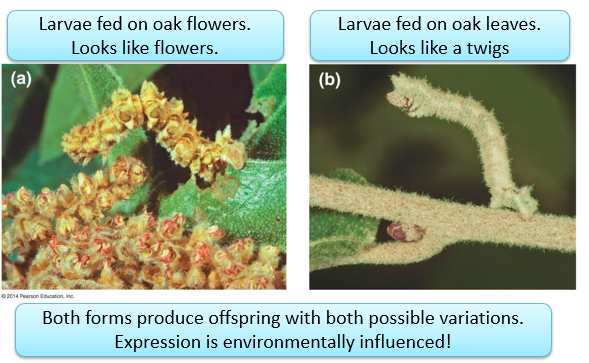
phenotypic variation
-is mostly genetic
-but environment can influence expression, creating non-heritable variation
-ex: the sex determination of the American alligator is affected by the temperature
genes and the inheritance of genes leads to
-different type of variation
→discrete genetic variation
→continuous variation
discrete genetic variation
-2 or more alleles at single gene locus
continuous variation
-phenotypes produced by combined effects of 2 or more genes
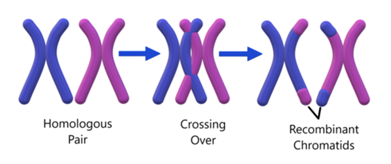
sexual recombination
-produces genetic diversity among offspring:
→crossovers
→ind. assortment
→random fertilization
new alleles arise from what
-from mutations in DNA
-in cells that ultimately make gametes
-ex: point mutations and chromosomal alternations
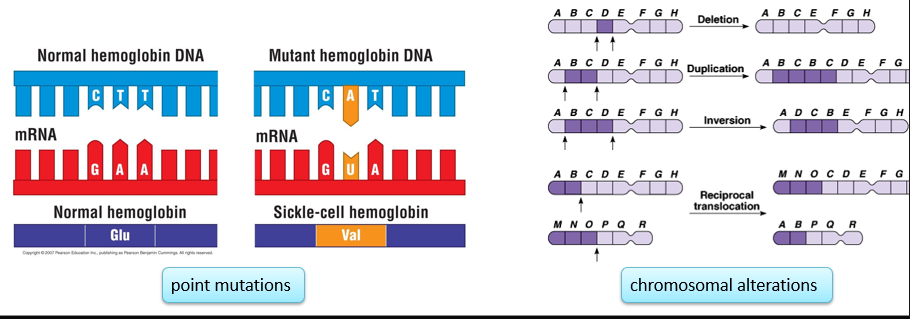
most DNA variability..
-DOES NOT affect phenotype
-not a new allele b/c protein translation/gene expression is not affected
what is the ONLY mutation that created a new allele
-substitution
-resulting in translation of different amino acid (w/ potential for phenotypic variation)
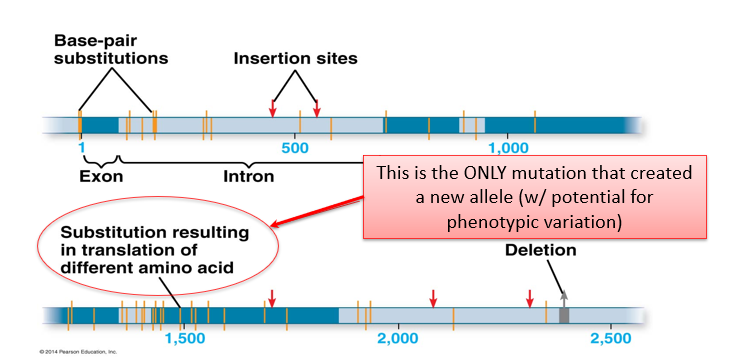
mutation
-most new alleles are harmful (“deleterious”)
→but harmful effects may be “hidden” in heterozygotes
-some new alleles may be neutral w/ regard to selection
→new phenotype does not affect likelihood of leaving offspring
-if enviornment changes, harmful or neutral alleles may become adaptive
→new phenotype increases likelihood of leaving offspring
mutations create
-new alleles (new version of a gene)
population genetics
-became formally incorporated into the Theory of Evolution only in the 1940s after the Modern Synthesis
-the study of what changes allele frequencies in populations through time
genetic composition of population can be described by:
gene pool
genotypic frequency
allele and allelic frequency
population genetics
-populations differ in genetic composition
gene pool
-all the alleles of all the genes in a population
-many genes have “fixed” alleles (homozygous in all individuals)
-other genes: 2 or more alleles
genotypic frequency
= %(proportion) of each genotype in the population
%AA, %Aa, %aa
allelic frequency
= % of each allele in the population
%A allele and %a allele
population
a group of interbreeding individuals in the same area, somewhat isolated from other groups
Hardy-Weinberg Principle of Equilibrium
-a population’s allele and genotype frequencies are inherently stable
-hardy-weinberg equilibrium
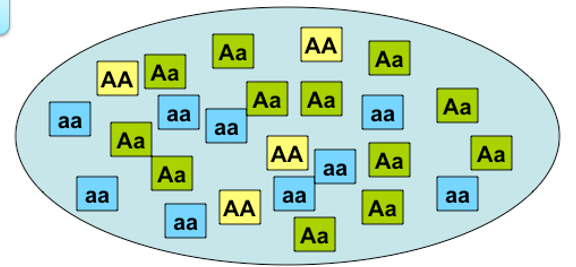
population #1 3 phenotypes
genotypic frequency:
0.16AA
0.48Aa
0.36aa
allele frequency:
20/50=40%=0.4A
30/50=60%=0.6aa
microevolution
-any change in population allelic or genotypic frequency over time
-smallest (fundamental) unit of evolution
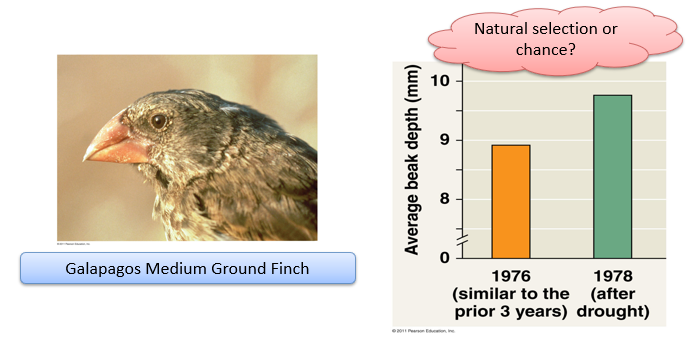
the hardy-weinberg principle, the H-W equilibrium
-if a large population reproduces sexually at random, then the genetic frequencies should not change in next generation (remains in equilibrium)
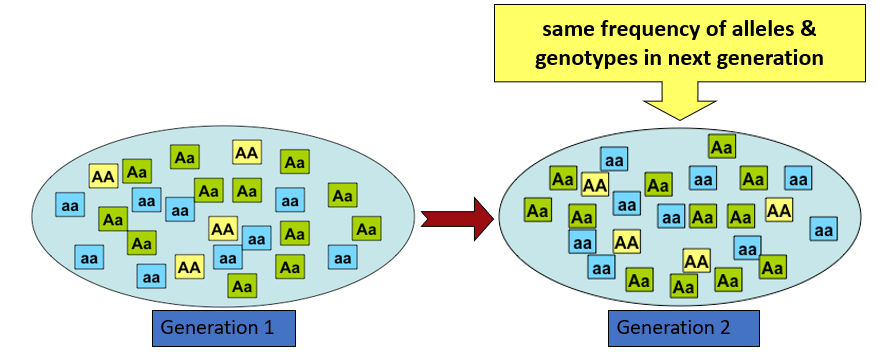
The H-W conditions:
no mutations
mating is random
no selection (equal survival)
very large population size
no gene flow in or out
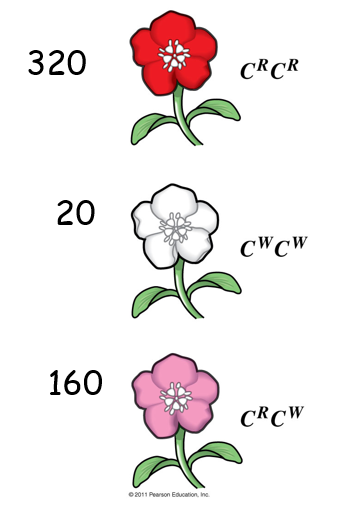
ex: population of 500 flowers
note that
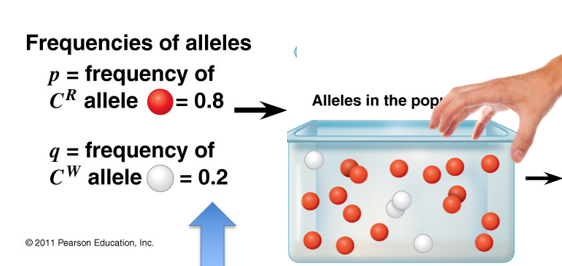
p+q=1
the H-W equation (population at equilibrium)
-if p=freq. dom. allele and q=freq rec. allele and p+q=1 then in any generation:
p2+2pq+q2=1
p2+2pq+q2=1
p2=freq of homozygous dominant genotype
2pq=freq of heterozygous genotype
q2=freq of homozygous recessive genotype
using the H-W equation
if you know of can assume an H-W equilibrium, then use the equation to determine population genetic makeup
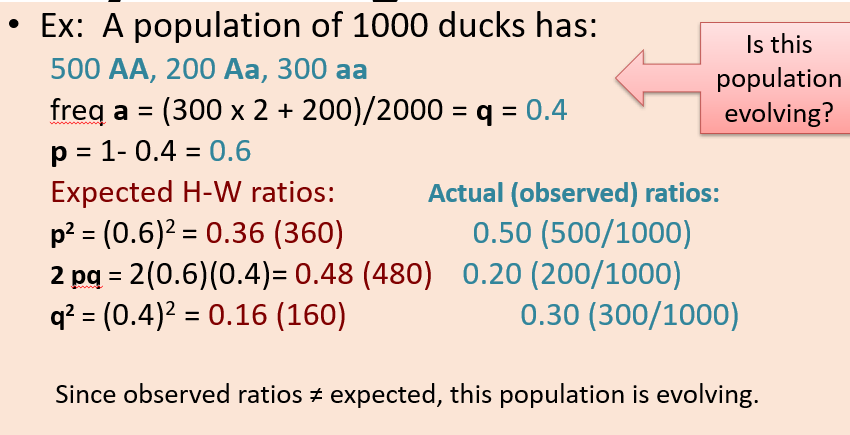
H-W is the population evolving?
in this example, since the observed ratios DO NOT equal the expected, the population is evolving
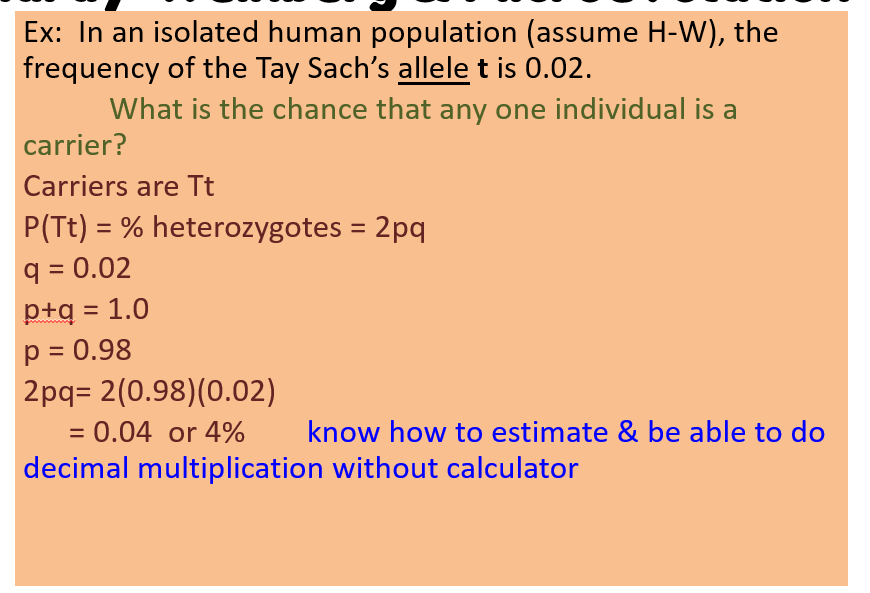
carrier example
-A carrier has one normal allele and one recessive disease allele
-ex: Tt
-answer: 0.04% or 4%
H-W also lets us detect microevolution:
-H-W equilibrium is “null hypothesis.”
-if actual ratios does not equal expected H-W ratios, then the population is evolving
microevolution
an evolving population is one that is showing genetic change over generations
mechanisms of microevolution
natural selection
genetic drift
→founder effect and bottleneck effect
gene flow
This is what CAUSES microevolution to happen
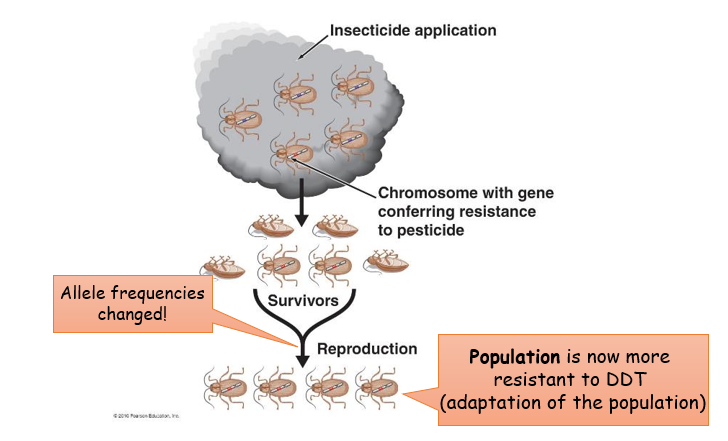
natural selection
-acts non-randomly on phenotypes of individuals
-changes allelic & genotypic frequencies of populations non-randomly
-always leads to adaptation of population to current environment
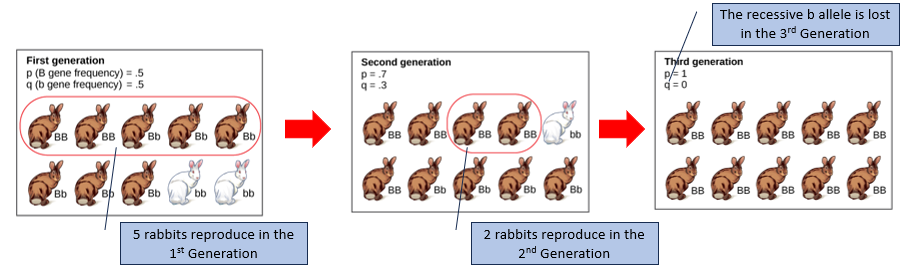
genetic drift
=genetic frequency changes due to random events
-often occurs in small populations
→like “sampling errors” in statistics
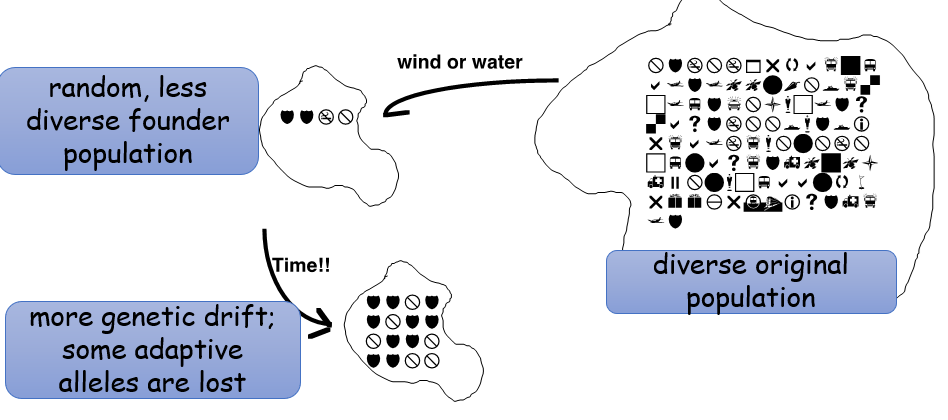
the founder effect and genetic drift
-a few founders start a new isolated population
-founder gene pool differs from original source
-small population size leads to more drift.
-better alleles may be lost
the founder effect and genetic drift example
-ex: high rate of inherited blindness on Tristan de Cunha
→ maladaptive allele frequency increased
→ retintis pigmentosa —autosomal recessive
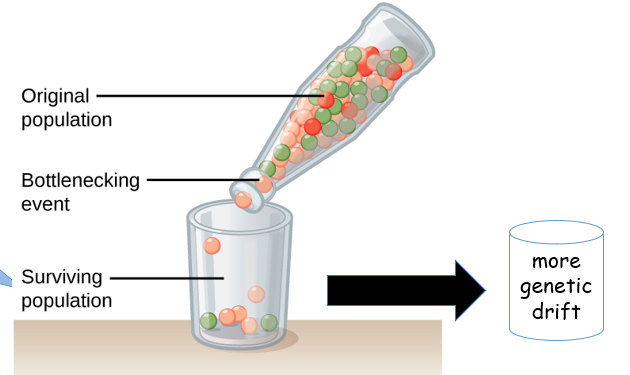
the bottleneck effect and genetic drift
-an event drastically cuts population size
-gene pool of survivors is random; some alleles are lost
gene flow
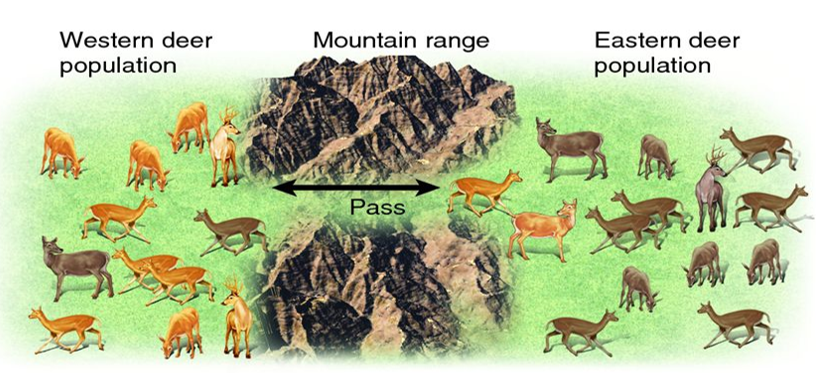
=alleles move in and out of population
-includes: migration of adults, dispersal of gametes, seeds, larvae
result of gene flow
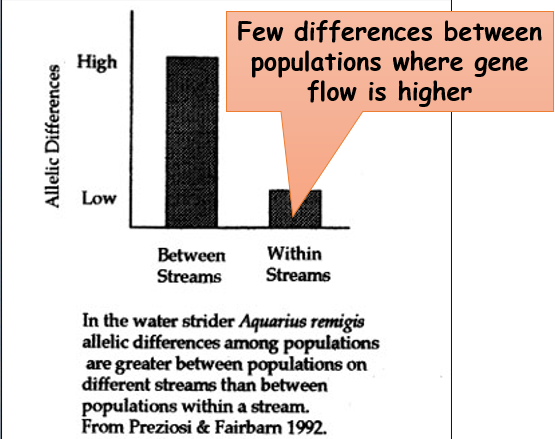
-tends to add genetic diversity to population
-tends to reduce genetic differences between populations
adaptive evolution: relative fitness
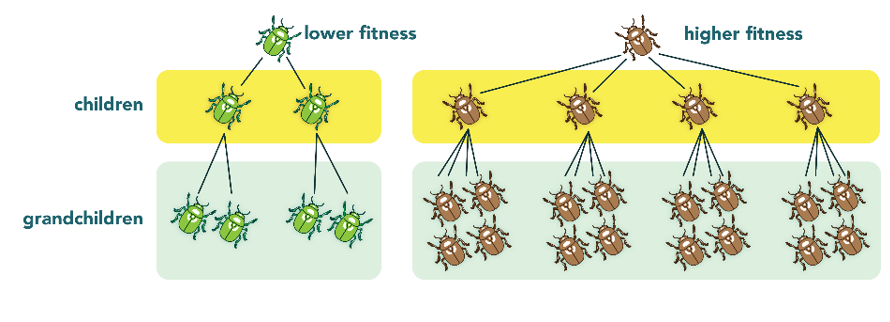
-fittness is relative to other individuals in the population
-”fittest”=best reproductive success
different forms of selection
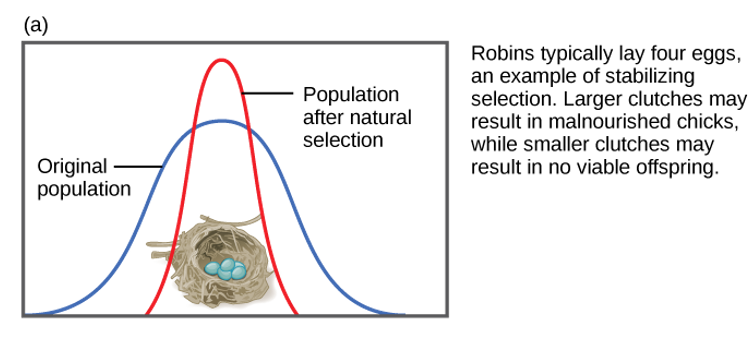
stabalizing selection
directional selection
diversifying selection
frequency dependent selection
sexual selection
*remember, natural selection acts on individuals to affect change in a population. Individuals do not evolve. Populations evolve.*
stabalizing selection
-favors average, intermediate phenotypes rather than extreme variations, reducing genetic variance within a population
directional selection
the change in a phenotype or genotype of a population in one direction away from the mean (average) in a particular environment over time
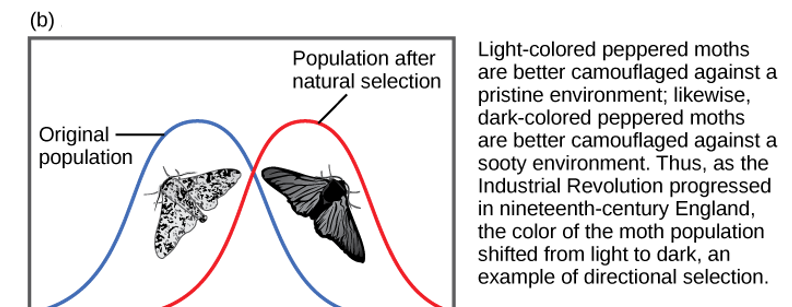
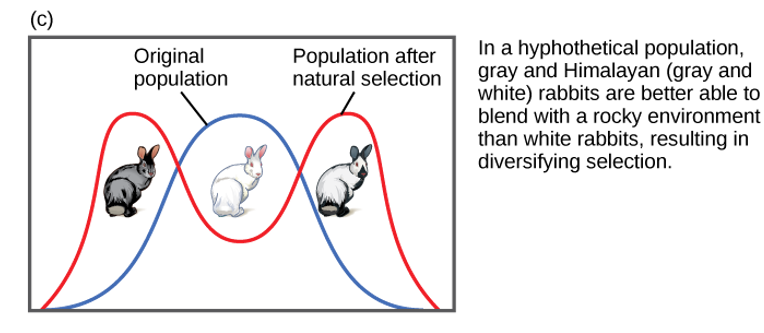
diversifying selection
-two or more extreme phenotypes are selected for, while the average phenotypes is selected against
-acting against intermediate forms, it increases genetic variance within a population and can lead to the splitting of a population into two distinct, specialized groups
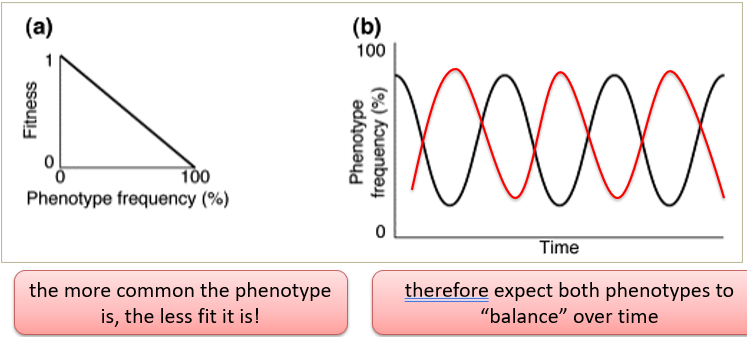
frequency-dependent selection
-negative frequency-dependent selection
→fitness of a phenotype decreases as its frequency increases in population
→expect both phenotypes to “balance” overtime
side-botched lizard example frequency-dependent seleciton
The Rock-Paper-Scissors Cycle:
Orange beats Blue (aggressively takes over territories).
Blue beats Yellow (guards females better).
Yellow beats Orange (sneaks into territory, as shown in the Cornell blog post.
Mechanisms: This is a form of negative frequency-dependent selection, ensuring that no single color remains dominant forever
what about some characteristics that do NOT seem to be adaptive
enviornmental factors are not the only drivers of evolutionary chnage; the preferences and behaviors of organisms themselves
sexual selection
=success based on traits related to obtaining mates (not directly related to environment)
→leads to sexual dimorphism
-ex: gynandromorphic cardinal → males compete with other males for the female’s good opinion (intersexual selection)
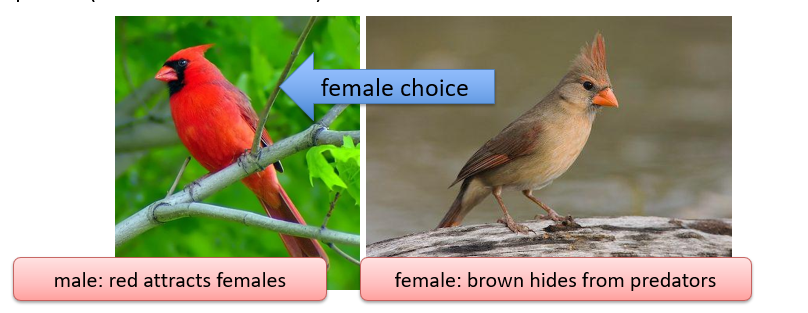
intrasexual selection
-individuals of one sex compete directly for mates of opposite sex
-direct competition
-ex: males fighting w/ each other
intersexual selection
-also called mate choice
-individuals of one sex (usually the females) are choosy in selecting their mates of the other sex
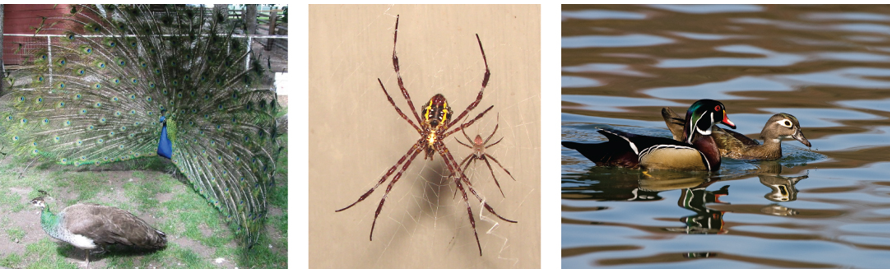
dimorphism: sexual selection
-distinct physical or behavioral differences between males and females of the same species
-ex: peacocks and peahens, arigiope appensa spiders (female is the bigger one), wood ducks
Maintaining genetic variation
through diploidy
through diversifying selection
through heterozygote advantage
through frequency-dependent selection
through diploidy
less successful recessive alleles are hidden in heterozygotes
through diversifying selection
-surviving extreme phenotypes will carry different alleles
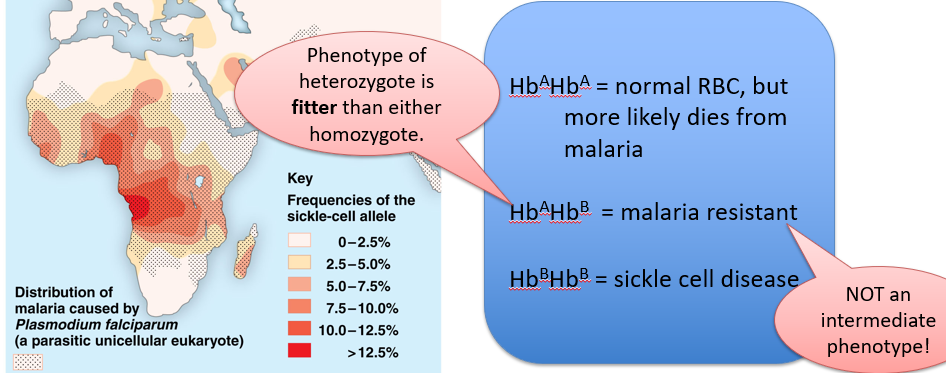
through heterozygote advantage
-selection favors heterozygote over either homozygote, maintaining both alleles
-ex: sickle cell allele when malaria present
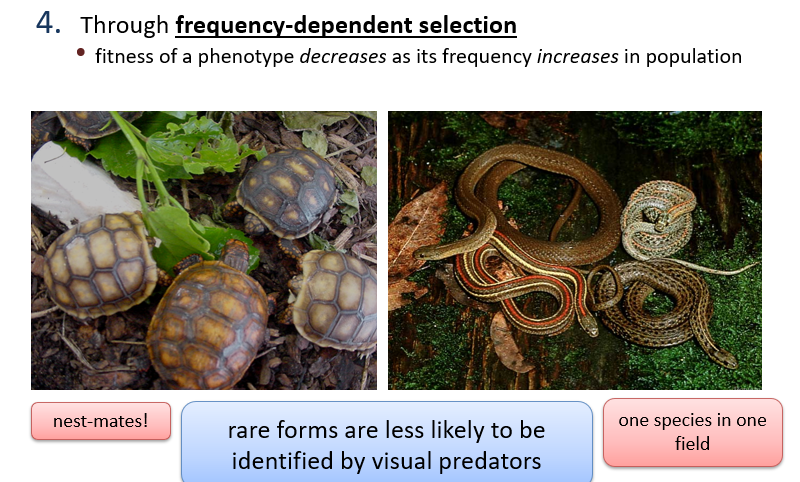
through frequency-dependent selection
-fittness of phenotype decreases as its frequency increases in population
-rare forms are less likely yo be identified by visual predators
-if you look like everyone, you are most likely to be eaten
limitations of natural selection
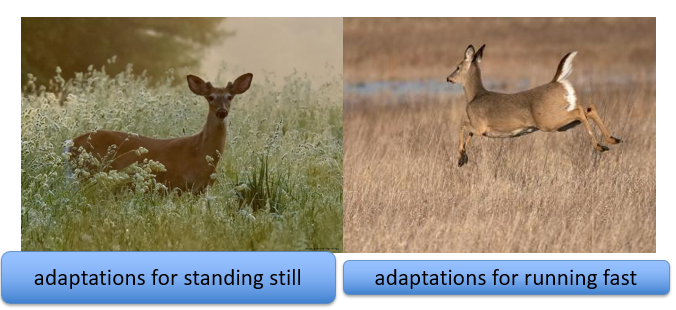
-it acts on phenotype of entire individual
-an adaptation may be a “compromise” in form due to competing needs
limitations of natural selection 2
-it can act only on existing variation
→extinction happens when adaptation is impossible
→form is constrained by ancestry
limitations of natural selection 3
-chance, environment & natural selection interact
-history matters
 Note
Note  Flashcards (20)