O2 transport and regulation
 Studied by 0 people
 Call Kai
 Learn
Learn Practice Test
 Spaced Repetition
 Match
Match Flashcards
 Knowt Play
1/26

There's no tags or description
Looks like no tags are added yet.
Name | Mastery | Learn | Test | Matching | Spaced |
|---|
No study sessions yet.
27 Terms
Ventilation-perfusion (V/Q) matching
refers to the coordination between the amount of air (ventilation) reaching the alveoli and the amount of blood (perfusion) flowing
For Successful Gas Exchange:
The sequence of oxygen movement
atmospheric O2 determines
Alveolar O2 determines
Plasma O2 determines
HbO2
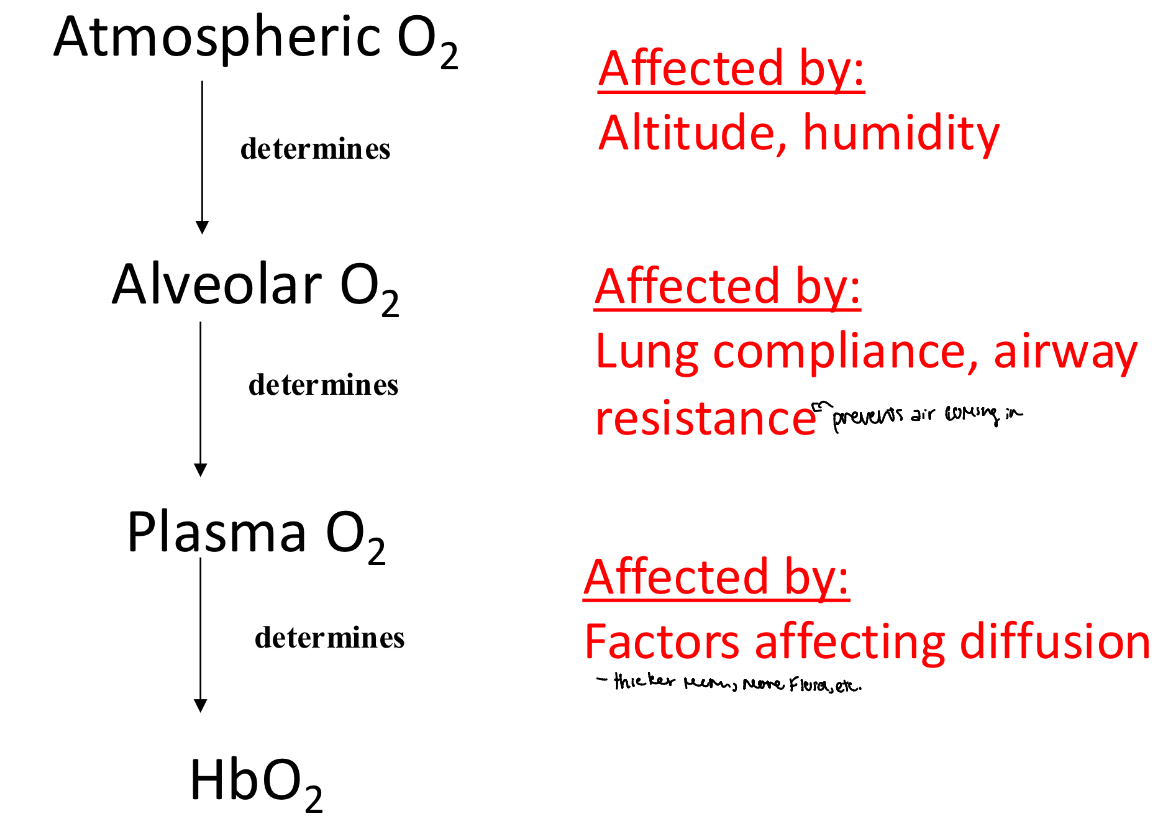
What is responsible for these pressure gradients?
Living and existing dirives gas exchange
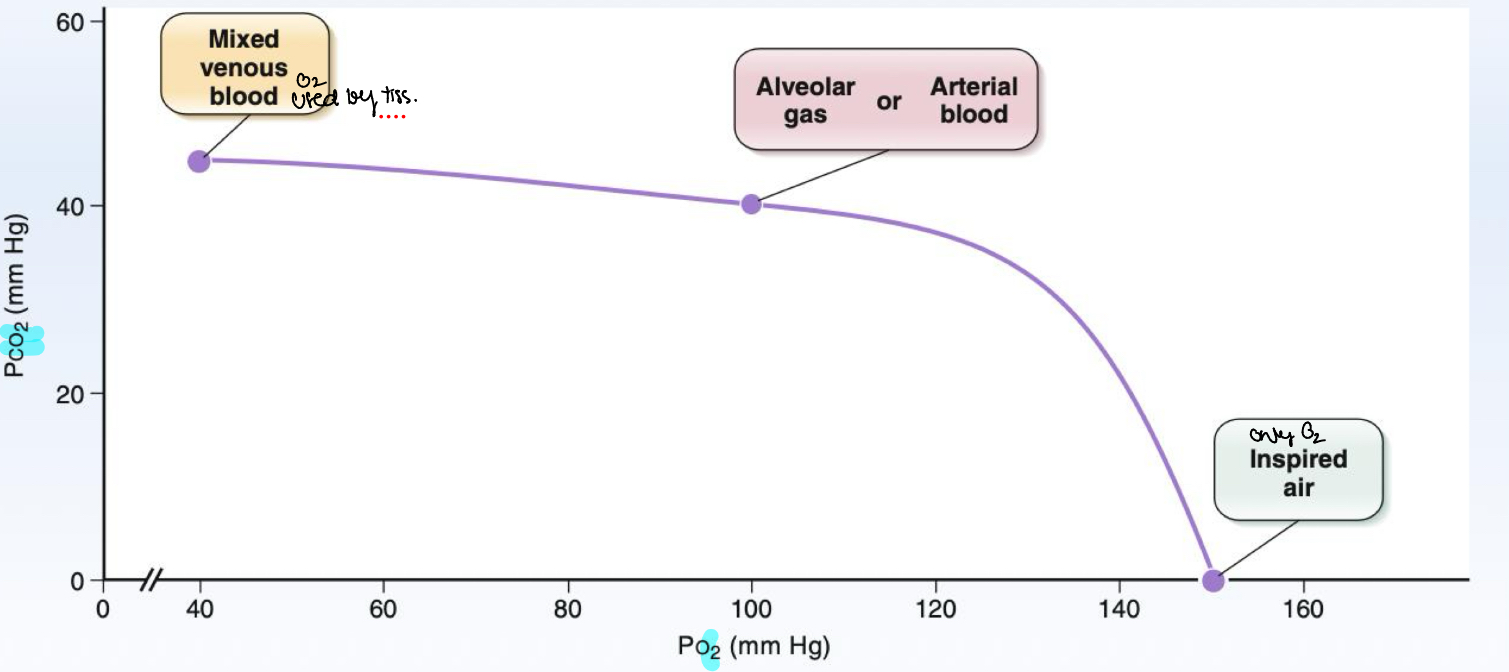
Oxygen and carbon dioxide
O2 enters co2 leaves pulmonary capillary
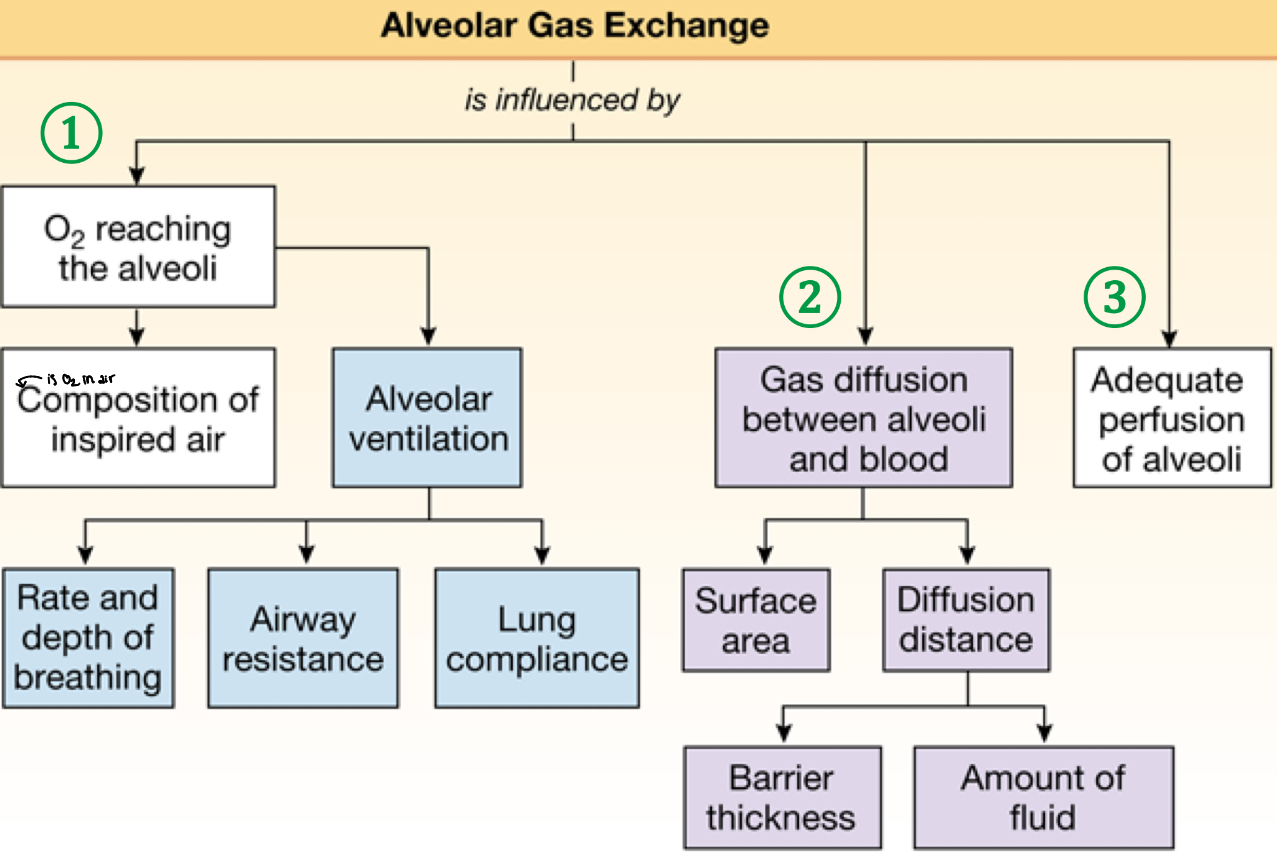
For Successful Gas Exchange:
Oxygen needs to reach alveoli
Oxygen needs to diffuse across
Oxygen needs to reach blood
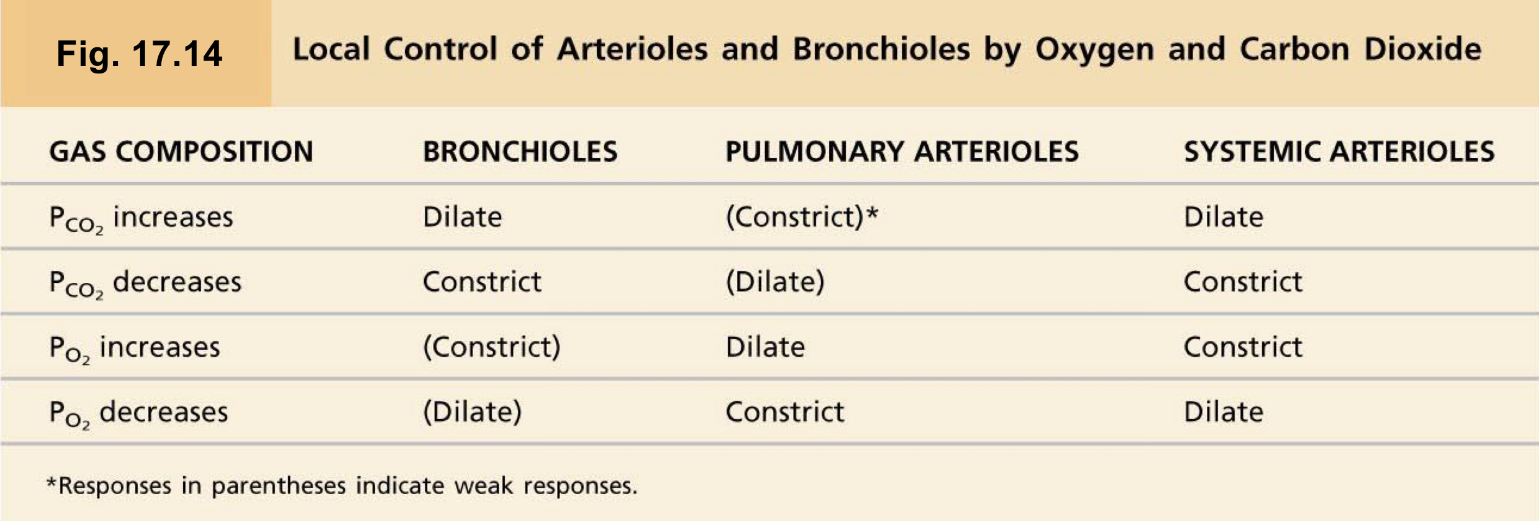
In peripheral/systemic
To optimize tissue oxygenation
Vasoconstriction: high oxygen low carbon dioxide
Vasodilation(run from tiger): high co2 and low o2 because uses oxygen for metabolism
In pulmonary
To optimize gas exchange
Vasoconstriction: high co2 and low o2
Vasodilation: high o2 and low co2
Lung’s goal
is to not “waste” perfusion to poorly ventilated areas.
Ventilation and perfusion
Ventilation/perfusion
V/Q
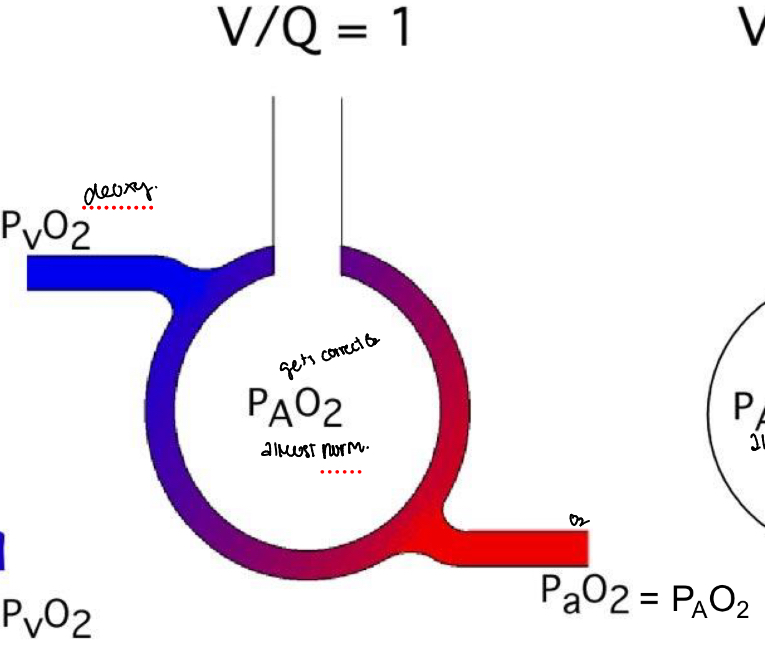
Ideal is 0.8
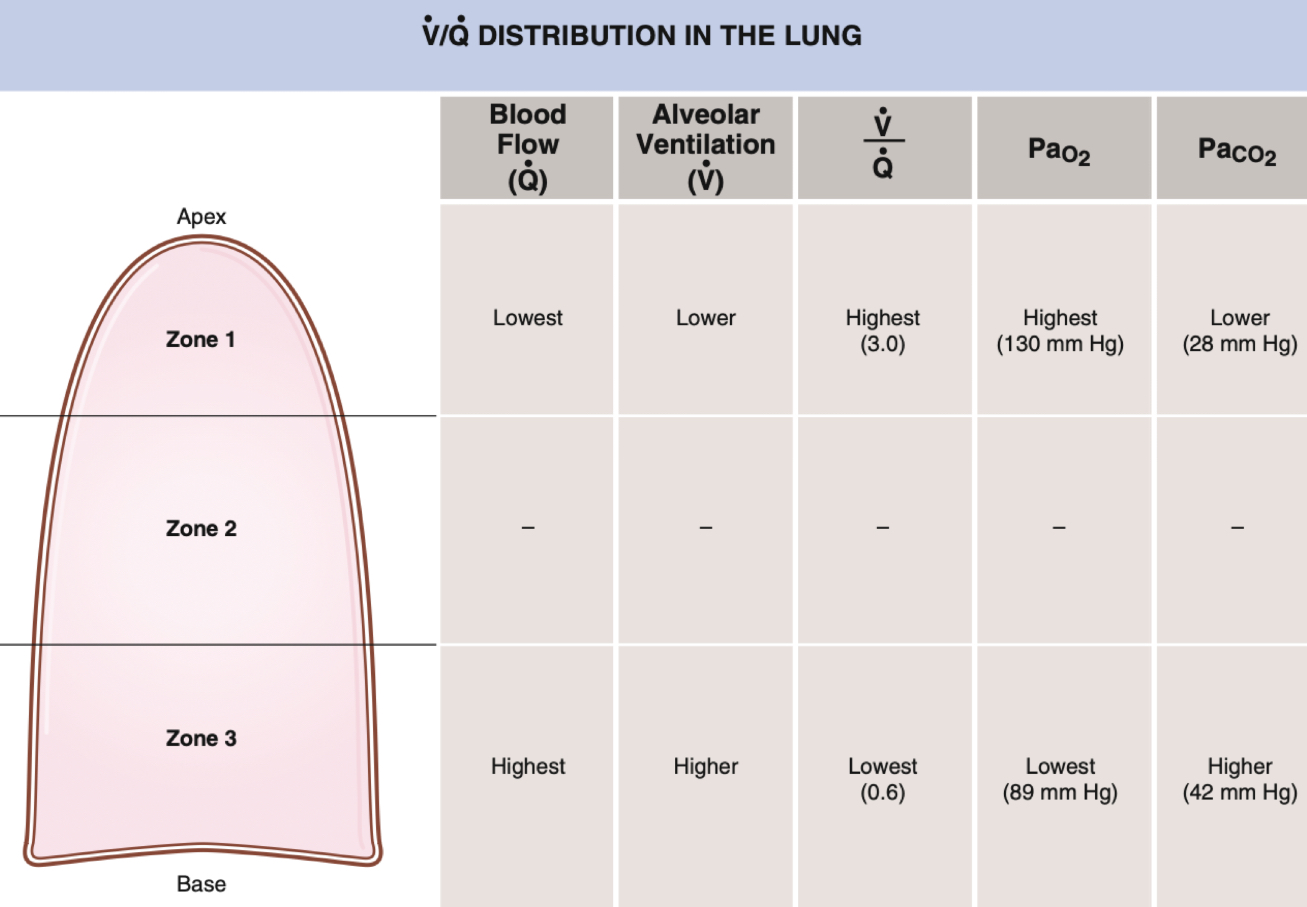
PAO2
alveolar oxygen pressure
PaO2
arterial oxygen pressure
For gas exchange to be effective,
blood flow (perfusion) must “match” air flow (ventilation) right to left heart
Underventilated
High PAco2 low PAo2
Arterioles constrict
Well ventilated
arterioles dilate
TPV=
RR x Tidal Volume
Avg RR = 12-18 br/min (~15br/min)
Avg TV/breath = 500ml/br
Avg TPV = 6 – 9 L/min
Ventilation
Air flow
Avg alveolar ventilation ~ 4 L/min
Perfusion
Blood flow
Avg = 5 L/min
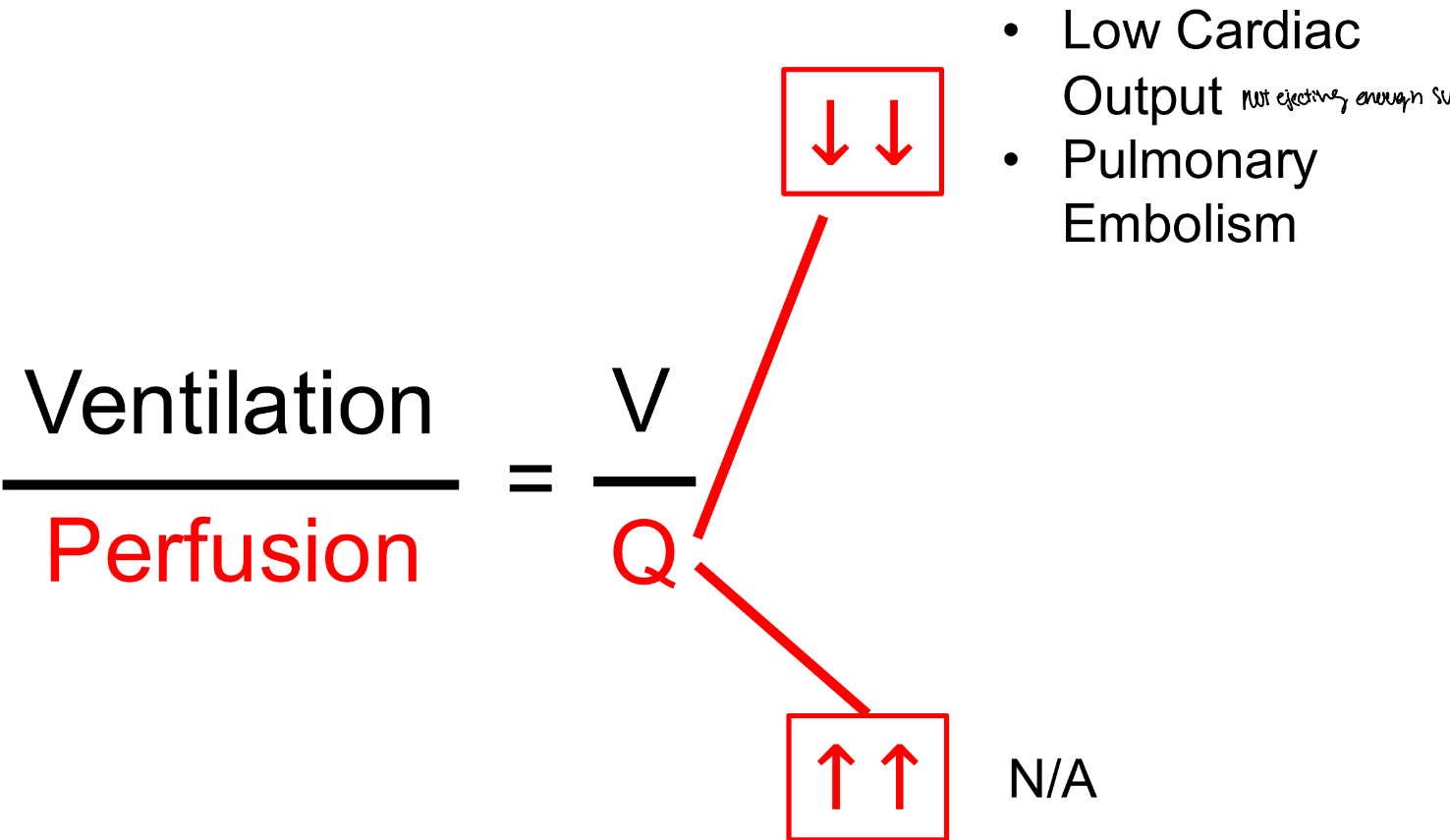
Low V/Q
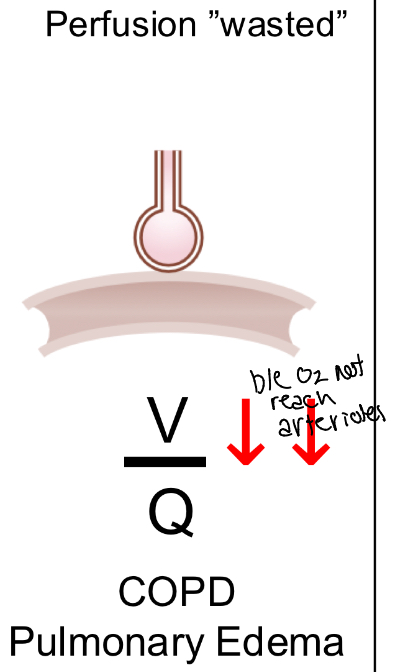
High V/Q
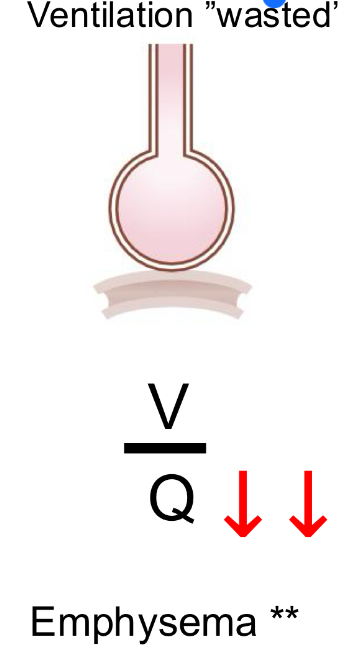
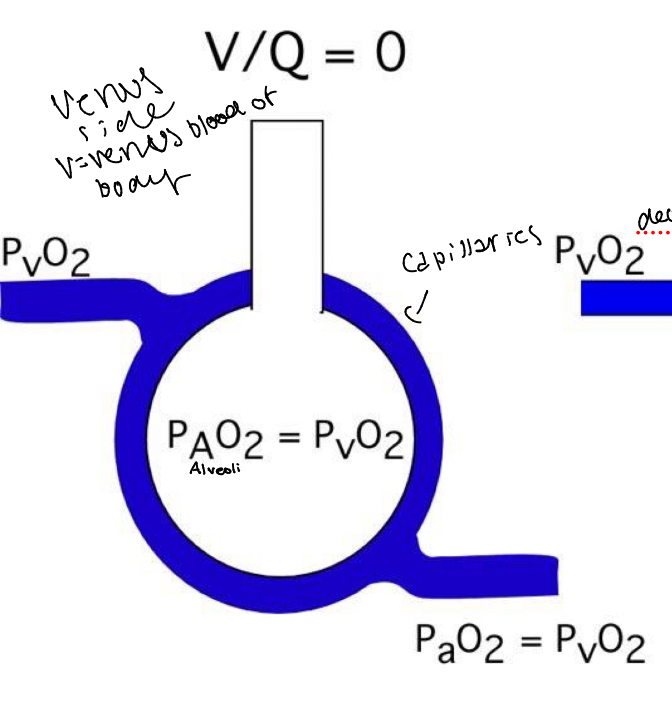
V/Q = 0
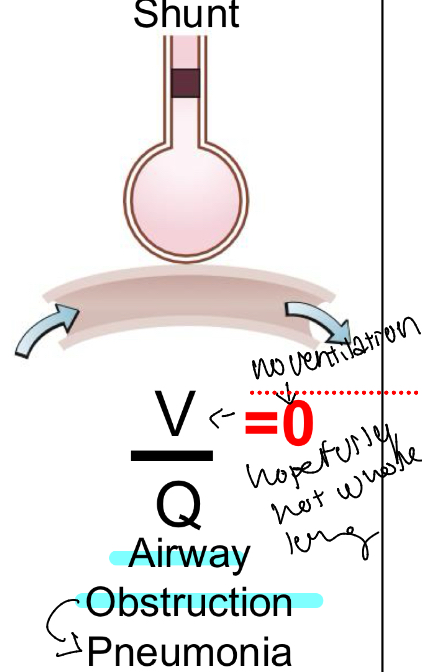
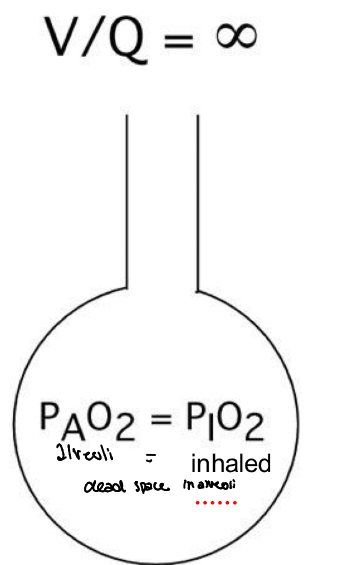
V/Q =∞

Ventilation issues
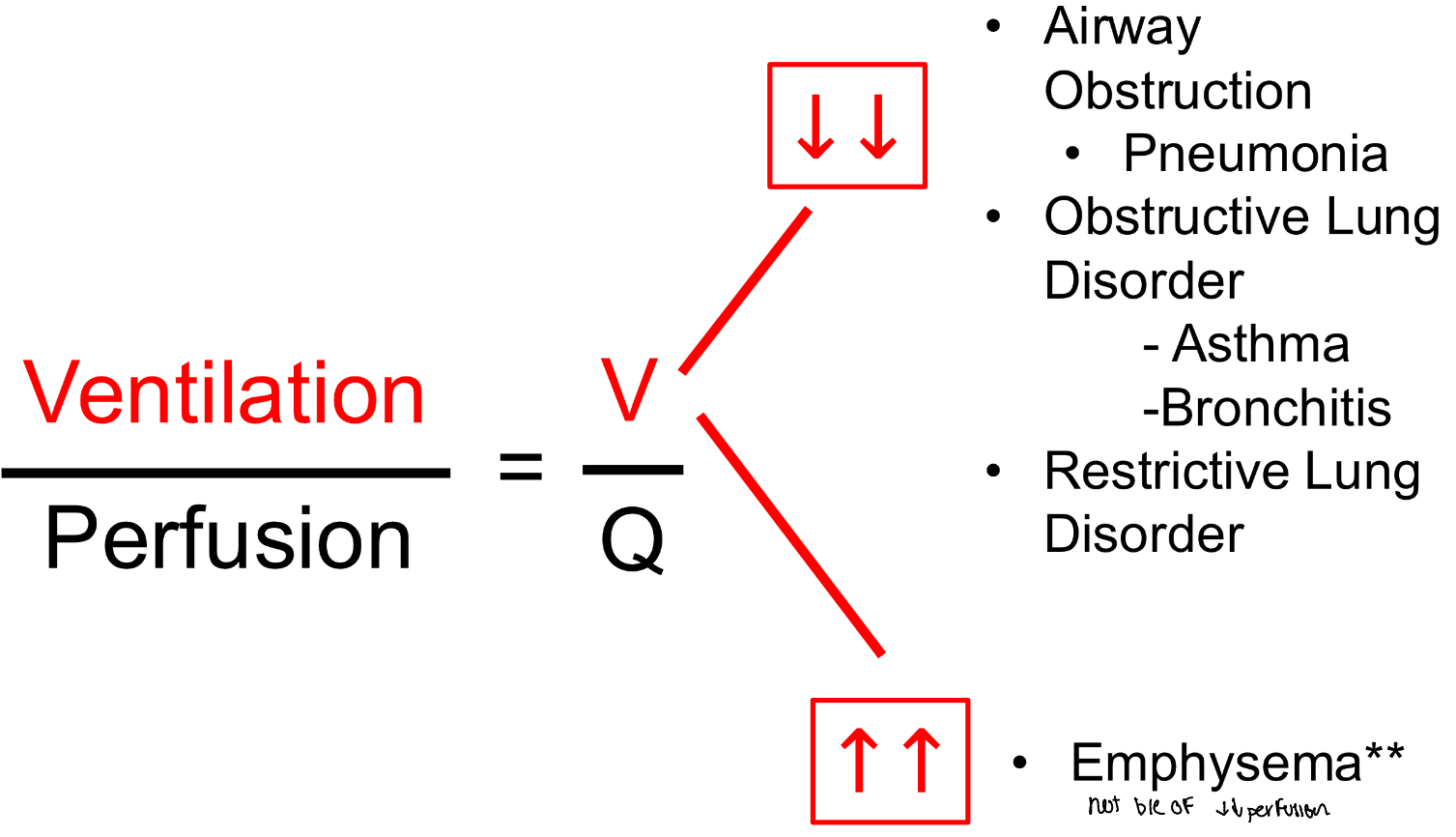
Perfusion issues
Shunt
The lower the V/Q ratio, the closer the outflowing blood composition gets to mixed venous blood
Alveolar gas
The higher the V/Q ratio, the closer the outflowing blood composition
Dead space
Memorize
 Note
Note  Flashcards (170)