Endocrine System
 View linked note
 Call Kai
 Learn
Learn Practice Test
 Spaced Repetition
 Match
Match Flashcards
 Knowt Play
1/69

There's no tags or description
Looks like no tags are added yet.
Name | Mastery | Learn | Test | Matching | Spaced | Call with Kai |
|---|
No analytics yet
Send a link to your students to track their progress
70 Terms

body adjust if out of range/setpoint until it doesn’t need to
hormone release triggered by:
Endocrine gland stimuli
Nervous system
Positive Feedback

Endocrine Gland Stimuli
stimulated to synthesize and release hormones in response to one of three stimuli:
Humoral stimuli
Neutral stimuli
Hormonal stimuli
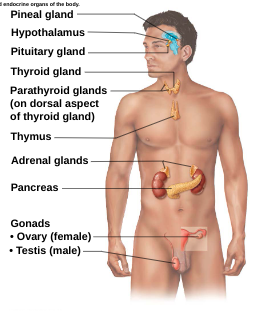
Gland Locations (study image!)
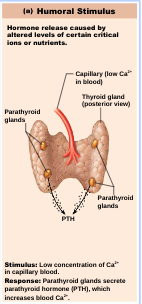
Humoral Stimuli
changing blood levels of ions and nutrients directly stimulate secretion of hormones
Ex. Ca2+ in blood
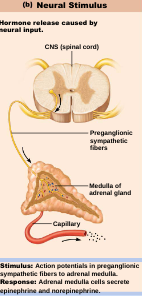
Neural Stimuli
nerve fibers stimulate hormone release
nervous system fibers stimulate adrenal medulla to secrete catecholamines (epi & norepi)
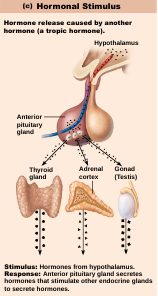
Hormonal Stimuli
hormones stimulate other endocrine organs to release their hormones:
Hypothalamic hormones stimulate release of most anterior pituitary hormones
Anterior pituitary hormones stimulate targets to secrete additional hormones
Hypothalamic-pituitary-target endocrine organs feedback loop
hormones from final target organs inhibit release of anterior pituitary hormones
Nervous System Modulation
adjusts to hormone levels:
modify stimulation/inhibition of endocrine glands
can override normal endocrine controls
Ex: severe stress, hypothalamus and nervous system override insulin to allow blood glucose levels to increase (“fight or flight”)
Action of Hormones
alter plasma membrane permeability and/ore membrane potential (open or close ion channels)
stimulate synthesis of enzymes or other proteins
activate or deactivate enzymes
induce secretory activity
stimulate mitosis
Second-Messenger Systems
Cyclic AMP (cAMP) signaling mechanism
PIP2 - calcium signaling mechanism
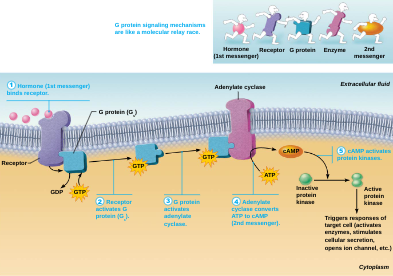
Cyclic AMP (cAMP)
hormone (first messenger) binds to receptor
receptor activates a G protein
G protein activities or inhibits effector enzyme adenylate cyclase
adenylate cyclase then converts ATP to cAMP (second messenger)
cAMP activates protein kinases that phosphorylate(adda phosphate) other proteins
PIP2
hormone-activated G protein activates: phospholipase C
splits membrane protein, PIP2, into two second messengers:
diacylglycerol (DAG) activates protein kinases
inositol trisphosphate (IP3) causes Ca2+ release from intracellular storage sites
calcium ions act as another second messenger
alters enzyme activity and channels, or binds to regulatory protein calmodulin
calcium-bound calmodulin activates enzymes that amplify cellular response
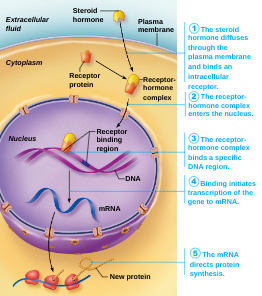
Intracellular Receptors and Direct Gene Activation
lipid-soluble steroid hormones and TH
diffuse into target cells
bind with intracellular receptors
enters nucleus and binds to region of DNA
initiate DNA transcription to produce mRNA
mRNA translate into specific protein
Ex.: metabolic activities, structural purposes, or exported from cell
Chemical Messengers
Hormones: long-distance chemical signals; travel in blood or lymph
Autocrines: exert effect on the same cells that secrete them
Paracrines: locally acting, affecting cells other than those that secrete them
Autocrines and paracrines - local chemical messengers; not considered part of the endocrine system
Endocrine System Overview
Controls and integrates:
reproduction
growth and development
maintenance of electrolyte, water and nutrient balance of blood
regulate cellular metabolism; energy balance
mobilization of body defensesBlod Sugar Regula
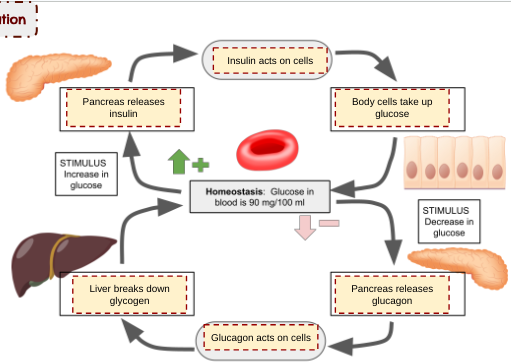
Blood Sugar Regulation (negative feedback loop)
When STIMULUS increase in glucose:
pancreases releases insulin
insulin acts on cells
body cells take up glucose
Homeostasis
When STIMULUS decrease in glucose:
pancreases releases glucagon
glucagon acts on cells
liver breaks down glycogen
Homeostasis
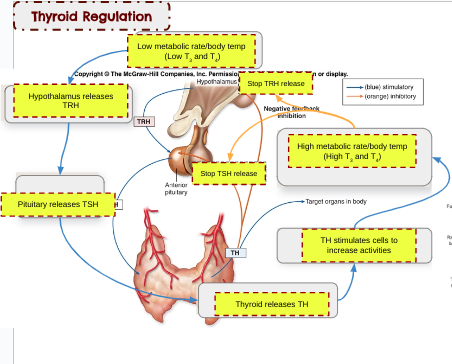
Thyroid Regulation (negative feedback loop)
low metabolic rate/body temp. (Low T3 & T4)
hypothalamus release TRH
pituitary releases TSH
thyroid release TH
TH stimulates cells to increase activities
high metabolic rate/body temp. (High T3 & T4)
stop release of TSH and TRH
Difference between circulating hormones and an autocrine/paracrines:
A hormone enters the bloodstream or lymph and binds to receptors on a distant tissue. Autocrine/Paracrine is released in fluid but acts on nearby cells or the same cells that secrete
Changes in cellular activity typically produced by hormones:
Hormones open or close ion channels to change permeability
increase enzymes synthesis
activate/deactivate enzymes
induce secretion
stimulate mitosis
Best hormone that fits description: regulate the functions of another endocrine organ; four tropic hormones
thyroid stimulating hormone (TSH), follicle-stimulating hormone (FSH), adrenocorticotropic hormone (ACTH), luteinizing hormone (LH)
Organs & Glands of the Endocrine System
Endocrine glands: pituitary, thyroid, parathyroid, adrenal, and pineal glands
Hypothalamus = neuroendocrine organ
Some exocrine and endocrine: pancreas, gonads, placenta
Other tissues & organs that produce hormones: adipose cells, thymus, and cells in walls of small intestine, stomach, kidneys, and heart
Two main classes of hormones:
Amino acid-based hormones: (water soluble)
Steroids:
synthesized from cholesterol
gonadal and adrenocortical hormones
Water-Soluble Hormones (Amino acid-based)
acts on plasma membrane receptors
act via G protein second messengers
cannot enter cell
(Epinephrine, norepinephrine, melatonin, histamine, serotonin, oxytocin, ADH, GH, TSH, ATCH, FSH, LH, PRL, MSH, insulin, glucagon)
Lipid-Soluble Hormones (Steroid Hormones)
act on intracellular receptors - directly activate genes
can enter cell
attaches to plasma proteins when circulating in blood
(aldosterone, cortisol, Androgens, testosterone, calcitriol, estrogen, progesterone, T3, T4, NO)
Target Cells
tissues with receptors for a specific hormone
Factors for Activation of Target Cells
Blood levels of hormone
Relative number of receptors on/in target cell
Affinity (strength) of binding between receptor and hormone
# of Hormones Influence on Target Cell Receptors
Up-regulation: target cells form more receptors in response to low hormone levels
Down-regulation: target cells lose receptors in response to high hormones levels
desensitizes the target cells to prevent them from overreacting to persistently high levels of hormones
Half-Life
time required for level of hormones in blood level to decrease by half
How to remove Hormones from blood
degrading enzymes
kidneys
liver
Permissiveness
one hormones cannot exert its effects without another hormone being present
ex. reproductive hormones need TH to have effect
Synergism
more than one hormones produces same effects on target cell, causing amplification
ex. glucagon and epinephrine both cause liver to release glucose
Antagonism
one or more hormones oppose(s) action of another hormone
ex. insulin & glucagon
Dwarfism, Gigantism & Acromegaly
Dwarfism: hyposecretion of GH
Gigantism & Acromegaly: hypersecretion of GH (usually caused by anterior pituitary tumor) gigantism = children, acromegaly = adults
Anterior Pituitary
growth hormone (GH)
thyroid stimulating hormone (TSH)
adrenocorticotropic hormone (ACTH)
follicle-stimulating hormone (FSH)
luteinizing hormone (LH)
prolactin (PL)
Growth Hormone (GH)
promotes growth of bones and muscle
Thyroid Stimulating Hormone (TSH)
promotes the release of thyroid hormone from the hyroid
Adrenocorticotropic Hormone (ACTH)
energy metabolism - stimulate your adrenal glands to release cortisol
Follicle-Stimulating Hormone (FSH)
Females: triggers the growth of eggs in the ovaries and gets the eggs ready for ovulation
Males: stimulates sperm production
Luteinizing Hormone (LH)
Sexual development in children fertility in adults: in women who menstruate (have periods). helps control the menstrual cycle & triggers the release of an egg from the ovary (ovulation)
Males: causes the leydig cells of the testes to produce testosterone
Prolactin (PL)
promotes milk production and the development of mammary glands within breast tissues
Posterior Pituitary
oxytocin
antidiuretic hormone (ADH)
Oxytocin
Females: stimulate uterine contractions in labor and childbirth and to stimulate contractions of breast tissue to aid in lactation after childbirth,
Males: ontracts the vas deferens to push sperm and semen forward for ejection
Antidiuretic Hormone (ADH)
causes the kidneys to release less water, decreasing the amount of urine produced
Thyroid
triiodothyronine (T3)
thyroxine (T4)
calcitonin
Triiodothyronine (T3)
hydrolyzes ATP and increases energy expenditure
Thyroxine (T4)
increases numerous enzymes that produce energy for the body
Calcitonin
inhibits (blocks) the activity of osteoclasts, which are cells that break down bone, reduces the amount of calcium in your blood
Parathyroid Gland
parathyroid hormone (PTH): raises your blood calcium, absorb more calcium from intestines from food
Adrenal Cortex
aldosterone (mineralocorticoids)
cortisol (glucocorticoids)
Androgens (gonadocorticoids)
Aldosterone (mineralocorticoids)
regulates the salt and water balance of the body (and blood pressure) by increasing the retention of sodium and water and the excretion of potassium by the kidneys
Cortisol (glucocorticoids)
increases glucose in the bloodstream, enhances the brain's use of glucose and increases the availability of substances in the body that repair tissues
Androgens (gonadocorticoids)
development of secondary sexual characteristics in men, including facial and body hair growth and voice change. Androgens also affect bone and muscle development and metabolism
Adrenal Medulla
epinephrine
norepinephrine
Epinephrine
increased vascular smooth muscle contraction, pupillary dilator muscle contraction, and intestinal sphincter muscle contraction. Other significant effects include increased heart rate, myocardial contractility
Norepinephrine
Constricts blood vessels, which helps maintain blood pressure in times of stress
Pancreas
glucagon (alpha cells)
insulin (beta cells)
Glucagon (alpha cells)
stimulates the conversion of stored glycogen (stored in the liver) to glucose, which can be released into the bloodstream
Insulin (beta cells)
Insulin is critical for transporting intracellular glucose to insulin-dependent cells/tissues, such as liver, muscle, and adipose tissue, lowering blood sugar levels
Testes Gland
testosterone: stimulates male secondary sex characteristics (muscle mass, deeper voice, facial hair. Increases bone density
Ovary Gland
estrogen
progesterone
Estrogen
Female secondary sex characteristics: breast growth, pubic hair, start menstrual cycles, regulate menstrual cycle thickening of uterine lining.
Men: errectile function
Progesterone
Females: promotes maintenance of embryo and uterus during early pregnancy, stays at high levels during pregnancy to stop menstrual cycles,
Men: builds bone mass
Pineal Gland
melatonin: timing of your circadian rhythms (24-hour internal clock) and with sleep. Being exposed to light at night can block melatonin production
Thymus Gland
thymosin: differentiation of T-lymphocytes, which provide cell-mediated immunity, promote the production of antibodies to provide humoral immunity
Diabetes Inspidus
Causes: low ADH levels
Symptoms: excessive urination and thirst
Hypo/Hyperthyroidism (Grave’s Disease)
Causes: thyroid produces too little (hypo) or too much (hyper) hormones)
Symptoms:
hyper: weight loss, irregular/rapid heartbeat, fatigue, enlarged thyroid gland, nervousness (aka. Grave’s Disease)
hypo: weight gain, fatigue, intolerance to cold, joint/muscle pain, dry skin, slow heartbeat
Diabetes
Cause: body is unable to either produce or use insulin sufficiently to regulate glucose
Symptoms: urinating often, thirsty, hungry, fatigue, weight loss
Hypo/Hypercalcemia
Cause: calcium levels in blood are too low(hypo) or high (hyper) parathyroid gland
Symptoms:
Hypo: muscle spasms, cramps, seizures
Hyper: nausea, thirst, muscle weakness, bone pain/fragile
High/Low Blood Pressure Cause
Cause: adrenal gland failure, too little/much intake of aldosterone cortisol
Symptoms:
high: headaches, chest pain, nausea, blurred vision
low: dizzy, fainting, blurred, nausea, sleepy, weak
Child Labor (positive feedback loop)
Gland: Pituitary
Hormones: Oxytocin (stimulates contractions)
baby presses on cervix
neurons send a signal to the brain to release oxytocin form the pituitary gland
oxytocin increases uterine contractions
pushes baby closer toward the cervix
repeats until the baby is birthed
