Endocrine System
Glands:
Hormone Release:
blood levels of hormones
Negative feedback control (body adjust if out of range/setpoint until it doesn’t need to)
hormone release triggered by:
Endocrine gland stimuli
Nervous system

Positive feedback:

Endocrine Gland Stimuli:
Endocrine glands are stimulated to synthesize and release hormones in response to one of three stimuli
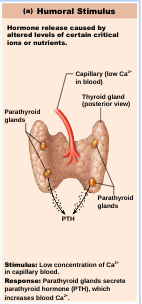
Humoral stimuli: changing blood levels of ions and nutrients directly stimulate secretion of hormones
Ex: Ca2+ in blood
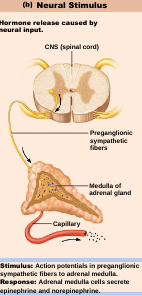
Neutral stimuli: nerve fibers stimulate hormone release
nervous system fibers stimulate adrenal medulla to secrete catecholamines (epi & norepi)
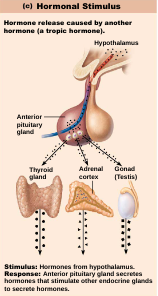
Hormonal stimuli: hormones stimulate other endocrine organs to release their hormones
Hypothalamic hormones stimulate release of most anterior pituitary hormones
Anterior pituitary hormones stimulate targets to secrete additional hormones
Hypothalamic-pituitary-target endocrine organs feedback loop
hormones from final target organs inhibit release of anterior pituitary hormones
 Nervous System Modulation:
Nervous system adjusts to hormone levels
modify stimulation/inhibition of endocrine glands
Can override normal endocrine controls
Ex: severe stress, hypothalamus and nervous system override insulin to allow blood glucose levels or increase
prepares body for “fight or flight”
Target Cell Specificity:
Target cells must have specific receptors to which hormone binds
ex: ACTH receptors on certain cells of adrenal cortex, but thyrozin receptors are found on nearly all cells of body
Target Cell activation depends on three factors:
blood levels of hormone
relative number of receptors on/in target cell
Affinity (strength) of binding between receptor and hormone
Amount of hormone can influence number of receptors for that hormone
Up-regulation: target cells form more receptors in response to low hormone levels
Down-regulation: target cells lose receptors in response to high hormone levels
desensitizes the target cells to prevent hem from overreacting to persistently high levels of hormone
Half-Life, Onset, And Duration of Hormone Activity:
hormones circulate in blood either free or bound
steroids and TH attached to plasma proteins
all other circulate without carriers
COncentration of circulating hormone reflects:
rate of release
speed at which it is inactivated and removed
Hormones can be removed blood by:
degrading enzymes or
kidneys or liver
Half-life: time required for level of hormone in blood level to decrease by half
Action of Hormones:
Hormone action on target cells:
alter plasma membrane permeability and/or membrane potential -open or close ion channels
stimulate synthesis of enzymes or other proteins
activate or deactivate enzymes
induce secretory activity
stimulate mitosis
Two main second-messenger systems:
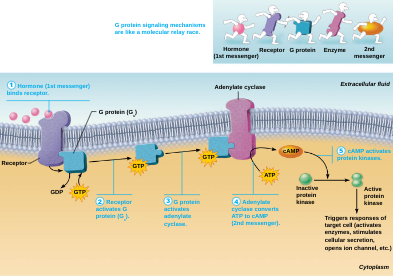
Cyclic AMP (cAMP) signaling mechanism: ex. epinephrine - water soluble
hormone (first messenger) binds to receptor
receptor activates a G protein
G protein activities or inhibits effector enzyme adenylate cyclase
adenylate cyclase then conversation ATP to cAMP (second messenger)
cAMP activates protein kinases that phosphorylate (adda phosphate) other proteins
PIP2 - calcium signaling mechanism (phosphatidylinositol 4,5-bisphosphate): ex. angiotensin pathway - regulates blood press.
hormone-activated G protein activates: phospholipase C
splits membrane protein, PIP2, into two second messengers:
diacylglycerol (DAG) activates protein kinases
inositol trisphosphate (IP3) causes Ca2+ release from intracellular storage sites
calcium ions act as another second messenger
alters enzyme activity and channels, or binds ot regulatory protein calmodulin
calcium-bound calmodulin activates enzymes that amplify cellular response
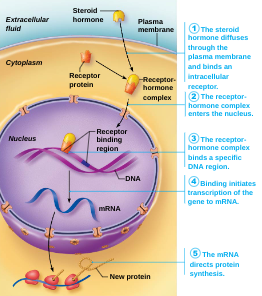
Intracellular Receptors and Direct Gene Activation:
lipid-soluble steroid hormones and TH
diffuse into target cells
bind with intracellular receptors
enters nucleus and binds to region of DNA
initiate DNA transcription to produce mRNA
mRNA translated into specific protein
Exs: metabolic activities, structural purposes, or exported from cell
Chemical Messengers:
Hormones: long-distance chemical signals; travel in blood or lymph
Autocrines: exert effect on the same cells that secrete them
Paracrines: locally acting, affecting cells other than those that secrete them
Autocrines and paracrines - local chemical messengers; not considered part of the endocrine system
Anterior Pituitary Hormones:
Growth Hormone (GH)
also called somatotropin as it is produced by somatotropic cells
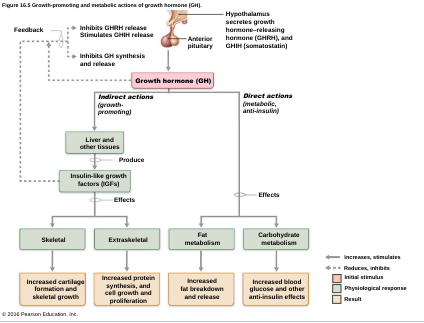
has direct actions on metabolism and indirect growth-promoting actions
direct actions on metabolism
glucose-sparing actions decrease the rate of cellular glucose uptake and metabolism (anti-insulin effects)
triggers liver to break down glycogen into glucose
increases blood level so fatty acids for use as fuel and encourages cellular protein synthesis
Indirection actions on growth:
GH triggers liver, skeletal muscle, and bone to produce insulin-like growth factors (IGFs)
IGFs then stimulate:
cellular uptake of nutrients used to synthesize DNA and proteins needed for cell division
formation of collagen and deposition of bone matrix
GH
GH stimulates most cells to enlarge and divide, but major targets are bone and skeletal muscle
Regulation of Secretion:
GH release or inhibition chiefly regulated by hypothalamic hormones on somatotropic cells
Growth hormone-releasing hormone (GHRH) stimulates GH release
> triggered by low blood GH or glucose, or high amino acid levels
Growth hormone-inhibiting hormones (GHIH) somatostatin) inhibits release
>triggered by increase in GH and iGF levels
Ghrelin (hunger hormone) also stimulates GH release
Homeostatic Imbalance:
hypersecretion of GH is usually caused by anterior pituitary tumor
in children results in gigantism
can reach heights of 8 feets
in adults results in acromegaly
overgrowth of hands, feet, and face
Hyposecretion of GH
in children results in pituitary dwarfism
may reach heights of only 4 feet
in adults usually cause no problem