W2 5(a) Food production
 Call Kai
 Learn
Learn Practice Test
 Spaced Repetition
 Match
Match Flashcards
 Knowt Play
1/18

There's no tags or description
Looks like no tags are added yet.
Name | Mastery | Learn | Test | Matching | Spaced | Call with Kai |
|---|
No analytics yet
Send a link to your students to track their progress
19 Terms
Explain the use of fertilisers in increasing crop yield. (5)
M1: (increase) growth / yield of plants / crops;
M2: fertiliser contains ammonium / nitrates; (Ignore nitrogen)
M3: amino acids / protein / DNA;
M4: magnesium for chlorophyll / chloroplasts; (Allow other named mineral and function e.g., phosphates for ATP / DNA / calcium for cell walls / sulphates for protein / eq)
M5: crops deplete soil minerals / ions / salts / soil lacks minerals / ions / salts / named mineral / minerals need to be replaced / eq;
M6: organic fertiliser / manure retains water;
Define the term pesticide. (1)
M1: chemical / solution / eq that kills / destroys / eq pests / animals / plants / insects / eq;
Give two alternatives to the use of chemical pesticides. (2)
M1: use biological control;
M2: use nets / exclude insects from plants; (Allow: introduce consumer of insect / ladybird for aphids)
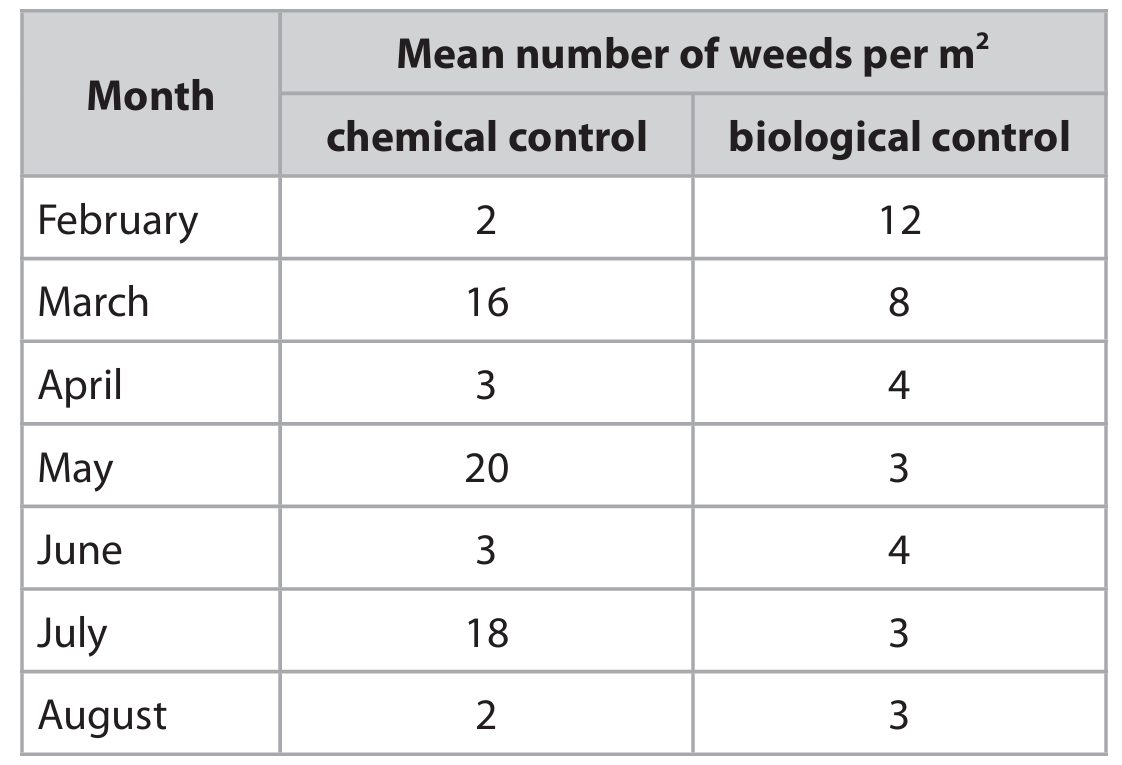
Explain why using a biological control could be better than using a chemical control. (3)
M1: BC (biological control) numbers decline slower / CC (chemical control) numbers lower at start / eq;
M2: BC stays low / less variable / CC go up and down / eq;
M3: BC no need to reapply / insects reproduce / eq;
M4: BC less risk of pollution / eq;
M5: BC less risk of resistance / eq;
M6: BC is specific / not affect (other) food chains / eq;
M7: BC no bioaccumulation / eq; (Allow biomagnification)
State the word equation for anaerobic respiration in yeast. (1)
M1: glucose »»»»» ethanol + carbon dioxide;
Explain why bread dough rises when yeast is added. (3)
M1: (yeast) respires / fermentation / respiration;
M2: producing carbon dioxide; (Reject: oxygen produced)
M3: (carbon dioxide) bubbles become trapped / stuck / inflate in dough;
Describe and explain the effect of increasing temperature from 25°C to 35°C on the rate of yeast respiration. (6)
At 25°C
M1: (kinetic) energy lower / molecules move slower / eq;
M2: fewer collisions / fewer enzyme substrate complexes / further away from enzyme optimum / eq;
M3: less carbon dioxide / gas released / eq;
At 35°C
M4: enzymes not denatured;
M5: substrate fits into active site / active site shape not changed / eq;
M6: so respiration continues / more carbon dioxide produced / yeast cells are alive / eq;
yeast denatures at around 49°C+
Describe an investigation to determine which type of yeast is best for producing low alcoholic beer. (6)
C: use yeast A and yeast B / use (both) varieties of yeast;
O: same concentration of yeast / same number of yeast (cells) / same mass of yeast / same volume of yeast / eq; (Ignore: amount)
R: repeat (for each species);
M1: measure / determine / test concentration / percentage / content (of alcohol in beer);
M2: stated time;
S1: add same mass / volume / concentration of starch / grains / barley / sugar / carbohydrate / glucose / maltose / malt / wort / substrate; (Ignore: amount / water)
S2: control temperature / pH / oxygen / allow not far to diffuse ref to anaerobic respiration;
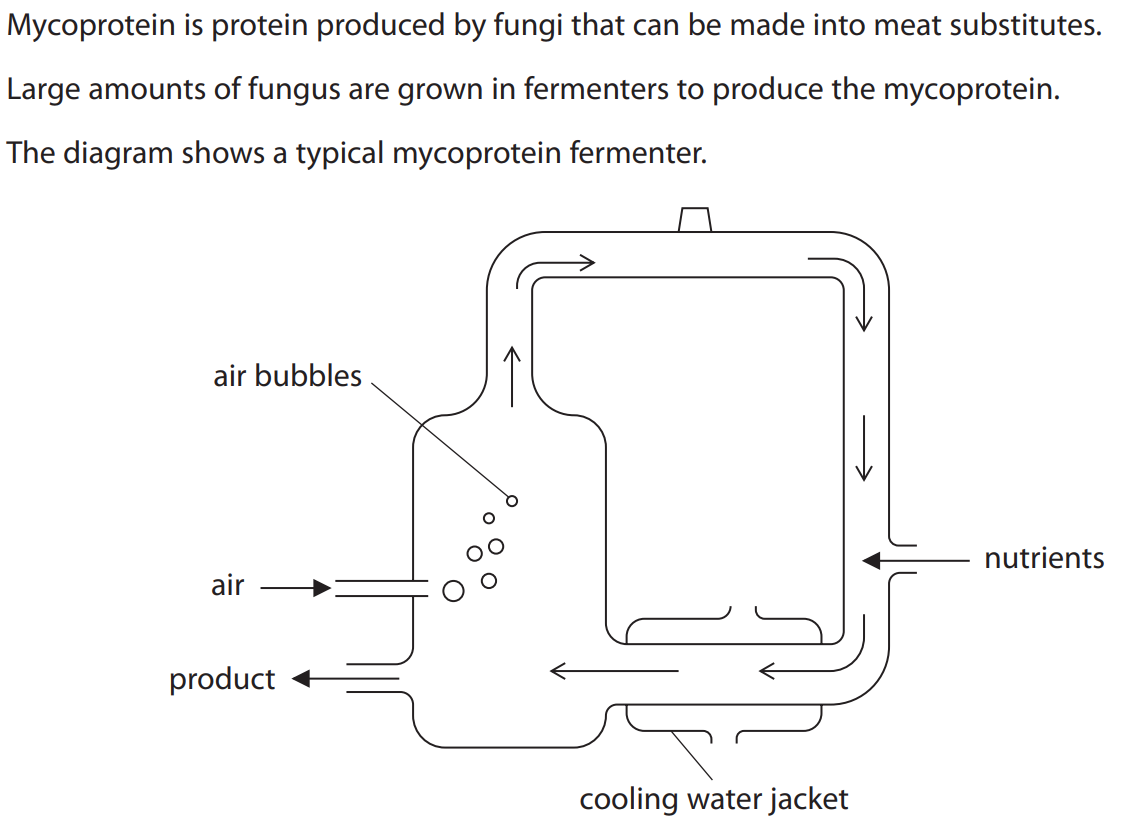
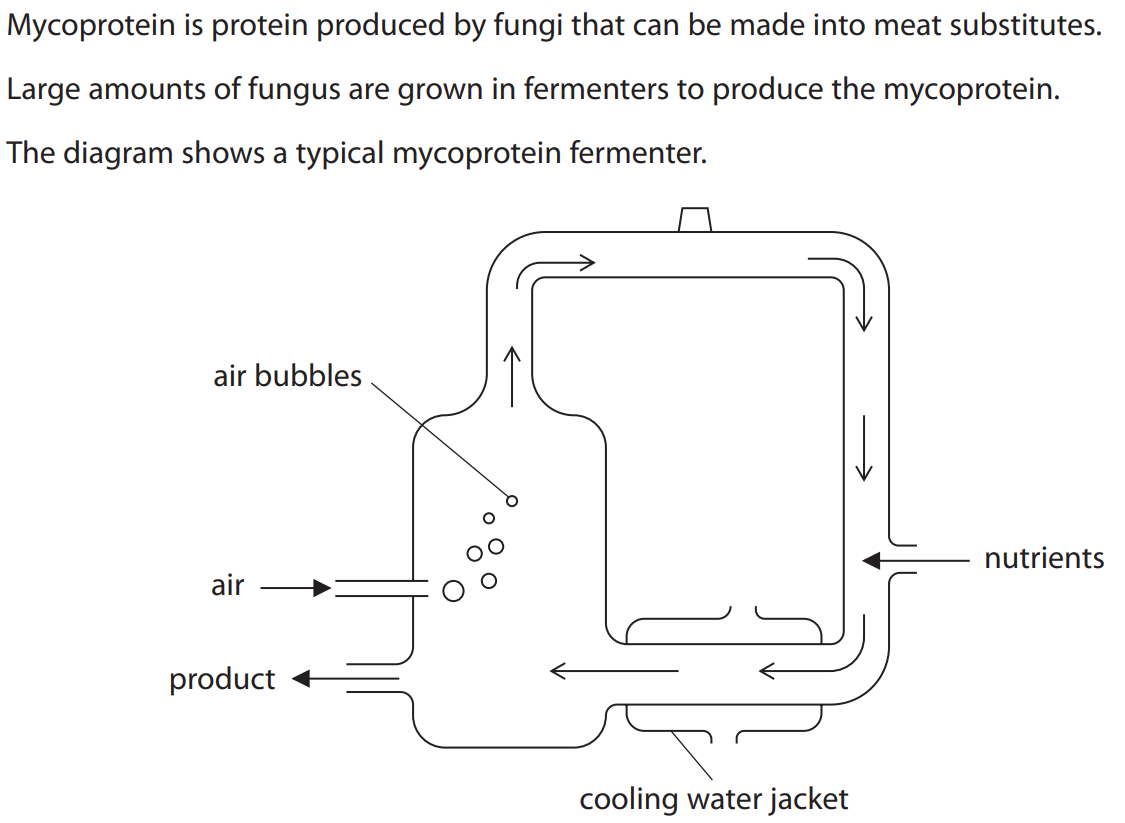
Explain why air is bubbled into the fermenter during the production of mycoprotein. (2)
M1: oxygen is required;
M2: for respiration;
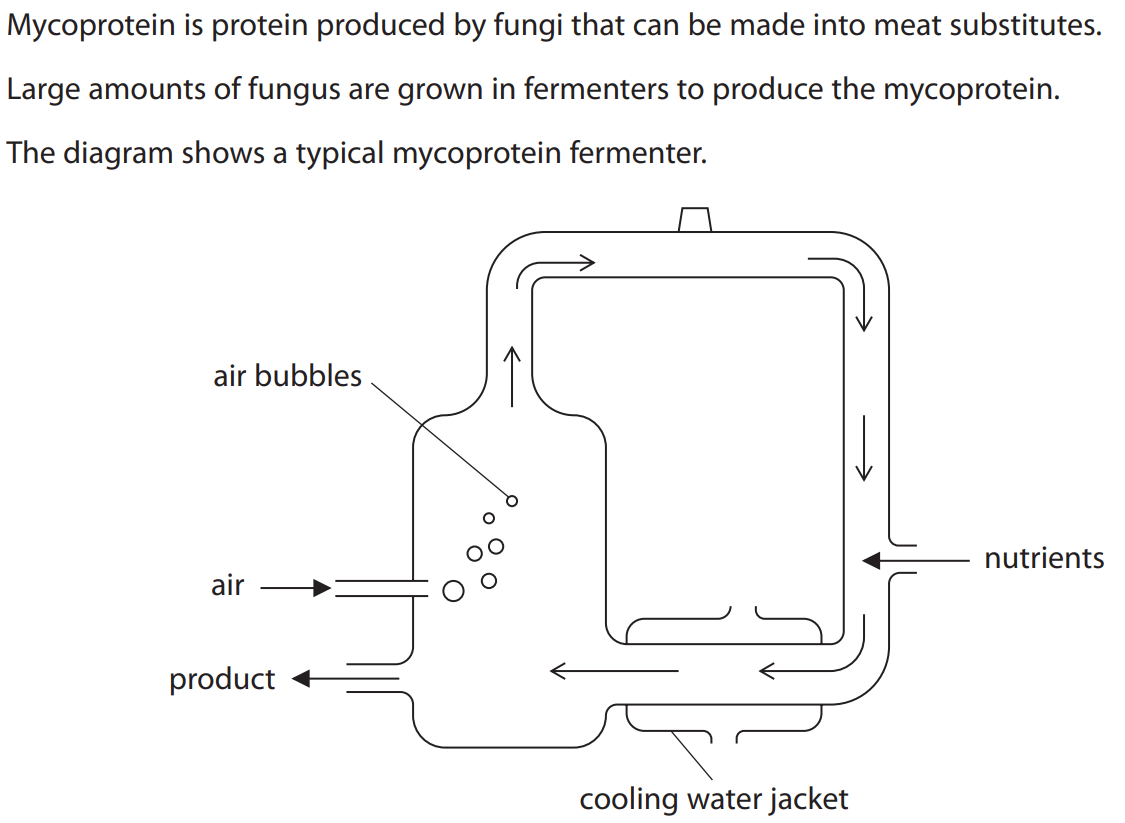
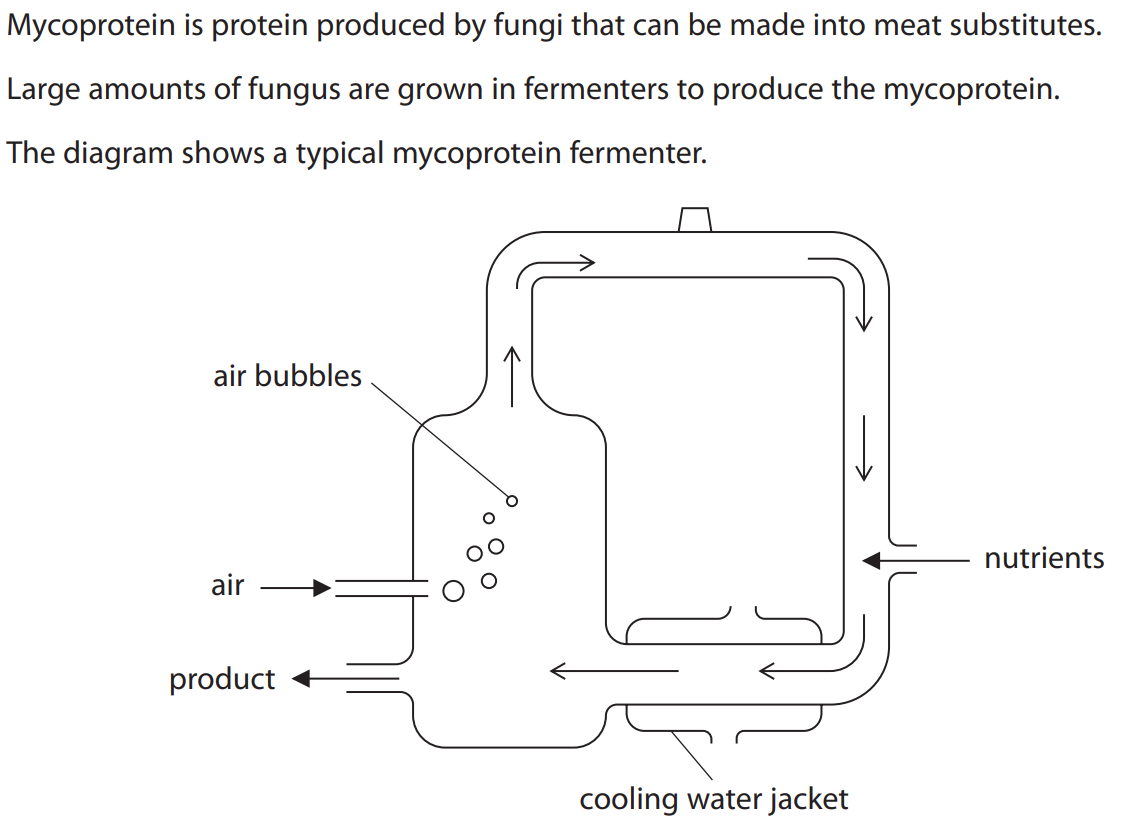
Explain why the fermenter is cleaned using steam before the fungus and nutrients are added. (3)
M1: to kill pathogens / other microorganisms / sterilises the fermenter / eq; (Accept: remove bacteria)
M2: to prevent contamination (of the product) / competition;
M3: steam condenses to water so does not affect product / taste / flavour / eq;
Explain how fish farmers can increase the yield of fish on a fish farm. (6)
M1 (Method): keep adults from young / keep sizes apart / eq;
E1 (Explanation): control intraspecific competition / large fish eat small fish / prevent young being eaten / eq;
M2 (Method): keep different species apart / use nets / use cages / eq;
E2 (Explanation): prevent fish being eaten / control predation / control interspecific competition / eq;
M3 (Method): antibiotics / vaccination / prevent overcrowding;
E3 (Explanation): control disease / infection; (Ignore: prevent disease if linked to feeding/water quality)
M4 (Method): selective breeding / use growth hormones / use GM fish;
E4 (Explanation): for named desired quality such as mass / yield;
M5 (Method): use wrasse / insecticide / pesticide / biological control / eq;
E5 (Explanation): to prevent / remove / kill parasites;
Note: For a 6-mark "Explain" question, you usually need a mix of Methods (M) and Explanations (E).
State two ways to reduce intraspecific predation on a fish farm. (2)
M1: keep sizes / ages / sexes apart; (Ignore: species / separate by nets alone)
M2: provide sufficient food;
Intraspecific competition Competition between members of the same species.
Intraspecific and Interspecific DIFFERENCE
Intraspecific competition Competition between members of the same species.
Interspecific competition Competition between members of different species.
Discuss the advantages and disadvantages of using antibiotics on fish farms. (4)
A1: prevent disease / infection; (Ignore: kill bacteria / pathogens)
A2: increase fish growth / yield;
D1: (antibiotic) resistance (in bacteria);
D2: antibiotic / resistant bacteria into humans;
Note: A is advantage and D is disadvantage
Describe the methods used by fish farmers to increase the yield of fish. (6)
M1: separate different species to prevent predation / use nets to prevent predation / eq;
M2: separate different sizes / ages to prevent predation / eq;
M3: feed protein rich food / feed (frequently) in small quantities (to prevent accumulation of waste) / eq; (Note: not just "control diet" unqualified)
M4: use antibiotics / fungicides to reduce disease / eq;
M5: (filter water to) remove faeces / waste / algae / remove dead fish / eq;
M6: aerate water / use pumps to maintain oxygen levels / eq; (Note: not just "clean the water" unqualified)
M7: use selective breeding / GM (to maximise yield) / eq;
Describe an experiment to investigate the effect of the build-up of faeces on fish growth. (6)
C: plus and minus faeces / range of faeces;
O: same species of fish / same age / same mass / same size / same sex;
R: repeat investigation / use more than one tank / use more than one fish (per tank) / same number of fish (per tank);
M1: measure mass / weight / length; (Ignore: number that survive / size / growth)
M2: same stated time period greater than one day;
S1: same type of food / same frequency / same mass of food / same diet / same protein / same number of pellets / eq; (Allow: amount)
S2: same oxygen / same temperature / same light / same volume of water/tank / same size of tank / eq; (Ignore: same quality of water / pH / type of faeces)
Explain how fish farms can reduce environmental pollution within their farming method and increase profits. (5)
M1: waste food / faeces eaten / removed (by lobsters and crabs) / eq; (Accept: can sell crabs / lobsters / seaweed)
M2: less decomposition / fewer decomposers / fewer bacteria;
M3: less disease / infection (due to fewer bacteria);
M4: less (bacterial/decomposers) respiration; (Accept: more fish/animal respiration)
M5: more oxygen in the water / less removal of oxygen / seaweed releases oxygen;
M6: nitrate / minerals / nutrients / carbon dioxide removed by seaweed; (Accept: fish provide CO2 for seaweed)
M7: less algae growth / algal bloom / eutrophication / eq;
M8: more products to sell;
M9: no need to buy food for lobsters / crabs / no need to buy minerals for seaweed;
answer the whole q
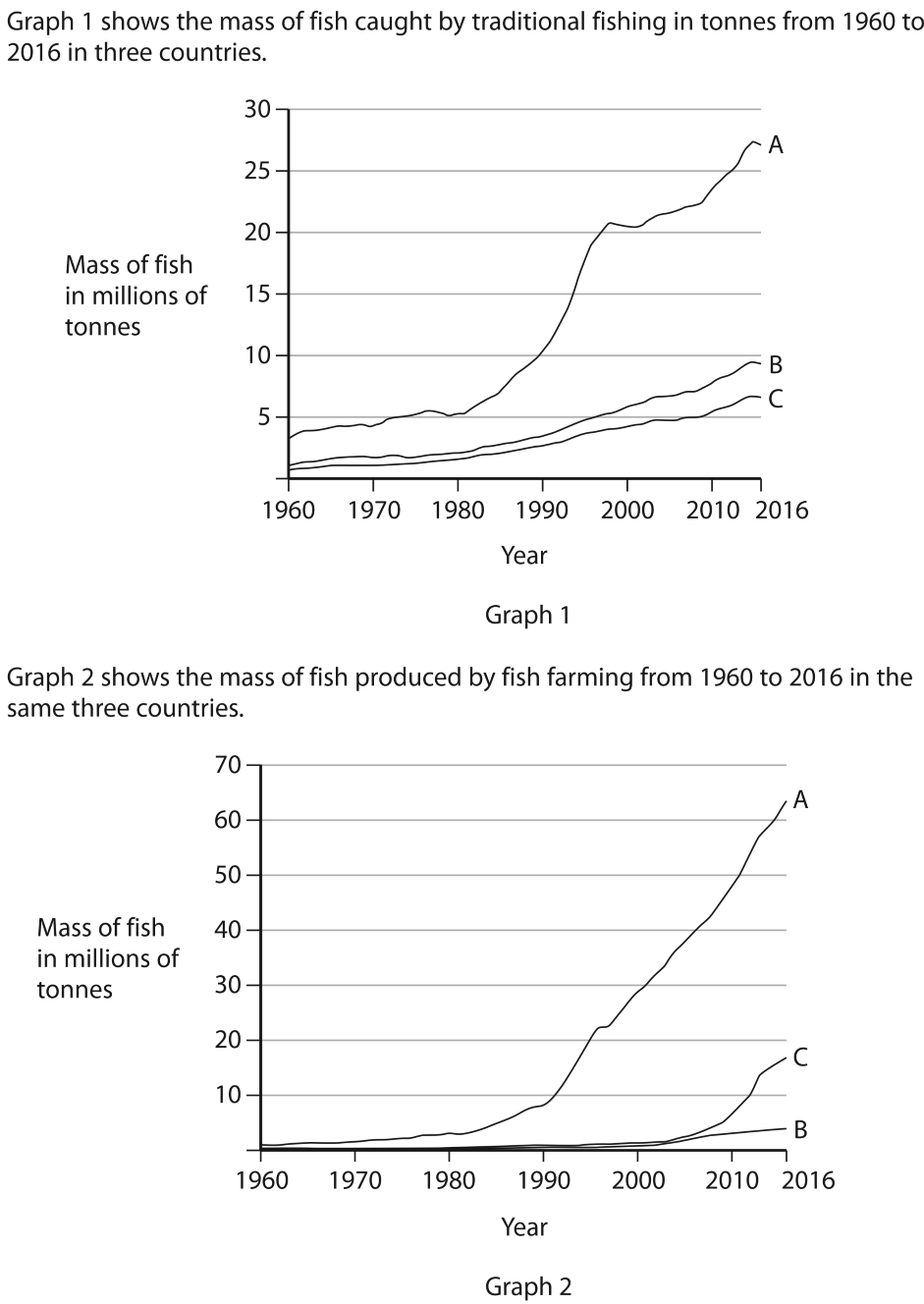
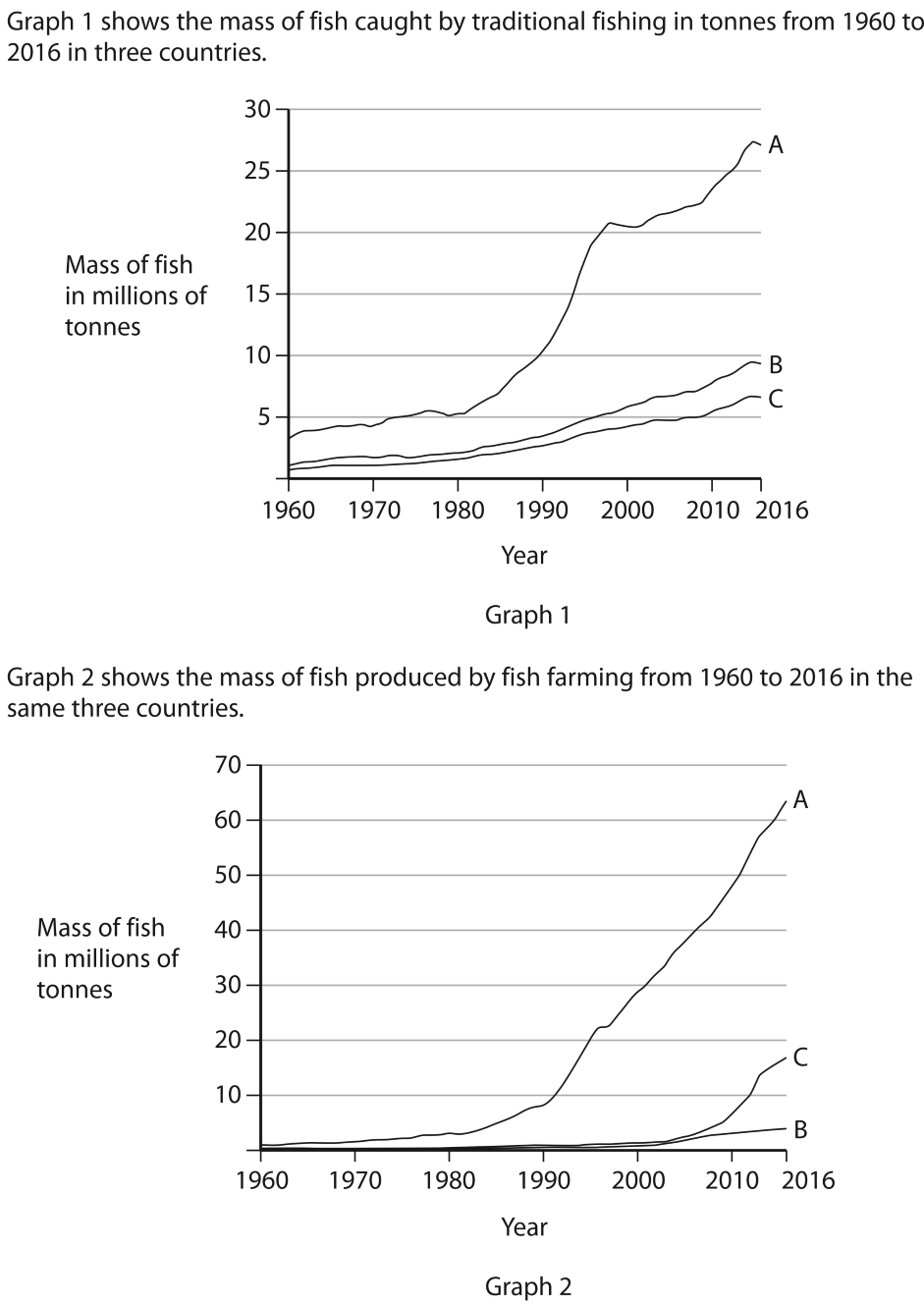
Compare the data for fish caught by traditional fishing and fish produced by fish farming between 1960 and 2016. (5)
Fish Caught / Traditional Fishing (Graph 1)
M1: increased (in all countries);
M2: increased by almost same proportion in each country;
Fish Farming (Graph 2)
M3: increase in farming (in all countries);
M4: increased most in A;
M5: higher growth in C than B;
Comparison
M6: more tonnes from farming (Graph 2) than catching in A / more tonnes from farming than catching in C / less in B;
M7: A has the highest for both (caught and farmed) / eq;
Other / Limitations
M8: no information on fish species / type of fish;
M9: no information on sustainability / fish supply / eq;
M10: data not expressed as per capita / eq;
Evaluate the use of keeping farmed animals (such as livestock or fish) indoors rather than outdoors. (5)
M1: less heat loss if indoors / eq;
M2: depends upon outside temperature / different in hot country;
M3: but only small / 5% difference / eq;
M4: animals move around less;
M5: more energy for growth / making meat / eggs / milk / less energy used to keep warm / eq;
M6: diseases easier to spread;
M7: protected from predators;
M8: ethical objection / cruel / quality of life idea / eq; (Ignore: natural)
M9: eat variety of food outdoors / taste / eq;

