(7.3-7.9) High Renaissance, Baroque, and New Spain Context
 Studied by 0 people
 Call Kai
 Learn
Learn Practice Test
 Spaced Repetition
 Match
Match Flashcards
 Knowt Play
1/79

There's no tags or description
Looks like no tags are added yet.
Name | Mastery | Learn | Test | Matching | Spaced | Call with Kai |
|---|
No analytics yet
Send a link to your students to track their progress
80 Terms
1600-1750 CE
Southern Baroque period
→ the age of reformation in Italy and spain
Protestant, pagan religions, materialistic, nationalism/colonialism, rationalism, scientific inquiry
Four perceived threats to church: QUIZ
The _________ movements at home
The _______ ________ of Africa, Asia and the Americas abroad
The ___________ worldview due to __________/___________
The forces of __________ unleashed by free _______ inquiry
The Counter Reformation agenda
“salvation could not be obtained only through the senses or reason, but imaginative leap of faith”
Art, architecture and sculpture should be like “a miraculous apparition”
1492
Expulsion of Jews and Moors from Spain
1534
Counter-Reformation begins _____ CE
Counter Reformation
a movement within the church to bring about a revival of religious faith as a way to fight the Protestant Reformation begun by Martin Luther in 1517
1542
____ CE Universal Inquisition established- effort to censor printed matter
1545; 1545-1563 CE
___ CE Council of Trent convened from ____-____ to undertake reform and reaffirm dogma within the church
religious orders
Various ______ ______ established as part of the Counter Reformation
On the Revolution of the Heavenly Orbs
New discoveries in Science:
1543 Copernicus ____________________________ ____ _____
Galileo investigations raised unsettling questions about man’s place in the universe.
global exploration
New discoveries in Science:
discoveries of cultures in New World challenged European man’s belief that he was the center of this world’
Thirty Years War 1618-1648
begins as a religious conflict but soon involves most of Europe results in nation building. Treaty of Westphalia grants religious freedom across Europe
1623 CE; Bernini
Pope in ____ gave young _______ the demanding task of designing an enormous bronze baldocchino- or canopy, for the high altar of St. Peters.
architecture and sculpture
Baroque artists desire to combine __________ and ________
Concave and Convex
Either sides of the portal of San Carlo serve as symbols of rich relationships of ______ and ________ undulating structure
tenebrism
forms emerge from a dark background into a strong light often falls from a single light source outside the painting-the effect of a modern spotlight.
Characteristics of Caravaggio’s paintings (Baroque)
religious, dramatic, intense forms and poses / expressions, strong effects of light and color
→creates use of extreme light and dark, almost like a spotlight effect
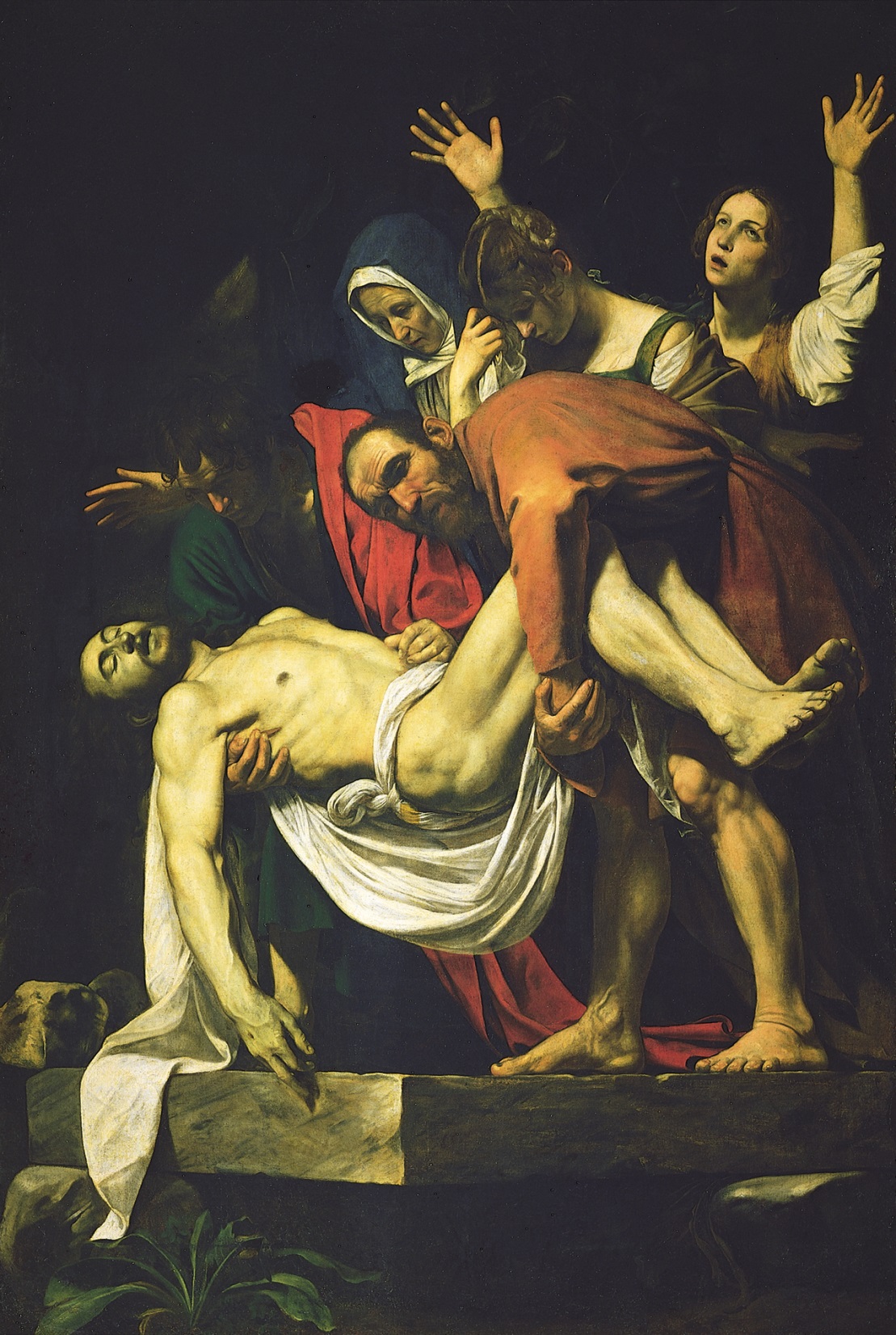
Caravaggesque
influenced Tenebrism and naturalism
1623 CE; King Philip IV
In ____- He (Valaquez) moved to Madrid where he became
court painter to
Young ____ ______ __ a patron until Velazquez’s death 1660 Comfortable position
1593 CE; Naturalism; Carvaggio
arrived in Rome ____ (20 yrs old) born in Milan
His subjects- still lives & low life scenes featuring fortune tellers, street urchins dressed as musicians or Mythological figures. figures in these paintings tend to be large, brightly lit.
most commissions after 1600 were religious (mixed reactions)
powerful, sometimes brutal _______ was rejected by patrons
emotional power of Baroque _________ combined with solemn
which artist is being described?
Theatrical, Time and motion, Twisting and turning, Tenebrism, Trompe l’ oil,Trent
What are the 6 T’s of Baroque Art?
→ distinctive characteristics of Baroque style
Asymmetrical, movement, lighting, dramatic
Most typical style of 17th century Europe was the Baroque Style, which was characterized by:
___________ compositions
Powerful effects of ________
Strong _______
__________ interpretations of subject matter.
Baroque; Derogatory
_______seems to have first been used to describe works 17-18th centuries when it became a ______ term for works that were considered-strange-irregular-irrational
Intellectual and Scientific Activity in Europe
Explosion of printed information followed the invention of movable type in the 15th century led to increasing levels of literacy.
By end of 17th almost ½ of adult male population of Europe was literate.
Many European capitals developed academies and learned institutions in science, which promoted advancement of knowledge.
Major figures in scientific theory / invention-Bacon, Galileo, Newton, Harvey, Hobbes, Keppler, Locke
In literature, poetry, drama found new more emotional expressiveness-Milton, Corneille, Moliere, Racine, Shakespeare
Italy
____-Still controlled by local city-states largest Milan / Venice most powerful political force in Italy was the papacy in Rome, 17th century flourished under ambitious popes.
Catholic
Popes rebuilt Rome with Baroque monuments, fought Protestantism & reasserted the authority of the ______ Church
European Baroque; governments, commercial, trading
Europe had become more prosperous in the 16th century, result from wealth from the Americas & new markets.
European wealth continued to increase 17th century in
Stable __________
Strong ________ & _____
source; light; light source
Caravaggio never included a ______ for the strong _____ that illuminated his subjects, realizing the mystery and drama that an unknown _____ ______ can convey.
1494; Savonarola
____CE Medici family is exiled from Florence by __________, signalling a general exodus of artists from Florence to Rome
16th century Europe
1506
New St. Peter’s begun by Pope Julius II
16th century europe
1517
____CE Luther posts his 95 Theses- Protestant Reformation begins.
16th century Europe
1534
Henry VII separated English church
16th century Europe
1527
Rome invaded (and sacked) by French and Spanish troops, ending its artistic preeminence
sacked by Charles V→ this ended the golden age of High Renaissance Rome
Rome
____as cultural capital
becomes the new Athens after expulsion of the Medici’s in Florence
16th century
Papal power
______ ______
Pope Julius II and Leo X- political as well as cultural ambitions
The artist as genius
___________________
Michelangelo, Raphael, da Vinci, Bramante → artist as hero, inspired, ‘divine’
16th century Europe
monumental ambition and scale
_______________________
-large scale painting, sculpture programs and architecture
16th century europe
Neoplatonic thought
___________- the Philosophical Basis of Michelangel’’s Sculpture and Painting
Levels in his design for Julius II’s tomb and the organization of the Sistine Chapel ceiling program.
16th century Europe
Art as metaphor
__ __ ________ for:
the ambitions of their patrons
the ego of the artist/creator
philosophical ideas
humanism
The _____________ of the 15th century slowly gave way to a new spirit of discovery that led Europeans to investigate the natural world around them and to explore lands unknown to them.
16th century Europe
(what century and where)
was an age of social, intellectual, religious and geographic transforming European culture.
travel became more common
Publication in translation of ancient books enabled people to educate and learn to read-much more than in earlier centuries and artists and their work became mobile
One tragic consequence of the “international” Reformation was the destruction of religious art.
Protestant Reformation
In some areas “Protestants smashed sculpture and stained glass windows and washed religious paintings to rid the churches of these images.
Many artists turned to portraiture and other secular subjects
These reformers called Protestants because they protested against the practices and beliefs of the catholic church.
Succeeded in permanently breaking away from Rome.
One factor in their success was the support of powerful rulers
By end of 16th century, some form of Protestantism prevailed throughout Northern Europe.
1560’s Italy, Spain, Ireland, Poland and Portugal were still entirely Catholic. France, S. Germany, Austria and Hungary also remained predominantly Catholic
Counter Reformation
To counter the Protestant Reformation, the Roman catholic hierarchy mid 16th formulated a program that included guidelines for religious art.
They were scrutinized carefully for profanity and bishops were to educate people not to view images as having power
Art became a powerful weapon of propaganda
Leonardo Da Vinci
Born in a Tuscan village Leonardo was 12 when his family moved to Florence.
He apprenticed w/painter sculptor Verrochio until 1476
After he worked a few years on his own, he spent much of his time in Milan on military & civil engineering projects for the Sforza court.
At the Duke Ludovico Sforza’s request. Leonardo painted one defying monuments of Renaissance art
The Last Supper in the dining hall monastery of Santa Maria delle Grazie between 1495-1498 in Milan
Raphael
Arrived in Florence from Urbino had studied with Perugino
Raphael quickly became successful in Florence he left Florence in 1508 for Rome where Pope Julius II put him to work immediately decorating his apartment.
In the Library-Raphael painted the four branches of knowledge-Religion (the Disputa) Philosophy (the School of Athens) Poetry and Law
The shape of the walls and vaults determined the composition of the paintings.
Michelangelo
Was born in the Tuscan town of Caprese grew up in Florence, and spent a long career working in Rome.
At 13 he studied fresco painting
He soon joined the household of Lorenzo the Magnificent, head of Medici family where he came in contact w/ the Neoplatonic philosophers and studied sculpture w/ Govanni pupil of Donatello.
Bourgeois
middle class/ citizen of town
1568
Flanders broke with Spain _____CE and joined together King of Spain & United Republic, the Vatican, Holy Roman Empire, and France (peace negotiations)
Amsertdam
was true center of power because of its sea trade
was a center of commerce and arts in the 17th century because of its wealth tolerance, and status as a financial hub. Due to its role in international trade and banking, ________ became one of the wealthiest cities in Europe.
Differences between Southern Baroque and Northern Baroque
In Northern Baroque art, both individuals and groups commissioned artists to create paintings that held modern taste, such as Landscape, portraits and genre paintings. Subjects popular in Southern Baroque art such as religious ecstasies, great myths, and historical subjects were avoided in the North. Similarly, Northern Dutch homes were small with limited wall space. so artists designed their art to be hung in a more intimate setting (scaling back the grandeur)
Dutch portraits
PORTRAITS-Dutch Baroque portraiture took many forms, ranging from single portraits to people in elaborate costumes.
Portraits success-accurate portrayal of settings, costumes, facial features often idealizing to convey personalities
Group portraiture documented the membership of corporate organizations (Dutch specialty)
Role of the city of Amsterdam in the 17th century
Became financial center of the continent with the founding of the Bank of Amsterdam
It initiated transfer banking and allowed a wider distribution of wealth through broader and easier acquisition of merchandise
Equally Dutch seamanship also facilitated and increased the Dutch economy
Rembrandt
Important painter working in Amsterdam in 17th century and known as one great artists of all time.
Born to a miller and his wife sent to University of Leiden age 14, but dropped out few months to study painting. He apprenticed to a Leiden artist, then briefly worked in Amsterdam
Painted religious, mythological paintings, landscapes and figure studies, but primary source of income was portraiture
Studied Peter Paul Rubens work (selected image #86) and incorporated some of his compositional ideas
Flemish Baroque
17th century Flanders returned to direct Spanish rule and remained predominantly Catholic
Antwerp-capital city & major arts center artists of talent flourished there, bringing commissions from foreign patrons.
Baroque Art of (Flanders-Netherlands) retained close connections to the Baroque art of Catholic Europe
Dutch schools of painting developed their own subjects & styles
Dutch Genre Paintings
term used to categorize paintings depicting scenes of everyday life, including domestic interiors, street scenes, inn scenes
Camera Obscura
An early camera-like device used in the Renaissance and later for capturing images of nature. Made from a dark box (or Room) with a hole in one side (sometimes fitted with a lens). It operates when the bright light shines through the hole, casting an upside down image of an object outside onto the inside wall of box. This image can be traced.
Optical distortions highlights illusion of brilliant light
Jan Vermeer
An innkeeper and art dealer who painted only for local patrons
Meticulous in his technique with unique compositional approach and painting style.
produced small # of works
Frequently scenes of women in their homes, alone or with a servant who are occupied with some activity (genre)
Such as, writing, reading letters, playing music,
also produced history paintings views of Delft
He may have experimented with the mechanical device known as camera obscura -an early camera like device
Dutch Still Life Painting
Realistic still-life painting needs no background in art to appreciate the ability of artist
Netherlands are specialists in still-life painting
16th and 17th centuries art theorists largely ignore still-life painting and landscape genre and portraits
These types of art were considered unimportant because they were merely copies from nature
A painters most significant accomplishment was a history painting-conception, design and execution that demanded intellect and academic training
Still life, landscape, portrait and genre paintings were considered less valuable than history paintings
Rachel Ruysch
Floral still life-she is ranked among the greatest still-life painters in the Netherlands, and her international reputation continued after her death.
At age of 15 and by 18 was active as a painter in same genre
her father was professor of anatomy and botany and his collection of scientific specimens may have inspired her to include the insects found so often in her paintings
Relationship between the Counter Reformation agenda and 17th century art
The Counter Reformation began in response to the Protestant Reformation, with the goal of a revival of religious faith. Art during the 17th century became a vessel for religious revival and a tool used by religious orders to spread their ideas. Therefore, the Counter Reformation led to the production of dramatic Baroque religious images, such as the”Ecstasy or Saint Teresa” by Bernini/
Peter Paul Rubens
Spent his youth in poverty and decided late teens to become an artist.
accepted into painters guild at 21- showing his energy, intelligence, and determination
studied Michelangelo and Titian Italian renaissance
he also operated a large workshop in Antwerp that produced 2,000 paintings
his assistants produced some of his paintings but he finished works fro important clients
Exploration of the new world
____________________- and the emergence of Britain as the dominate maritime power
later 18th century
Colonialism
___________-the beginning of the colonization of Africa, India and the South Seas
later 18th century
The Age of Enlightenment
great advances in the pure and natural sciences; the decline of the Church
Later 18th century
Rise of the Academics
_________________-theoretical writing and training of the artists in Royal Academies
Beginning of the Democratic movements
____________________________________-growing Democratic movements and revolutions
later 18th century
New Archaeological Discoveries
Pompeii (1748) led to Neoclassicism
Decline of Monarchies
_________________-French Revolution of 1789 and the decline of absolute monarchies in Europe
Beginnings of the Industrial Revolution
________________-begins with the invention of steam engine and electricity
later 18th century
European Monarchies in the 18th century
Beginning of 18th century-most European countries were governed by absolute monarchies
By the end of the 18th century absolute monarchies had been overturned in France-New ideas of government for the people replaced the concept of absolute monarchy
RULERS who believed that THEIR POWER and AUTHORITY from God. *Artwork from that time are evidence of the extreme wealth and frivolous attitude of these rulers.
Rococo
derived from the French rocaille (rock-work on rubble) first used to designate style of French art-charm, finesse hallmarks of social behavior (costumes)
_____’s light ornamental elegance complemented aristocratic values and tastes
18th century Art is Europe
pastel
a new medium for finished works of art. Soon became popular among Rococo artists and their patrons.
18th century poltically
During the reign of Louis XVI (16) and his wife, Marie Antoinette, lavish government expenditures led to economic depression
During French Revolution, a constitutional monarchy was established, but internal political drama threatened the new government
In France-hostility against aristocracy rose to high 1792 and bloody executions followed
A young military commander, Napoleon Bonaparte, rose in power and at age of 30 in 1799 made solid French Republic.
Age of Enlightenment
Influence of Catholic church declined
Belief in supremacy of human reason
Centrality of natural sciences
Advancement of 18th century philosophers
The Enlightenment was marked by:
Faith in human reason-natural human tights
Science and progress toward a utopian society
18th century Science
Building on Isaac Newton’s observations and discoveries….
Advances continued in physics, mathematics, astronomy
In 1759 Edmund Halley’s name given to the comet that returns every 7 years
Zoology, botany established as scientific disciplines
Improvements in devices as telescope, microscope, barometer and thermometer allowed for greater accuracy in scientific observation
Steam engine by James Watt 1769 brought Europe close to Industrial Revolution
Historical Background of New Spain
Columbus lands Bahamas 1492
European powers immediately set upon mission of conquest and colonization
Native American civilizations of the Aztecs and Incas rapidly fell
Some Native Americans married into the established Spanish hierarchy and produced children called mestizos.
Spanish extracted from New World-silver, gold, new crops (potatoes and corn)
Established a world-wide trading empire
Artistic life became enriched by the contact of East and west layered onto Native American population
Patronage and Artistic Life of New Spain
Spanish brought Roman Catholicism=rich imagery
High quality religious work
Native Artists
Combine Roman Catholicism with Native American traditions in pictorial landscape using materials from Asia
First center of European art in the Americas was established in Peru
Painting in New Spain
Spain contributed the oil technique and Catholic imagery to American painting
Native artists, working within their own traditions, showed less interest in European painting formulas such as perspective
Favored flattened surface with earthy tones
Many works of art created anonymously, in service of religion rather than in service of the fame of the artist
Trade from Asia-not uncommon to see Latin American art that use ivory, silk, or ceramics.
Spanish and Portuguese occupied=Latin America today
=Art of New Spain: Spanish Colonies in the Americas
Mestizo
someone of mixed European and Native American descent
Casta Paintings
paintings from New Spain showing people of mixed races
 Note
Note  Flashcards (114)