Sleep,Visual, Olfaction
 Call Kai
 Learn
Learn Practice Test
 Spaced Repetition
 Match
Match Flashcards
1/56

There's no tags or description
Looks like no tags are added yet.
Name | Mastery | Learn | Test | Matching | Spaced | Call with Kai |
|---|
No analytics yet
Send a link to your students to track their progress
57 Terms
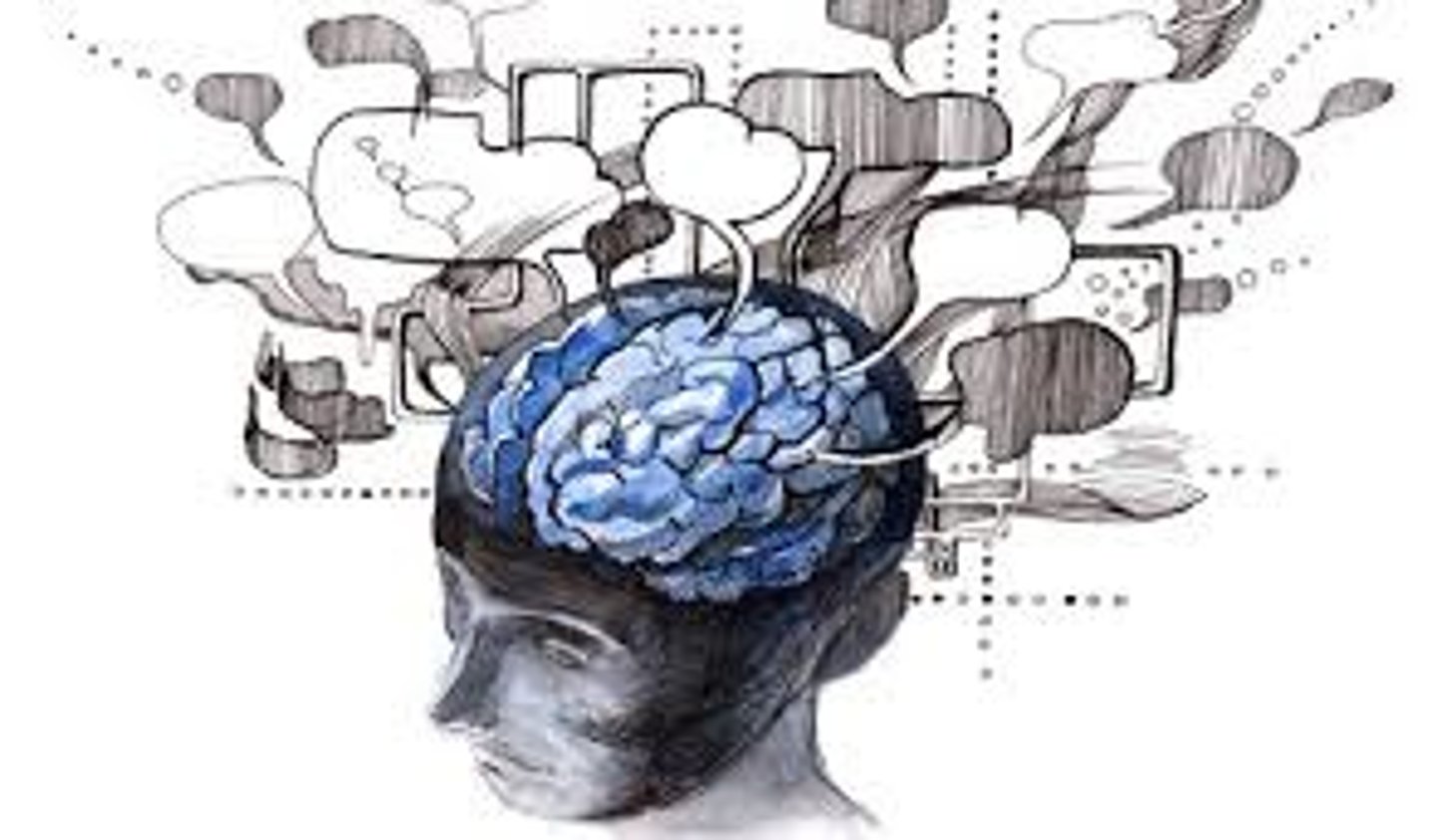
Consciousness
awareness of unique thoughts, memories, feelings, sensations, and environments
Circadian rhythm
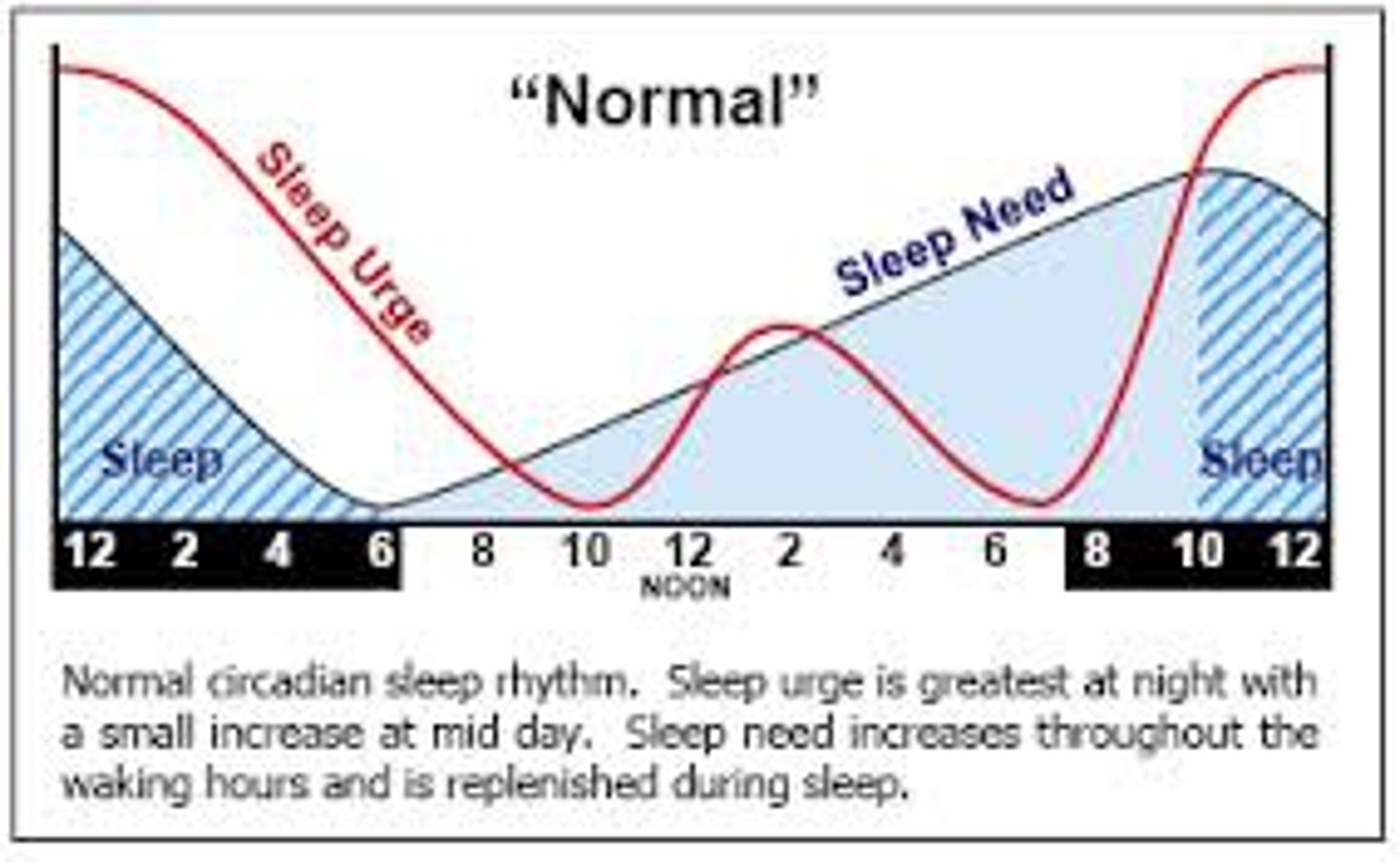
the biological clock; regular bodily rhythms that occur on a 24-hour cycle
REM sleep
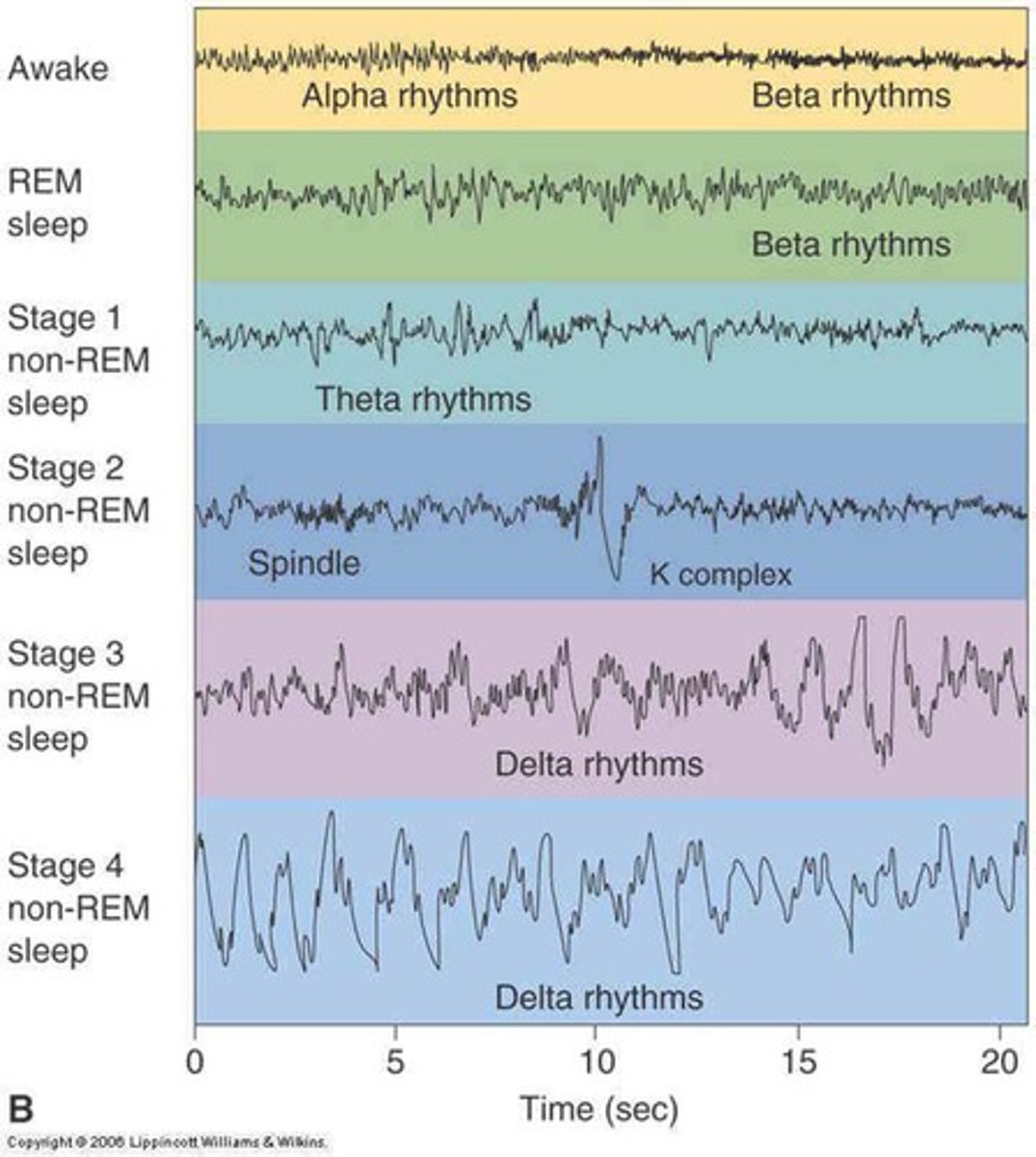
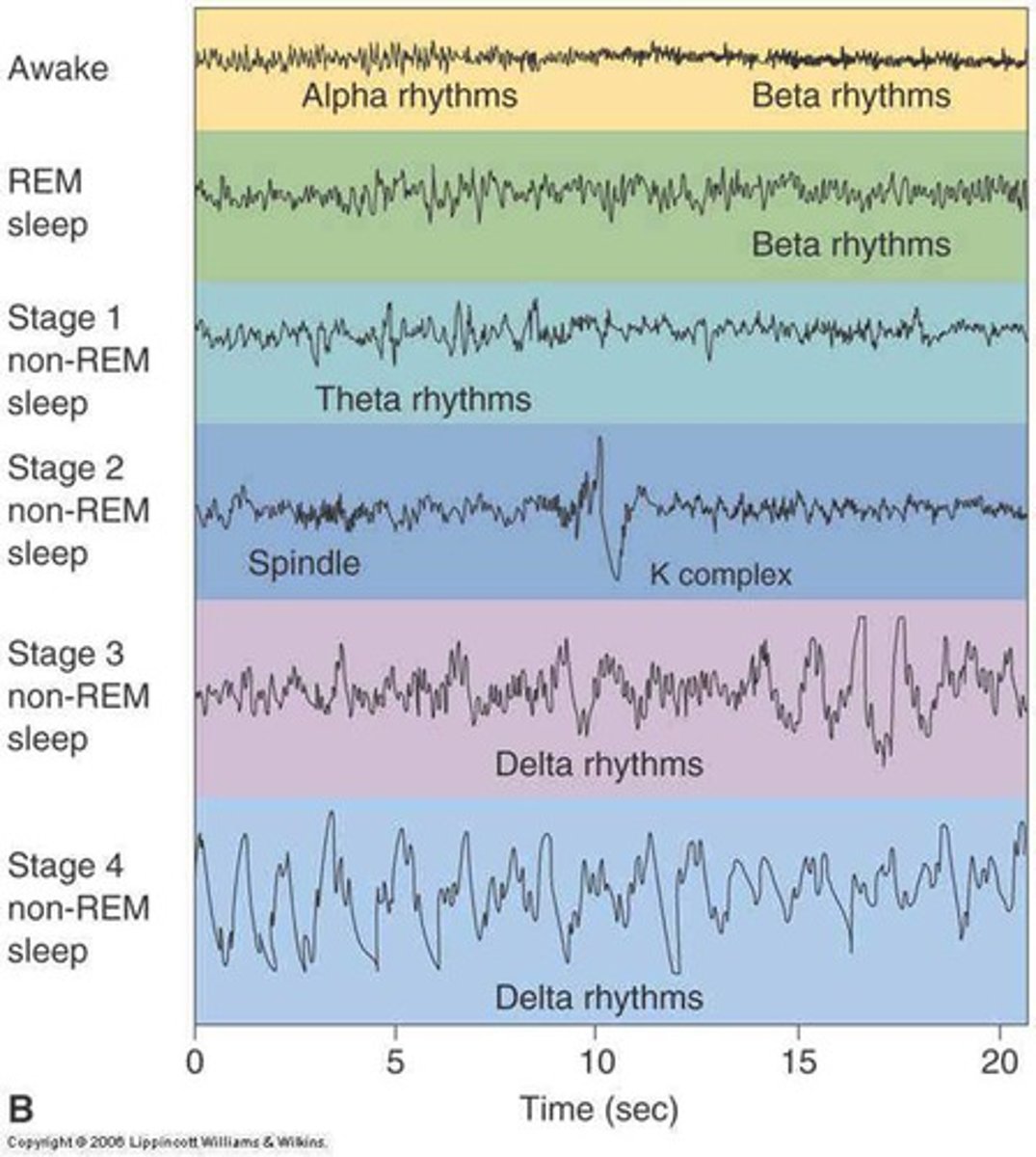
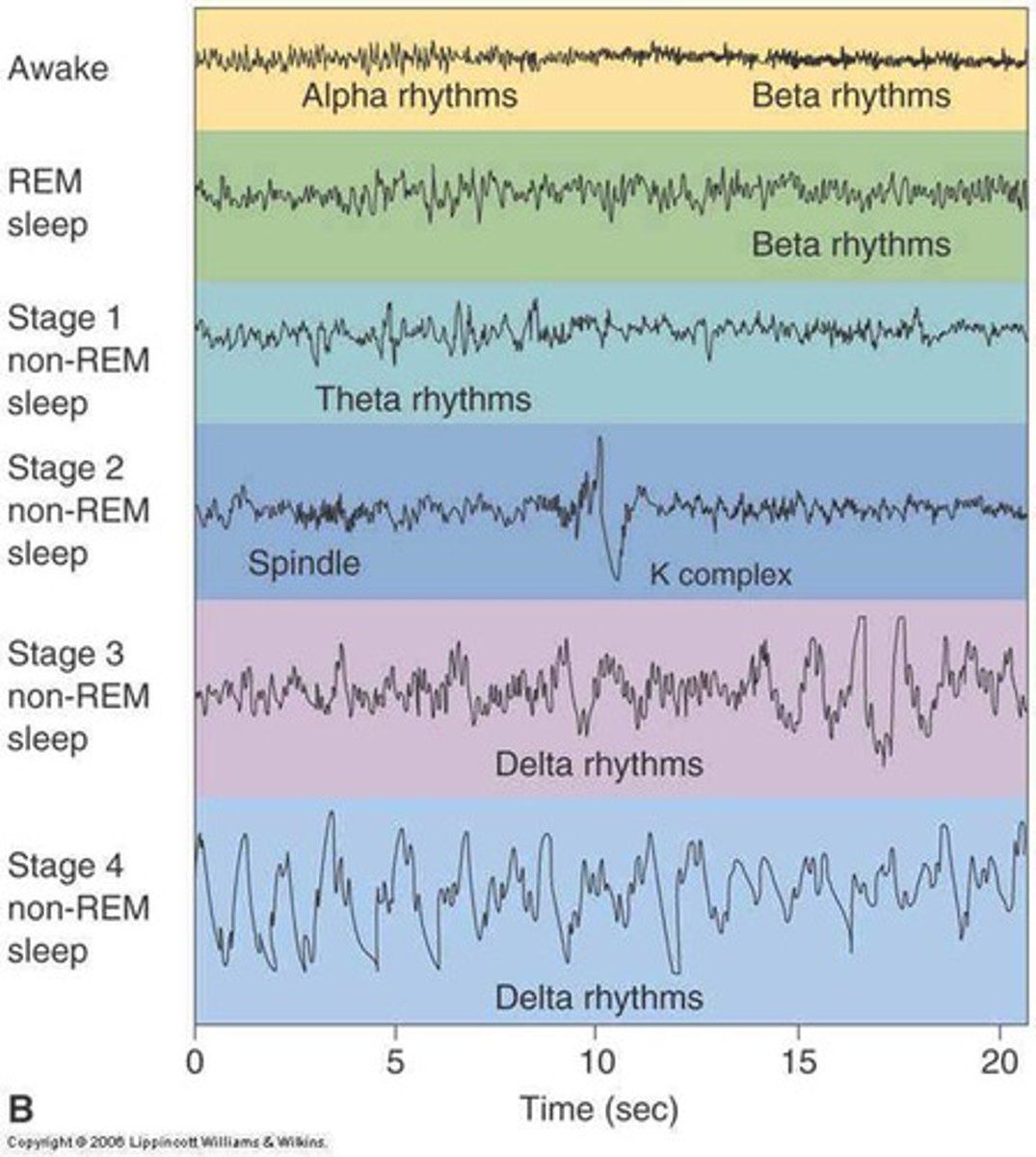
characterized by rapid eye movements and a high level of brain activity; accounts for about 25% of a person's total sleep. Called paradoxical stage as brain waves are similar to "woke" waves but the body is paralyzed by the brain stem.
REM rebound
the tendency for REM sleep to increase following REM sleep deprivation (created by repeated awakenings during REM sleep)

NREM stage 1
a transition period between wakefulness and sleep ("nodding off") characterized by relaxation and easy arousal
NREM stage 2
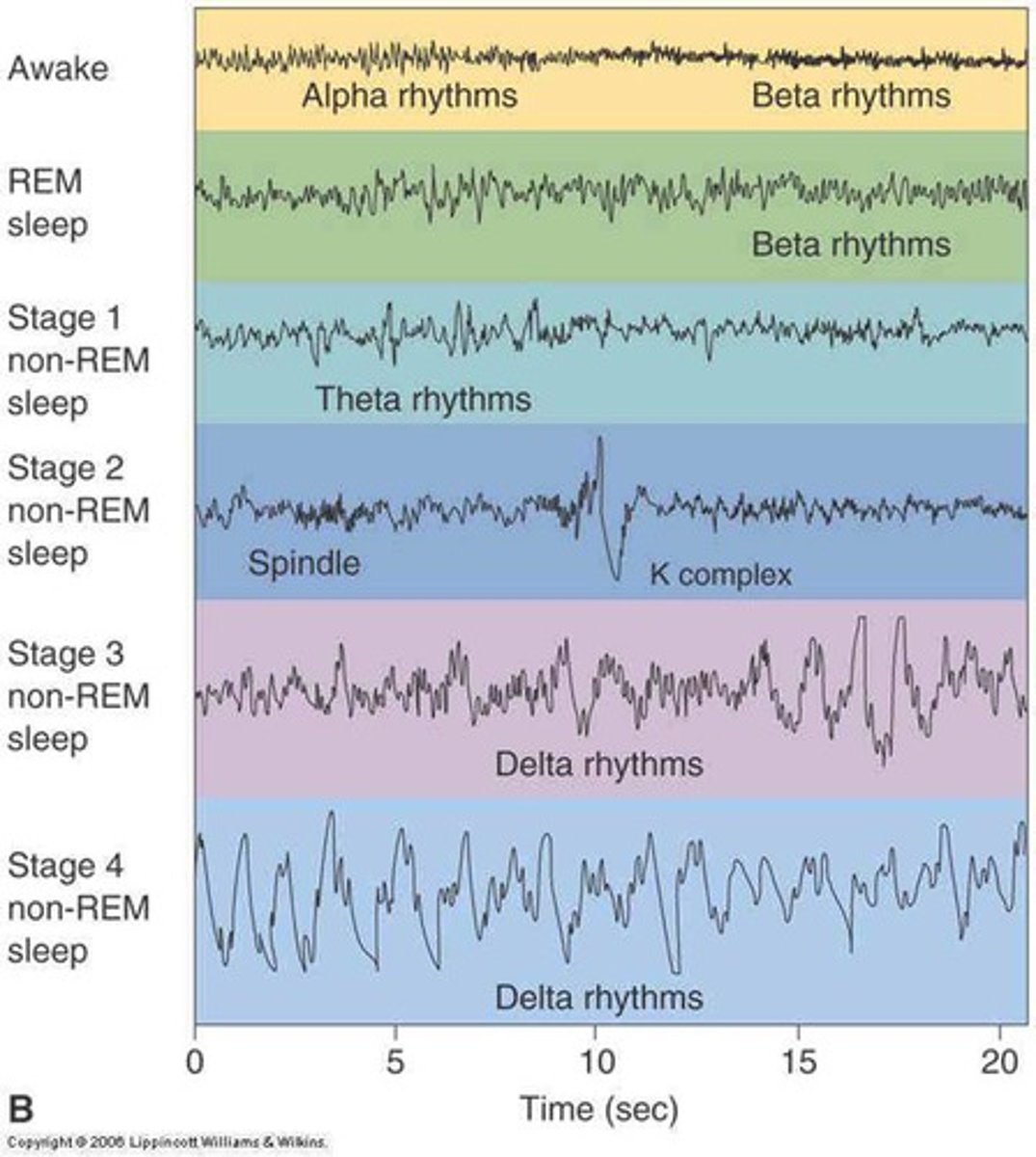
characterized by continued slowing of heartbeat, breathing, muscle activity, and eye movements; accounts for about half of a person's total sleep
NREM stage 3
characterized by muscle relaxation, lowered blood pressure, and slower breathing; deepest sleep occurs in this stage
Hypnagogic sensations
imaginary images or sensations (e.g., falling or floating) that seem real and occur as a person is falling asleep

Activation-synthesis (dreams)
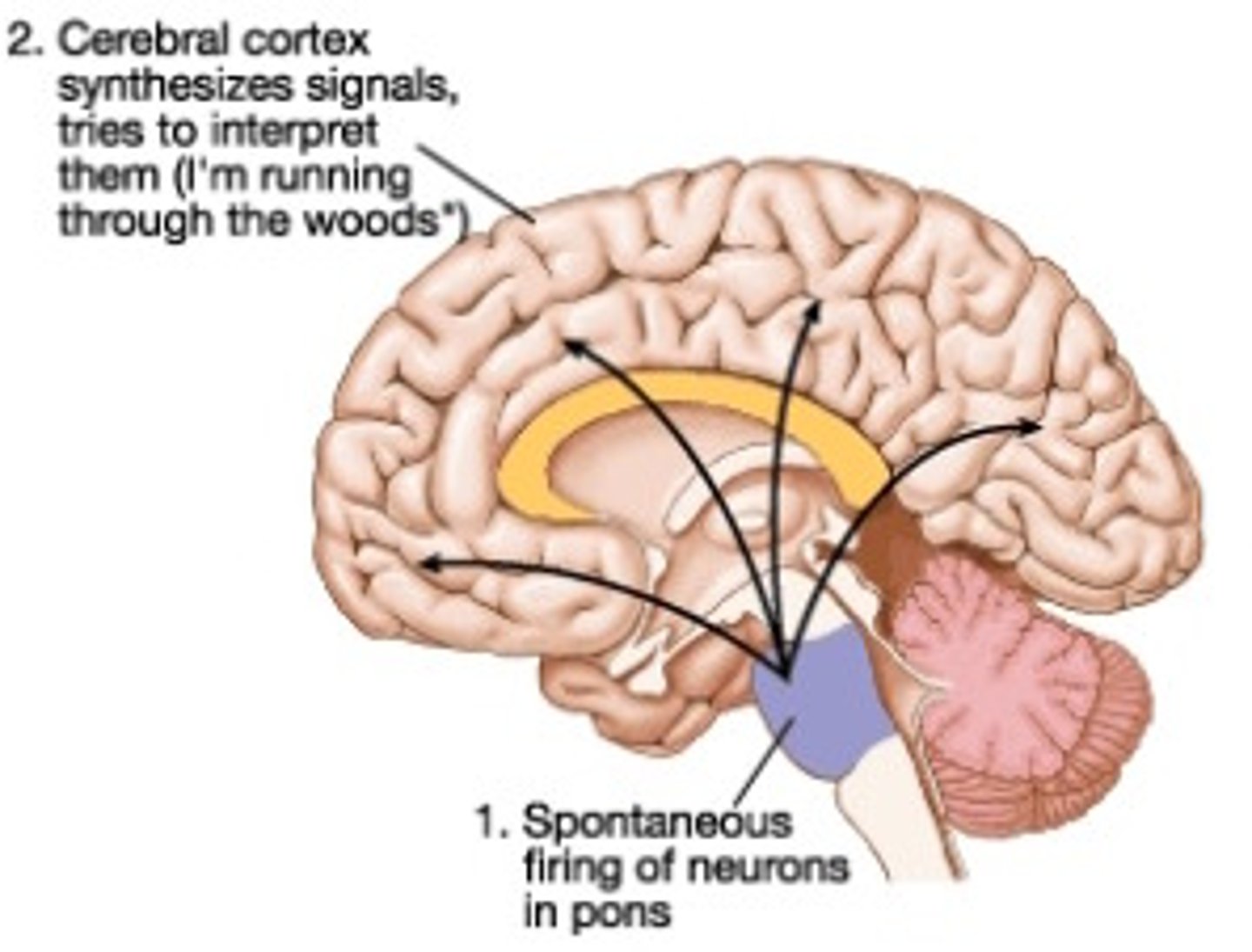
the theory that dreams are the result of the cerebral cortex interpreting and organizing random neural firing, originating in the lower brain structures, especially the pons.. states that dreams are meaningless
Consolidation theory (dreams)
the theory that during sleep the brain is best able to integrate newly encoded memory into long-term storage and that dreaming is influenced by this process
Insomnia
recurring problems in falling or staying asleep.. can be temporary or chronic

Narcolepsy
a sleep disorder characterized by unmanageable drowsiness and/or uncontrollably falling into REM sleep during the day

REM sleep behavior disorder
a disorder in which a person physically acts out vivid, often unpleasant dreams with vocal sounds and sudden, often violent, arm and leg movements during REM sleep

Sleep apnea
a disorder in which a person stops breathing for brief periods while asleep
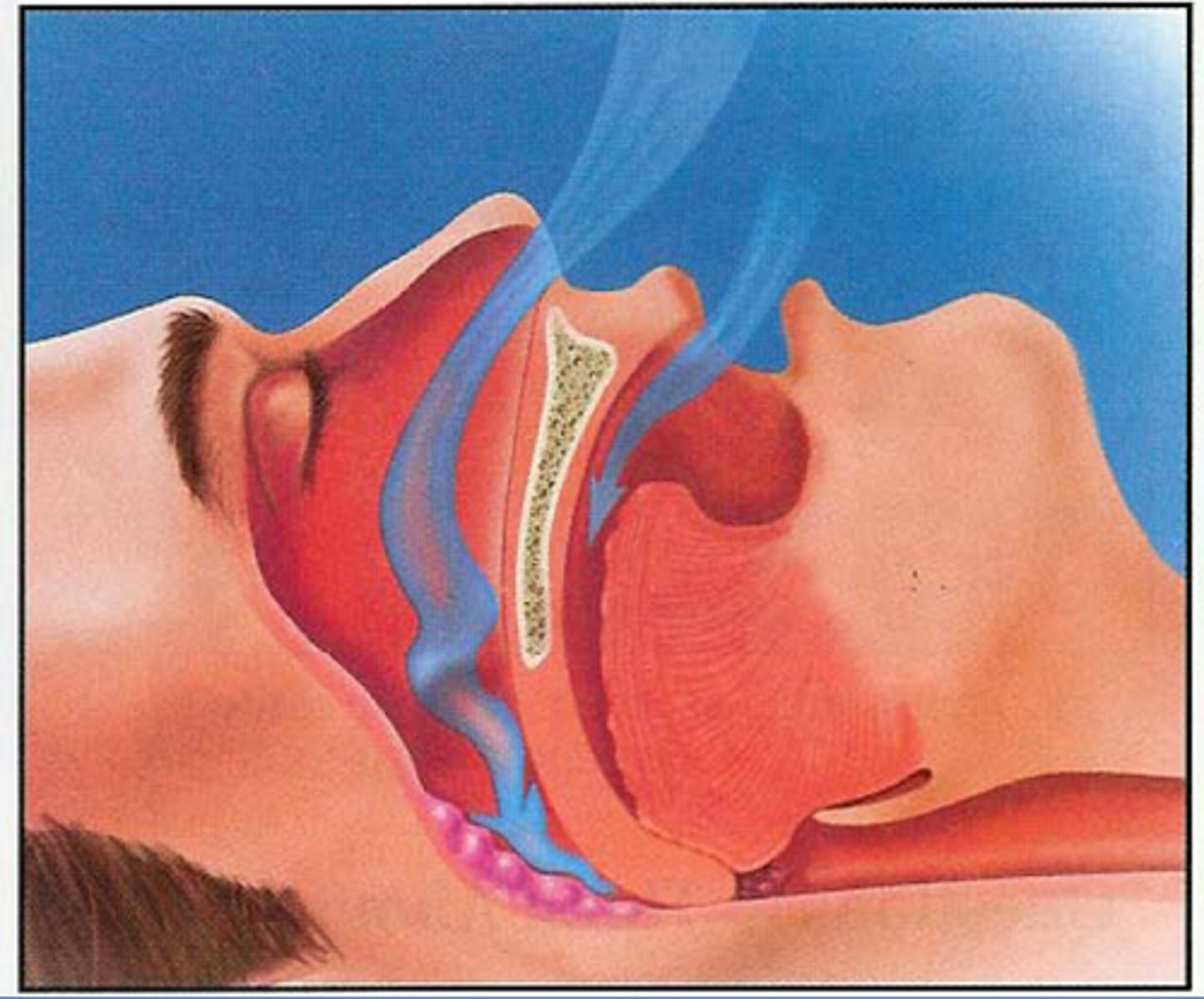
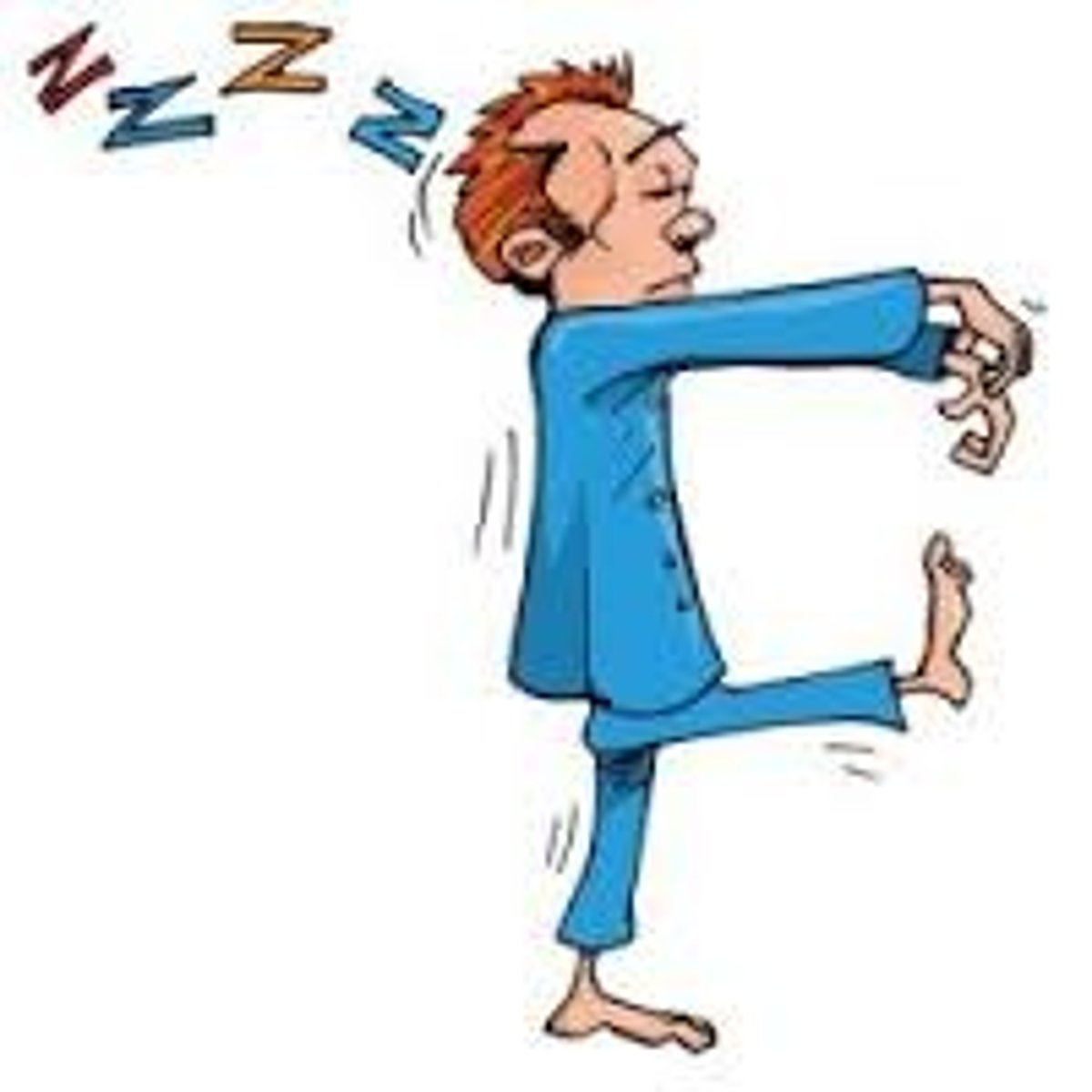
Somnambulism
the condition of walking or performing some other activity without awakening, usually during NREM 3.. also known as sleepwalking
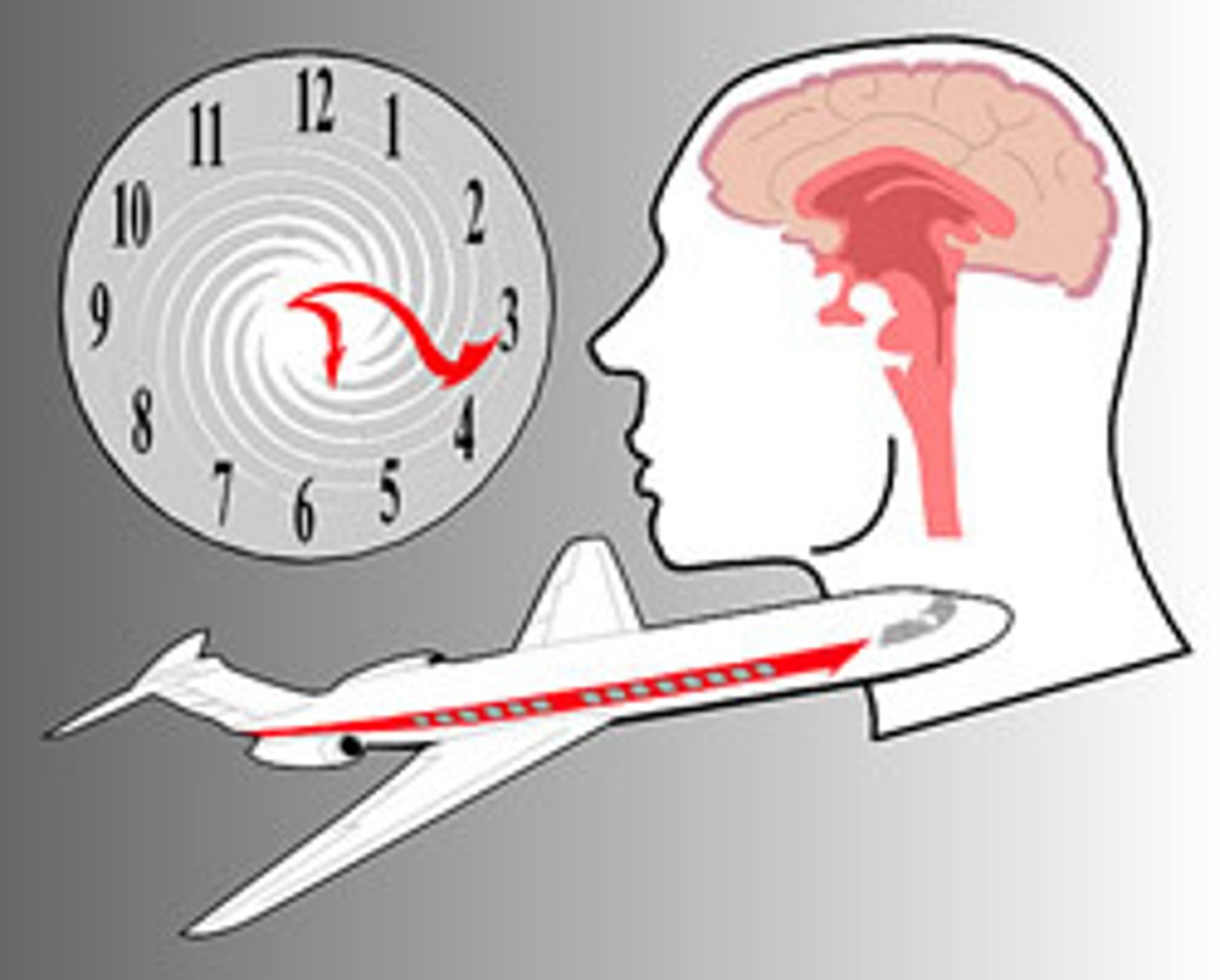
circadian rhythm disruptions
out-of-sync sleep/wake cycle caused by jet lag, shift work, time change, or sleep deprivation
unconscious
according to Freud, a reservoir of mostly unacceptable thoughts, wishes, feelings, and memories. According to contemporary psychologists, information processing of which we are unaware.

Transduction
Conversion of one form of energy into another
Wavelength
Determines Hue
Amplitude
Determines Brightness
Pupil
A small adjustable opening in the center of the eye through which light enters
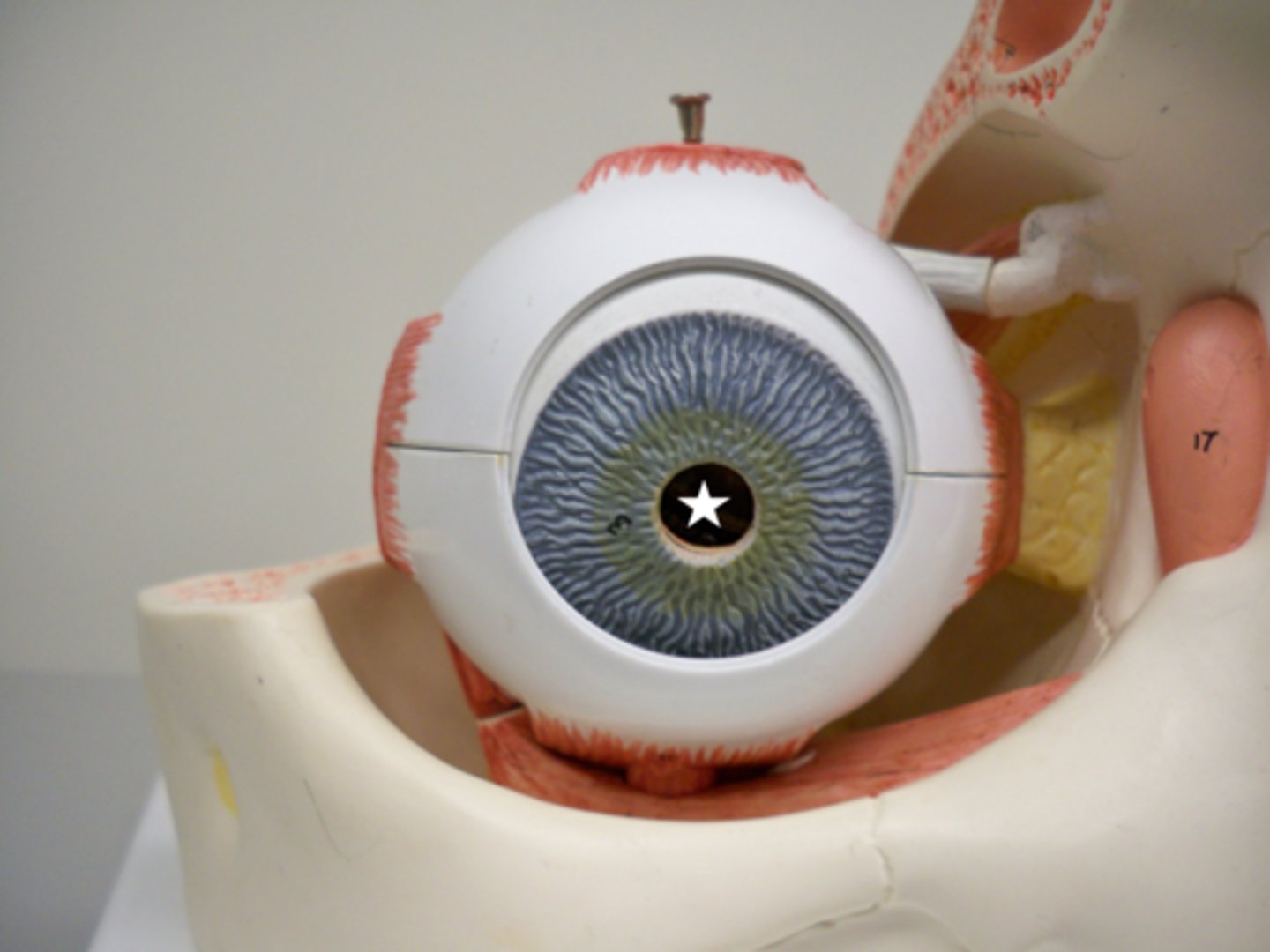
Iris
A ring of muscle tissue that forms the colored portion of the eye around the pupil and controls the size of the pupil's opening
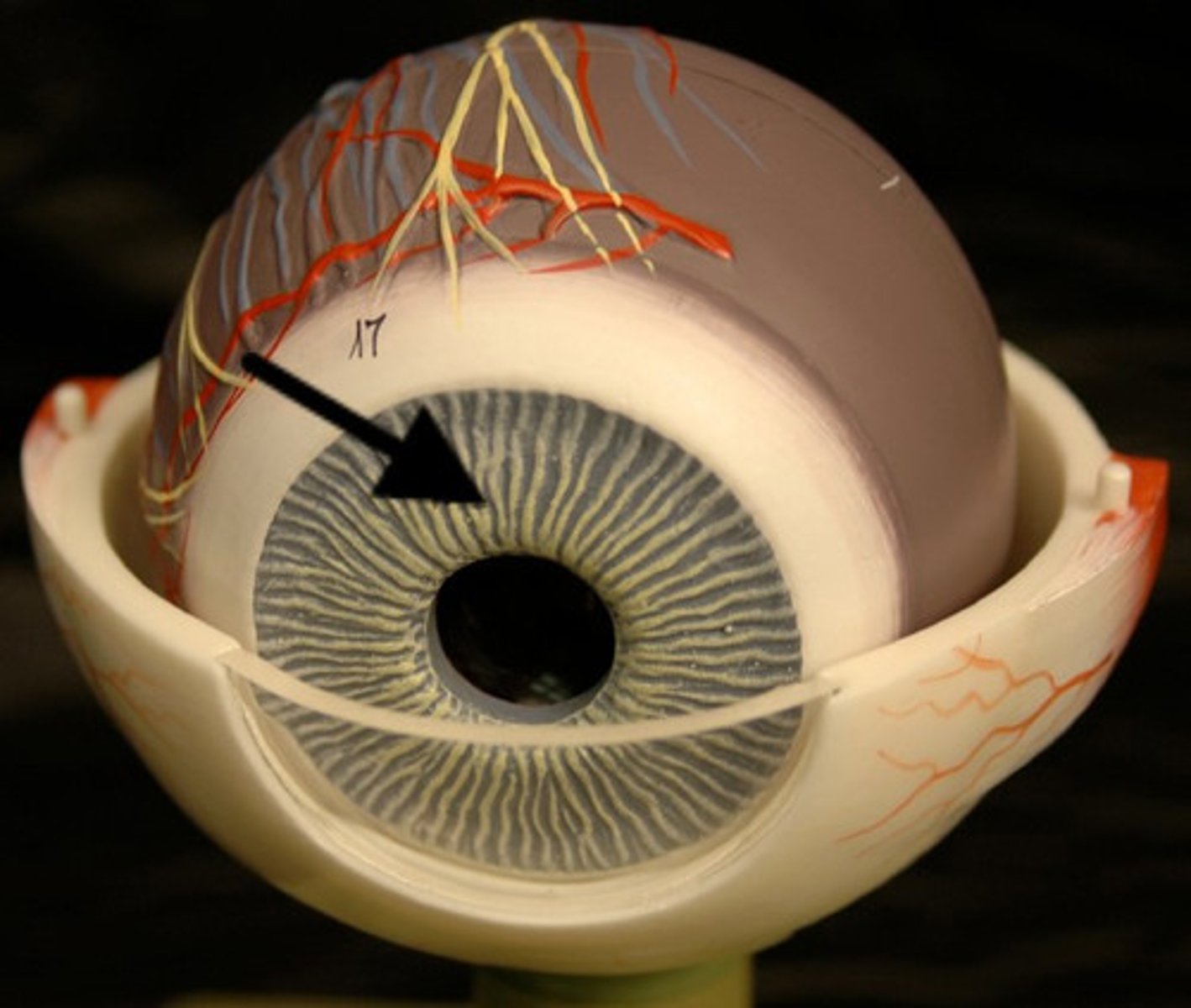
Cornea
Protects the eye and bends light to provide focus
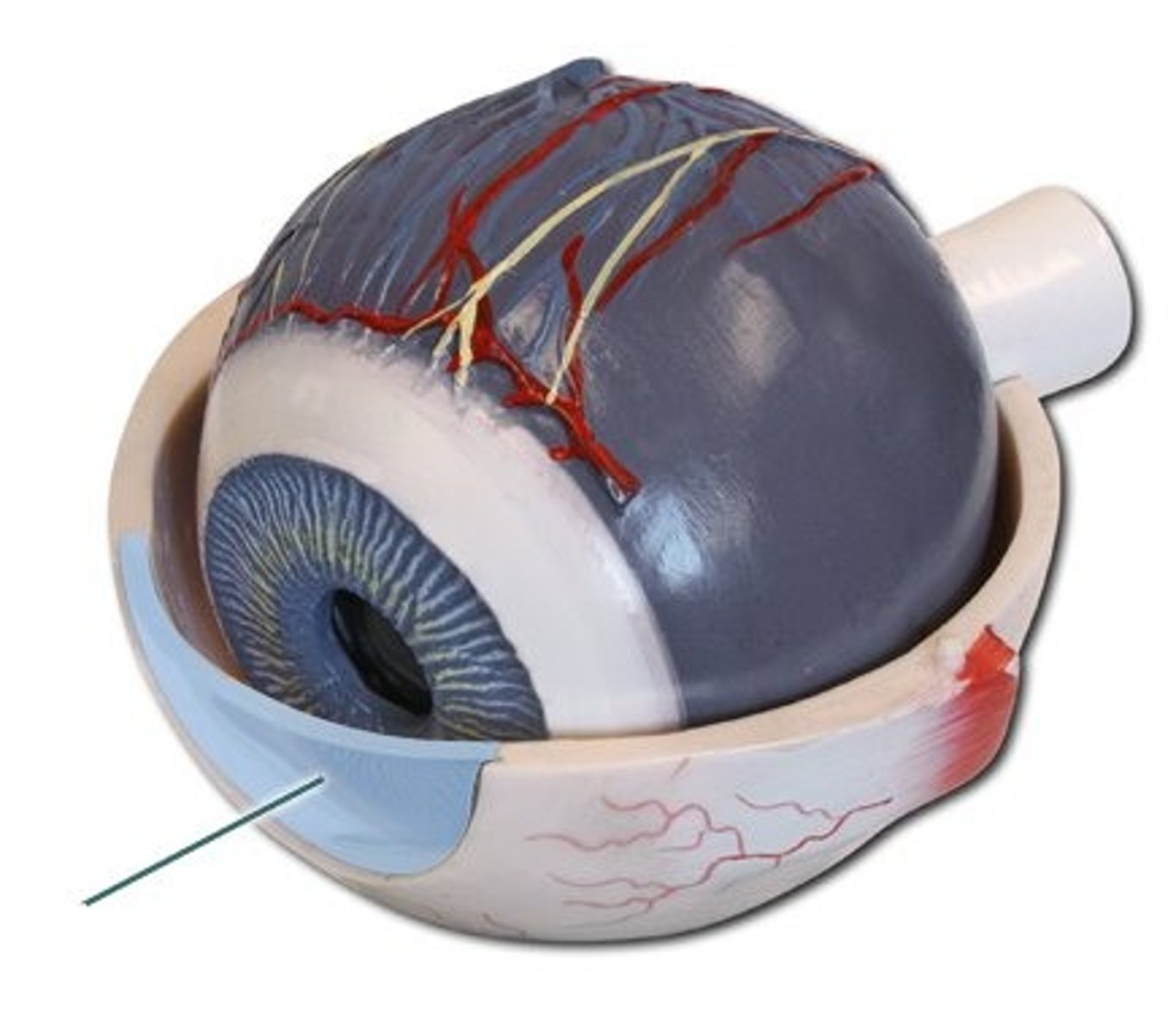
Lens
The transparent structure behind the pupil that changes shape to help focus objects on the retina
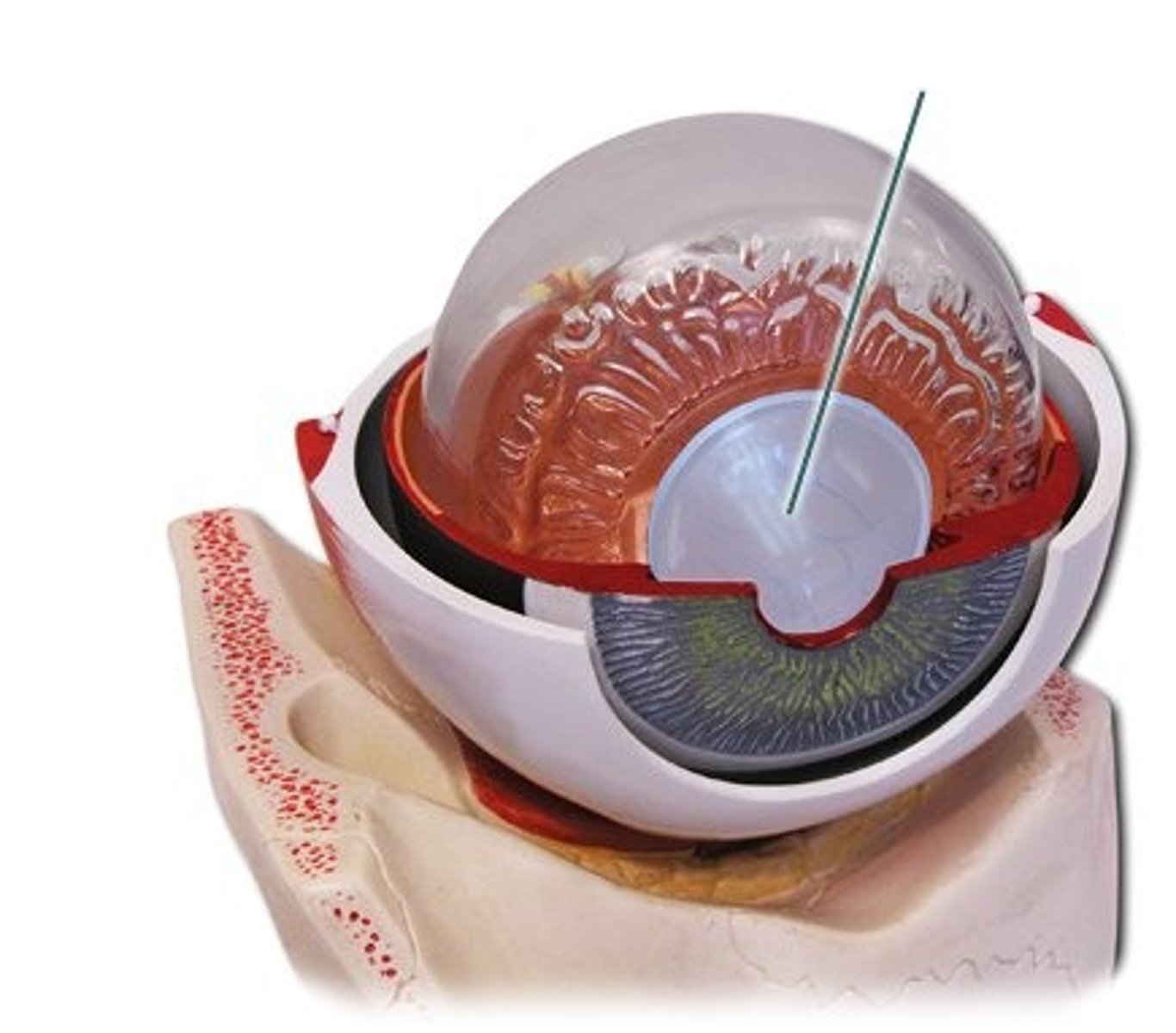
Accomodation
Lens changes shape to focus near or far images on the retina
Retina
Light sensitive inner surface of the eye containing the receptor rods and cones plus layers of neurons that begin the processing of visual information
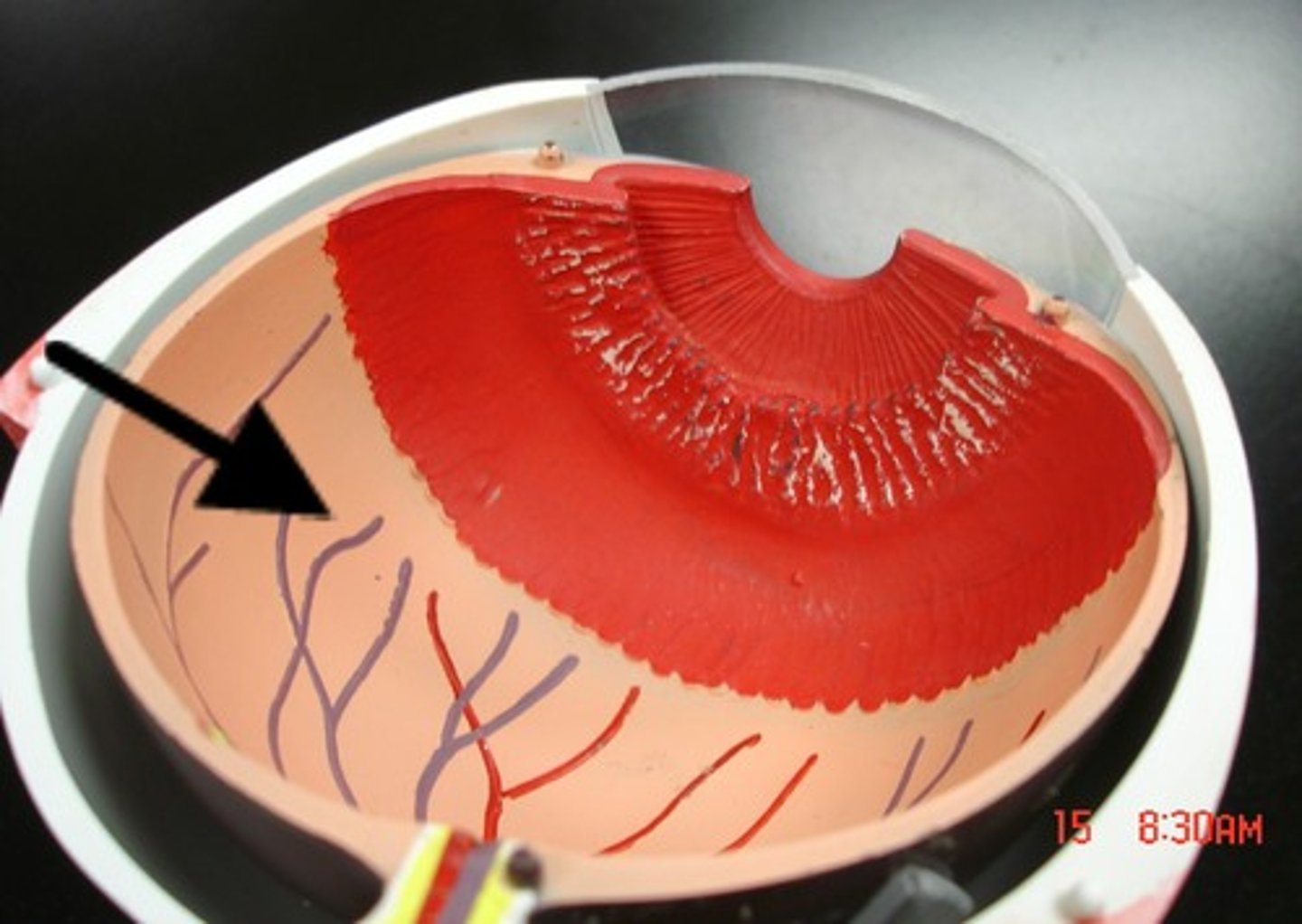
Optic Nerve
The nerve that carries neural impulses from the eye to the brain
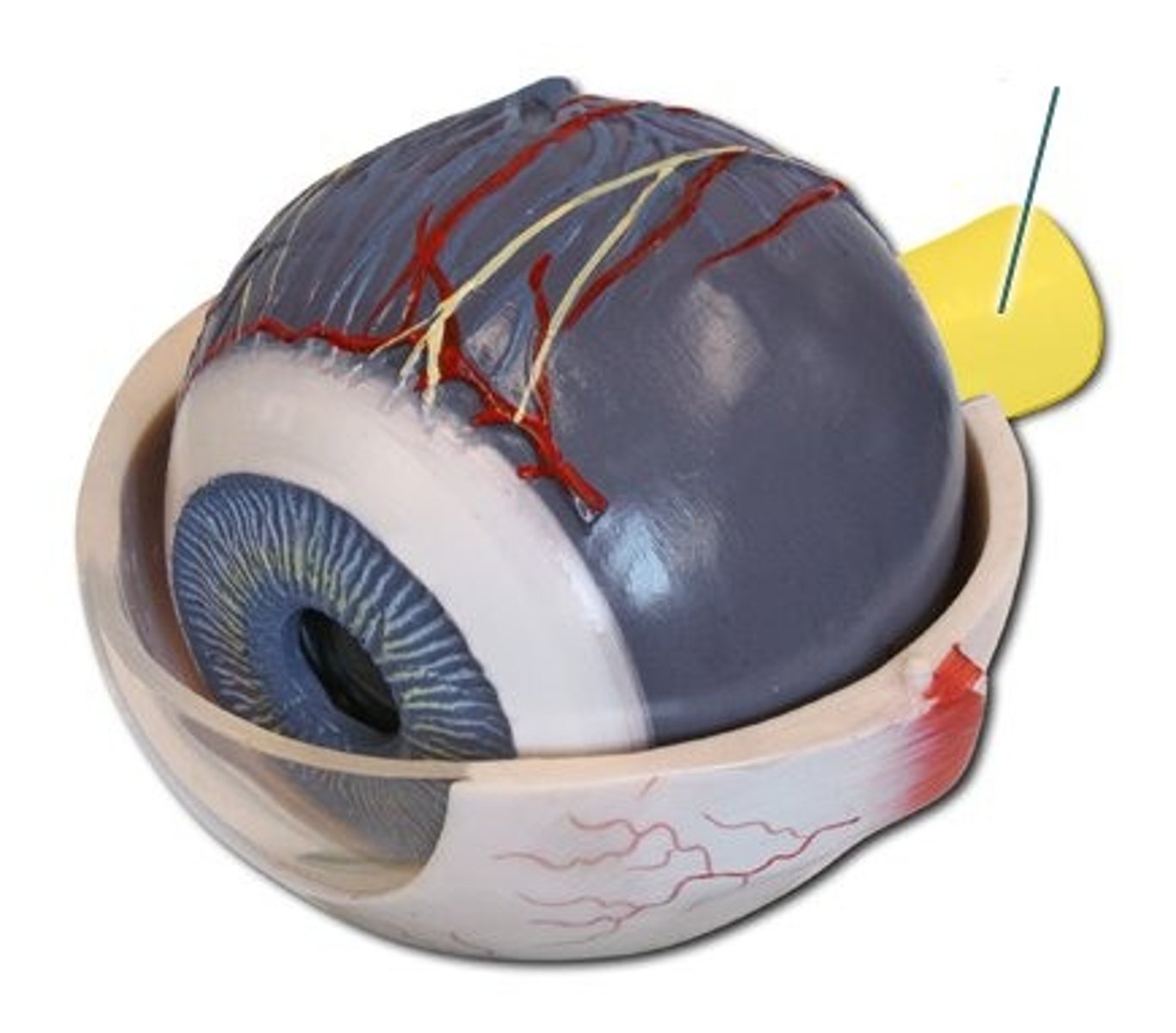
Blind Spot
The point at which the optic nerve leaves the eye
No receptor cells
Brain fills the "hole" without permission
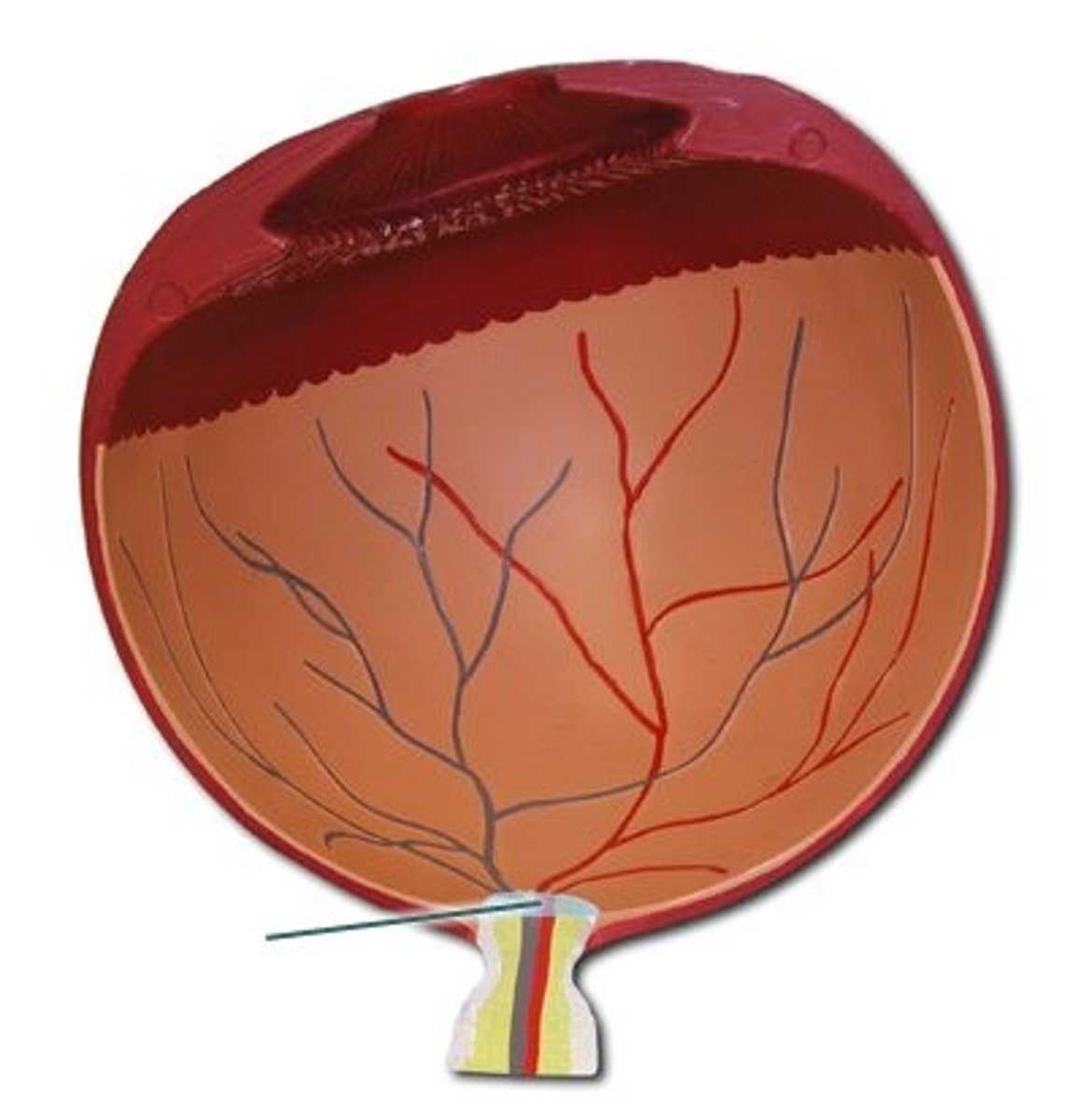
Fovea
The central focal point in the retina
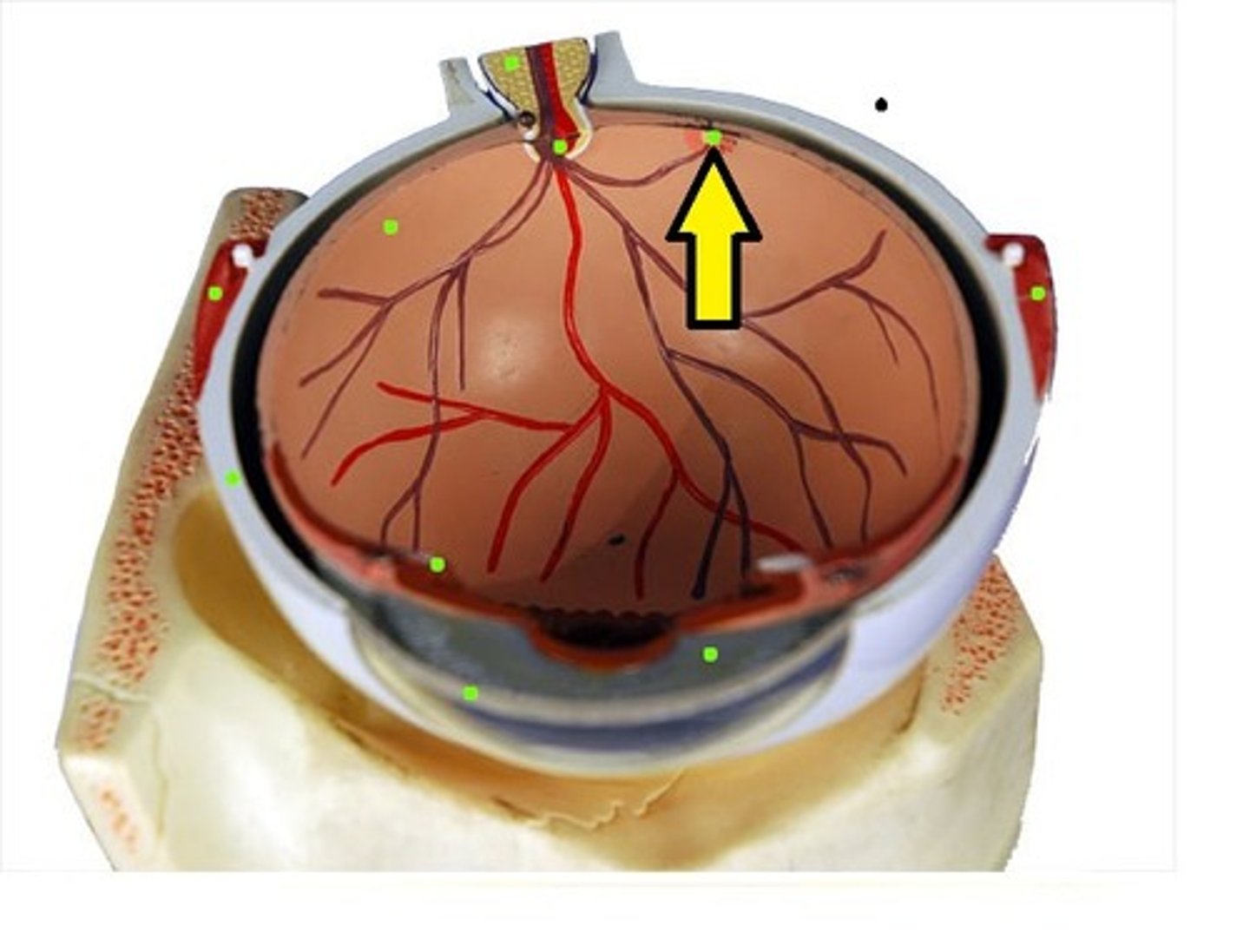
Acuity
Resolution
Nearsightedness
Too much curvature of the cornea/lens
Near objects are more clear
Farsightedness
Not enough curvature of the cornea/lens
Far objects are more clear
Rods
Retinal receptors that detect black, white, and grey
Necessary for peripheral vision
Cones
Retinal receptors that are concentrated near the center of the retina
Detect fine detail and give rise to color sensations
Feature Detectors
Nerve cells in the brain the respond to specific features of the stimulus, such as shape, angles, or movement
Parallel Processing
The processing of many aspects of a problem simultaneously
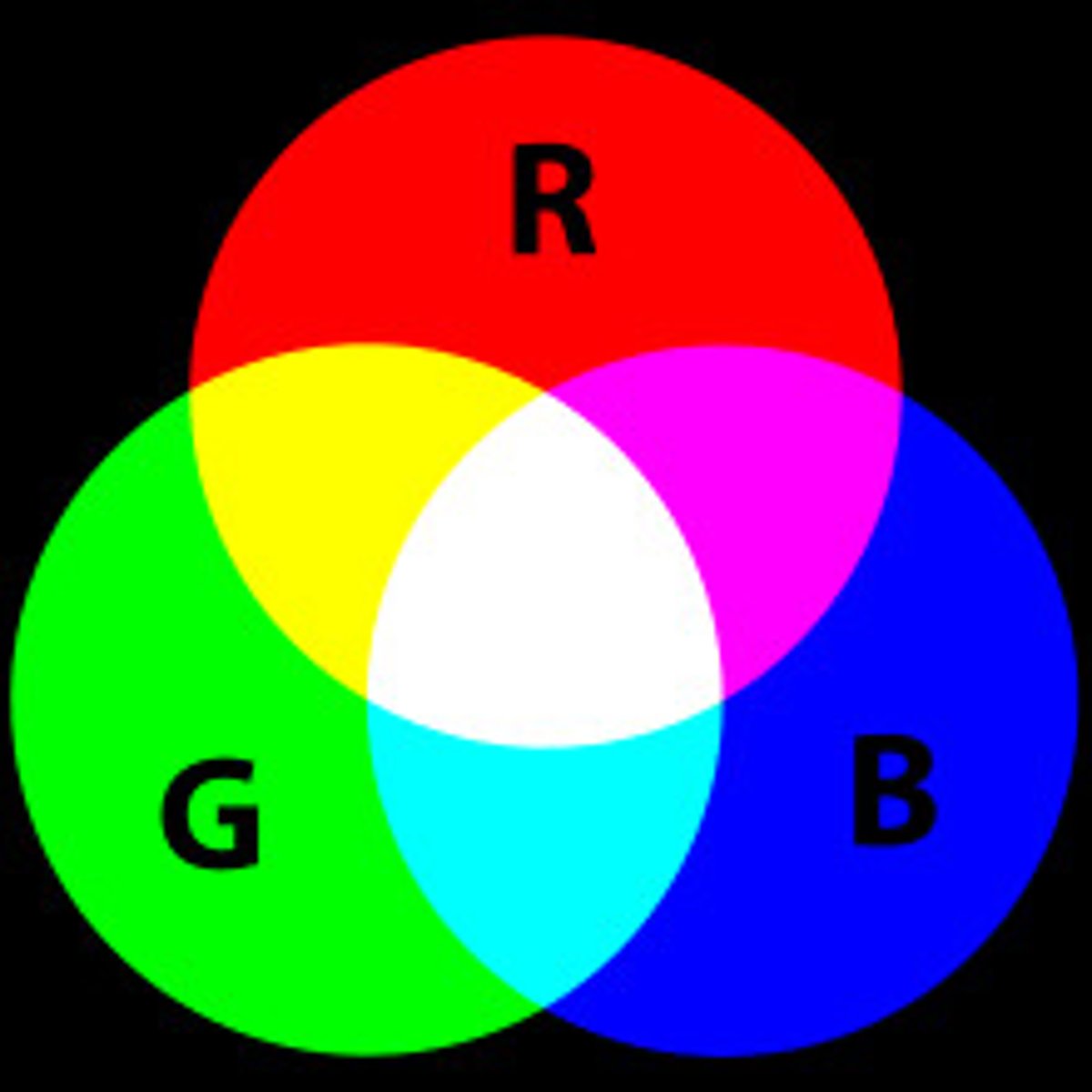
Trichromatic Theory of Color Vision
The eye has 3 types of color receptors (red, green, and blue)
Cones work in 3's
Color Blind
People who lack a chemical produced by one or more types of cones
Opponent Process Theory of Color Vision
Certain neurons can be either excited or inhibited depending on the wavelength of light
Complementary wavelengths have opposite effects.

Wavelength
Pitch
Measured in Hz (Hertz)
Amplitude
Loudness
Decibels
Unit of measurement for sound
(dB)
Transduction in the Ear
Vibration/mechanical energy -> neural impulses
Hair Cells
Bent by the vibrations and transduce mechanical energy to neural impulses
In the cochlea
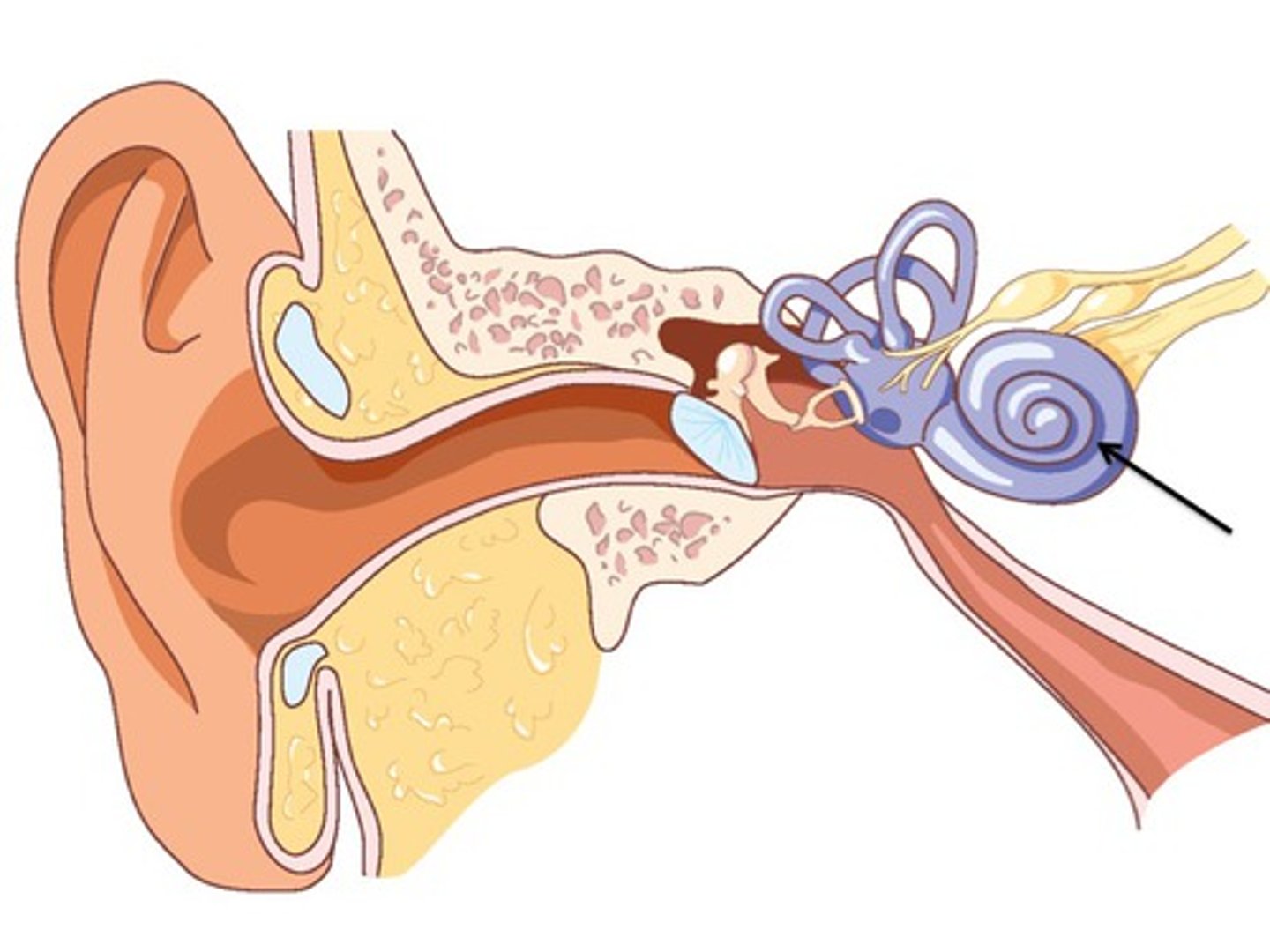
Frequency Theory
The theory that the rate of nerve impulses travelling up the auditory nerve matches the frequency of a sound
(Explains low-pitch)
Place Theory
The theory that links pitch with the place where the cochlea's membrane is stimulated.
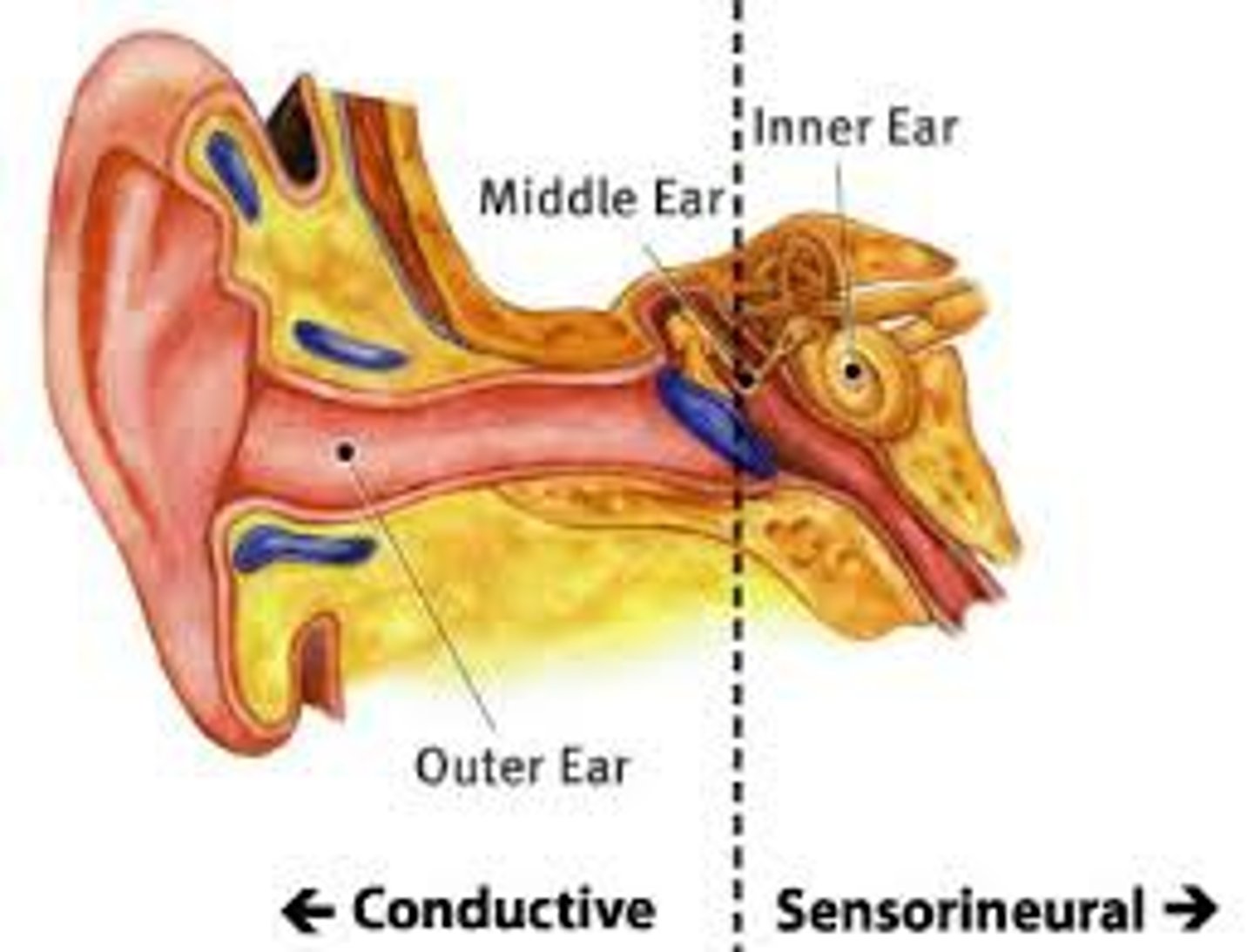
Conduction Deafness
Caused by damage to the mechanical system that conducts sound waves to the cochlea
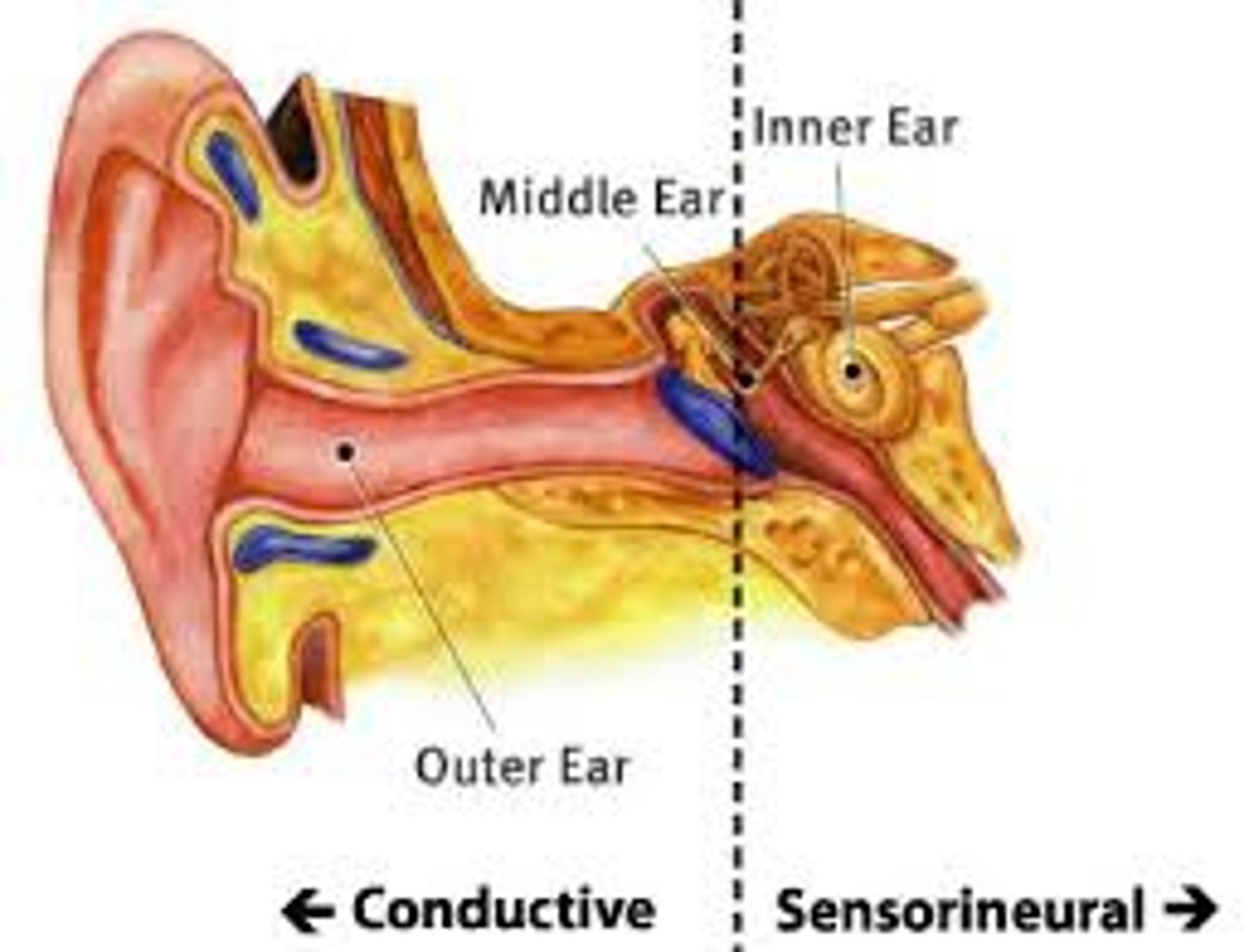
Sensorineural Deafness
Caused by damage to the cochlea's receptor cells or to the auditory nerves
Four Skin Senses
Pressure, Warmth, Cold, and Pain
Gate Control Theory of Pain
The spinal cord contains a neurological "gate" that blocks pain signals or allows them to pass onto the brain
Six Taste Sensations
Sweet. Salty, Bitter, Sour, Umami, Oleogustus
Papillae
Tiny bumps on the surface of the tongue covered in taste buds

6 Taste Sensations
Sweet, salty, bitter, sour, umami oleogustus
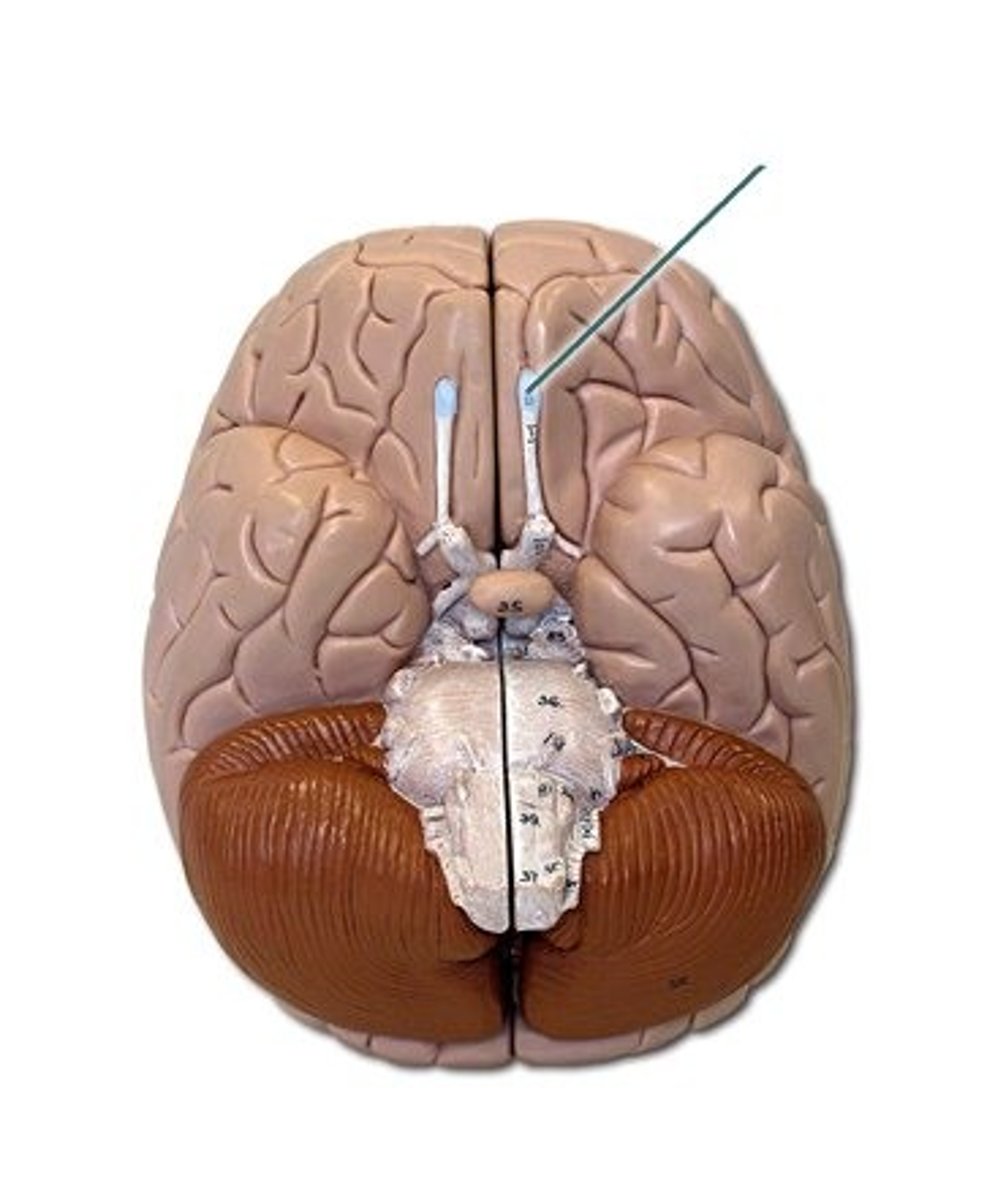
Olfactory Bulb
Brain structure responsible for our sense of smell
Processes info about odors after receiving sensory input form the nose
Vestibular Sense
The sense of body movement and position, including the sense of balance
Decibels
Unit of measurement for sound
(dB)
Transduction in the Ear
The process by which sound waves are converted into electrical signals in the inner ear, allowing the brain to perceive sound.

