organ functions
 Studied by 0 people
 Call Kai
 Learn
Learn Practice Test
 Spaced Repetition
 Match
Match Flashcards
 Knowt Play
1/20

Earn XP
Description and Tags
SRJC bio 2.2, Swinstrom. Organ and their functions
Name | Mastery | Learn | Test | Matching | Spaced | Call with Kai |
|---|
No analytics yet
Send a link to your students to track their progress
21 Terms
Trachea
airway that connects larynx to bronchia. carries oxygen to lungs and waste out
Bronchii
distribute air throughout the lungs. connects trachea and lungs
lungs
gas exchange occurs here, blood leaves waste and attracts oxygen
diaphragm
helps with negative pressure breathing
Esophagus
transports food and liquid to stomach
stomach
store food, breaks down proteins, and begins chemical digestion of food
small intestine
digests food, absorbs nutrients, removes waste.
Large intestine
absorbs water and electrolytes, breaks down fiber into short-chain fatty acids.
rectum
stores feces
liver
produces bile, filters toxins from blood, stores glycogen, making essential proteins
gallbladder
store bile
spleen
red blood cell “grave yard”, store blood cells, produce immune cells,
filter blood for pathogens
Pancreas
secretes digestive enzymes into the duodenum
Kidney
filter waste, toxins, and extra water from your blood to produce urine, while maintaining fluid balance, blood pressure, red blood cell production, and bone health by making hormones and balancing minerals.
ureters
connects kidney to bladder
bladder
stores urine
heart
Pumps blood throughout the body
Ureteri in females
a Y-shaped organ with two long uterine horns, a small body, and a cervix, allowing for multiple fetuses to develop in a row within the horns during pregnancy
peritoneum
membrane lining the abdominal cavity and covering the abdominal
organs, supports and protects abdominal organs, provides space for blood vessels and nerves, and prevents friction
mesenteries
keep intestines in place, passage for blood vessels, nerves, and lymphatics, store fat
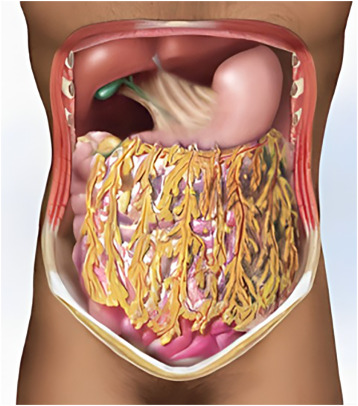
greater omentum
found on the small and large intestine, its function is to contain inflammatory and infectious processes within the abdominal cavity and store fat
 Note
Note  Flashcards (57)