Precalc Unit 3B
 Call Kai
 Learn
Learn Practice Test
 Spaced Repetition
 Match
Match Flashcards
 Knowt Play
1/49

There's no tags or description
Looks like no tags are added yet.
Name | Mastery | Learn | Test | Matching | Spaced | Call with Kai |
|---|
No analytics yet
Send a link to your students to track their progress
50 Terms
Tangent asymptote equation
π/2b + k(π/b), where k is any integer
Tangent period
π/b
Inverse sin graph (sin^-1(x))
Restricted domain: [-1,1]
Range: [-π/2, π/2]
![<p>Restricted domain: [-1,1]</p><p>Range: [-π/2, π/2]</p>](https://assets.knowt.com/user-attachments/98fbe10c-4c74-4c4d-9440-e9132ef01d96.png)
Inverse cos graph (cos^-1(x))
Restricted Domain: [0, π]
Range: [-1,1]
![<p>Restricted Domain: [0, π]</p><p>Range: [-1,1]</p>](https://assets.knowt.com/user-attachments/9c3f3c69-2ba6-4f56-8416-d18a1dd6d4e5.png)
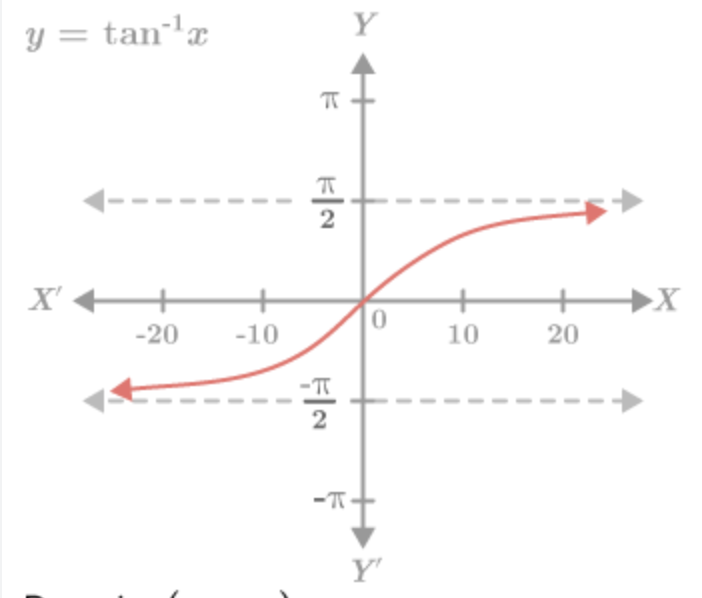
Inverse tan graph (tan^-1(x))
Restricted domain: (-π/2,π/2)
Range: idk dude
Find inverse of the function
Swap x and y, solve. Domain and range change depending on vertical/horizontal shifts/dilations
Vertical dilations change…
DISTANCE from x-axis. If a point is on the x-axis it doesn’t move.
Solving trigonometric equations (RESTRICTED DOMAIN)
answer is negative: apply reference angle to quadrants where sin, cos, or tan of the angle is negative.
Answer is positive: apply reference angle to quadrants where sin, cos, or tan of the angle is positive.
Answer is BOTH (FACTORS AND/OR SQUARE ROOT!): Apply reference angle to ALL quadrants.
Solving trigonometric equations (ALL VALUES)
Answer will be an EQUATION. Otherwise same as restricted domain.
csc(x)
1/sin(x)
sec(x)
1/cos(x)
cot(x)
1/tan(x)
csc and sec graphs
Graph function normally, midline points become VAs and make the U graphs.
cot graph
tan graph reflected across y axis
1
cos²(x) + sin²(x)
cos²(x)
1 - sin²(x)
sin²(x)
1 - cos²(x)
csc²(x)
1 + cot²(x)
cot²(x)
csc²(x) - 1
sec²(x)
tan²(x) + 1
tan²(x)
sec²(x) - 1
Tips to rewrite in single trig identity
Rewrite in sin and cos
Squared trig functions could be a pythagorean identity
Put in terms of one trig function
sin(a + b)
sin(a)cos(b) + sin(b)cos(a)
sin(a - b)
sin(a)cos(b) - sin(b)cos(a)
cos(a + b)
cos(a)cos(b) - sin(a)sin(b)
cos(a - b)
cos(a)cos(b) + sin(a)sin(b)
sin(2a)
2sin(a)cos(a)
cos(2a)
cos²(a) - sin²(a)
1 - 2sin²(a)
2cos²(a) - 1
Polar —> Rectangular COORDINATES
x = rcos(x)
y = rsin(x)
(r, theta) —> (x,y)
Rectangular —> Polar COORDINATES
r = √x² + y²
theta = tan^-1(y/x)
PAY ATTENTION TO QUADRANTS ON THETA.
Name 4 diff. ways
r: 2 pos. and 2 neg.
theta accordingly
Polar Form
r[cos(x) + isin(x)]
rcos(x) + risin(x)
Rectangular complex numbers —> Polar FORM
r = √x² + y²
theta = tan^-1(y/x)
PAY ATTENTION TO QUADRANTS: regular complex number = a + bi, use negative a and b to determine quad.
Polar complex numbers —> Rectuangular FORM
x = rcos(x)
y = rsin(x)
end in a + bi
sin circles
Positive: Opens up
Negative: Opens down
cos circles
Positive: Opens right
Negative: Opens left
cos roses
Starts on pole
Sin roses
start above pole
Polar functions: n is ODD
n petals
cycle: [0, π]
Polar functions: n is EVEN
2n petals
cycle: [0, 2π]
Max distance from pole
= amplitude
Find endpoints
Plug endpoints in for theta in rcos(theta) and rsin(theta)
Limaçon
r = a +- bcos(theta)
Limaçon a = b
cardioid
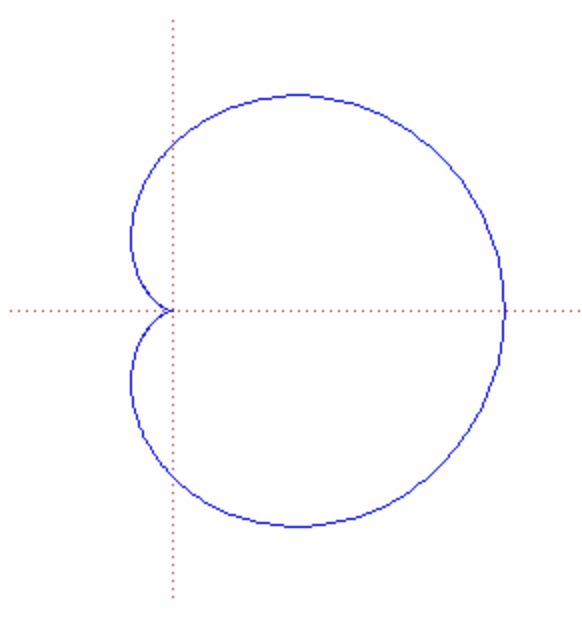
Limaçon a > b
dimpled cardioid
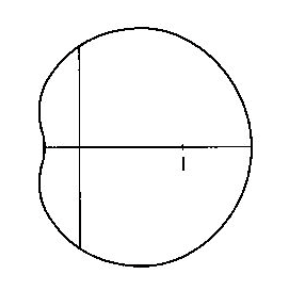
Limaçon a < b
inner loop limaçon
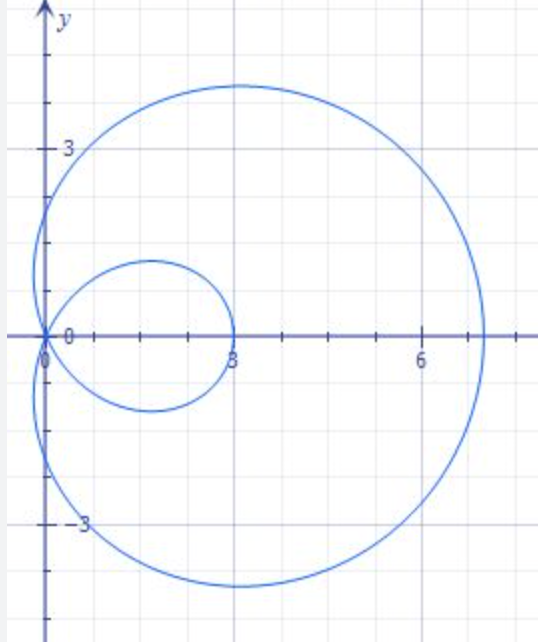
r = theta where theta >= 0
Spiral
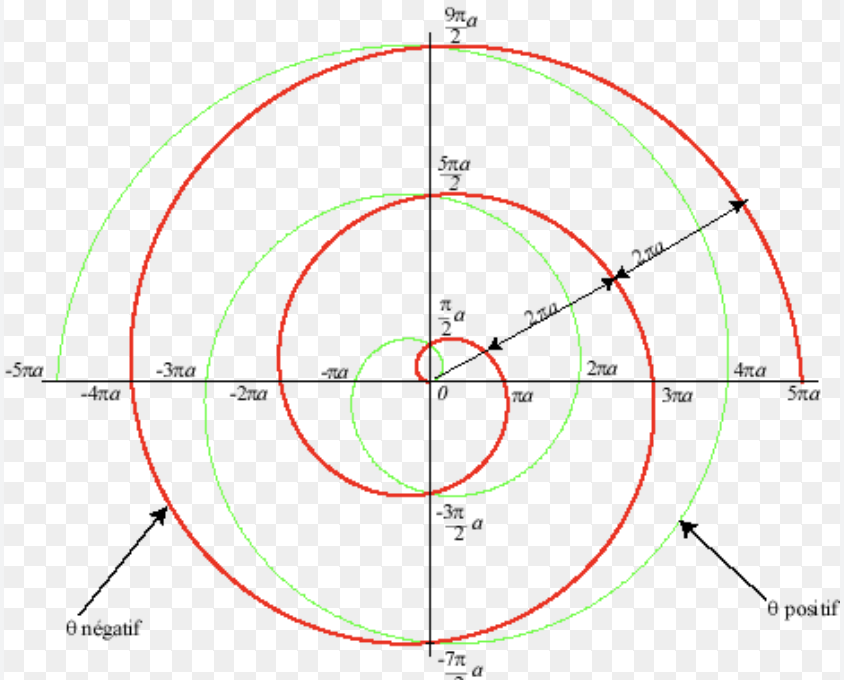
Distance from pole is INCREASING
r is positive and increasing
r is negative and decreasing
Distance from pole is DECREASING
r is positive and decreasing
r is negative and increasing
Use AROC to estimate
f(x) = y1 + AROC(x - x1)

