BIOL 107 - UNIT 1
 Call Kai
 Learn
Learn Practice Test
 Spaced Repetition
 Match
Match Flashcards
 Knowt Play
1/678

There's no tags or description
Looks like no tags are added yet.
Name | Mastery | Learn | Test | Matching | Spaced | Call with Kai |
|---|
No analytics yet
Send a link to your students to track their progress
679 Terms
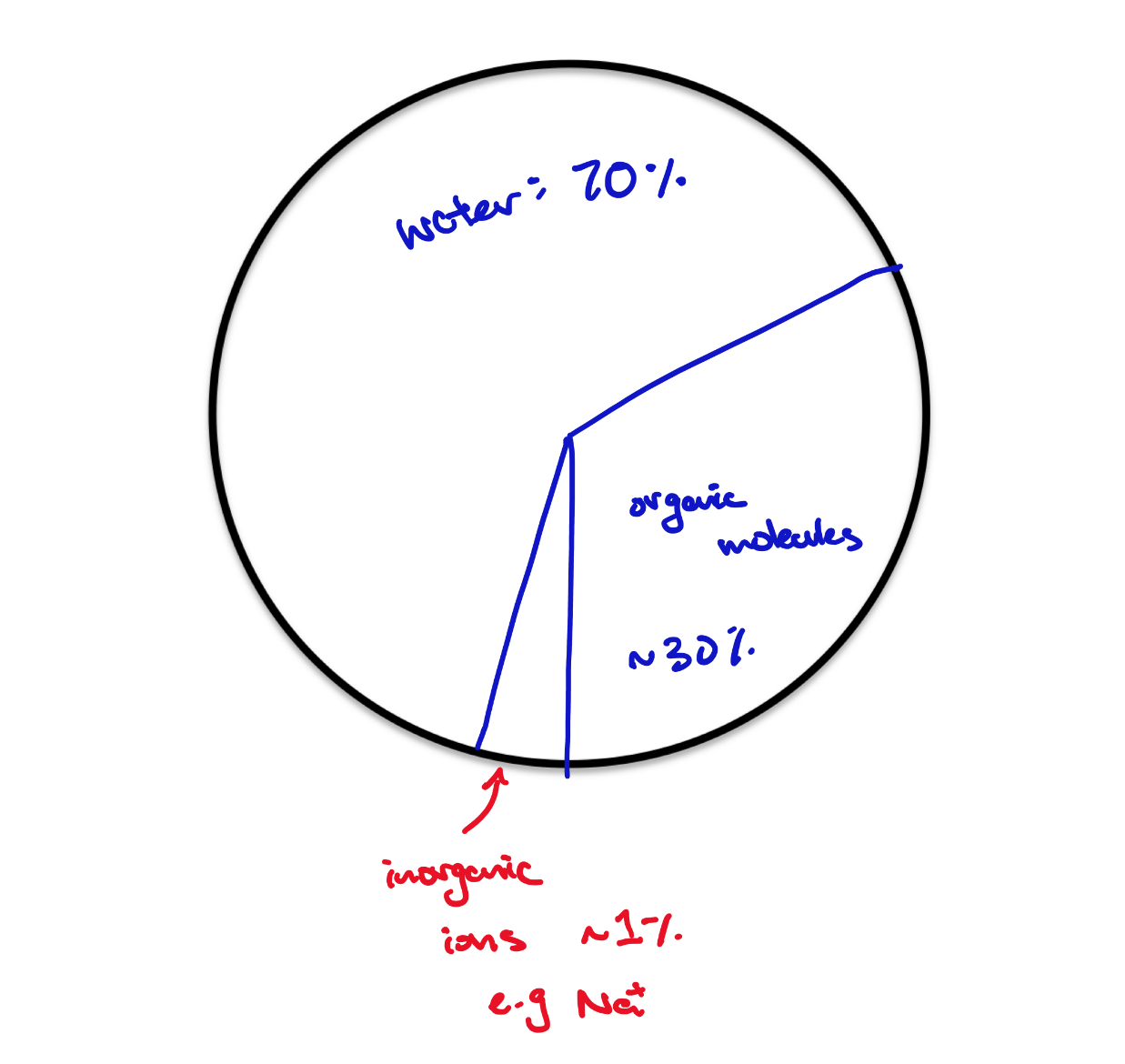
What are some characteristics of cells since they are mostly water?
Molecules inside can change shape becuz they’re surrounded by water
Able to move around in cell
Breakdown of a cell
What is an organic molecule?
Contains carbon and hydrogen
Carbon Dioxide is NAWT organic
e.g methane
Carbon/Silicon based life
Based on if it can form rings (?)
Life is carbon based because of it’s ability to form rings, silicon can not form rings
Elements found in living cells
DA BIG 4
C
H
O
N
lechon 🤤🤤🤤
What is a polymer
Poly - many things
Monomers form chains to make polymers
Dehydration
Water removal
Removing H2O to make a covalent bond
Occurs during synthesis (making things)
Hydrolysis
Water breaking
Molecule breaks down into smaller parts by adding a molecule of water
H2O splits into H+ and O2-
Occurs during break down of molecules (think of how the H2O is being split into the new fragments)
Carbs (sugars)
Made of monomers = monosaccharides
5+6 carbon monosaccharides are usually in ring structures
Functions as energy souce and building other molecules (carbon source)
Monosaccharide formula
CnH2nOn
what the freaky is a dimer
Disaccharides
2 monosaccharides joined tgt
Functions as energy and carbon source
Making sucrose requires?
Dehydration reaction
becuz synthesis!!!!!!
Ogliomers
made of ogliosaccharides
-structure 3-10 monosaccharides joined tgt
Polymers
made of polysacchardies
100s-1000s of glucose joined tgt
What are the 2 glucose ring structures?
Alpha → NAG*
Beta → NAM*
Polysaccharides made from alpha and beta glucose
* modified glucose
Diff types of polysaccharide
Alpha
Beta
NAG
NAM
Glycogen
Polymer of alpha glucose
Energy storage in animal cells
!! Glycogen → think alpha wolves need energy → in animal cells
Starch
Polymer of alpha glucose
Energy storage in plants
!! Think potato → best vegetable → alpha glucose
→ potato is a vegetable → plant enegry storage
Cellulose
Polymer of beta glucose
Cell walls in plants
!! Think cellulose → losing is BETA → betas put up emotional walls → cell wall for plants!
Chitin
Polymer of NAG
Cell walls in yeast
exoskeleton in anthropods
!! think cheating!
ppl who cheat can get yeast infections (cell wall in yeast)
ppl who cheat are insects → exoskeleton in anthropods
NAG ppl who cheat
Proteins
Amino acids
Monomers are amino acids
Polymer is a protein
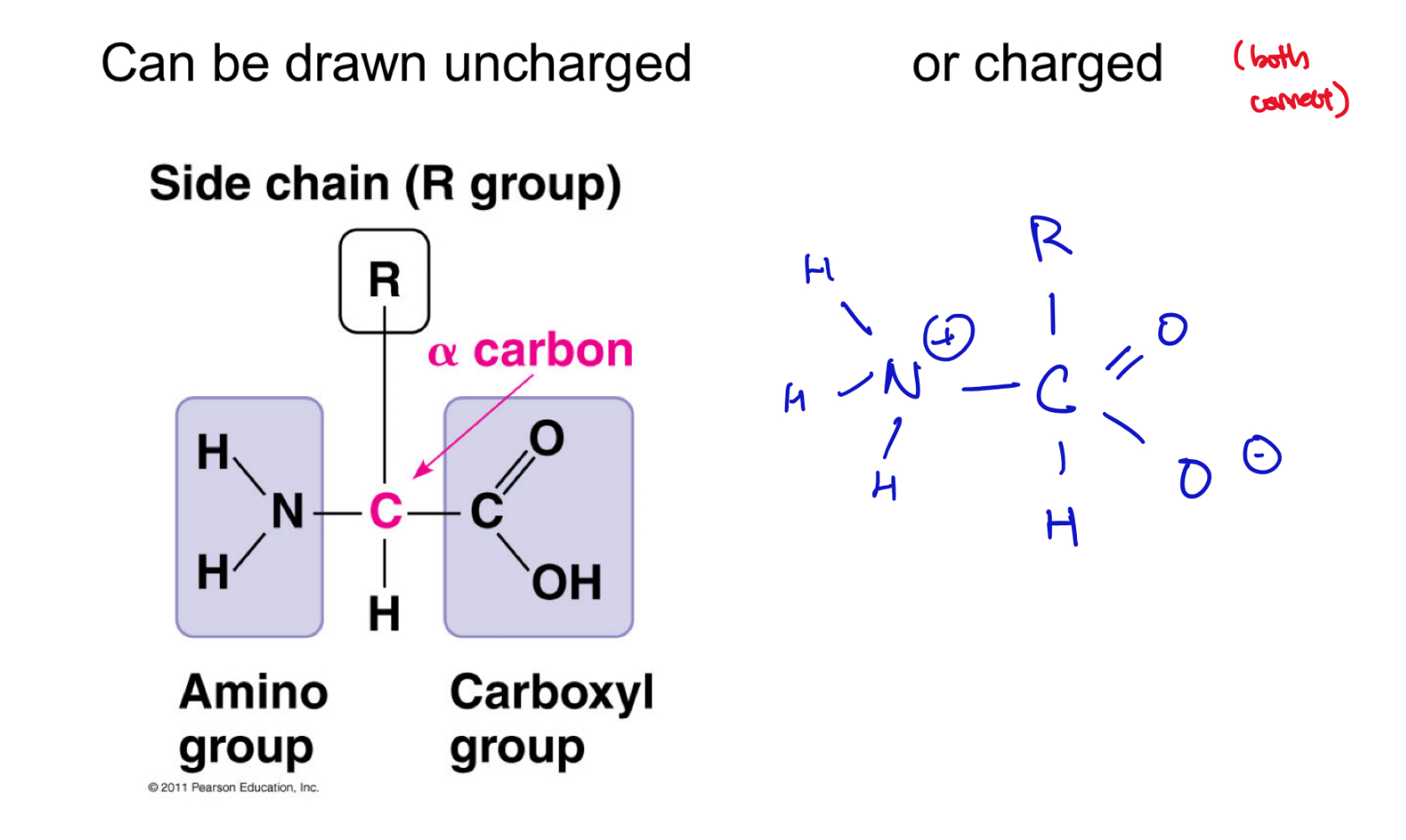
Draw amino acid structure (charged or uncharged)
Classifying Amino Acids
Look for R group!
Nonpolar side chain characteristic
only C + H
Uncharged polar side chain characteristic
Hydroxyl group (OH)
Acidic (negative charge) side chain
Carboxyl group (COOH)
Basic (+ charged) side chain
Amino group (nitrogen w/2H or positive charge on R group)
Structure of protein
Polymer = polypeptide
Amino acids join tgt to make polypeptide (joined by peptide bonds)
Amino acids when joined tgt are called amino acid residues, true or false
TRUE
How do polypeptides turn into proteins?
Polypeptides need to fold into a specific shape to become a protein
Polypeptide chains fold into lowest energy shape possible (all happening in water)
What models show proteins and what are the advantages of each
Ribbon model: able to see folds and backbones
Space filling model: able to see overall shape
Primary structure
Sequence of amino acids
Held by covalent bond (peptide bond) btwn AA
Primary structure determines secondary structure (e.g determines if alpha helix or beta sheets), tertiary structures, quaternary structure
Secondary structure
Regioins within polypeptide
H Bond btwn backbone
1) Alpha helix
2) Beta sheet
Tertiary structure
Various bond btwn side chain (R group)
Quaternary structure
when there is 2 or more polypeptides
Bonds btwn side chains
True or false: Proteins are regulated (able to be turned on or off) by phosphate groups
TRUE!!!!!
True or False: Some proteins are not attached to Ogliosaccharides
False, some proteins are attached to ogliosaccharides
Protein functions
Enzymes: cause chemical reactions to take place
Transporters: move molecules across membrane
Defensive proteins: Protection against disease e.g antibodies
Storage: Storage of amino acids
Hormonal: Coordination of an organism‘s activities e.g insulin
Receptor: Response of cell to chemical stimuli
Contractile and motor proteins: for movement e.g actin/myosin
Structural: for support e.g keratin
Types of nucleic acid
DNA (deoxyribonucleic): Stores information for cells
RNA (ribonucleic acid): allows info stored in DNA to control the cell
What is nucleic acid made up of?
Monomers are nucleotides!!
bases: C,T,A,U,G (nitrogenous bases: rings with nitrogen)
Sugars: Deoxyribose and ribose
Phosphate groups (1,2,3 [monophosphate, di…,tri…])
Combinations
1) base + sugar = nucleoside
2) nucleoside + 1-3 phosphates = nucleotide
3) 2+ nucleotides = nucleic acid
Reading nucleic acids
3 Letters
(x)XXX
last two x’s are abbreviations for phosphate (e.g DP = diphosphate)
If there is a little d in the front = deoxyribose, if none = ribose
Nucleic Acid shape
H bonds between certain bases give DNA and RNA molecules their shape
What is strand character of DNA?
Double stranded!
Length of RNA molecules
Single stranded
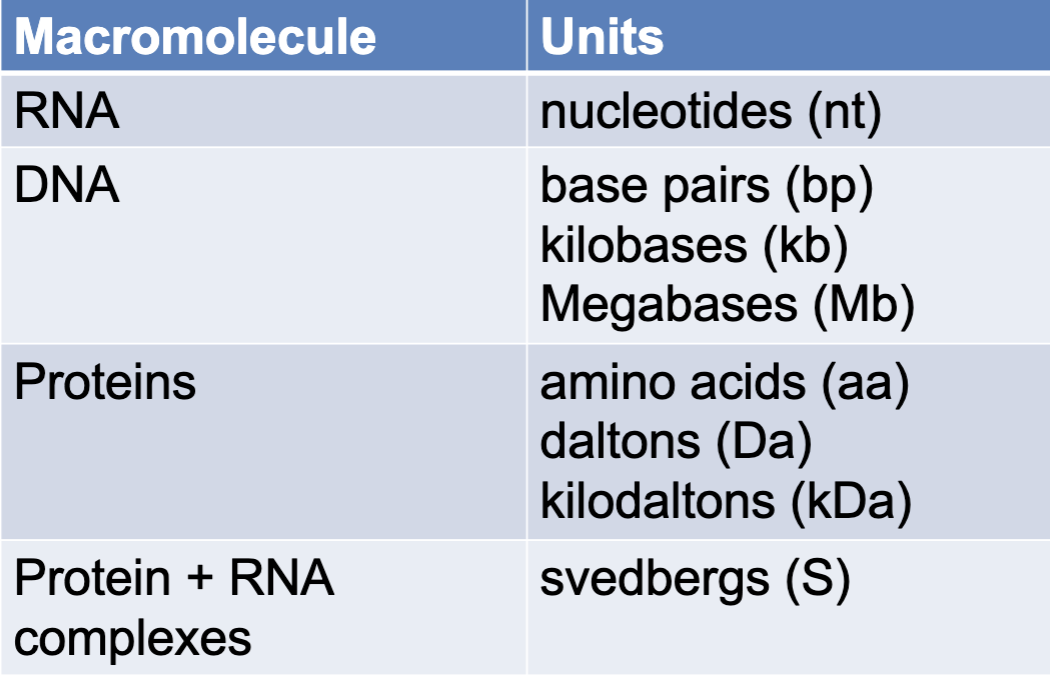
Measured in nucleotides
Length of DNA molecules
Double stranded
Measured in base pairs
ahmad: it’s almost like there’s ginormous boobs in front on me 🤓
me: son i’m crine
Nucleic acids - functions
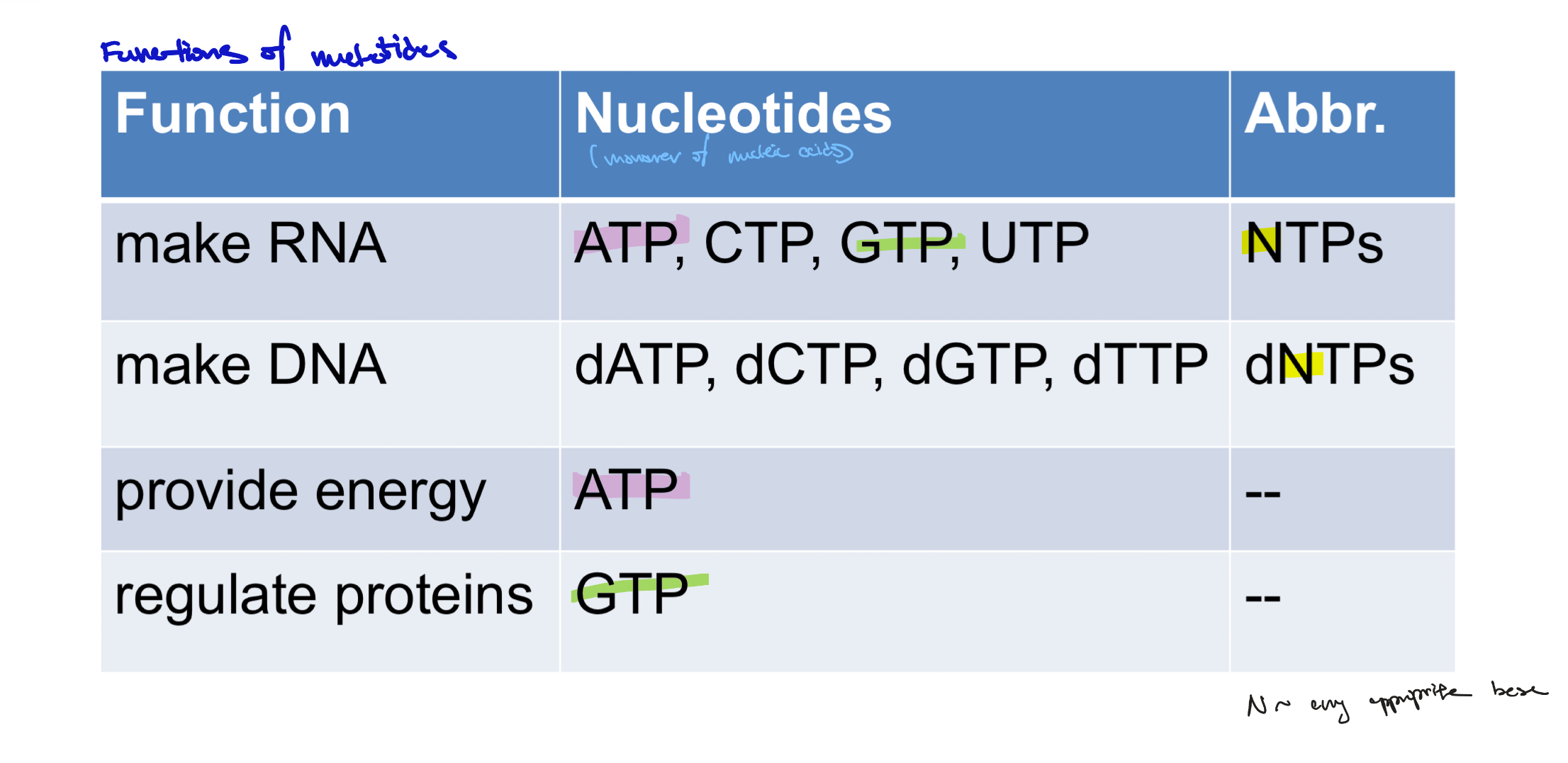
ATP is also used for energy
ATP + H2O → ADP and inorganic phosphate
Types of P
Phosphorus atom: P
Phosphate group: Yellow P
Inorganic phosphate: Grey P
GTP function
GTP is also used to regulate proteins
Adding phosphate can activate/deactivate protein
Function of nucleotide table
Protein and Nucleic acid Units table
Lipids Common properties
NAWT polymers (not long chain of anything)
Mostly hydrophobic (water hating)
Fat component
3 Fatty Acids
1 Glycerol
= Triglyceride!!!!! (fat/oil)
Fats/oil function
Energy storage
Fats
Contain only saturated fatty acids
Solid at room temp
Example: butter
Saturated meaning
Primary carbon interaction is a single bond
Single bonds = straight
Oils
Contain one or more unsaturated fatty acid
Liquid at room temp
Example: olive oil
Unsaturated meaning
Carbons are double bonded
Have bends!
Phospholipid structure
2 fatty acids
1 glycerol
1 phosphate group
1 small organic group
= phospholipid
Amphipathic molecule
Partly hydrophobic
Partly hydrophilic
e.g hydrophilic head and hydrophobic tail
What do phospholipids do in water
Spontaneously form bilayers in water
Glycolipids
Similar in composition and identical in shape with phospholipids
Have monosaccharide instead of phosphate
Steroids
Cholesterol: membranes in animal cells precursor for other lipids
Steroids Function
Molecules to Make membrane
Make other lipids (hormones)
Steroid hormones
Communication used btwn cells in animals
Cells send small molecules (hormones) to communicate to cells far away
Waxes
Hydrophobic
Soft and waterproof material
used by bees and tropical plants
What is used as energy storage?
Carbs and lipids
Carbs as energy storage
Easy to break down
Remove monosaccharide to break down
Lipids as energy storage
Lots of energy per kg
Efficient energy storage
Long term storage in humans?
Fats
Short term storage in humans?
Glycogen
Glycogen
Body’s stored form of glucose
In liver and muscles
“Quick“ energy
Why do cold blooded animals use oil
Stays liquid in cold environments
Oil as energy storage
Lots of energy
Harde to make
Put carbon double bond in fatty acids
Won’t solidify in low temperatures
Lipopolysaccharide
lipid and sugar
User in some bacteria cell walls
Giant glycolipid
Peptidoglycan
Used in most Bacteria cell walls
Proteins and polysaccharides
Cofactors
small molecules that are part of proteins
Some proteins req. cofactors to be functionable
e.g Heme is an organic cofactor
Fe+ is an inorganic cofactor
Cell reproduction (few cells)
Long chain breaks down into smaller chains
Produce amino acid or sugar (specialization)
Why are most cells small? [The surface area to volume problem]
import nutrients through surface
expel waste
small size = enough SA which make sit more efficient in transporting nutrients and waste
If cell is too large volume would increase faster than SA
Specialization cells
200 different
RBC function
Transport oxygen from lung to body tissues
Carry CO2 waste back to lungs
oxygen entering/leaving
Intestine function
Import nutrients from gut into body
Nutrients enters and leaves
What surrounds cells?
Plasma membrane
Functions of the plasma membrane
Contain cell contents
Allows specific molecules to enter or leave
Flexible
All cells have plasma membranes
All plasma membranes have transport proteins
Unicellular
One cell
Multicellular
Many cells
Phospholipid bilayer (structure)
Hydrophilic head
Hydrophobic bilayer
Surrounded by water
Automatically arranges itself
Flexible
Forms Spontaneously
Moderatley fluid
Cholesterol
Amphipathic
Between phospholipids
Helps phospholipids maintain moderate fluidity
Prevents leaking at high temps
Prevents solidifying at low temps
Types of membrane proteins
Integral – span phospholipid bilayer
Peripheral – connected to an integral
membrane protein
Draw membrane protein
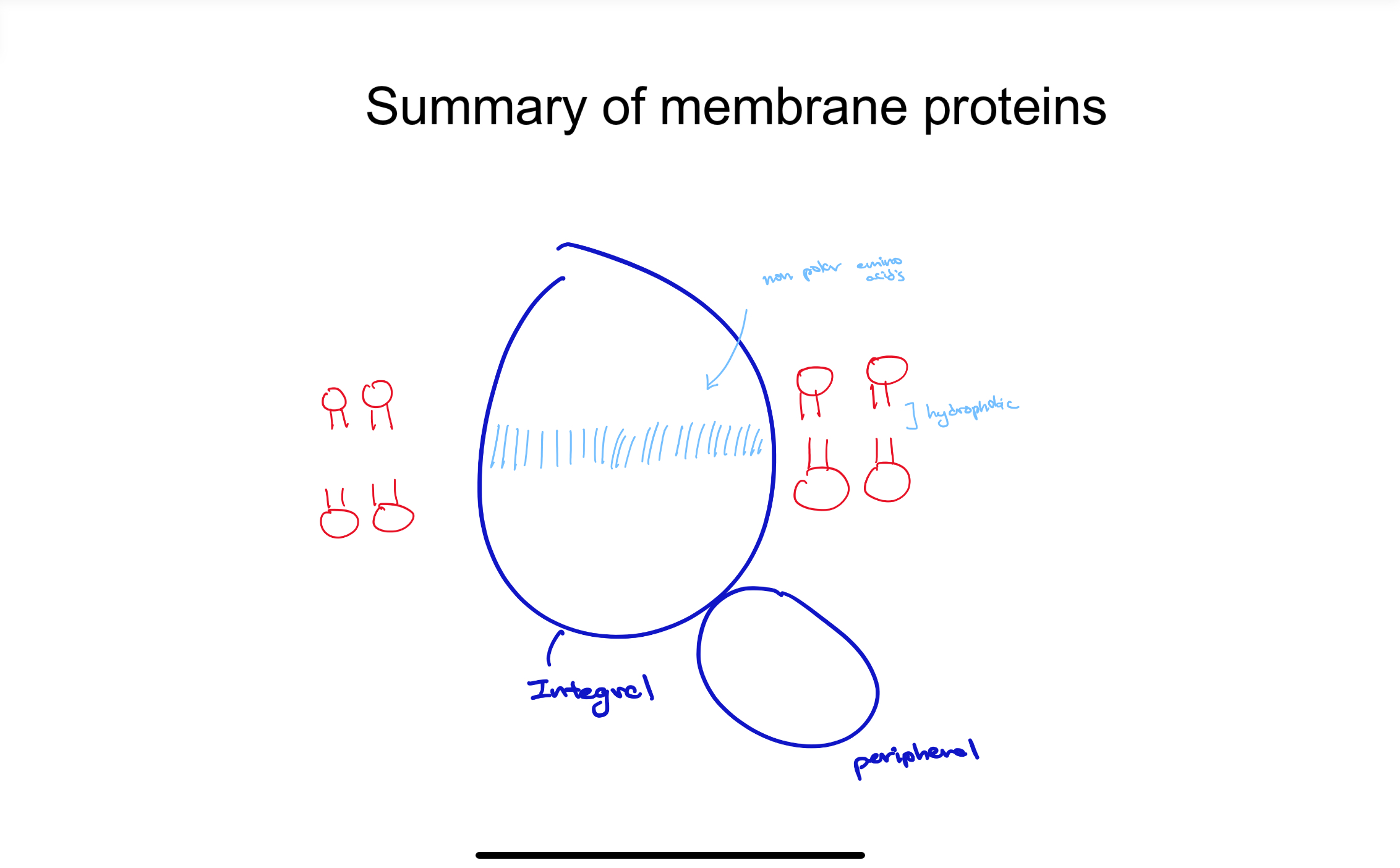
membrane proteins functions
Transporters (move molecules)
Carbohydrates
Protection for cells
Glycolipids and glycoproteins face outwards to protect the cell
Animal cell plasma membranes
Don't have a cell wall for protection
Membrane has:
• phospholipids
• membrane proteins
• cholesterols
• carbohydrates
Human RBC plasma membrane
a) Antibodies
b) RBCs
c) Glycolipids
d) Integral membrane proteins
Antibodies
made by white blood cells (WBCs)
• stick to antigens on target cells (all cells have antigens on the surface)
• small proteins
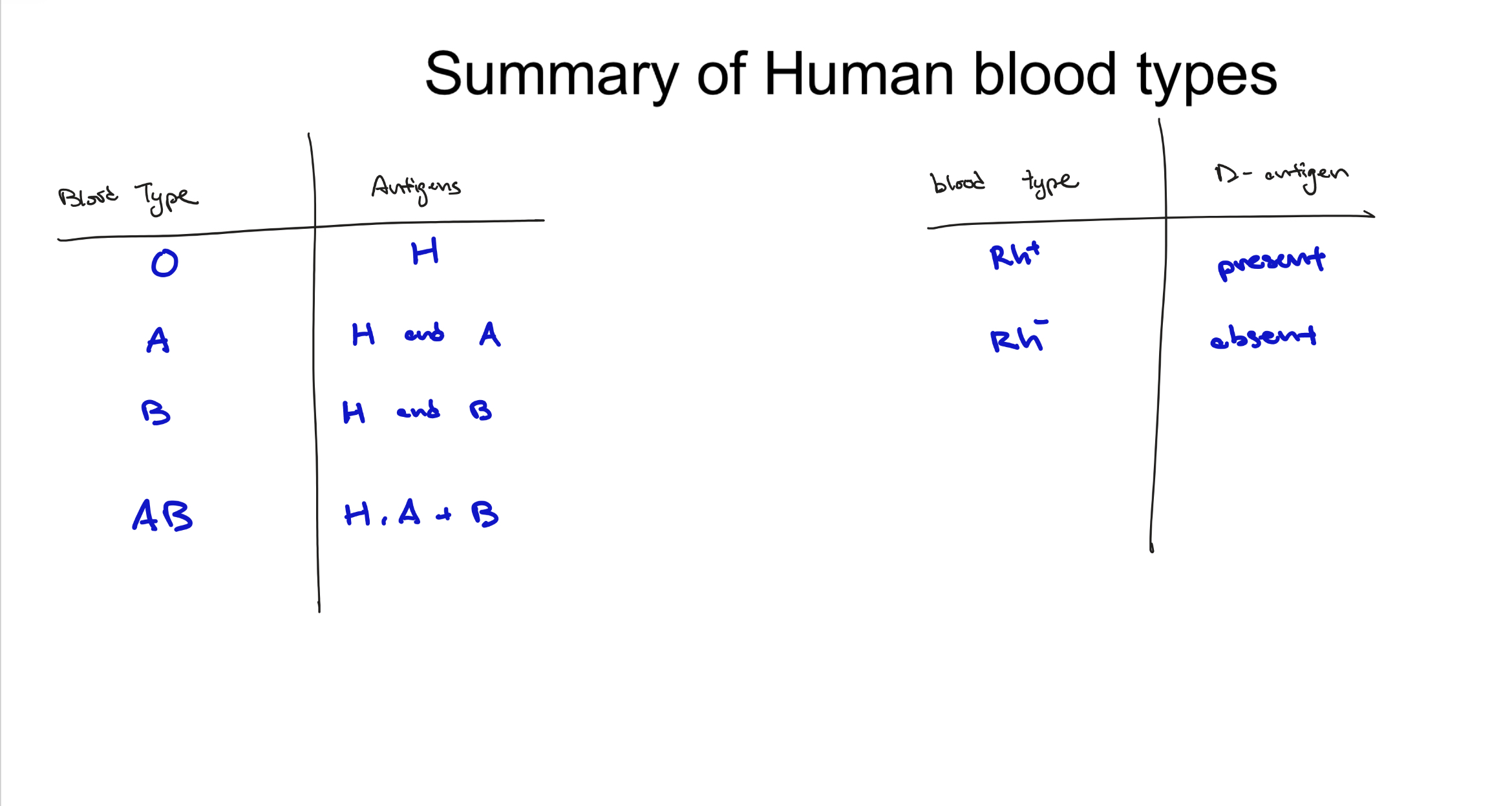
Human Blood type and Antigen
glycolipid
Everyone has one or more of:
A-antigens
B-antigens
H-antigens
Integral membrane protein
Most, but not all, people
have D-antigen proteins
Plant cell plasma membranes
Have a cell wall for protection
Membrane has just (simpler bcuz of cell wall):
• phospholipids
• membrane proteins
Prokaryotic (Bacteria) cell plasma membranes
Have a cell wall for protection
Membrane has just (simpler bcuz of cell wall):
• phospholipids
• membrane proteins
Why and how do you increase membrane surface area
More membrane = more membrane
proteins = more things done by membrane protein
Outfoldings (human intestine)
Infoldings (some bacteria)
Internal membranes (all eukaroytes)
increase Sa but maintain same voume

