PERIO Kasies quizlet modified
 Call Kai
 Learn
Learn Practice Test
 Spaced Repetition
 Match
Match Flashcards
 Knowt Play
1/48

There's no tags or description
Looks like no tags are added yet.
Name | Mastery | Learn | Test | Matching | Spaced | Call with Kai |
|---|
No analytics yet
Send a link to your students to track their progress
49 Terms
1. Gingiva
2. Cementum
3. Periodontal ligament
4. Alveolar bone
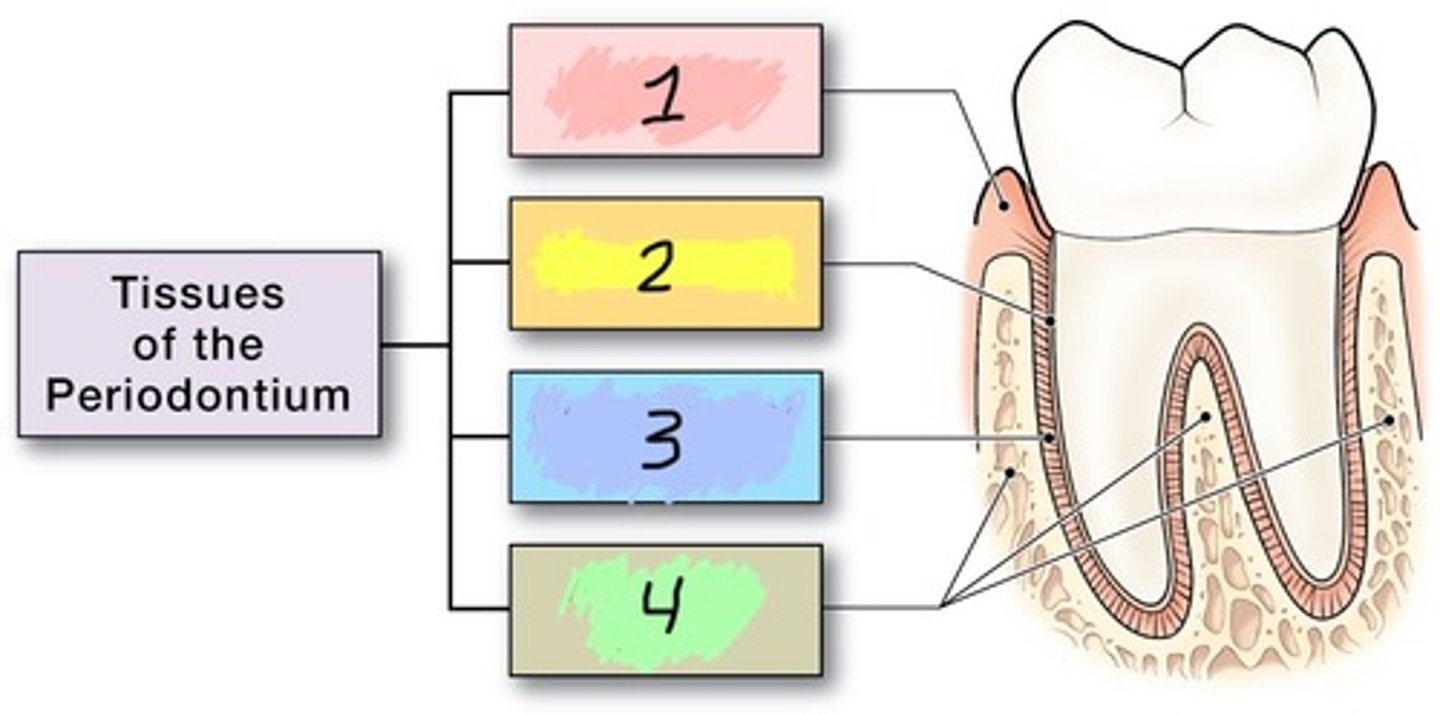
gingiva
mucosa that surrounds cervical portions of teeth and covers alveolar process
incisor and molar regions
Attached gingiva is widest in what regions?
premolar regions
Attached gingiva is narrowest in what region?
palate
What area is the attached gingiva is NOT measured because it is difficult to distinguish it from the mucosa.
all the same color and you can't pull it to see it better like you can pull the cheeks
attached and interdental
What gingiva is stippled
root cementum
does NOT have its own blood or nutrient supply
sharpeys fibers
the terminal endings of periodontal ligament fibers that attach to cementum.
Five functions of PDL (periodontal ligament)
1. Supportive - maintains the tooth in the socket
2. Sensory - provides pressure and pain sensation
3. Nutritive - supplies nutrients to cementum and bone
4. Formative - provides cementoblasts and osteoblasts
5. Remodeling - remodels alveolar bone in response to pressure
basal lamina
A thin mat that underlies the epithelium
epithelial cells are considered avascular, where do they get oxygen and nutrients?
from the underlying connective tissue by diffusion
epithelial tissue
Enamel is derived from what type of tissue?
rete pegs
Epithelial ridges
Desmosomes
connect epithelial cells to each other. (holding hands)
Hemidesmosomes
connect epithelial cells to the basal lamina (touching table)
pregnancy associated gingivitis
An exaggerated inflammatory response from hormones; usually occurring during the 2nd and 3rd trimesters of pregnancy
Gingivitis/ gingival changes
Blood dyscrasia (leukemia) can cause what early oral finding? (first clinical signs)
infants, institutionalized elderly, and alcoholics
groups of people most at risk for Plaque-induced gingival disease modified by malnutrition?
marginal gingiva
not attached- can never be stippled, it is smooth in health
Hereditary Gingival fibromatosis
A rare, benign, hereditary enlargement of attached gingiva (very fibrotic tissue)
What is the key clinical feature of necrotizing periodontal disease (gingivitis stage)?
Ulcerated and necrotic papillae and gingival margins (punched-out or cratered appearance).
candidiasis (thrush)
What is the most common fungal infection of the oral cavity?
cinnamon and carvone
Which two flavor additives can cause allergic reactions of the gingiva?
erythema multiforme
Large symmetrical “target-like” red blotches all over the skin
lichen planus
Lacy white patches in the oral cavity are characteristic of what condition?
Neoplasms
can be premalignant or malignant
periodontitis
Whats the number 1 cause of tooth loss in adults?
pain or no pain with perio
no pain
interproximals with heavy deposits
Rapidly progressing disease occurs more frequently here
when is someone considered to have periodontitis
When there is interdental clinical attachment loss detectable at two or more nonadjacent teeth.
Can attachment loss be caused by anything other than periodontitis?
no, nothing other than periodontitis can cause this
furcation involvement
class III and IV are the only classes to involve this
???True (they have all the same measurements)
???True or false: the only difference between a class III and IV periodontitis is that class IV has either mobility, masticatory dysfunction (biting issues ), or less than 20 teeth remaining.
bone loss
Periodontitis "grade" is based on indirect evidence on assessment of
What are the 3 stages of necrotizing periodontal disease?
Necrotizing gingivitis
Necrotizing periodontitis
Necrotizing stomatitis (most severe, most rare)
Risk factors for necrotizing periodontal disease
• Young adults (age 22-24)
• Often college-aged
• Common in industrialized countries
• Often Caucasian
• Smokers
• People under high stress
• People not sleeping well
• Poor nutrition / low protein intake
• Alcohol users
• Poor oral hygiene
• Pre-existing gingivitis
Why do people get necrotizing periodontal disease?
develops due to compromised immune response combined with plaque-induced inflammation
abutment
Which implant component protrudes partially or fully through the gingival tissue?
Why is titanium used for dental implants?
Because it is biocompatible and will not be rejected by the body.
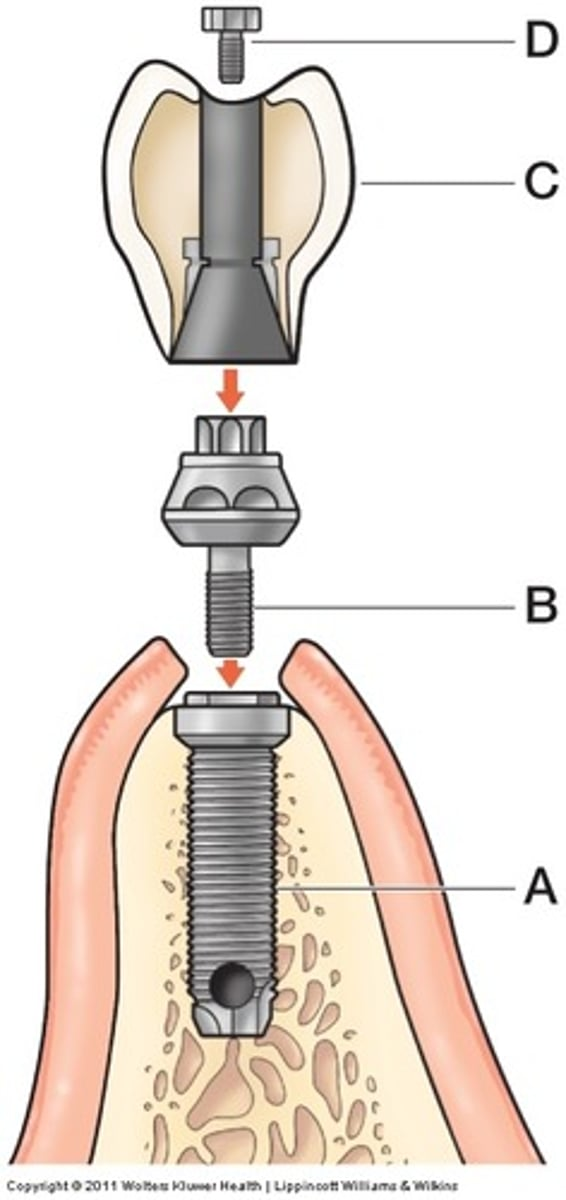
A—implant body
B—abutment
C—crown or prosthesis
D—screw
biologic seal
At the implant-to-epithelial tissue interface, the epithelium adapts to the titanium abutment post
why is the implant-to-connective tissue interface different than natural teeth
gingival fibers and PDL cannot insert into titanium
peri-implantitis
Which peri-implant condition involves bone loss?
Peri-implant mucositis
implant site shows bleeding on probing but no radiographic bone loss
peri-implant mucositis
gingivitis in an implant is called
peri-implantitis
periodontitis in an implant is called
final stages of disease
When does implant mobility occur in peri-implantitis?
instruments recommended for implant maintenance
titanium instruments, others can scratch or groove the implant surface, increasing biofilm retention and disturbing the biocompatible coating
residual cement
retained material, common risk factor for implant failure

