07 - Digestive System, Nutrition & Obesity
 Call Kai
 Learn
Learn Practice Test
 Spaced Repetition
 Match
Match Flashcards
 Knowt Play
1/59

There's no tags or description
Looks like no tags are added yet.
Name | Mastery | Learn | Test | Matching | Spaced | Call with Kai |
|---|
No analytics yet
Send a link to your students to track their progress
60 Terms
Digestive organs are located within the
gastrointestinal (GI) tract.
function of gastrointestinal (GI) tract
to hydrolyze, or break down, the macromolecules found in food
The nutrients made available are transported by the blood to our cells.
Where does digestion begin?
a. The mouth
b. The stomach
c. The small intestine
d. The large intestine
e. The pancreas
a
Ingestion
intake of food via the mouth
Digestion
mechanically or chemically breaking down foods into their subunits
Mechanical digestion
▪ Physical breaking of food into smaller pieces
Chemical digestion
▪ Breaking of chemical bonds so that complex molecules are broken into smaller subunits
▪ The digestive organs:
• Mouth, Pharynx (throat), Esophagus, Stomach, Small intestine, Large intestine
accessory glands and organs of digetsive sustem
Salivary glands, Pancreas, Liver, Gallbladder
enzyme produced by salivary glands
amylase
enzyme produced by pancreas
digestive enzymes
enzyme produced by liver
helps digest fat
Digestion processes:
Movement
Absorption
Elimination
Digestion processes: Movement
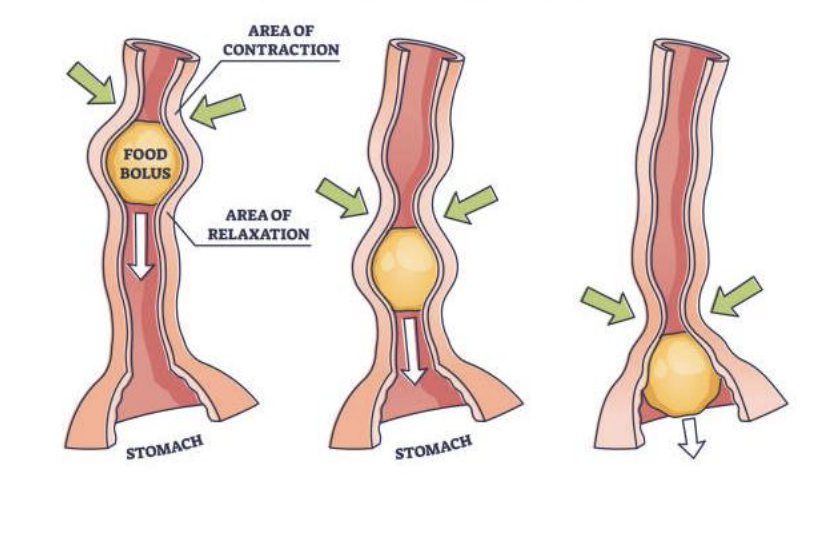
food is passed from one organ to the next, normally by contractions of muscle
Digestion processes:Absorption
movement of nutrients across the GI tract wall into the blood; they are then delivered to cells
Digestion processes:Elimination
removal of indigestible wastes through defecation
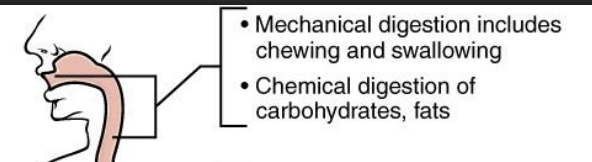
Functions of the mouth
• Begins mechanical digestion
• Begins chemical digestion
• Monitors food quality
• Prepares (moistens and manipulates) food for swallowing
_____, ______, and _____ contribute to mouth’s functions
Teeth, salivary glands, and tongue
Salivary glands and chemical digestion
• Release saliva into mouth
• Water moistens food
• Mucus binds food
• The enzyme, salivary amylase (targets carbs), begins chemical digestion of starch
Peristalsis
contractions that push food through the digestive tract
Digestion begins in the ___ and continues as food travels through the __________. Most absorption occurs in the ______.
mouth
small intestine
small intestine
what happens in the mouth
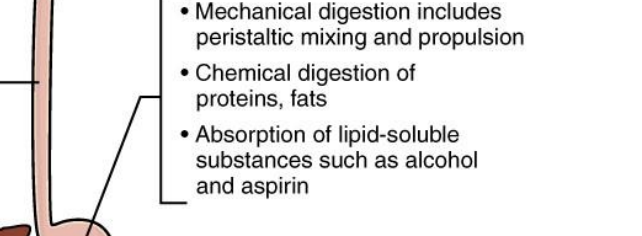
what happens in the stomach
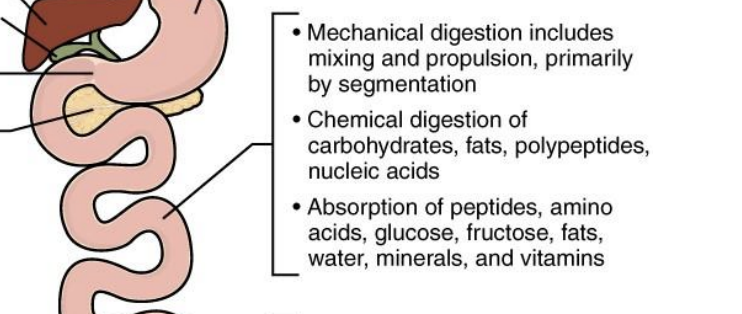
what happens in the small intestine
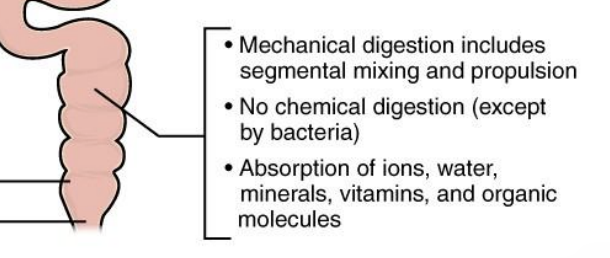
what happens in the large intestine
Stomach location
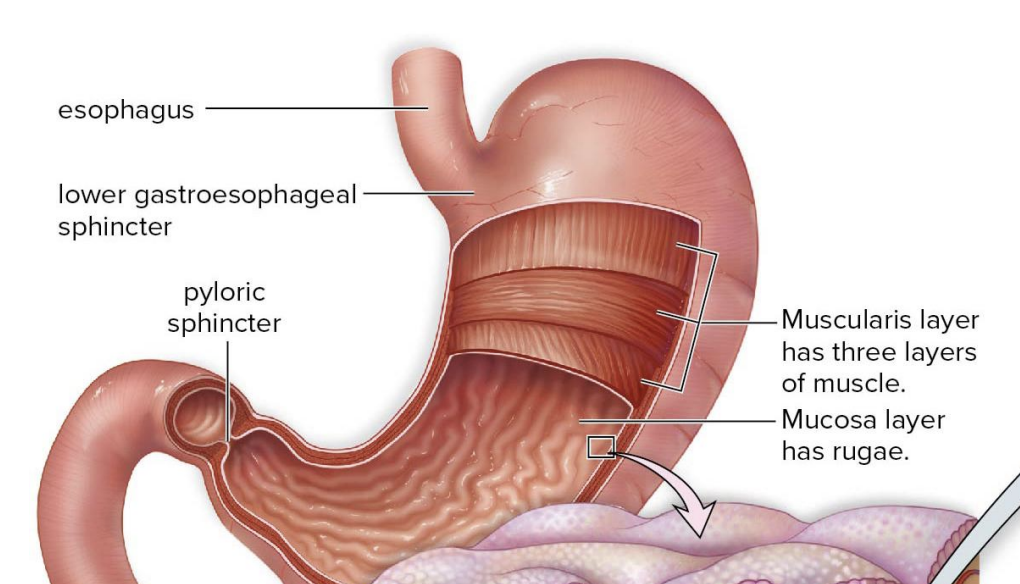
thick, walled, J-shaped organ on left side of body beneath diaphragm
Stomach function
Stores food, starts digestion of proteins (w protease), and controls movement of food into the small intestine (not quickly) but does not absorb nutrients
can Stomach absorb alcohol
dual solubility property allows it to easily disovle in blood or bodily fluids
thats why it is said to intake alcohol with food
Structure of the Stomach
3 layers - circular, longituidal, obique
why?
can mix more easily
mucosa layer has rugae
gastric glands
how the stomach empties
The mucosa has deep folds called
rugae(allows stomach expansion)
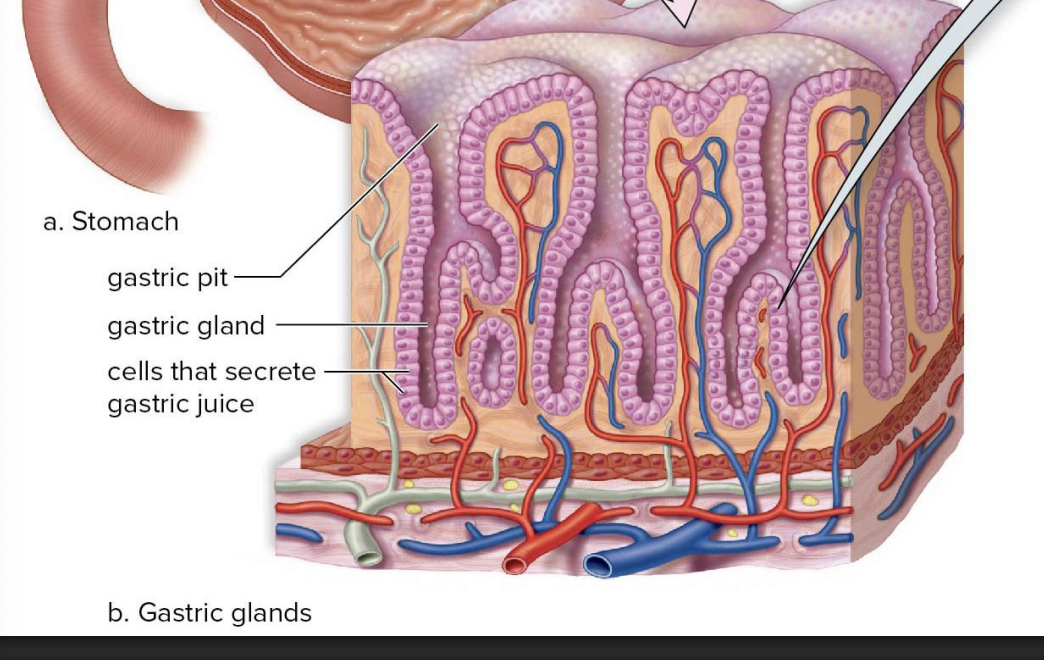
The Stomach Contains gastric pits, which contain
gastric gland
deep pits, produce gsatric juices
gastric glands produce
gastric juice
gastric juice includes
• Hydrochloric acid (HCl)—pH of 0-3
• Kills pathogens and activates pepsinogen → pepsin (digests proteins)
• Mucus
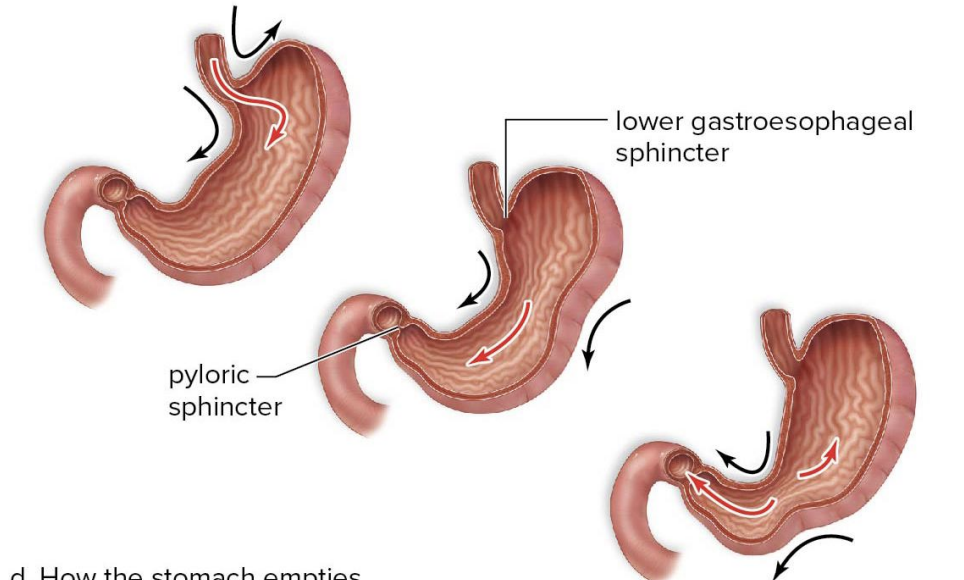
Normally, the stomach empties in
2–6 hours
Chyme—
a mixture of food and gastric juice
Pyloric sphincter
allows only a small amount of chyme to enter the small intestine at a time
heart burn (grd) → back up
In the epithelium, gastric pits lead to gastric glands that secrete
gastric juice.
The gastric gland
contain different types of cells that secrete a variety of enzymes, including HCl, which activates the protein-digesting enzyme pepsin.
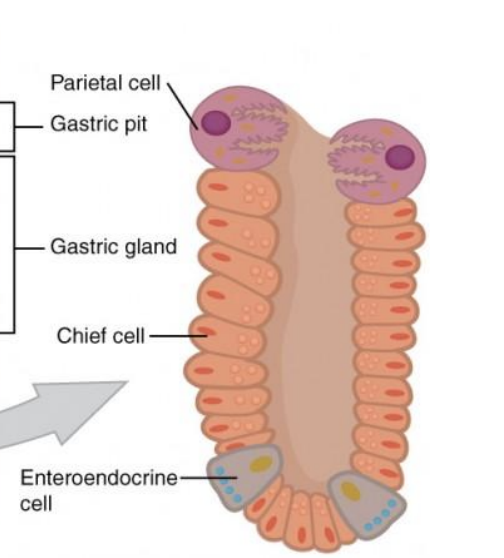
chief cells produces
Pepsinogen
Inactive enzyme → converted to pepsin
Function: digests proteins
Gastric lipase
Enzyme that helps break down fats (minor role)
enteroendocrine cells produce
hormones + other peptides
regions of the small intestine
– Long, highly convoluted tube extending from the stomach to large intestine
– Region where most digestion and absorption takes place
– 6-8 meters in length; 2,700 square feet
Small Intestine function
▪ Chemical digestion
▪ Absorption (primary site)
Chemical digestion in SI
▪ Carbohydrates, proteins, fats, and nucleic acids are broken down into their simplest forms
▪ Performed by enzymes of the pancreas and small intestine, aided by bile produced in the liver, and released into the small intestine
▪ Aids in digestion and absorption of fats
absorption in SI
▪ Surface area of small intestine is increased by
• Pleated lining
• Villi
• Microvilli

