PSY1210 Foundations Deck: Attention → Brain → Neurons
 Studied by 0 people
 Call with Kai
 Learn
Learn Practice Test
 Spaced Repetition
 Match
Match Flashcards
 Knowt Play
1/60

There's no tags or description
Looks like no tags are added yet.
Name | Mastery | Learn | Test | Matching | Spaced | Call with Kai |
|---|
No analytics yet
Send a link to your students to track their progress
61 Terms
What is selective attention?
Focusing cognitive resources on a subset of sensory input so important information is processed despite limited capacity.
Why is selective attention necessary?
Because sensory input exceeds processing capacity; attention prioritizes information for safety, learning, and action.
What is the illusion of attention?
The mistaken belief we notice most notable events when we actually filter out most incoming information.
Define change blindness.
Failure to notice large changes in a visual scene, especially across a visual disruption.
Define inattentional blindness
Failing to see a visible object because attention is directed elsewhere, even when looking directly at it.
What does attentional capacity mean?
The finite amount of processing resources available at any moment.
How do attentional blindspots show limits of consciousness?
They show conscious perception depends on attention; unattended stimuli may not reach awareness.
What is the Dorsal Attention Network (DAN)?
A brain network supporting goal‑directed, top‑down attention to external stimuli.
What is the Salience Network (SN)?
A network that detects behaviorally relevant stimuli and helps switch attention between internal and external focus.
What role does the thalamus play in sensory processing?
Acts as a switchboard, routing sensory input to cortical and subcortical regions.
Which is the fast threat pathway.
a. Sensory thalamus → amygdala → rapid fear response; advantage is speed.
Which is the slow threat pathway.
b. Sensory thalamus → sensory cortex → higher cortical areas → amygdala; provides detailed evaluation.
How does stress affect threat processing?
Stress biases processing toward the fast amygdala pathway, reducing cortical regulation and increasing reactivity.
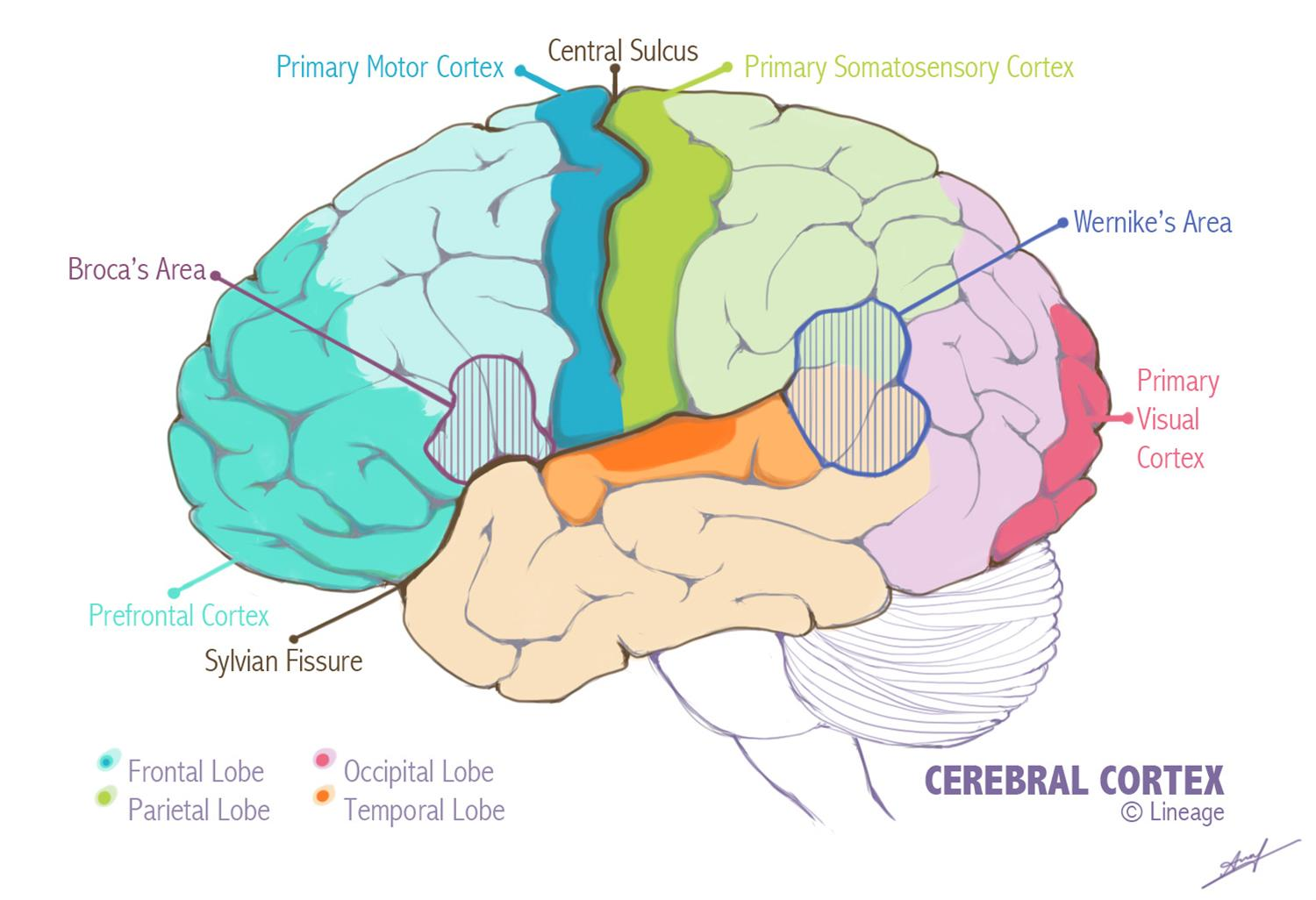
Which cortical areas help regulate the amygdala?
Prefrontal cortical regions involved in evaluation and inhibition.
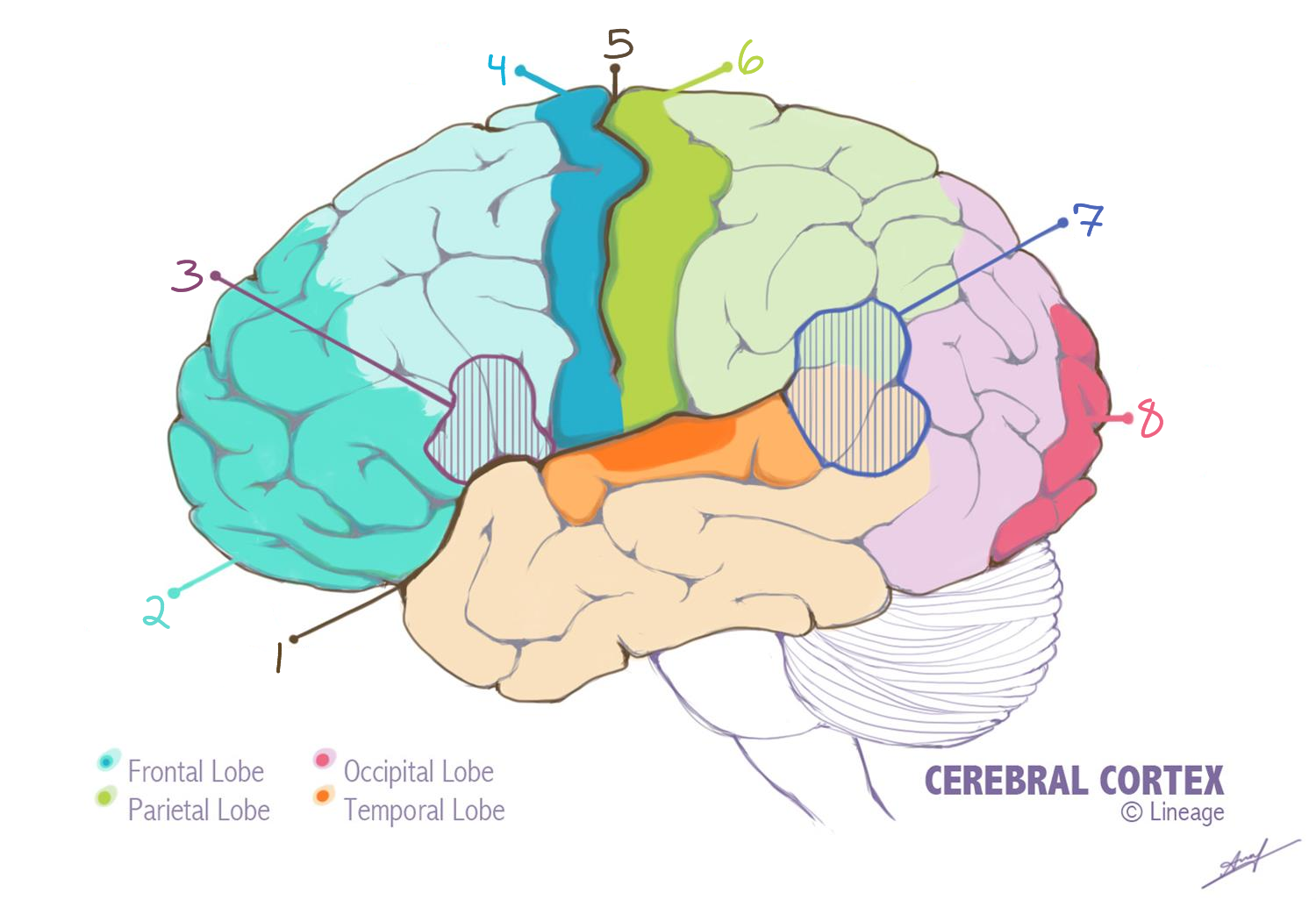
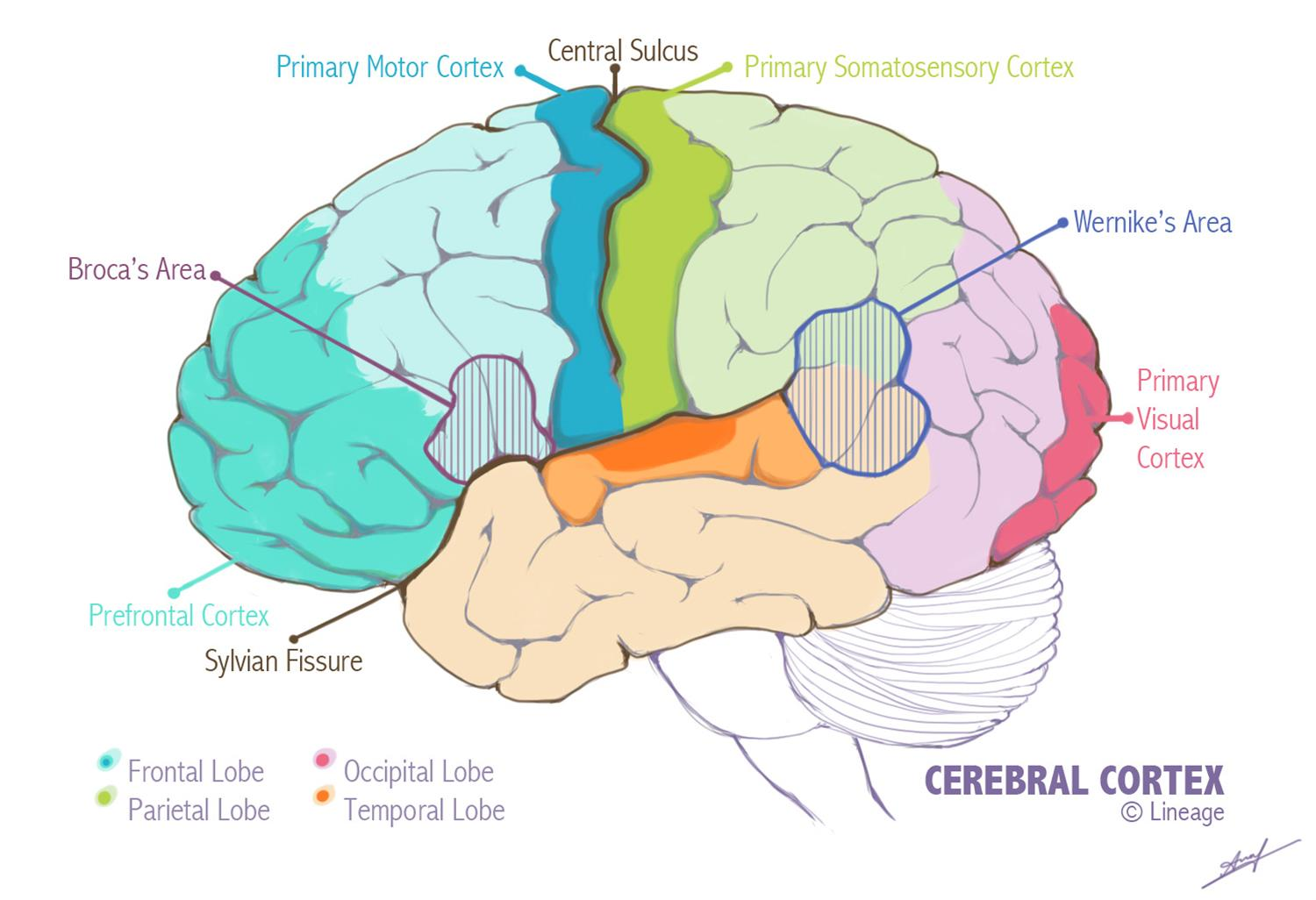
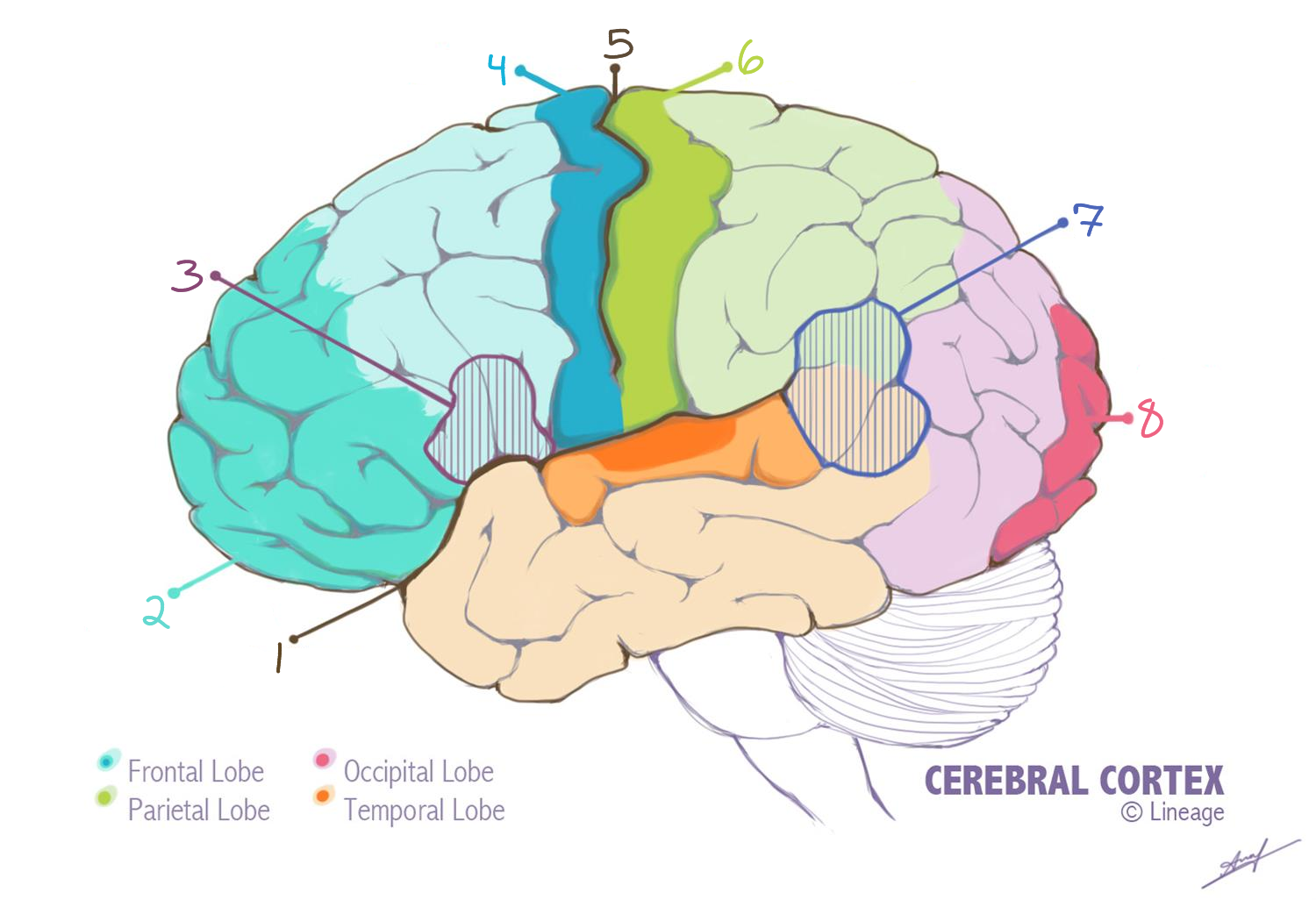
Where is the Prefrontal Cortex located?
at the front of the frontal lobe
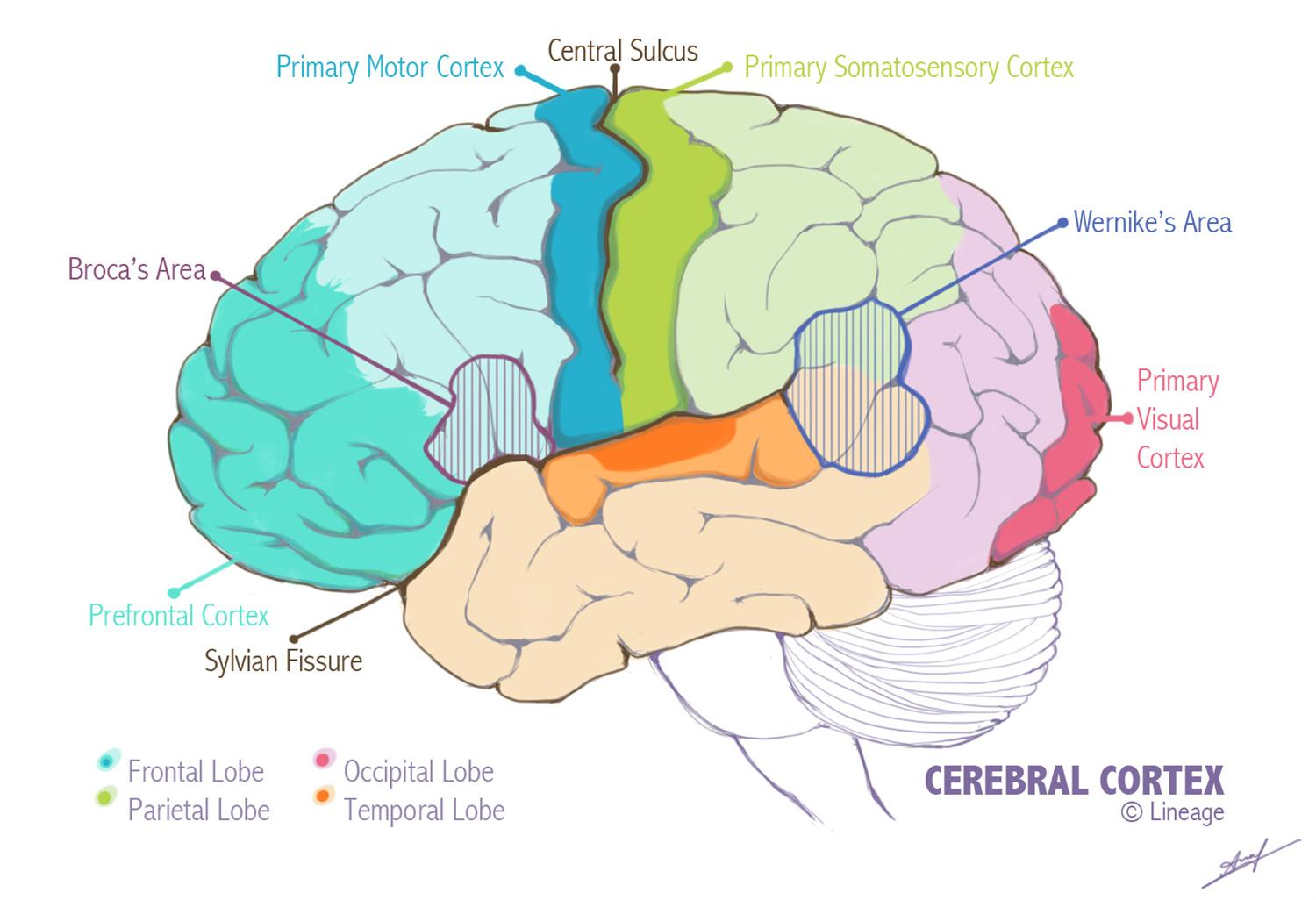
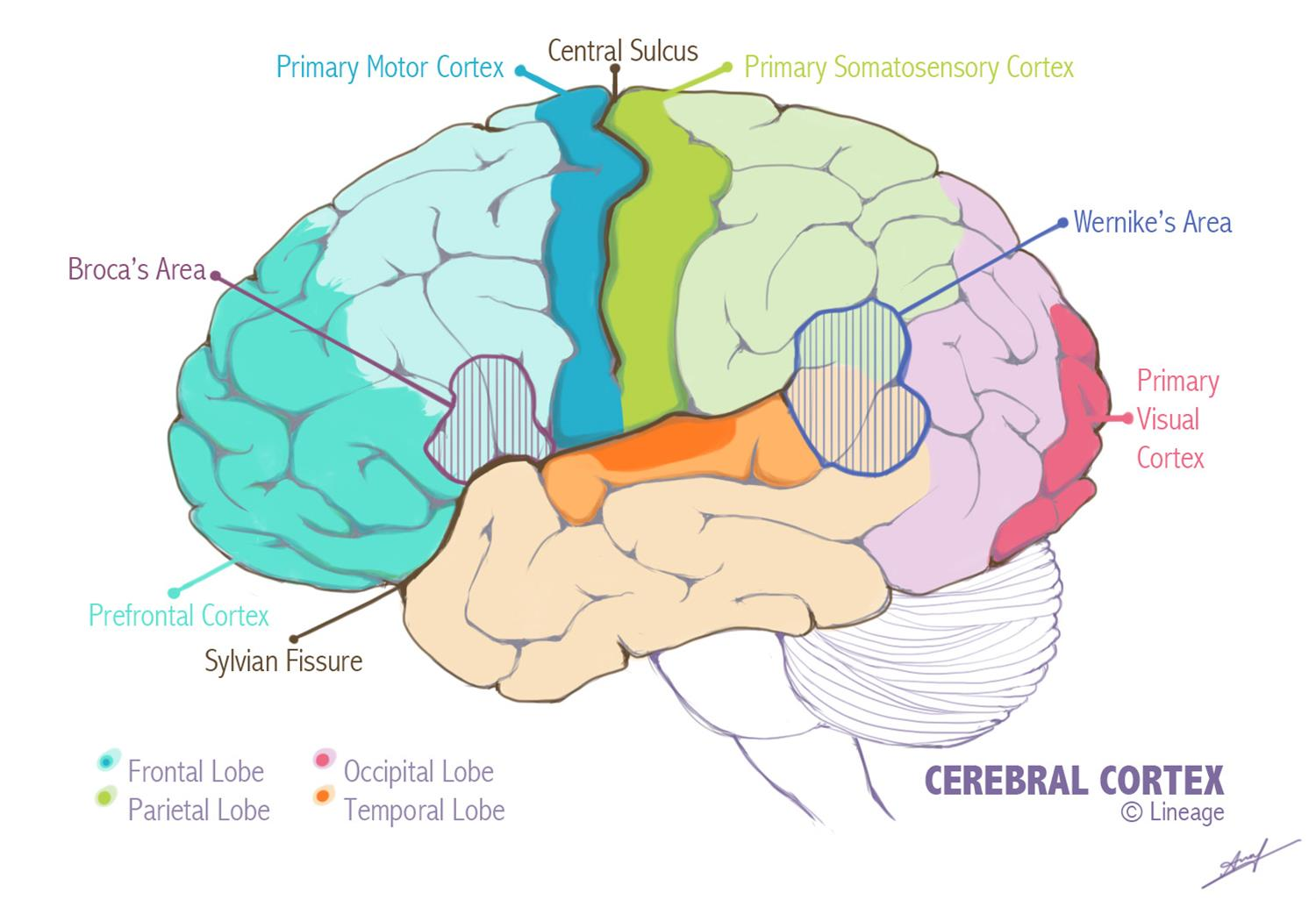
What does the prefrontal cortex do?
Supports planning, decision‑making, social behavior, and executive control
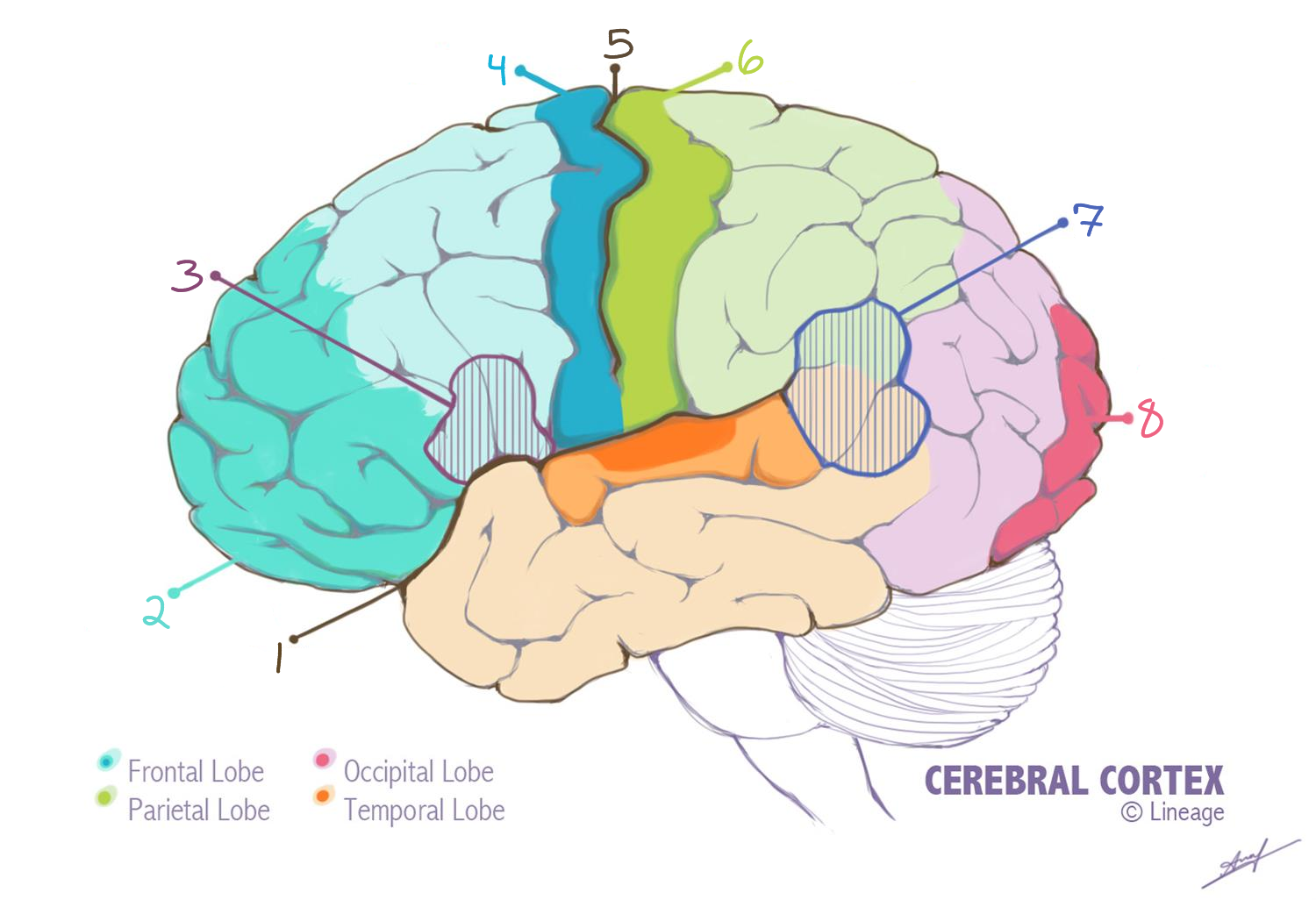
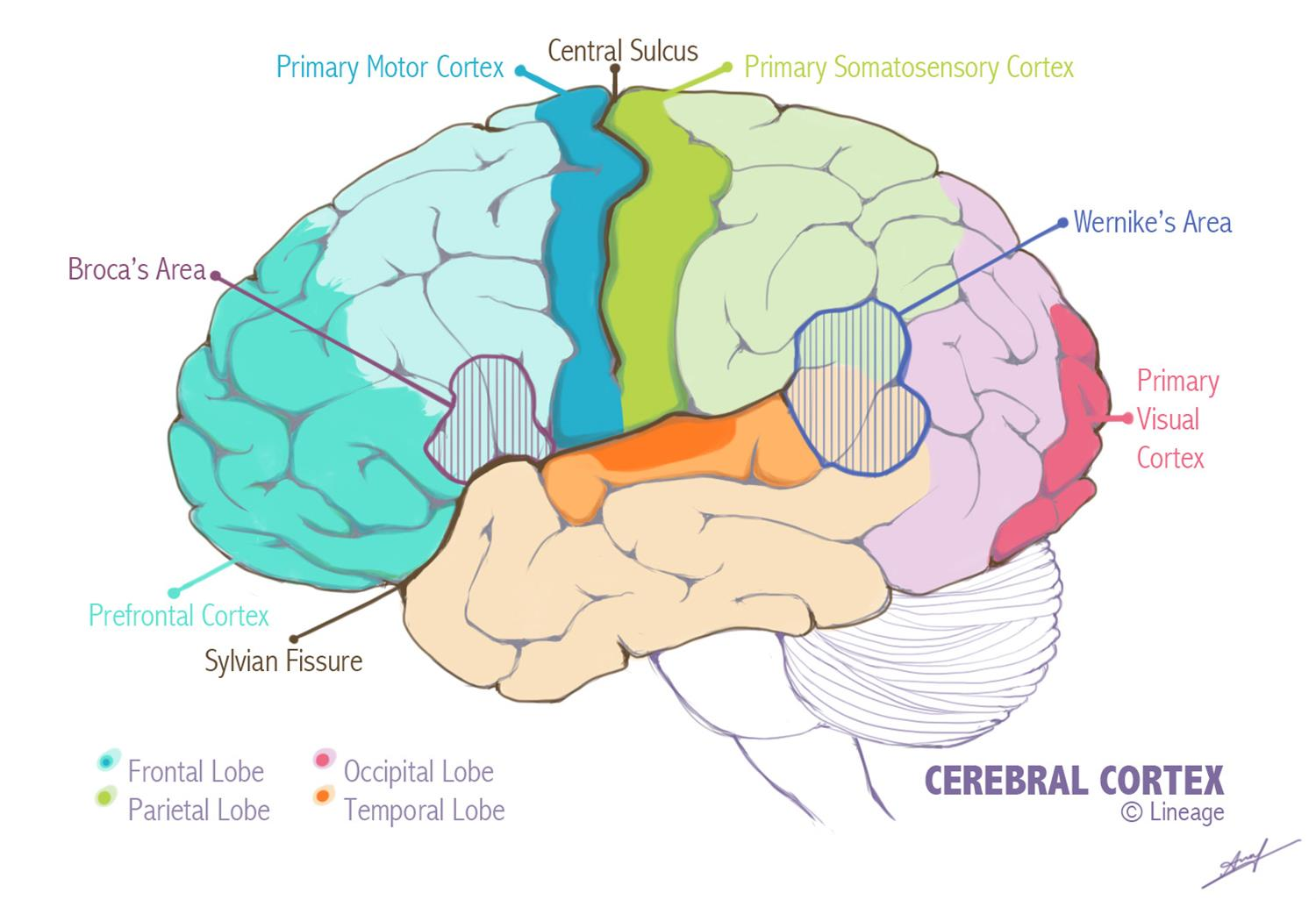
Where is Broca’s area located?
In the left frontal lobe
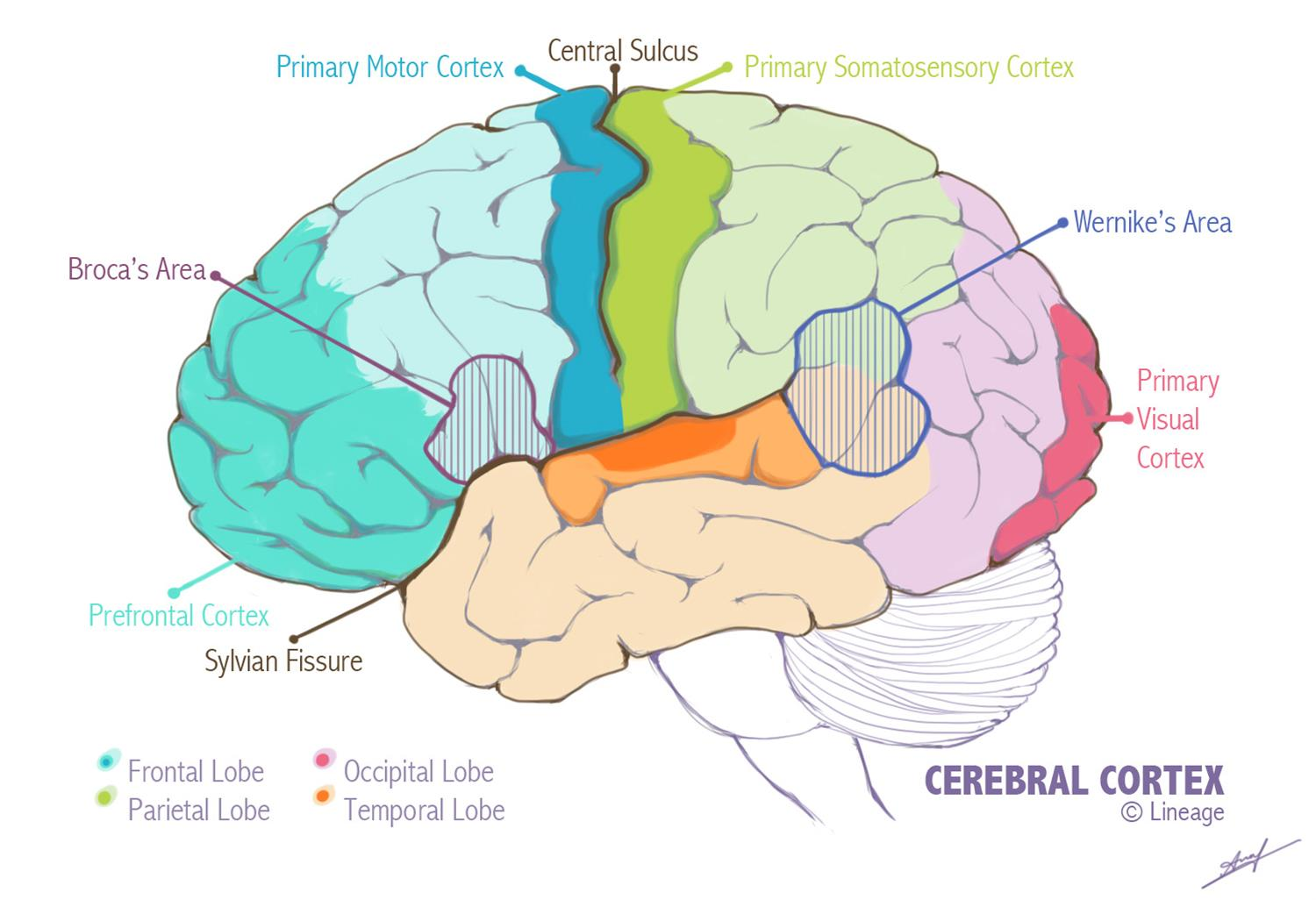
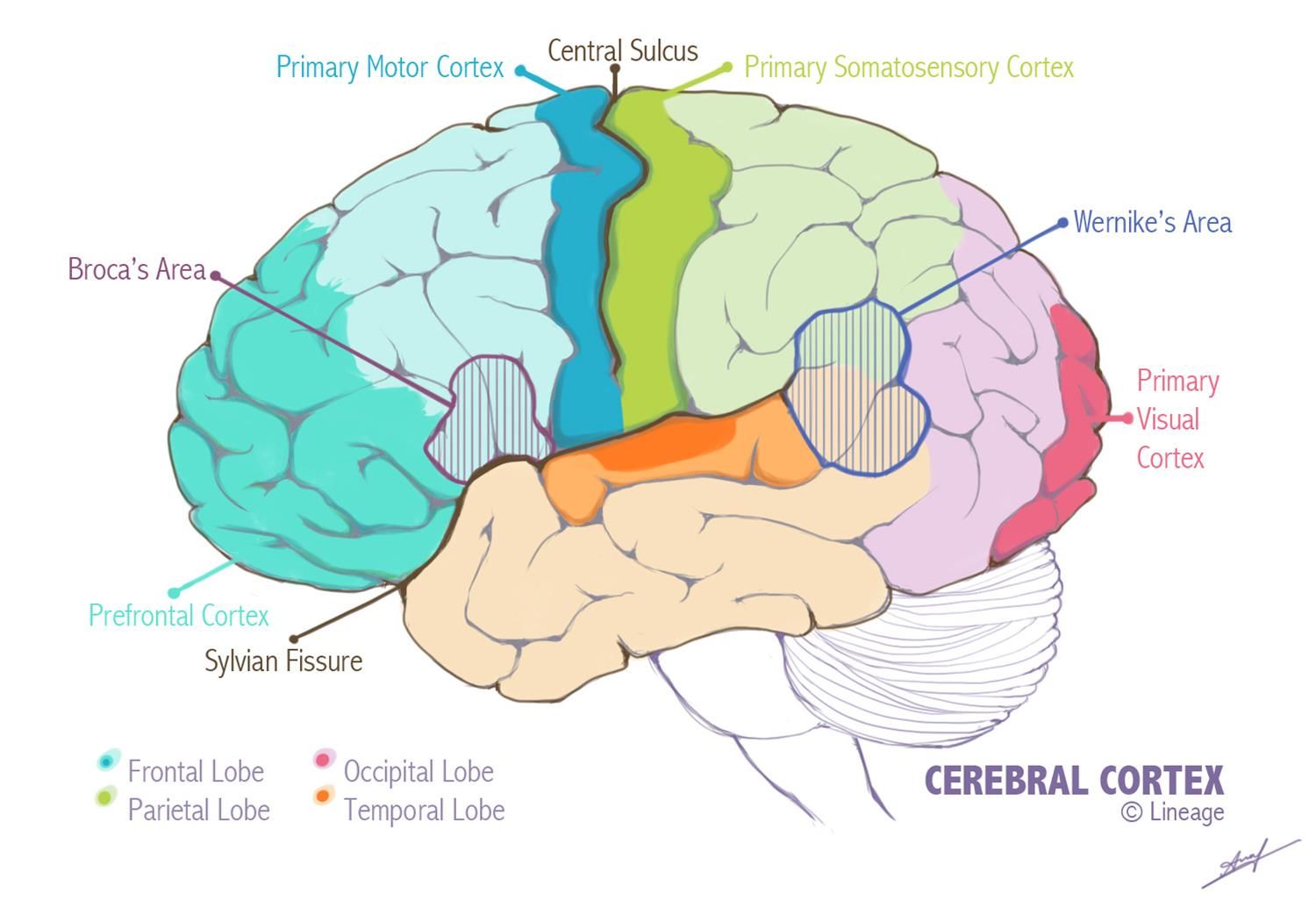
What does Broca’s area do?
Responsible for speech production and articulation.
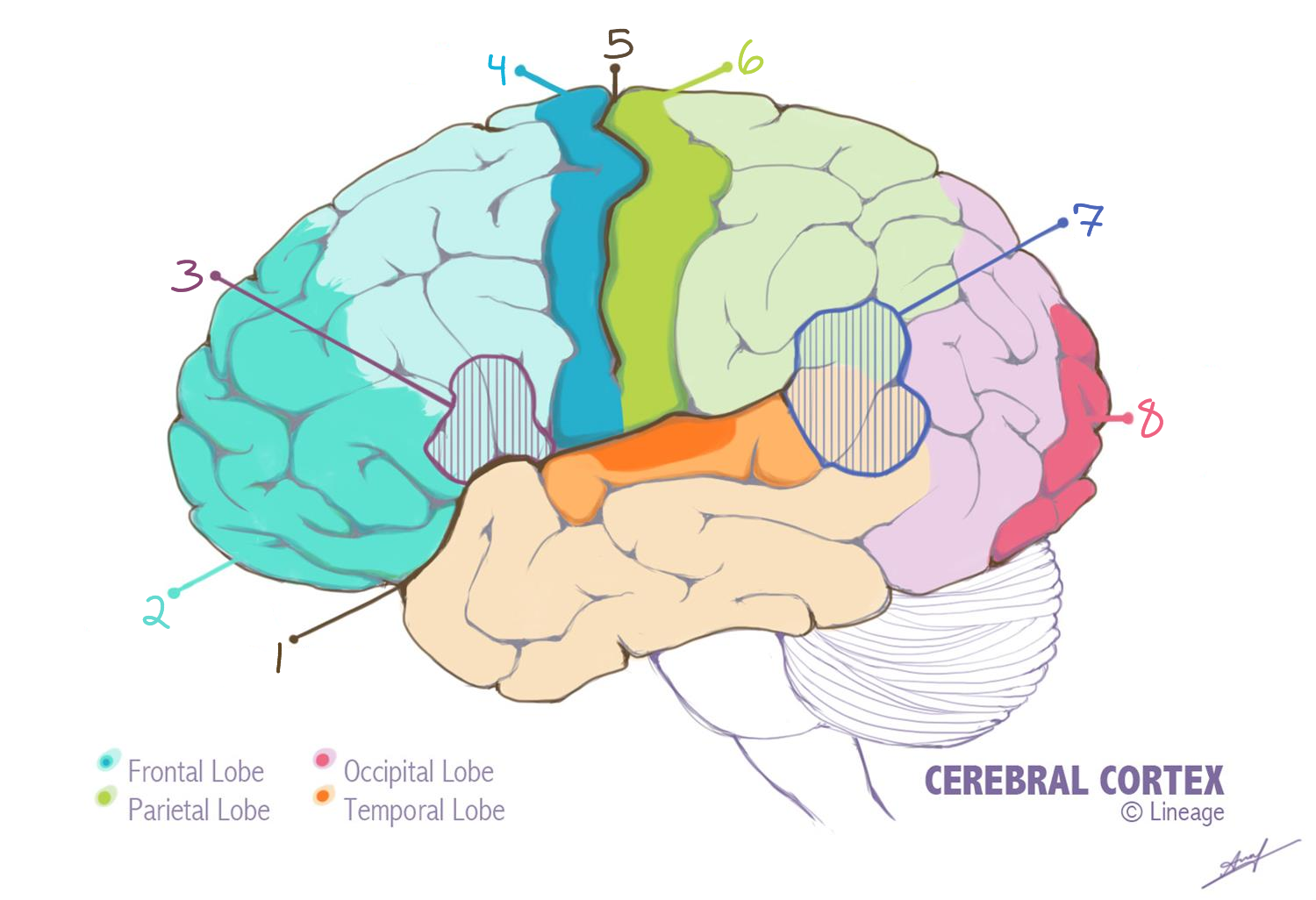
Where is the primary motor cortex located?
In the frontal lobe
What does the primary motor cortex do?
Controls voluntary movement of muscles throughout the body.
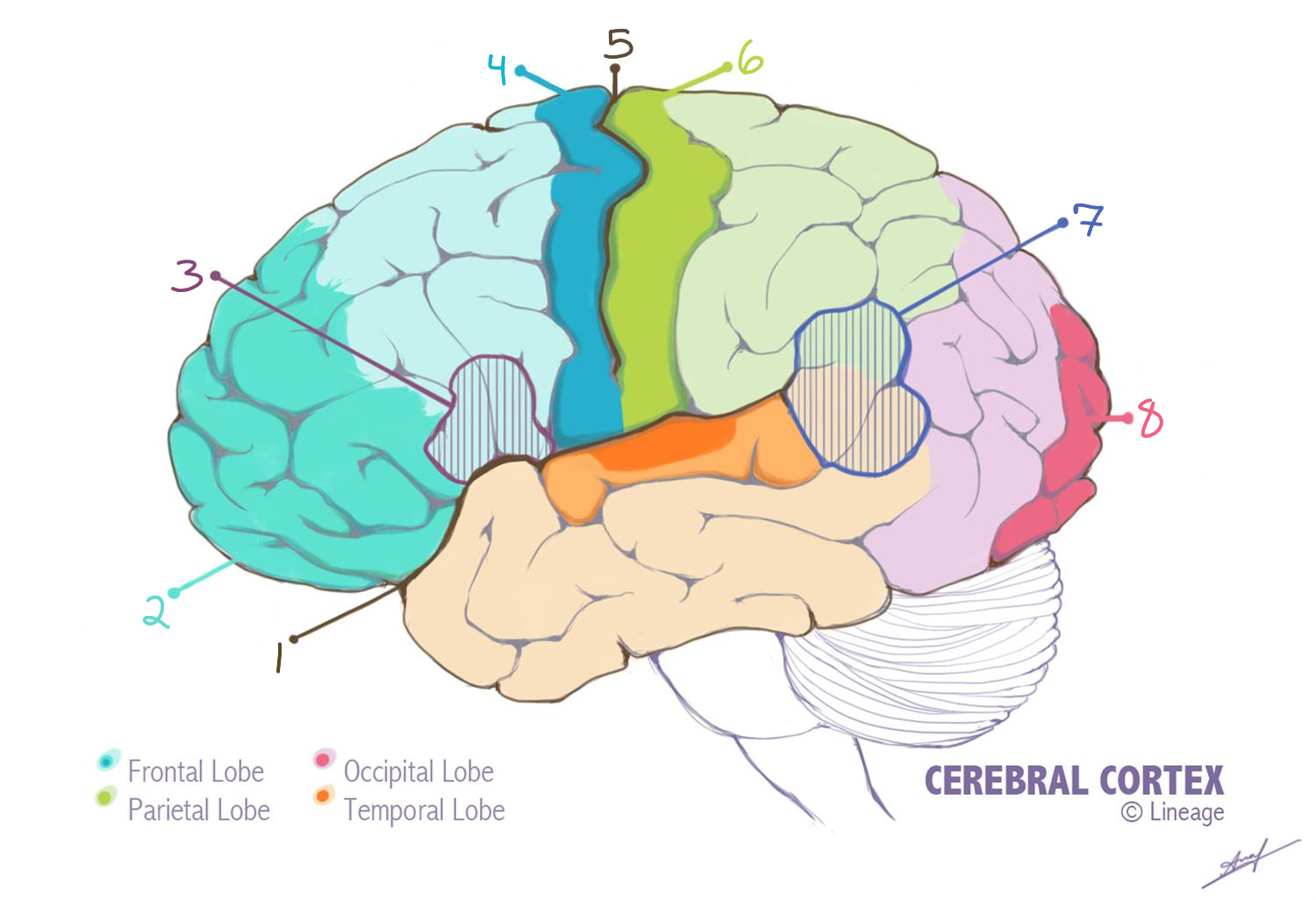
Where is the central sulcus located?
A prominent groove separating the frontal lobe from the parietal lobe.
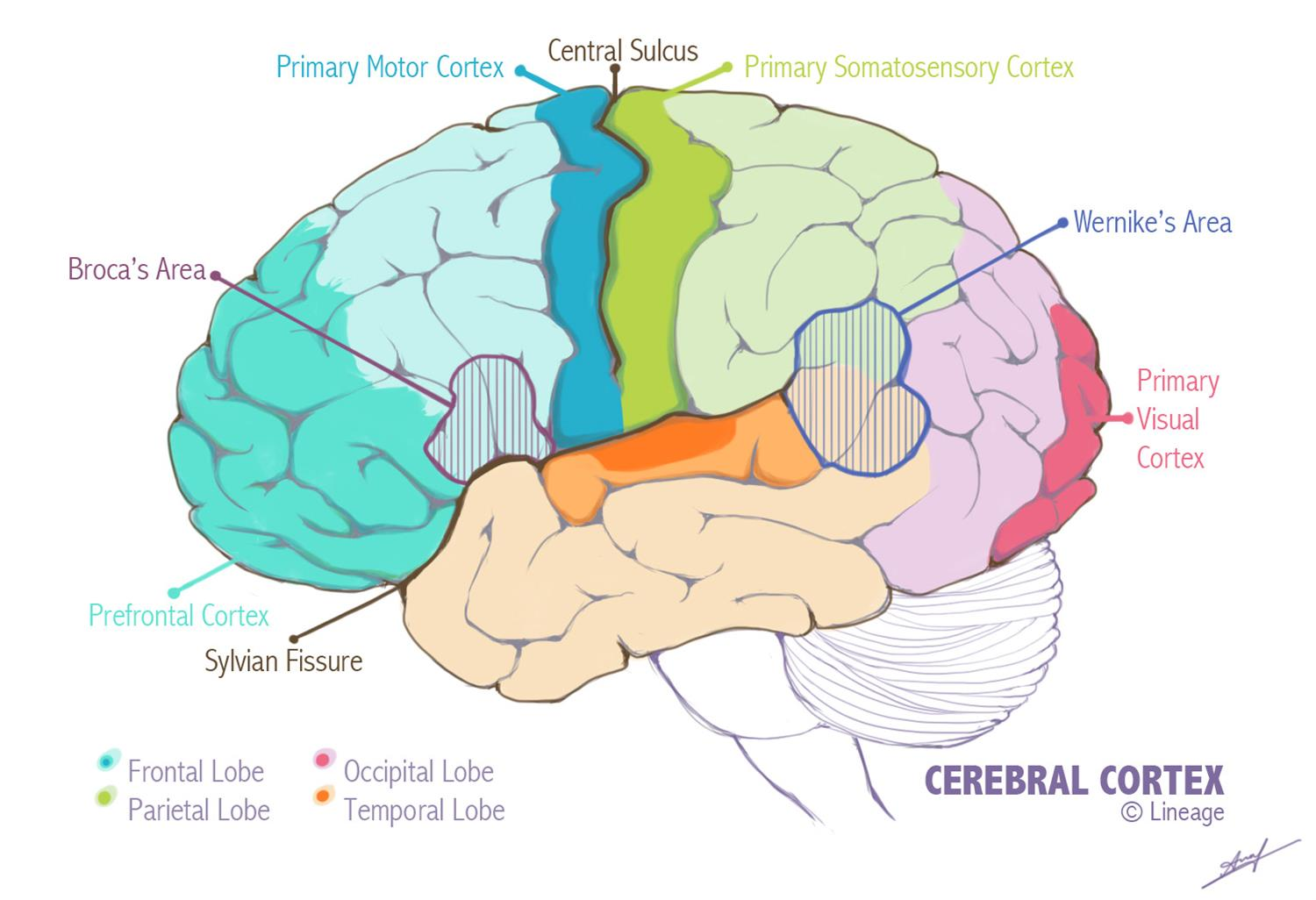
What does the central sulcus do?
Marks the boundary between the motor cortex (front) and the somatosensory cortex (back).
Where is the primary somatosensory cortex located?
In the parietal lobe
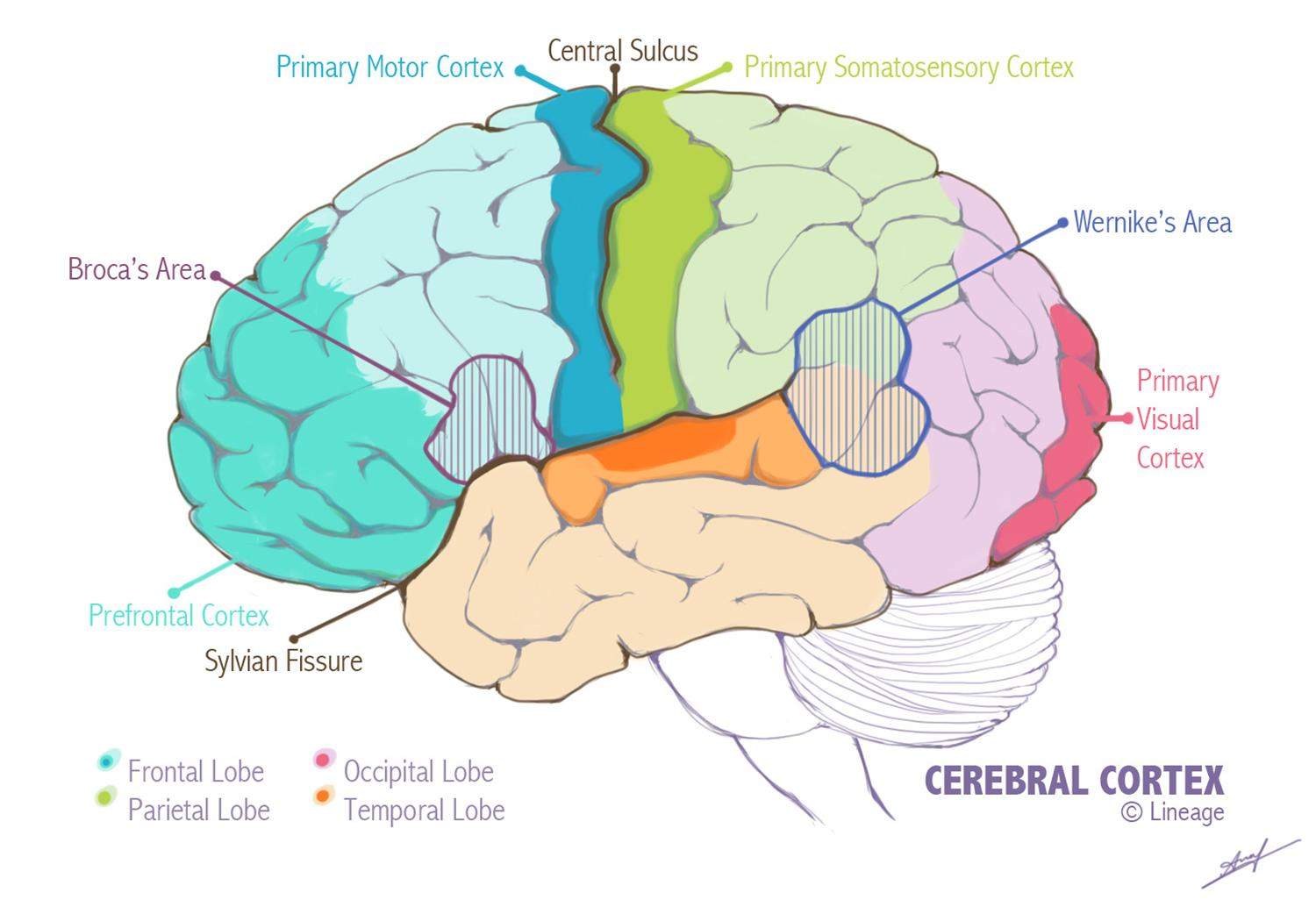
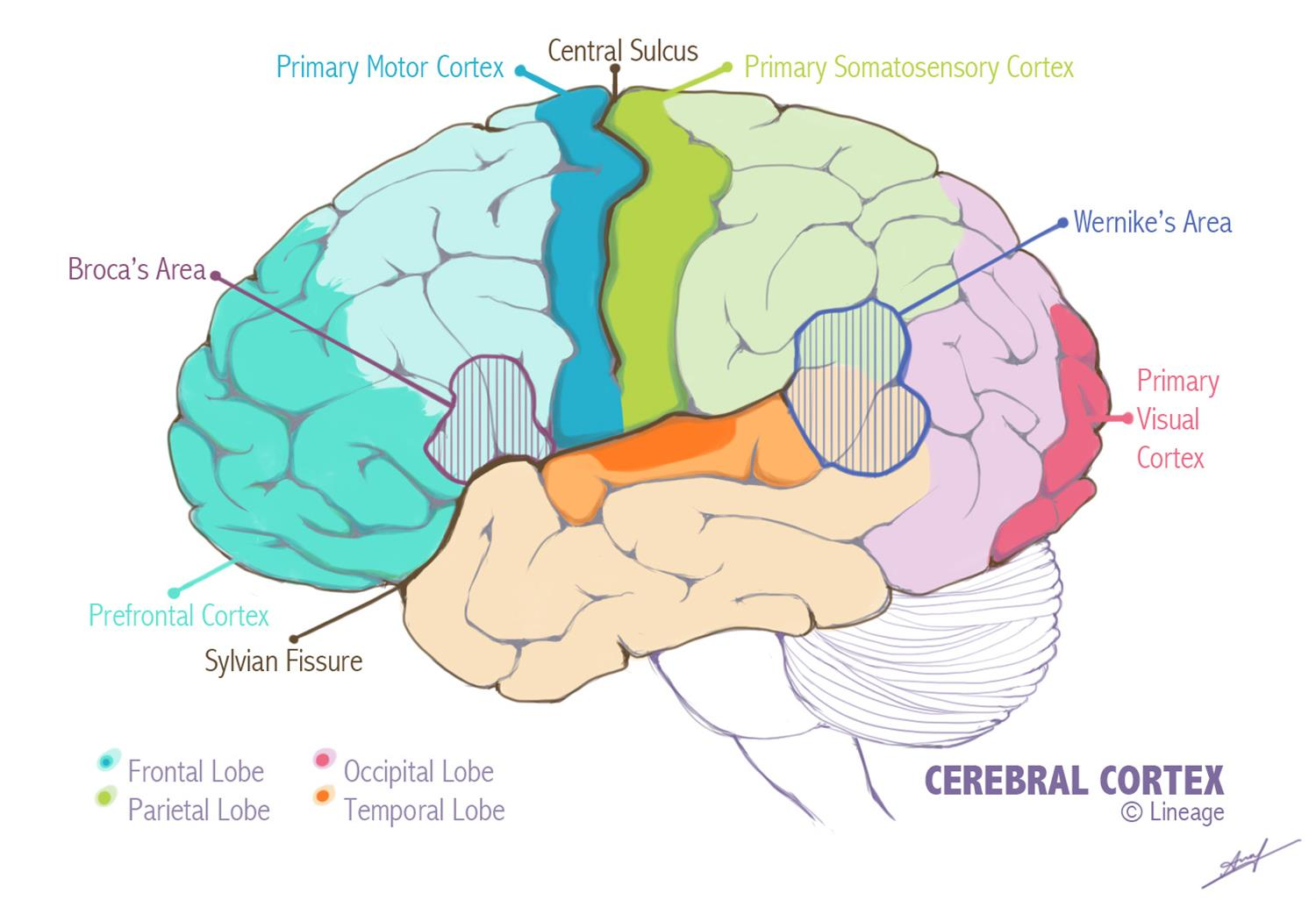
What does the primary somatosensory cortex do?
Processes touch, pressure, pain, temperature, and body position.
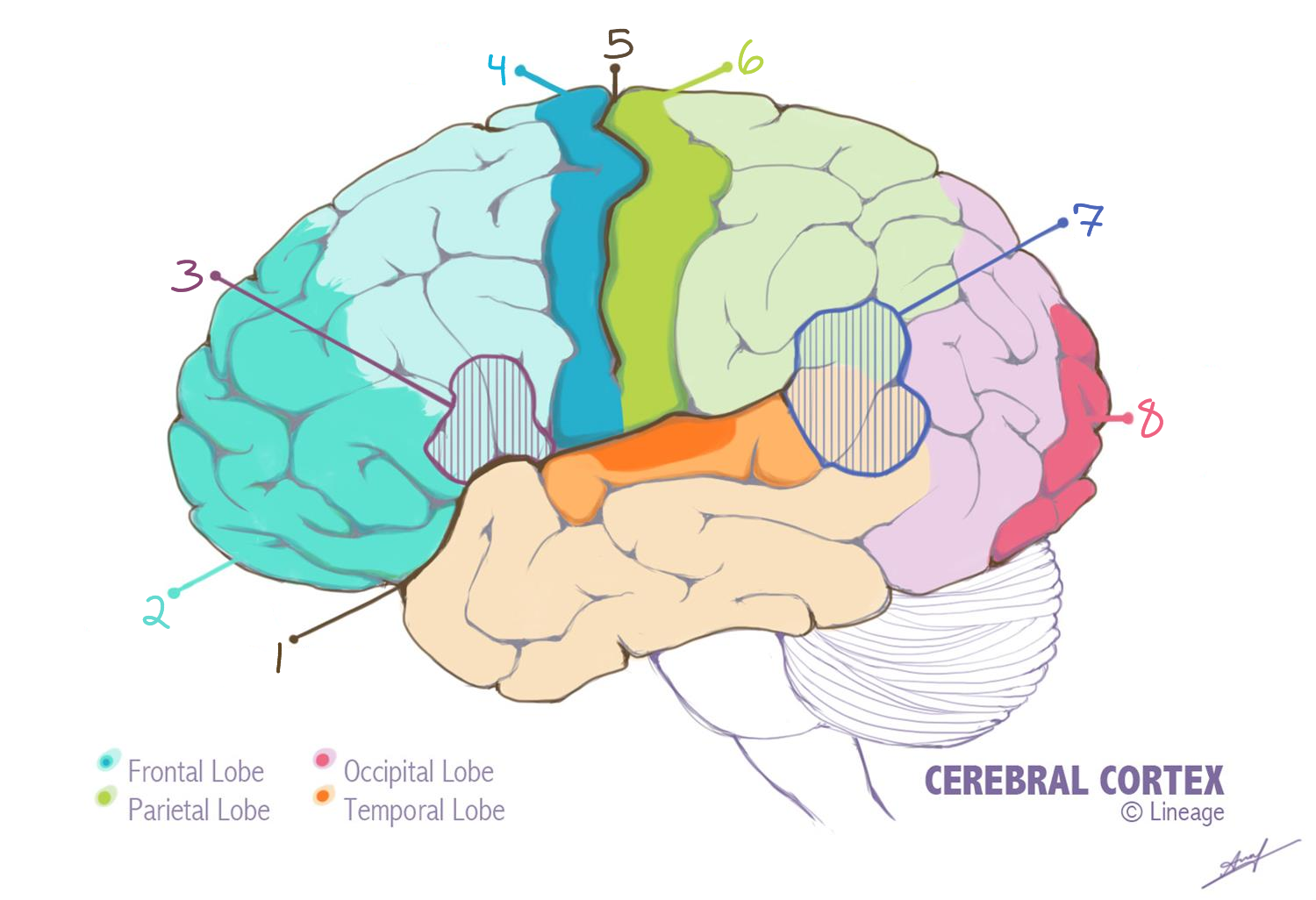
Where is Wernicke’s area located?
In the left temporal lobe
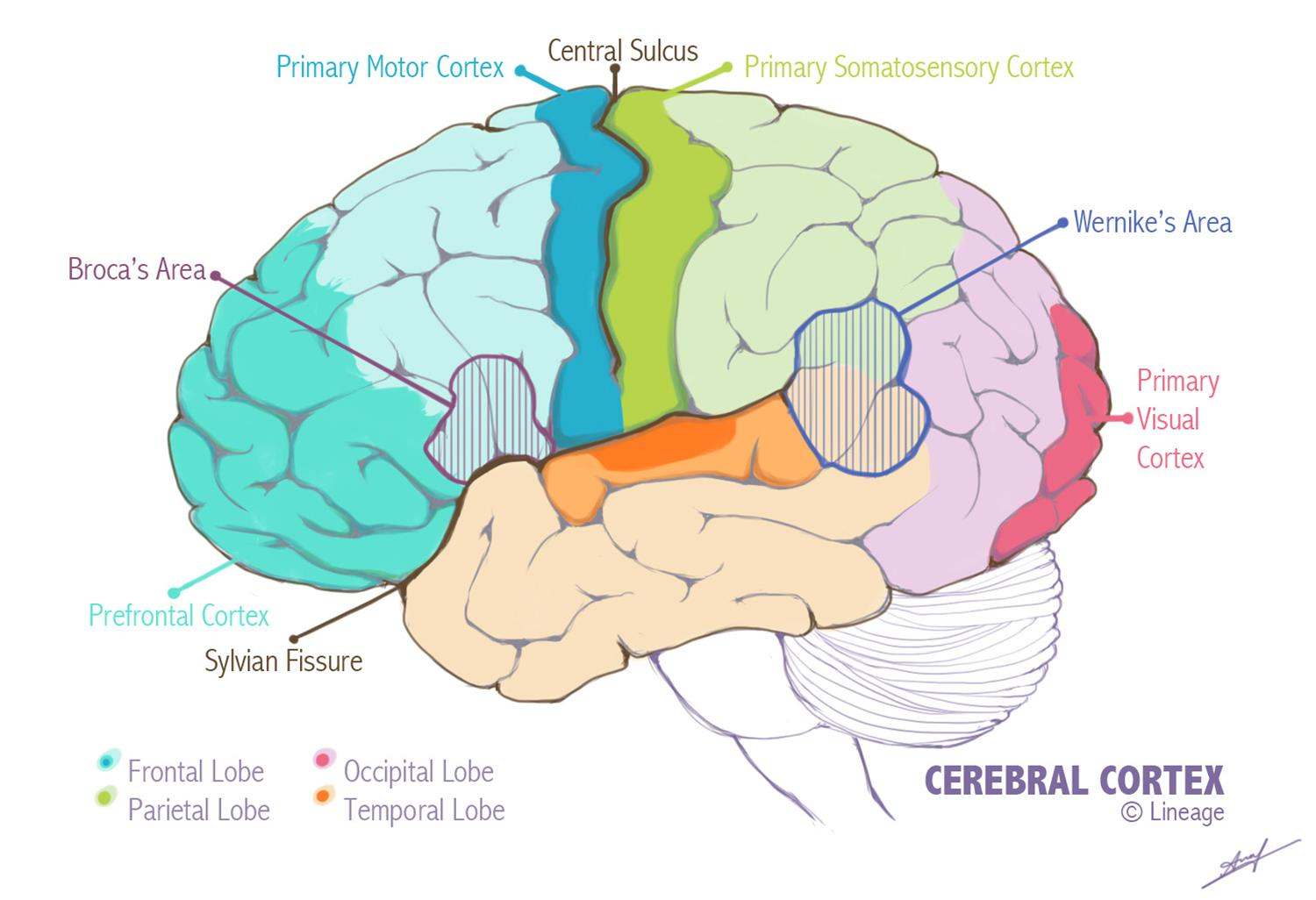
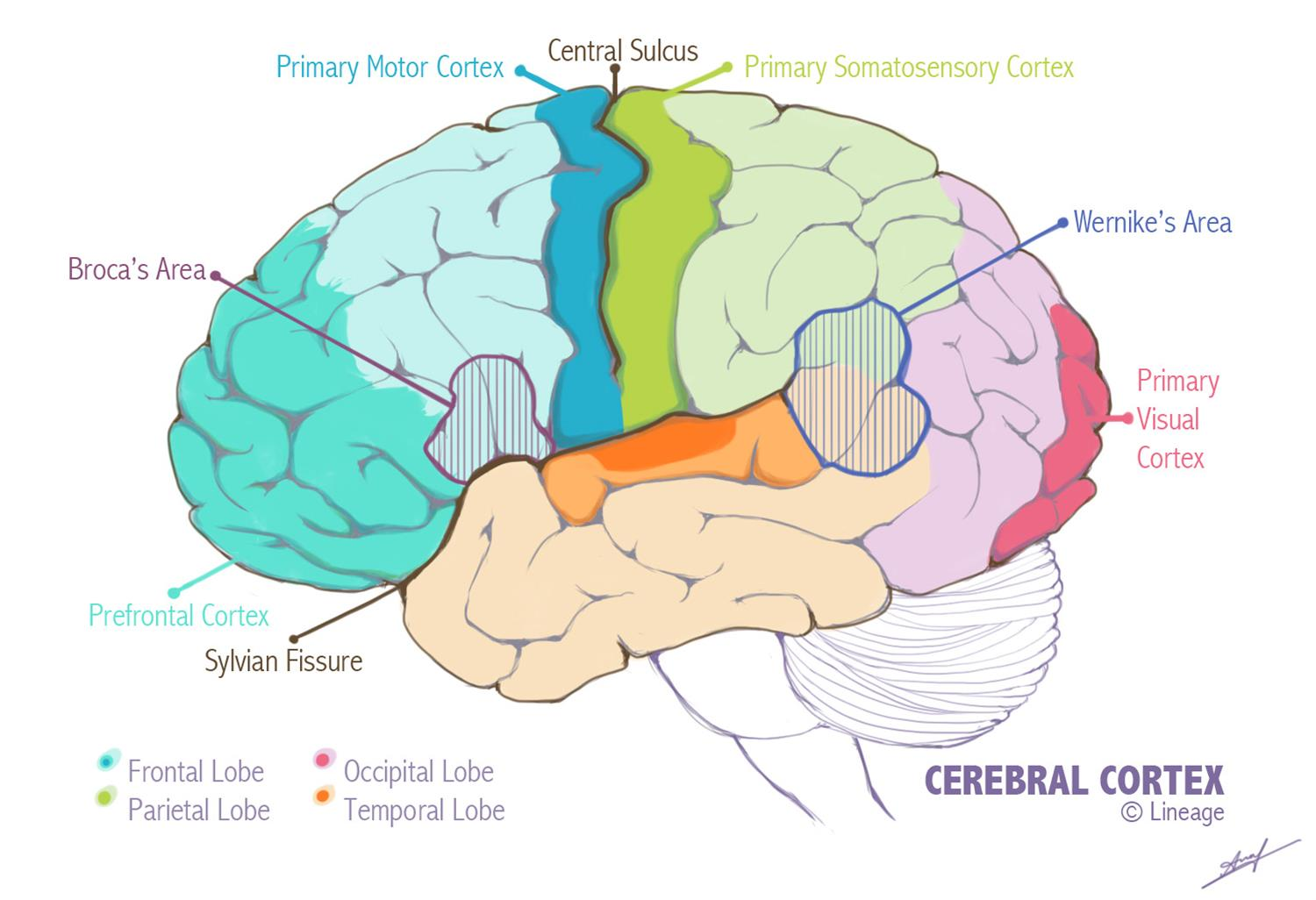
What does Wernicke’s area do?
Supports language comprehension — understanding spoken and written words.
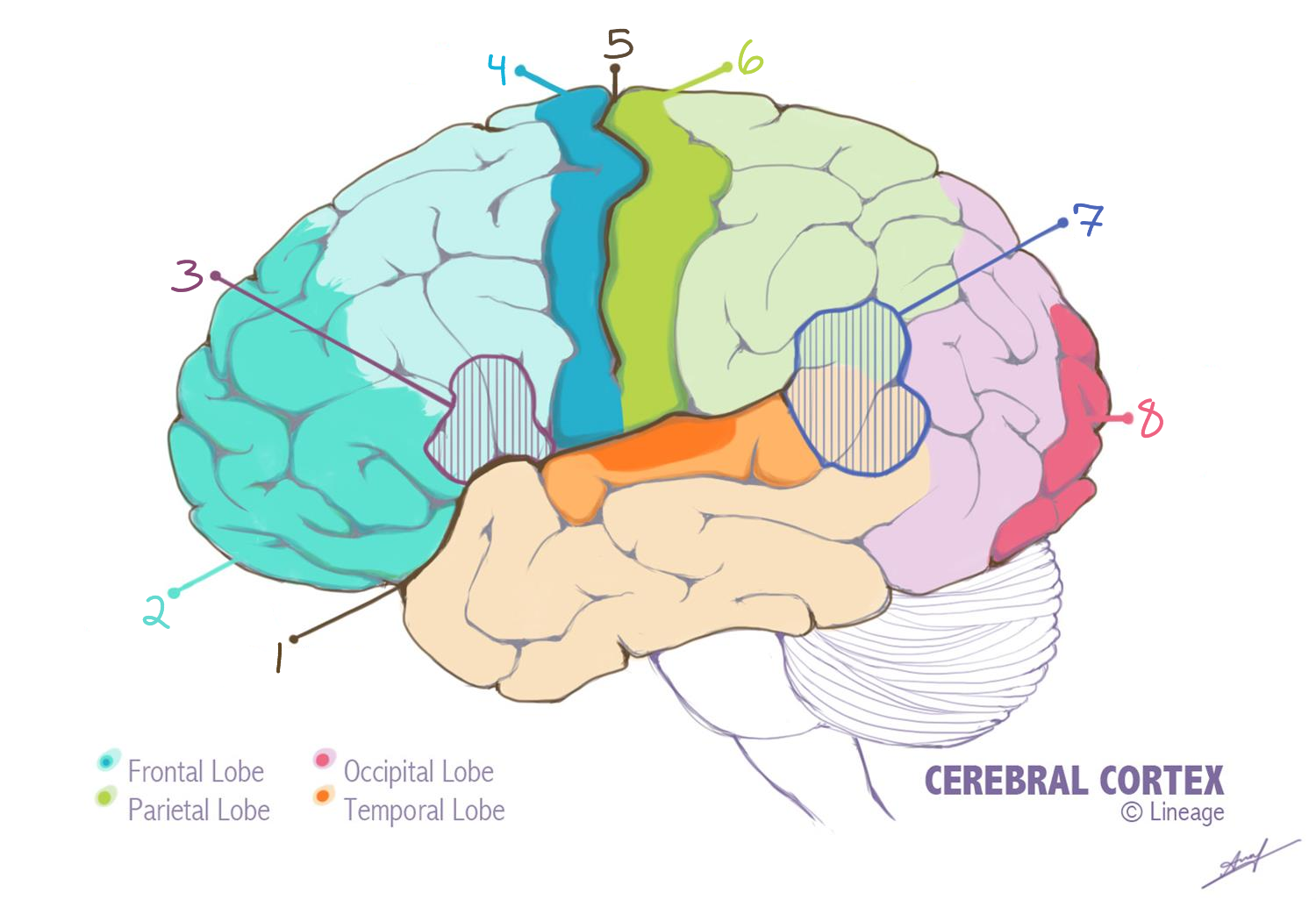
Where is the primary visual cortex located?
In the occipital lobe
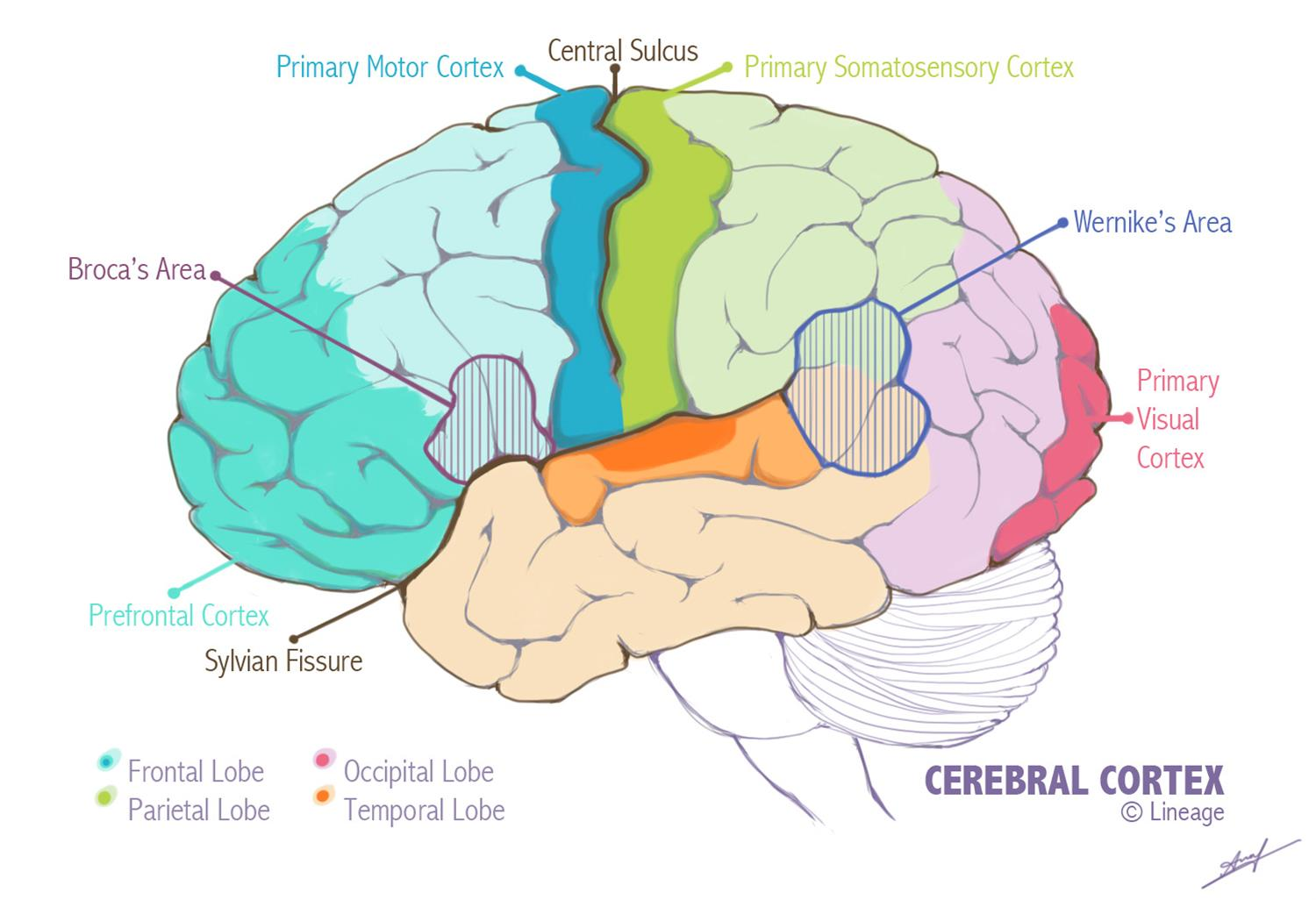
What does the primary visual cortex do?
Processes visual information such as shape, color, and motion
Define affective empathy
The capacity to feel or share another person’s emotional state.
Define cognitive empathy
The ability to understand another person’s perspective or mental state without necessarily sharing the emotion.
What is the shared activation hypothesis?
Observing another’s emotion activates similar brain regions as experiencing that emotion oneself.
What does the Theory Theory hypothesis propose?
We understand others by using cognitive models or inferences about their mental states rather than direct emotional sharing.
Name two ways researchers measure empathy.
Self‑report scales and neuroimaging responses to others’ emotions; also behavioral tasks and physiological measures.
Primary function of the frontal lobe?
Thinking, planning, decision making, motor control (includes prefrontal cortex functions).
Primary function of the parietal lobe?
Somatosensory processing, spatial awareness, attention
Primary function of the occipital lobe?
Vision and visual processing.
Primary function of the temporal lobe?
Hearing, language comprehension, memory encoding.
Primary function of the cerebellum?
Balance, coordination, fine motor control
Primary function of the brain stem?
Basic life functions such as breathing and heart rate.
What is functional localisation?
The idea that different brain areas support different functions, inferred from lesion and imaging studies
What is double dissociation and why is it useful?
When Damage A → Impairment X but not Y, and Damage B → Impairment Y but not X; it shows two functions rely on separate brain areas.
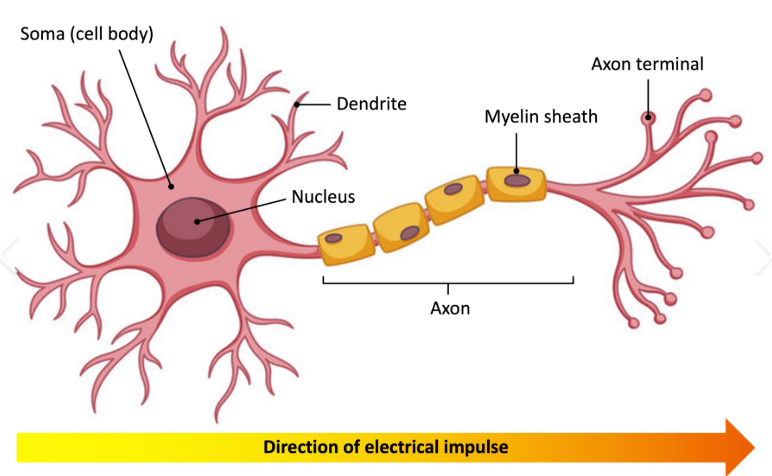
What are the main parts of a neuron?
Dendrites (input), soma/cell body (integration), axon (output), synapse (communication).
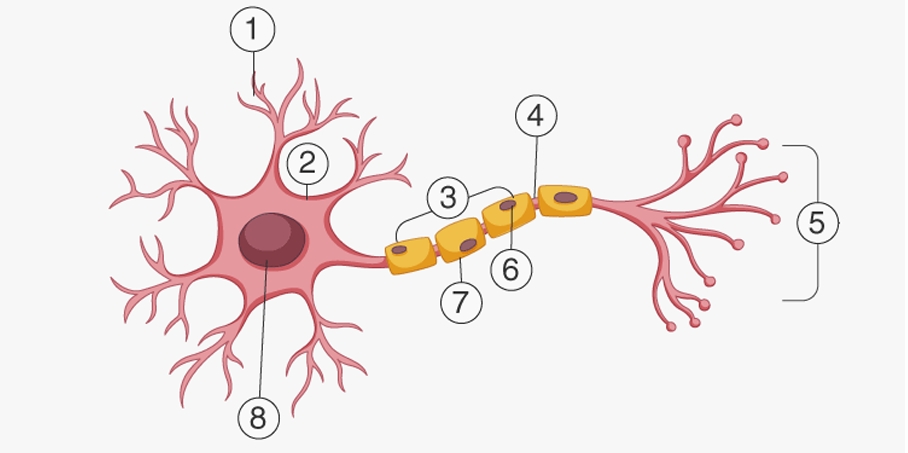
Where is the soma located?
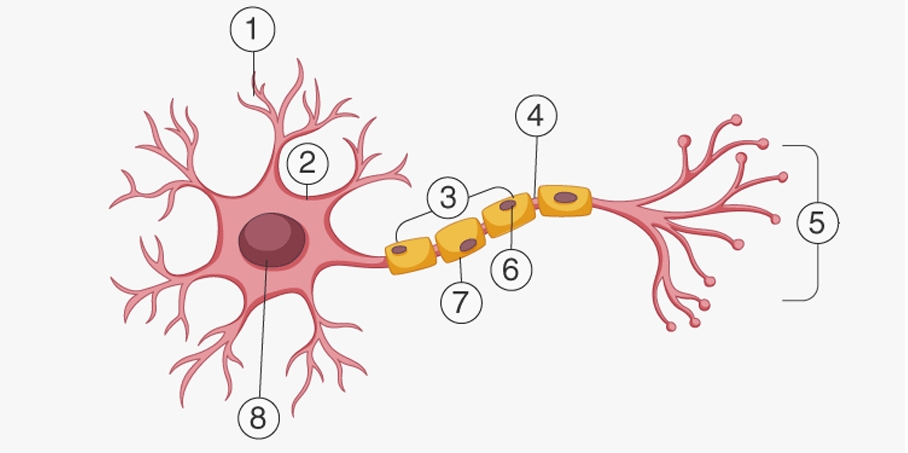
2; In the center of the neuron
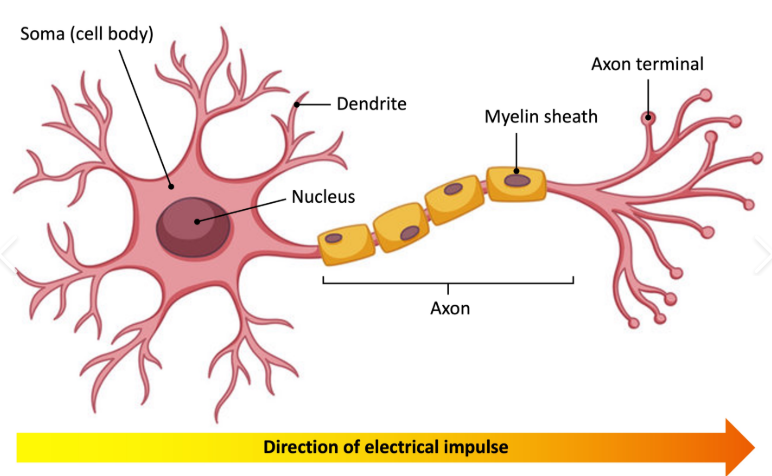
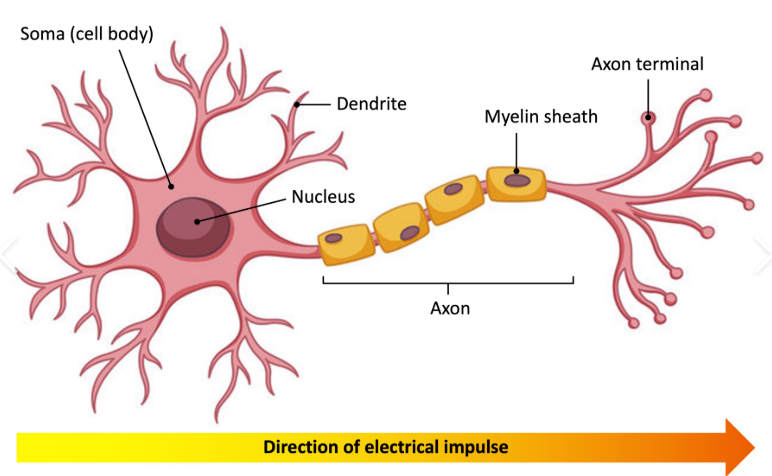
What does the soma do?
It integrates incoming signals from dendrites and contains the cell’s machinery to keep the neuron alive.
Where are dendrites located?
1; They branch out from the soma
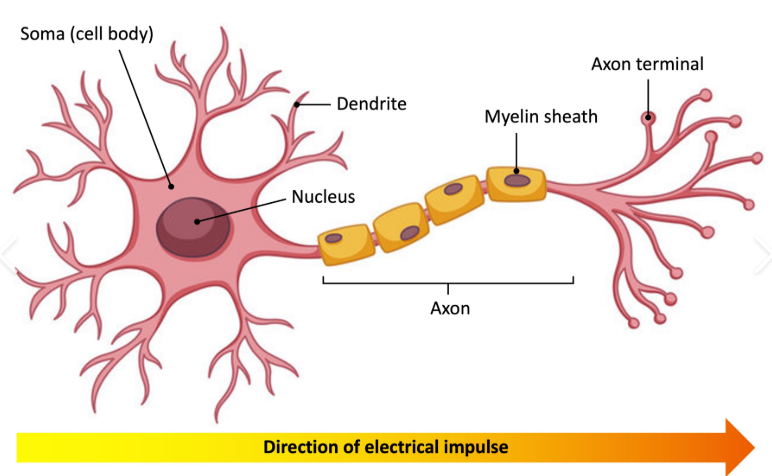
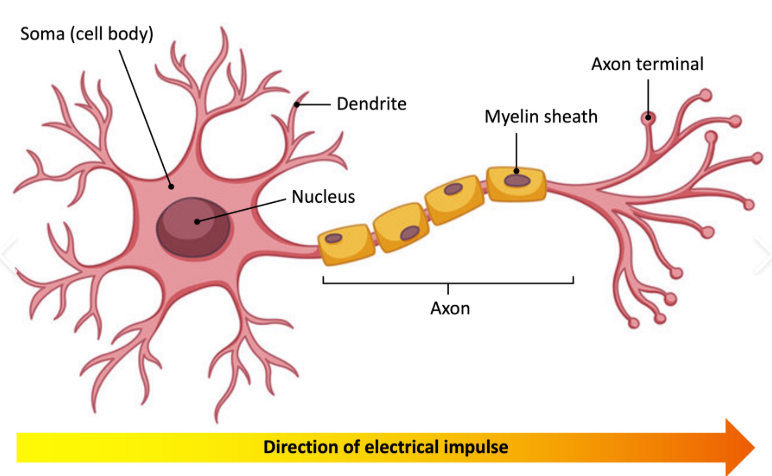
What do dendrites do?
They receive incoming signals (neurotransmitters) from other neurons.
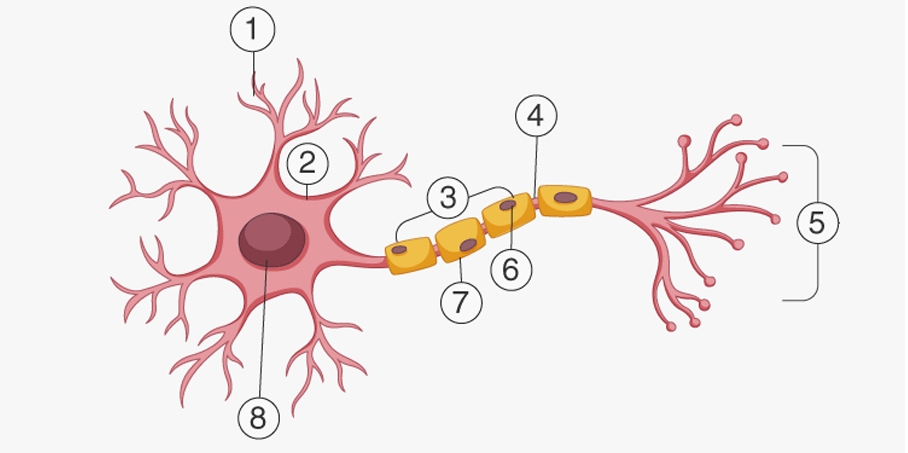
Where is the nucleus located?
8; Inside the soma
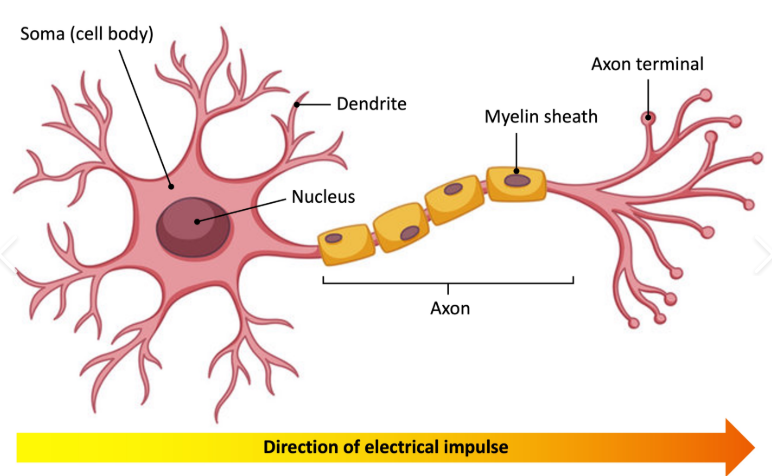
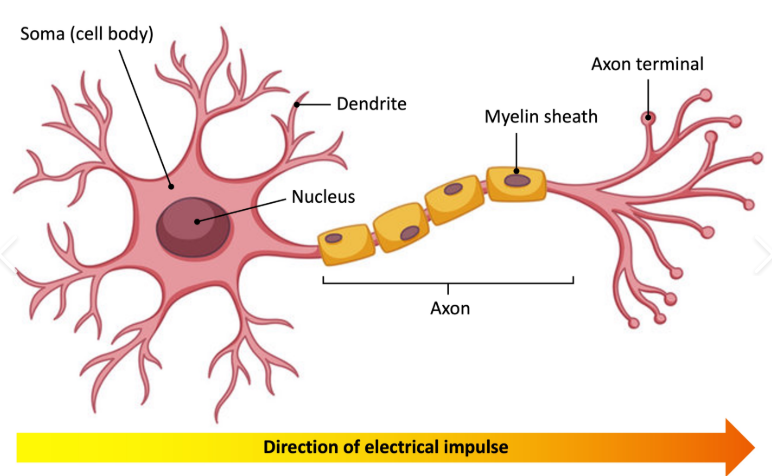
What does the nucleus do?
It contains the neuron’s genetic material (DNA) and controls cell growth, repair, and protein production
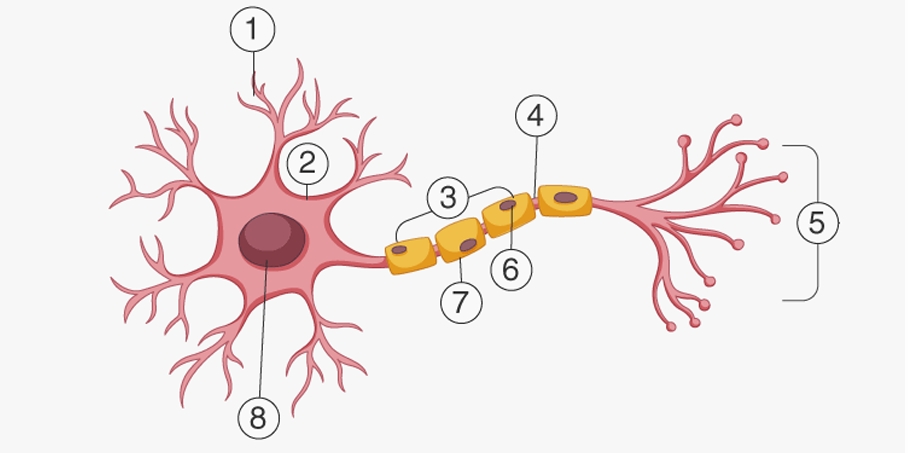
Where is the axon located?
3; Extending from the soma as a long, single projection leading toward the axon terminals.
What does the axon do?
it transmits electrical impulses (action potentials) away from the soma to other neurons or muscles.
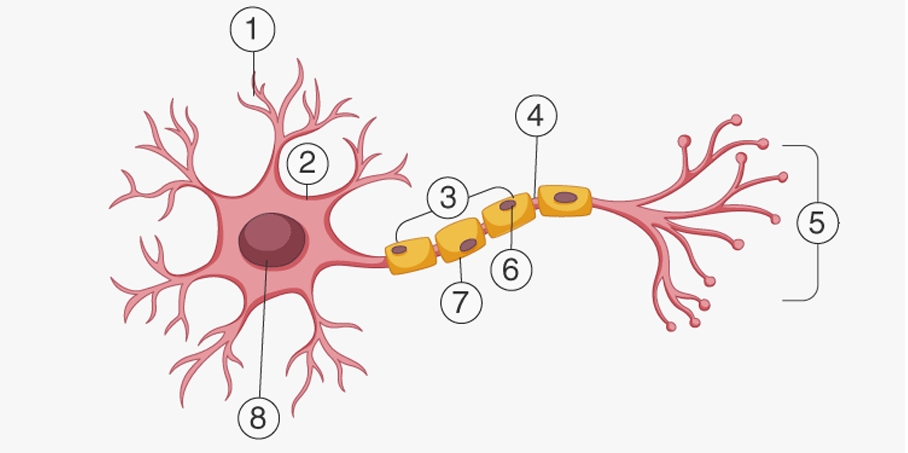
Where is the myelin sheath located?
7; Wrapped around the axon in segments, leaving small gaps (nodes of Ranvier - 4).
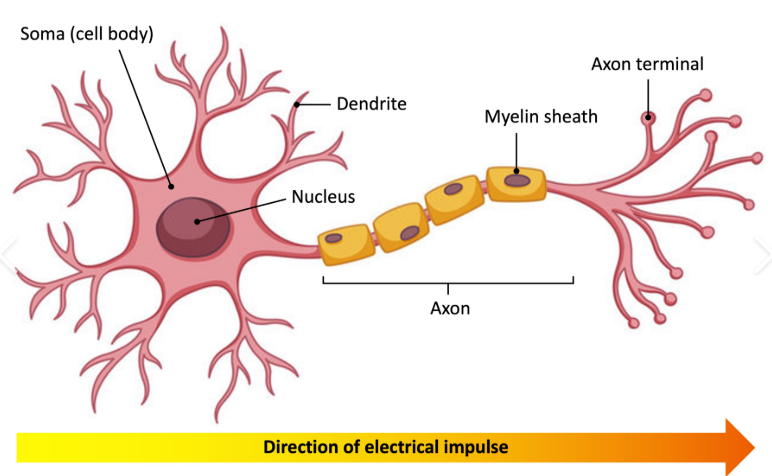
What does the myelin sheath do?
It insulates the axon and dramatically increases the speed of electrical signal conduction.
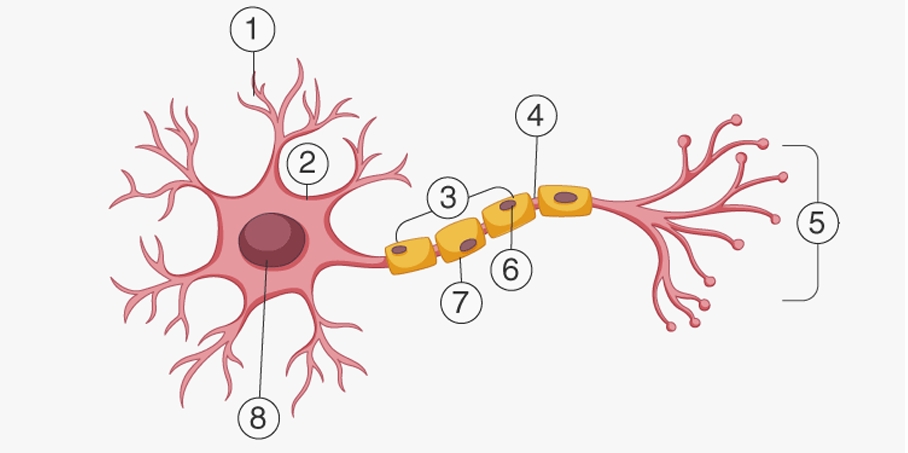
Where are axon terminals located?
5; At the end of the axon
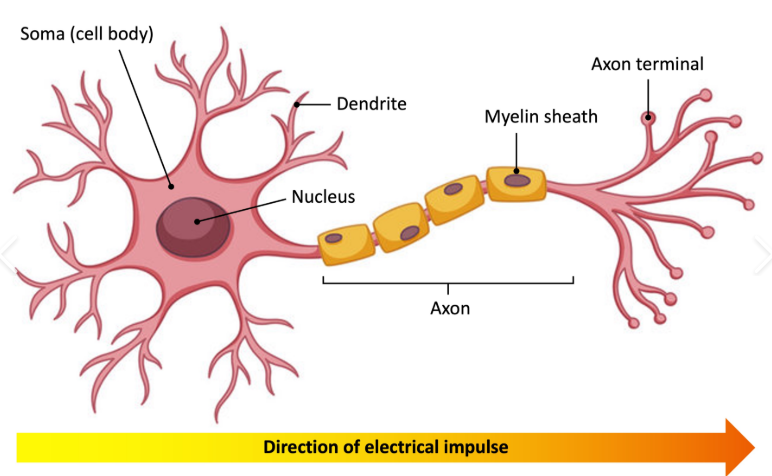
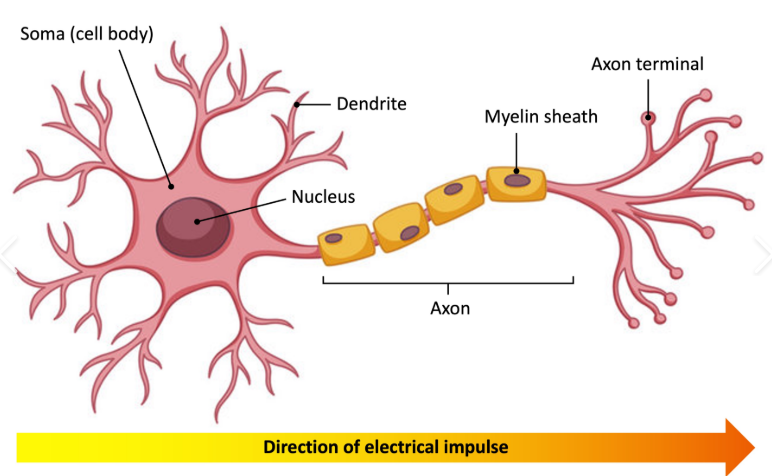
What do axon terminals do?
They release neurotransmitters into the synapse, allowing the neuron to send signals to the next cell.
How do neurons communicate?
Via electrical signals (action potentials) and chemical signals (neurotransmitters at synapses).
What is a synapse?
The junction where neurotransmitters are released from one neuron and bind receptors on another.
What is myelin and why is it important?
A fatty sheath around axons that speeds electrical conduction and improves signal fidelity.
Define neuroplasticity.
The brain’s ability to change structure and function in response to experience, learning, or injury.
How do cellular mechanisms support attention and learning?
Synaptic strengthening and network reconfiguration make processing more efficient and support attentional control.
Why are case studies limited for localisation?
Brain damage is rarely restricted to one area, individual anatomy varies, and findings can be hard to generalize.
How can understanding neuroplasticity inform therapy?
Interventions (e.g., exposure, cognitive training) can induce plastic changes that reduce symptoms and improve function.
 Note
Note  Flashcards (54)