L2-(transport)across cells diffusion and osmosis
 Studied by 1 person
 Call Kai
 Learn
Learn Practice Test
 Spaced Repetition
 Match
Match Flashcards
 Knowt Play
1/4

There's no tags or description
Looks like no tags are added yet.
Name | Mastery | Learn | Test | Matching | Spaced | Call with Kai |
|---|
No analytics yet
Send a link to your students to track their progress
5 Terms
1.What is active transport?
What is meant by active transport and passive transport?
Info:To fully understand passive forms of transport you need to know:
• All particles are constantly in motion due to the kinetic energy that they possess.
. This motion is random, with no set pattern to the way the particles move around
• Particles are constantly bouncing off one another as well as off other objects, ie, the side of a container
1.The movement of molecules across a cell membrane from a region of lower concentration to higher concentration, using ATP and carrier proteins.
Active:The exchange of substances between cells and the environment occur in ways that require metabolic energy
Passive: implies the energy comes from the natural, inbuilt motion of particles NOT from an external source such as ATP
1.What is diffusion?
2.What is facilitated diffusion? (Also a passive process! As it uses the inbuilt kinetic energy of the diffusing molecules)
What is a similarity and a difference between diffusion and facilitated diffusion?
Only small, …4?-polar molecules like oxygen can diffuse across the plasma membrane easily.
Charged ions and polar molecules do not diffuse easily because of the …5? nature of the non-polar fatty-acid …6? of the phospholipids in the membrane.
1 The net movement of molecules or ions from an area of high concentration to an area of low concentration until they are evenly distributed
2.The movement of these is facilitated (made easier) by transmembrane channels and carriers that span the membrane
3.Like diffusion - it occurs down a concentration gradient
Unlike diffusion -it occurs in specific points on the plasma membrane where there are special protein molecules
4.non. 5.hydrophobic. 6. Tails
1.Which 2 types of proteins are involved in facilitated diffusion?
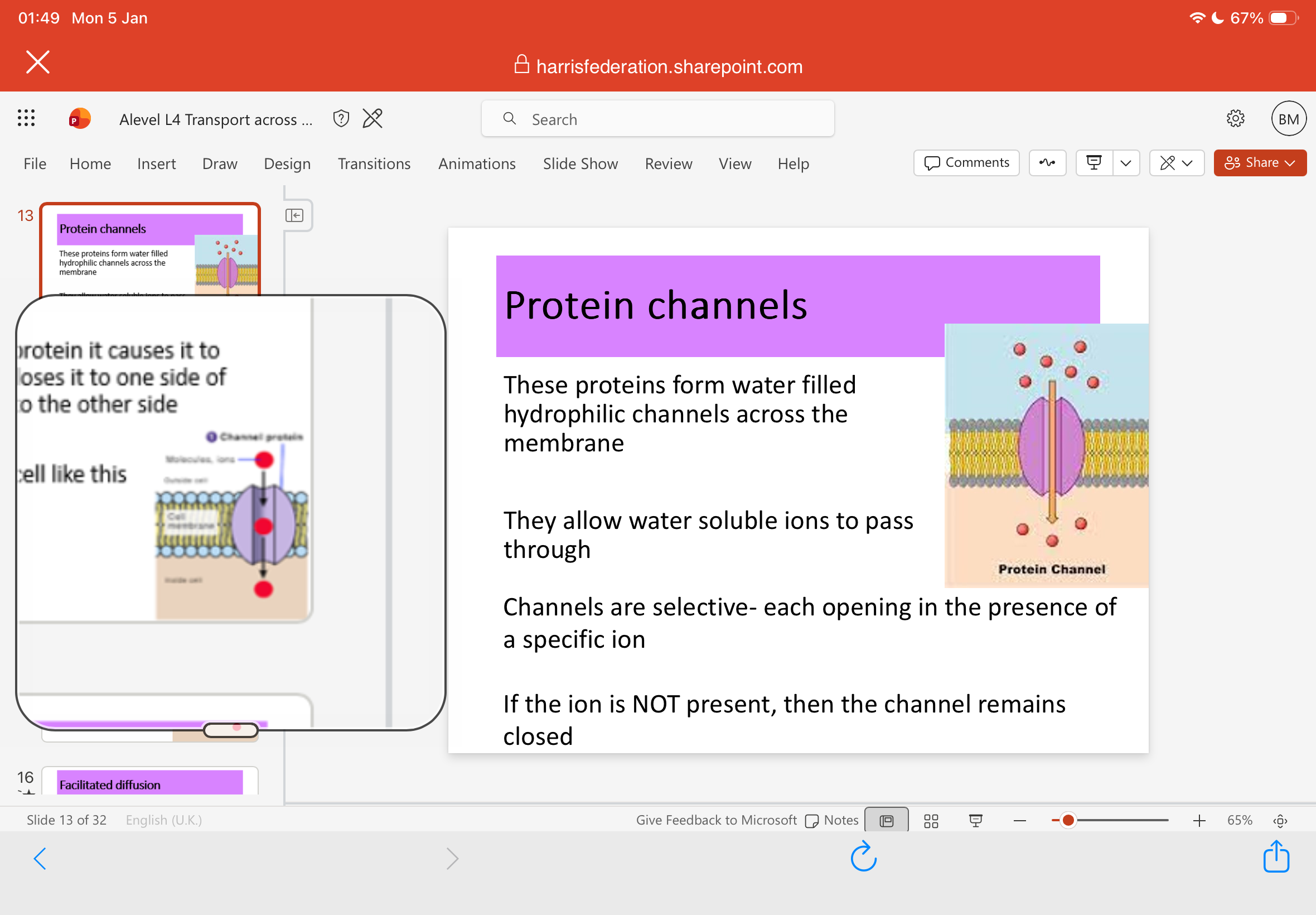
Protein channels:
These proteins form …2? filled hydrophilic channels across the membrane
They allow …3? soluble ions to pass through
Channels are selective- each opening in the presence of a specific …4?
If the ion is NOT present, then the channel remains ..5?
6.How do protein channels control the entry and exit of ions? Why would Na+ ions be able to move in a cell like this?
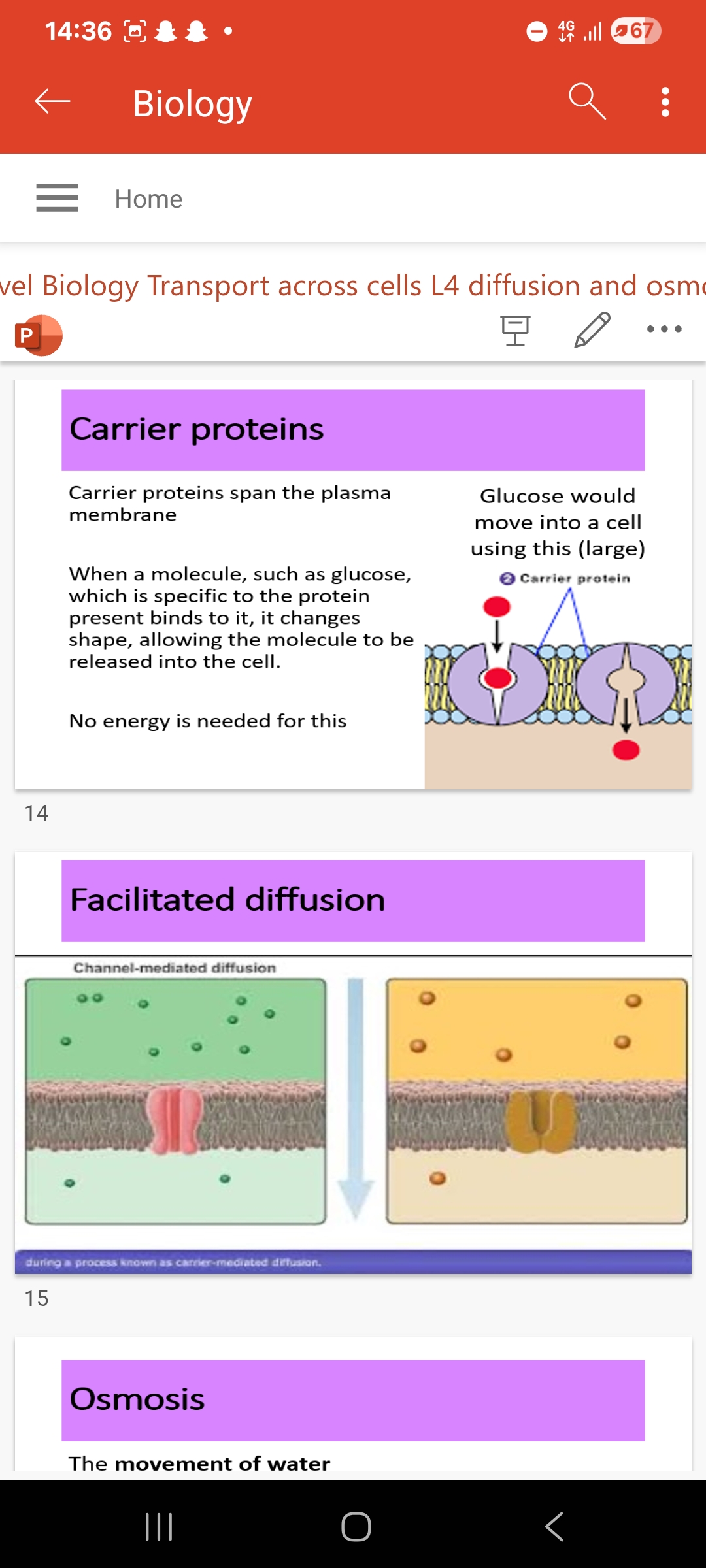
Carrier proteins:
Carrier proteins span the …7? membrane
When a molecule, such as glucose, which is specific to the protein present binds to it, it changes …8?, allowing the molecule to be released into the cell.
9.Why would glucose ions be able to move into a cell like this?
Carrier proteins and protein channels
water. 3.water. 4.ion 5.closed
6.When an ion binds with the protein it causes it to change shape in a way that closes It to one side of the membrane and opens it to the other side
6.they are small and polar
7.plasma. 8.shape 9.because glucose is large.
1.What is osmosis?
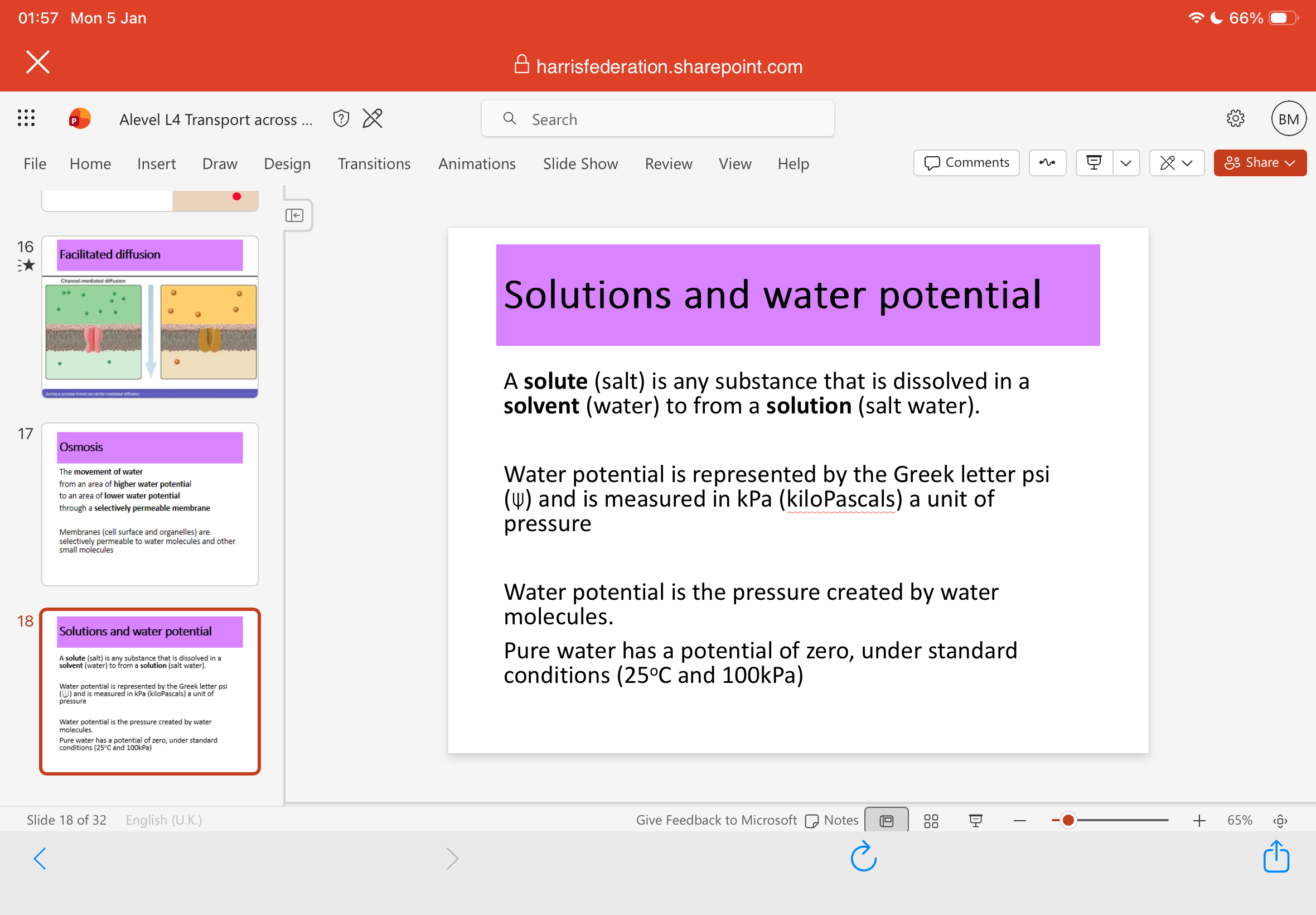
A solute (salt) is any substance that is dissolved in a …2? (water) to form a …3? (salt water).
Water potential is represented by the Greek letter psi and is measured in kPa (kiloPascals) a unit of pressure
Water potential is the pressure created by …4? molecules.
Info:Pure water has a water potential of …@?, under stand conditions(…5?°C and 100kPa)
Water potential:
• The addition of a solute to pure water will …6? its potential
• The water potential of a solution must always be less than …7? (a negative value)
• The more solute added the …8? (more negative) the water potential will become
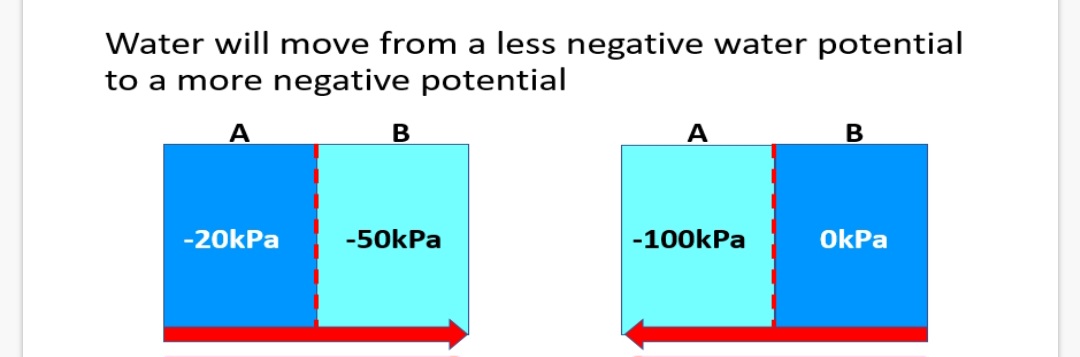
1.The net movement of water from an area of higher water potential(water conc) to an area of lower water potential through a selectively permeable membrane.(Membranes (cell surface and organelles) are selectively permeable to water molecules and other small molecules)
2.solvent 3.solution. @. zero. 4.water. 5. 25
6.lower. 7. 0. 8. lower
Osmosis and animal cells:
Animal cells, such as red blood cells, contain a variety of solutes dissolved in their cytoplasm.
Q:What happens to animal cells when they are placed in pure water and when they are placed in a very negative water potential area?
Pure water - water will enter by osmosis, the thin, flexible membrane will stretch and burst (haemolysis)
Very negative water potential- water will leave by osmosis. The cell shrinks and becomes shriveled
(For this reason, cells tend to be found in areas with the same water potential ie plasma and RBC)
 Note
Note  Flashcards (150)