UWEC MGMT 449 Exam 1
 Call Kai
 Learn
Learn Practice Test
 Spaced Repetition
 Match
Match Flashcards
 Knowt Play
1/59

There's no tags or description
Looks like no tags are added yet.
Name | Mastery | Learn | Test | Matching | Spaced | Call with Kai |
|---|
No analytics yet
Send a link to your students to track their progress
60 Terms
PESTEL Analysis
focuses on principal components of strategic significance in the macro-environment
what do the letters in PESTEL mean
Political factors
Economic conditions
Socioeconomic forces
Technological factors
Environmental factors
Legal factors
What are the components in the five-forces model of competition
Buyers
Suppliers
Potential
Firms in other industries w/ sub products
Rivalry among competing firms
How to use the five-forces model
Step 1: ID parties involved in competitive pressures
Step 2: Eval strengths of pressures
Step 3: Determine if the forces are supportive of high industry profitability
define Strategy
set of actions that its managers take to out perform the company's competitors and achieve superior profitability
Rivalry increases and becomes stronger when:
- demand is growing slowly
- cost to switch brands is low
- products are commodities or weakly differentiated
- firms have excess production capacity
- firms have high fixed/storage costs
- competitors are numerous or equal in size and strength
- rivals have diverse objectives, strategies or countries of origin
- rivals have emotional stakes or face high exit barriers
Factors affecting the threat of entry
all types barriers to entry from capital requirements or brand loyalty to government regulations or policies
competitive pressure from substitutes are stronger when:
good substitutes are available and attractively priced, comparable or better features, and have a low cost to switch
competitive pressures from buyers increase when:
they have strong bargaining power and are price sensitive
supplier bargaining power is stronger when
products are in short supply
products are differentiated
costs of switching suppliers
supplier industry is dominated by one/few companies
firm is not able to integrate backward for self-manufacturing
supplier is a small cost overall to the firm
no good subs
firm doesn't account for much of the suppliers sales
Strategic Management Principle
strategy concerns competition and exceptional strategy is doing what competitors don't or cannot do
competitive advantage
superior value compared to the competition or offers the same value at a lower cost to the firm
sustainable competitive advantage
competitive advantage continues indefinitely despite the efforts of competitors to match or surpass its advantage
Basic Strategic Approches
Low-Cost Provider
Focused Low-Cost
Best-Cost Provider
Focused Differentiation
Broad Differentiation
Focused Low Cost
simple products that are inexpensive to produce sold for low costs to a specific trgt mrkt
ex: dollar shave club
Low Cost
selling products for lowest possible cost to compete within the market
ex: amazon
Best Cost
good quality and equally good price for the quality
ex: applebees
focused differentiation
a lot of R&D to create unique and focused products for a very specific market
ex: Luxury Brands such as Redbull, Lamborghini, and designer clothing
Broad Differentiaion
still has a lot of R&D but has a wider target market which allows for lower prices
ex: Apple
Strategy should stay the same
false
it is always changing and evolving
Current Strategy
a blend of proactive and reactive strategies
Deliberate/Proactive Strategy
elements that include both continued and new initiatives
Emergent/Reactive Strategy
elements that are required due to unanticipated competitive developments and fresh market conditions
strategic group
consists of firms within an industry with similar competitive approaches and positions in the market
cluster of industry rivals
strategic group mapping
business model
sets forth the logic for how its strategy will create value for customers, while at the same time generate revenues sufficient to cover costs and realize a profit
Customer Value Proposition
the difference between product price and the value a customer places on it
Profit Formula
the difference between the per unit cost and the price the product is set at
What three tests can you use to test your strategy
strategic fit
competitive advantage
performance test
strategic plan
lays out future direction
3 key indicators if a strategy is working
Achievement of key financial and strategic goals
Financial performance vs industry average
Whether it is gaining customers and increasing its market share
strategic vision
describes managements aspirations for the future and delineates the company's strategic course and long term direction
Key ratios to measure financial performance
Gross, operating, and net profit margins
total ROA and net ROTA
ROE and ROIC
TD/TA, D/A, Current Ratio, Working Capital, LTD/Capital
resource
competitive asset owned or controlled by the firm
capability/competence
the capacity of a firm to perform and internal activity competently through deployment of a firms resources
competitive assets
represented by a firms resources and capabilities, and are determinates of its competitiveness and ability to succeed in the marketplace
Strategic Vision requirements
outlines the rationale for the firms direction in the future and uses distinctive and specific language to set the organization apart from the competition
Mission Statement requirements
specific language, focus on the business not profit, and describes the purpose
Resource Bundle
is a linked and closely integrated set of competitive assets centered around one or more cross functional capabilities
VRIN Test
Valuable
Rare
Inimitable
Non-Substitutable
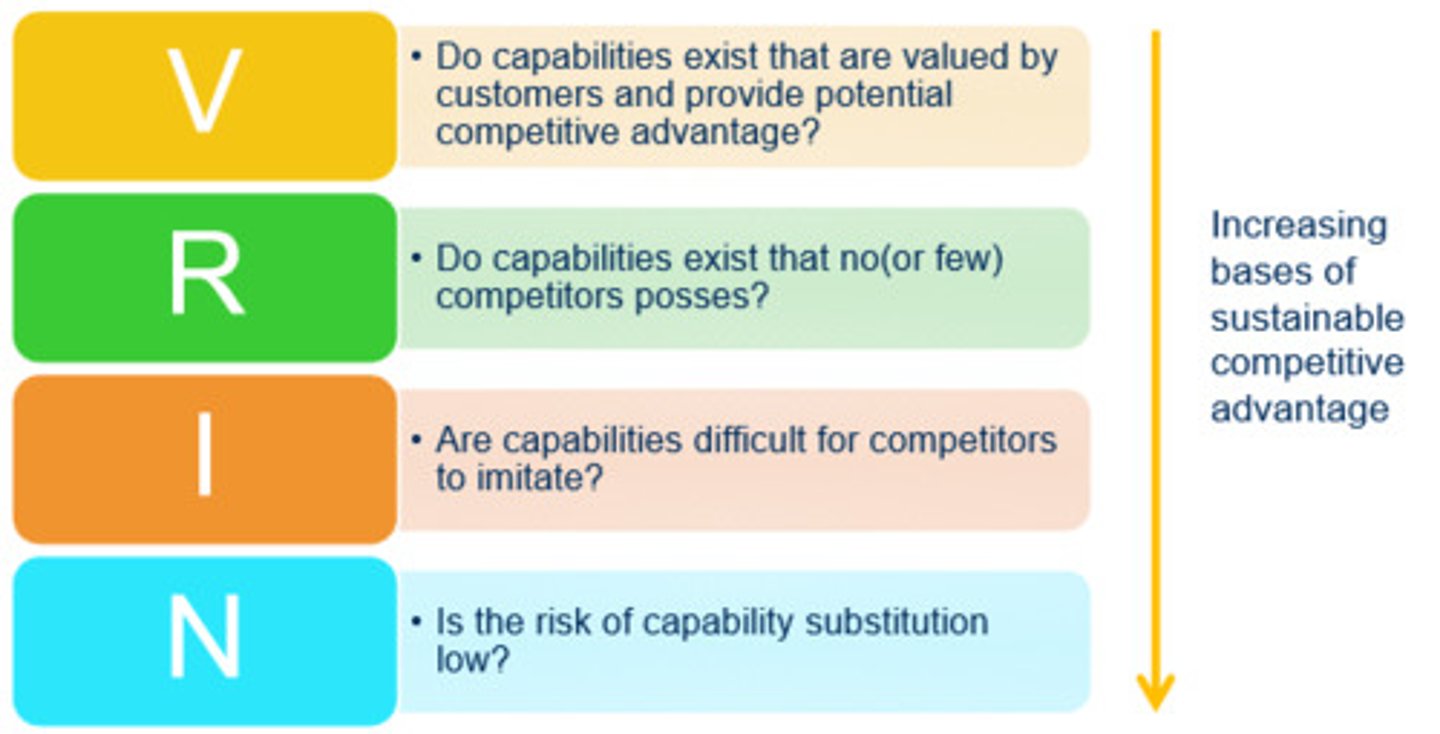
Support for Competitive Advantage
Valuable and Rare
Support for Sustained Competitive Advantage
Inimitable and Non-Substitutable
Charateristics of Well-Stated Objectives
Specific
Challenging
Quantifiable
Deadline
Objectives
an orgs performance targets
Stretch Objective
sets performance targets high enough to stretch an org to perform at its full potential and deliver the best possible results
strategic intent
when a org relentlessly pursues an ambition strategic objective, concentrating the full force of its resources and competitive actions on achieving that objective
Financial Objectivies
relate to the financial performance targets management has established for the organization to achieve
Strategic Objectives
relate to target outcomes that indicate a company is strengthening its market standing, competitive position, and future business prospects
balanced scorecard
a widely used method for combining the use of both strategic and financial objectives, tracking their achievement, and giving management, a more complete and balanced view of how well and org is performing
SWOT Analysis
simple but powerful tool for sizing up a company's strengths and weaknesses, market ops and external threats
core competence
an activity that a firm performs proficiently and is central to its strategy and competitive sucess
distinctive competence
a competitively important activity that a firm performs better than its rivals, thus representing a competitively superior internal strength
strengths
competitive assets
weaknesses
shortcomings that are competitive liabilities
benchmarking
potent tool for improving a company's own internal activities that is based on learning how other companies perform them and borrowing their best practices
best practice
method of performing an activity that consistently delivers superior results compared to other approaches
value chain
ID's the primary activities and related support activities that create customer value
Competitive Strengths Assessment
Step 1: list the firms key success factors and mist important measures of competitive strength/weakness
Step 2: Assign weights to each measure based upon perceived significance
Step 3: rate the firm and competitors on each factor and multiply the rating by the weight assigned to each factor
Step 4: Sum the weights
Step 5: Draw Conclusions
complentor
producers of complementary products which are products that enhance the value of the focal firm
Macro-environment
The major external and uncontrollable factors that influence an organization's decision making, and affect its performance and strategies

