DNA, RNA, DNA replication
 Call Kai
 Learn
Learn Practice Test
 Spaced Repetition
 Match
Match Flashcards
 Knowt Play
1/28

There's no tags or description
Looks like no tags are added yet.
Name | Mastery | Learn | Test | Matching | Spaced | Call with Kai |
|---|
No analytics yet
Send a link to your students to track their progress
29 Terms
function of DNA
hereditary information
primary long-term storage molecule for genetic information in all living organisms
structure of DNA
double helix
(phosphate backbone and nitrogen bases)
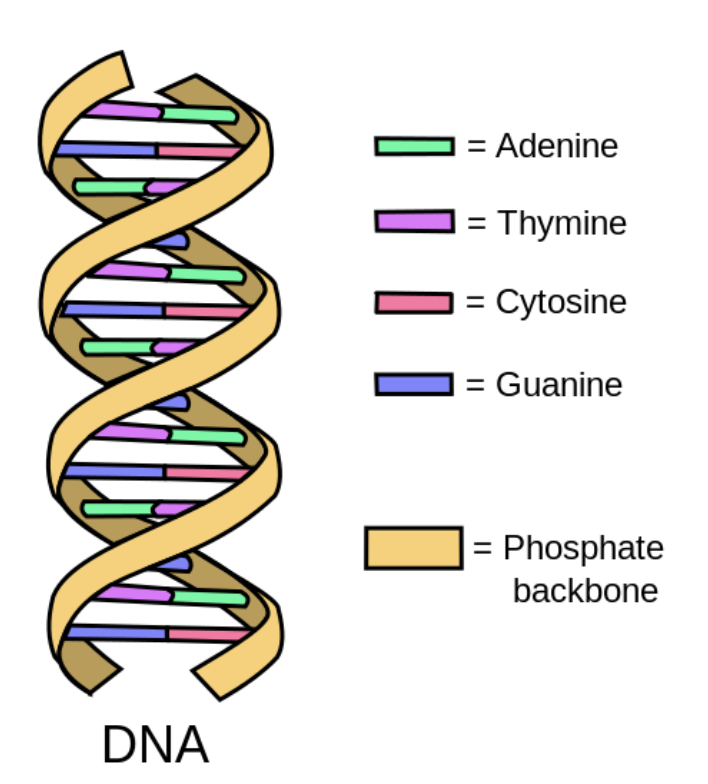
what does DNA stand for
deoxyribose nucleic acid
monomer
small, basic molecules that act as a building block to form long, complex chains called polymers
nucleotide
makes up DNA, part of the double helix
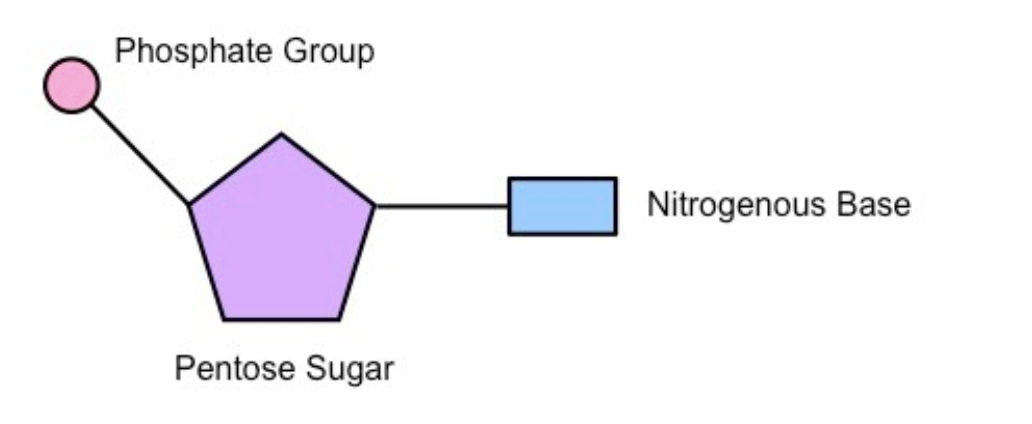
complementary pairing
specific, consistent matches of nitrogenous bases
base pairings
Adenine – Thymine, Cytosine – Guanine
what bonds are base pairings joined by
hydrogen bonds
difference between DNA and RNA
DNA, RNA
Double-stranded // single-stranded
deoxyribose sugar // ribose sugar molecules
A T C G bases // A, Uracil, C G bases
nucleus, mitochondria // nucleolus, cytoplasm
blueprint for life // converts genetics to proteins
the protein DNA is wrapped in
histone
genome
entire set of DNA
chromsome
tightly coiled package of DNA
carried information about the organism in units of genes
gene
specific segment of DNA
how many chromosomes in human body
46 chromosomes in 23 homologous pairs
homologous pairs
same size, shape, and carry the same genes at same positions (loci), may have different alleles
sex chromosomes
determines the sex of an individual
autosomes
not sex chromosomes
diploid
two complete sets of chromosomes– one from mum, one from dad
haploid
one single set of chromosomes
karyotyping
a profile of all the chromosomes in the nucleus of an organism’s single cell
prepared from nuclei of cultured WBC
frozen at metaphase
trisomy
an extra chromosome
trisomy 13
patau syndrome
trisomy 18
edwards syndrome
trisomy 21
down syndrome
XXY
klinefelter syndrome
X0
turners syndrome
XYY syndrome
XYY syndrome
why does DNA replication need to occur?
so that there is enough DNA for all cells in mitosis / meiosis
semi-conservative
each strand acts as a template for the synthesis for a new, complementary strand

