crustaceans + mollusks
 Studied by 0 people
 Call Kai
 Learn
Learn Practice Test
 Spaced Repetition
 Match
Match Flashcards
 Knowt Play
1/20

Earn XP
Description and Tags
girl idfk
Name | Mastery | Learn | Test | Matching | Spaced |
|---|
No study sessions yet.
21 Terms
phylum of mollusks
MOLLUSCA
classes of mollusks
class bivalvia, class gastropoda, class cephalopoda
characteristics of all mollusks
soft bodies with an internal or external shell (calcium carbonate)
mantle: fleshy material that secretes the shell of the organism
well defined nervous system + primitive brain
circulatory system + chambered heart
digestive system
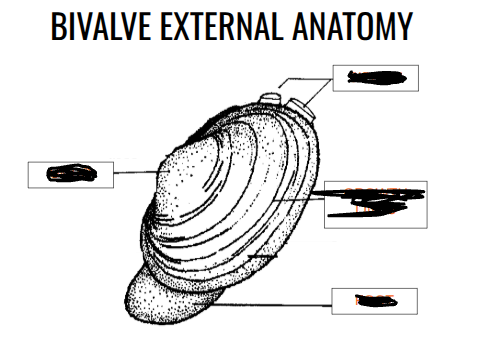
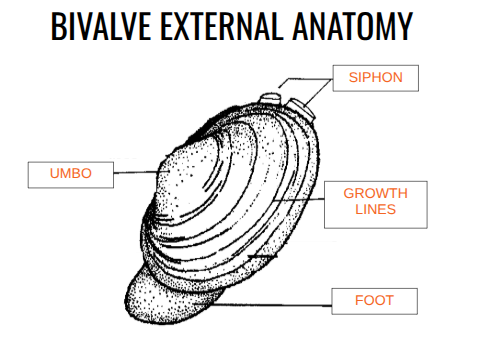
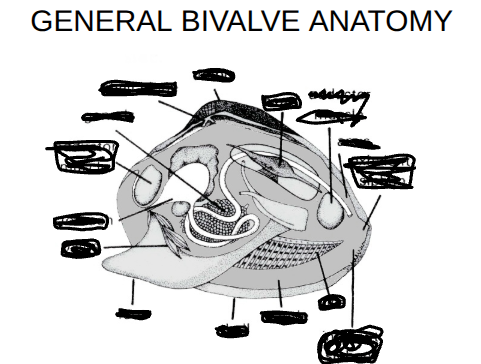
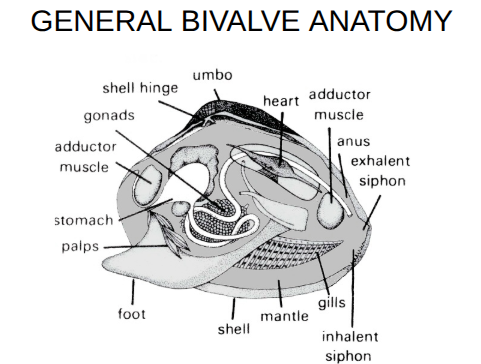
bivalves traits
2 half shells
large mantle cavity
large gills — respiration + food
burrowers
inhabit mud, silt, sandy bottoms
examples of bivalves
clams, mussels, oysters, scallops
pearl formation in bivalves
sand or parasite enter the body
nacre is secreted in layers around the sand/parasite in defense
nacre: mother of pearl, what pearls are made of
cephalopod characteristics
tentacles and arms
ink sac filled with melanin (defense)
can use jet propulsion
large brain w/ developed senses
sharp beak
chromatophores (camouflage)
semi-internal fertilization
cephalopod examples
squid, cuttlefish, octopus, nautilus
what are chromatophores
saccules of pigment surrounded by muscle that contract in order to show as much or as little pigment through the skin as needed
difference between arms and tentacles
arms are short with suckers all throughout, while tentacles are longer with suckers located towards the bottom of the arm
gastropod characteristics
some have a single shell, some have no shell
radula (“chainsaw tongue”)
gastropod examples
snails, limpets, slugs, nudibrachs
radula
tongue-like structure with many tiny teeth
used to scape algae off rocks and to drill into other shells
gastropod feeding habits
most are herbivores
some are predators (oyster drills, whelks)
cone snails use a harpoon w/ poison
marine arthropod subphylum
crustaceans
crustacean examples
crab, shrimp, lobsters, crayfish, barnacles
crustacean characteristics
jointed appendages
segmented body
exoskeleton
open circulatory system
molting
exoskeletons are hard and stunt growth
crabs need to shed their exoskeleton when their bodies are too large
a new skeleton hardens around them over days
have a 30% increase in body size
 Note
Note  Flashcards (30)