350 Ch 8 - New Products/Product Life Cycle
 Studied by 0 people
 Call Kai
 Learn
Learn Practice Test
 Spaced Repetition
 Match
Match Flashcards
 Knowt Play
1/17

There's no tags or description
Looks like no tags are added yet.
Name | Mastery | Learn | Test | Matching | Spaced | Call with Kai |
|---|
No study sessions yet.
18 Terms
Idea generation
first stage of product development
systematic search for new product ideas
internal product idea sources
intrapreneurial programs
internal social networks
external product idea sources
competitors
customers
distributors and suppliers
crowdsourcing
inviting broad communities of people into the new product innovation process
idea screening
screening new product ideas to spot good ones and drop poor ones as soon as possible
new idea write up reviewed by committee
RWW framework
Real need
Win w strategic comp adv
Worth doing - PROFITS $
product image
the way a product is perceived by consumers
product concept
a detailed version of the new product idea stated in consumer terms
product idea
an idea for a possible product that the company can see itself offering to the market
product concept testing
Methods
Presenting the concepts to consumers symbolically or physically or with a word or picture description
Asking customers about their reactions to the concepts
market strategy development
initial strategy statement for new product
marketing strategy statement
describes target market, planned value proposition, sales, market-share, profit goals for first few years
outlines planned product price, distribution, marketing budget for 1st year
describes LR sales, profit goals, marketing mix strategy
business analysis
Review of the sales, costs, and profit projections for a new product
To find out whether the projections satisfy the company’s objectives
product development
develop the product concept into a physical product
ensure the product idea can be turned into a workable market offering
test marketing
product and proposed marketing program and introduced in a realistic market setting
gives marketer an experience with marketing a product before introduction
tests the product and its marketing program
CONS
high costs and time consuming
standard test markets alternatives
Controlled test markets
Simulated test markets
Reasons for using alternative test markets
Reduce the costs of test marketing
Speed up the process
commercialization
introduce a new product to the market
considers:
time
place
single location, region, national/international market
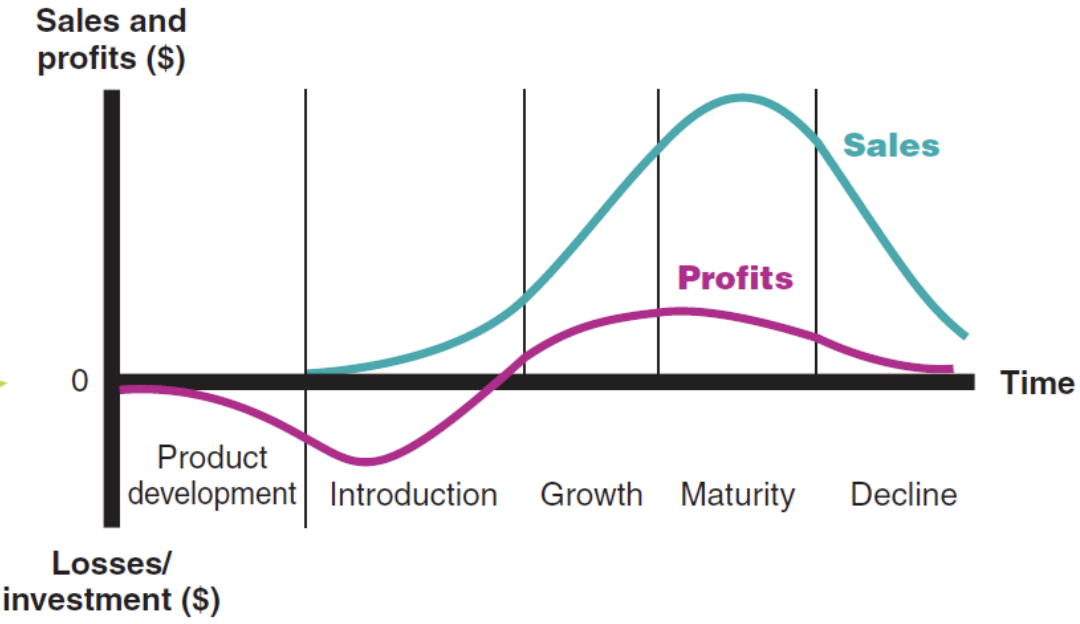
sales and profits over the product life cycle
sales peak at maturity
profits lowest at introduction
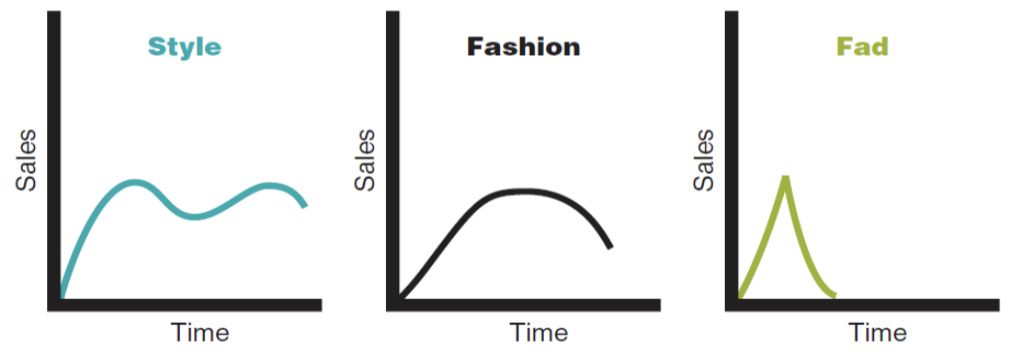
styles, fashion, fad
styles fluctuate over time
fashion slowly dec over time
fad sharp rise, sharp dec over time
 Note
Note  Flashcards (38)