L3: Structural loads and internal responses P2
 Studied by 0 people
 Call Kai
 Learn
Learn Practice Test
 Spaced Repetition
 Match
Match Flashcards
 Knowt Play
1/24

There's no tags or description
Looks like no tags are added yet.
Name | Mastery | Learn | Test | Matching | Spaced | Call with Kai |
|---|
No analytics yet
Send a link to your students to track their progress
25 Terms
Infinitesimal
Very very small
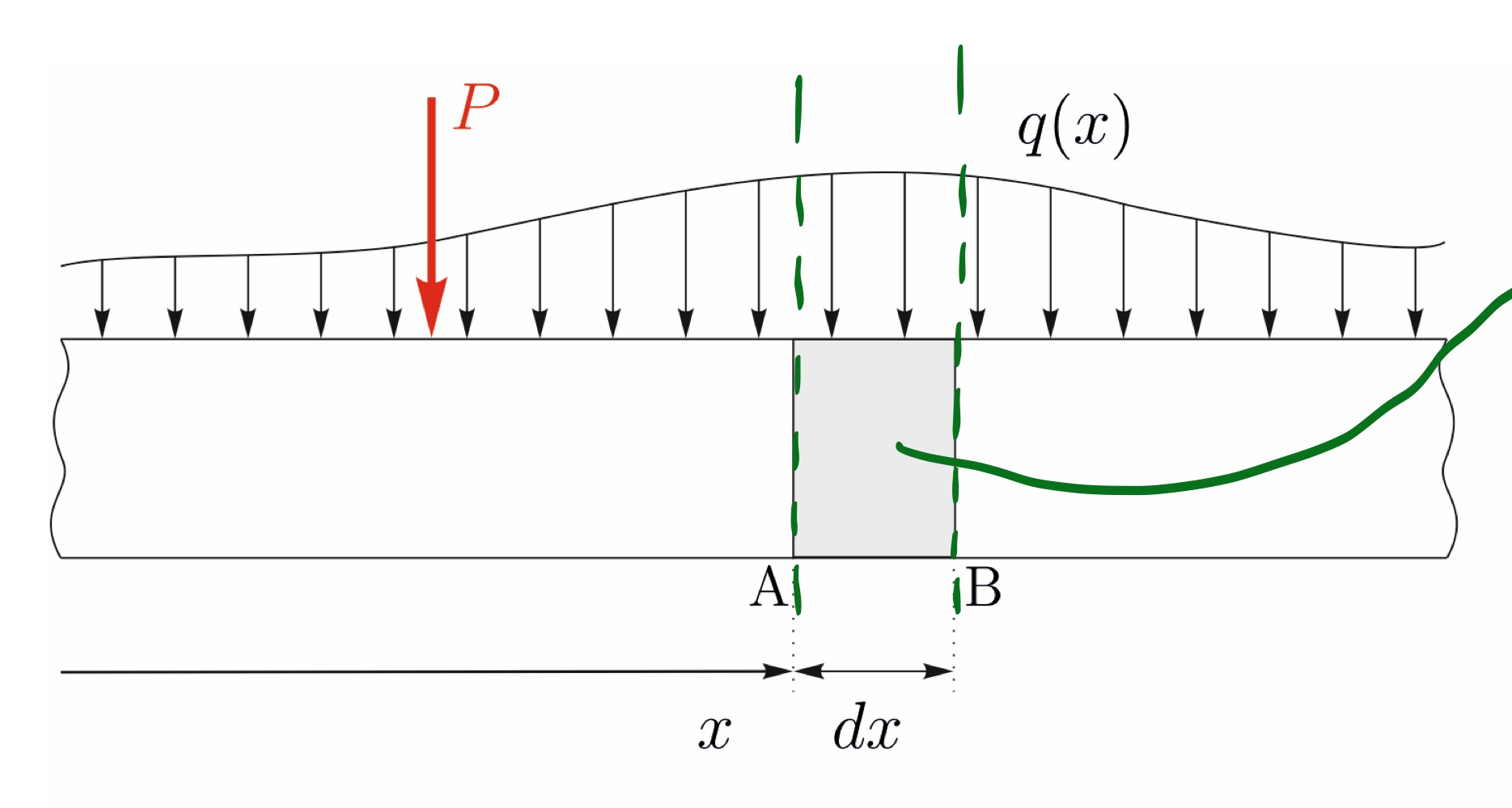
Show equilibrium of an infinitesimal element dx of the beam
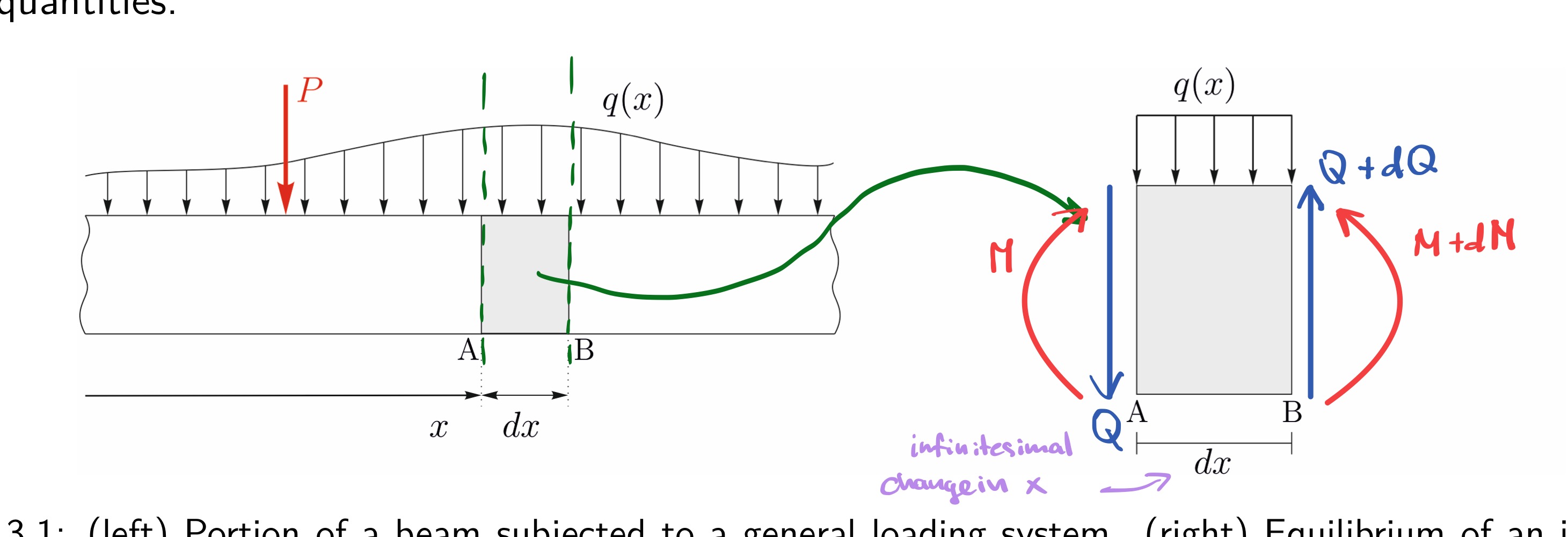
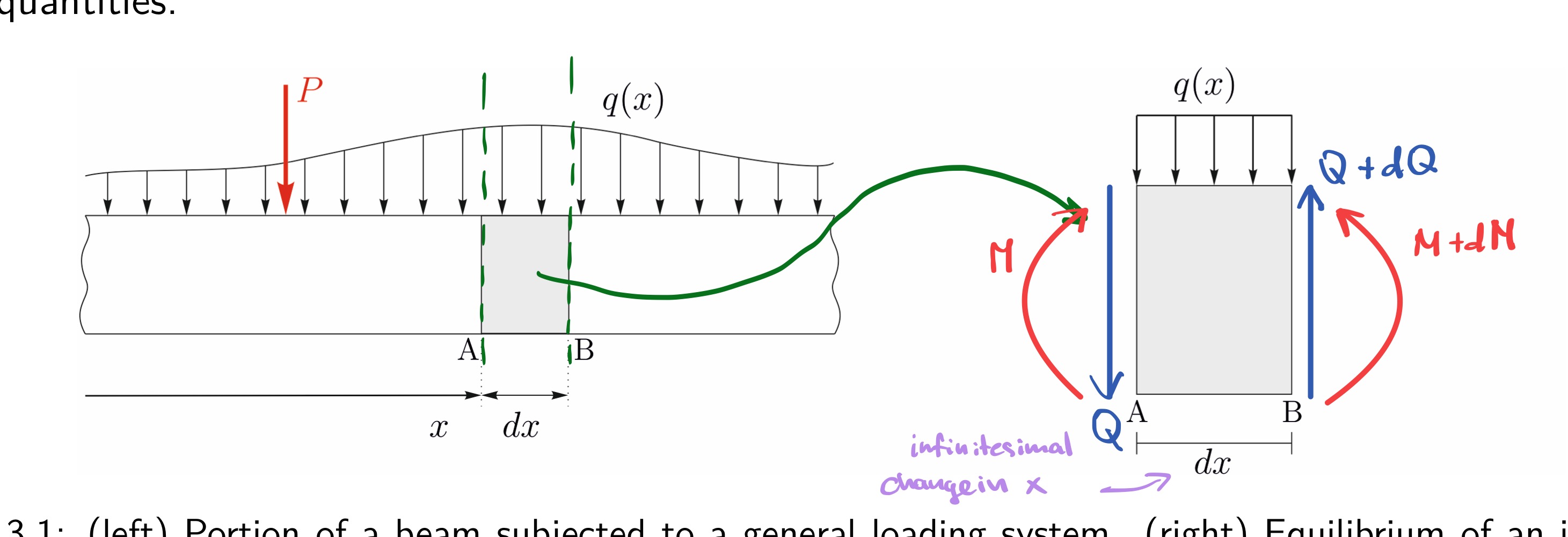
From this section of a beam, what equations can be derived
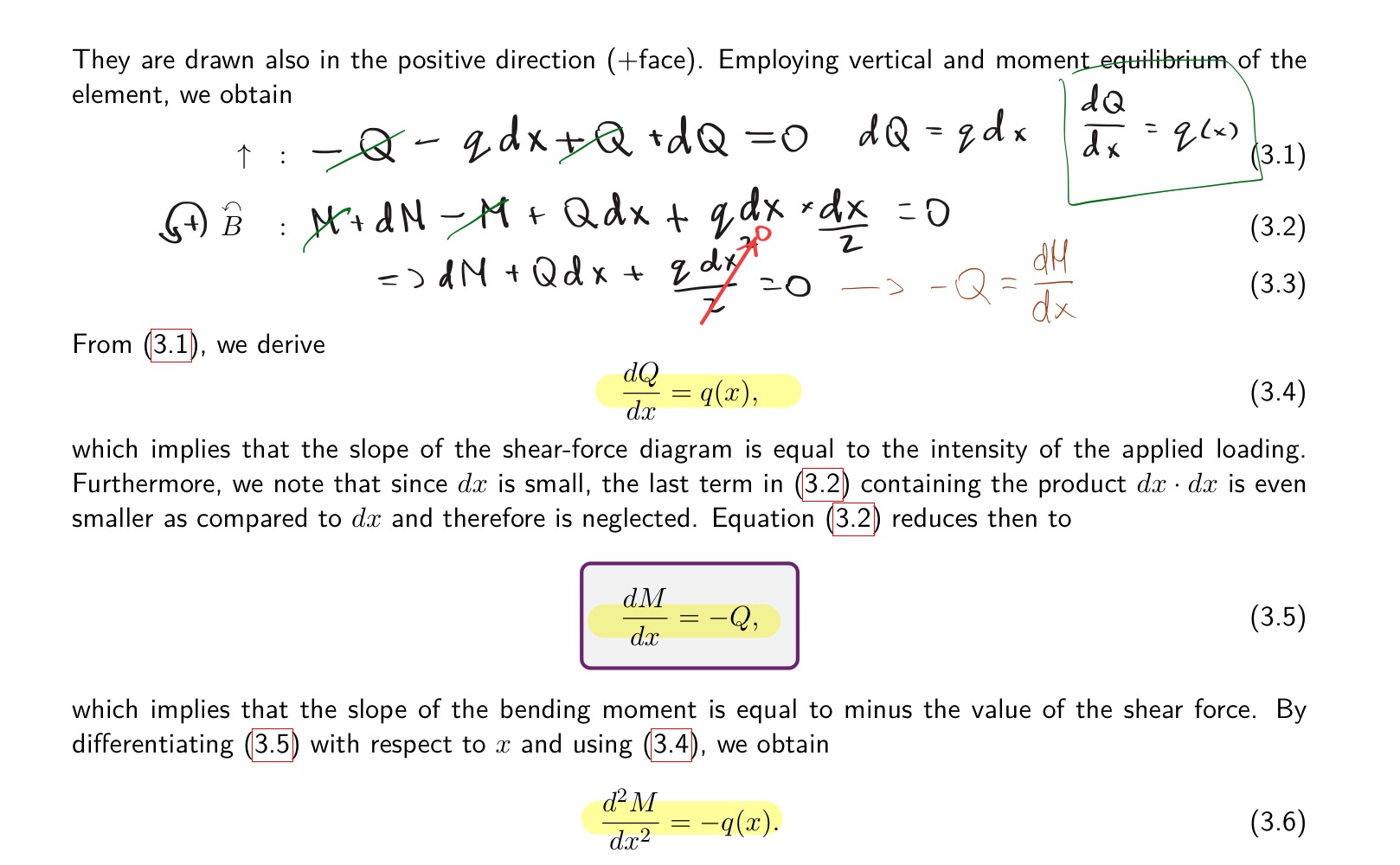
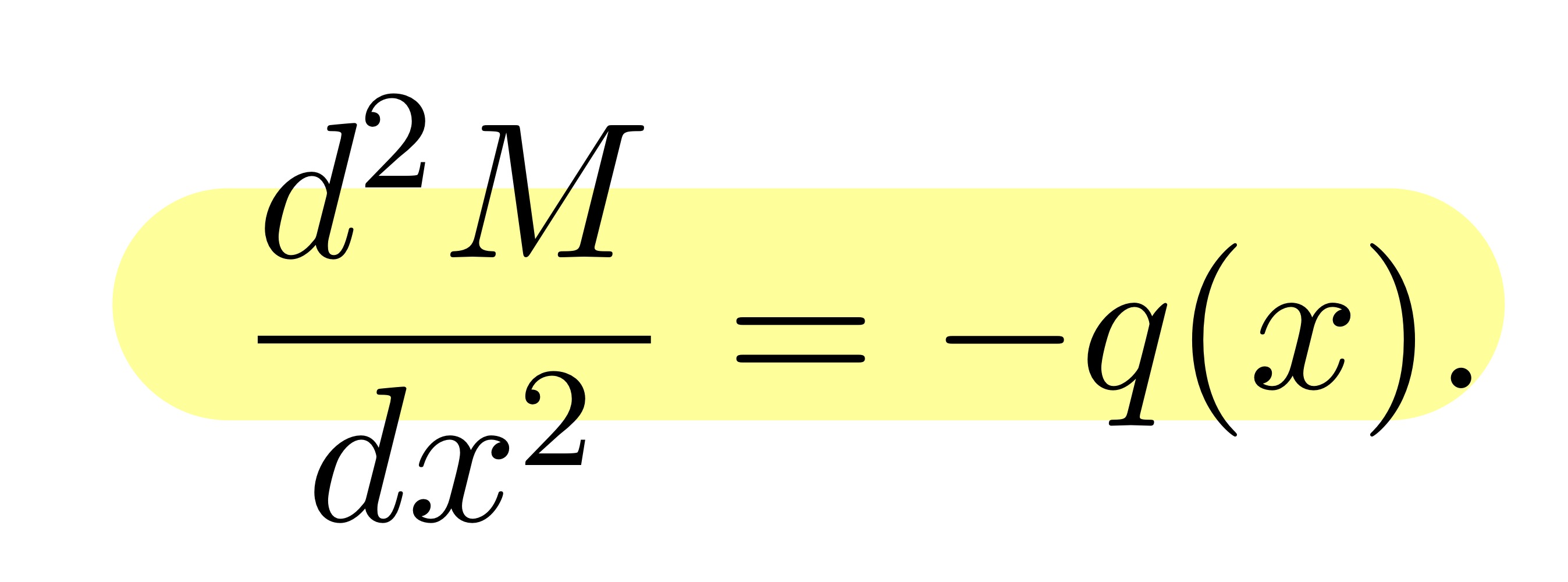
How do you exactly derive this equation?
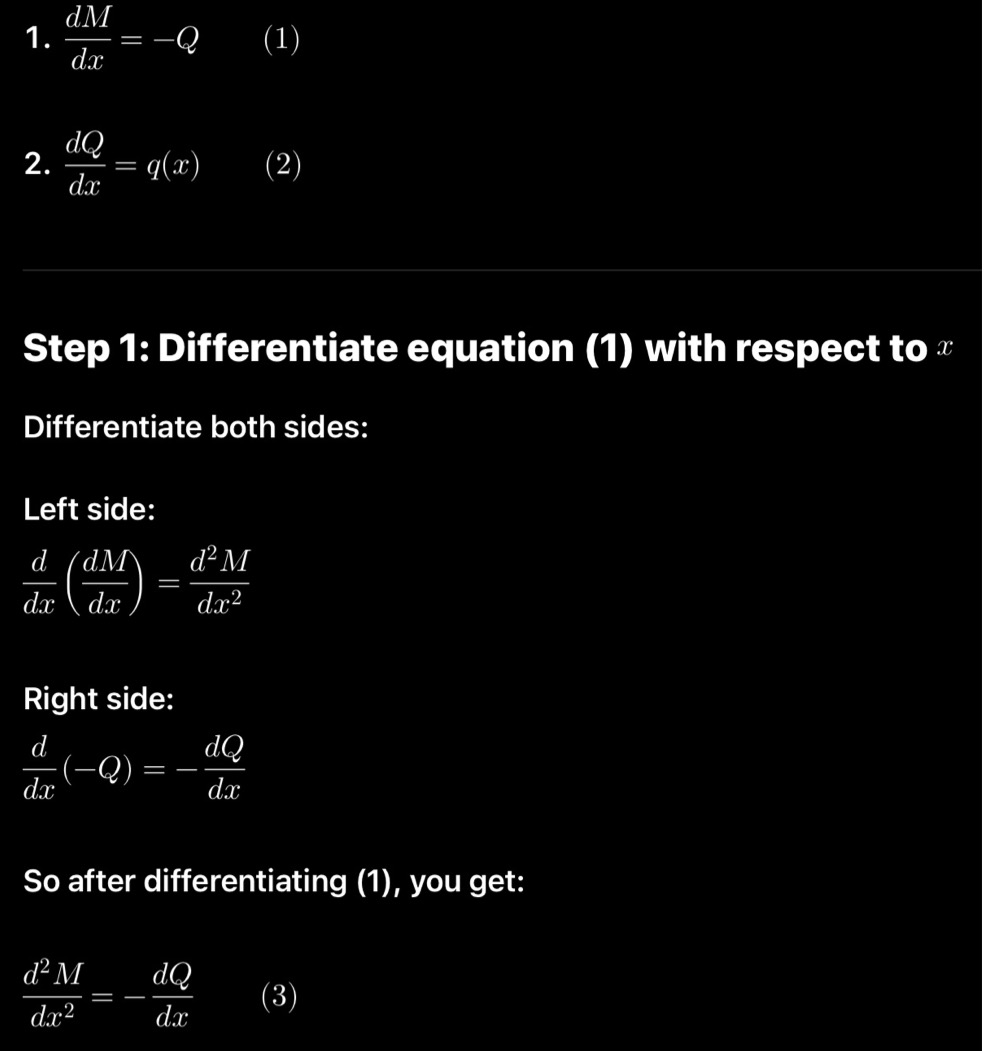
Q and M are….
Not mathematically independent
Q tells us…
Q tells us how fast M is changing as we move along the beam
M is…
A curve
Why Q=0 when M is max?
When M is maximum, it’s like the max point on curve so no slope so differentiation is 0. So when M is max, Q is 0. When M increases, Q is positive. When M decreases, Q is negative. When M is max or min, Q is 0.
Why do we care that Q=0 when M is max?
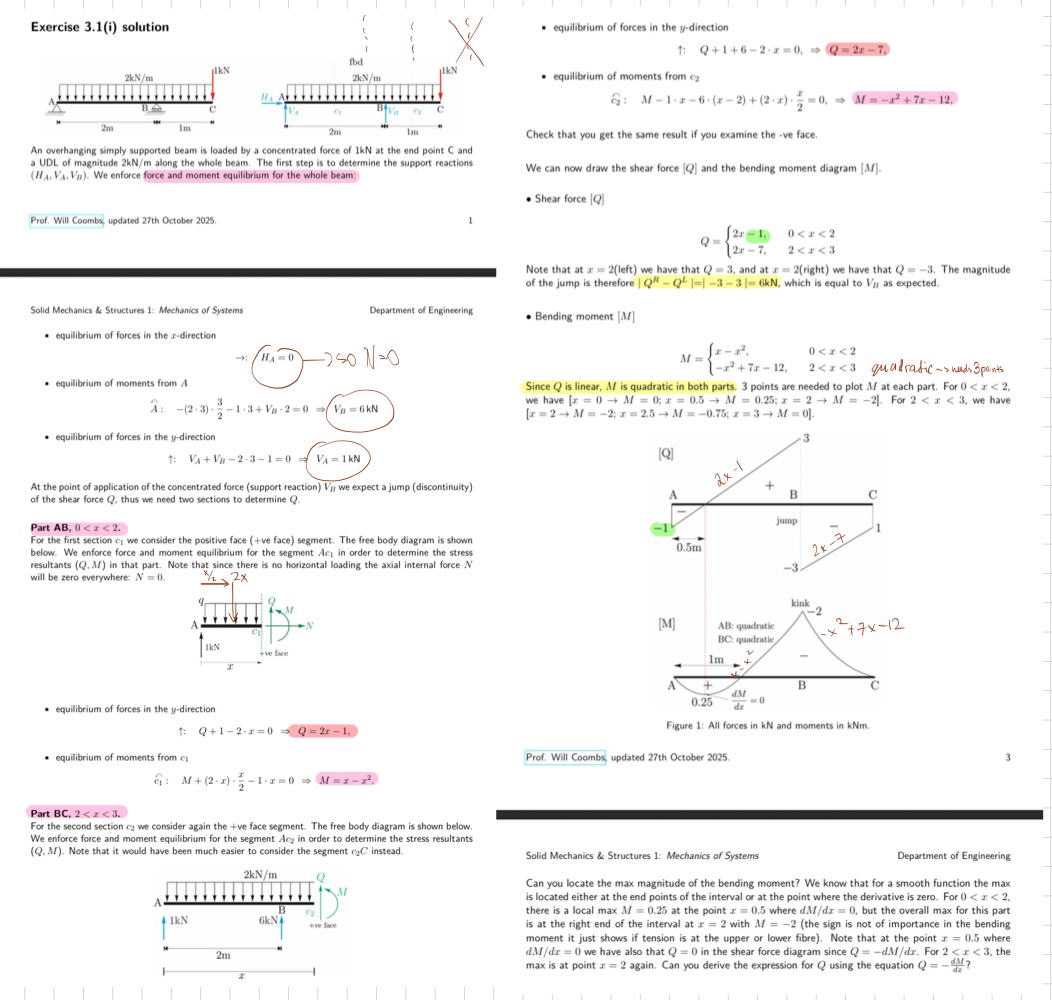
M max usually causes highest stress and failure risk. So we set Q=0 and calculate max M. BUT! Q=0 gives local maxima/minima, not always the biggest value.
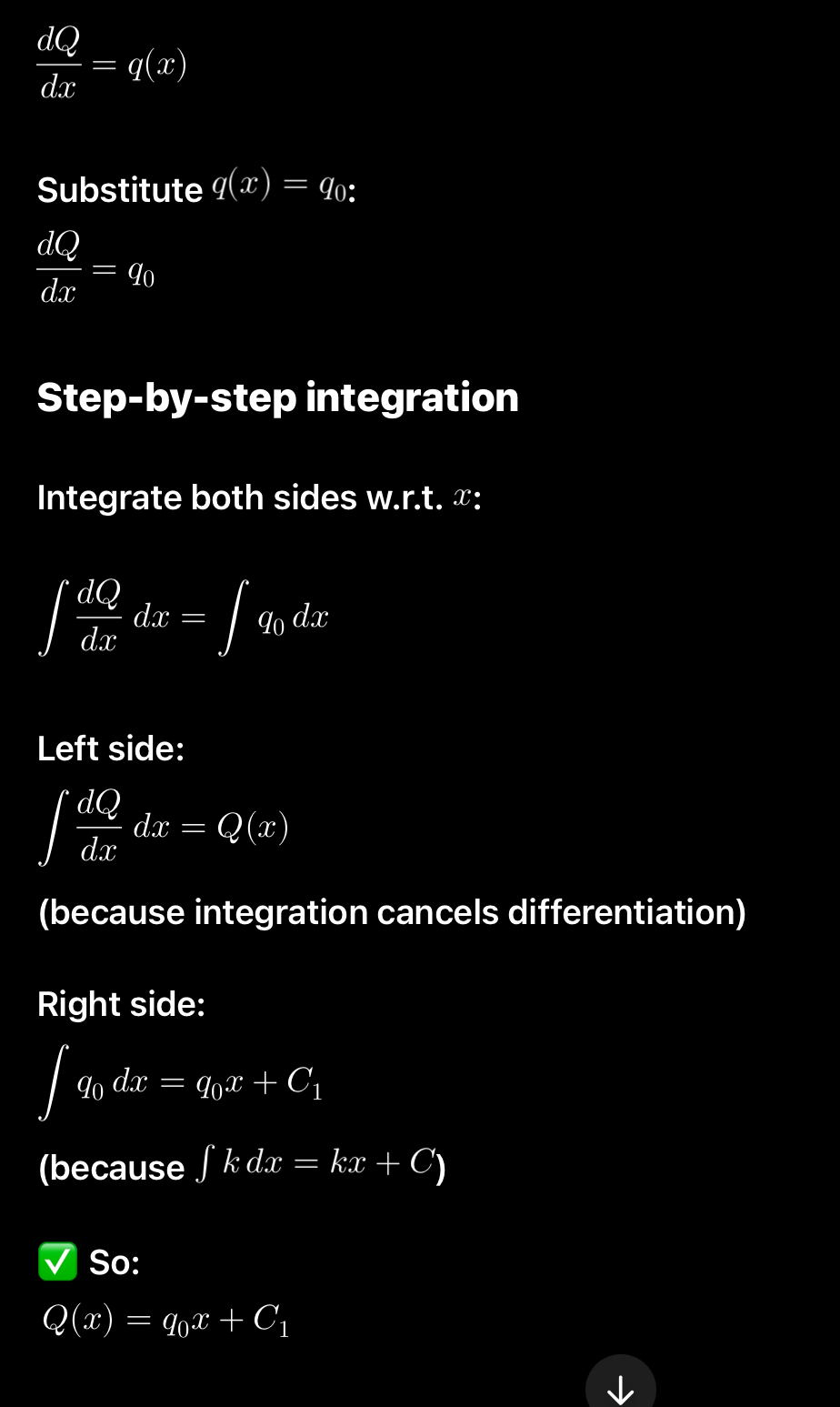
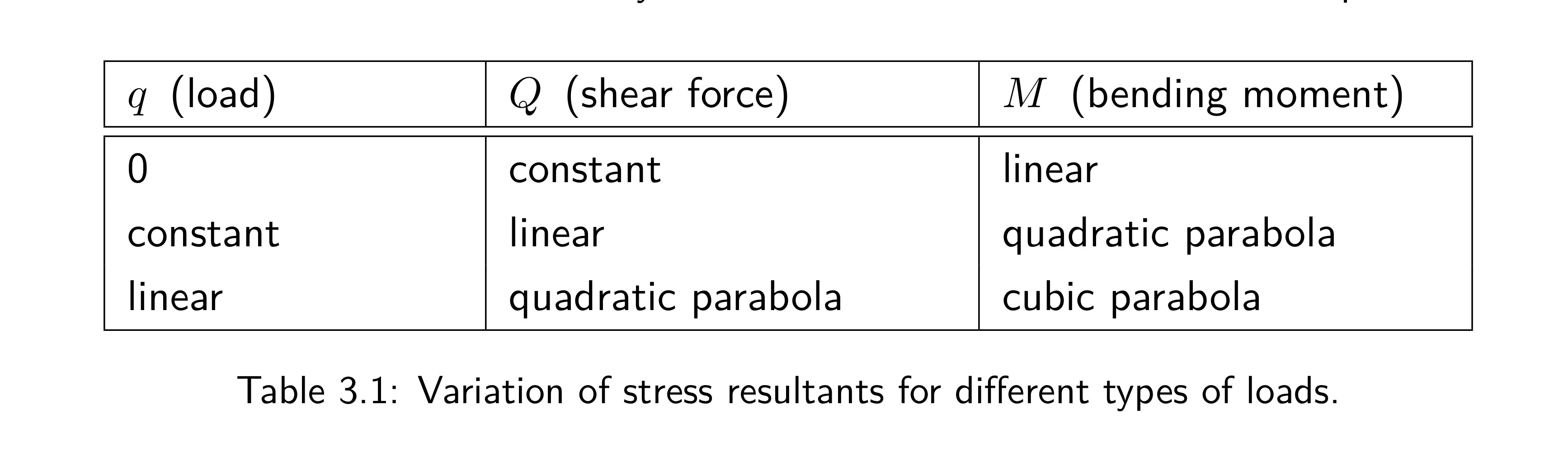
If q(x) is a Uniformly Distributed Load (UDL) of intensity q0, i.e., it is not a function of x, then equations show (by integrating) that the shear force Q will be …, while the bending moment M will be …
If q(x) is a Uniformly Distributed Load (UDL) of intensity q0, i.e., it is not a function of x, then Eqs (3.4) and (3.6) show (by integrating) that the shear force Q will be a linear function of x, while the bending moment M will be quadratic function of x.
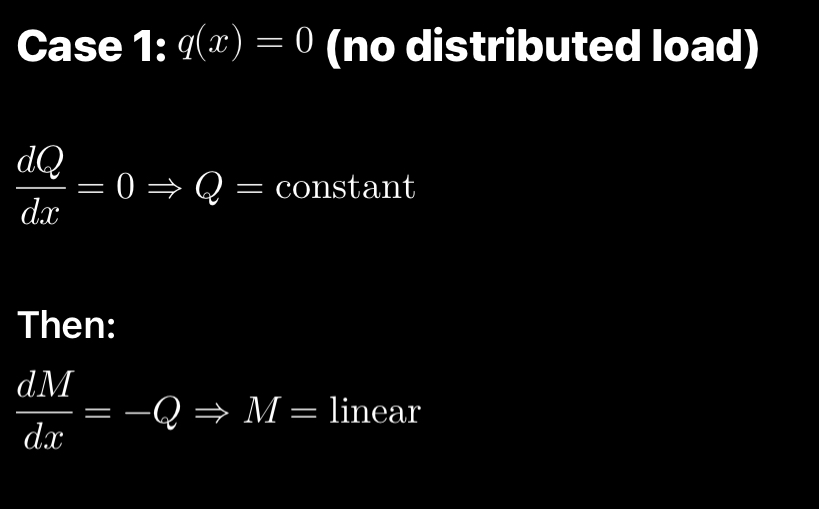
If q(x) = 0, then the shear force is …, while the bending moment is …
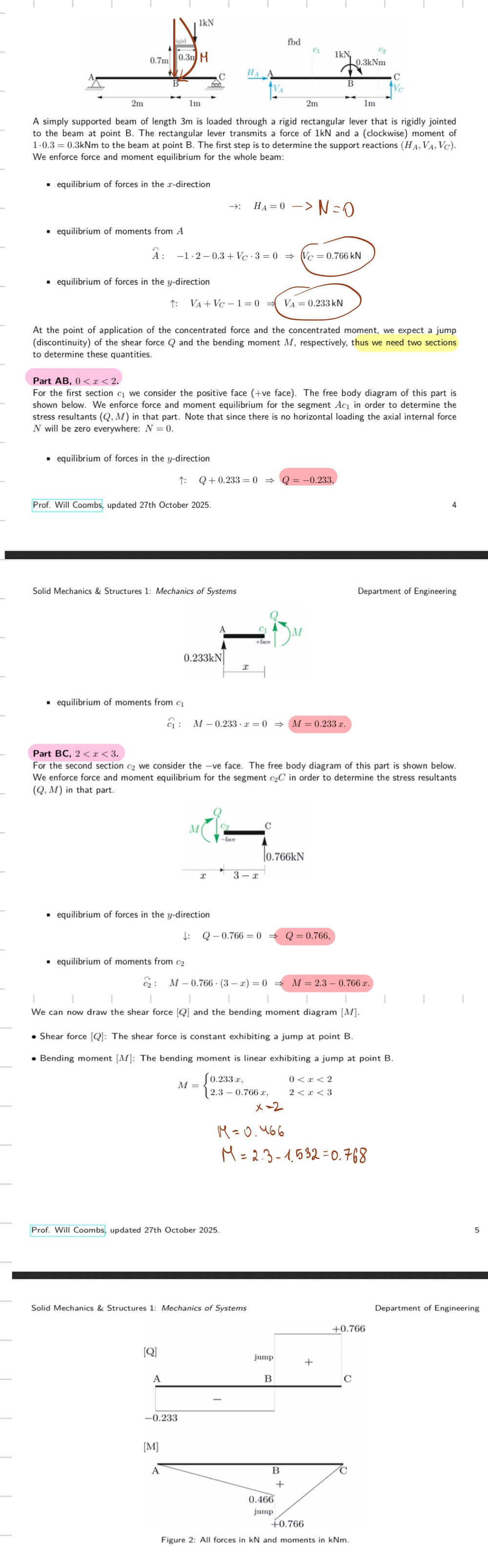
If, on the other hand, q(x) = 0, then the shear force is constant, while the bending moment is a linear function of x
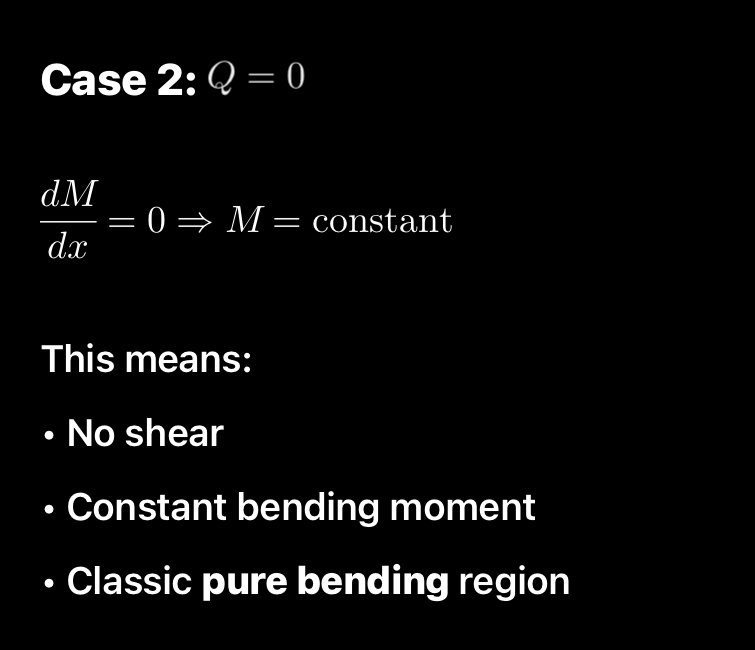
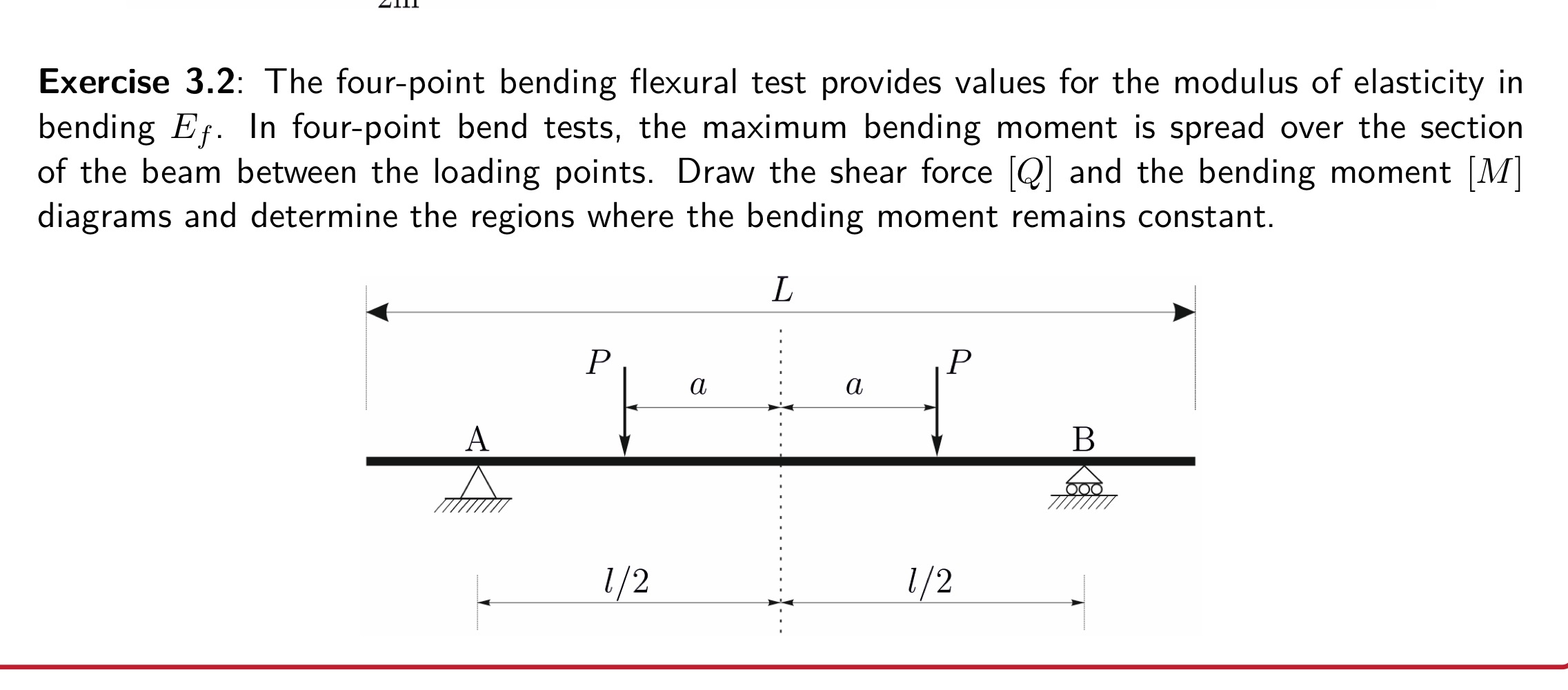
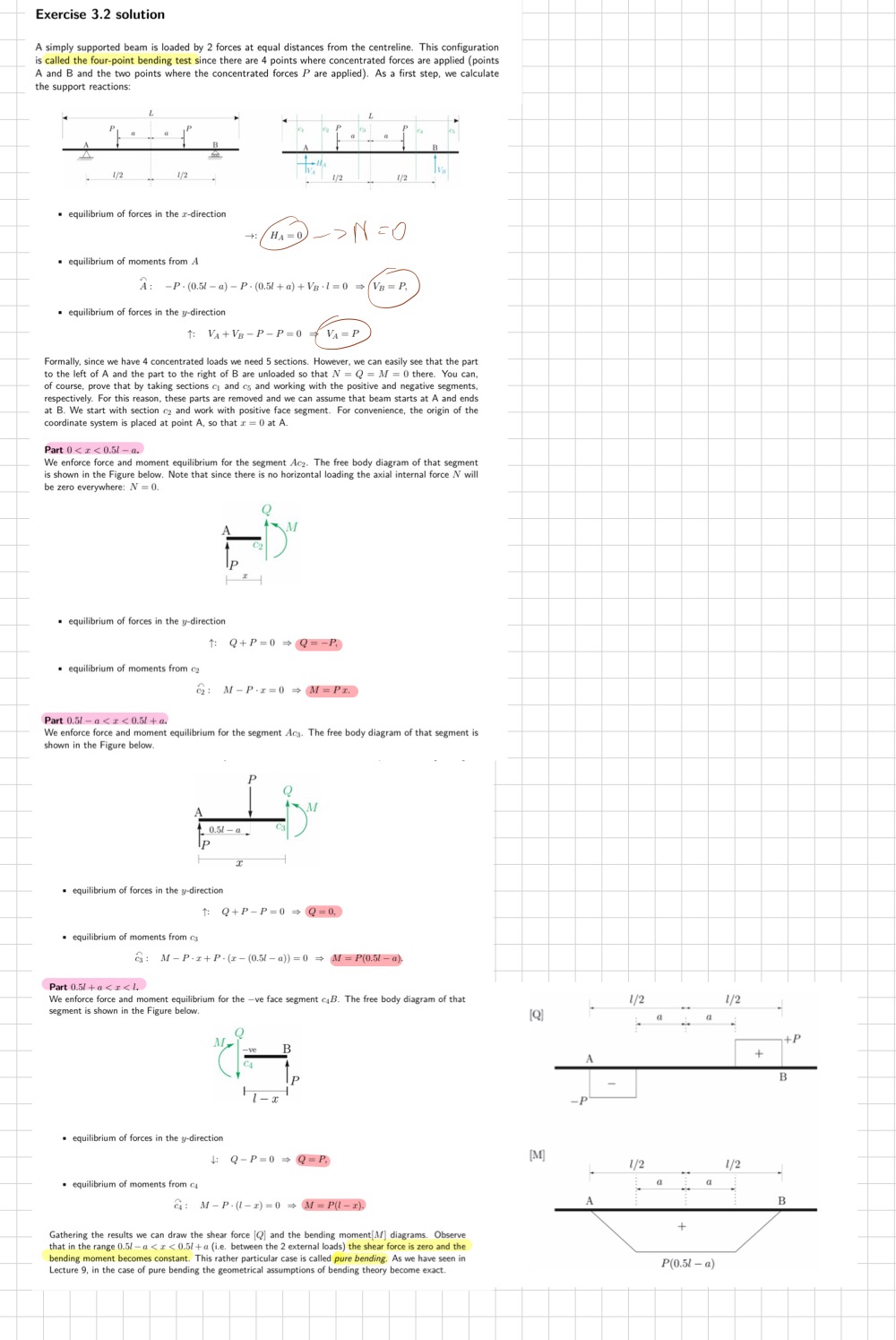
special case exists when the shear force Q is zero and the bending moment M is …. This situation is called …
special case exists when the shear force Q is zero and the bending moment M is constant. This situation is called pure bending
Equation of shear force Q in case of a concentrated force P

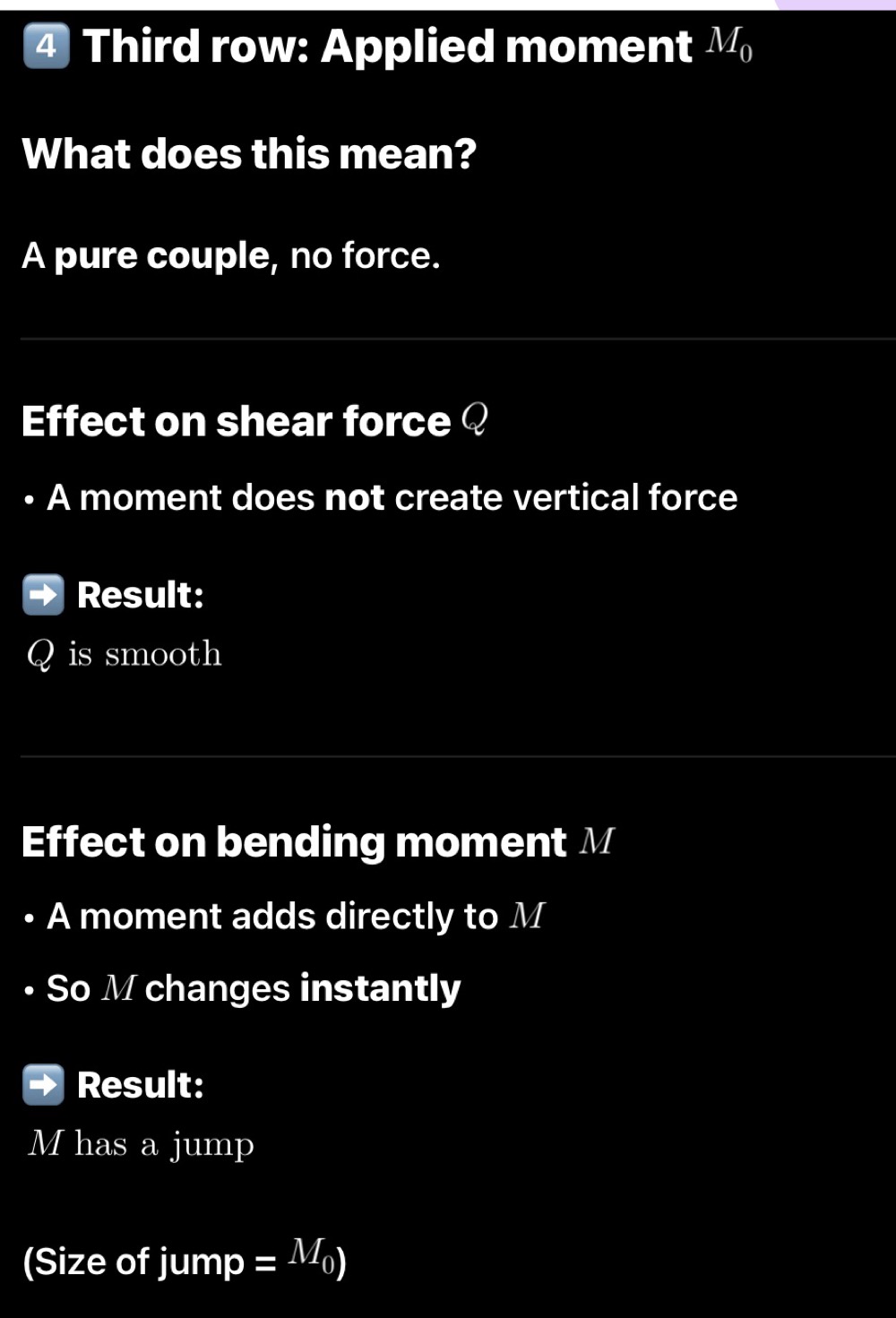
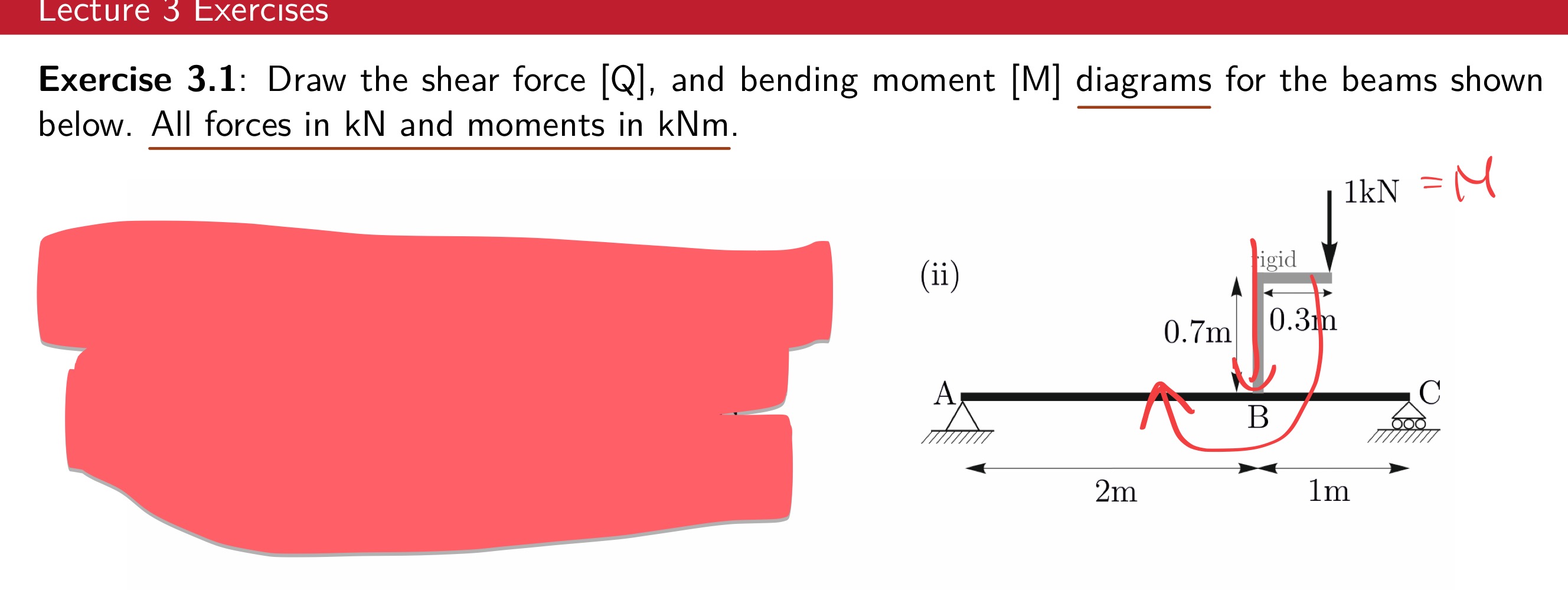
Equation of moment M in case of a concentrated moment M0

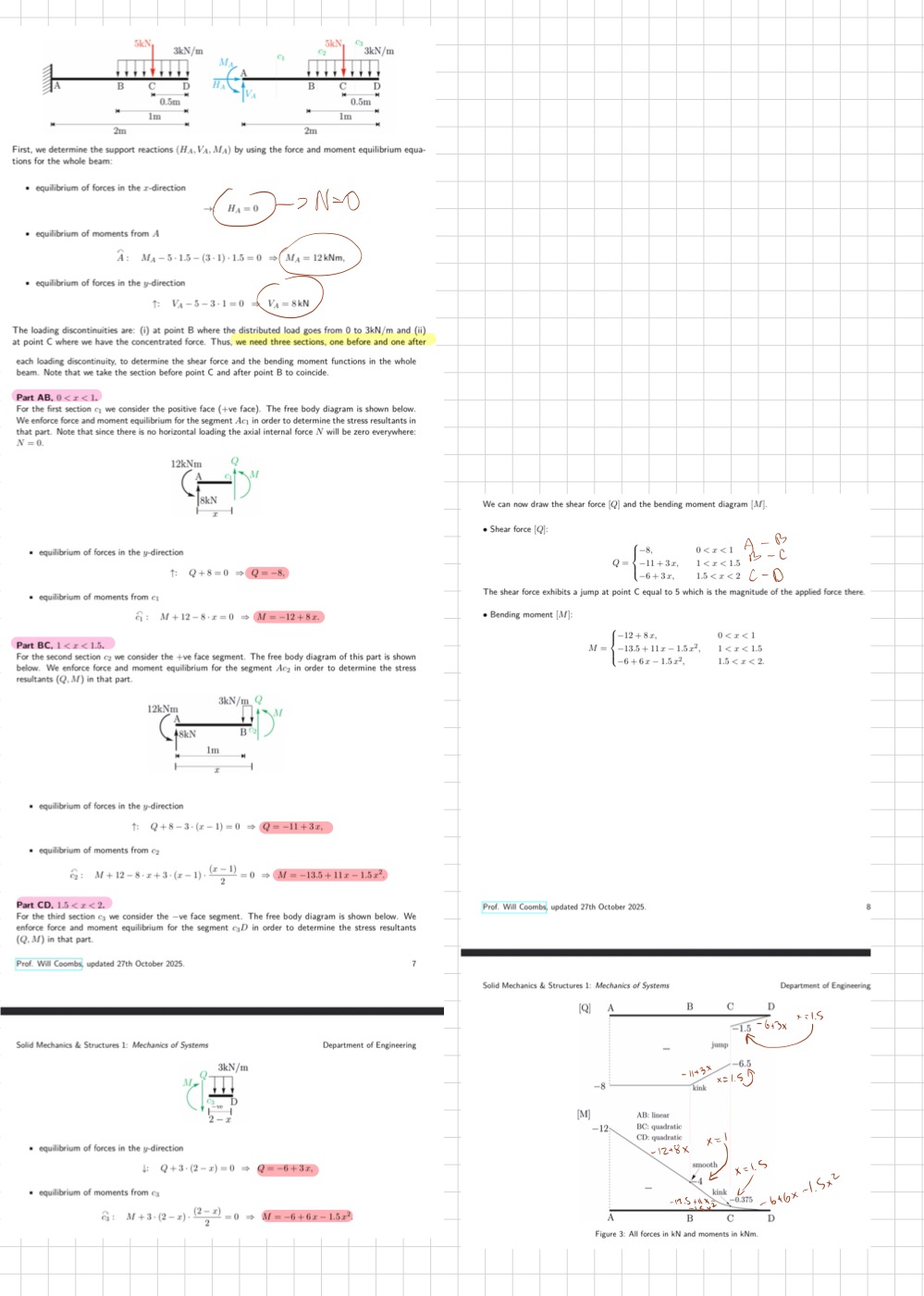
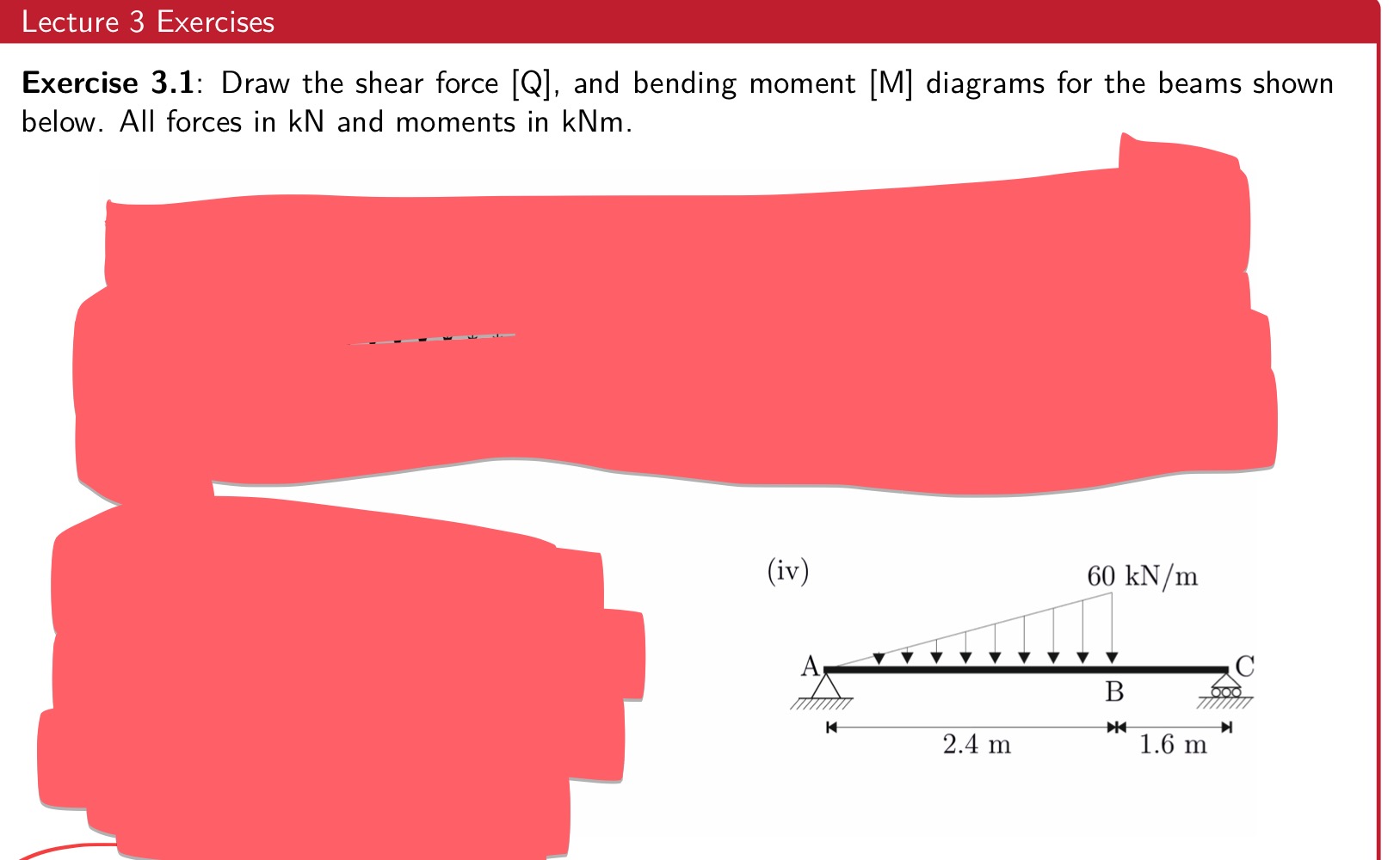
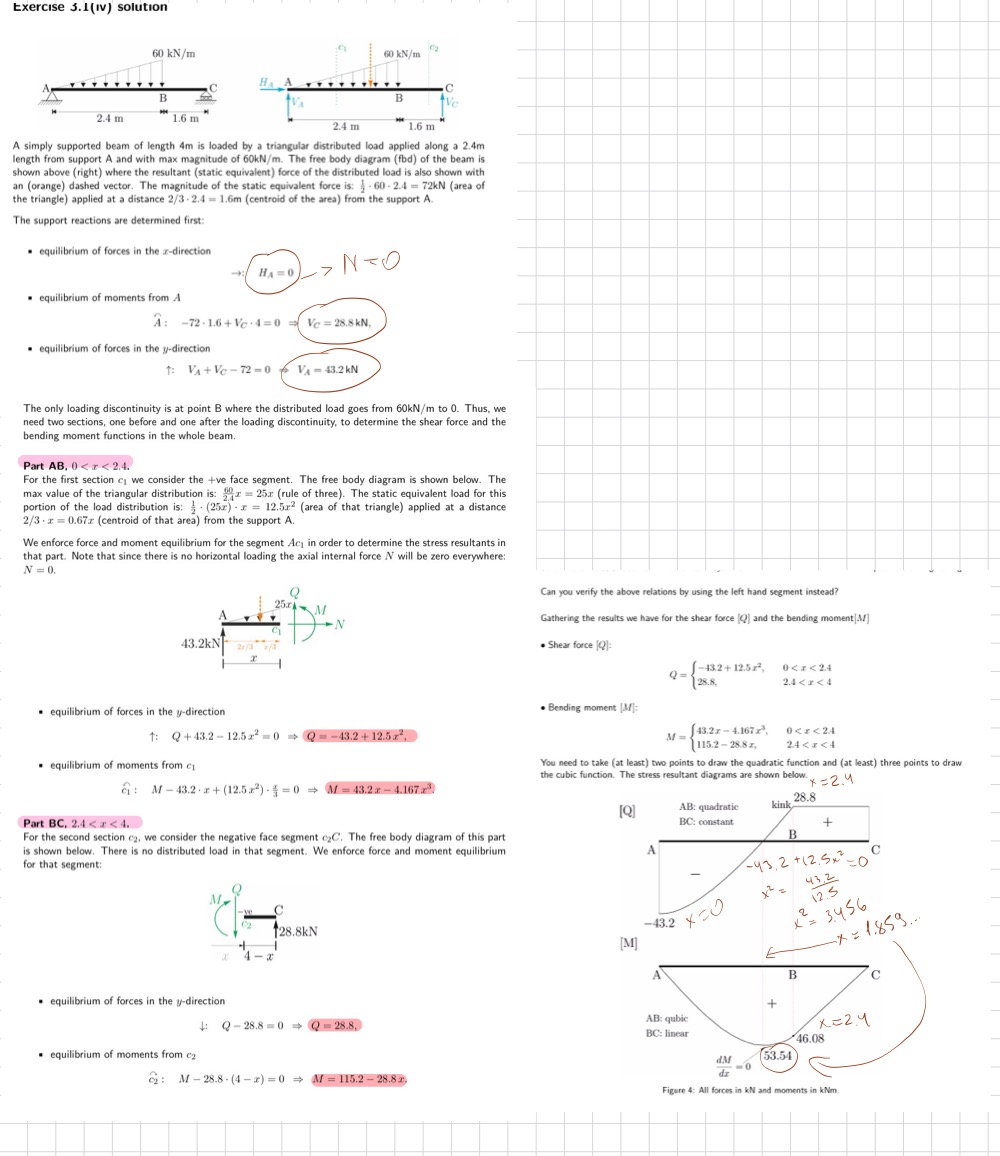
Variation of stress resultants for different types of loads
Behaviour of stress resultants at the point of load discontinuities
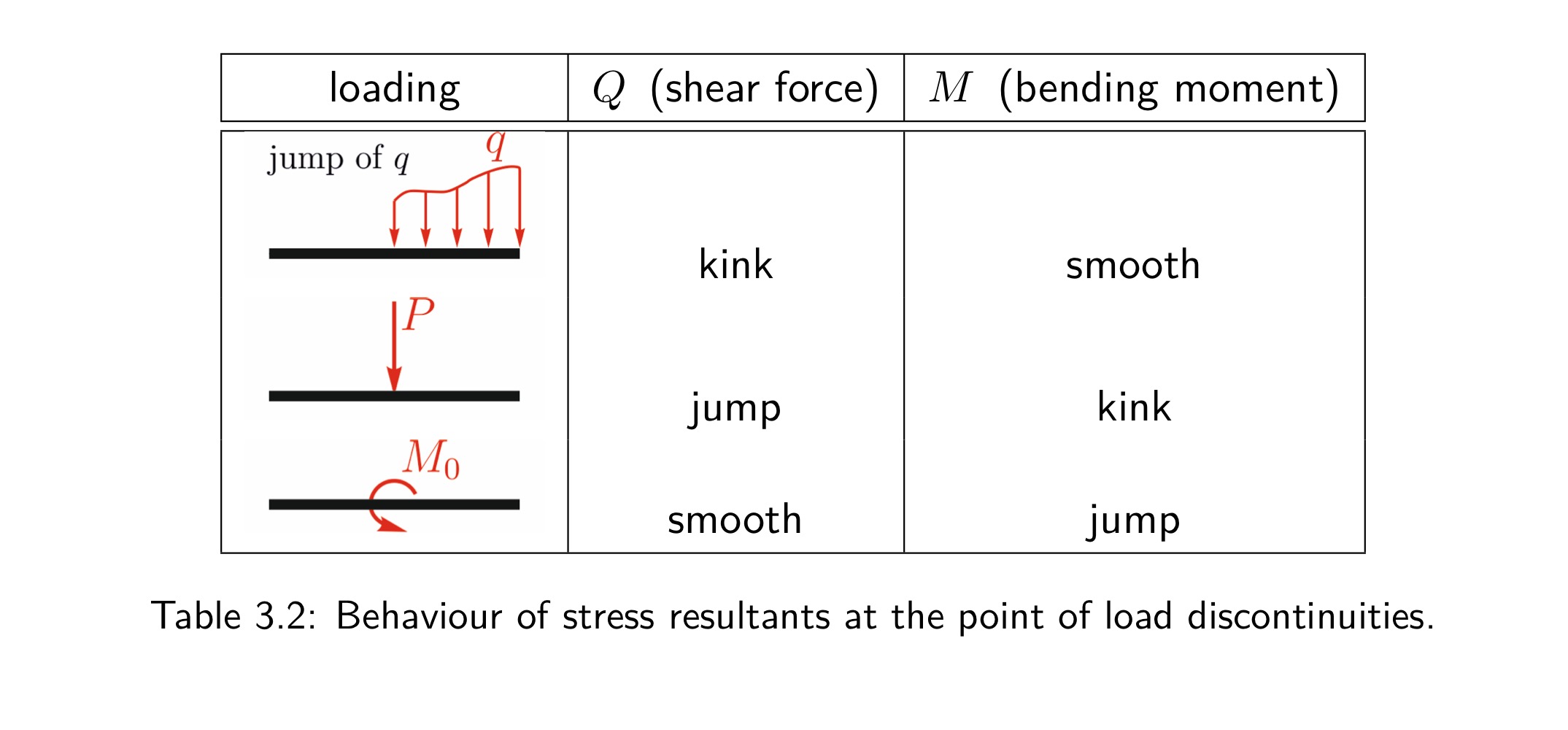
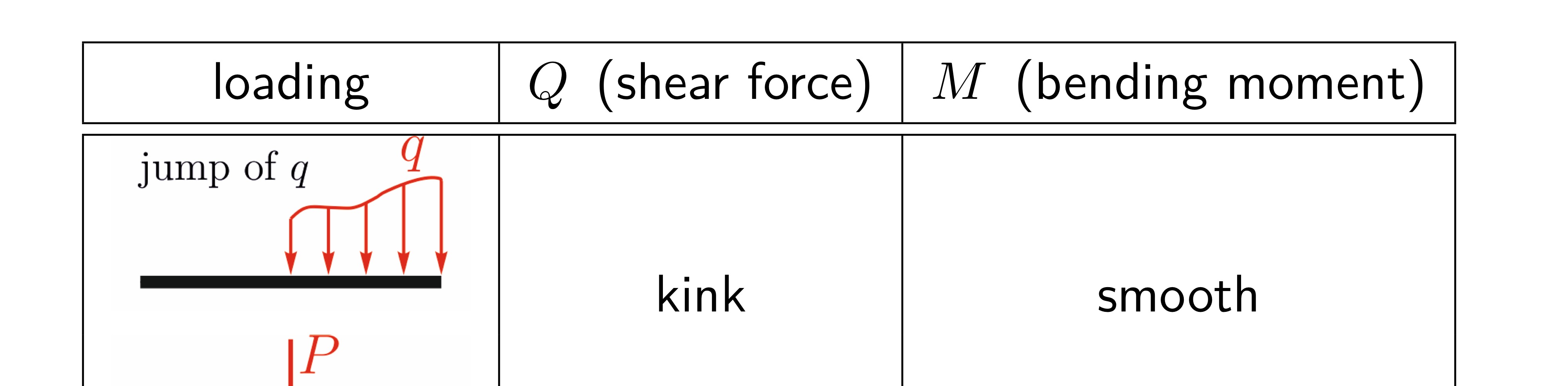
Explain mathematically
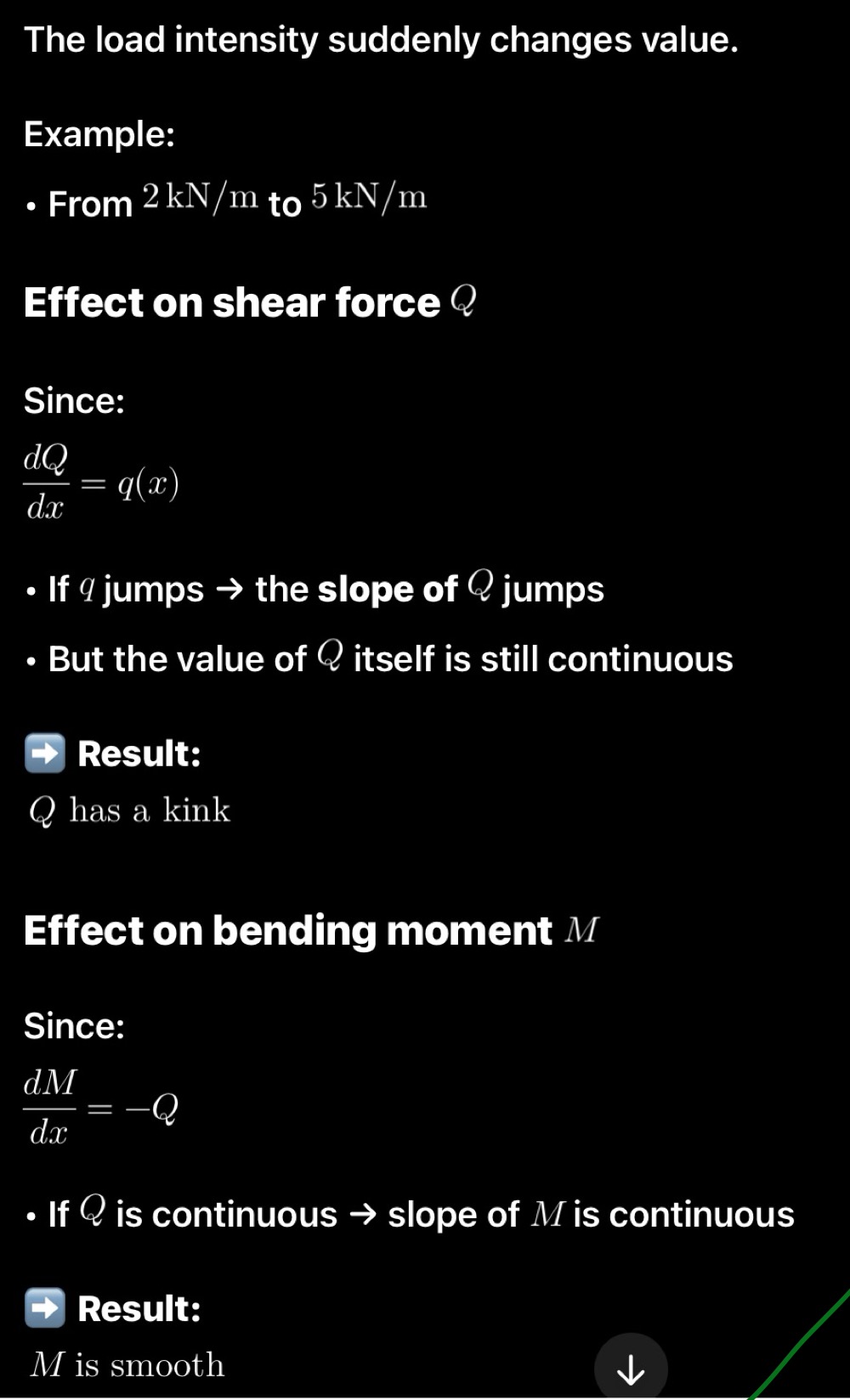
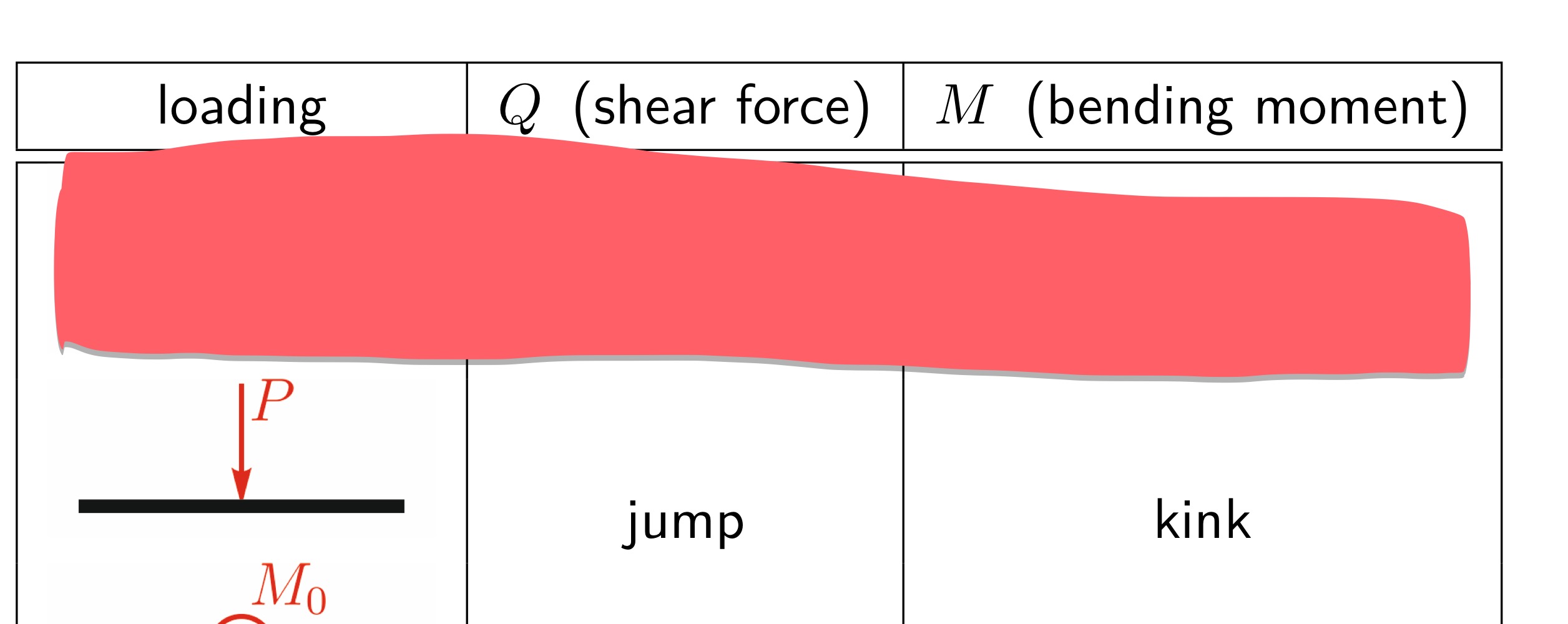
Explain mathematically
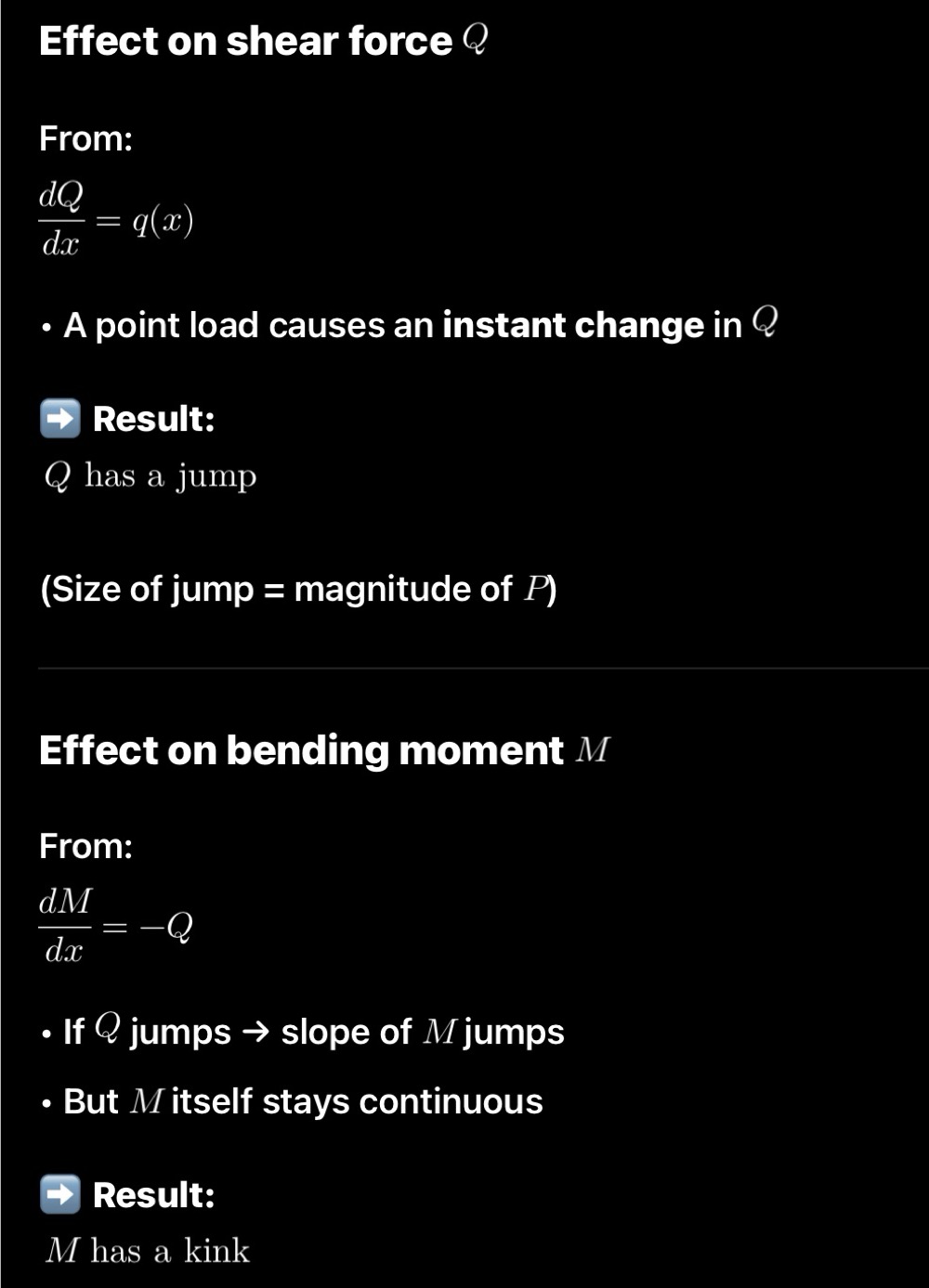
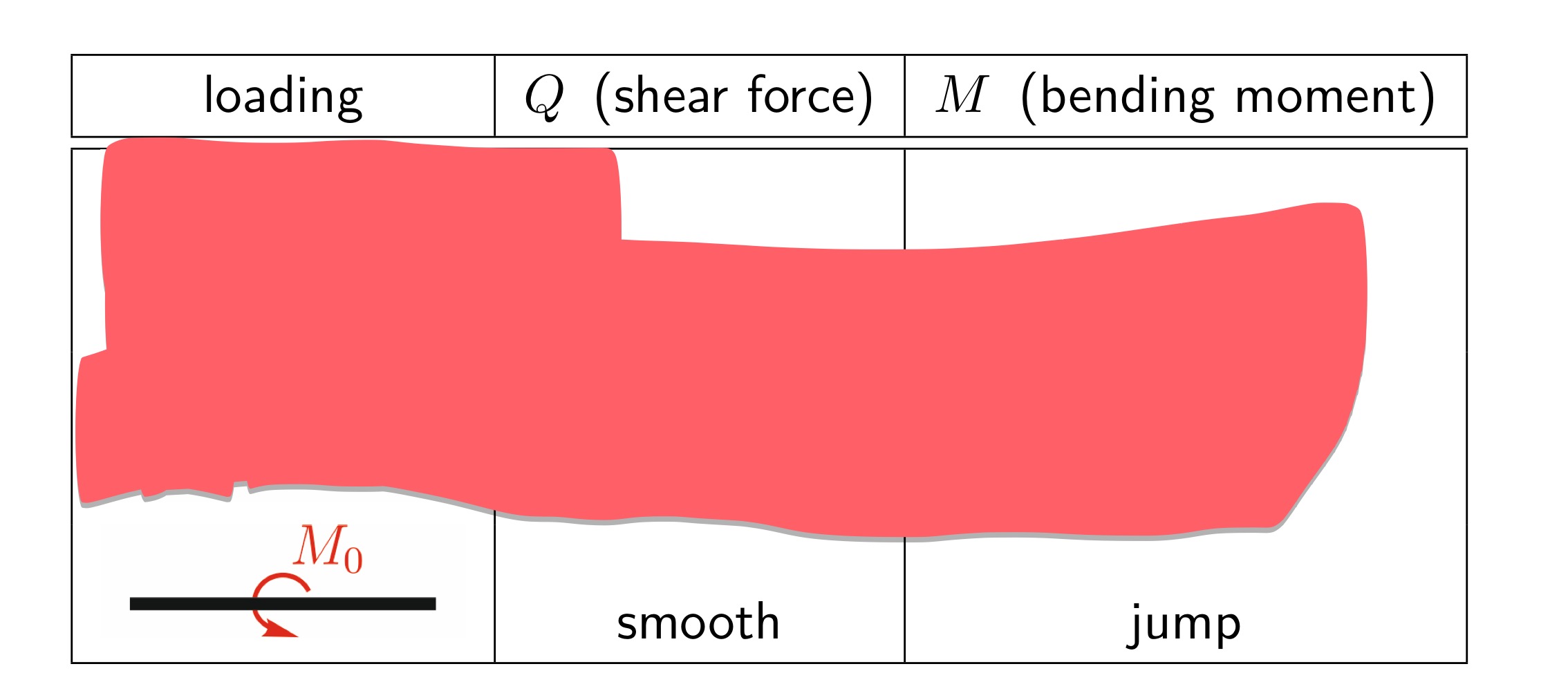
Explain mathematically
 Note
Note  Flashcards (73)