8) Principles of muscle strengthening
 Studied by 0 people
 Call Kai
 Learn
Learn Practice Test
 Spaced Repetition
 Match
Match Flashcards
 Knowt Play
1/52

There's no tags or description
Looks like no tags are added yet.
Name | Mastery | Learn | Test | Matching | Spaced | Call with Kai |
|---|
No analytics yet
Send a link to your students to track their progress
53 Terms
Why do PTs perform strength training
improve force production
definition of strength
maximal force a muscle or group of muscles can generate at a specific speed of contraction
overload
load
reps
Repetition speed/temp
rest periods
training volume
adaptions are specific to
muscle actions
speed of movement
range of movement
selection of muscle groups
energy system involved
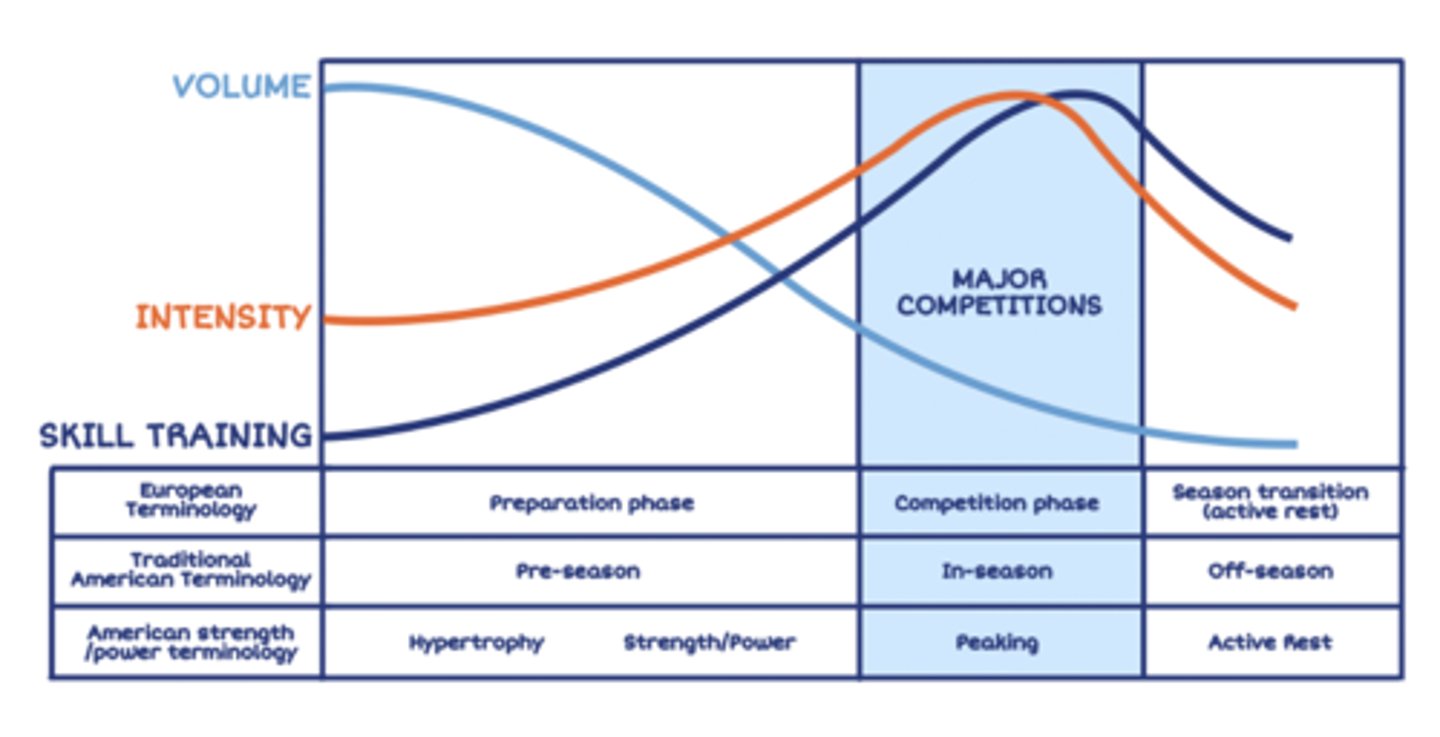
Intensity and volume
variation
systematic alteration of the program over time to maintain overload
when varying an exercise what can we change
volume and intensity
effect of overload
increase the tolerance threshold (hypertrophy)
the intervention principle: PST
To change homeostatic mechanisms, we must change stress(es) on the system to stimulate responses in the system to reduce the problem/improve function
interventions have what time of relationship
dose-response
inadequate dose
no response
optimal dose
optimal response
excessive dose
sub-optimal or possibly harmful response
Specificity is based on
energy pathways, movement patterns and muscle groups
when people put on muscle they are
making their muscles bigger not laying new muscle fibers
Resistance training is beneficial for
everyone
any type of contraction is beneficial for
strength
- concentric, eccentric, isometric muscle actions should be included
intensity for strength (dose)
60-70% of 1 RM for 8-12 reps
intensity for power (dose)
30-60% of 1 RM for 1-3 sets of 3-6 reps
What is the rep dose we should do overall
The exercise should be performed to the point at which it would be difficult to do another repetition
- between 6-15 reps
frequency for strength
train entire body 2-3 days per week
volume
number of reps multiplied by resistance
volume reflects
the degree of muscle stress
volume examples
number of exercises, number of sets, number of reps
volume for strength
1-3 sets per exercise for the novice
mode of training for strength
free weights and machines
thera-bands are helpful for what types of muscles
smaller muscles, maybe shoulders or ankles
speed of training for strength
slow and moderate velocities
the last rep of a set should be
difficult to complete!
fatigue
completes the reps, but shows some difficulty, slight decrease in range, or substitutions
attempt to correct substitutions prior to
concluding that failure has occured
failure
inability to complete reps
Fatigue during training
is acceptable and expected during final reps of a set, during the last set and after increasing the load while doing high-intensity exercise
rest intervals
Increase the duration of rest to 3-5 minutes to maintain repetitions per set
is body weight considered a load
yes
non-free weight training resistance
fixed or variable (bands)
non-free weight training limitations
weakest point in range
not an infinite number of machines
made of an "average" person
common geriatric protocol
3 sets of 8 at 80% 1 RM
isometric training limitations
largest gains made at one angle
examples of isometrics
isometric sets
maximal voluntary isometric contraction (MVIC)
power =
force x velocity
Power is more muscular or neural?
neural
- we are not trying to get more muscle
in older adults
Muscle power is a critical determinant of physical function
high-velocity power training can lead to
improvements in power and physical function in older adults
When should we re-assess all forms of training
every two weeks
why do we assess so frequently
the beginner gains in the patient are most prevalent (neural adaptations)
contradictions for high-intensity training
acute inflammatory conditions
acute wound or tissue healing
severe osteoporosis
unstable cardiac disease
what groups are under reported in for adverse effects?
older adults and peds
adverse events from high-intensity training
muscle strain, brusing, joint pain
falls
increased BP
aggravation of existing arthritis
how do we choose training intensity
is increased force production the goal?
is recruiting the correct muscles for a certain task the goal?
is prioritizing a specific muscle contraction related to function the goal?
is recruitment of the proper muscles for sustained periods of times the goal?
testing education
explain why you are testing by relating strengthening exercise to function
educate and demonstrate proper technique before loading
training education
provide encouragement and continue to watch form and technique
Educate about possible muscle soreness
what helps relieve delayed onset muscle soreness (DOMS)
whatever works for the patient!
- ice, heat, stretching, doing the same thing that invoked it
when does DOMS happen
24 or 48 hours after exercise
 Note
Note  Flashcards (54)