Cardiac and pulmonary and acute care safety
 Call Kai
 Learn
Learn Practice Test
 Spaced Repetition
 Match
Match Flashcards
 Knowt Play
1/92

There's no tags or description
Looks like no tags are added yet.
Name | Mastery | Learn | Test | Matching | Spaced | Call with Kai |
|---|
No analytics yet
Send a link to your students to track their progress
93 Terms
140, 90
Hypertension is a systolic blood pressure of _____ mmhg or more, and .or a diastolic pressure of ____ mmhg or more
ST Elevation MI
STEMI stands for....
Anterior STEMI
Most serious MI, life-threatening; known as the "widow maker"
Anterior MI
Blockage in the left main or left anterior descending artery (LAD) of the heart will cause damage to the front of the left ventricle
Inferior MI
blockage in the right coronary artery
Diaphoresis
CLassic symptom of heart attack; excessive sweating
Coronary Artery Disease (CAD)
Common term for the buildup of plaque in the heart's arteries that could lead to heart attack
Angina
•Heart pain caused by a temporary inadequate supply of blood to the heart muscle; ot should rest patinet with angina
Angioplasty
•Procedure to improve blood flow through an occluded artery
atherectomy
When lesions are too calcified for angiopalsty, proceudre involves a rotating blade to cut the plaque
stop
Sternal precautions= If you feel sternal shifting of clicking, ________any UE exercises
backwards with both arms
When someone has sternal precautions, they may move their arms within a pain free range but must avoid reaching...
No pushing through arms
what changes about a transfer with someone with sternal precautions?
sternal precautions
A heart hugger is one option to maintain...
Heart Hugger
name this device
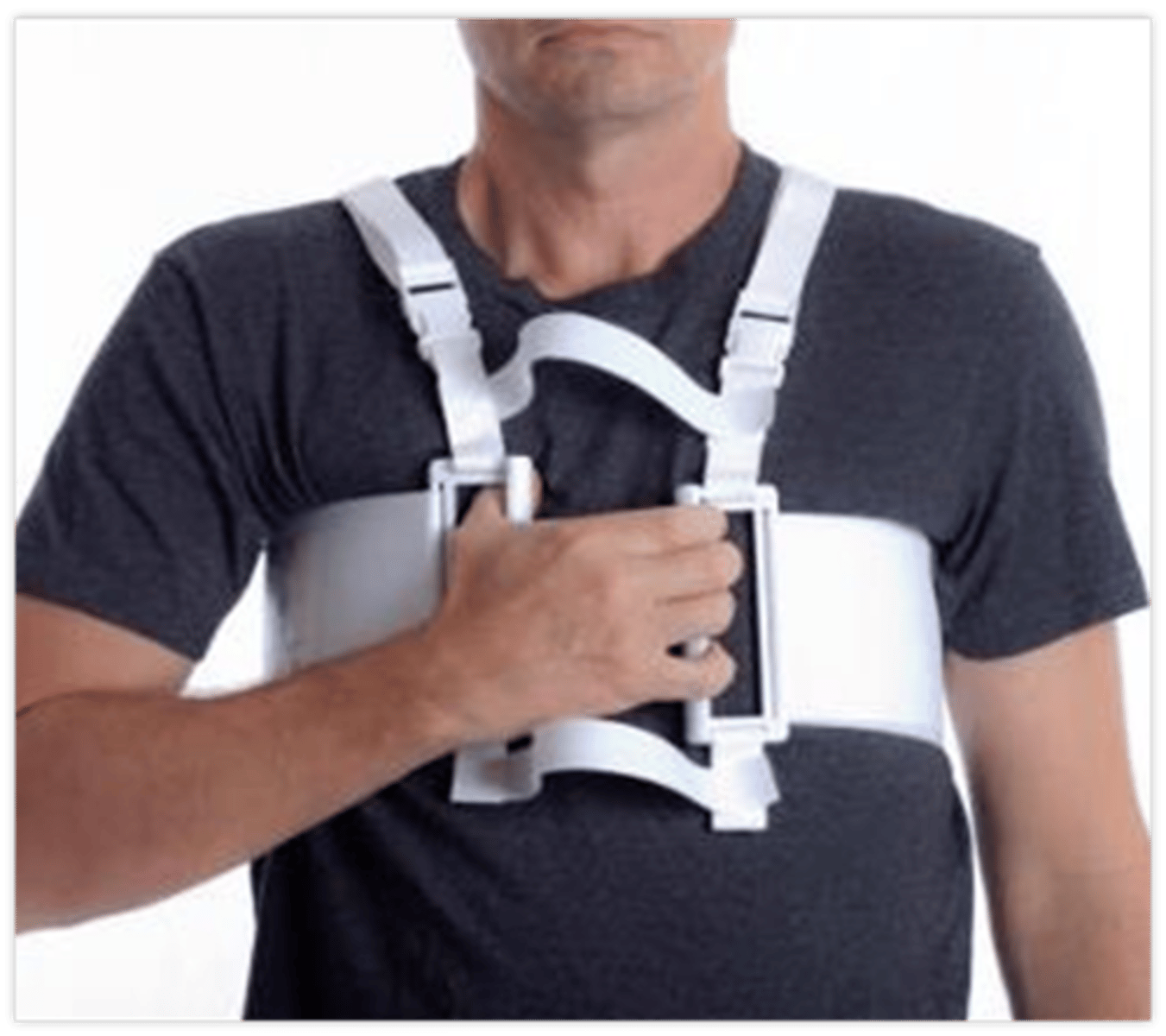
Congestive Heart Failure (symptoms)
SOB, increase in weight, dry cough, inability to sleep laying flay, swelling in LEs, lack of appetite, difficulty focusing attentino
Cardiomyopathy
disease of the heart muscle
Atrial fibrillation
•Irregular and ineffective contractions in both atria
•Blood flow through the heart slows
•Blood clots (emboli) may develop
heart damage
A troponin blood test is looking for....
Stress echocardiogram
an ulstrasound taking with either exercise or a pharmacologic agent to increase heart rate in order to assess how the heart functions with exertion
ejection fraction
measurement of how much blood ejects the heart with each beat
60
A normal EF is greater than _____%
50-60
A mild EF impairment is ____ to _____%
40-50
A moderate EF impairment is ____ to _____%
40
A significant EF impairment is less than_______%
Coronary Angiography
Most definitive cardiovascular tests involving:
•Catheter inserted into a blood vessel in the groin or radial artery and threaded back into the heart
•Dye is injected through it
•Extent of the obstruction in any coronary blood vessel is visualized
Coronary Angiography
_________ often have movement restrictions day of procedure and lifeting restrictions for atleast a week
pace maker
An electrical device for stimulating or steadying the heartbeat or reestablishing the rhythm of an arrested heart.
Left Ventricular Assist Device
Booster pump implanted in the abdomen with a tube inserted into the left ventricle. A "bridge to transplant" or destination therapy when heart transplantation is impossible.
Angina, fatigue, dyspynea, dizziness, vomiting, diaohoresis
List as many signs and symptoms of excercises intolerance and cardiac distress
Rate of Perceived Extertion
RPE stands for
METs
metabolic equivalents; units of measure used to describe the amount of O2 the body needs for a given activity
6-20, 1-10
RPE scores range from __ to ____ where as METs range from _____ to ______
Phase one (inpatient cardiac rehabilitation
What phase of cardiac rehabilitation does OT primarily play a role in
COPD (chronic obstructive pulmonary disease)
Combiniation of emphysema and chronic bronchitis
ARDS (acute respiratory distress syndrome)
respiratory failure in an adult; typically an inflammatory reaction to illness or trauma
Pursed Breathing
OT intervention for pulmonary disorders that prevent stightness in the airway by providing resistance to expiration
Diaphragmatic Breathing
OT intervention for pulmonary disorders that increases the use of the diaphragm to improve chest volume
20
When working with someone with a cardiovascular condition, you should stop or even discontinue if HR increases more than ______ beats/min
220
When working with someone with a cardiovascular condition, you should stop or even discontinue if systolic BP rises above ______ mmhg
15
When working with someone with a cardiovascular condition, you should stop or even discontinue if RPE goes above
160/100, 80/40
Unstable vitals for early mobilization would include if Bp is greateer than _______ or lower than _________
130, 40
Unstable vitals for early mobilization would include if HR is greater than ____ or less than _____
90
Unstable vitals for early mobilization would include if OT Sat is less than _______
30
Unstable vitals for early mobilization would include if respiration rate is greater than ______
7
IF hemogllobin is less than_______ therapy would most likely be bedside only
Femoral
OT can only perform supine activites if a patient has a ______ line
Side
When someone has a seizure and convlusions subside, have the client rest on their _____ to maintain an open airway
Hyperglycemia
Hyperglycemia or Hypoglycemia:
Ketoacidosis
180
Hyperglecemia is a blood sugar level over ________ mg/dl
70
Hypoglycemia is a blood sugar below _______ mg/dl
hyperglycemia
Hyperglycemia or Hypoglycemia:
Excessive thirst and increased urination
Hyperglycemia
Hyperglycemia or Hypoglycemia:
Fruity breath odor
Hyperglycemia
Hyperglycemia or Hypoglycemia:
Dry skin, flushed
Hyperglycemia
Hyperglycemia or Hypoglycemia:
frequent infections and slow healing cuts/wounds
Hyperglycemia
Hyperglycemia or Hypoglycemia:
Blurred vision and nausea
Hypoglycemia
Hyperglycemia or Hypoglycemia:
Hunger and shakiness
Hypoglycemia
Hyperglycemia or Hypoglycemia:
Sweating and pale skin tone
Hypoglycemia
Hyperglycemia or Hypoglycemia:
Rapid heart rate, dizziness, headache
Hypoglycemia
Hyperglycemia or Hypoglycemia:
Confusion, trouble speaking
High-Fowler's position
A semi-sitting position; the head of the bed is raised 60 to 90 degrees; facilitates lung expansion
Orthopneic position
client bends forward and leans forearms on table or counter; helps someone in respiratory distress
what are the sternal precautions?
can move arms in a pain free range, but don’t reach back with both arms at the same time, do not lift push or pull more than 10 pounds, do not let others push or pull on your arms when helping you move, avoid one sided pulling, if you feel sternal shifting or clicking stop activity
CPK MB diagnostic study
enzyme in blood within 6 hours after a heart attack, peaks at 24 hours
troponin tests
rises after 3-6 hours and cn stay high for 14 days
if levels are higher or haven’t leveled off, therapy may be delayed
pacemaker precautions
no lifting affected arm over head on the side of the pacemaker for 2 weeks, no lifting or pushing more than 10 pounds for 6 weeks, no driving for 2 weeks, keep area dry for 48 hours, then shower but no scrubing, may need a sling for 2 weeks
what to think about if your patient has a newly implanted pacemaker?
how will this affect ADLs? Balance? what if they use a device? what if they live alone?
risk factors for heart disease
NC: age, gender, family history
Controllable: smoking, NTH< sendentary lifestyle, obesity, diabetes, stress
What are OTs goals within Phase I of inpatient cardiac rehabilitation?
prevent muscle loss from bed rest, monitor and assess patient’s ability to function, instruct in appropriate home activities, educate about risk factors and methods to reduce them
What is the OTs goal during the intervention phase of inpatient cardiac rehabilitation?
evaluate, analyze, and modffy patients activities of daily living (can they tolerate ADLs)
During exercise, OTs monitor heart rate, BP, and EKG responses
what are the 7 symptoms fo cardiac distress/exercise intolerance?
angina, extreme fatigue (RPE > 15), dyspena (excessive SOB with activity), light-headed, nausea, cerebral symptoms, excessive sweating
have chair behind them in case symptoms begin
OT intervention of Functional Skill Deficits Secondary to Pulmonary Disease
ADL eval and train on increasing endurance, instruction and training in appropriate breathing techniques, UE function, energy conservation, promote roles, need for AT, educate on stress management
What are the 4 appropriate responses to cardiovascular activity? `
HR - increases with activity to no more than 20 bpm above resting (if it doesn’t drop or rise that is a concern)
BP: systolic BP rises with activity (>220 mmHG is BAD)
Absence of adverse symptoms (SOB, angina, nausea, extreme fatigue *RPE>15
Pulse Ox - above 90 is good!
what are some psychosocial consideration?
uncertainty, depression, anxiety, isolation
what are the symptoms of MI?
angina, pressure readiating down the teeth, jaw, ear, and arm
diaphoresis (sweating), SOB
gender differenes in heart attack
women: dizziness, cold sweat, SOB, indigestion, unusual fatigue, sleeping issues
men: SOB, chest pain, UE discomfort
clinic safety recommendations
Remember appropriate hand-washing techniques -Wash hands for 30-40+ seconds before and after each treatment, Make sure space is adequate, Do not transfer clients in congested areas or where your view or movement is blocked, Use gait belt and nonskid footwear, Routinely check equipment to be sure it is working properly, Make sure furniture and equipment in the area are stable, Keep floor free from cords, scatter rugs, litter, and spills, Do not leave clients unattended, Have the treatment area and supplies ready before the client arrives.
Follow procedures for handling and storing potentially hazardous material
when leaving a patient consider…
Call light in reach, Bed/chair alarms, Phone and other desired items in reach, Is patient in a safe position? Brakes set on bed/wheelchair, Bed rail position, Ask if they are comfortable, Ask if they have any questions or needs
complications of bedrest
decrease activity tolerance, muscle atrophy, delirium, sores, DVT
what to think about before getting them out of bed?
sitting and standing balance, cognition, safety awareness/insight, activity tolerance
symptoms of decreased functional endurance
excessive heart rate elevation, increase respiratory rate, O2 decline, breathlessness
what are some causes of delirium?
isolation, deep sedation, prolongded immobility, use of drugs, anxiety, stress
ways to manage delirium
regulate sensory input, sleep hygiene, environmental modification, communication, caregiver training
the two types of infection control are…
universal precautions'
preventing transmission of pathogens through contact with blood and body fluids
body substance isolation
isolation of all most and infectious substances
ALWAYS CLEAN TOOLS THAT WERE BROUGHT INTO ROOMS
protective isolation is…
occurs if a condition makes them more likely to get an infection
people who enter the room may have to wear PPE
nosocomial infection
hospital-acquired infections (happens within 24 hrs of being admitted)
signs of a seizure
Place the person in a safe location, and position away from anything that might cause injury. Do not attempt to restrict or restrain, Loose clothing around the person’s neck to assist in keeping the client’s airway open, Do not insert any objects into the client’s mouth, When convulsions subside have the client rest on his or her side to maintain an open airway, The client may experience confusion, be incontinent, or be lethargic
Obtain medical assistance
hyperglycemia is
severly low insulin levels but high blood glucose levels
called ketoacidosis and can lead to a diabetic coma
occur because: missed medication, overeating, lack of exericse
symptoms of hyperglycemia
increased thirst, dry skin, fatigue, fruity breath, increased urination, nausea, slow healing cuts, weight loss
what is hypoglycemia
excessive insulin but low blood glucose
insulin reaction or shock
symptoms of hypoglyemia
hunger, shakiness, pale skin, increased HR, dizzy or light-headed, sleepy, trouble speaking, mood changes

