L7-12
 Studied by 0 people
 Call Kai
 Learn
Learn Practice Test
 Spaced Repetition
 Match
Match Flashcards
 Knowt Play
1/44

Earn XP
Description and Tags
Name | Mastery | Learn | Test | Matching | Spaced | Call with Kai |
|---|
No analytics yet
Send a link to your students to track their progress
45 Terms
mathematical logic
or symbolic logic
branch of mathematics that studies logic
formal reasoning
science or study of how to evaluate arguments & reasoning
aristotle
father of logic
statement
declarative statement which is either true or false
propositional variable
variable which used to represent a statement
conjunction
and (^)
disjunction
or (v)
negation
not (~)
implication or conditional
if then (➡️)
biconditional
if and only if (⬅➡)
exclusive or
XOR (⊕)
p^q = same, then false
p^q = opposite, then true
predicate
or open statements
statement whose truth depends on the value of one or more variables
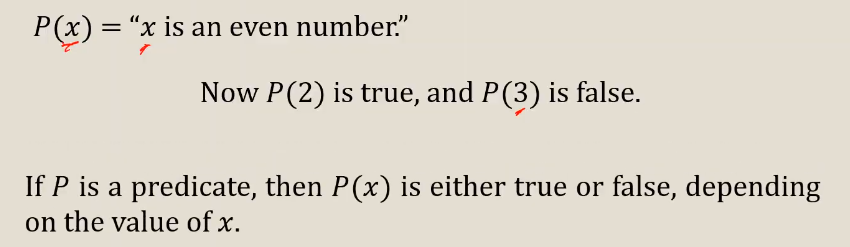
propositional function
a sentence P(x) becomes a statement only when variable x is given particular value
universal quantifiers
reversed A symbol
a logical statement that applies to all objects in a collection
existential quantifiers
applies to some objects in a collection
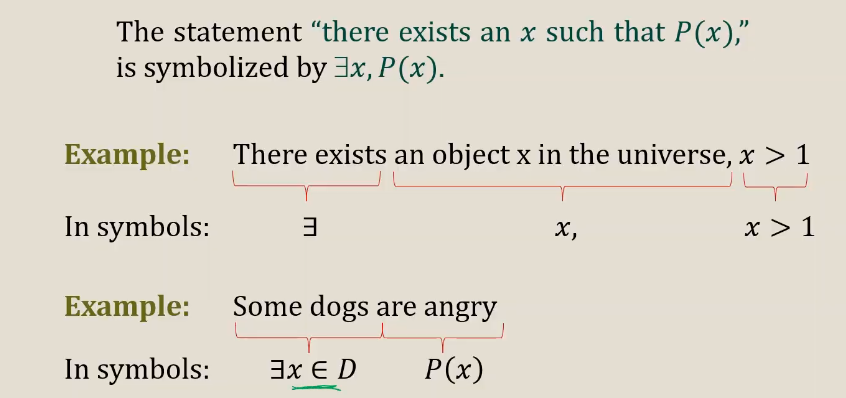
mathematical knowledge
often expressed with quantified statements
statistics
branch of mathematics that deal with collecting, classifying, presenting, analyzing, and interpreting data
descriptive statistics
includes collection, classification, presentation, and description of numerical data
inferential statistics
refers to techniques of interpreting the values
population
denoted as N, collection, or set of individuals, objects or measurement whose properties are to be analyzed
sample
denoted as n, is a subset of a population
marginal error
probability of committing a mistake
confidence level
probability of getting the correct result
random sampling
also called lottery sampling or raffle sampling
systematic sampling
elements are numbered for identification and samples are selected at regular intervals
interval = N/n
stratified sampling
set of interests is divided into groups
convenience sampling
samples are those chosen to respond
purposive sampling
samples are chosen based on specific objective
categorical data
qualitative
numerical data
quantitative
discrete data
data expressed as counts
continuous data
data expressed as measurements
nominal data
values that represent discrete units and are used to label variables
ordinal data
values that represent discrete units and ordered units
interval data
represent ordered values that have the same difference
ratio data
represent ordered values that have the same difference and HAS AN ABSOLUTE ZERO VALUE
response variable
a characteristic of interest about each individual element (e.g personal details form)
datum
a value of response associated with one element of a population or sample
data
set of values collected from the response variable from each of the elements belonging to the sample
parameter
a numerical characteristic that describes the entire population
statistic
a numerical characteristic of a sample, also called “estimate”
central tendency
commonly referred to as average, is a single value that represents a data set
arithmetic mean
all values play an equal role
xbar for sample, mu for population
median
middle value in a dataset
x~
mode
the most frequent item in a set
x^
 Note
Note  Flashcards (85)