Psyc*3410- Hunger, Satiety and the Brain
 Studied by 0 people
 Call Kai
 Learn
Learn Practice Test
 Spaced Repetition
 Match
Match Flashcards
 Knowt Play
1/20

There's no tags or description
Looks like no tags are added yet.
Name | Mastery | Learn | Test | Matching | Spaced | Call with Kai |
|---|
No analytics yet
Send a link to your students to track their progress
21 Terms
Early Studies of hunger and the brain
brainstem: decerebrated rats show fairly normal eating
Hypothalamus: old lesion and stimulation studies
1. Lateral hypothalamus (LH) as feeding centre
2. Ventromedial hypothalamus (VMH) as satiety centre
Hypothalamic Control of Feeding: Ventromedial Hypothalamus Lesions
Lesions to the VMH cause VMH syndrome
- hyperphagia (excessive eating)
- preference for palatable food (finicky)
- Dynamic phase: excessive eating -> very rapid weight gain
- Static phase: stabilized (but still high) eating -> new weight becomes stable
Hypothalamic Control of Feeding: Lateral Hypothalamus Lesions
Lesions to the LH cause LH syndrome
- aphagia (cessation of eating)
- adipsia (cessation of drinking)
However: lesions produce severe motor disturbances and general lack of responsiveness to sensory input
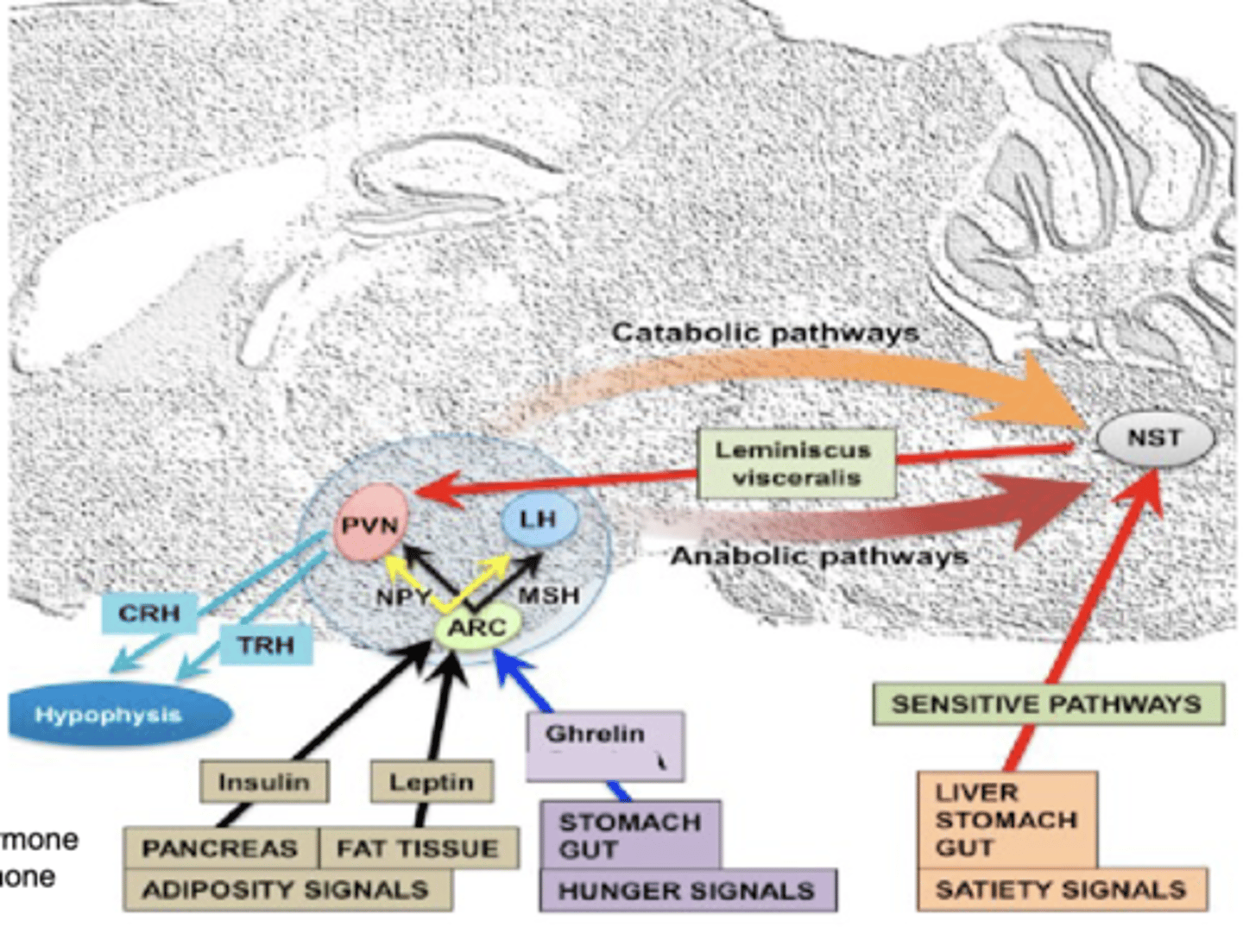
Updated Role of the Hypothalamus in hunger and eating
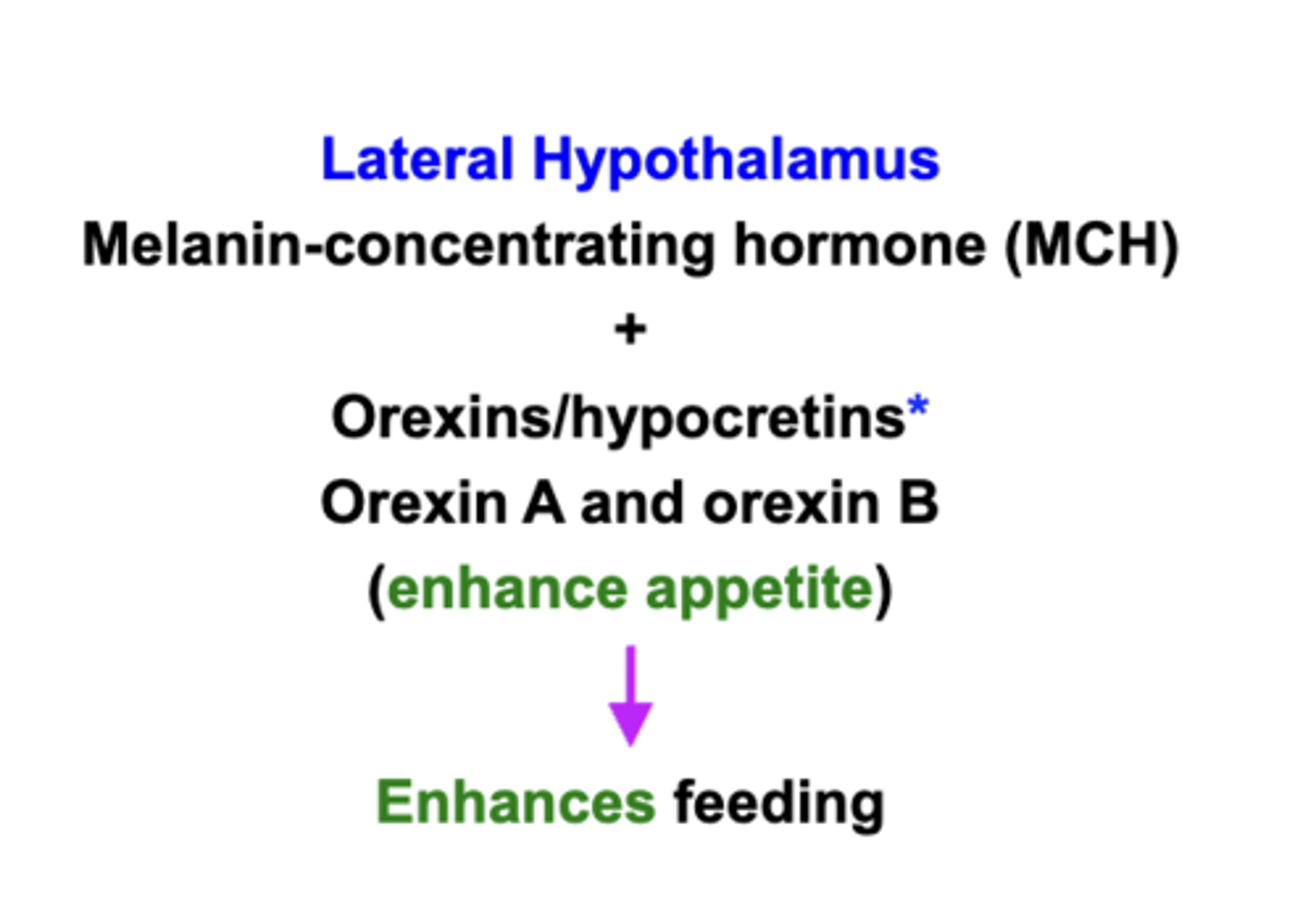
Lateral Hypothalamus
Paraventricular Hypothalamic Nucleus
Arcuate Hypothalamic Nucleus
What about the VMH?
Role of Hypothalamic Nuclei in Hunger and Eating
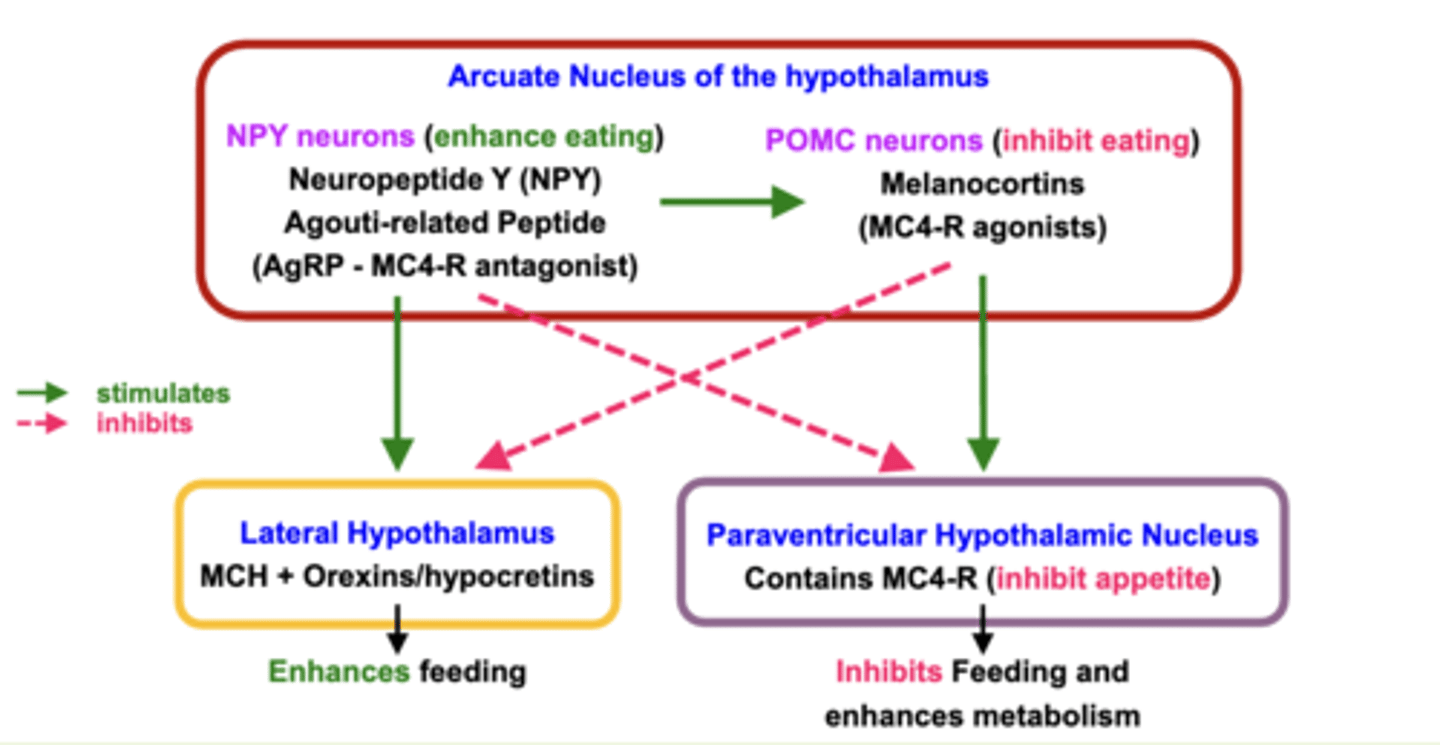
Role of Hypothalamic Nuclei in Hunger and Eating: Summary
Arcuate NPY neurons
- Neuropeptide Y (NPY): feeding enhancer
- Agouti-related peptide (AgRP): feeding enhancer
Arcuate POMC neurons
- Melancortins (agonist of MC4 receptor): feeding inhibitors
Lateral hypothalamus
- melanin-concentrating hormone (MCH): feeding enhancer
- Orexins (A and B)/hypocretins: feeding enhancers
Paraventricular hypothalamic nucleus
- feeding inhibitor and metabolism enhancer
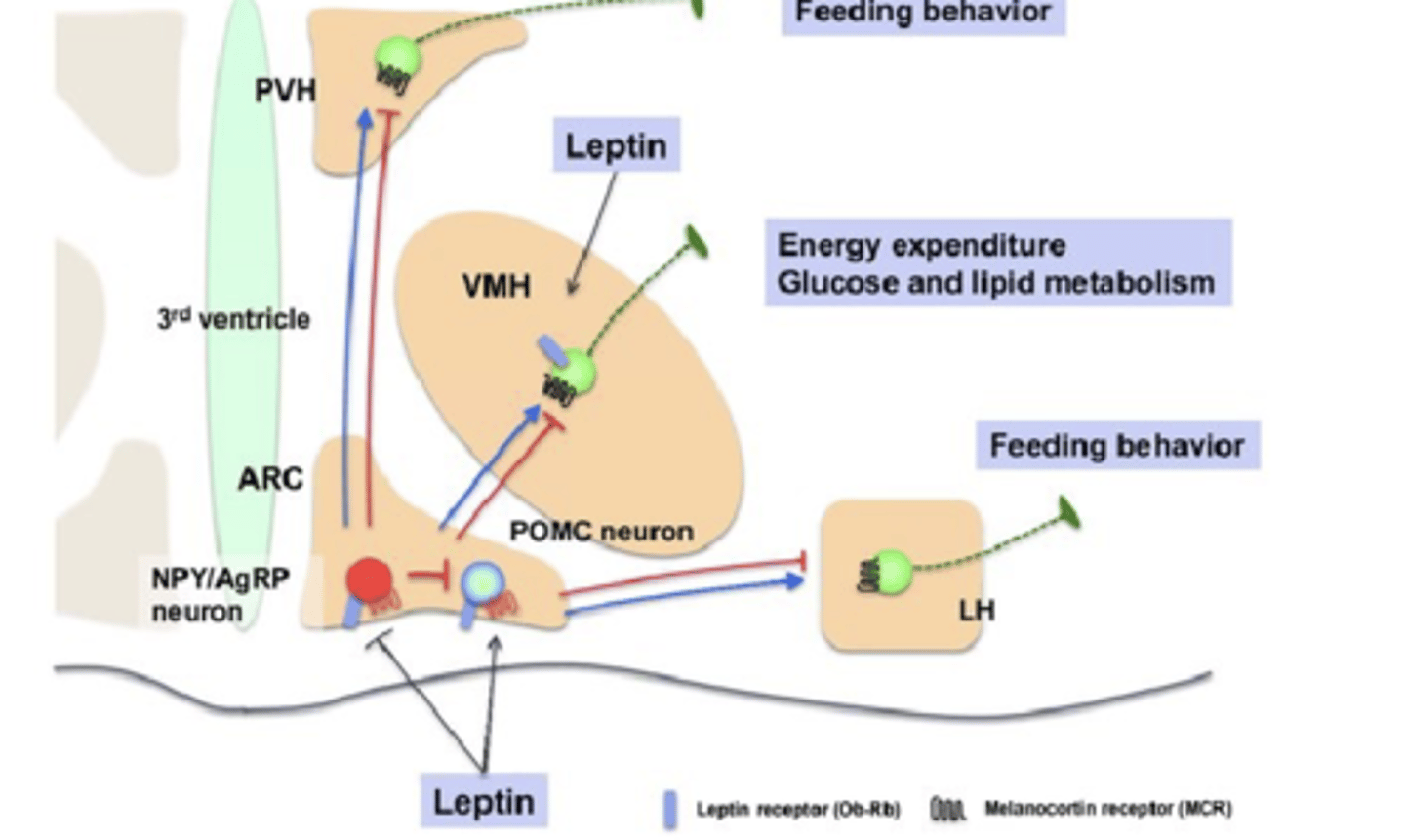
Distinct roles in hypothalamic nuclei in the regulation of food intake, energy expenditure, and glucose and lipid metabolism in peripheral tissues by leptin
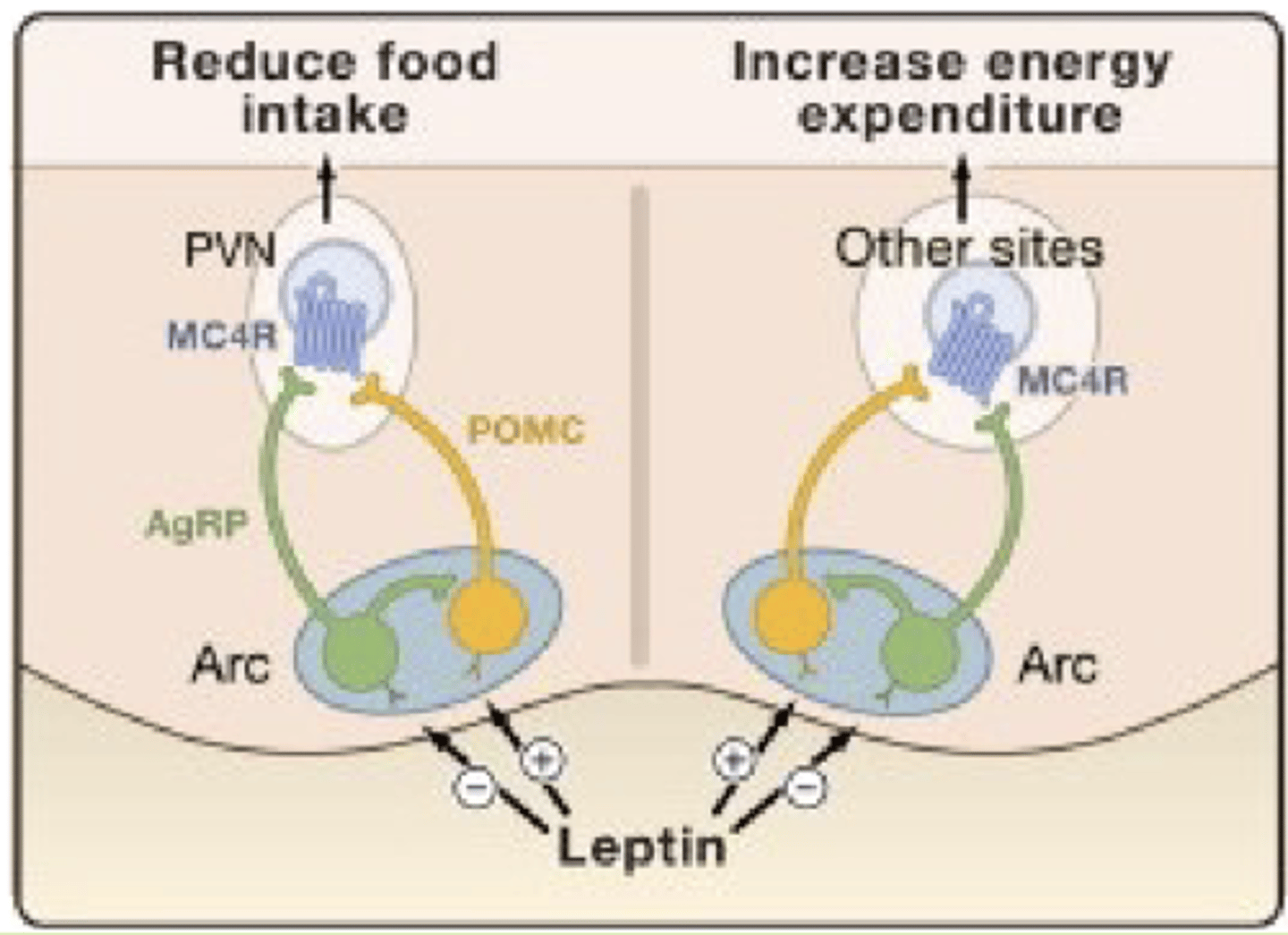
Control of Food intake by the hypothalamix leptin-melanocortin pathway
Role of Hypothalamic Nuclei in Hunger and Eating: What about the Ventromedial Hypothalamus
Most effects due to changes in metabolism (not feeding behaviour)
- insulin levels increase
- lipogenesis (formation of fat) increases
- lipolysis (breakdown of fat) decreases
- most energy stored as fat
- rats need to get more energy, therefore eat more
Other effects due to unwanted lesions
- paraventricular nucleus of the hypothalamus
- noradrenergic bundle
Role of leptin in hypothalamic regulation of hunger and eating
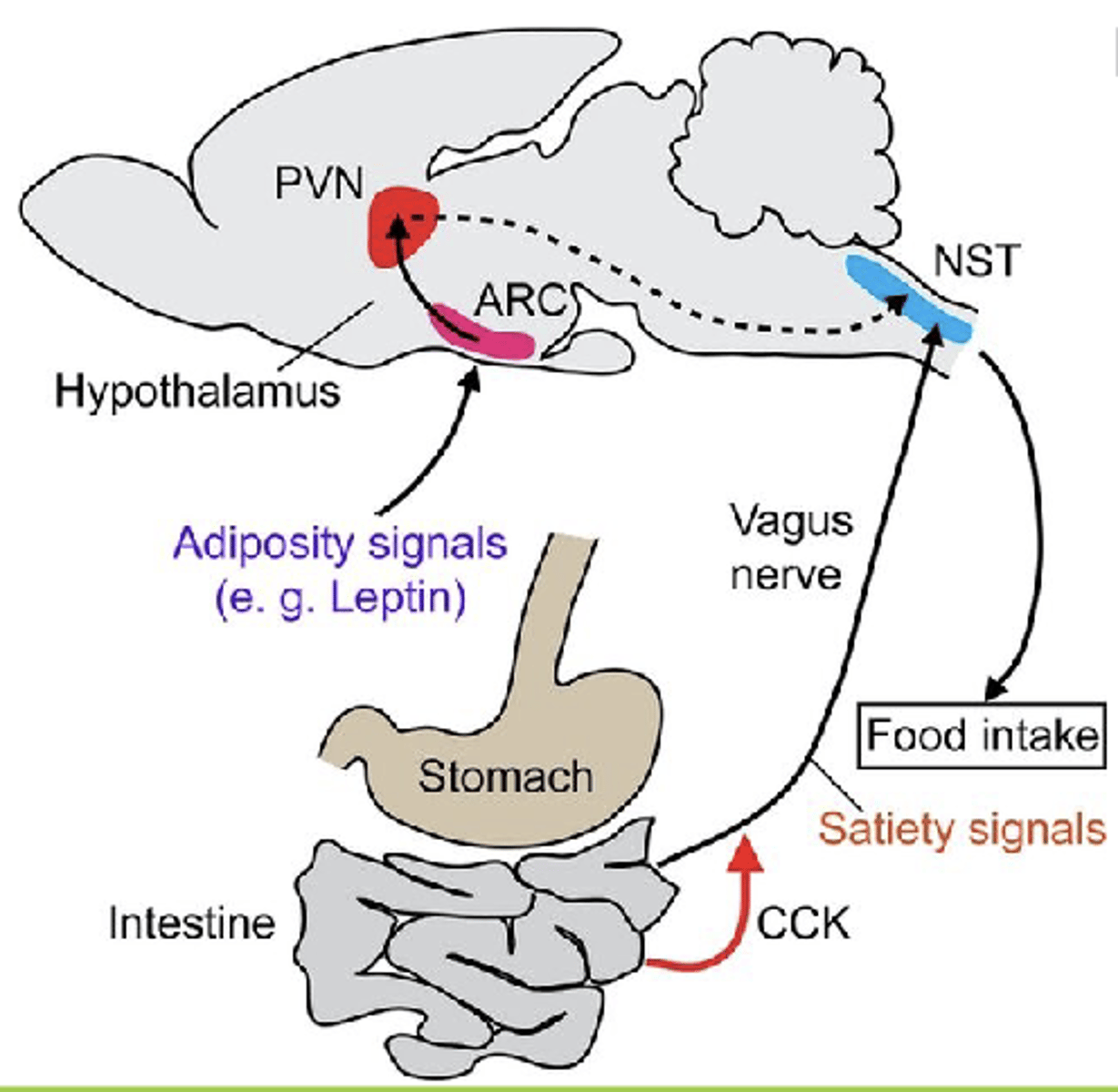
Secreted by adipose tissue
- long term satiety signal
- regulatin of body fat/composition
- inhibits NPY neurons
- stimulates POMC neurons
-Net effect = eat less food, burn more calories
Feeding inhibitors
Cholecystokinin (CCK)
Bomesin
Glucagon
Somatostatin
Leptin
Monoamines
Motilin
Melanocortins
- alpha-melanocyte-stimulating hormone
Immune-related peptides
Urocortin
Peptide YY
Feeding enhancers
Neuropeptide Y
Orexin-A
Ghrelin
Opiods
Galanin
Catecholamines
Effects of Food Restriction
Evidence suggesting enhancement of health and longevity in food restricted humans and animals
Humans: "The Okinawa Paradox", 20-38% food restriction
Mice: up to 65% less food than free-fed
Chronic caloric restriction and intermittent fasting
Hypotheses for the benefits of food restriction
1. Accumulation of by-products of energy consumption accelerates aging
2. Activation of conservation/survival mechanisms that protect cells from damage -> prolong cells' live -> slow organ aging
Things to consider regarding food restriction
- In mice, food restriction directly triggers activation of factors that regulate energy balance and promote longevity
- Life expectancy and longevity have declined in Okinawa since the1960s; younger Okinawans have higher average BMI, not enduring calorie restriction▪ However:
-People are not mice. -the actual probability for individuals 70 years old in 1975 of becoming centenarians in 2005 was 3 times higher, on average, in Okinawa ...than in Japan as a whole
-Historical disenfranchisement and post-WWII military occupation
-Diet quality - nutrient- and anti-oxidant-dense foods
- Strong social support
Regulation of Body Consumption: Energy Consumption
Not just what/how much we eat but also energy usage
Daily energy consumption:
- basal metabolic rate
- diet-induced thermogenesis/ thermal effects of food
- physical activity (exercise activity thermogenesis)
- non-exercise activity thermogenesis
Changes in the Efficiency of Energy Use
Decrease in body fat = more efficient fat usage
Increase in body fat= less effective fat usage
Adjustments in diet-induced thermogenesis:
- decrease in body fat= decrease in body temp
- increase in body fat= increase in body temp
- changes in the efficiency of energy use are why weight loss and weight gain programs are more effective in their initial phase
Changes in Body Composition and Energy Use
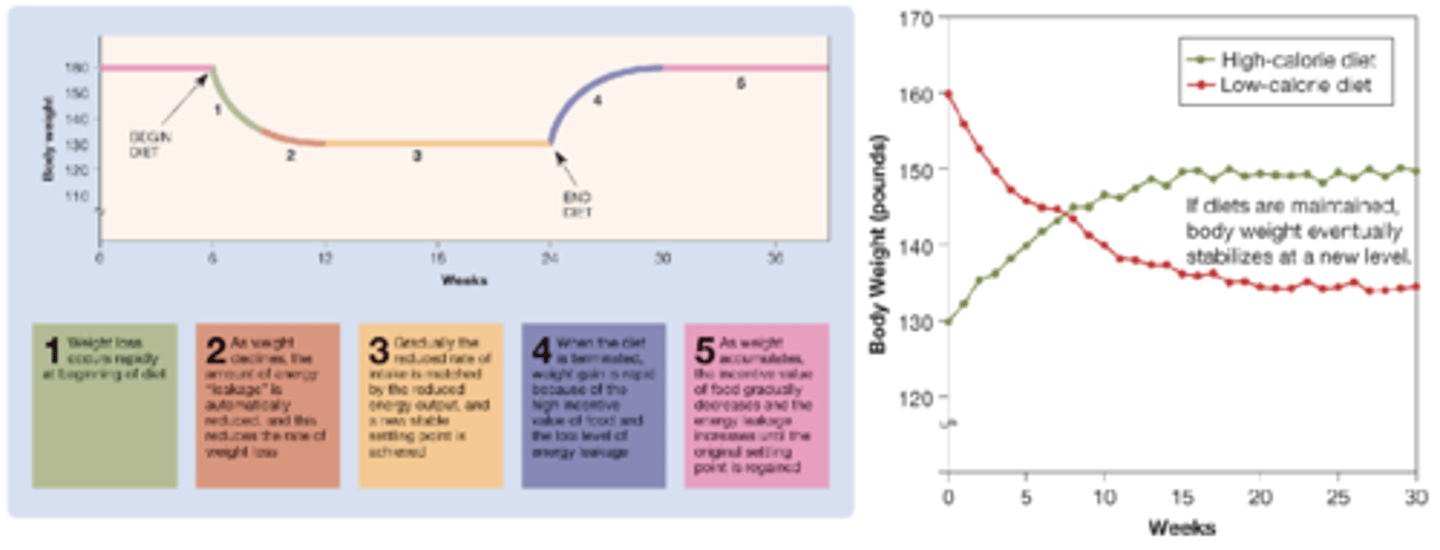
Body Composition Regulation: Setting-Points Theory
Not just fat regulation -> various factors
A loose concept of homeostasis
Long term changes in various factors -> body composition changes
Feedback mechanisms -> limit the impact of changes
(leaky barrel)
 Note
Note  Flashcards (32)