ANSC 2050 Exam 3 Williams
 Studied by 0 people
 Call with Kai
 Learn
Learn Practice Test
 Spaced Repetition
 Match
Match Flashcards
 Knowt Play
1/172

There's no tags or description
Looks like no tags are added yet.
Name | Mastery | Learn | Test | Matching | Spaced | Call with Kai |
|---|
No study sessions yet.
173 Terms
Intact Male
bull
Castrated male
steer
female (pre-calving)
heifer
Female (post-calving)
cow
young cow
calf
act of parturition
calving
group of cattle
herd
scientific term for cow
bovine
what industry is the largest money-generating commodity in all of agriculture?
beef industry
the gross annual income from beef in the US has averaged approx. ___$ billion
45
which countries are the top producing beef countries in the world?
US and Brazil
what percentage does the US have of the world cattle?
6%
how much does the US produce of the worlds beef and veal?
18%
conversion of roughage
the chief contribution of beef cattle to the welfare of humans
Largest cattle and calves states
1. Texas
2. Nebraska
3. Kansas
4. California
5. Oklahoma
Louisiana Beef Industry
- cow-calf state
- seedstock operations
- stocker operations
- beef cattle production is valued over $200 million
beef industry segments/phases
1. seedstock
2. cow-calf
3. stocker
4. feedlot
5. packer/processor
6. retail
7. consumer
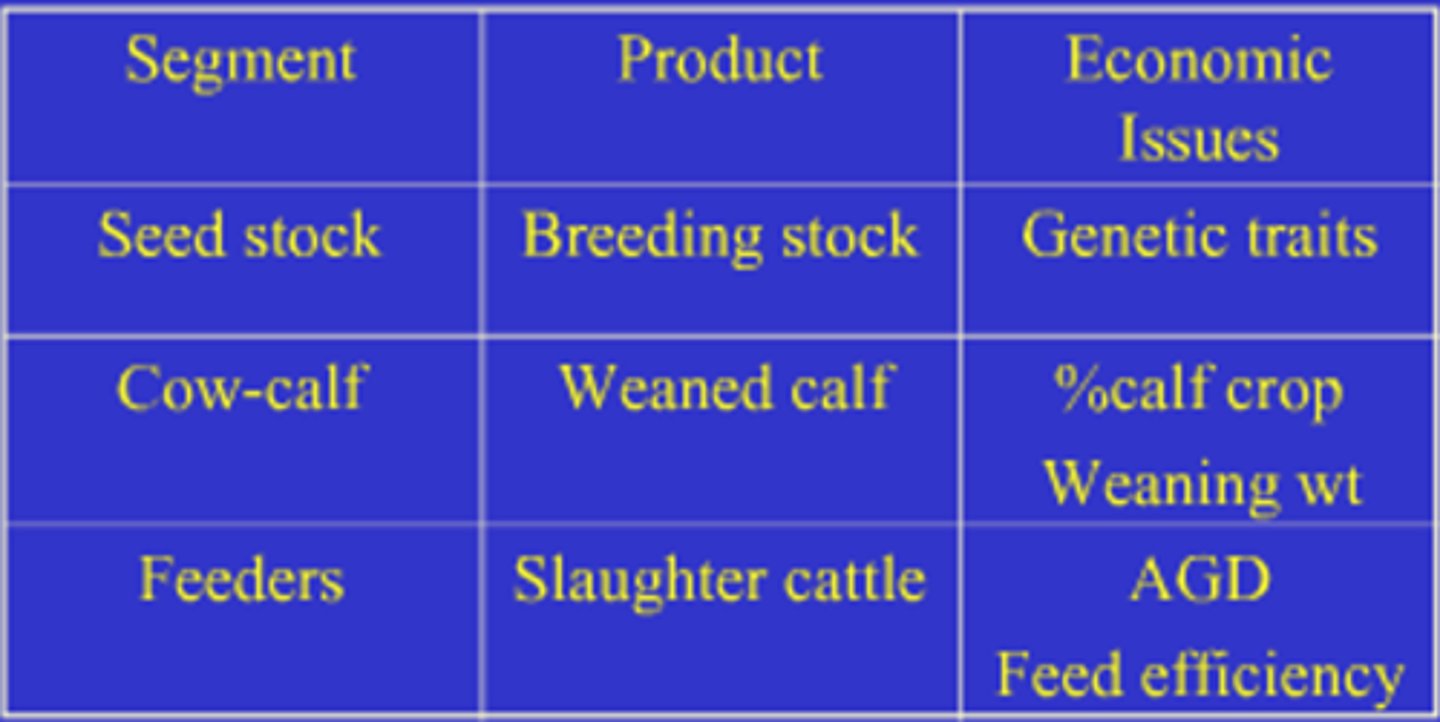
Structure of the Beef Industry
animals change ownership when moving from one phase to the next
different regions tend to specialize in different phases
seedstock production
- only segment that does not produce animals whose primary use is for meat (animals may enter food supply after reproductive life-culling)
- goal: to produce breeding stock
- greatest demand: bulls
- if quality is high, they will be able to market semen and embryos
- female offspring can be used as herd replacements
commercial cow-calf
- first phase of producing animals whose primary use is meat consumption
- product: 6-10 month old crossbred calves that range in weight (300-700lbs)
- calves are usually sold at weaning to feedlot or stocker operation
- main goal: produce heaviest calves at smallest price
stocker phase
- growing calves to heavier weights on low-priced forage before calves enter feedlot
- purchase claves from cow-calf producers and grow them during a specific season then ship to feedlots
- calves that have been through a stocker system have received various health producers (vaccinations, deworming, castration, dehorning or bunk broke)
feedlot
- finishing phase
- cattle go to feedlot at approx. 1 year
- 600-850lb cattle are finished to market weight and condition (900-1,400lbs at slaughter. Usually stay in feedlot 60-200 days)
- vast majority of slaughter in US are fed grain in feedlots before sent to slaughter
packer/processor for beef industry
harvest finished cattle purchased from feedlots
break down carcasses into sub primal cuts (boxed beef)
retailer for beef industry
purchases product from packers/processors
present beef product to consumer (break down subprimal cuts into retail cuts)
consumer for beef industry
behavior and purchasing trends influence subsequent decisions made by every other segment of beef industry
breed
- race of animals within a species
- have a common organ and similar identifying characteristics
- all breeds have strong and weak points
- no one breed is adapted to all situations
breed association
- organization that defines animal type for a breed
- provides base genetic material for beef cattle breeders
- 50-80 breed associations in the US (10 dominant)
Bos Taurus vs Bos indicus
considerations when selecting a breed
- environmental compatibility (they suited for the environment)
- market demand for offspring (does the product meet consumer demands)
English breeds (maternal)
- Angus
- Red Angus
- Hereford
- Shirthorn
Heat tolerant breeds (subtropical adapted)
- Braham
- Senepol
- Longhorn
continental breeds (terminal)
- Charolais
- Gelbvieh
- Limousin
-Simmental
Composite breeds
- Brangus
- Braford
- Beef master
- Santa Gertrudis
Maternal breeds advantages
Good mothering
Excellent fertility
Early sexual maturity
Carcass traits
Milking ability
Maternal breeds disadvantages
Light muscled
Not fast growing
Fat carcasses
Terminal breeds advantages
Fast growing
Heavily muscled
Good feed efficiency
Terminal breeds disadvantages
Large nutrient demands
High birth weights
Large framed
Late sexually maturity
Lower quality carcasses
Heat tolerant breeds advantages
Disease resistant
Parasite resistant
Good mothering ability
Longevity
Strong will to survive
Heat tolerant breeds disadvantages
Temperament (Bos indicus)
Late sexual maturity
Poor carcass characteristics
composite breeds make up
- at least two component breeds, designed to retain heterosis in future generations without crossbreeding and maintained as a purebred
- breed make up of two or more breeds with defined proportions
- retain a level of hybrid vigor normally associated with traditional crossbreeding systems
EX: Brangus (3/8 brahman, 5/8 Angus)
English breed: Angus
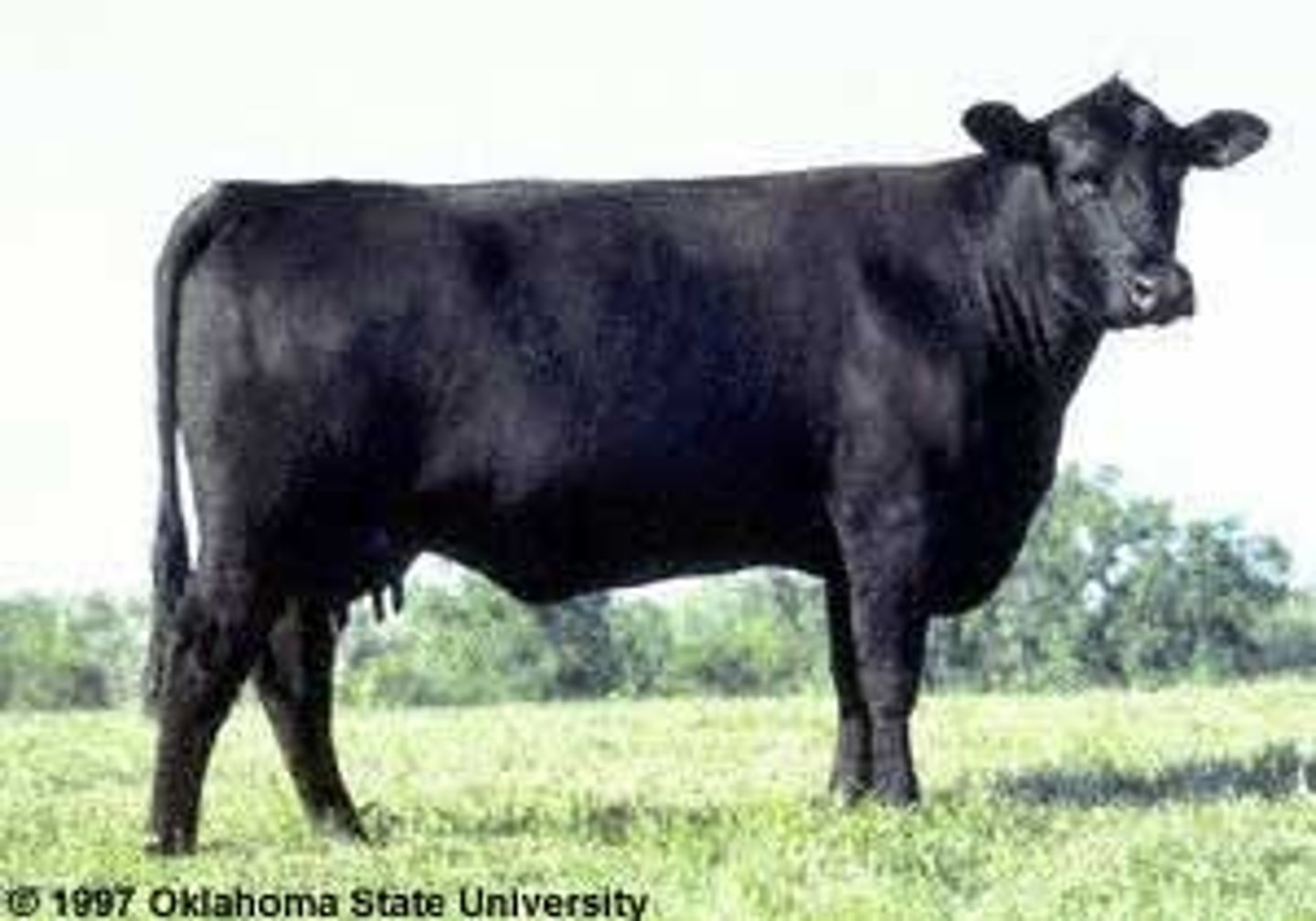
English breeds: Hereford

Hereford X Aungus
black baldy
one fo the more common crossbreds in the beef industry
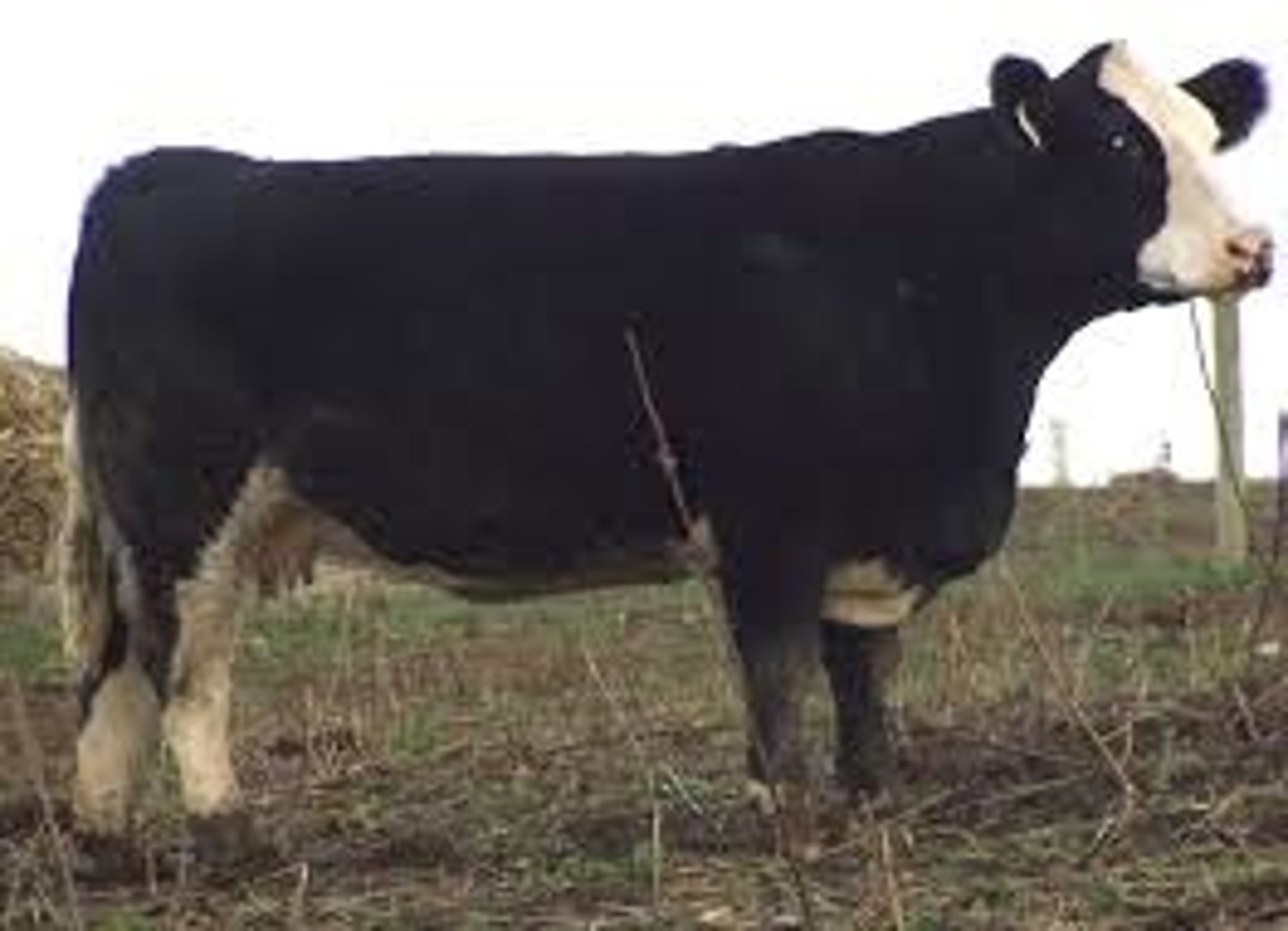
English breeds: Red Angus
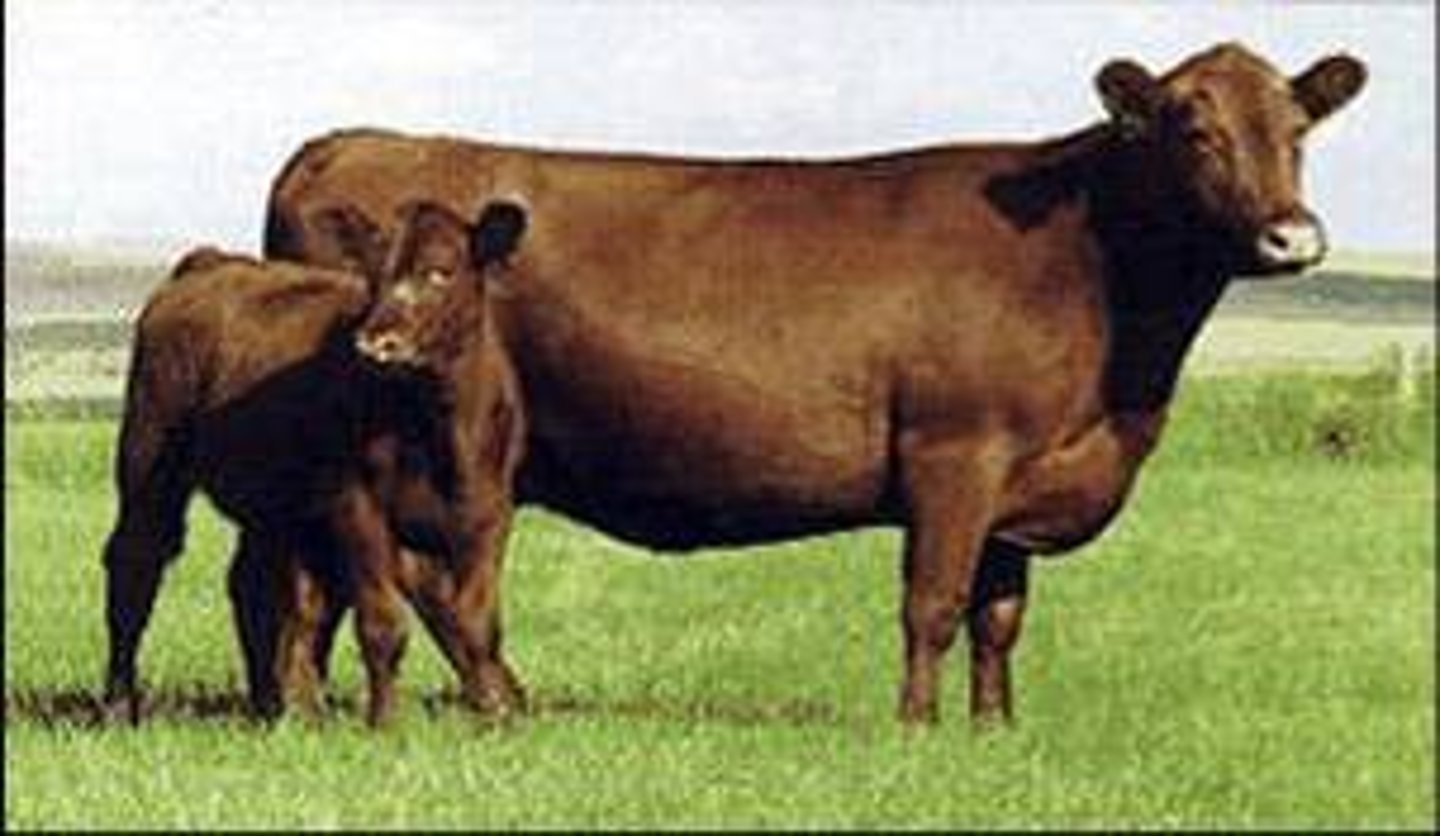
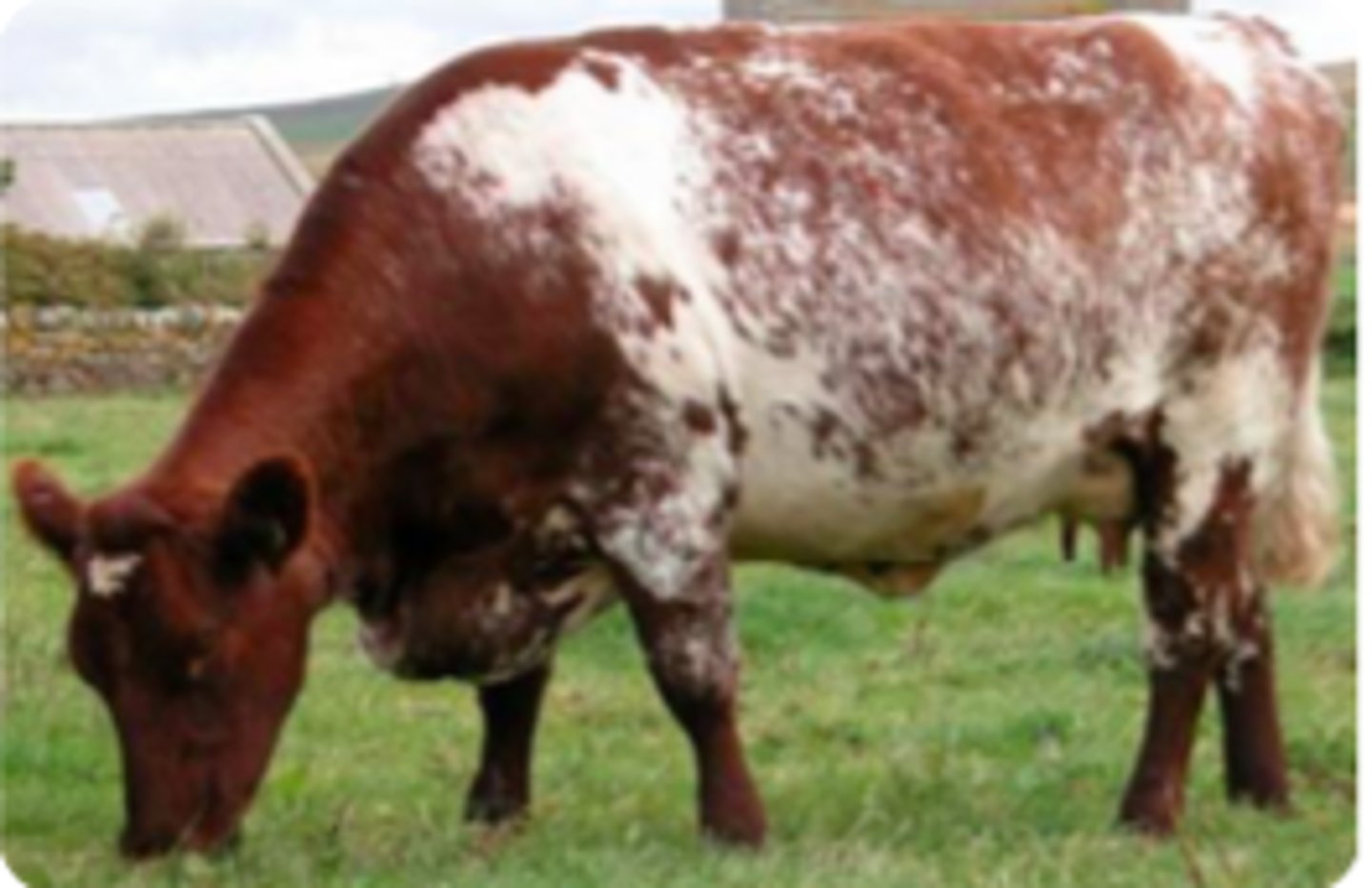
English breed: Shorthorn
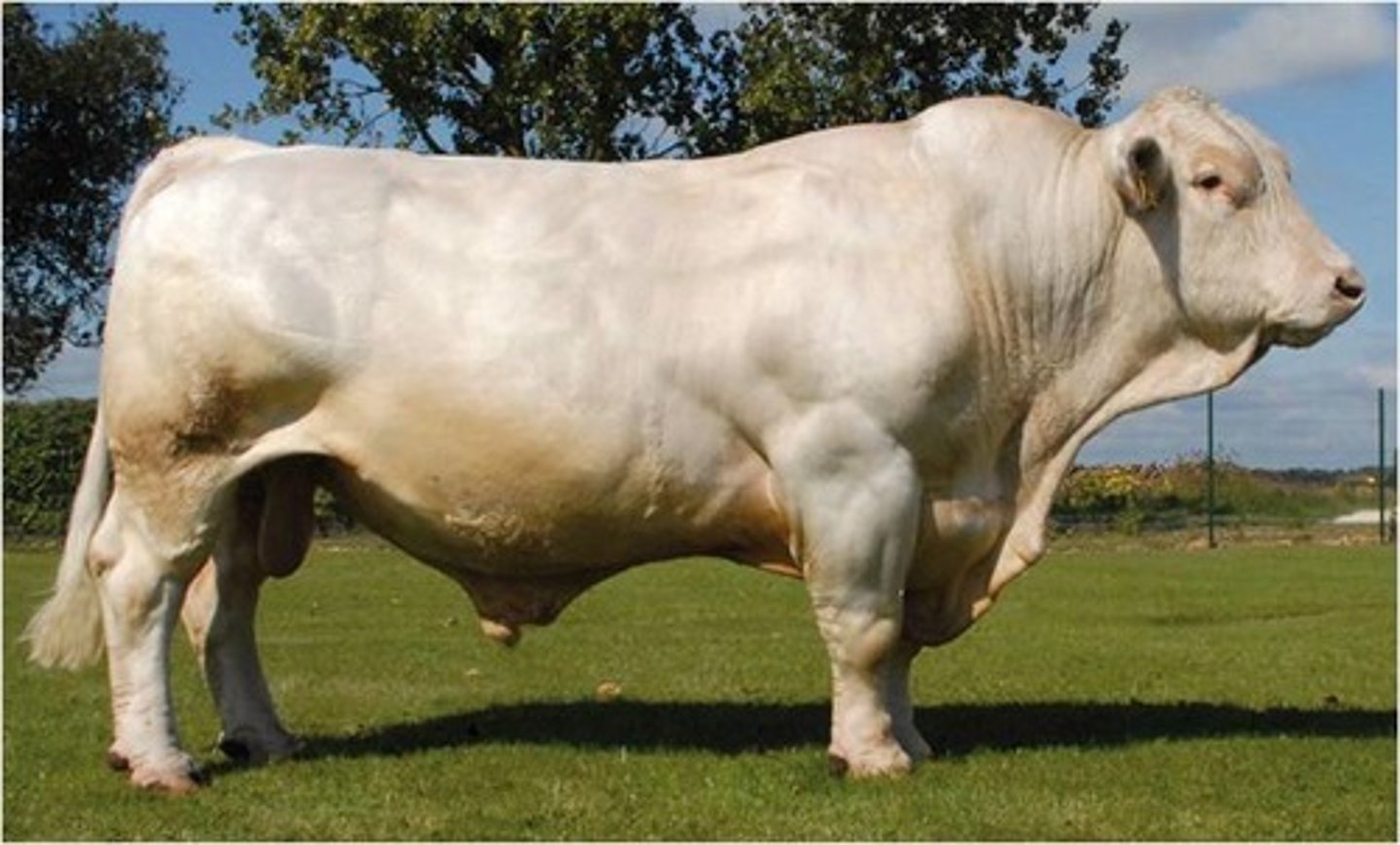
Continental breeds: Charolais
continental breeds: Gelbvieh
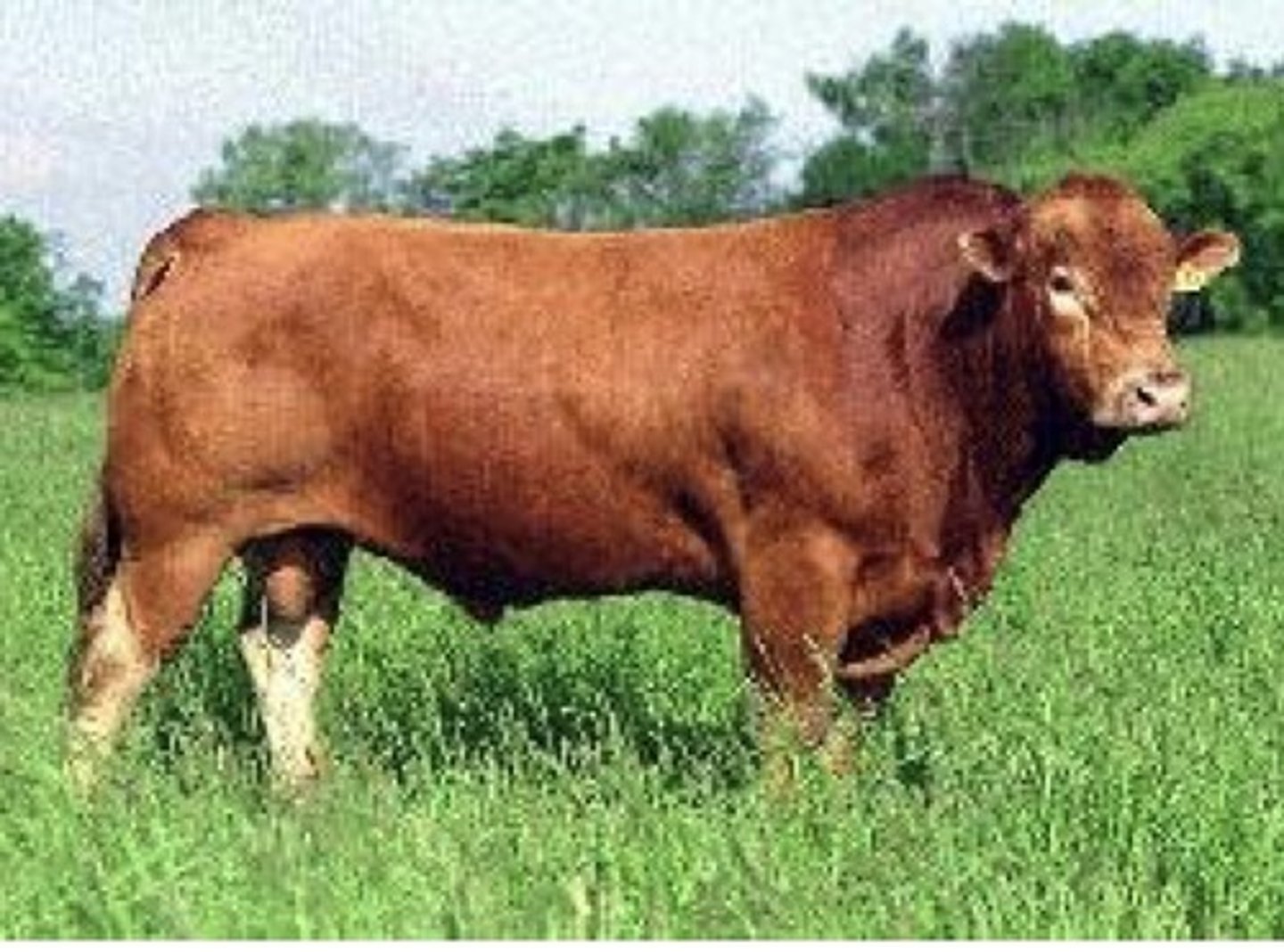
continental breeds: Limousin
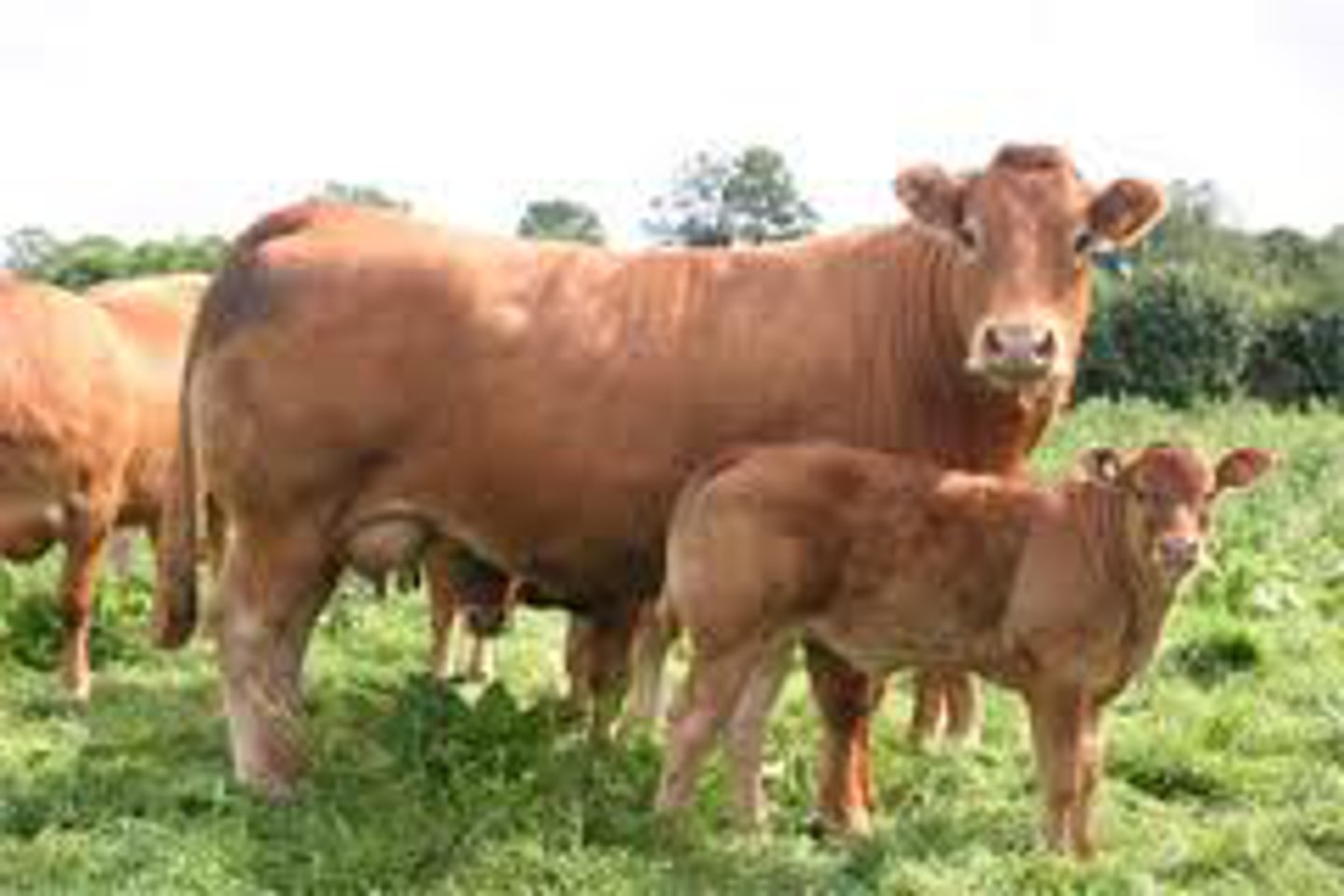
continental breeds: Simmental
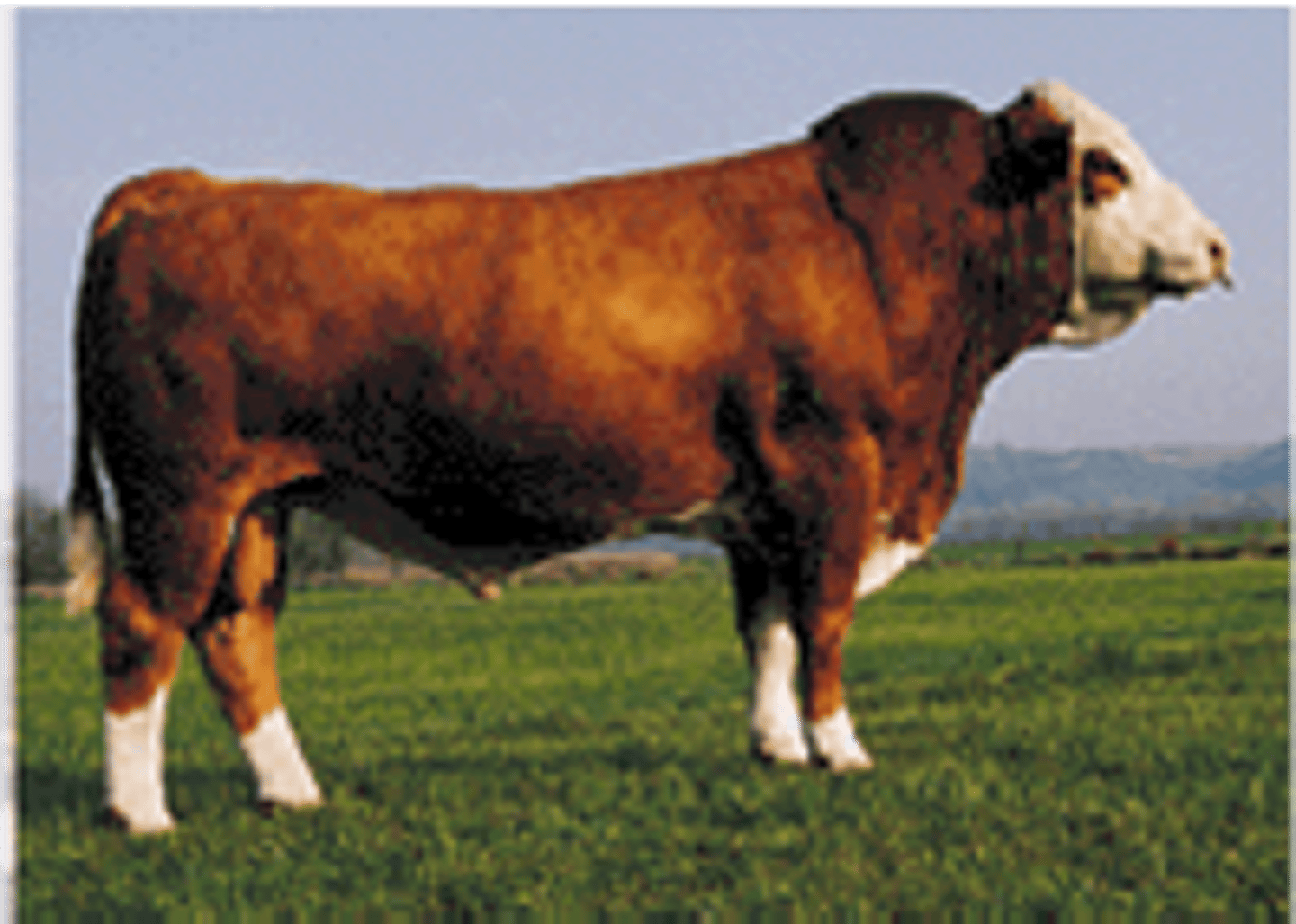
heat tolerant breeds: brahman (red and grey)

which 3 Zebu breeds was the American Brahman developed from?
Gir , Guzerat, Nelore
Brahman influence in Louisiana
- percent of brahman in commercial cattle increases from north to south
- NORTH: 0 to 1/4 brahman
- MIDDLE: 1/4 to 1/2 Brahman
- SOUTH: 1/2 to purebred brahman
heat tolerance: Senepol
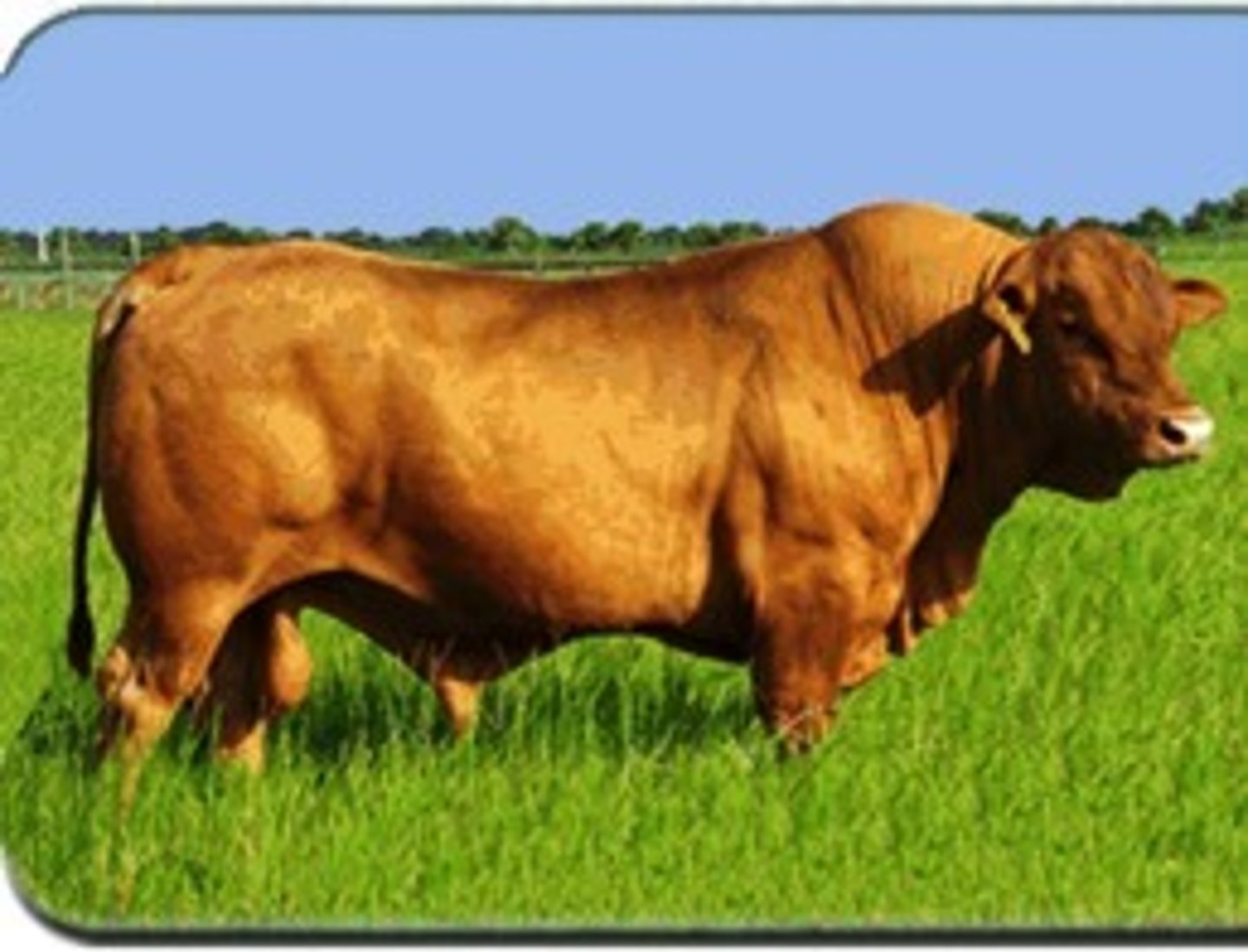
heat tolerance: Texas Longhorn
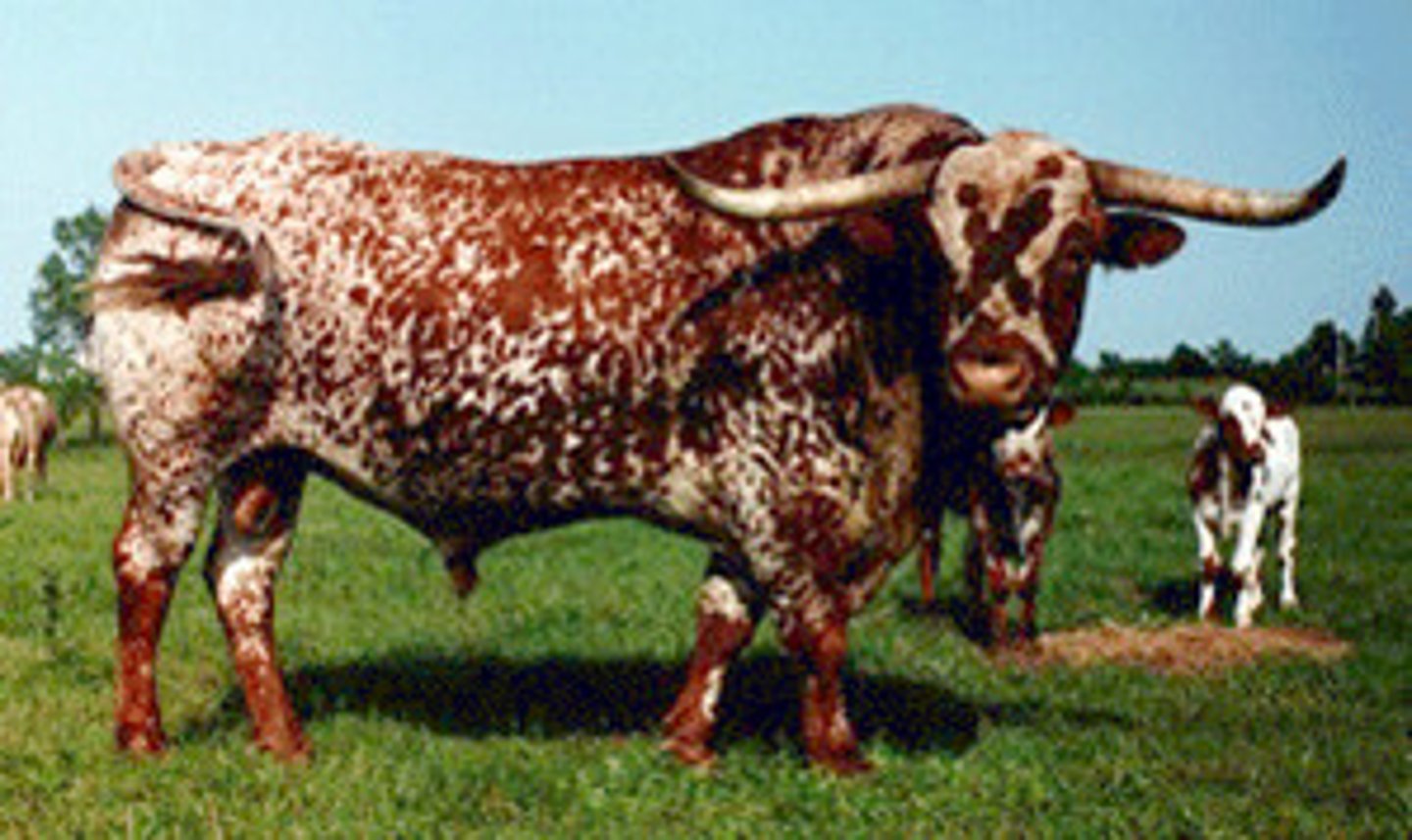
composite breeds: Brangus
3/8 Brahman, 5/8 Angus
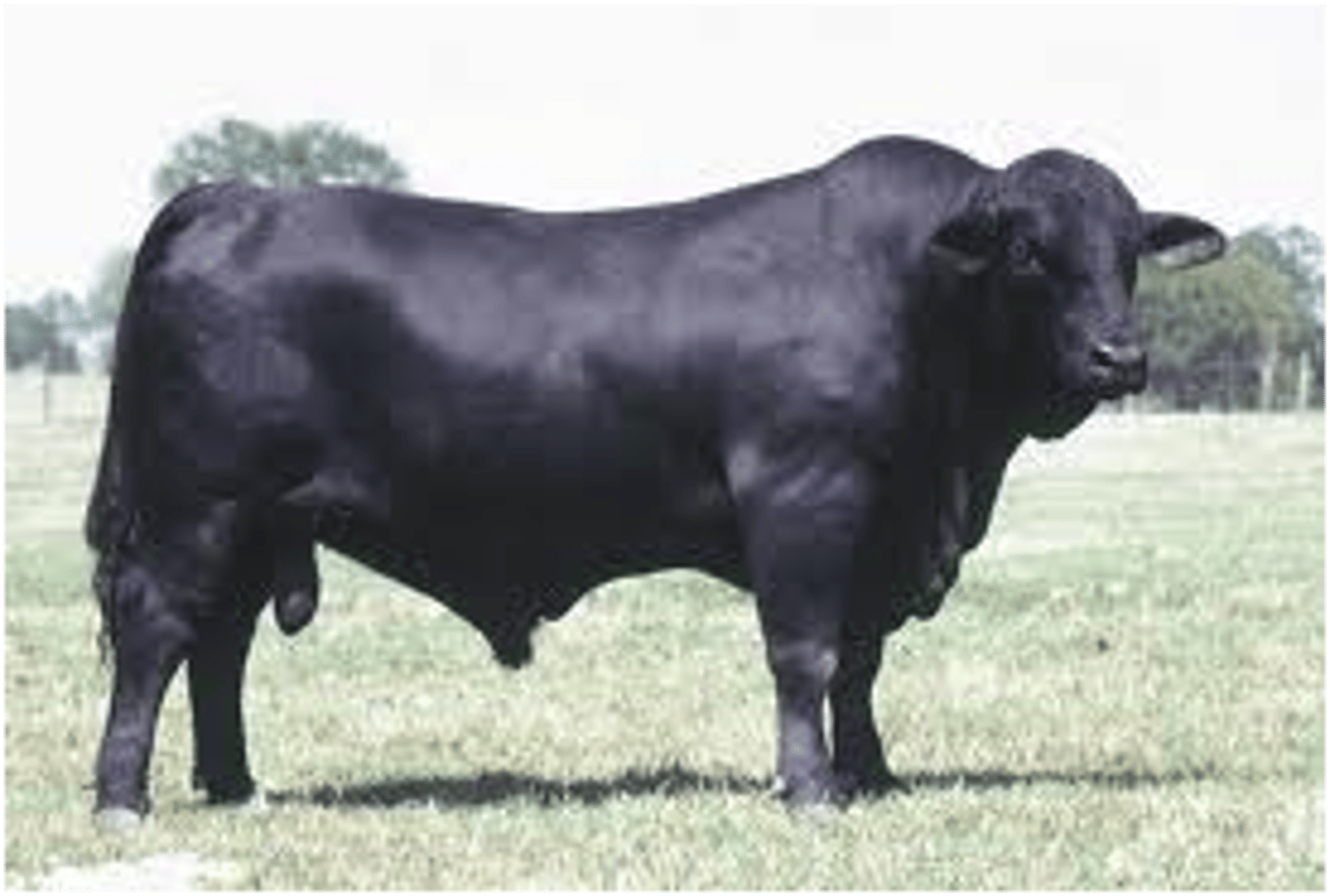
composite breeds: Bradford
3/8 Graham, 5/8 Hereford
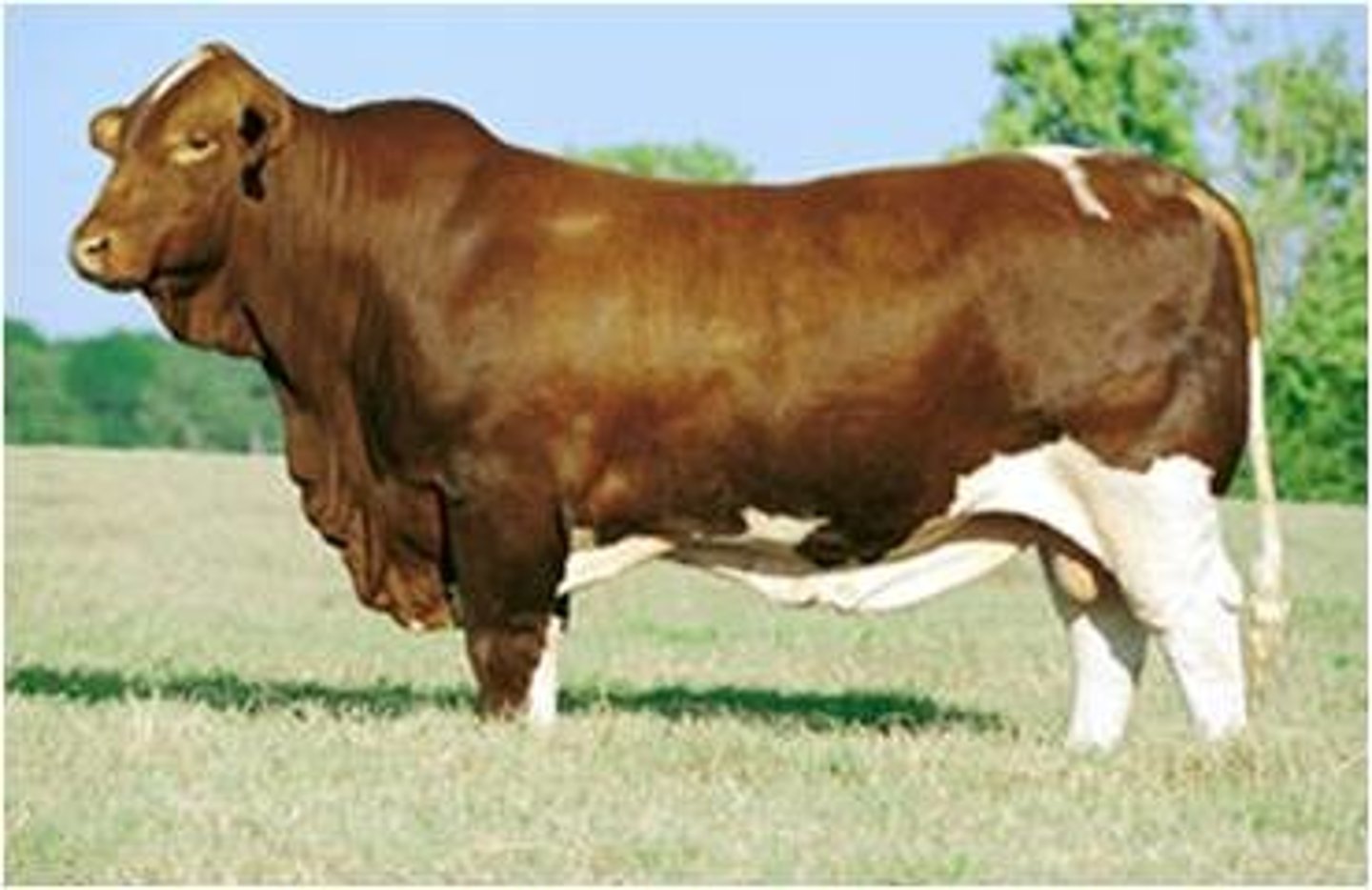
composite breeds: Santa Gertrudis
3/8 Brahman, 5/8 Shorthorn
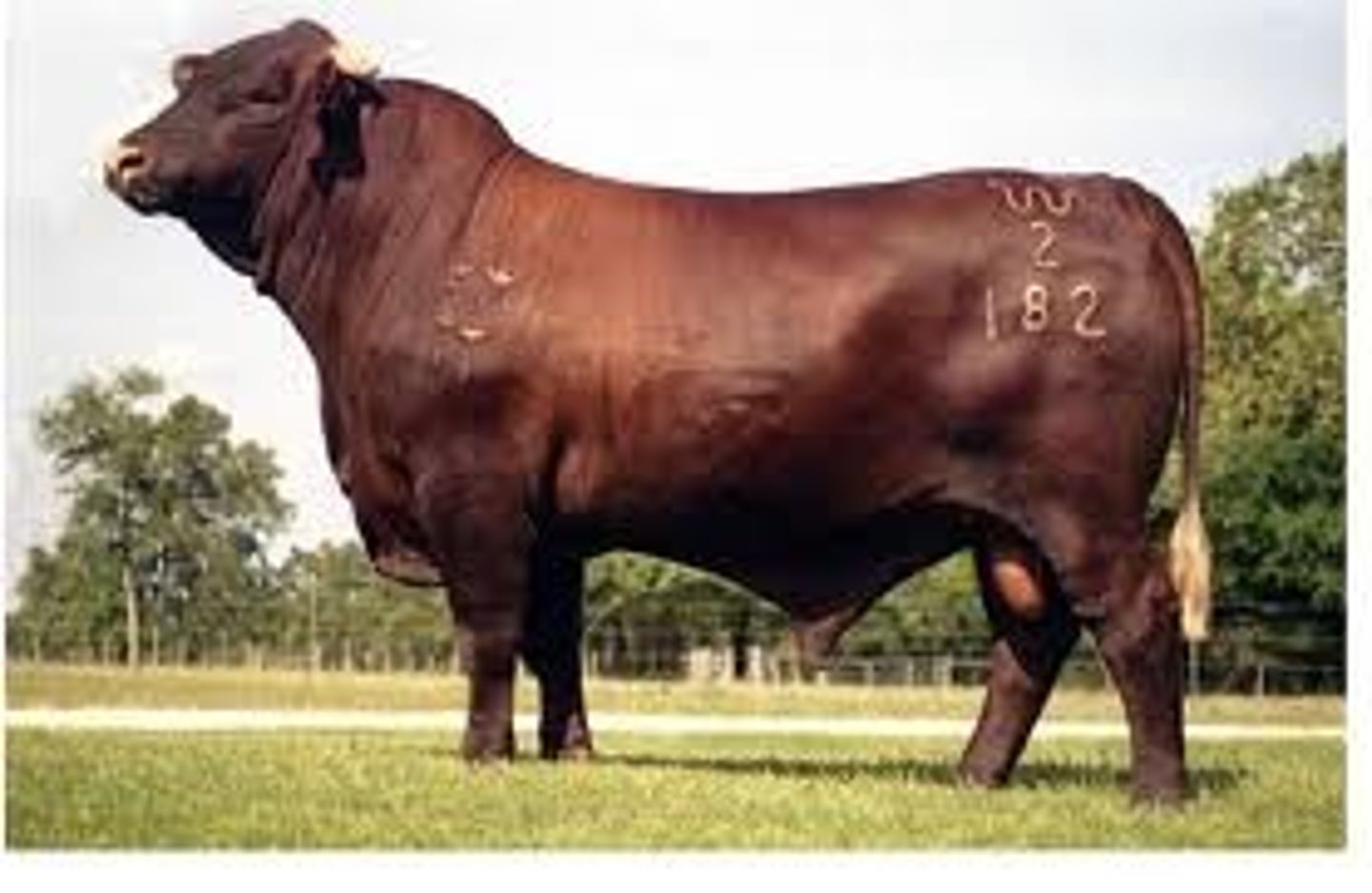
composite breeds: Beefmaster
1/4 Hereford, 1/4 Shorthorn, 1/2 Brahman
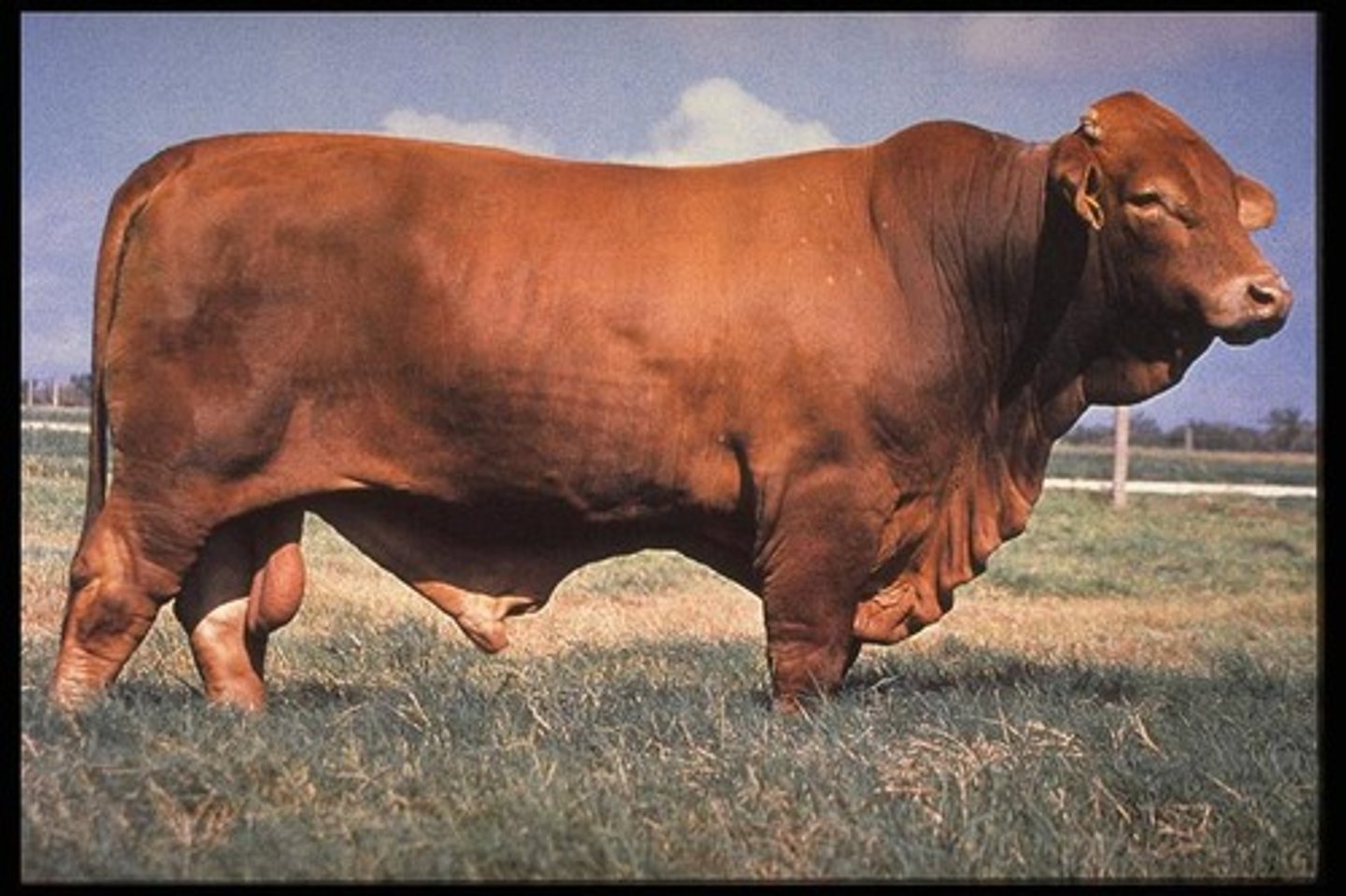
crossbreeding
- large majority of beef comes from these cows
- hybrid vigor or heterosis
- breed complementarity
- overall improvements of crossbred offspring resulting from crossing breeds of different but complimentary biological types
hybrid vigor (heterosis)
an increase in the performance of hybrids over that of purebreds, most noticeably in traits like fertility and survivability
degree to which offspring outperforms parents
queens of cow country
F1 brahman female
- increased milk production, higher fertility, wean faster-growing calves with fewer inputs
- longer productive life, raises the most calves over lifetime
- used in Louisiana and across the south
why weigh cattle?
- nutrition
- drug dosing
- marketing
- breeding weight
how can we figure out body weight?
- scale
- formula using measurements (similar to what is done with horses)
identification
- necessary for any type of cattle operation
- very simple or complex
- properly identified cattle can help producers assists with record keeping, theft, shared pastures
- permanent vs temporary identification: ear and RFID tags, tattoos, branding (hot or freeze)
nutrient requirements
- requirements change as cattle go through different stages of production
- three stages with a mature cow
1. maintenance
2. gestation
3. lactation
- 2 and 3 year old heifers have a growth requirement and continue until they reach 60 months of age
maintenance requirements
- nutrients used to maintain life
- occurs everyday
- maintains organs, cells, etc.
gestation (pregnancy) requirements
nutrients used to maintain the fetus and all associated fluids and tissues
lactation requirements (milk production)
nutrients used to make milk
peaks at 45-60 days post calving
stages of production for cow herd
1. calving to breeding (82 days): early lactation, prepare cow for rebreeding- MILK NUTRITION
2. breeding to weaning (83-205days): slow fetal growth, late lactation- MILK NUTRITION
3. weaning- late gestation (206-315 days): slow fetal growth- PRE PREGNANCY NUTRITION
4. late gestation (316-365days): rapid fetal growth- PREGNANCY NUTRITION
ALL THESE DIFFERENT STAGES REQUIRE DIFFERENT NUTRITION MANAGEMENT!
body condition score
- indicator of cow nutrition status
- assessment of energy stores, level of fat (flesh) on cattle
- scale ranges 1-9
- once BCS is approximately 80lbs. on a 1,000 cow with a BCS of 5
- with heathy cattle BCS is an indicator of nutrient intake
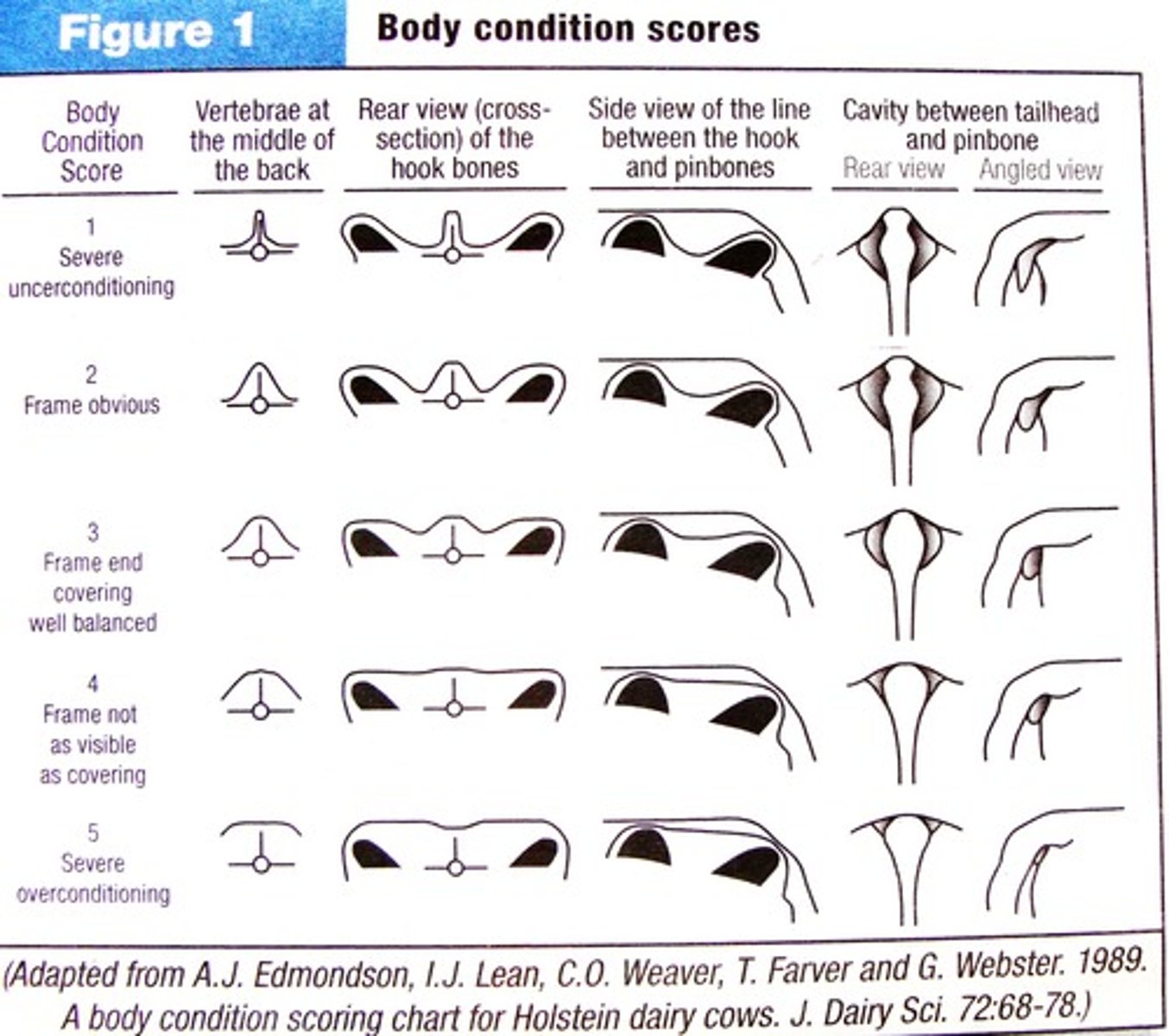
BCS for beef cattle
1 to 9
why is BCS important
- related to pregnancy rate, calving interval, calf age at weaning, calf average daily gain etc (money)
- income is reduced when the BCS drops
- Producers work to keep cows at 5-6 to maintain health and profitability
thin cattle
- failure to have normal reproductive cycles and to conceive
- increased calving interval and days to estrus
- decreased calf vigor
overweight cattle
- costly to maintain
- increased dystocia
- impaired mobility
- failure to have normal reproductive cycles and to conceive
herd nutrition
goal: provide adequate nutrition on forages
- cattle consume approx. 2.5% of body weight in dry matter
- supplements may be needed, depending on forage quality and availability
- hay can be fed during winter months prior to grazing rye grass
storage and feed losses
hay should be store off the ground and under a roof or wrapped in plastic to minimize losses
- to avoid feeding loss use a bale feeder to prevent trampling and waste of hay
reproductive management
- cattle typically reach puberty around 10 months
- cattle breed year round: typically bred in fall/spring calving season
- producers can chose to use natural or artificial insemination to breed females (or combo of both)
- estrus (heat) synchronization helps make breeding possible
length of estrous cycle
21 days
length of estrus (heat)
14-16 hours
time of ovulation
10-14 hours after standing heat
length of gestation
283 days
controlled breeding season
- produces a controlled calving season. leaving bull in with cows for limited time
- breeding seasons range from 60-90 days
why have a defined breeding season?
- concentrated labor and other resources
- able to market a uniform set of cattle at one time
- nutrient requirements similar for entire herd (all in the same stage of production at the same time)
Breeding programs: purebred
seedstock producers
mating animals within the same breed
breeding programs: crossbreeding
commercial operations
crossing animals of different breeds
breeding programs: breeding/calving season
- spring calving (60 day season). Breed mid-April to mid-June. Calving at end of January to end of March
- fall calving (60 day season). breed beginning of January to end of February. calve mid October to beginning of December
crossbreeding programs
crossing of one or more pure breeds
benefits: hybrid vigor (heterosis)
heifer reproductive management
- first calf heifers should be bred to calve at 2 years
- breed heifers at 15 months (60-65% of mature body weight)
- producers may wait until 36 months- loss of one calf makes it hard to make a profit
- first calf heifers should be bred 30 days earlier than cow herd. Stressful time- heifer is still growing and now lactating- nutrient demands are high
bull reproductive management
- begin at 15 months. rule of thumb: bull is able to breed one cow for every month of age
- bull evaluation should be more important to the producer than selection for replacement heifers. Bulls produce more offspring per year compared to cows. Bad bull can cause great damage to profitability of an operation
bull reproductive management: breeding soundness exam (BSE)
- must be done prior to every breeding season
- testicular development
- semen quality
- ability to breed females (libido)
diseases that directly affect reproductive efficiency include
- brucellosis (bangs disease)
- Vibriosis
- leptospirosis
- IBR/BVD complex
- trichomoniasis
conception rate (pregnancy rate)
number of females pregnant ÷ total number of females exposed X 100
calf crop percent
number of calves weaned ÷ number of females exposed X 100
calving interval
time period from when a cow calves this year to when she calves next year (12 months is the target)
reasons for calf loss
mother, disease, weather, predator, accident
average cow cost in LA
$550
initial signs of calving
- nervousness
- off feed
- separation
- milk let down (swelling of the udder "springing")
- swollen vulva
- tail kinks
Stage 1 of Parturition
- restlessness, frequent standing up/lying down, not eating
- takes 2 to 6 hours for cervix to dilate completely
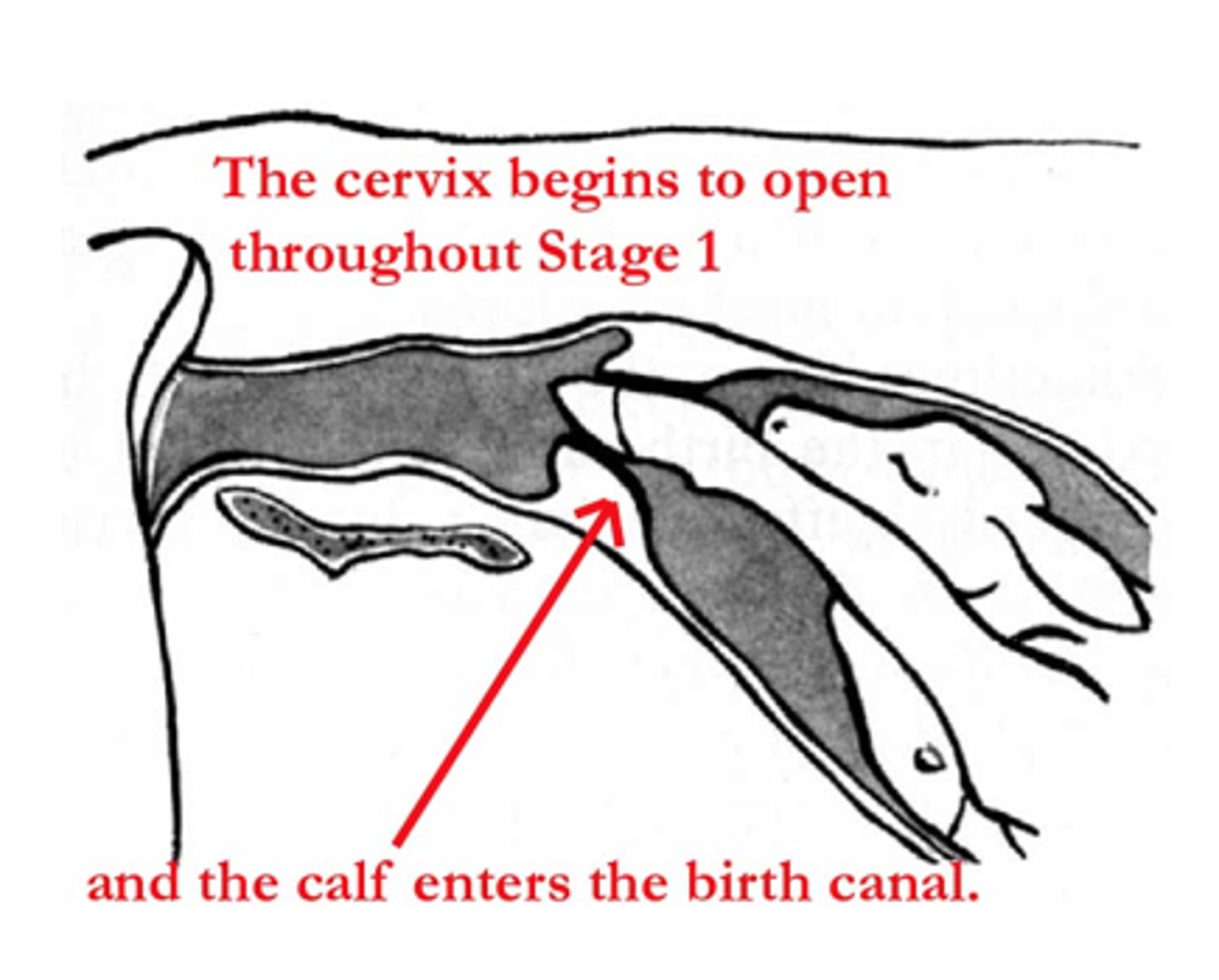
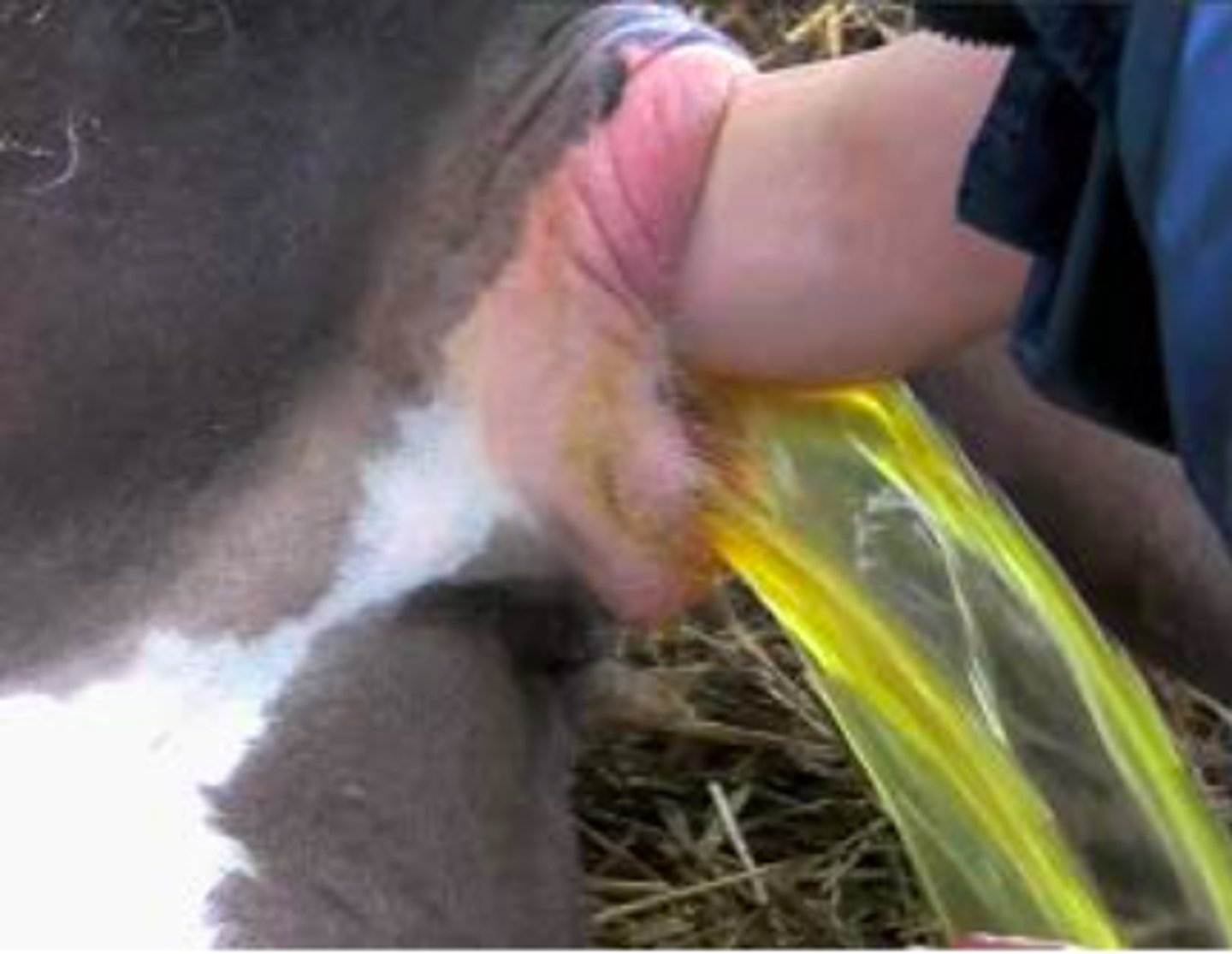
stage 2 of parturition
- water sac protrudes and breaks
- fetus enters the birth canal
- regular intermittent straining begins
- once front feet are out, calf expulsion should occur in 1 to 2 hours
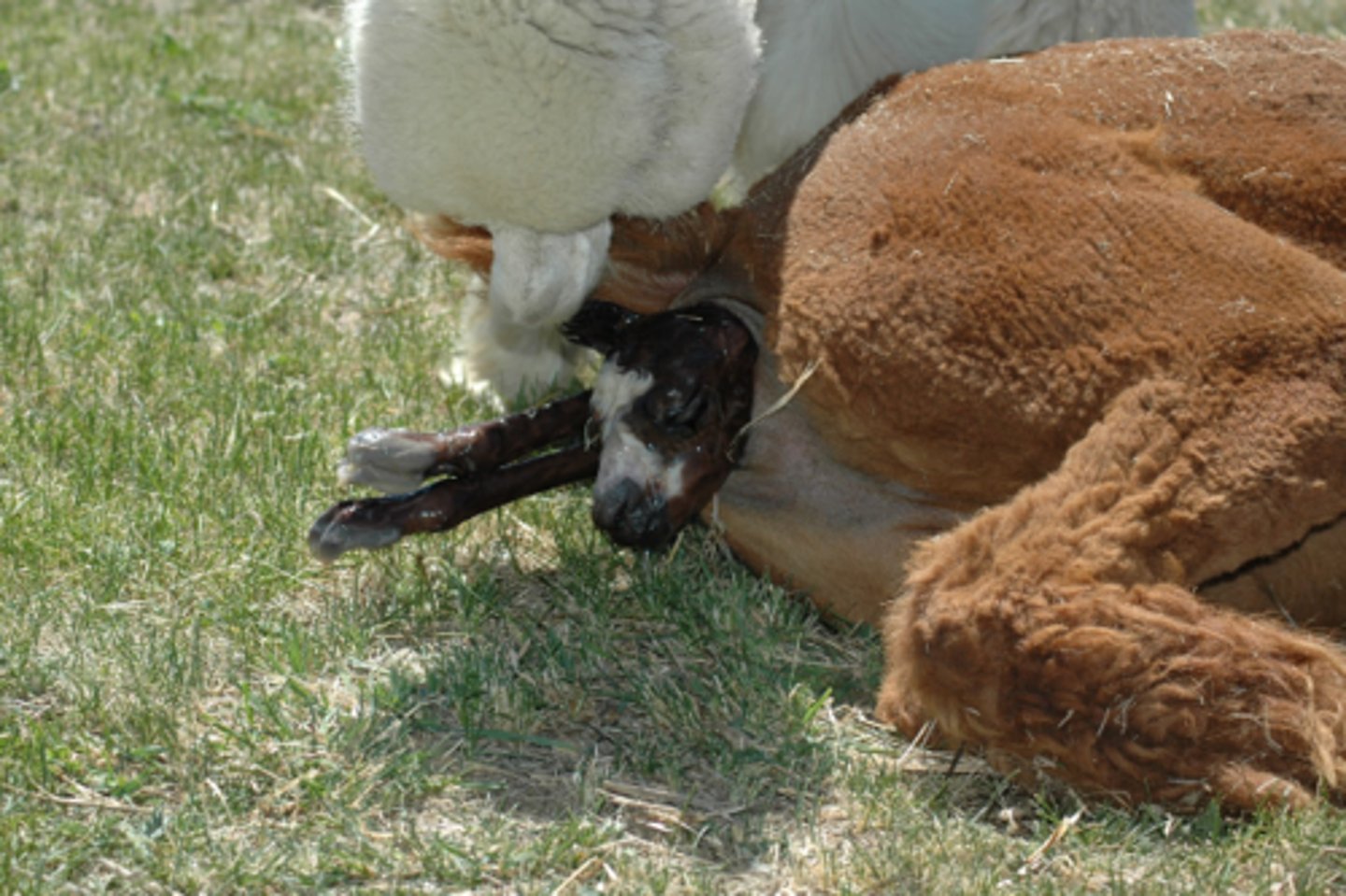
stage 3 of parturition
- expulsion of placenta and fetal membranes
- 30 minutes to 8 hours
- membranes not expelled after 12 hours are considered retained
dystocia and results from factors
difficulty with the calving process
- presentation of the fetus
- birth weight (major factor in dystocia)
- sex of calf (bull heavier by approximately 8 lbs)
- pelvic area of mother
- nutrition
- gestation length
- paternal maternal influence (high BW genetics)
 Note
Note  Flashcards (24)