ACCT 3110 Exam 4
 Call Kai
 Learn
Learn Practice Test
 Spaced Repetition
 Match
Match Flashcards
 Knowt Play
1/35

There's no tags or description
Looks like no tags are added yet.
Name | Mastery | Learn | Test | Matching | Spaced | Call with Kai |
|---|
No analytics yet
Send a link to your students to track their progress
36 Terms
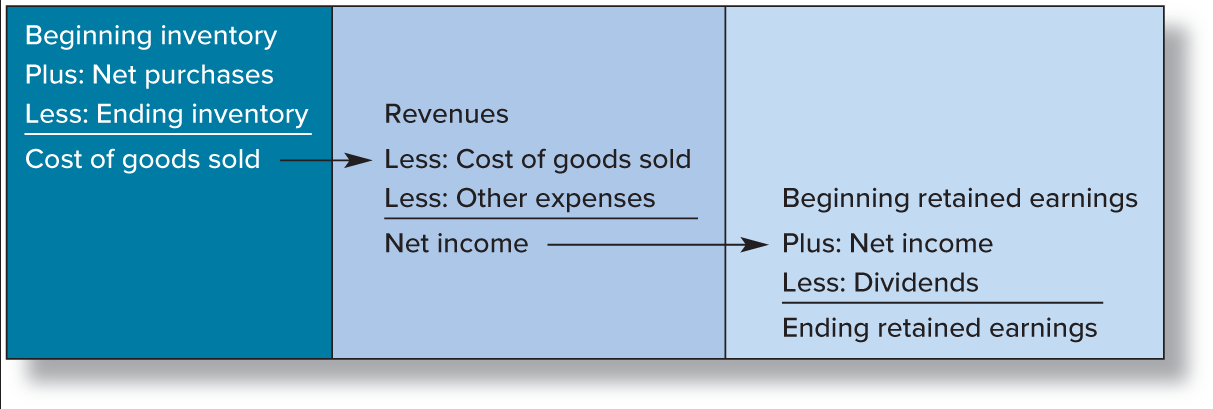
COGS equation
Beg. Inv. + Purchases + GAFS - End. Inv = COGS
Gross Profit Method
Beg. inv + net purchases = GAFS - Est. COGS = Est. End. Inv.
(Est. COGS = Net Sales * (1 - Gross Profit %))
Avg Retail Inventory Method
Cost of GAFS - Sales (retail) = End. Inv. (retail) * cost-to-retail % = End. Inv. (cost)
Cost of GAFS
Beg. Inv. + net purchases - net markdowns
Cost to retail % (avg)
GAFS (cost) / GAFS (retail)
Cost to retail % (conventional)
GAFS (cost) / GAFS (retail w/o markdown)
Conventional Retail Inventory Method
Cost of GAFS (w/ markdown) - Sales (retail) = End. Inv. (retail) * cost to retail % = Est. End. Inv. (cost)
Inventory Errors
NRV from LCNRV
NRV = est. selling price - cost of completion, disposal, & transportation
Ceiling from LCM
Ceiling = NRV = selling price - est. selling cost
Floor from LCM
Floor = NRV - normal profit margin
Market from LCM
Market is the middle amount of floor, replacement cost, and ceiling
LCNRV
for companies that DON’T use LIFO or Retail Inventory Method
LCM
for companies that DO use LIFO or Retail Inventory Method
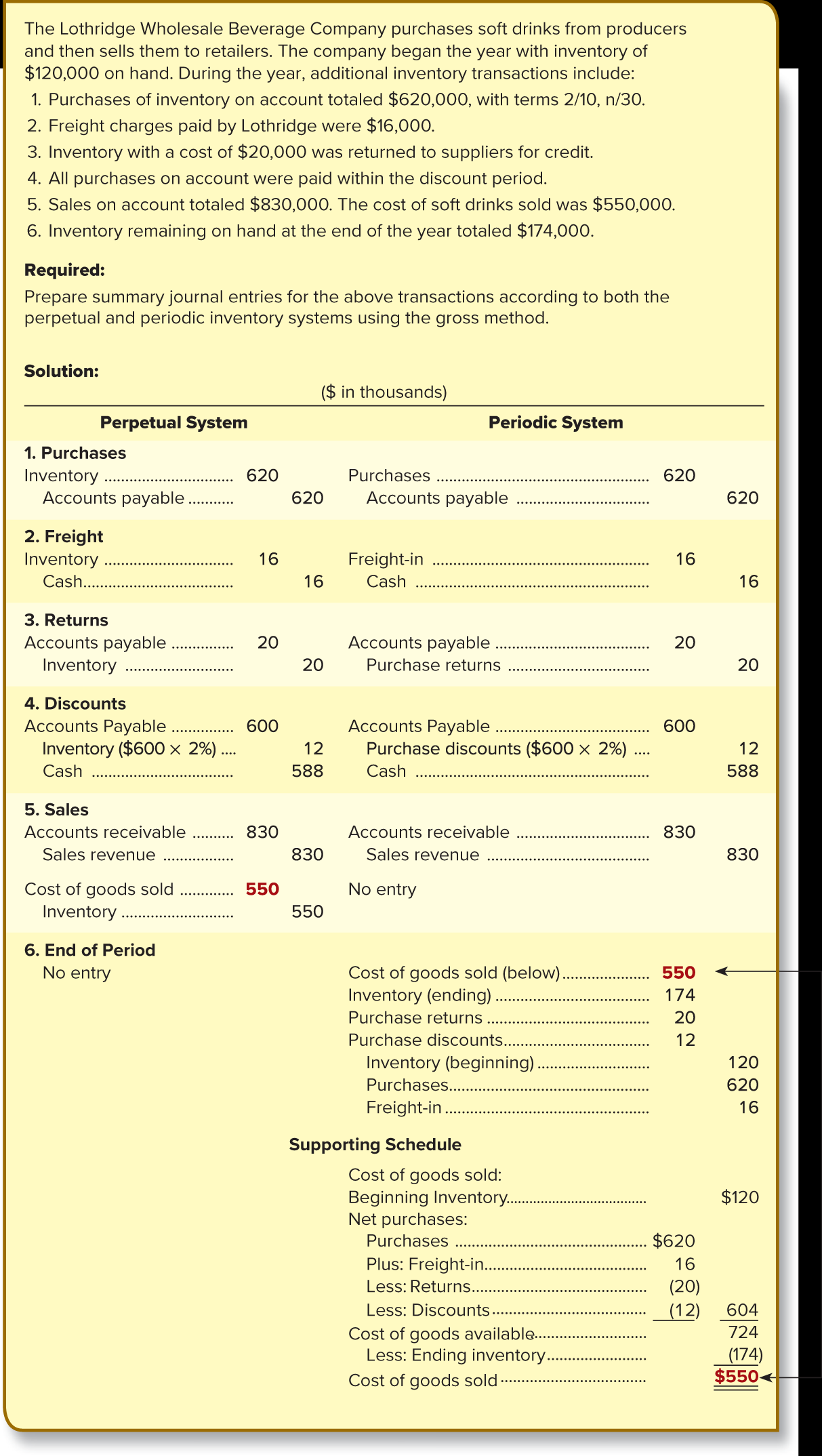
Perpetual Inventory System
continually adjust inventory acct for each change in inventory and COGS acct each time goods are sold or returned
Periodic Inventory System
adjusts inventory and records COGS only at the end of each reporting period. records inventory changes in temporary accts
FOB shipping point
legal title passes to buyer at a point of shipment
FOB destination
legal title passes to buyer when goods arrive at destination
Goods on consignment
A company (consignor) arranges for another company (consignee) to sell its product under consignment
Weighted avg unit cost
Cost of GAFS / quantity available for sale
Weighted avg - periodic
COGS = weighted avg per unit X units sold
only calculated at end of period
Weighted avg - perpetual
(cost of previous inventory + cost of new purchases) / # units on hand
FIFO
end inventory consists of most recently acquired units. Periodic amount = perpetual amount
LIFO - periodic
units sold are priced at most recent units purchased
LIFO - perpetual
each time inventory is purchased/ sold, LIFO layers adjust bc “most recent” items purchased changes as time passes
LIFO liquidation
removes entire current year year and some of beginning inventory / end inventory of previous year; some of “old” inventory is liquidated
LIFO inventory pools
groups inventory units into pools based on physical similarities of individual units and reduce the risk of LIFO liquidation
Dollar value LIFO
allows company to combine large variety of goods into one pool. inventory viewed as quantity of value than physical quantity
Cost index in base yr
1.00
Cost index in layer yr
cost in layer yr / cost in base yr
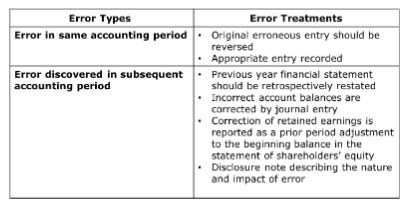
Error reporting
Periodic vs Perpetual
Change in Inventory methods - perpetual
dr inventory (new - old) cr retained earnings vice versa if old amount is larger than new amount
(Est.) loss on purchase commitment
Contract price - current market price at year-end
Year-End adjusting for purchase commitment
dr est. loss on purchase commitment cr est. liability on purchase commitment *for commitments in next period
Journal entry for purchase of purchase commitment
dr inventory dr loss on purchase commitment (difference) dr est. liability of commitment (from adj. entry) cr cash

